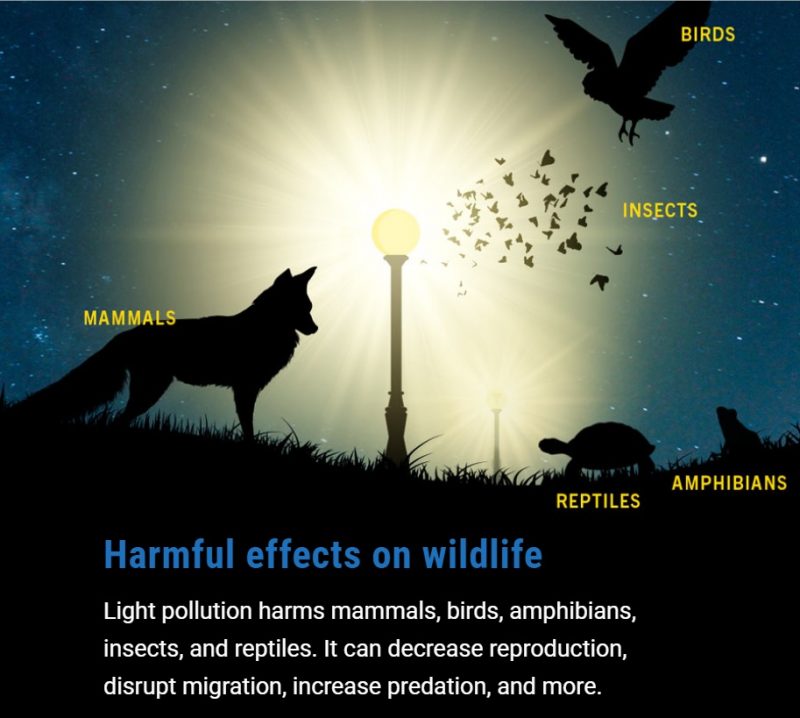
International Dark Sky Week is April 13 to 20, 2026. Image via IDA.
International Dark Sky Week is a worldwide celebration of the dark and natural night.
Light pollution is the human-made alteration of outdoor light levels.
Go Dark is the 2026 theme.
According to the International Dark-Sky Association (IDA) – founded in 1988 and based in Tucson, Arizona – light pollution is increasing at a rate twice that of human population growth. And about 80% of people around the world live under a light-polluted sky. That’s why IDA has established an International Dark Sky Week, which in 2026 falls on April 13 to 20. The goal for the week is to Go Dark. According to the IDA:
From the darkness needed for a restful night’s sleep to the activities we enjoy beneath the stars, the night is filled with wonder and importance. Dark nights sustain critical wildlife ecosystems, strengthen the well-being of our communities, enable scientific discovery, and preserve shared cultural knowledge and traditions.
The group also hopes you’ll learn the stars and constellations, and teach them to others.
Also, the IDA hopes you’ll join the global dark sky movement to protect and celebrate our shared heritage of dark night skies. DarkSky International promotes solutions that allow people to appreciate dark, star-filled skies while enjoying the benefits of responsible outdoor lighting.
According to the IDA:
For this International Dark Sky Week we invite you to join us as we discover the night together, exploring its importance and the actions we can take to protect dark skies.
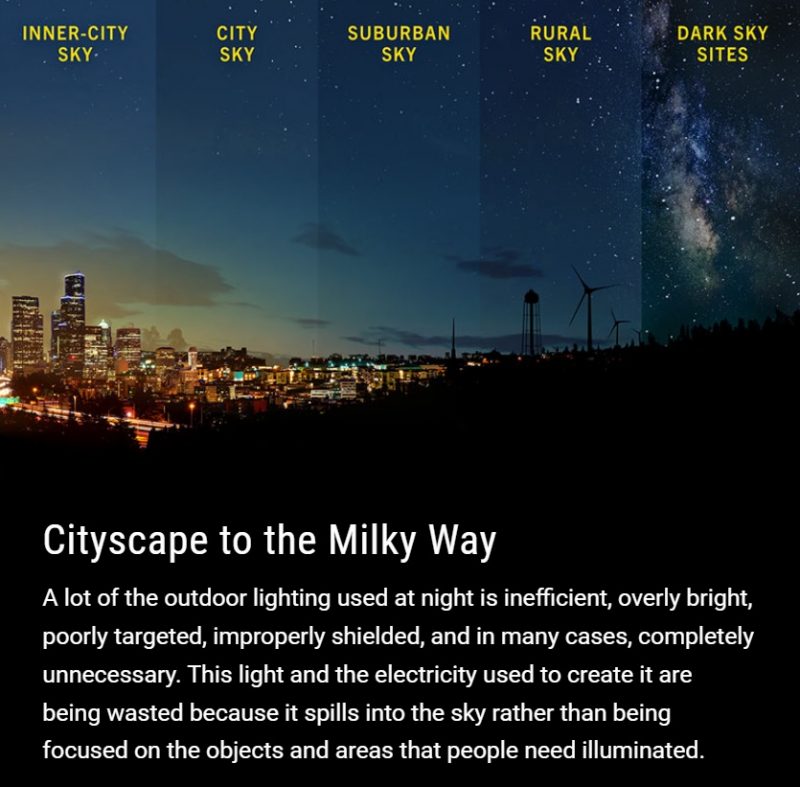
Poor lighting in cities leads to larger amounts of light pollution. From a dark country sky, you can see the river of stars that makes up our galaxy, the Milky Way. Image via IDA.
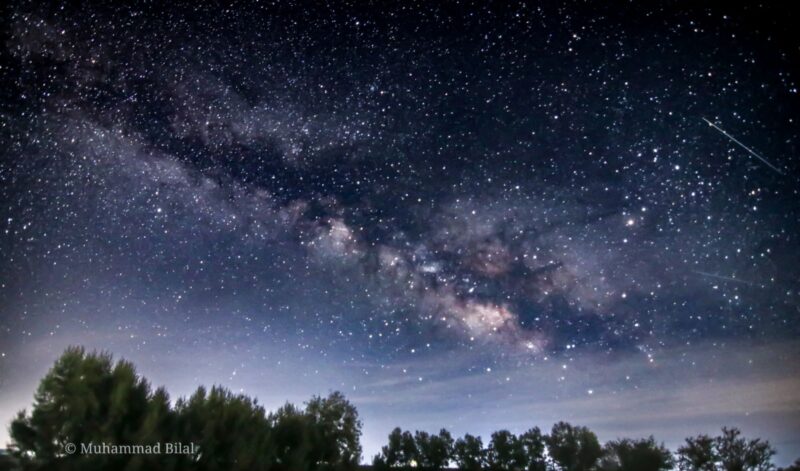
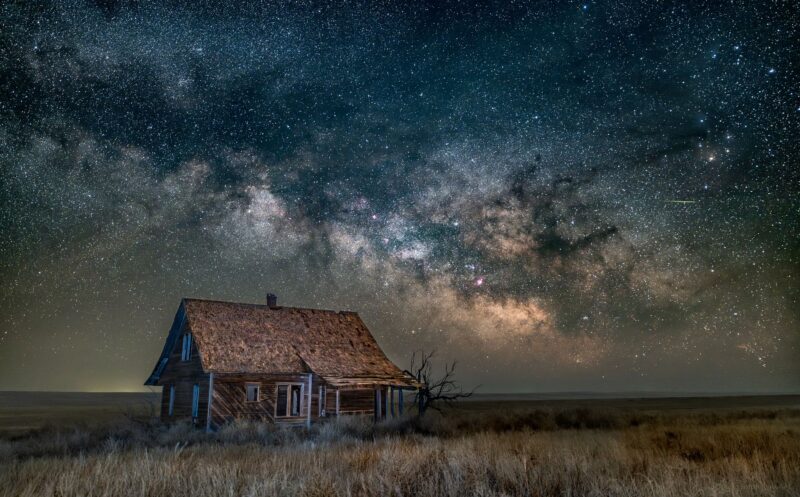
View at EarthSky Community Photos. | Muhammad Bilal in Talagang, Punjab, Pakistan, captured our home galaxy on March 6, 2025. Muhammad wrote: “As the summer is approaching, our very own Milky way Galaxy is back in sky.” Thank you, Muhammad!View at EarthSky Community Photos. | William Mathe made the 100-mile drive to Last Chance, Colorado, for this scene on March 16, 2024. William wrote: “The ranch house is a bit of a fixer-upper. But it has spectacular views of the core of our little Milky Way galaxy.” Thank you, William!
Bottom line: Celebrate dark night skies and help limit light pollution by raising awareness through the annual International Dark Sky Week, April 13 to 20, 2026. Find links here.
International Dark Sky Week is April 13 to 20, 2026. Image via IDA.
International Dark Sky Week is a worldwide celebration of the dark and natural night.
Light pollution is the human-made alteration of outdoor light levels.
Go Dark is the 2026 theme.
According to the International Dark-Sky Association (IDA) – founded in 1988 and based in Tucson, Arizona – light pollution is increasing at a rate twice that of human population growth. And about 80% of people around the world live under a light-polluted sky. That’s why IDA has established an International Dark Sky Week, which in 2026 falls on April 13 to 20. The goal for the week is to Go Dark. According to the IDA:
From the darkness needed for a restful night’s sleep to the activities we enjoy beneath the stars, the night is filled with wonder and importance. Dark nights sustain critical wildlife ecosystems, strengthen the well-being of our communities, enable scientific discovery, and preserve shared cultural knowledge and traditions.
The group also hopes you’ll learn the stars and constellations, and teach them to others.
Also, the IDA hopes you’ll join the global dark sky movement to protect and celebrate our shared heritage of dark night skies. DarkSky International promotes solutions that allow people to appreciate dark, star-filled skies while enjoying the benefits of responsible outdoor lighting.
According to the IDA:
For this International Dark Sky Week we invite you to join us as we discover the night together, exploring its importance and the actions we can take to protect dark skies.
Poor lighting in cities leads to larger amounts of light pollution. From a dark country sky, you can see the river of stars that makes up our galaxy, the Milky Way. Image via IDA.
View at EarthSky Community Photos. | Muhammad Bilal in Talagang, Punjab, Pakistan, captured our home galaxy on March 6, 2025. Muhammad wrote: “As the summer is approaching, our very own Milky way Galaxy is back in sky.” Thank you, Muhammad!View at EarthSky Community Photos. | William Mathe made the 100-mile drive to Last Chance, Colorado, for this scene on March 16, 2024. William wrote: “The ranch house is a bit of a fixer-upper. But it has spectacular views of the core of our little Milky Way galaxy.” Thank you, William!
Bottom line: Celebrate dark night skies and help limit light pollution by raising awareness through the annual International Dark Sky Week, April 13 to 20, 2026. Find links here.
View larger. | This artist’s concept shows Jupiter with its powerful magnetic field (left) and Saturn with its weaker magnetic field in the early years of our solar system. Jupiter’s disk of material has cavities in it, while Saturn’s doesn’t. New findings suggest these cavities gave Jupiter’s large moons a place to form and grow. Image via Yuri I. Fujii/ L-INSIGHT (Kyoto University)/ Shinichiro Kinoshita/ Kyoto University.
Jupiter and Saturn both have many moons, with Saturn having nearly twice as many as Jupiter. But Jupiter has more large moons than Saturn. Why is that?
The planets’ magnetic fields and disks of material that the moons were born in provide the answers, says a new study from researchers in Japan.
Jupiter’s much stronger magnetic field created cavities in its disk for the large moons to grown in.
In the last week, astronomers announced even more new moons for Jupiter and Saturn. As of now, Jupiter has 115 known moons and Saturn has a whopping 292. But Jupiter has four large moons – Ganymede, Callisto, Io and Europa – while Saturn has only one, Titan. Why the discrepancy? Researchers in Japan said on April 8, 2026, that the answer might have to do with the magnetic fields around both planets and the disks of material that the moons originally formed in.
This question has been the subject of long-running debate among astronomers. Now, the new findings show that scientists need to reevaluate their theories about the formation of moons around gas giant planets. This could also be extrapolated to possible moons around distant exoplanets as well.
Jupiter’s four large moons are known as the Galilean moons. They were named in honor of the Italian astronomer Galileo, who discovered them through his telescope in 1610.
The researchers published their peer-reviewed results in Nature Astronomy on April 2, 2026.
On March 16, 2026, the Minor Planet Center (MPC) announced 11 more moons for Saturn and 4 more moons for Jupiter. And then, just this past week, the MPC announced another 14 moons for Jupiter and 7 for Saturn. So Saturn now has 292 confirmed moons! This animation is from Tony Dunn, creator of Orbitsimulator.com. Image via Tony Dunn/ Bluesky (@tony873004). Used with permission.Yuri I. Fujii at Kyoto University in Japan is the lead author of the new paper about the large moons of Jupiter and Saturn. Image via Kyoto University.
Magnetic fields and circumplanetary disks
The new findings involve both the magnetic fields of Jupiter and Saturn and the circumplanetary disks that surrounded them when they were first forming. Those disks contain the dust and gas that moons are born in.
And the researchers found something interesting. The structure of the disks of the two planets were different from each other. According to the new study, this difference originated from the strength of the planets’ magnetic fields.
Jupiter has a much stronger magnetic field than Saturn. This created magnetospheric cavities in the circumplanetary disk. These cavities then captured the forming moons Ganymede, Callisto, Io and Europa.
But Saturn’s magnetic field was too weak to create such cavities. Therefore, any larger moons that might have existed didn’t survive inside the disk. Except for Titan, of course.
National Astronomical Observatory of Japan: How Jupiter Cultivated More Large Moons Than Saturn — a Magnetospheric Cavity Explains the Difference https://ift.tt/JiMDKSU…
The researchers wanted to test planet formations theories. Understanding how the planets – and moons – formed in our solar system could provide clues about planets and moons around other stars.
In particular, planets with multiple moons, like Jupiter and Saturn and others, might be analogs for other planetary and moon systems. As lead author Yuri I. Fujii at Kyoto University noted:
Testing planet formation theory is somewhat difficult because we have only our solar system for reference, but there are multiple satellite systems close to us whose detailed characteristics we can observe.
The researchers are confident that the new findings will indeed help astronomers identify exomoons. As of now, there are several candidates, but no confirmations yet. The paper states:
Our findings predict that compact exomoon systems – in cases of massive gas giants, and a couple of distant moons in cases of Saturn-sized gas giants – will be found in future surveys.
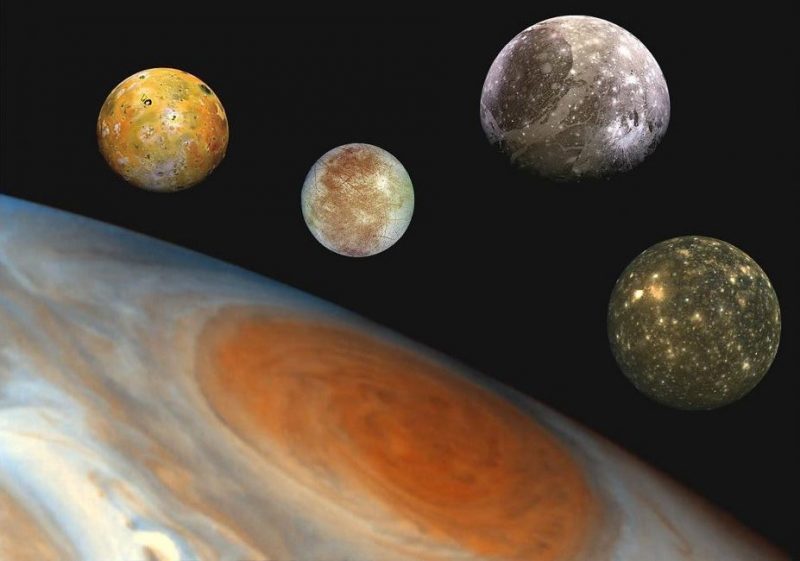
Composite image of Jupiter and its 4 large Galilean moons. From left to right the moons are Io, Europa, Ganymede and Callisto. The Galileo spacecraft obtained the images to make this composite in 1996. Image via NASA Photojournal.
Bottom line: Jupiter’s large moons – Ganymede, Callisto, Io and Europa – number four. But Saturn has just one large moon, Titan. Why? It may be the planets’ magnetic fields.
View larger. | This artist’s concept shows Jupiter with its powerful magnetic field (left) and Saturn with its weaker magnetic field in the early years of our solar system. Jupiter’s disk of material has cavities in it, while Saturn’s doesn’t. New findings suggest these cavities gave Jupiter’s large moons a place to form and grow. Image via Yuri I. Fujii/ L-INSIGHT (Kyoto University)/ Shinichiro Kinoshita/ Kyoto University.
Jupiter and Saturn both have many moons, with Saturn having nearly twice as many as Jupiter. But Jupiter has more large moons than Saturn. Why is that?
The planets’ magnetic fields and disks of material that the moons were born in provide the answers, says a new study from researchers in Japan.
Jupiter’s much stronger magnetic field created cavities in its disk for the large moons to grown in.
In the last week, astronomers announced even more new moons for Jupiter and Saturn. As of now, Jupiter has 115 known moons and Saturn has a whopping 292. But Jupiter has four large moons – Ganymede, Callisto, Io and Europa – while Saturn has only one, Titan. Why the discrepancy? Researchers in Japan said on April 8, 2026, that the answer might have to do with the magnetic fields around both planets and the disks of material that the moons originally formed in.
This question has been the subject of long-running debate among astronomers. Now, the new findings show that scientists need to reevaluate their theories about the formation of moons around gas giant planets. This could also be extrapolated to possible moons around distant exoplanets as well.
Jupiter’s four large moons are known as the Galilean moons. They were named in honor of the Italian astronomer Galileo, who discovered them through his telescope in 1610.
The researchers published their peer-reviewed results in Nature Astronomy on April 2, 2026.
On March 16, 2026, the Minor Planet Center (MPC) announced 11 more moons for Saturn and 4 more moons for Jupiter. And then, just this past week, the MPC announced another 14 moons for Jupiter and 7 for Saturn. So Saturn now has 292 confirmed moons! This animation is from Tony Dunn, creator of Orbitsimulator.com. Image via Tony Dunn/ Bluesky (@tony873004). Used with permission.Yuri I. Fujii at Kyoto University in Japan is the lead author of the new paper about the large moons of Jupiter and Saturn. Image via Kyoto University.
Magnetic fields and circumplanetary disks
The new findings involve both the magnetic fields of Jupiter and Saturn and the circumplanetary disks that surrounded them when they were first forming. Those disks contain the dust and gas that moons are born in.
And the researchers found something interesting. The structure of the disks of the two planets were different from each other. According to the new study, this difference originated from the strength of the planets’ magnetic fields.
Jupiter has a much stronger magnetic field than Saturn. This created magnetospheric cavities in the circumplanetary disk. These cavities then captured the forming moons Ganymede, Callisto, Io and Europa.
But Saturn’s magnetic field was too weak to create such cavities. Therefore, any larger moons that might have existed didn’t survive inside the disk. Except for Titan, of course.
National Astronomical Observatory of Japan: How Jupiter Cultivated More Large Moons Than Saturn — a Magnetospheric Cavity Explains the Difference https://ift.tt/JiMDKSU…
The researchers wanted to test planet formations theories. Understanding how the planets – and moons – formed in our solar system could provide clues about planets and moons around other stars.
In particular, planets with multiple moons, like Jupiter and Saturn and others, might be analogs for other planetary and moon systems. As lead author Yuri I. Fujii at Kyoto University noted:
Testing planet formation theory is somewhat difficult because we have only our solar system for reference, but there are multiple satellite systems close to us whose detailed characteristics we can observe.
The researchers are confident that the new findings will indeed help astronomers identify exomoons. As of now, there are several candidates, but no confirmations yet. The paper states:
Our findings predict that compact exomoon systems – in cases of massive gas giants, and a couple of distant moons in cases of Saturn-sized gas giants – will be found in future surveys.
Composite image of Jupiter and its 4 large Galilean moons. From left to right the moons are Io, Europa, Ganymede and Callisto. The Galileo spacecraft obtained the images to make this composite in 1996. Image via NASA Photojournal.
Bottom line: Jupiter’s large moons – Ganymede, Callisto, Io and Europa – number four. But Saturn has just one large moon, Titan. Why? It may be the planets’ magnetic fields.
Want to know the rising and setting times for the sun, moon and planets in your sky? Here are some resources for you. We can’t answer every inquiry individually, but we can direct you to some wonderful almanacs that provide this information.
Rising and setting times are for locations with a level horizon.
Custom Sunrise Sunset Calendar
This site provides a printable monthly calendar that gives you the sunrise/sunset and moonrise/moonset times, and the phases of the moon. Optional features include times for civil, nautical and astronomical twilight, and the definitions for these different shades of twilight.
Old Farmer’s Almanac
Calculate rise and set times for the sun, moon and planets (including the dwarf planet Pluto!) for any location in the U.S. and Canada.
timeanddate.com planet guide
Gives the rising and setting times for Mercury, Venus, Mars, Jupiter, Saturn, Uranus and Neptune for any chosen location.
Australian National University
Gives rise/transit/set times for the sun, moon and bright planets for anyplace worldwide. You need to know your latitude and longitude. Try latlong.net to find that.
Heavens-Above
Information on when the International Space Station and other satellites are visible in your sky.
A photo from our EarthSky community
View at EarthSky Community Photos. | Jose Zarcos Palma captured this image on July 28. 2025, from Portugal. Jose wrote: “During nautical twilight, the two space stations – ISS and TIANGONG – cross the same region of the sky just a few minutes apart. On the right side of the image, we can also see the moon’s trail, with an illumination of about 18%. The apparent motion of the stars and the moon correspond to the period between the beginning of the ISS’s ascent and the end of Tiangong’s visibility (~24 minutes).” Thank you, Jose!
Bottom line: Find out rising and setting times for the sun, the moon, planets, and satellites at the almanac sites linked here.
Want to know the rising and setting times for the sun, moon and planets in your sky? Here are some resources for you. We can’t answer every inquiry individually, but we can direct you to some wonderful almanacs that provide this information.
Rising and setting times are for locations with a level horizon.
Custom Sunrise Sunset Calendar
This site provides a printable monthly calendar that gives you the sunrise/sunset and moonrise/moonset times, and the phases of the moon. Optional features include times for civil, nautical and astronomical twilight, and the definitions for these different shades of twilight.
Old Farmer’s Almanac
Calculate rise and set times for the sun, moon and planets (including the dwarf planet Pluto!) for any location in the U.S. and Canada.
timeanddate.com planet guide
Gives the rising and setting times for Mercury, Venus, Mars, Jupiter, Saturn, Uranus and Neptune for any chosen location.
Australian National University
Gives rise/transit/set times for the sun, moon and bright planets for anyplace worldwide. You need to know your latitude and longitude. Try latlong.net to find that.
Heavens-Above
Information on when the International Space Station and other satellites are visible in your sky.
A photo from our EarthSky community
View at EarthSky Community Photos. | Jose Zarcos Palma captured this image on July 28. 2025, from Portugal. Jose wrote: “During nautical twilight, the two space stations – ISS and TIANGONG – cross the same region of the sky just a few minutes apart. On the right side of the image, we can also see the moon’s trail, with an illumination of about 18%. The apparent motion of the stars and the moon correspond to the period between the beginning of the ISS’s ascent and the end of Tiangong’s visibility (~24 minutes).” Thank you, Jose!
Bottom line: Find out rising and setting times for the sun, the moon, planets, and satellites at the almanac sites linked here.
This satellite imagery in October 2024 showed Hurricane Milton resembling a creepy skull as it approached Florida. Seeing things, such as faces, in random objects is a phenomenon known as pareidolia. Image via Max Velocity.
Maybe you’ve seen a fluffy bunny in the clouds on a warm summer day, or a face staring back at you from the bark of a tree. Seeing familiar shapes in otherwise random objects is called pareidolia. And now, new research is helping to explain why. On April 7, 2026, researchers at the University of New South Wales in Sydney, Australia, said that the images our brains tend to perceive are strongly biased toward angry male faces.
Lindsay Peterson of UNSW led the new study. Peterson explained that our tendency to see angry male faces might be due to an instinct to protect ourselves. Peterson said:
Your lizard brain is telling you that the safest thing is to assume it’s a threat and then deal with it.
The researchers published their study in the peer-reviewed journal Royal Society Open Science on March 25, 2026.
A look at the research
The new study consisted of two experiments with 70 participants. As participants looked at images, the researchers asked them to identify faces and assign traits such as age, gender and emotion. Some of the objects were real items, such as a purse. And in other cases the images were just abstract visual “noise.” Overall, there was a wide range of things people saw in the noise images. Peterson said:
Buddha, angels, demons, dragons. It’s amazing you can have these quite rich responses to a stimulus that is essentially noise. It is quite remarkable [what we see] given that in the noise stimulus, it is just noise. There really isn’t anything there.
Despite the variety of things people reported seeing, there were detectable patterns as well. Notably, there was a bias toward people seeing male faces with expressions of anger. Peterson said previous research has shown:
The male bias exists across generations and in children as young as four years old, which suggests that it’s hard wired.
From an evolutionary perspective, pareidolia is a useful feature. It’s better to mistakenly see a face – or a potential threat – than to miss one entirely. And this bias toward detection helps explain why we’re especially sensitive to facelike patterns.
The trade-off? We occasionally see meaning in randomness.
Clouds become dragons. Shadows become figures. Hurricanes look like skulls.
An example of a visual noise image the UNSW researchers showed to participants. The red lines represent some of the faces participants saw within the noise. Image via UNSW.
Pareidolia in astronomy
Seeing the famous man in the moon or the canals on Mars are classic examples from astronomy. The ability to experience pareidolia is more developed in some people and less in others. Look at the photos below to learn more and test your own ability to see things that aren’t there.
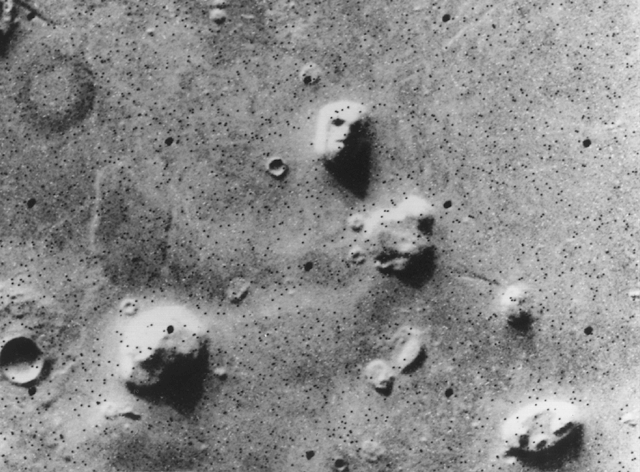
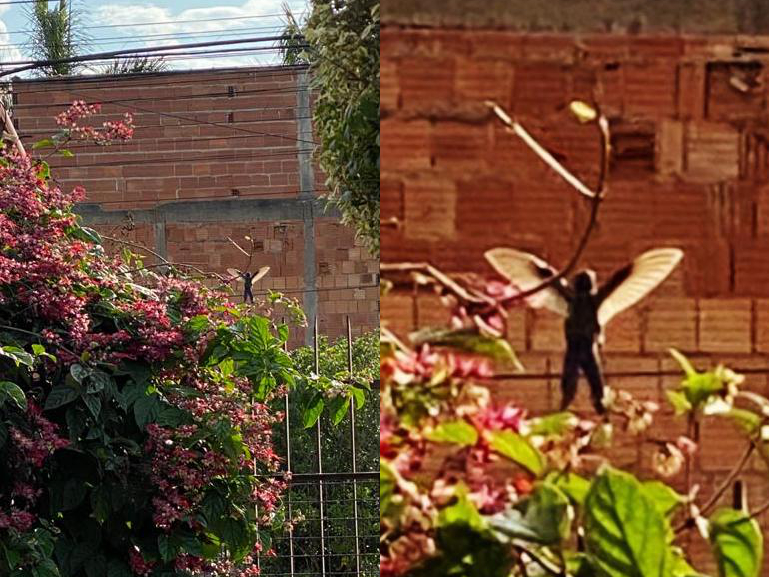
Seeing things on other planets? Here’s an example of pareidolia in an early mystery of the space age. It’s the so-called face on Mars. The Viking 1 orbiter originally captured this image in 1976. NASA shows how subsequent spacecraft revealed the “face” to be a play of light and shadows. Image via Wikimedia Commons/ NASA.View at EarthSky Community Photos. | Peter Lowenstein in Mutare, Zimbabwe, captured these images on April 16, 2020. He wrote: “… the sunset was accompanied by the appearance of some pareidolic cumulus clouds which appeared to encroach on and devour the setting sun!” Read more about these images or see them as a video. Thank you, Peter!View at EarthSky Community Photos. | Helio C. Vital of Rio de Janeiro, Brazil, wrote: “A friend of mine, Professor Eliane Teixeira Mársico, who is a veterinarian and a food engineer, was taking photos of her yard when she saw a hummingbird. She noticed a remarkable example of pareidolia (seeing things). The image greatly resembles a little winged male figure (a male fairy, as mystics could say) floating over her home garden.” Thank you, Eliane and Helio! Image by Eliane Teixeira Mársico.
Pareidolia is making sense out of what you think you see
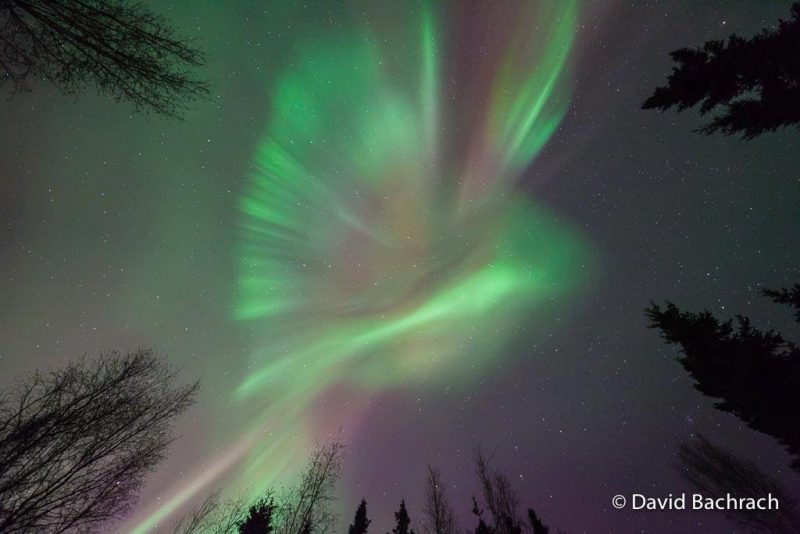
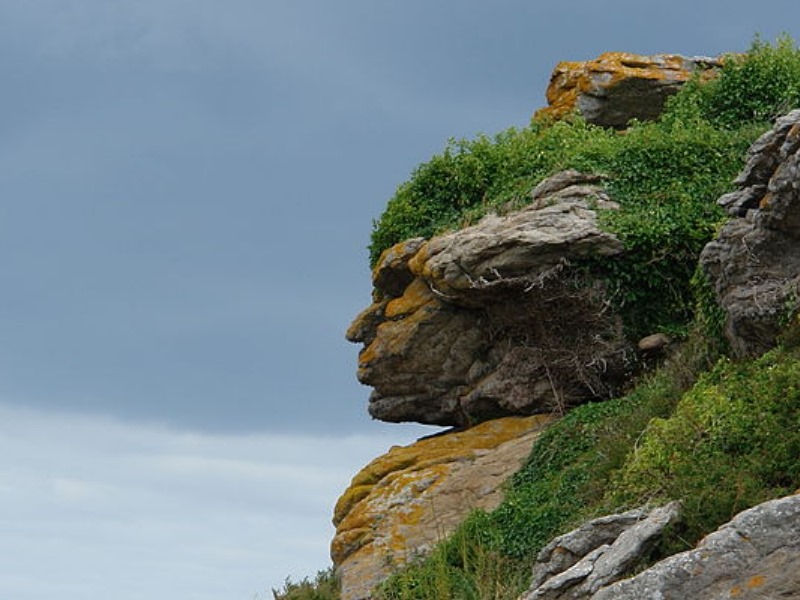
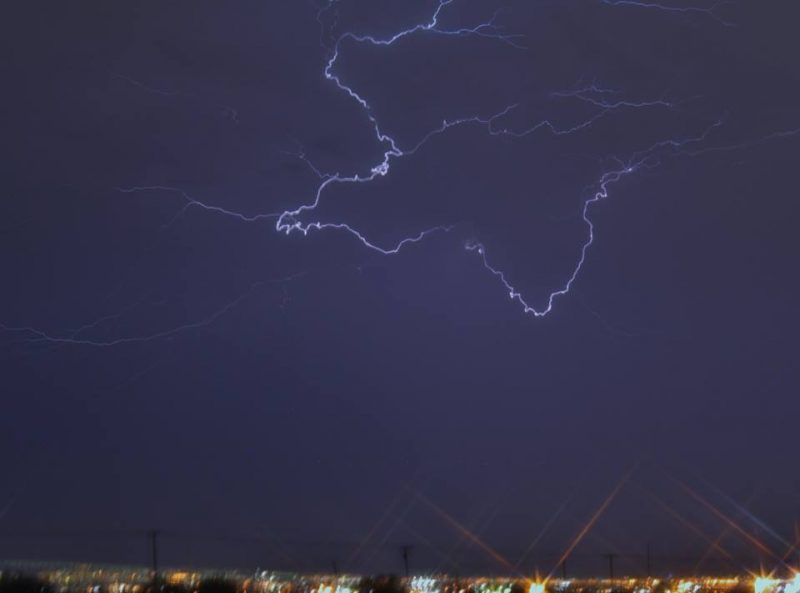
Can you see a bird in flight in this photo? It’s a photo of the aurora borealis taken near Fairbanks, Alaska, by Dave Bachrach. Used with permission.Erwan Mirabeau shot this rock formation in Ebihens, France. It’s reminiscent of a green-haired man, known in the area as an Apache. Photo via Wikimedia Commons.The “face of Jesus” in this photo is actually a child with a bonnet, and the hair is vegetation in the background. Anonymous Swedish photograph from the late nineteenth century via Wikimedia Commons.
Seeing things varies by individuals
Sometimes the ability to see objects in photos, where no such objects exist, has results that are not simply beautiful or intriguing, but downright bizarre. For example, consider the old photo above from an anonymous Swedish photographer of the 19th century.
In the image above, many viewers will immediately see the image of a bearded man with wavy hair, which could resemble Jesus, near the left center of the image. In fact, however, the face is just a phenomenon of light, shadow and placement. The “face of Jesus” is actually a child with a bonnet, and the hair is vegetation in the background.
You have also probably have seen claims of images of Jesus in a piece of toast, or the Madonna in the misshapen form of a gourd. And although intrinsically meaningless, such images are sometimes striking. More often, though, the similarity to known persons, animals or objects is a bit more subtle.
Ty Lawrence in Las Vegas, Nevada, contributed this photo. We posted it at EarthSky Facebook and asked people what it looked like to them. We got many answers. Puppy. Dragon. Dog. Map of the Mediterranean Sea. But most people said “bird.” Thanks, Ty!
Did pareidolia lead to creating the constellations?
To a certain extent, the definition of pareidolia can explain why the ancients connected the dots and came up with the patterns we know as constellations. Indeed, it does not take a great deal of imagination to see a lion in Leo, a scorpion in Scorpius or a mighty hunter in Orion. To be honest, many other constellations, such as Cancer the Crab or Capricornus the Sea Goat, stretch the pattern recognition idea a bit far, making the naming process more one of contrivance than of pareidolia.
What about the face on Mars?
Staying in the realm of astronomy for a bit, many have seen a face or a rabbit in the moon or any of a variety of other figures on the face of the moon for ages. And nowadays, technology has given us close-ups of other planets that serve as fodder for the pareidolia monster.
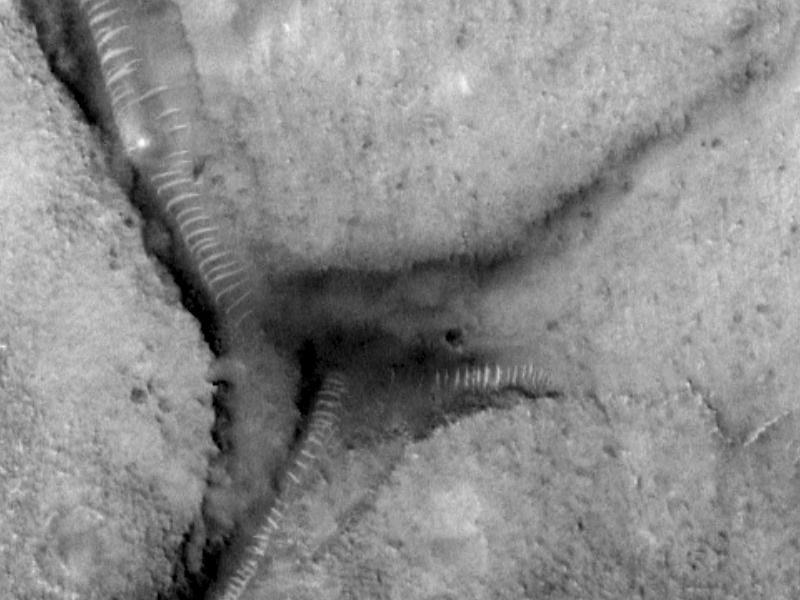
Glass tunnels or “ice worms” on Mars? In fact, these Martian canyons contain crescent-shaped sand dunes, which form when the wind is predominantly from one direction. Image via NASA.
For example, some self-appointed experts have stated that the image above – which is an enlargement of a small section of image M0400291 from the Mars Global Surveyor – shows large glass tunnels on Mars, or even evidence for ice worms on the red planet. But what the image above really shows is a convergence of deep canyons on the planet Mars. At the bottom of these canyons are crescent-shaped sand dunes, which form when the wind is predominantly from one direction. Such dunes are common in desert areas of the Earth and are known as barchans.
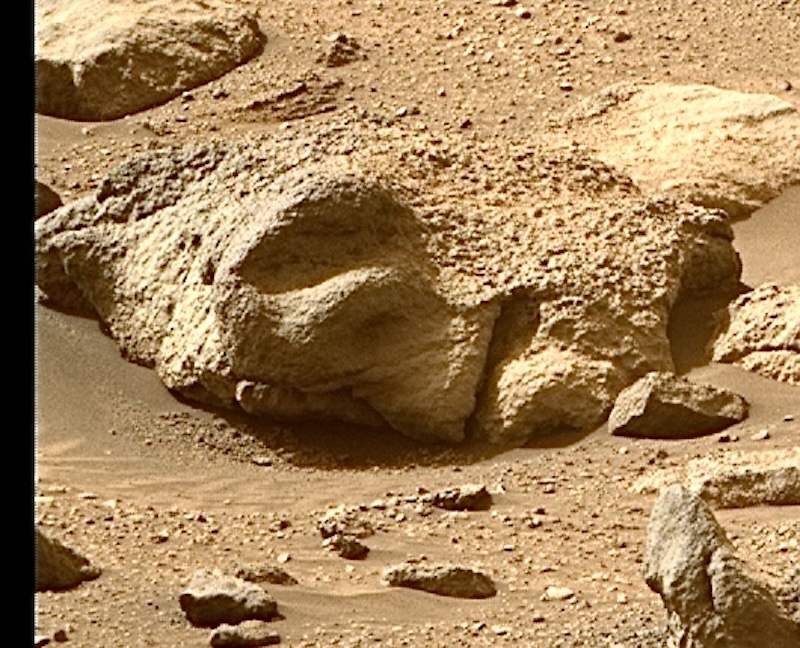
View full image. | On September 27, 2024, the Perseverance rover found a new face on Mars. Image via NASA/ JPL-Caltech/ ASU.
Our own interests and experiences play a part in seeing things
In some ways, the pareidolic images we discover tend to indicate things about which we are most interested, whether they be people, puppies or planes. To be sure, finding such “embedded” images can be fun and interesting, almost a hobby for some. But for some they can also fuel obsessiveness and paranoia. Enjoy finding your own pareidolic images, but keep in mind that what you are seeing is not really there, but in your mind.
Bottom line: Seeing things such as a creepy face in satellite imagery is called pareidolia. Now, a new study says we’re more likely to see angry men in random objects.
This satellite imagery in October 2024 showed Hurricane Milton resembling a creepy skull as it approached Florida. Seeing things, such as faces, in random objects is a phenomenon known as pareidolia. Image via Max Velocity.
Maybe you’ve seen a fluffy bunny in the clouds on a warm summer day, or a face staring back at you from the bark of a tree. Seeing familiar shapes in otherwise random objects is called pareidolia. And now, new research is helping to explain why. On April 7, 2026, researchers at the University of New South Wales in Sydney, Australia, said that the images our brains tend to perceive are strongly biased toward angry male faces.
Lindsay Peterson of UNSW led the new study. Peterson explained that our tendency to see angry male faces might be due to an instinct to protect ourselves. Peterson said:
Your lizard brain is telling you that the safest thing is to assume it’s a threat and then deal with it.
The researchers published their study in the peer-reviewed journal Royal Society Open Science on March 25, 2026.
A look at the research
The new study consisted of two experiments with 70 participants. As participants looked at images, the researchers asked them to identify faces and assign traits such as age, gender and emotion. Some of the objects were real items, such as a purse. And in other cases the images were just abstract visual “noise.” Overall, there was a wide range of things people saw in the noise images. Peterson said:
Buddha, angels, demons, dragons. It’s amazing you can have these quite rich responses to a stimulus that is essentially noise. It is quite remarkable [what we see] given that in the noise stimulus, it is just noise. There really isn’t anything there.
Despite the variety of things people reported seeing, there were detectable patterns as well. Notably, there was a bias toward people seeing male faces with expressions of anger. Peterson said previous research has shown:
The male bias exists across generations and in children as young as four years old, which suggests that it’s hard wired.
From an evolutionary perspective, pareidolia is a useful feature. It’s better to mistakenly see a face – or a potential threat – than to miss one entirely. And this bias toward detection helps explain why we’re especially sensitive to facelike patterns.
The trade-off? We occasionally see meaning in randomness.
Clouds become dragons. Shadows become figures. Hurricanes look like skulls.
An example of a visual noise image the UNSW researchers showed to participants. The red lines represent some of the faces participants saw within the noise. Image via UNSW.
Pareidolia in astronomy
Seeing the famous man in the moon or the canals on Mars are classic examples from astronomy. The ability to experience pareidolia is more developed in some people and less in others. Look at the photos below to learn more and test your own ability to see things that aren’t there.
Seeing things on other planets? Here’s an example of pareidolia in an early mystery of the space age. It’s the so-called face on Mars. The Viking 1 orbiter originally captured this image in 1976. NASA shows how subsequent spacecraft revealed the “face” to be a play of light and shadows. Image via Wikimedia Commons/ NASA.View at EarthSky Community Photos. | Peter Lowenstein in Mutare, Zimbabwe, captured these images on April 16, 2020. He wrote: “… the sunset was accompanied by the appearance of some pareidolic cumulus clouds which appeared to encroach on and devour the setting sun!” Read more about these images or see them as a video. Thank you, Peter!View at EarthSky Community Photos. | Helio C. Vital of Rio de Janeiro, Brazil, wrote: “A friend of mine, Professor Eliane Teixeira Mársico, who is a veterinarian and a food engineer, was taking photos of her yard when she saw a hummingbird. She noticed a remarkable example of pareidolia (seeing things). The image greatly resembles a little winged male figure (a male fairy, as mystics could say) floating over her home garden.” Thank you, Eliane and Helio! Image by Eliane Teixeira Mársico.
Pareidolia is making sense out of what you think you see
Can you see a bird in flight in this photo? It’s a photo of the aurora borealis taken near Fairbanks, Alaska, by Dave Bachrach. Used with permission.Erwan Mirabeau shot this rock formation in Ebihens, France. It’s reminiscent of a green-haired man, known in the area as an Apache. Photo via Wikimedia Commons.The “face of Jesus” in this photo is actually a child with a bonnet, and the hair is vegetation in the background. Anonymous Swedish photograph from the late nineteenth century via Wikimedia Commons.
Seeing things varies by individuals
Sometimes the ability to see objects in photos, where no such objects exist, has results that are not simply beautiful or intriguing, but downright bizarre. For example, consider the old photo above from an anonymous Swedish photographer of the 19th century.
In the image above, many viewers will immediately see the image of a bearded man with wavy hair, which could resemble Jesus, near the left center of the image. In fact, however, the face is just a phenomenon of light, shadow and placement. The “face of Jesus” is actually a child with a bonnet, and the hair is vegetation in the background.
You have also probably have seen claims of images of Jesus in a piece of toast, or the Madonna in the misshapen form of a gourd. And although intrinsically meaningless, such images are sometimes striking. More often, though, the similarity to known persons, animals or objects is a bit more subtle.
Ty Lawrence in Las Vegas, Nevada, contributed this photo. We posted it at EarthSky Facebook and asked people what it looked like to them. We got many answers. Puppy. Dragon. Dog. Map of the Mediterranean Sea. But most people said “bird.” Thanks, Ty!
Did pareidolia lead to creating the constellations?
To a certain extent, the definition of pareidolia can explain why the ancients connected the dots and came up with the patterns we know as constellations. Indeed, it does not take a great deal of imagination to see a lion in Leo, a scorpion in Scorpius or a mighty hunter in Orion. To be honest, many other constellations, such as Cancer the Crab or Capricornus the Sea Goat, stretch the pattern recognition idea a bit far, making the naming process more one of contrivance than of pareidolia.
What about the face on Mars?
Staying in the realm of astronomy for a bit, many have seen a face or a rabbit in the moon or any of a variety of other figures on the face of the moon for ages. And nowadays, technology has given us close-ups of other planets that serve as fodder for the pareidolia monster.
Glass tunnels or “ice worms” on Mars? In fact, these Martian canyons contain crescent-shaped sand dunes, which form when the wind is predominantly from one direction. Image via NASA.
For example, some self-appointed experts have stated that the image above – which is an enlargement of a small section of image M0400291 from the Mars Global Surveyor – shows large glass tunnels on Mars, or even evidence for ice worms on the red planet. But what the image above really shows is a convergence of deep canyons on the planet Mars. At the bottom of these canyons are crescent-shaped sand dunes, which form when the wind is predominantly from one direction. Such dunes are common in desert areas of the Earth and are known as barchans.
View full image. | On September 27, 2024, the Perseverance rover found a new face on Mars. Image via NASA/ JPL-Caltech/ ASU.
Our own interests and experiences play a part in seeing things
In some ways, the pareidolic images we discover tend to indicate things about which we are most interested, whether they be people, puppies or planes. To be sure, finding such “embedded” images can be fun and interesting, almost a hobby for some. But for some they can also fuel obsessiveness and paranoia. Enjoy finding your own pareidolic images, but keep in mind that what you are seeing is not really there, but in your mind.
Bottom line: Seeing things such as a creepy face in satellite imagery is called pareidolia. Now, a new study says we’re more likely to see angry men in random objects.
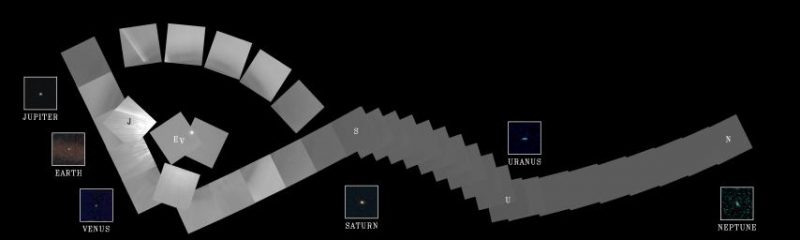
View larger. | On February 14, 1990, the Voyager 1 spacecraft – most distant spacecraft from Earth – pointed its cameras back toward the sun and captured a series of images of our sun and its planets. Incredibly, it was the 1st-ever “portrait” of our solar system as seen from the outside. At that time, Voyager 1 was approximately 4 billion miles (6 billion km) away. Read more about this image.
What’s Earth’s most distant spacecraft?
The most distant artificial object is the spacecraft Voyager 1. Which – in April 2026 – is more than 15 billion miles (24 billion km) from Earth. Voyager 1 and its twin, Voyager 2, were launched 16 days apart in 1977. Both spacecraft flew by Jupiter and Saturn. And Voyager 2 also flew by Uranus and Neptune. Now, both Voyagers are journeying into the space between the stars. Voyager 1 officially became the first earthly craft to leave the solar system, crossing the heliopause in 2012. Later, in 2021, it sent back a message that it’s hearing a faint, monotone hum of interstellar space.
Voyager 1 is expected to reach 1-light-day from Earth in November 2026. That’s 16.1 billion miles (25.9 billion km). You can track Voyager 1’s location and distance here.
And curiously, for a few months every year, the Voyager spacecraft actually get closer to Earth. That’s because in Earth’s orbit around the sun, we move away from the spacecraft (as they move away from us). Then, we move back toward them as we swing around the sun. So the distance between us and the Voyagers gets smaller temporarily. You can read more about it here: Why are the Voyager spacecraft getting closer to Earth?
Voyagers’ beginnings
Both Voyager spacecraft were designed back in the early 1970s. They were, specifically, built to take advantage of a rare grouping of planets on a single side of the sun in our solar system. This grouping, which happens only every 176 years, lets the Voyagers slingshot from one planet to the next, via gravitational assists.
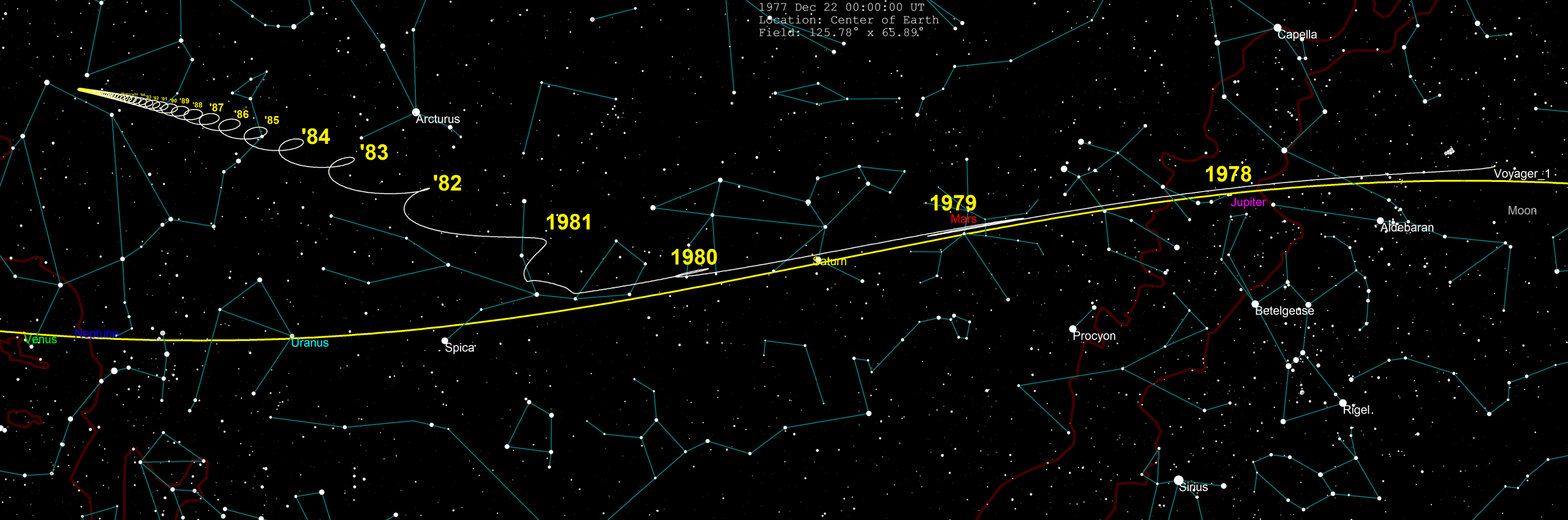
First, the Voyagers began acquiring images of Jupiter in January 1979. Voyager 1 completed its Jupiter encounter in early April of that year. Then, Voyager 2 picked up the baton in late April and its encounter continued into August. Overall, the two spacecraft took more than 33,000 pictures of Jupiter and its four major satellites.
And then the Voyagers went farther. When they were launched, no spacecraft had gone as far as Saturn, which is 10 times as far as Earth’s distance from the sun. Indeed, the four-year journey to Saturn was thus a major leap. The Voyagers arrived at Saturn nine months apart, in November 1980 and August 1981. Voyager 1 then began leaving the solar system, and Voyager 2 went on to an encounter with Uranus in January 1986 and with Neptune in August 1989.
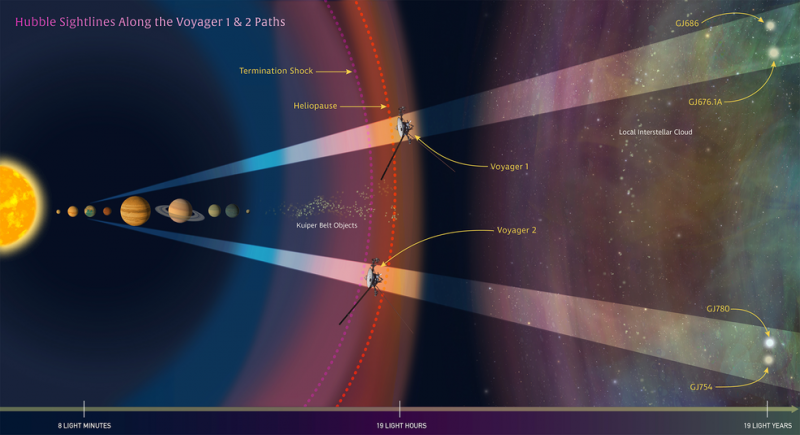
In 2017, astronomers described using the Hubble Space Telescope to look along the Voyagers’ paths. Later, in about 40,000 years, long after both spacecraft are no longer operational, Voyager 1 will pass within 1.6 light-years of the star Gliese 445, in the constellation Camelopardalis. Meanwhile, Voyager 2 will pass 1.7 light-years from the star Ross 248 in the constellation Andromeda in about 40,000 years.
Artist’s concept of the paths of the Voyager 1 and 2 spacecraft on their journey through our solar system and out into interstellar space. Image via NASA/ ESA/ and Z. Levay (STScI). Read more about this image.
Bottom line: Voyager 1 and its twin, Voyager 2, launched 16 days apart in 1977. Voyager 1 is now the most distant spacecraft from Earth.
View larger. | On February 14, 1990, the Voyager 1 spacecraft – most distant spacecraft from Earth – pointed its cameras back toward the sun and captured a series of images of our sun and its planets. Incredibly, it was the 1st-ever “portrait” of our solar system as seen from the outside. At that time, Voyager 1 was approximately 4 billion miles (6 billion km) away. Read more about this image.
What’s Earth’s most distant spacecraft?
The most distant artificial object is the spacecraft Voyager 1. Which – in April 2026 – is more than 15 billion miles (24 billion km) from Earth. Voyager 1 and its twin, Voyager 2, were launched 16 days apart in 1977. Both spacecraft flew by Jupiter and Saturn. And Voyager 2 also flew by Uranus and Neptune. Now, both Voyagers are journeying into the space between the stars. Voyager 1 officially became the first earthly craft to leave the solar system, crossing the heliopause in 2012. Later, in 2021, it sent back a message that it’s hearing a faint, monotone hum of interstellar space.
Voyager 1 is expected to reach 1-light-day from Earth in November 2026. That’s 16.1 billion miles (25.9 billion km). You can track Voyager 1’s location and distance here.
And curiously, for a few months every year, the Voyager spacecraft actually get closer to Earth. That’s because in Earth’s orbit around the sun, we move away from the spacecraft (as they move away from us). Then, we move back toward them as we swing around the sun. So the distance between us and the Voyagers gets smaller temporarily. You can read more about it here: Why are the Voyager spacecraft getting closer to Earth?
Voyagers’ beginnings
Both Voyager spacecraft were designed back in the early 1970s. They were, specifically, built to take advantage of a rare grouping of planets on a single side of the sun in our solar system. This grouping, which happens only every 176 years, lets the Voyagers slingshot from one planet to the next, via gravitational assists.
First, the Voyagers began acquiring images of Jupiter in January 1979. Voyager 1 completed its Jupiter encounter in early April of that year. Then, Voyager 2 picked up the baton in late April and its encounter continued into August. Overall, the two spacecraft took more than 33,000 pictures of Jupiter and its four major satellites.
And then the Voyagers went farther. When they were launched, no spacecraft had gone as far as Saturn, which is 10 times as far as Earth’s distance from the sun. Indeed, the four-year journey to Saturn was thus a major leap. The Voyagers arrived at Saturn nine months apart, in November 1980 and August 1981. Voyager 1 then began leaving the solar system, and Voyager 2 went on to an encounter with Uranus in January 1986 and with Neptune in August 1989.
In 2017, astronomers described using the Hubble Space Telescope to look along the Voyagers’ paths. Later, in about 40,000 years, long after both spacecraft are no longer operational, Voyager 1 will pass within 1.6 light-years of the star Gliese 445, in the constellation Camelopardalis. Meanwhile, Voyager 2 will pass 1.7 light-years from the star Ross 248 in the constellation Andromeda in about 40,000 years.
Artist’s concept of the paths of the Voyager 1 and 2 spacecraft on their journey through our solar system and out into interstellar space. Image via NASA/ ESA/ and Z. Levay (STScI). Read more about this image.
Bottom line: Voyager 1 and its twin, Voyager 2, launched 16 days apart in 1977. Voyager 1 is now the most distant spacecraft from Earth.
Arc to Arcturus, and speed on to Spica. Scouts learn this phrase. Grandparents teach it to kids. It’s one of the first sky tools many learn to use in astronomy. It’s a handy way to identify stars and patterns in the sky.
This mnemonic – a memory trick or device – directs you to two stars that are bright enough to shine even through the light pollution of suburbs and small cities. In fact, Spica is a prime example of a 1st-magnitude star. This means that, according to a brightness scale first used by the early astronomers Hipparchus (c.190-c.120 BCE) and Ptolemy (c.100-c.170 CE), it is one of our sky’s brightest stars.
And the star Arcturus beams brighter yet. It’s shining one magnitude (2.5 times) more brightly than Spica.
Arc to Arcturus
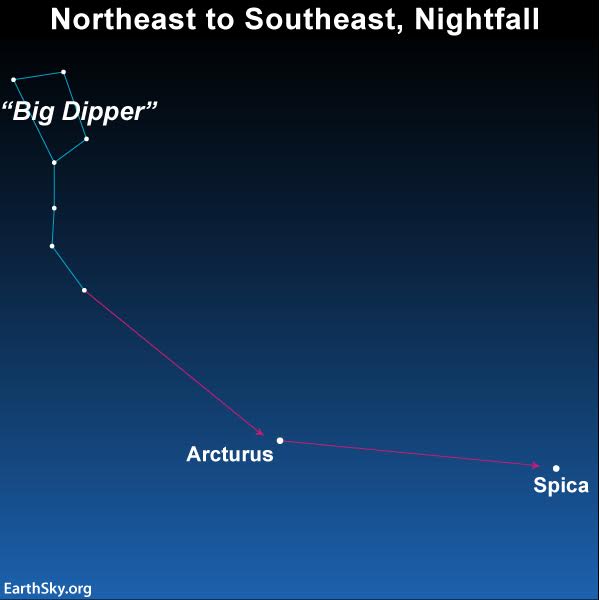
On any evening this month, look for the asterism of the Big Dipper high in the northeastern sky. You can’t miss the distinctive arrangement of its seven bright stars. Some people see it as an old-fashioned water ladle or a long-handled dipping spoon. Notice it has two parts: a bowl and a handle. Extend the curve of the handle until you come to a bright orange star. That’s Arcturus! It shines at a magnitude of -0.04.
Arcturus is a giant star, located an estimated 36.7 light-years from Earth. It is the 4th brightest star in the night sky. And it’s the brightest star in the constellation Boötes the Herdsman. Its name derives from the Ancient Greek for “Guardian of the Bear” due to its proximity to Ursa Major, the Great Bear. Some sky watchers still refer to it as the Bear Guard.
Speed on to Spica
Once you’ve followed the curve of the Big Dipper’s handle to Arcturus, you’re on your way to your next target. Just extend that same curve and speed on to the bright, blue-white star Spica! It shines at +1.04 magnitude. It’s the 16th brightest star in the sky.
Spica is the brightest light in Virgo the Maiden, a large, rambling constellation. Spica’s name derives from the Latin word for “ear,” referring to an ear of wheat held by the maiden. Greek astronomers associated the star and its constellation with the goddess of the harvest, Demeter. It’s also been associated with Demeter’s daughter, Persephone.
Today we know Spica as a tight double star. The two stars are indistinguishable from a single point of light in ordinary telescopes. Spica’s dual nature was revealed only by analyzing its light with a spectroscope. That’s an instrument that splits light into its component colors. Separated by just less than 11 million miles (18 million km), Spica’s two stars orbit a common center of gravity in only four days. They’re collectively more than 2,000 times brighter than our sun, and are estimated to be 7.8 and 4 times larger!
Bottom line: If you only ever learn one star mnemonic, make it this one! Arc to Arcturus and speed on to Spica to identify two of the sky’s brightest stars.
Arc to Arcturus, and speed on to Spica. Scouts learn this phrase. Grandparents teach it to kids. It’s one of the first sky tools many learn to use in astronomy. It’s a handy way to identify stars and patterns in the sky.
This mnemonic – a memory trick or device – directs you to two stars that are bright enough to shine even through the light pollution of suburbs and small cities. In fact, Spica is a prime example of a 1st-magnitude star. This means that, according to a brightness scale first used by the early astronomers Hipparchus (c.190-c.120 BCE) and Ptolemy (c.100-c.170 CE), it is one of our sky’s brightest stars.
And the star Arcturus beams brighter yet. It’s shining one magnitude (2.5 times) more brightly than Spica.
Arc to Arcturus
On any evening this month, look for the asterism of the Big Dipper high in the northeastern sky. You can’t miss the distinctive arrangement of its seven bright stars. Some people see it as an old-fashioned water ladle or a long-handled dipping spoon. Notice it has two parts: a bowl and a handle. Extend the curve of the handle until you come to a bright orange star. That’s Arcturus! It shines at a magnitude of -0.04.
Arcturus is a giant star, located an estimated 36.7 light-years from Earth. It is the 4th brightest star in the night sky. And it’s the brightest star in the constellation Boötes the Herdsman. Its name derives from the Ancient Greek for “Guardian of the Bear” due to its proximity to Ursa Major, the Great Bear. Some sky watchers still refer to it as the Bear Guard.
Speed on to Spica
Once you’ve followed the curve of the Big Dipper’s handle to Arcturus, you’re on your way to your next target. Just extend that same curve and speed on to the bright, blue-white star Spica! It shines at +1.04 magnitude. It’s the 16th brightest star in the sky.
Spica is the brightest light in Virgo the Maiden, a large, rambling constellation. Spica’s name derives from the Latin word for “ear,” referring to an ear of wheat held by the maiden. Greek astronomers associated the star and its constellation with the goddess of the harvest, Demeter. It’s also been associated with Demeter’s daughter, Persephone.
Today we know Spica as a tight double star. The two stars are indistinguishable from a single point of light in ordinary telescopes. Spica’s dual nature was revealed only by analyzing its light with a spectroscope. That’s an instrument that splits light into its component colors. Separated by just less than 11 million miles (18 million km), Spica’s two stars orbit a common center of gravity in only four days. They’re collectively more than 2,000 times brighter than our sun, and are estimated to be 7.8 and 4 times larger!
Bottom line: If you only ever learn one star mnemonic, make it this one! Arc to Arcturus and speed on to Spica to identify two of the sky’s brightest stars.
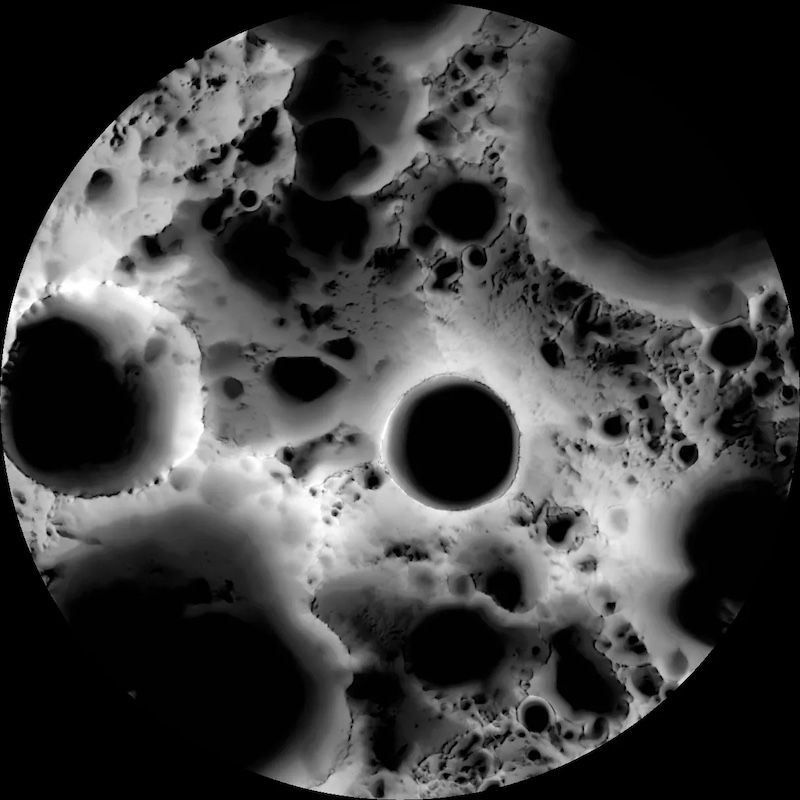
View larger. | Scientists once spoke of possible rich deposits of water ice in the deep, permanently shadowed craters at the moon’s poles. But a new study suggests less ice in moon’s shadows than previously thought. In this map of the moon’s south pole, you see Shackleton Crater – about 12 miles or 19 km in diameter – in the center. And the south pole itself is approximately at 9 o’clock on its rim. The map was created from images from the LROC camera aboard NASA’s Lunar Reconnaissance Orbiter (LRO). Image via NASA/ GSFC/ Arizona State University.
There are deposits of water ice at the moon’s poles. The ice is in dark, shadowed craters.
But there’s less ice than previous estimates had suggested, a new study shows.
Researchers used NASA’s ShadowCam instrument on the Korea Pathfinder Lunar Orbiter, also known as Danuri, to peer into the deep dark moon shadows.
How much water-ice is there on the moon? That question is important for future exploration of the moon. For a time, scientists spoke of easily accessible and possibly abundant surface water-ice deposits near the moon’s poles. This would have been in permanently shadowed craters at the poles, which are the darkest, coldest regions of the moon. But now researchers at the University of Hawaii at Manoa have confirmed a 2023 study, suggesting significantly less ice at the moon’s poles than we thought. The moon’s poles still likely hold the moon’s largest reservoirs of ice. But recent studies suggest those deposits might be smaller and more patchy than earlier estimates indicated.
The researchers of the new study said in late March 2026 that ice in permanently shadowed moon craters exists only in low concentrations or small, isolated deposits. The researchers used data from NASA’s ShadowCam instrument on the Korea Pathfinder Lunar Orbiter (KPLO), also known as Danuri.
The findings could have an impact on future human exploration of the moon. Astronauts will need water resources, especially for any future habitats on the moon’s surface. If there is less accessible water-ice, mission planners need to know now. Some water can be brought from Earth. But the more in-situ lunar water-ice, the better. Right now, the crew of Artemis 2 has looped around the moon and are now returning to Earth. They didn’t land on the surface, but – starting with Artemis 4 – they soon will.
View larger. | This image shows the view of a permanently shadowed region on the left. The map on the right shows how the nearby lunar surface scatters sunlight. The bright spot (blue arrow) is water ice. The scattered sunlight helps ShadowCam to see ice deposits in the dark shadows. Image via Li et al., 2026/ University of Hawaii at Manoa.
ShadowCam
ShadowCam provided the data to study the ice deposits. NASA-funded engineers led by a team at Arizona State University designed it specifically for this task. It can take images of details in the darkest moon shadows. It does this by capturing sunlight reflected off nearby crater walls.
Contrary to expectations, the researchers found no evidence of widespread water ice in the permanently shadowed regions at the moon’s poles. This was for concentrations above 20-30% by weight.
How about elsewhere on the moon? Previous studies had suggested more widespread lunar ice deposits. And it’s still possible some water-ice exists at mid-latitudes on the moon, but probably only in small, isolated pockets. What’s more, this “widespread” ice is thought to be not only extremely sparse, but also likely locked in glass beads or bound in minerals. That’s in contrast to the thick ice deposits scientists once hoped existed at the moon’s poles.
ShadowCam observations indicate that relatively pure water ice is likely absent from the moon’s permanently shadowed regions, suggesting lunar ice may be less abundant than previously thought. doi.org/hbtbs4
So the new analysis of ShadowCam images did find some water ice at the moon’s poles, just not a lot of it. In the high-resolution images, the researchers identified a few small deposits, about 65-165 feet (20-50 meters) in size.
That’s a lot smaller than previous estimates had suggested.
Lead author Shuai Li is an associate researcher at the Hawaii Institute of Geophysics and Planetology at the University of Hawaii at Manoa. Image via University of Hawaii at Manoa.
Using scattered light to see ice
ShadowCam is designed to peer into the darkest shadows on the moon. And it can use scattered sunlight to help see details in the darkness.
Rocks and dust scatter light differently than ice does. Rocks and dust send more light back toward the direction from which it came. But water ice scatters light forward. And the potential icy spots did exhibit both high reflectance and unique forward-scattering properties. These optical signatures are consistent with ice concentrations greater than 10%.
Lead author of the new study is Shuai Li, an associate researcher at the Hawaii Institute of Geophysics and Planetology in the University of Hawaii’s Manoa School of Ocean and Earth Science and Technology. He said:
Water ice doesn’t just make the surface brighter. The way it scatters light is a fingerprint. By using stereo observations to look at these shadowed craters from different perspectives, we were able to detect this distinctive forward-scattering behavior for the first time.
I thought we’d find more bright, ice-rich areas. So the small number we found was a bit surprising. But the forward-scattering signal was a true and exciting surprise because it required stereo observations that were only possible during the extended mission.
View larger. | This view from NASA’s MESSENGER spacecraft in 2015 shows deposits of water ice at Mercury’s north pole (marked by yellow spots). Image via NASA/ Johns Hopkins University Applied Physics Laboratory/ Carnegie Institution of Washington.
Distinct difference from Mercury and Ceres
The findings are a bit of a mystery. Some other airless bodies, such as Mercury and Ceres, do have substantial water ice at their poles. And that’s despite the fact that the moon’s poles are colder than on Mercury or Ceres. Ceres is far out in the asteroid belt between Mars and Jupiter. But how could Mercury have any ice, being so close to the sun?
It’s because Mercury is virtually airless. Since there’s no atmosphere, the heat on the dayside doesn’t get trapped and transported to the nightside. So the nightside remains extremely cold, down to -292 degrees Fahrenheit (-180 degrees Celsius) even though Mercury is the closest planet to the sun.
The new study also suggests that the hot dayside surface helps create more water from the solar wind when it impacts Mercury. On the other hand, space weathering from solar wind, volcanic degassing and mixing of rock layers from impacts might tend to destroy or bury surface ice.
Keep searching
The search for more water ice on the moon will continue. Notably, many of the small deposits that scientists have found are near young craters. So it’s possible there’s more ice below the surface.
This would be good news for future crewed missions to the moon. Water will be essential for any long-term habitation, as noted earlier. And while the results to date suggest relatively few pockets of water ice on the surface, the research team does expect to find more of them until 2028. Early that year, the Danuri probe will run out of battery power during a lunar eclipse.
There is also a good new article in the New York Times, with visualizations, of why humans’ return to the moon is important. And the role that water plays in the design of those missions.
Bottom line: Ice in moon’s shadows is scarce, NASA’s ShadowCam finds, with only small, scattered deposits instead of the abundant ice once expected.
View larger. | Scientists once spoke of possible rich deposits of water ice in the deep, permanently shadowed craters at the moon’s poles. But a new study suggests less ice in moon’s shadows than previously thought. In this map of the moon’s south pole, you see Shackleton Crater – about 12 miles or 19 km in diameter – in the center. And the south pole itself is approximately at 9 o’clock on its rim. The map was created from images from the LROC camera aboard NASA’s Lunar Reconnaissance Orbiter (LRO). Image via NASA/ GSFC/ Arizona State University.
There are deposits of water ice at the moon’s poles. The ice is in dark, shadowed craters.
But there’s less ice than previous estimates had suggested, a new study shows.
Researchers used NASA’s ShadowCam instrument on the Korea Pathfinder Lunar Orbiter, also known as Danuri, to peer into the deep dark moon shadows.
How much water-ice is there on the moon? That question is important for future exploration of the moon. For a time, scientists spoke of easily accessible and possibly abundant surface water-ice deposits near the moon’s poles. This would have been in permanently shadowed craters at the poles, which are the darkest, coldest regions of the moon. But now researchers at the University of Hawaii at Manoa have confirmed a 2023 study, suggesting significantly less ice at the moon’s poles than we thought. The moon’s poles still likely hold the moon’s largest reservoirs of ice. But recent studies suggest those deposits might be smaller and more patchy than earlier estimates indicated.
The researchers of the new study said in late March 2026 that ice in permanently shadowed moon craters exists only in low concentrations or small, isolated deposits. The researchers used data from NASA’s ShadowCam instrument on the Korea Pathfinder Lunar Orbiter (KPLO), also known as Danuri.
The findings could have an impact on future human exploration of the moon. Astronauts will need water resources, especially for any future habitats on the moon’s surface. If there is less accessible water-ice, mission planners need to know now. Some water can be brought from Earth. But the more in-situ lunar water-ice, the better. Right now, the crew of Artemis 2 has looped around the moon and are now returning to Earth. They didn’t land on the surface, but – starting with Artemis 4 – they soon will.
View larger. | This image shows the view of a permanently shadowed region on the left. The map on the right shows how the nearby lunar surface scatters sunlight. The bright spot (blue arrow) is water ice. The scattered sunlight helps ShadowCam to see ice deposits in the dark shadows. Image via Li et al., 2026/ University of Hawaii at Manoa.
ShadowCam
ShadowCam provided the data to study the ice deposits. NASA-funded engineers led by a team at Arizona State University designed it specifically for this task. It can take images of details in the darkest moon shadows. It does this by capturing sunlight reflected off nearby crater walls.
Contrary to expectations, the researchers found no evidence of widespread water ice in the permanently shadowed regions at the moon’s poles. This was for concentrations above 20-30% by weight.
How about elsewhere on the moon? Previous studies had suggested more widespread lunar ice deposits. And it’s still possible some water-ice exists at mid-latitudes on the moon, but probably only in small, isolated pockets. What’s more, this “widespread” ice is thought to be not only extremely sparse, but also likely locked in glass beads or bound in minerals. That’s in contrast to the thick ice deposits scientists once hoped existed at the moon’s poles.
ShadowCam observations indicate that relatively pure water ice is likely absent from the moon’s permanently shadowed regions, suggesting lunar ice may be less abundant than previously thought. doi.org/hbtbs4
So the new analysis of ShadowCam images did find some water ice at the moon’s poles, just not a lot of it. In the high-resolution images, the researchers identified a few small deposits, about 65-165 feet (20-50 meters) in size.
That’s a lot smaller than previous estimates had suggested.
Lead author Shuai Li is an associate researcher at the Hawaii Institute of Geophysics and Planetology at the University of Hawaii at Manoa. Image via University of Hawaii at Manoa.
Using scattered light to see ice
ShadowCam is designed to peer into the darkest shadows on the moon. And it can use scattered sunlight to help see details in the darkness.
Rocks and dust scatter light differently than ice does. Rocks and dust send more light back toward the direction from which it came. But water ice scatters light forward. And the potential icy spots did exhibit both high reflectance and unique forward-scattering properties. These optical signatures are consistent with ice concentrations greater than 10%.
Lead author of the new study is Shuai Li, an associate researcher at the Hawaii Institute of Geophysics and Planetology in the University of Hawaii’s Manoa School of Ocean and Earth Science and Technology. He said:
Water ice doesn’t just make the surface brighter. The way it scatters light is a fingerprint. By using stereo observations to look at these shadowed craters from different perspectives, we were able to detect this distinctive forward-scattering behavior for the first time.
I thought we’d find more bright, ice-rich areas. So the small number we found was a bit surprising. But the forward-scattering signal was a true and exciting surprise because it required stereo observations that were only possible during the extended mission.
View larger. | This view from NASA’s MESSENGER spacecraft in 2015 shows deposits of water ice at Mercury’s north pole (marked by yellow spots). Image via NASA/ Johns Hopkins University Applied Physics Laboratory/ Carnegie Institution of Washington.
Distinct difference from Mercury and Ceres
The findings are a bit of a mystery. Some other airless bodies, such as Mercury and Ceres, do have substantial water ice at their poles. And that’s despite the fact that the moon’s poles are colder than on Mercury or Ceres. Ceres is far out in the asteroid belt between Mars and Jupiter. But how could Mercury have any ice, being so close to the sun?
It’s because Mercury is virtually airless. Since there’s no atmosphere, the heat on the dayside doesn’t get trapped and transported to the nightside. So the nightside remains extremely cold, down to -292 degrees Fahrenheit (-180 degrees Celsius) even though Mercury is the closest planet to the sun.
The new study also suggests that the hot dayside surface helps create more water from the solar wind when it impacts Mercury. On the other hand, space weathering from solar wind, volcanic degassing and mixing of rock layers from impacts might tend to destroy or bury surface ice.
Keep searching
The search for more water ice on the moon will continue. Notably, many of the small deposits that scientists have found are near young craters. So it’s possible there’s more ice below the surface.
This would be good news for future crewed missions to the moon. Water will be essential for any long-term habitation, as noted earlier. And while the results to date suggest relatively few pockets of water ice on the surface, the research team does expect to find more of them until 2028. Early that year, the Danuri probe will run out of battery power during a lunar eclipse.
There is also a good new article in the New York Times, with visualizations, of why humans’ return to the moon is important. And the role that water plays in the design of those missions.
Bottom line: Ice in moon’s shadows is scarce, NASA’s ShadowCam finds, with only small, scattered deposits instead of the abundant ice once expected.