

Seeing things in everyday objects
Maybe you’ve seen a fluffy bunny in the clouds on a warm summer day, or a face staring back at you from the bark of a tree. Seeing familiar shapes in otherwise random objects is called pareidolia. And now, new research is helping to explain why. On April 7, 2026, researchers at the University of New South Wales in Sydney, Australia, said that the images our brains tend to perceive are strongly biased toward angry male faces.
Lindsay Peterson of UNSW led the new study. Peterson explained that our tendency to see angry male faces might be due to an instinct to protect ourselves. Peterson said:
Your lizard brain is telling you that the safest thing is to assume it’s a threat and then deal with it.
The researchers published their study in the peer-reviewed journal Royal Society Open Science on March 25, 2026.
A look at the research
The new study consisted of two experiments with 70 participants. As participants looked at images, the researchers asked them to identify faces and assign traits such as age, gender and emotion. Some of the objects were real items, such as a purse. And in other cases the images were just abstract visual “noise.” Overall, there was a wide range of things people saw in the noise images. Peterson said:
Buddha, angels, demons, dragons. It’s amazing you can have these quite rich responses to a stimulus that is essentially noise. It is quite remarkable [what we see] given that in the noise stimulus, it is just noise. There really isn’t anything there.
Despite the variety of things people reported seeing, there were detectable patterns as well. Notably, there was a bias toward people seeing male faces with expressions of anger. Peterson said previous research has shown:
The male bias exists across generations and in children as young as four years old, which suggests that it’s hard wired.
From an evolutionary perspective, pareidolia is a useful feature. It’s better to mistakenly see a face – or a potential threat – than to miss one entirely. And this bias toward detection helps explain why we’re especially sensitive to facelike patterns.
The trade-off? We occasionally see meaning in randomness.
Clouds become dragons. Shadows become figures. Hurricanes look like skulls.

Pareidolia in astronomy
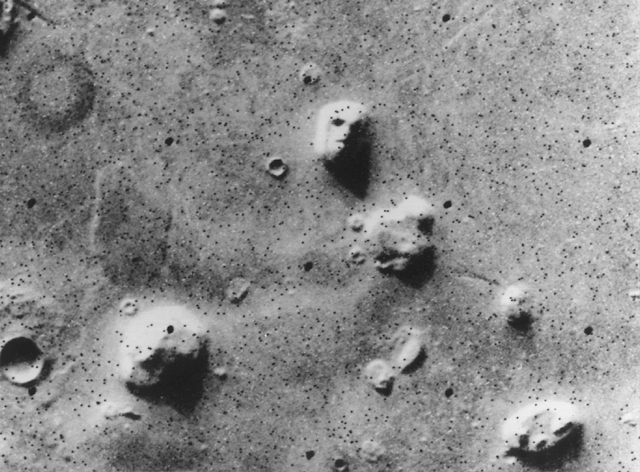
Seeing the famous man in the moon or the canals on Mars are classic examples from astronomy. The ability to experience pareidolia is more developed in some people and less in others. Look at the photos below to learn more and test your own ability to see things that aren’t there.

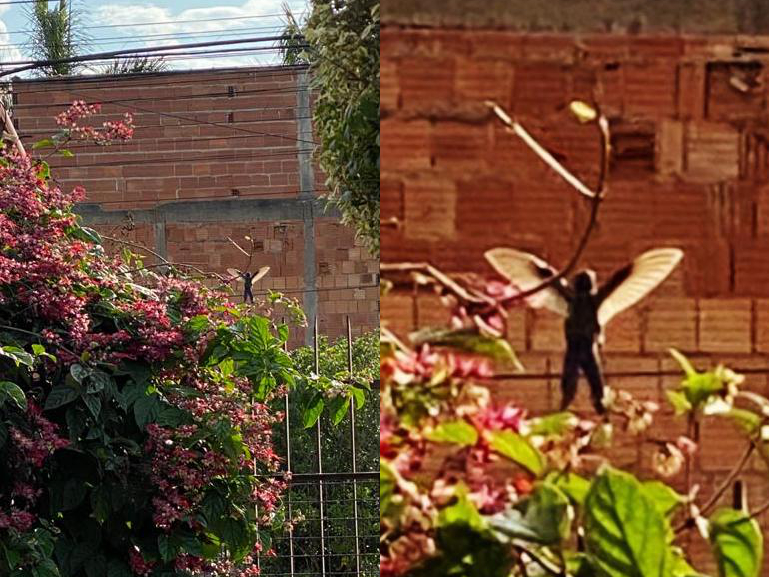
Pareidolia is making sense out of what you think you see
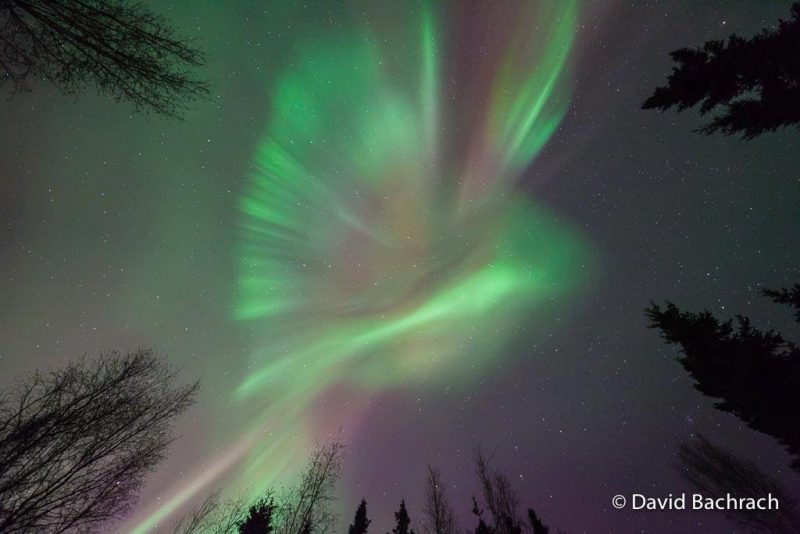
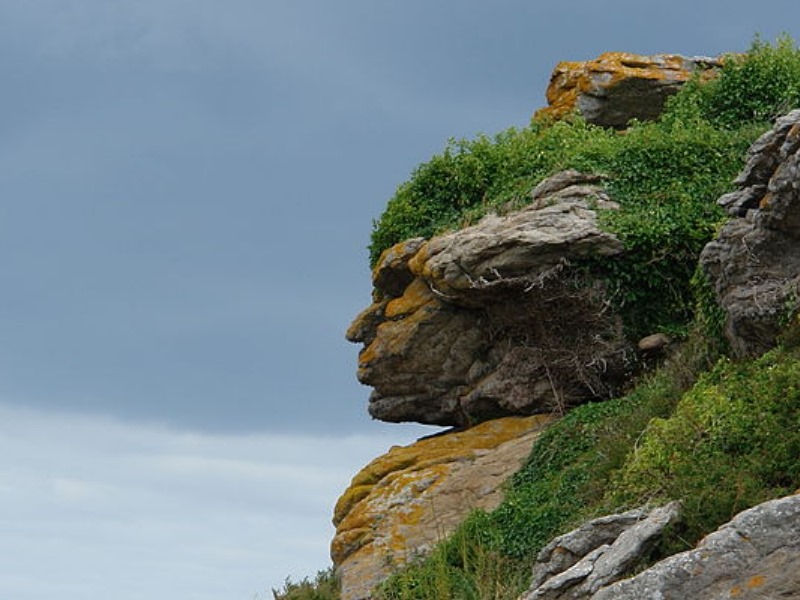
Seeing things varies by individuals
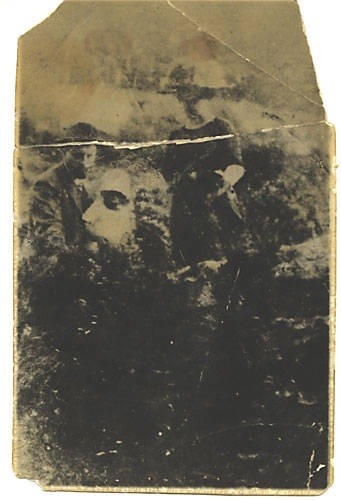
Sometimes the ability to see objects in photos, where no such objects exist, has results that are not simply beautiful or intriguing, but downright bizarre. For example, consider the old photo above from an anonymous Swedish photographer of the 19th century.
In the image above, many viewers will immediately see the image of a bearded man with wavy hair, which could resemble Jesus, near the left center of the image. In fact, however, the face is just a phenomenon of light, shadow and placement. The “face of Jesus” is actually a child with a bonnet, and the hair is vegetation in the background.
You have also probably have seen claims of images of Jesus in a piece of toast, or the Madonna in the misshapen form of a gourd. And although intrinsically meaningless, such images are sometimes striking. More often, though, the similarity to known persons, animals or objects is a bit more subtle.
Did pareidolia lead to creating the constellations?
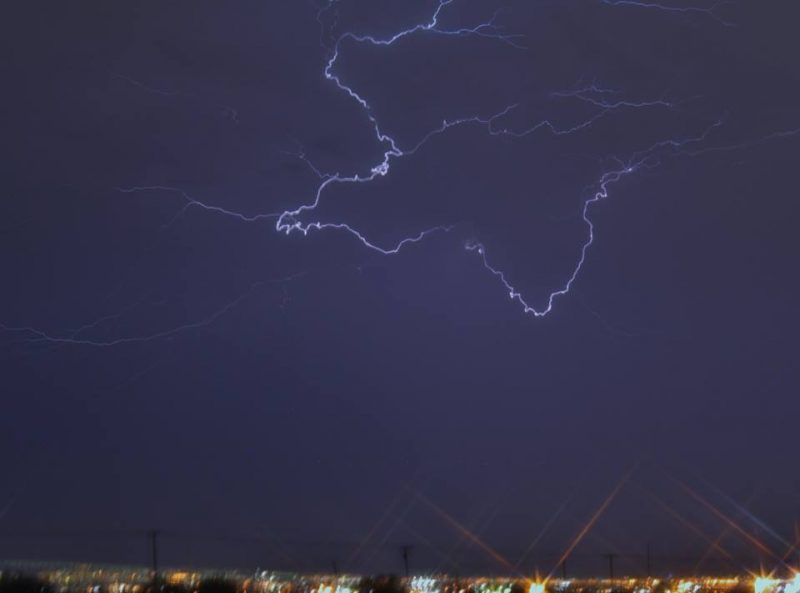
To a certain extent, the definition of pareidolia can explain why the ancients connected the dots and came up with the patterns we know as constellations. Indeed, it does not take a great deal of imagination to see a lion in Leo, a scorpion in Scorpius or a mighty hunter in Orion. To be honest, many other constellations, such as Cancer the Crab or Capricornus the Sea Goat, stretch the pattern recognition idea a bit far, making the naming process more one of contrivance than of pareidolia.
What about the face on Mars?
Staying in the realm of astronomy for a bit, many have seen a face or a rabbit in the moon or any of a variety of other figures on the face of the moon for ages. And nowadays, technology has given us close-ups of other planets that serve as fodder for the pareidolia monster.
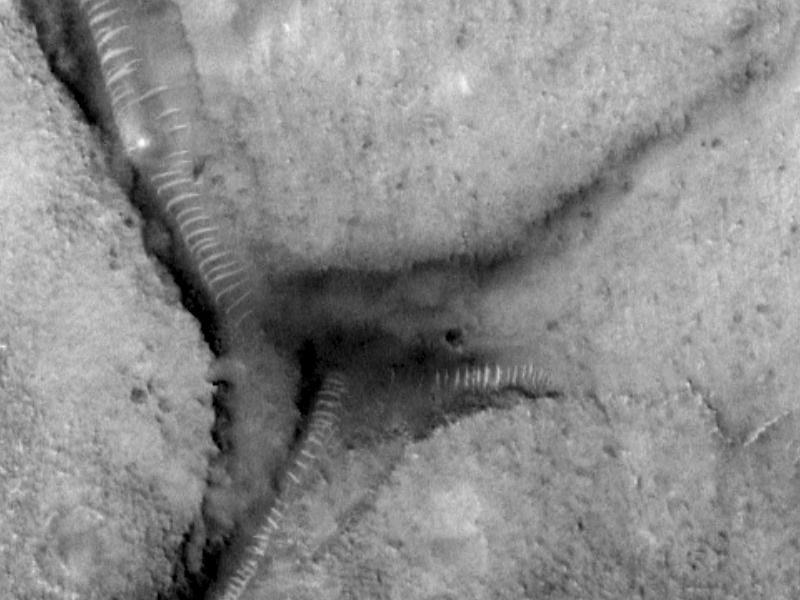
For example, some self-appointed experts have stated that the image above – which is an enlargement of a small section of image M0400291 from the Mars Global Surveyor – shows large glass tunnels on Mars, or even evidence for ice worms on the red planet. But what the image above really shows is a convergence of deep canyons on the planet Mars. At the bottom of these canyons are crescent-shaped sand dunes, which form when the wind is predominantly from one direction. Such dunes are common in desert areas of the Earth and are known as barchans.
Our own interests and experiences play a part in seeing things
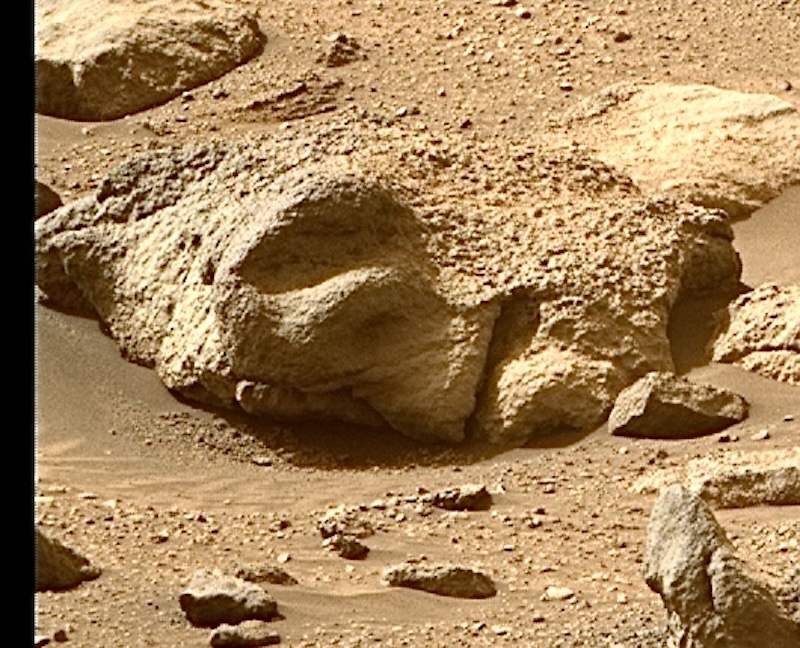
In some ways, the pareidolic images we discover tend to indicate things about which we are most interested, whether they be people, puppies or planes. To be sure, finding such “embedded” images can be fun and interesting, almost a hobby for some. But for some they can also fuel obsessiveness and paranoia. Enjoy finding your own pareidolic images, but keep in mind that what you are seeing is not really there, but in your mind.
Bottom line: Seeing things such as a creepy face in satellite imagery is called pareidolia. Now, a new study says we’re more likely to see angry men in random objects.
The post Pareidolia is seeing things like faces in random objects first appeared on EarthSky.
from EarthSky https://ift.tt/WX6AMmt
Seeing things in everyday objects
Maybe you’ve seen a fluffy bunny in the clouds on a warm summer day, or a face staring back at you from the bark of a tree. Seeing familiar shapes in otherwise random objects is called pareidolia. And now, new research is helping to explain why. On April 7, 2026, researchers at the University of New South Wales in Sydney, Australia, said that the images our brains tend to perceive are strongly biased toward angry male faces.
Lindsay Peterson of UNSW led the new study. Peterson explained that our tendency to see angry male faces might be due to an instinct to protect ourselves. Peterson said:
Your lizard brain is telling you that the safest thing is to assume it’s a threat and then deal with it.
The researchers published their study in the peer-reviewed journal Royal Society Open Science on March 25, 2026.
A look at the research
The new study consisted of two experiments with 70 participants. As participants looked at images, the researchers asked them to identify faces and assign traits such as age, gender and emotion. Some of the objects were real items, such as a purse. And in other cases the images were just abstract visual “noise.” Overall, there was a wide range of things people saw in the noise images. Peterson said:
Buddha, angels, demons, dragons. It’s amazing you can have these quite rich responses to a stimulus that is essentially noise. It is quite remarkable [what we see] given that in the noise stimulus, it is just noise. There really isn’t anything there.
Despite the variety of things people reported seeing, there were detectable patterns as well. Notably, there was a bias toward people seeing male faces with expressions of anger. Peterson said previous research has shown:
The male bias exists across generations and in children as young as four years old, which suggests that it’s hard wired.
From an evolutionary perspective, pareidolia is a useful feature. It’s better to mistakenly see a face – or a potential threat – than to miss one entirely. And this bias toward detection helps explain why we’re especially sensitive to facelike patterns.
The trade-off? We occasionally see meaning in randomness.
Clouds become dragons. Shadows become figures. Hurricanes look like skulls.
Pareidolia in astronomy
Seeing the famous man in the moon or the canals on Mars are classic examples from astronomy. The ability to experience pareidolia is more developed in some people and less in others. Look at the photos below to learn more and test your own ability to see things that aren’t there.
Pareidolia is making sense out of what you think you see
Seeing things varies by individuals
Sometimes the ability to see objects in photos, where no such objects exist, has results that are not simply beautiful or intriguing, but downright bizarre. For example, consider the old photo above from an anonymous Swedish photographer of the 19th century.
In the image above, many viewers will immediately see the image of a bearded man with wavy hair, which could resemble Jesus, near the left center of the image. In fact, however, the face is just a phenomenon of light, shadow and placement. The “face of Jesus” is actually a child with a bonnet, and the hair is vegetation in the background.
You have also probably have seen claims of images of Jesus in a piece of toast, or the Madonna in the misshapen form of a gourd. And although intrinsically meaningless, such images are sometimes striking. More often, though, the similarity to known persons, animals or objects is a bit more subtle.
Did pareidolia lead to creating the constellations?
To a certain extent, the definition of pareidolia can explain why the ancients connected the dots and came up with the patterns we know as constellations. Indeed, it does not take a great deal of imagination to see a lion in Leo, a scorpion in Scorpius or a mighty hunter in Orion. To be honest, many other constellations, such as Cancer the Crab or Capricornus the Sea Goat, stretch the pattern recognition idea a bit far, making the naming process more one of contrivance than of pareidolia.
What about the face on Mars?
Staying in the realm of astronomy for a bit, many have seen a face or a rabbit in the moon or any of a variety of other figures on the face of the moon for ages. And nowadays, technology has given us close-ups of other planets that serve as fodder for the pareidolia monster.
For example, some self-appointed experts have stated that the image above – which is an enlargement of a small section of image M0400291 from the Mars Global Surveyor – shows large glass tunnels on Mars, or even evidence for ice worms on the red planet. But what the image above really shows is a convergence of deep canyons on the planet Mars. At the bottom of these canyons are crescent-shaped sand dunes, which form when the wind is predominantly from one direction. Such dunes are common in desert areas of the Earth and are known as barchans.
Our own interests and experiences play a part in seeing things
In some ways, the pareidolic images we discover tend to indicate things about which we are most interested, whether they be people, puppies or planes. To be sure, finding such “embedded” images can be fun and interesting, almost a hobby for some. But for some they can also fuel obsessiveness and paranoia. Enjoy finding your own pareidolic images, but keep in mind that what you are seeing is not really there, but in your mind.
Bottom line: Seeing things such as a creepy face in satellite imagery is called pareidolia. Now, a new study says we’re more likely to see angry men in random objects.
The post Pareidolia is seeing things like faces in random objects first appeared on EarthSky.
from EarthSky https://ift.tt/WX6AMmt

Aucun commentaire:
Enregistrer un commentaire