This interactive map compares the Mercator projection versus the Equal Earth projection. Use the slide bar to compare the 2 maps. Image via EqualEarthMap.app.
The best map of Earth is a globe. Any flat map will distort some areas. For years, criticism has been leveled at the widely used Mercator projection map for its noticeable distortions. And on September 4, 2026, the U.N. General Assembly voted 164 to 1 – with six abstentions – to encourage the use of equal-area maps – such as the Equal Earth projection – in certain situations over the Mercator projection map.
The ruling does not change any borders or ban the use of the Mercator map. It simply recommends using an equal earth map in situations where seeing areas of Earth in true proportion are useful.
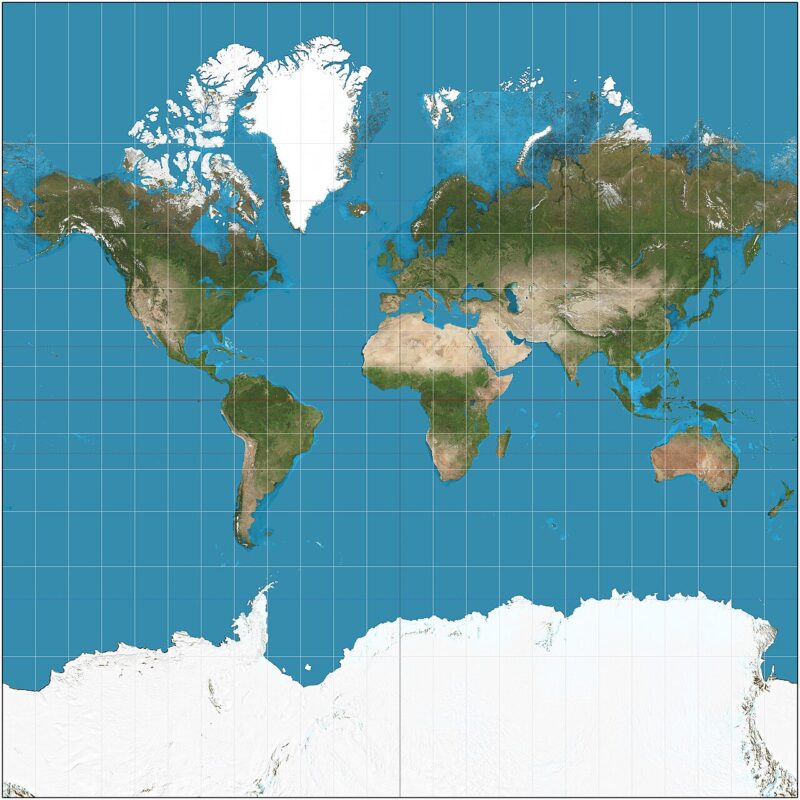
The Mercator map’s biggest drawback is that land closest to the equator looks smaller than it should, while land nearer to the poles looks huge. It’s why people have such a distorted view of the size of Greenland, for instance. And an equal-area Earth map is still a two-dimensional map, so it has its own drawbacks. For example, equal-area maps will distort shapes and angles near the poles.
So what exactly is an equal-area map of Earth?
The best representation of Earth is, of course, a globe. But flat images on pages and screens make globes not always the most practical option. Video by McZerrill/ Pixabay.
What is an Equal Earth projection map?
The Equal Earth map is a specific map invented in 2018. Its goal is to keep the relative size of land masses. Mercator maps are useful because they preserve angles that are important in marine navigation. Equal Earth maps are useful for comparing different regions of the world. As NewWorldMap.org explains:
Equal Earth is a modern equal-area projection designed to keep the relative sizes of countries and continents correct without giving the world an unfamiliar, severely stretched outline.
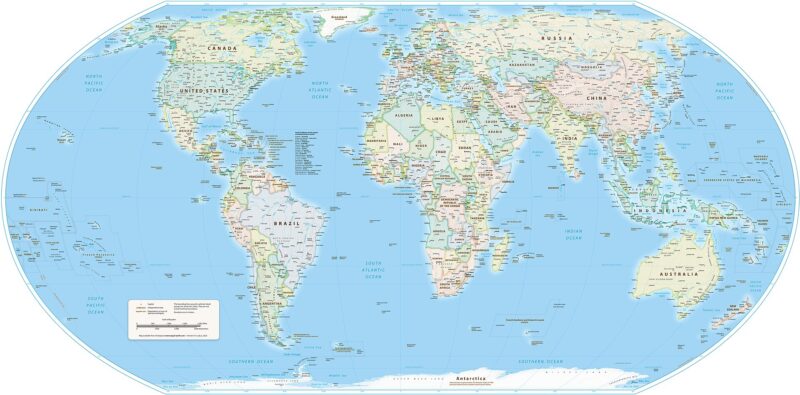
View larger. | This is an Equal Earth map. Note how land near the equator, such as Africa, looks larger than on a Mercator projection map (below). Then compare the sizes of Greenland. Image via Tom Patterson/ Wikimedia Commons.This is a Mercator projection map. Note how areas near the poles seem outsized, while areas near the equator appear small in comparison. Image via Wikimedia Commons.
What will you see differently?
Africa will likely look larger on the Equal Earth map than you are used to seeing on other flat maps. But if you compare the Equal Earth map to the view of Africa on the spinning globe, you will see they are more in harmony. As a specific example, one of the countries on the equator in Africa – Somalia, which curves around the Horn of Africa – is about the size of the U.S. East Coast.
Over in South America, you can see that Brazil also sits on the equator. The Equal Earth map more accurately shows the large size of Brazil. In fact, Brazil is so large that the country’s northernmost point is closer to Canada than it is to Brazil’s southernmost point.
Note the size of Greenland on the Equal Earth map. On Mercator projection maps, Greenland can look as large as Africa.
Africa is much larger than you are used to seeing on a Mercator projection map. Its length is equal to Russia’s width. The U.S. can fit comfortably inside Northern Africa. Image via Statista.
What other differences do you see between the Equal Earth and Mercator projection maps? Share in the comments below.
Bottom line: Everyone is familiar with the Mercator map, a flattened view of Earth. But what is the Equal Earth projection map, and how does it compare?
This interactive map compares the Mercator projection versus the Equal Earth projection. Use the slide bar to compare the 2 maps. Image via EqualEarthMap.app.
The best map of Earth is a globe. Any flat map will distort some areas. For years, criticism has been leveled at the widely used Mercator projection map for its noticeable distortions. And on September 4, 2026, the U.N. General Assembly voted 164 to 1 – with six abstentions – to encourage the use of equal-area maps – such as the Equal Earth projection – in certain situations over the Mercator projection map.
The ruling does not change any borders or ban the use of the Mercator map. It simply recommends using an equal earth map in situations where seeing areas of Earth in true proportion are useful.
The Mercator map’s biggest drawback is that land closest to the equator looks smaller than it should, while land nearer to the poles looks huge. It’s why people have such a distorted view of the size of Greenland, for instance. And an equal-area Earth map is still a two-dimensional map, so it has its own drawbacks. For example, equal-area maps will distort shapes and angles near the poles.
So what exactly is an equal-area map of Earth?
The best representation of Earth is, of course, a globe. But flat images on pages and screens make globes not always the most practical option. Video by McZerrill/ Pixabay.
What is an Equal Earth projection map?
The Equal Earth map is a specific map invented in 2018. Its goal is to keep the relative size of land masses. Mercator maps are useful because they preserve angles that are important in marine navigation. Equal Earth maps are useful for comparing different regions of the world. As NewWorldMap.org explains:
Equal Earth is a modern equal-area projection designed to keep the relative sizes of countries and continents correct without giving the world an unfamiliar, severely stretched outline.
View larger. | This is an Equal Earth map. Note how land near the equator, such as Africa, looks larger than on a Mercator projection map (below). Then compare the sizes of Greenland. Image via Tom Patterson/ Wikimedia Commons.This is a Mercator projection map. Note how areas near the poles seem outsized, while areas near the equator appear small in comparison. Image via Wikimedia Commons.
What will you see differently?
Africa will likely look larger on the Equal Earth map than you are used to seeing on other flat maps. But if you compare the Equal Earth map to the view of Africa on the spinning globe, you will see they are more in harmony. As a specific example, one of the countries on the equator in Africa – Somalia, which curves around the Horn of Africa – is about the size of the U.S. East Coast.
Over in South America, you can see that Brazil also sits on the equator. The Equal Earth map more accurately shows the large size of Brazil. In fact, Brazil is so large that the country’s northernmost point is closer to Canada than it is to Brazil’s southernmost point.
Note the size of Greenland on the Equal Earth map. On Mercator projection maps, Greenland can look as large as Africa.
Africa is much larger than you are used to seeing on a Mercator projection map. Its length is equal to Russia’s width. The U.S. can fit comfortably inside Northern Africa. Image via Statista.
What other differences do you see between the Equal Earth and Mercator projection maps? Share in the comments below.
Bottom line: Everyone is familiar with the Mercator map, a flattened view of Earth. But what is the Equal Earth projection map, and how does it compare?
The house-shaped constellation Cepheus the King lies in the northern sky near the constellation Cassiopeia and the north pole star, Polaris. And one of its stars, Delta Cephei, was a key to determining distances in the universe.
Delta Cephei is a pulsating star
Delta Cephei, in the constellation Cepheus the King, is a variable star that changes in brightness with clock-like precision. In fact, it doubles in brightness and fades back to minimum brightness every 5.366 days. So with careful observation under a dark sky, you can see this star change in brightness over several days. Delta Cephei, and other stars like it, are important players in establishing the distance scale of our galaxy … and our universe.
Delta Cephei itself looms large in the history of astronomy. An entire class of supergiant stars called Cepheid variables is named in this star’s honor.
#TBT to 1912 when Henrietta Swan Leavitt published ground-breaking observations of Cepheid variable stars. They were key to the discovery by Edwin Hubble that the Andromeda “nebula” is a galaxy like our own Milky Way. Learn more: https://t.co/5oDsiPWtiJpic.twitter.com/KXeP6XHgin
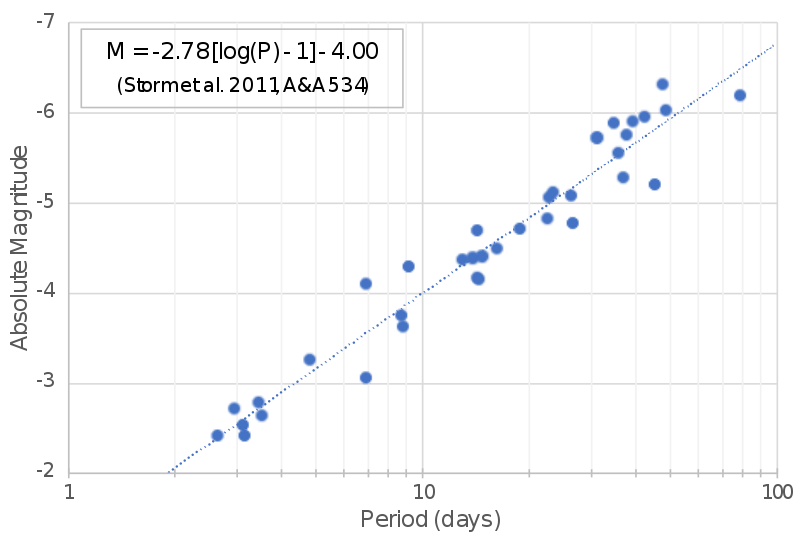
Cepheid variable stars, also called Cepheids, dependably change their brightnesses over regular intervals ranging from a few days to a few weeks. In 1912, astronomer Henrietta Leavitt discovered that the star’s periodic change in brightness in our sky was directly related to its intrinsic brightness (or actual luminosity). And she found that the longer the brightness pulsation cycle, the greater the intrinsic brightness of the star in reality. Sometimes this Cepheid period-luminosity relationship is called the Leavitt law.
Why are these stars varying in brightness? It’s thought they vary because they expand (get brighter) and then contract (get fainter) in a regular way.
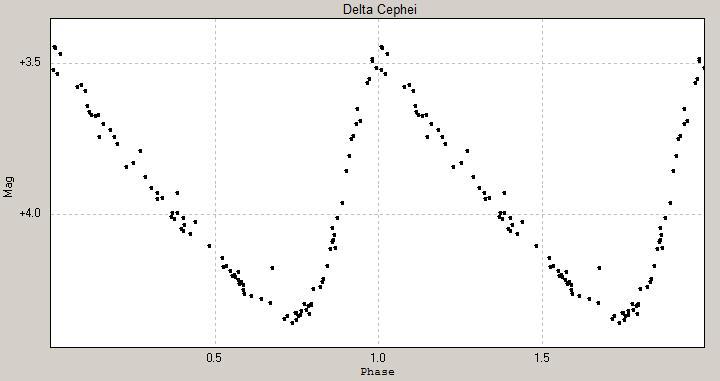
A light curve plot of the changes in brightness in Delta Cephei. The Y axis (upward) is brightness in units of magnitude, and the X axis (across) is time. At the bottom, the two lowest points are when the star is at its minimum brightness. The time it takes from one minimum to the other is 5.366 days. Image via ThomasK Vbg/ Wikimedia Commons.
Cepheids help measure cosmic distances
The regularity of Cepheids’ brightening and dimming is a powerful tool in astronomy. It lets astronomers probe distances across vast space.
The surest way to measure star distances is with stellar parallax. But, for the parallax method to work with Earth-based telescopes, the stars have to be relatively nearby (within about 300 light-years) of Earth. Luckily, in recent years, astronomers have been able to make direct parallax measurements of more distant stars – up to tens of thousands light-years away – thanks to space-based telescopes such as Gaia.
Still, the problem remains. How can we find the distance to stars that are too far away to give us a reliable distance measurement using parallax? Suppose you measured the distance to a nearby Cepheid star using the parallax method. Then suppose you watched its pulsations, which you know are correlated with the star’s intrinsic – real – brightness. Then you know both its distance and how bright the star looks at that distance.
Armed with this information, you can then look farther out in the universe toward more distant Cepheids, those too far for parallax measurements. You can measure the apparent brightness and pulsation rate of such a star. And with a few simple calculations, you can then find the distance to it.
Therefore, astronomers use Cepheid variable stars to measure distances across space. For this reason, they’re known as standard candles by astronomers.
Edwin Hubble used Cepheids to expand our known universe
In 1924, the astronomer Edwin Hubble used Cepheids to determine that the then-called Andromeda nebula is not a nebula after all, but a giant galaxy lying beyond our Milky Way. Indeed, it released us from the confines of a single galaxy and introduced us to the vast universe we know today. This work in understanding the size of the universe is sometimes called the cosmic distance ladder.
And the work continues today, not just with Cepheids but also with other astronomical objects and phenomena.
An example of the period-luminosity relationship of Cepheids in the Large Magellanic Cloud, a satellite galaxy of our Milky Way. The plot shows the intrinsic brightness of stars vs. their pulsation periods. Each star, represented by a dot in the plot, is roughly the same distance from us. Henrietta Leavitt discovered, as illustrated in this plot, that the longer the brightness pulsation cycle, the greater the intrinsic brightness of the star. Image via Dbenford/ Wikimedia Commons.
Cepheids in other galaxies
Distance determinations using Cepheids in other galaxies, as well as other techniques, are an active area of research in astronomy. And astronomers are constantly improving distance accuracies to further constrain the value of the Hubble constant that indicates the expansion rate of the universe.
Cepheids have been observed as far away as 100 million light-years in the galaxy NGC 4603, by the Hubble Space Telescope. However, measuring them at distances of 30 million light-years and farther is difficult because it’s hard to isolate Cepheids from their neighboring stars. At such distances, astronomers transition to other methods to determine distances, such as observing type 1a supernovae.
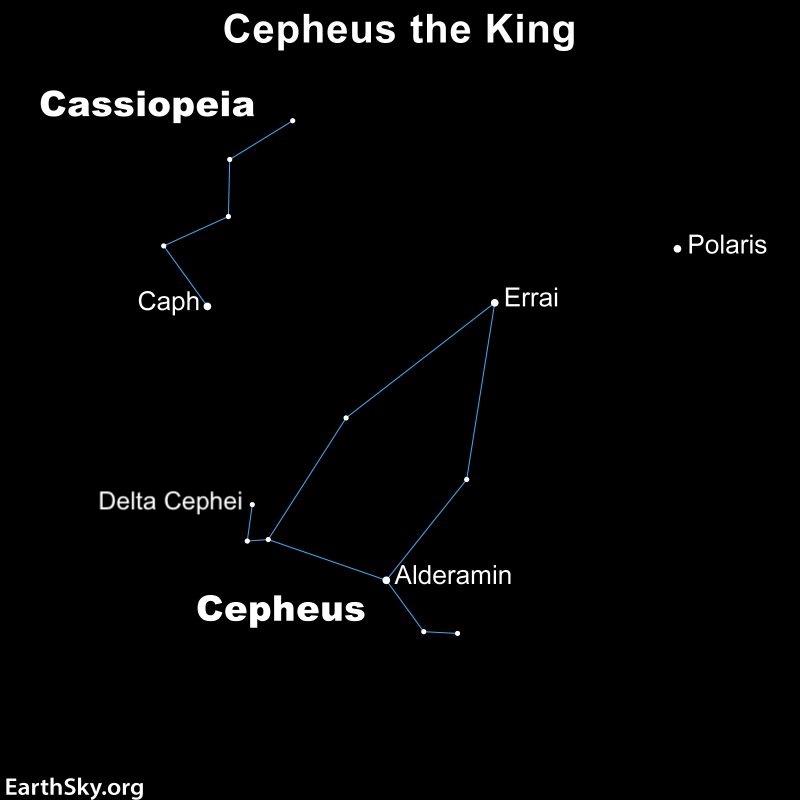
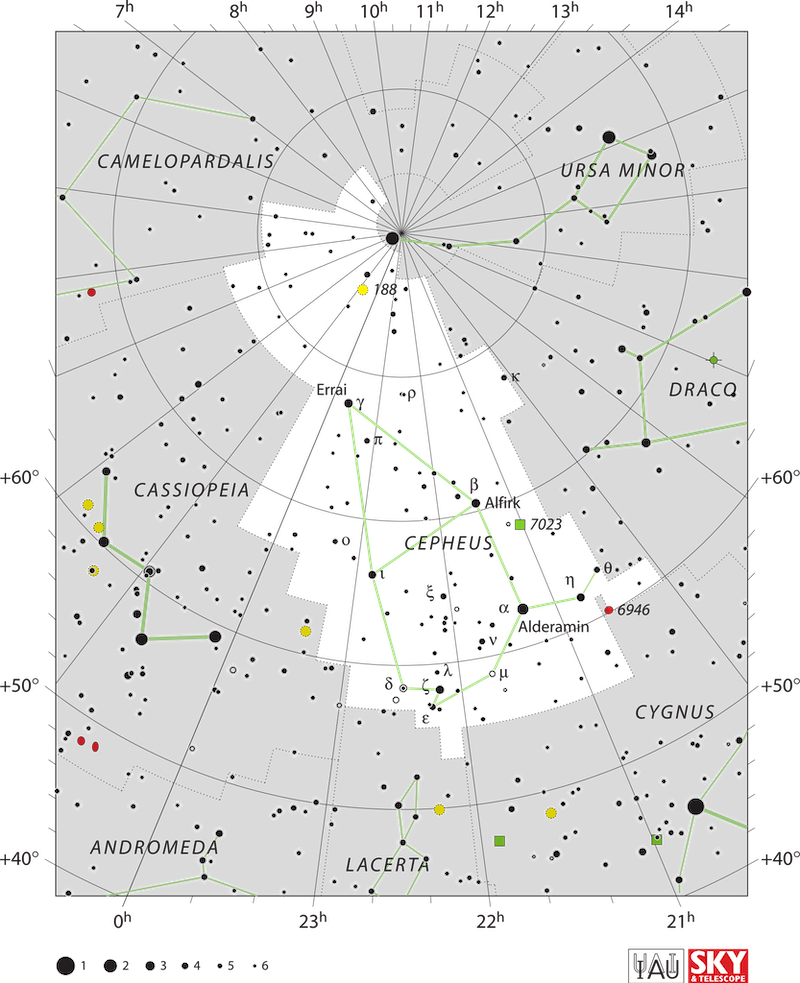
View larger. | A star map of Cepheus, showing Delta Cephei, as well as Epsilon and Zeta Cephei, at the bottom left corner of the constellation. Image via IAU/ Sky & Telescope/ Wikimedia Commons.
How to spot Delta Cephei in the night sky
The original Cepheid, Delta Cephei, is circumpolar – always above the horizon – in the northern half of the United States (north of about 40 degrees north latitude).
Even so, Delta Cephei is much easier to see when it’s high in the northern sky on autumn and winter evenings. So if you’re far enough north, you can find the constellation Cepheus using the Big Dipper. First, locate the Big Dipper “pointer stars” to draw an imaginary line to Polaris, the North Star. Then jump beyond Polaris by a fist-width to land on Cepheus.
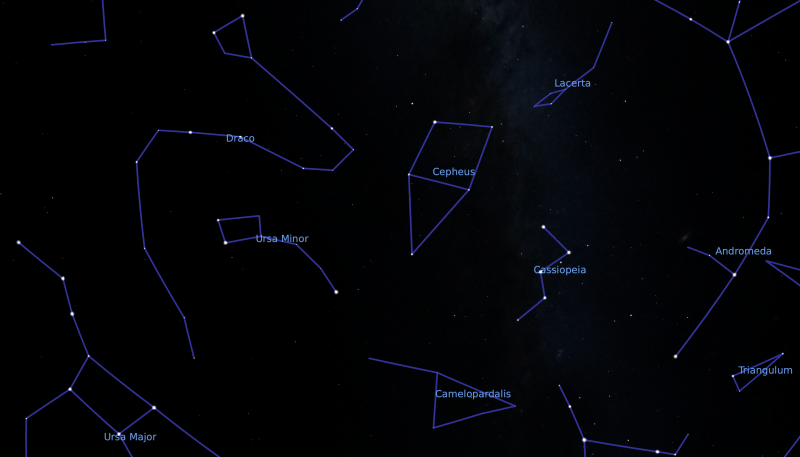
You’ll see the constellation Cepheus the King close to his wife, Cassiopeia the Queen, her signature W or M-shaped figure of stars making her the flashier of the two constellations. They’re high in your northern sky on November and December evenings.
For viewers in the Southern Hemisphere, Cepheus can be viewed as far south as -10 degrees southern latitude. Parts of Cepheus – including Delta Cephei – can be viewed low on the northern horizon from around -31 degrees southern latitude.
Charts for Delta Cephei
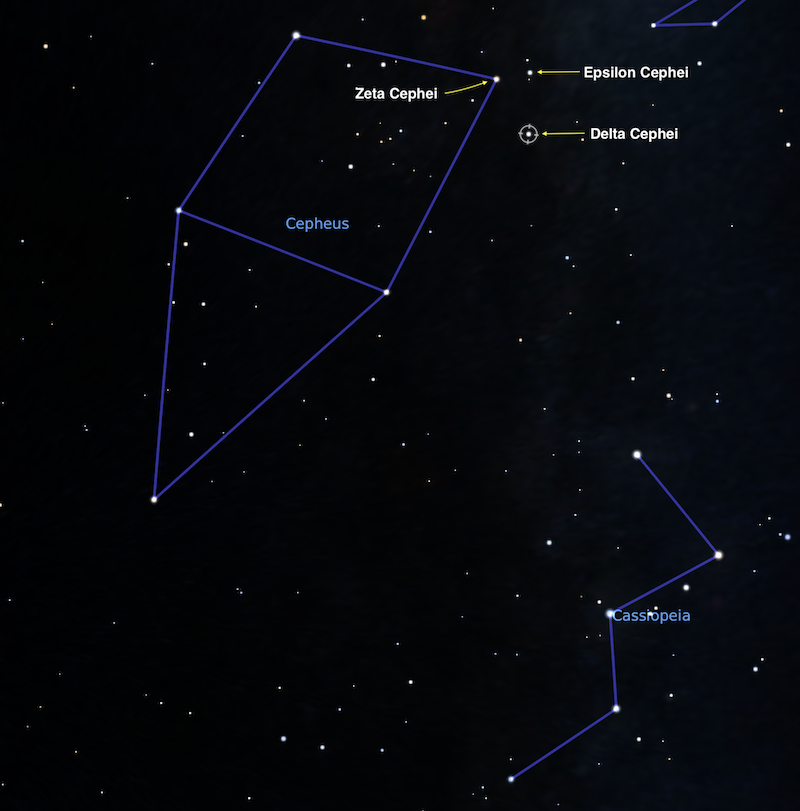
View larger. | If you’re not able to see the Big Dipper, try using the distinctive W-shaped Cassiopeia to locate the house-shaped Cepheus. The open side of the “W” faces the “roof” of Cepheus. Once you locate the “roof,” look for a rectangle pattern of 4 stars connected to it. Image via Stellarium.View larger. | A larger view of Cepheus, showing the Cepheid variable Delta Cepheid (circled) near two other stars, Zeta and Epsilon Cephei. Delta Cephei displays about a two-fold change in brightness (0.23 visual magnitudes) every 5.366 days, ranging from a visual magnitude of 3.48 at its brightest to 4.37 at its faintest. Zeta and Epsilon Cephei are useful comparison stars for noting the changes in brightness of Delta Cephei from one night to the next. Zeta Cephei has a visual magnitude of 3.35, which is close to the maximum brightness of Delta Cephei. Epsilon Cephei has a visual magnitude of 4.15, which is close to the minimum brightness of Delta Cephei. Image via Stellarium.
How to watch Delta Cephei vary in brightness
How to watch Delta Cephei vary in brightness? The real answer to that question is time and patience. But two stars lodging near Delta Cephei on the sky’s dome – Epsilon Cephei and Zeta Cephei – can help. They match the low and high ends of Delta Cephei’s brightness scale, respectively. So, those two stars should help you watch Delta Cephei change.
Using the charts above, locate the stars Epsilon and Zeta Cephei. At its faintest, Delta Cephei is as dim as the fainter star, Epsilon Cephei. At its brightest, Delta Cephei matches the brightness of the brighter star, Zeta Cephei.
Have fun!
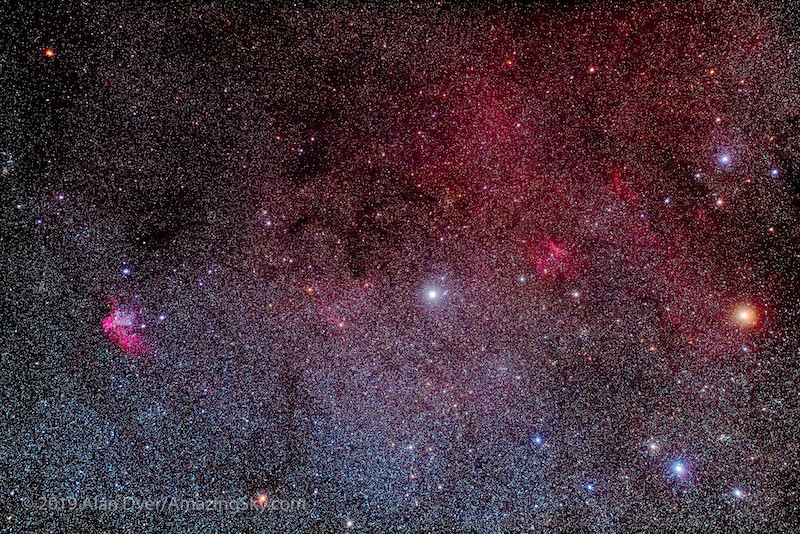
View larger. | Astrophotographer Alan Dyer captured this image of Delta Cephei (center), with the Wizard Nebula on its left, and the nebula Sharpless 2-135 on its right. The orangish star on the far right is Zeta Cephei. Image via Alan Dyer/ AmazingSky.com/ Flickr. Used with permission.
Bottom line: Delta Cephei is an inconspicuous variable star in the northern constellation Cepheus the King. This important star helped establish the cosmic distance scale.
The house-shaped constellation Cepheus the King lies in the northern sky near the constellation Cassiopeia and the north pole star, Polaris. And one of its stars, Delta Cephei, was a key to determining distances in the universe.
Delta Cephei is a pulsating star
Delta Cephei, in the constellation Cepheus the King, is a variable star that changes in brightness with clock-like precision. In fact, it doubles in brightness and fades back to minimum brightness every 5.366 days. So with careful observation under a dark sky, you can see this star change in brightness over several days. Delta Cephei, and other stars like it, are important players in establishing the distance scale of our galaxy … and our universe.
Delta Cephei itself looms large in the history of astronomy. An entire class of supergiant stars called Cepheid variables is named in this star’s honor.
#TBT to 1912 when Henrietta Swan Leavitt published ground-breaking observations of Cepheid variable stars. They were key to the discovery by Edwin Hubble that the Andromeda “nebula” is a galaxy like our own Milky Way. Learn more: https://t.co/5oDsiPWtiJpic.twitter.com/KXeP6XHgin
Cepheid variable stars, also called Cepheids, dependably change their brightnesses over regular intervals ranging from a few days to a few weeks. In 1912, astronomer Henrietta Leavitt discovered that the star’s periodic change in brightness in our sky was directly related to its intrinsic brightness (or actual luminosity). And she found that the longer the brightness pulsation cycle, the greater the intrinsic brightness of the star in reality. Sometimes this Cepheid period-luminosity relationship is called the Leavitt law.
Why are these stars varying in brightness? It’s thought they vary because they expand (get brighter) and then contract (get fainter) in a regular way.
A light curve plot of the changes in brightness in Delta Cephei. The Y axis (upward) is brightness in units of magnitude, and the X axis (across) is time. At the bottom, the two lowest points are when the star is at its minimum brightness. The time it takes from one minimum to the other is 5.366 days. Image via ThomasK Vbg/ Wikimedia Commons.
Cepheids help measure cosmic distances
The regularity of Cepheids’ brightening and dimming is a powerful tool in astronomy. It lets astronomers probe distances across vast space.
The surest way to measure star distances is with stellar parallax. But, for the parallax method to work with Earth-based telescopes, the stars have to be relatively nearby (within about 300 light-years) of Earth. Luckily, in recent years, astronomers have been able to make direct parallax measurements of more distant stars – up to tens of thousands light-years away – thanks to space-based telescopes such as Gaia.
Still, the problem remains. How can we find the distance to stars that are too far away to give us a reliable distance measurement using parallax? Suppose you measured the distance to a nearby Cepheid star using the parallax method. Then suppose you watched its pulsations, which you know are correlated with the star’s intrinsic – real – brightness. Then you know both its distance and how bright the star looks at that distance.
Armed with this information, you can then look farther out in the universe toward more distant Cepheids, those too far for parallax measurements. You can measure the apparent brightness and pulsation rate of such a star. And with a few simple calculations, you can then find the distance to it.
Therefore, astronomers use Cepheid variable stars to measure distances across space. For this reason, they’re known as standard candles by astronomers.
Edwin Hubble used Cepheids to expand our known universe
In 1924, the astronomer Edwin Hubble used Cepheids to determine that the then-called Andromeda nebula is not a nebula after all, but a giant galaxy lying beyond our Milky Way. Indeed, it released us from the confines of a single galaxy and introduced us to the vast universe we know today. This work in understanding the size of the universe is sometimes called the cosmic distance ladder.
And the work continues today, not just with Cepheids but also with other astronomical objects and phenomena.
An example of the period-luminosity relationship of Cepheids in the Large Magellanic Cloud, a satellite galaxy of our Milky Way. The plot shows the intrinsic brightness of stars vs. their pulsation periods. Each star, represented by a dot in the plot, is roughly the same distance from us. Henrietta Leavitt discovered, as illustrated in this plot, that the longer the brightness pulsation cycle, the greater the intrinsic brightness of the star. Image via Dbenford/ Wikimedia Commons.
Cepheids in other galaxies
Distance determinations using Cepheids in other galaxies, as well as other techniques, are an active area of research in astronomy. And astronomers are constantly improving distance accuracies to further constrain the value of the Hubble constant that indicates the expansion rate of the universe.
Cepheids have been observed as far away as 100 million light-years in the galaxy NGC 4603, by the Hubble Space Telescope. However, measuring them at distances of 30 million light-years and farther is difficult because it’s hard to isolate Cepheids from their neighboring stars. At such distances, astronomers transition to other methods to determine distances, such as observing type 1a supernovae.
View larger. | A star map of Cepheus, showing Delta Cephei, as well as Epsilon and Zeta Cephei, at the bottom left corner of the constellation. Image via IAU/ Sky & Telescope/ Wikimedia Commons.
How to spot Delta Cephei in the night sky
The original Cepheid, Delta Cephei, is circumpolar – always above the horizon – in the northern half of the United States (north of about 40 degrees north latitude).
Even so, Delta Cephei is much easier to see when it’s high in the northern sky on autumn and winter evenings. So if you’re far enough north, you can find the constellation Cepheus using the Big Dipper. First, locate the Big Dipper “pointer stars” to draw an imaginary line to Polaris, the North Star. Then jump beyond Polaris by a fist-width to land on Cepheus.
You’ll see the constellation Cepheus the King close to his wife, Cassiopeia the Queen, her signature W or M-shaped figure of stars making her the flashier of the two constellations. They’re high in your northern sky on November and December evenings.
For viewers in the Southern Hemisphere, Cepheus can be viewed as far south as -10 degrees southern latitude. Parts of Cepheus – including Delta Cephei – can be viewed low on the northern horizon from around -31 degrees southern latitude.
Charts for Delta Cephei
View larger. | If you’re not able to see the Big Dipper, try using the distinctive W-shaped Cassiopeia to locate the house-shaped Cepheus. The open side of the “W” faces the “roof” of Cepheus. Once you locate the “roof,” look for a rectangle pattern of 4 stars connected to it. Image via Stellarium.View larger. | A larger view of Cepheus, showing the Cepheid variable Delta Cepheid (circled) near two other stars, Zeta and Epsilon Cephei. Delta Cephei displays about a two-fold change in brightness (0.23 visual magnitudes) every 5.366 days, ranging from a visual magnitude of 3.48 at its brightest to 4.37 at its faintest. Zeta and Epsilon Cephei are useful comparison stars for noting the changes in brightness of Delta Cephei from one night to the next. Zeta Cephei has a visual magnitude of 3.35, which is close to the maximum brightness of Delta Cephei. Epsilon Cephei has a visual magnitude of 4.15, which is close to the minimum brightness of Delta Cephei. Image via Stellarium.
How to watch Delta Cephei vary in brightness
How to watch Delta Cephei vary in brightness? The real answer to that question is time and patience. But two stars lodging near Delta Cephei on the sky’s dome – Epsilon Cephei and Zeta Cephei – can help. They match the low and high ends of Delta Cephei’s brightness scale, respectively. So, those two stars should help you watch Delta Cephei change.
Using the charts above, locate the stars Epsilon and Zeta Cephei. At its faintest, Delta Cephei is as dim as the fainter star, Epsilon Cephei. At its brightest, Delta Cephei matches the brightness of the brighter star, Zeta Cephei.
Have fun!
View larger. | Astrophotographer Alan Dyer captured this image of Delta Cephei (center), with the Wizard Nebula on its left, and the nebula Sharpless 2-135 on its right. The orangish star on the far right is Zeta Cephei. Image via Alan Dyer/ AmazingSky.com/ Flickr. Used with permission.
Bottom line: Delta Cephei is an inconspicuous variable star in the northern constellation Cepheus the King. This important star helped establish the cosmic distance scale.
As summer turns to fall in North America, millions of hummingbirds migrate south to warmer climes. More than a dozen species of tiny hummers are on the move through the end of October. Flying from as far north as Canada, they can end up as far south as Central America. The colorful daredevil fliers need a lot of sweet nectar – natural or artificial – to fuel the journey. Ornithologist Sheri Williamson joins EarthSky’s Dave Adalian to talk about best practices for interacting with these fascinating seasonal visitors. Watch here or at YouTube. And read more about fall hummingbird migration below.
Hummingbirds are on the move. As summer winds down across North America, many hummingbirds begin their southward migration. The mass movement is typically in swing by late August – though the males may make an earlier start – and it continues into late October and beyond.
During those usually temperate months, the skies over every U.S. state and Canadian province become a nectar-fueled highway for tiny bejeweled avians. And they’ll be making a lot of stops at colorful flowering plants and bird feeders along the way.
A long and tiring journey for these miniscule flyers
For some of these small wanderers, the journey will take them hundreds or even thousands of miles from the wilds of Canada, south across the United States and finally into Mexico and Central America. A few of the most daring hummers will take a perilous nonstop flight across the Gulf of Mexico to reach their winter homes.
The small birds turn up almost everywhere in North America. While some locations have hummers all year, for most North American locations the stay is only seasonal.
According to research published in 2016, an individual ruby-throated hummingbird was recorded traveling 3,082 miles (4,960 km) during its fall migration. Ruby-throated hummers on average migrate around 1,400 miles (2,250 km) each way during their flight to better weather.
They perform most of that journey in short hops with lingering stopovers to eat. But when the birds reach the Gulf of Mexico, they must make the approximately 600-mile (1,000-km) water crossing in a single flight. Only a few of the ruby-throated hummers are brave or strong enough to try the route in autumn. The rest typically follow the Texas-Mexico coastline south around the Gulf.
3 avenues open for fall hummingbird migration
Besides the ruby-throated hummer, there are several other common hummingbird species. Most, but not all, of those species migrate with the seasons. In general, North America can be divided into three distinct migratory pathways.
Eastern States: Ruby-throated hummingbirds are found only east of the Rocky Mountains. They’re seen throughout that region, and for most of the eastern half of North America, the ruby-throated hummer is the only species commonly seen.
Middle States: However, the center of the continent, an area from about Central Texas west to the Rockies, is home to several species: the black-chinned, the rufous, the broad-tail, the Calliope and Allen’s hummingbirds. The Calliope’s range is somewhat northerly.
Western States: The area west of the Rocky Mountains is also home to a variety of hummingbirds. Anna’s hummingbirds are year-long residents that don’t migrate. Sharing their range are the Allen’s, the black-chinned, the Costa’s, the blue-throated, the rufous and the broad-tailed hummingbirds.
Watch a live cam of hummingbirds visiting feeders. Right now, the fall hummingbird migration is in progress across North America. Read on for info on how you can help these weary travelers.
Humans can lend traveling hummers a helping hand
According to JourneyNorth.com, hummingbirds double their weight as they prepare for their long-distance journeys southward. To do that, they need abundant food sources. They also need habitat. Humans can provide both, says migration expert Julian Avery of Penn State:
Studies show that providing food has myriad effects on birds’ decisions, behaviors and reproduction. One significant finding is that winter bird feeding increases individual survival rates, can encourage birds to lay eggs earlier in the year, and can also improve nestling survival.
The most popular way of attracting hummers is using hummingbird feeders. HummingbirdCentral.com offers tips for placing them and a sugar-water recipe that mimics the calorie content of nectar. They also offer advice for avoiding pathogens and for keeping away unwanted visitors, like bees.
Costa’s hummingbirds are frequent visitors at feeders in Arizona and southern California. Image via Julian Avery/ The Conversation.
Native plant gardens boost success during fall hummingbird migration
The more ecologically minded might want to fill their yards and gardens with hummingbird-friendly plants. The right landscaping can make a yard attractive to hummers, but it depends on what region. The Missouri Prairie Association offers tips for the middle region of the country at GrowNative.org.
The California Native Plant Society has hummer-friendly garden advice for those west of the Rockies. Those living in the eastern half of the country will find appropriate hummingbird plants for the garden at Penn State’s Center for Pollinator Research.
In general, the tiny travelers are attracted to plants with red, orange and yellow flowers. Nectar is a prime source of calories for hummers. But they are also omnivores who consume any insect they can catch. Any plant that provides home for bugs will also provide shelter and food for hummingbirds.
There are some issues to consider when feeding wild birds. In an article from The Conversation, Avery discusses them in depth:
There is still much to learn about the risks and benefits of feeding birds, particularly through large integrated national citizen science networks like Project FeederWatch. But we now have enough information to promote healthy interactions that can inspire future generations to care about conservation.
In addition to using Project FeederWatch, seasonal birdwatchers can report their sightings to JourneyNorth.org. And, for the spring migration, you can also track via HummingbirdCentral.com.
Bottom line: The fall hummingbird migration in North America typically lasts from August through October. You can spot the tiny birds in every U.S. state and Canadian province as they travel south.
As summer turns to fall in North America, millions of hummingbirds migrate south to warmer climes. More than a dozen species of tiny hummers are on the move through the end of October. Flying from as far north as Canada, they can end up as far south as Central America. The colorful daredevil fliers need a lot of sweet nectar – natural or artificial – to fuel the journey. Ornithologist Sheri Williamson joins EarthSky’s Dave Adalian to talk about best practices for interacting with these fascinating seasonal visitors. Watch here or at YouTube. And read more about fall hummingbird migration below.
Hummingbirds are on the move. As summer winds down across North America, many hummingbirds begin their southward migration. The mass movement is typically in swing by late August – though the males may make an earlier start – and it continues into late October and beyond.
During those usually temperate months, the skies over every U.S. state and Canadian province become a nectar-fueled highway for tiny bejeweled avians. And they’ll be making a lot of stops at colorful flowering plants and bird feeders along the way.
A long and tiring journey for these miniscule flyers
For some of these small wanderers, the journey will take them hundreds or even thousands of miles from the wilds of Canada, south across the United States and finally into Mexico and Central America. A few of the most daring hummers will take a perilous nonstop flight across the Gulf of Mexico to reach their winter homes.
The small birds turn up almost everywhere in North America. While some locations have hummers all year, for most North American locations the stay is only seasonal.
According to research published in 2016, an individual ruby-throated hummingbird was recorded traveling 3,082 miles (4,960 km) during its fall migration. Ruby-throated hummers on average migrate around 1,400 miles (2,250 km) each way during their flight to better weather.
They perform most of that journey in short hops with lingering stopovers to eat. But when the birds reach the Gulf of Mexico, they must make the approximately 600-mile (1,000-km) water crossing in a single flight. Only a few of the ruby-throated hummers are brave or strong enough to try the route in autumn. The rest typically follow the Texas-Mexico coastline south around the Gulf.
3 avenues open for fall hummingbird migration
Besides the ruby-throated hummer, there are several other common hummingbird species. Most, but not all, of those species migrate with the seasons. In general, North America can be divided into three distinct migratory pathways.
Eastern States: Ruby-throated hummingbirds are found only east of the Rocky Mountains. They’re seen throughout that region, and for most of the eastern half of North America, the ruby-throated hummer is the only species commonly seen.
Middle States: However, the center of the continent, an area from about Central Texas west to the Rockies, is home to several species: the black-chinned, the rufous, the broad-tail, the Calliope and Allen’s hummingbirds. The Calliope’s range is somewhat northerly.
Western States: The area west of the Rocky Mountains is also home to a variety of hummingbirds. Anna’s hummingbirds are year-long residents that don’t migrate. Sharing their range are the Allen’s, the black-chinned, the Costa’s, the blue-throated, the rufous and the broad-tailed hummingbirds.
Watch a live cam of hummingbirds visiting feeders. Right now, the fall hummingbird migration is in progress across North America. Read on for info on how you can help these weary travelers.
Humans can lend traveling hummers a helping hand
According to JourneyNorth.com, hummingbirds double their weight as they prepare for their long-distance journeys southward. To do that, they need abundant food sources. They also need habitat. Humans can provide both, says migration expert Julian Avery of Penn State:
Studies show that providing food has myriad effects on birds’ decisions, behaviors and reproduction. One significant finding is that winter bird feeding increases individual survival rates, can encourage birds to lay eggs earlier in the year, and can also improve nestling survival.
The most popular way of attracting hummers is using hummingbird feeders. HummingbirdCentral.com offers tips for placing them and a sugar-water recipe that mimics the calorie content of nectar. They also offer advice for avoiding pathogens and for keeping away unwanted visitors, like bees.
Costa’s hummingbirds are frequent visitors at feeders in Arizona and southern California. Image via Julian Avery/ The Conversation.
Native plant gardens boost success during fall hummingbird migration
The more ecologically minded might want to fill their yards and gardens with hummingbird-friendly plants. The right landscaping can make a yard attractive to hummers, but it depends on what region. The Missouri Prairie Association offers tips for the middle region of the country at GrowNative.org.
The California Native Plant Society has hummer-friendly garden advice for those west of the Rockies. Those living in the eastern half of the country will find appropriate hummingbird plants for the garden at Penn State’s Center for Pollinator Research.
In general, the tiny travelers are attracted to plants with red, orange and yellow flowers. Nectar is a prime source of calories for hummers. But they are also omnivores who consume any insect they can catch. Any plant that provides home for bugs will also provide shelter and food for hummingbirds.
There are some issues to consider when feeding wild birds. In an article from The Conversation, Avery discusses them in depth:
There is still much to learn about the risks and benefits of feeding birds, particularly through large integrated national citizen science networks like Project FeederWatch. But we now have enough information to promote healthy interactions that can inspire future generations to care about conservation.
In addition to using Project FeederWatch, seasonal birdwatchers can report their sightings to JourneyNorth.org. And, for the spring migration, you can also track via HummingbirdCentral.com.
Bottom line: The fall hummingbird migration in North America typically lasts from August through October. You can spot the tiny birds in every U.S. state and Canadian province as they travel south.
Sirius is the sky’s brightest star. You can always be sure you’re looking at the correct bright star by drawing a line from Orion’s Belt to Sirius. And from the Southern Hemisphere, turn the chart upside down.
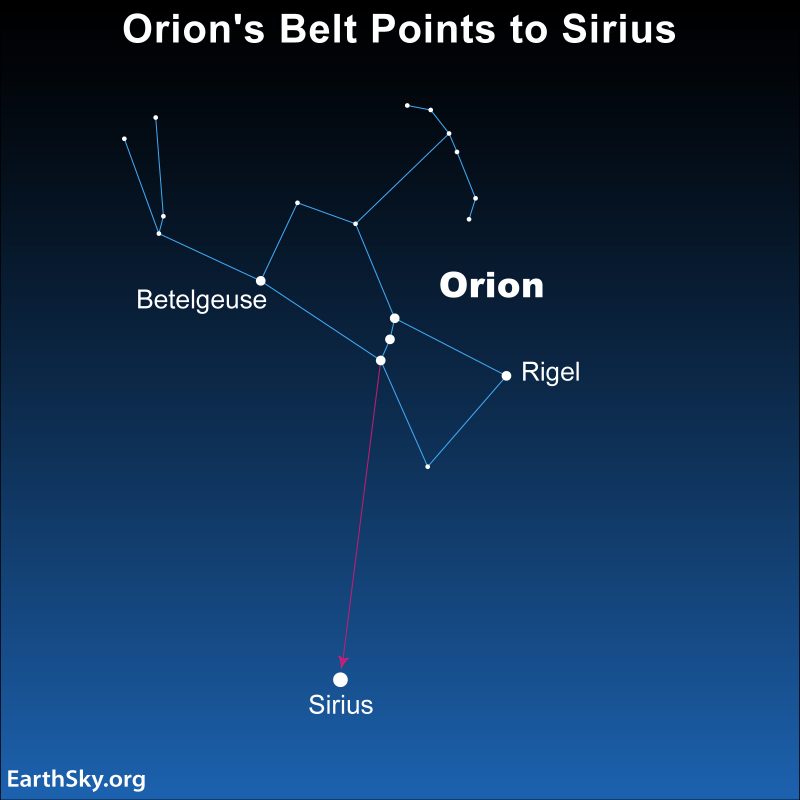
Orion’s Belt points to Sirius
It’s one of the neatest tricks in all the heavens: Orion’s Belt points to Sirius, the sky’s brightest star.
On September mornings, you’ll find both Orion the Hunter and the very bright star Sirius in the eastern part of the sky before dawn. And before you know it, they’ll be shifting into the evening sky. So identify them now, and enjoy them for months to come.
Sometimes there are bright planets in the same region that might outshine even Sirius. For example, in September 2026, Jupiter is also in the morning sky and definitely outshines our brightest star. What’s more, bright planets often adorn the evening sky during the northern winter, when Orion and Sirius shine brightly. In these cases, how can you be sure the object you’re looking at is Sirius? The constellation Orion is your ticket. And no matter where you are, no matter what time of the year it is, Orion’s Belt always points to Sirius.
Flying into Orion’s Belt at 0.001c ?The hunter isn’t flat. It’s a real 3D region of space. (Upgraded animation!) #astronomy ?
Orion returned to the sky before dawn in late July and early August. Now in September, you can easily find this large constellation before sunup. Just look in the eastern part of the sky. You’ll easily notice Orion’s Belt, which consists of a short, straight row of three medium-bright stars.
And to find Sirius, draw a line through Orion’s Belt and extend that line toward the horizon. There, you’ll spot Sirius, the sky’s brightest star.
Sirius is in the constellation Canis Major the Greater Dog. Indeed, it’s often called the Dog Star.
View at EarthSky Community Photos. | Sergei Timofeevski shared this image from November 13, 2023. Sergei wrote: “The constellation Orion the Hunter and the star Sirius rising just above the eastern horizon in the Anza-Borrego Desert State Park, California.” Thank you, Sergei! And note bright Sirius is at the bottom, with Orion’s Belt pointing to it.
Bottom line: Use Orion’s Belt to find Sirius, the sky’s brightest star. In 2026, Jupiter is in the same region, outshining even Sirius.
Sirius is the sky’s brightest star. You can always be sure you’re looking at the correct bright star by drawing a line from Orion’s Belt to Sirius. And from the Southern Hemisphere, turn the chart upside down.
Orion’s Belt points to Sirius
It’s one of the neatest tricks in all the heavens: Orion’s Belt points to Sirius, the sky’s brightest star.
On September mornings, you’ll find both Orion the Hunter and the very bright star Sirius in the eastern part of the sky before dawn. And before you know it, they’ll be shifting into the evening sky. So identify them now, and enjoy them for months to come.
Sometimes there are bright planets in the same region that might outshine even Sirius. For example, in September 2026, Jupiter is also in the morning sky and definitely outshines our brightest star. What’s more, bright planets often adorn the evening sky during the northern winter, when Orion and Sirius shine brightly. In these cases, how can you be sure the object you’re looking at is Sirius? The constellation Orion is your ticket. And no matter where you are, no matter what time of the year it is, Orion’s Belt always points to Sirius.
Flying into Orion’s Belt at 0.001c ?The hunter isn’t flat. It’s a real 3D region of space. (Upgraded animation!) #astronomy ?
Orion returned to the sky before dawn in late July and early August. Now in September, you can easily find this large constellation before sunup. Just look in the eastern part of the sky. You’ll easily notice Orion’s Belt, which consists of a short, straight row of three medium-bright stars.
And to find Sirius, draw a line through Orion’s Belt and extend that line toward the horizon. There, you’ll spot Sirius, the sky’s brightest star.
Sirius is in the constellation Canis Major the Greater Dog. Indeed, it’s often called the Dog Star.
View at EarthSky Community Photos. | Sergei Timofeevski shared this image from November 13, 2023. Sergei wrote: “The constellation Orion the Hunter and the star Sirius rising just above the eastern horizon in the Anza-Borrego Desert State Park, California.” Thank you, Sergei! And note bright Sirius is at the bottom, with Orion’s Belt pointing to it.
Bottom line: Use Orion’s Belt to find Sirius, the sky’s brightest star. In 2026, Jupiter is in the same region, outshining even Sirius.
Have you ever wondered how many stars you can see in a dark sky?
How many stars can you see?
Imagine you’re under a dark sky far away from city lights, on a night with no moon, no clouds and no haze. How many stars could you see with your unaided eye? There’s really no definitive answer to this question, but astronomers use different numbers as theoretical estimates.
Considering all the stars visible in all directions around Earth, the upper end on the estimates is close to 10,000 visible stars. Here’s how one source, astronomytrek.com, came up with that number:
The brighter the star, the lower the apparent magnitude value assigned to it, with the most luminous given a negative number. In total there are 22 stars with magnitudes of between -1 and 1, making them the night sky’s brightest stars. In the meantime, there are 71 stars of 2nd magnitude, 190 stars of 3rd magnitude, 610 of 4th magnitude, 1,929 of 5th magnitude, and 5,946 of 6th magnitude. When we include another 3,150 stars at the limit of our visual acuity of magnitude +6.5, then this adds up to 9,096 stars that it is possible to see in the night sky from both the Northern and Southern Hemispheres with the unaided eye.
And there’s two hemispheres
But one person couldn’t see all those stars at once. For instance, in the Northern Hemisphere, many of the stars visible from the Southern Hemisphere will be hidden below your southern horizon. So, therefore, each hemisphere can only see about 5,000 stars. And, at any given time, half of Earth is in daylight. So only half the estimated number – perhaps 2,500 stars – would be visible from Earth’s night side. Plus, another fraction of those visible stars would be lost in the murk surrounding your horizon. That could bring you down to around 2,000, the most common number you’ll see for these estimates.
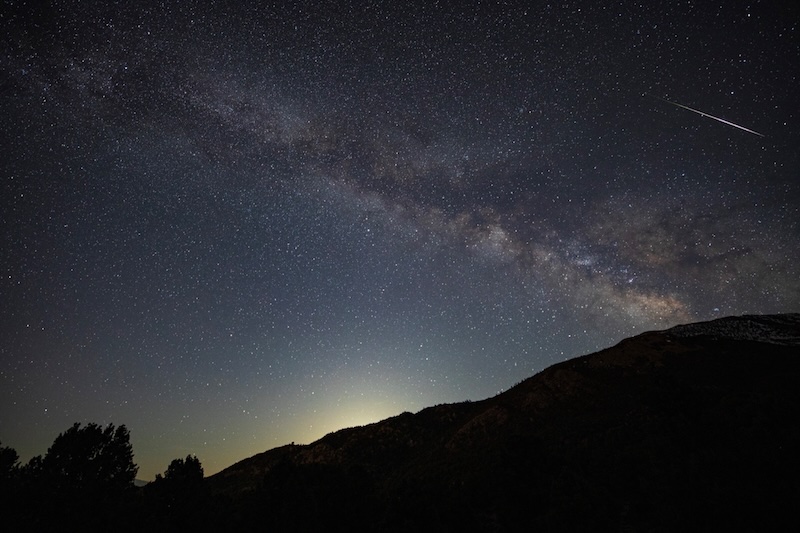
View at EarthSky Community Photos. | Jeremy Evans of California captured a Lyrid meteor zipping along the Milky way on April 22, 2025. Jeremy wrote: “Lyrids meteor shower, April 22nd at peak activity. It was a quiet shower this year. I had my camera going all night and only caught one meteor. This single frame is from an all-night 1,200 frame time lapse on my front deck, I’m very fortunate to live under dark Bortle 2 skies. The glow on the horizon is from the last quarter moon just before rising.” Thank you, Jeremy.
Factors that affect your seeing
Why can’t astronomers agree on the number of visible stars? It’s because we don’t all see the sky in the same way. And even under ideal conditions, there’s a fair amount of variation between how well people can see the stars. Some of the factors include the strength of your vision and your age. As you get older, your eyes become much less sensitive to faint light.
Plus, you have to take into account the brightness of your night sky. Even on a moonless night, the glow of lights from Earth’s surface brightens the sky.
Still, far from city lights – under absolutely perfect conditions of darkness and sky clarity – a young to middle-aged person with normal vision should be able to see thousands of stars.
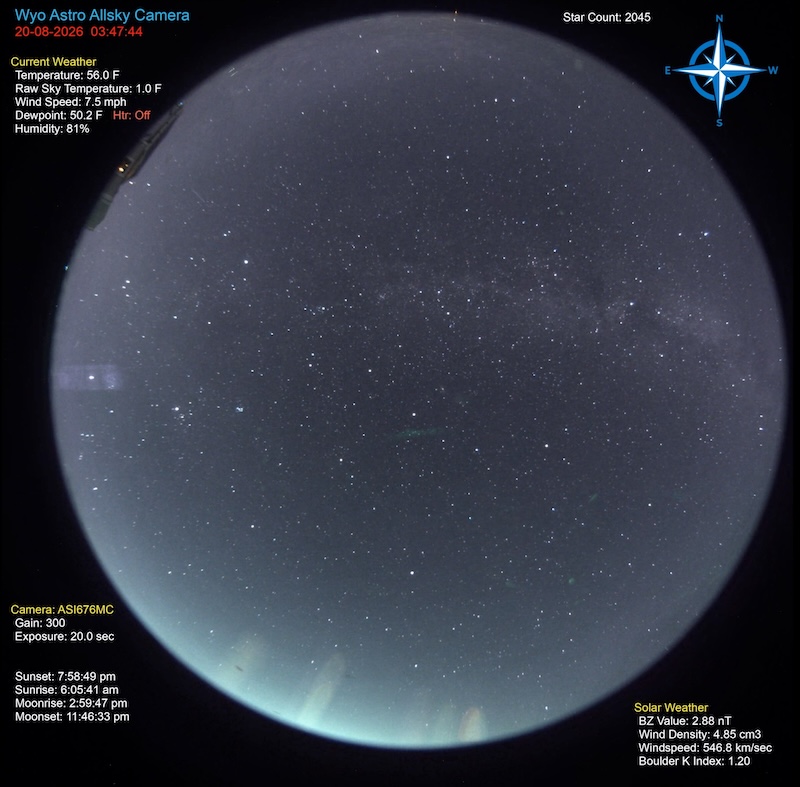
The WyoAstro allsky camera recorded 2045 stars (see upper right) on the morning of August 20, 2026. This is approximately the same view an observer would see in a fairly dark sky. Image via WyoAstro allsky camera. Used with permission.
Bottom line: Have you ever wondered how many stars are visible on a given night? It depends on factors including how dark your sky is and what your age is.
Have you ever wondered how many stars you can see in a dark sky?
How many stars can you see?
Imagine you’re under a dark sky far away from city lights, on a night with no moon, no clouds and no haze. How many stars could you see with your unaided eye? There’s really no definitive answer to this question, but astronomers use different numbers as theoretical estimates.
Considering all the stars visible in all directions around Earth, the upper end on the estimates is close to 10,000 visible stars. Here’s how one source, astronomytrek.com, came up with that number:
The brighter the star, the lower the apparent magnitude value assigned to it, with the most luminous given a negative number. In total there are 22 stars with magnitudes of between -1 and 1, making them the night sky’s brightest stars. In the meantime, there are 71 stars of 2nd magnitude, 190 stars of 3rd magnitude, 610 of 4th magnitude, 1,929 of 5th magnitude, and 5,946 of 6th magnitude. When we include another 3,150 stars at the limit of our visual acuity of magnitude +6.5, then this adds up to 9,096 stars that it is possible to see in the night sky from both the Northern and Southern Hemispheres with the unaided eye.
And there’s two hemispheres
But one person couldn’t see all those stars at once. For instance, in the Northern Hemisphere, many of the stars visible from the Southern Hemisphere will be hidden below your southern horizon. So, therefore, each hemisphere can only see about 5,000 stars. And, at any given time, half of Earth is in daylight. So only half the estimated number – perhaps 2,500 stars – would be visible from Earth’s night side. Plus, another fraction of those visible stars would be lost in the murk surrounding your horizon. That could bring you down to around 2,000, the most common number you’ll see for these estimates.
View at EarthSky Community Photos. | Jeremy Evans of California captured a Lyrid meteor zipping along the Milky way on April 22, 2025. Jeremy wrote: “Lyrids meteor shower, April 22nd at peak activity. It was a quiet shower this year. I had my camera going all night and only caught one meteor. This single frame is from an all-night 1,200 frame time lapse on my front deck, I’m very fortunate to live under dark Bortle 2 skies. The glow on the horizon is from the last quarter moon just before rising.” Thank you, Jeremy.
Factors that affect your seeing
Why can’t astronomers agree on the number of visible stars? It’s because we don’t all see the sky in the same way. And even under ideal conditions, there’s a fair amount of variation between how well people can see the stars. Some of the factors include the strength of your vision and your age. As you get older, your eyes become much less sensitive to faint light.
Plus, you have to take into account the brightness of your night sky. Even on a moonless night, the glow of lights from Earth’s surface brightens the sky.
Still, far from city lights – under absolutely perfect conditions of darkness and sky clarity – a young to middle-aged person with normal vision should be able to see thousands of stars.
The WyoAstro allsky camera recorded 2045 stars (see upper right) on the morning of August 20, 2026. This is approximately the same view an observer would see in a fairly dark sky. Image via WyoAstro allsky camera. Used with permission.
Bottom line: Have you ever wondered how many stars are visible on a given night? It depends on factors including how dark your sky is and what your age is.
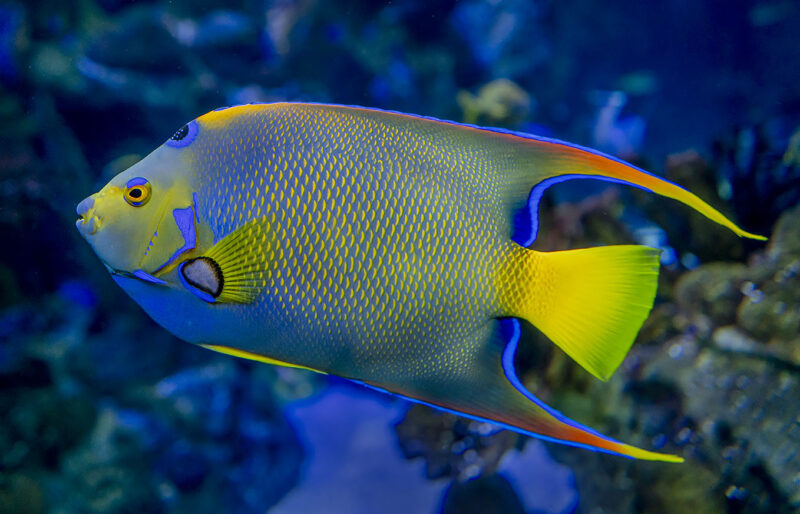
A queen angelfish, one of the colourful reef fish that inhabit coral reef ecosystems. Image via Pedro Lastra/ Wikipedia.
Motorboat noise could be doing more than just disturbing life beneath the ocean’s surface. New research from the University of Exeter, the University of Bristol and James Cook University suggests that repeated exposure to motorboat noise during early development can have lasting effects on reef fish, potentially affecting both their growth and their ability to respond to danger.
The findings reveal a hidden cost of boat traffic for reef ecosystems, with effects that can persist long after the boats have passed.
The researchers published their findings in the peer-reviewed journal Environmental Pollution on August 28, 2026.
Why reef fish are important
Reef fish are species that live in and around coral reefs, relying on these ecosystems for food, shelter and breeding grounds. Coral reefs support an extraordinary variety of marine life and provide habitats for thousands of fish species across tropical and subtropical waters.
But these ecosystems face pressure from many human activities, and underwater noise is one of the less visible disturbances. Motorboats can introduce persistent sounds into reef environments, potentially changing the conditions young fish experience during some of the most important stages of their development.
To investigate the longer-term effects of this noise, researchers from the University of Exeter, University of Bristol and James Cook University studied a species found on Australia’s Great Barrier Reef: the spiny chromis.
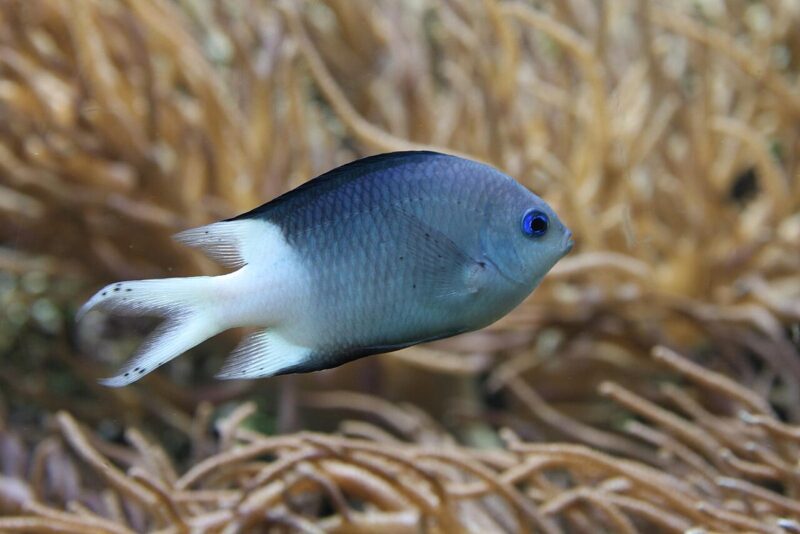
The spiny chromis (Acanthochromis polyacanthus) was the focus of research into how motorboat noise can affect young reef fish, from growth to the ability to escape predators. Image via Nikita/ Wikipedia.
Testing noise during early development
The researchers exposed the fish to recordings of either motorboat noise or natural reef sounds at two different stages of development: as embryos and shortly after hatching.
The researchers divided the fish into four groups. Some heard natural reef sounds before and after hatching, while others heard motorboat noise at both stages. The remaining two groups switched from one sound to the other after hatching.
The exposure lasted for up to 78 days. The researchers then stopped playing sounds 24 hours before testing the fish and kept the tanks silent during the test.
This allowed them to determine whether the noise had produced longer-lasting effects rather than simply distracting the fish while they were hearing the sound.
A royal angelfish, a striking coral reef species. Image via Diego Delso/ Wikipedia.
Noise changed their response to predators
The researchers wanted to know whether exposure to motorboat noise could affect one of the most important skills a young fish needs: escaping a predator.
The researchers simulated a predator attack by dropping a weight onto the surface of the water. For spiny chromis, the natural response to a threat is to bend the body into a “C” shape before rapidly swimming away from the danger.
Among fish that had experienced natural reef sounds during at least one stage of development, around 80% responded to the simulated attack. However, about 20% of those fish made a fatal mistake: they swam towards the predator instead of away from it.
The results were more concerning among fish exposed to motorboat noise during both stages of early development. Only 68% responded to the simulated attack, and 40% of those responders swam towards the predator.
Because the researchers did not expose the fish to any sound during the test itself, the results suggest that the effects were not simply an immediate reaction to the noise. Instead, early exposure appeared to have changed how the fish responded to danger later on.
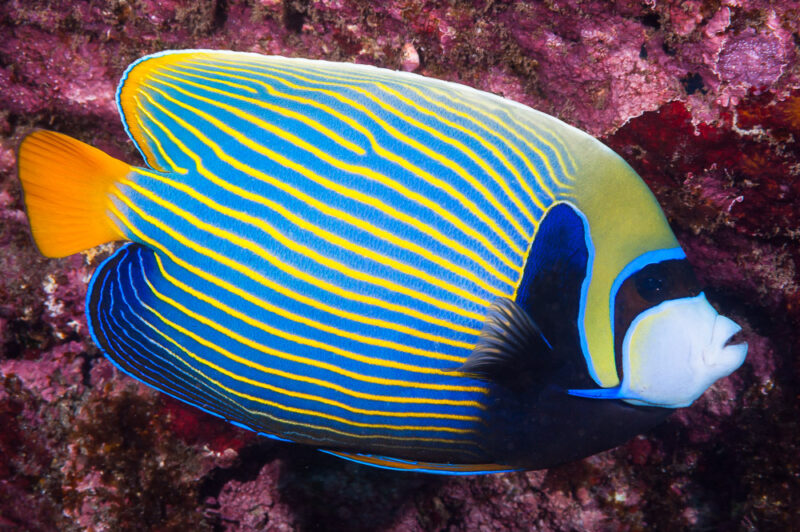
This is an emperor angelfish, a reef-dwelling fish found across the Indo-Pacific. Image via Francois Libert/ Wikipedia.
Motorboat noise can affect growth
The researchers also found a clear difference in body size among fish exposed to boat noise after hatching. On average, those fish were 7% shorter than fish exposed to natural reef sounds.
The researchers suggest that several mechanisms could contribute to this effect. Notably, previous research has shown that motorboat noise can alter parental care behavior. Sophie Nedelec, a senior research fellow at the University of Exeter, said:
We know from previous research that motorboat noise affects parental care behavior, including oxygenating eggs by fanning during the embryonic phase, which is linked with their survival.
She added:
[Exposure to motorboat noise] could cause stress or affect feeding, creating cumulative effects that lead to poor assessment of risk and decision making, and smaller body size.
A mandarinfish, a small reef fish known for its intricate patterns. Image via Luc Viatour/ Wikipedia.
Effects that can persist beyond the noise
The findings suggest that noise pollution can influence young reef fish even when the source of the disturbance is no longer present. Nedelec said:
Our results show that exposure to motorboat noise during early development can affect growth and disrupt the escape response of juveniles, even when the escape occurs in relatively quiet conditions.
The combination of reduced growth and poorer predator responses could be particularly important in the wild, where young fish already face intense pressure from predators and must make rapid decisions to survive.
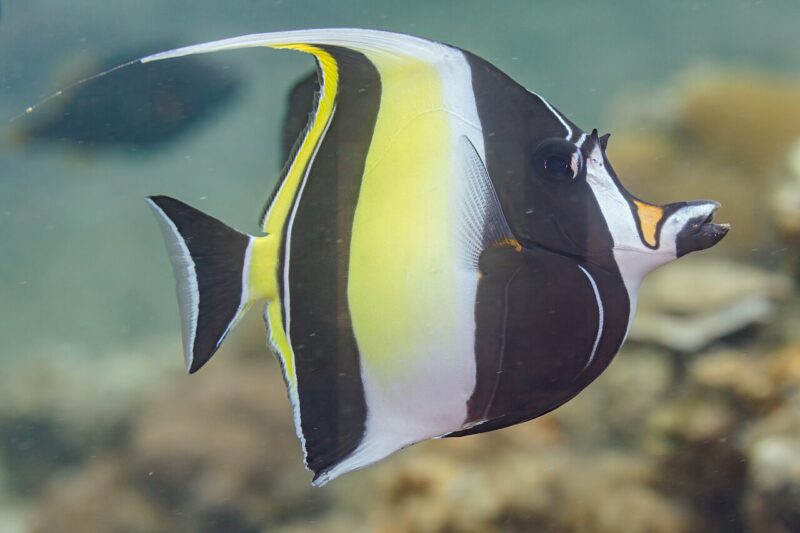
Here’s a moorish idol, a distinctive reef fish with a long, pointed snout. Image via Diego Delso/ Wikipedia.
Could limiting boat traffic help?
The researchers suggest that limiting motorboat traffic close to reefs during the breeding season could help protect young reef fish from these effects. Nedelec explained that:
Limiting motorboat traffic close to reefs during the breeding season may reduce these effects and protect reef fish – thereby helping to preserve coral reefs, which are valuable and vulnerable ecosystems worldwide.
For these young fish, motorboat noise is not simply an annoyance. It can affect their growth and their ability to escape danger, two factors that can make the difference between surviving and becoming prey.
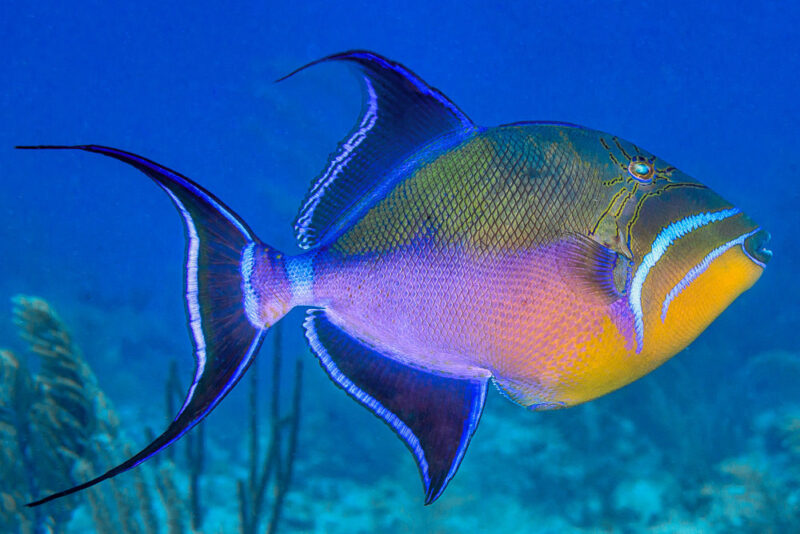
A queen triggerfish, a distinctive inhabitant of tropical coral reefs. Image via Francois Libert/ iNaturalist.
Bottom line: Reef fish exposed to motorboat noise can end up smaller and struggle to escape predators, says new research into dangerous underwater noise.
A queen angelfish, one of the colourful reef fish that inhabit coral reef ecosystems. Image via Pedro Lastra/ Wikipedia.
Motorboat noise could be doing more than just disturbing life beneath the ocean’s surface. New research from the University of Exeter, the University of Bristol and James Cook University suggests that repeated exposure to motorboat noise during early development can have lasting effects on reef fish, potentially affecting both their growth and their ability to respond to danger.
The findings reveal a hidden cost of boat traffic for reef ecosystems, with effects that can persist long after the boats have passed.
The researchers published their findings in the peer-reviewed journal Environmental Pollution on August 28, 2026.
Why reef fish are important
Reef fish are species that live in and around coral reefs, relying on these ecosystems for food, shelter and breeding grounds. Coral reefs support an extraordinary variety of marine life and provide habitats for thousands of fish species across tropical and subtropical waters.
But these ecosystems face pressure from many human activities, and underwater noise is one of the less visible disturbances. Motorboats can introduce persistent sounds into reef environments, potentially changing the conditions young fish experience during some of the most important stages of their development.
To investigate the longer-term effects of this noise, researchers from the University of Exeter, University of Bristol and James Cook University studied a species found on Australia’s Great Barrier Reef: the spiny chromis.
The spiny chromis (Acanthochromis polyacanthus) was the focus of research into how motorboat noise can affect young reef fish, from growth to the ability to escape predators. Image via Nikita/ Wikipedia.
Testing noise during early development
The researchers exposed the fish to recordings of either motorboat noise or natural reef sounds at two different stages of development: as embryos and shortly after hatching.
The researchers divided the fish into four groups. Some heard natural reef sounds before and after hatching, while others heard motorboat noise at both stages. The remaining two groups switched from one sound to the other after hatching.
The exposure lasted for up to 78 days. The researchers then stopped playing sounds 24 hours before testing the fish and kept the tanks silent during the test.
This allowed them to determine whether the noise had produced longer-lasting effects rather than simply distracting the fish while they were hearing the sound.
A royal angelfish, a striking coral reef species. Image via Diego Delso/ Wikipedia.
Noise changed their response to predators
The researchers wanted to know whether exposure to motorboat noise could affect one of the most important skills a young fish needs: escaping a predator.
The researchers simulated a predator attack by dropping a weight onto the surface of the water. For spiny chromis, the natural response to a threat is to bend the body into a “C” shape before rapidly swimming away from the danger.
Among fish that had experienced natural reef sounds during at least one stage of development, around 80% responded to the simulated attack. However, about 20% of those fish made a fatal mistake: they swam towards the predator instead of away from it.
The results were more concerning among fish exposed to motorboat noise during both stages of early development. Only 68% responded to the simulated attack, and 40% of those responders swam towards the predator.
Because the researchers did not expose the fish to any sound during the test itself, the results suggest that the effects were not simply an immediate reaction to the noise. Instead, early exposure appeared to have changed how the fish responded to danger later on.
This is an emperor angelfish, a reef-dwelling fish found across the Indo-Pacific. Image via Francois Libert/ Wikipedia.
Motorboat noise can affect growth
The researchers also found a clear difference in body size among fish exposed to boat noise after hatching. On average, those fish were 7% shorter than fish exposed to natural reef sounds.
The researchers suggest that several mechanisms could contribute to this effect. Notably, previous research has shown that motorboat noise can alter parental care behavior. Sophie Nedelec, a senior research fellow at the University of Exeter, said:
We know from previous research that motorboat noise affects parental care behavior, including oxygenating eggs by fanning during the embryonic phase, which is linked with their survival.
She added:
[Exposure to motorboat noise] could cause stress or affect feeding, creating cumulative effects that lead to poor assessment of risk and decision making, and smaller body size.
A mandarinfish, a small reef fish known for its intricate patterns. Image via Luc Viatour/ Wikipedia.
Effects that can persist beyond the noise
The findings suggest that noise pollution can influence young reef fish even when the source of the disturbance is no longer present. Nedelec said:
Our results show that exposure to motorboat noise during early development can affect growth and disrupt the escape response of juveniles, even when the escape occurs in relatively quiet conditions.
The combination of reduced growth and poorer predator responses could be particularly important in the wild, where young fish already face intense pressure from predators and must make rapid decisions to survive.
Here’s a moorish idol, a distinctive reef fish with a long, pointed snout. Image via Diego Delso/ Wikipedia.
Could limiting boat traffic help?
The researchers suggest that limiting motorboat traffic close to reefs during the breeding season could help protect young reef fish from these effects. Nedelec explained that:
Limiting motorboat traffic close to reefs during the breeding season may reduce these effects and protect reef fish – thereby helping to preserve coral reefs, which are valuable and vulnerable ecosystems worldwide.
For these young fish, motorboat noise is not simply an annoyance. It can affect their growth and their ability to escape danger, two factors that can make the difference between surviving and becoming prey.
A queen triggerfish, a distinctive inhabitant of tropical coral reefs. Image via Francois Libert/ iNaturalist.
Bottom line: Reef fish exposed to motorboat noise can end up smaller and struggle to escape predators, says new research into dangerous underwater noise.
View larger. | Here’s a view of Earth on September 21, 2005, showing the entire region of Antarctica with land ice and its seasonal sea ice. Now, researchers have found microbes in Antarctica that don’t live anywhere else on Earth. Image via Andrzej 22/ NASA/ Wikimedia Commons.
Antarctica is home to a variety of plant and animal life, despite the extreme cold. What about microbes?
Researchers at University of Colorado have discovered microbes in Antarctica soil that are not known to exist anywhere else on Earth.
The microbes are uniquely adapted to the extreme conditions in Antarctica.
Antarctica is a unique environment on Earth, with its own plant and animal life such as penguins. But what about microbes? We think of microbes as being everywhere. That is, the same types of microbes all over the planet. But it turns out that Antarctica is unique that way, too. On August 31, 2026, researchers at CIRES at University of Colorado Boulder said that they’ve discovered microbes in Antarctica that are found nowhere else on Earth. And indeed, the microbial critters are uniquely adapted to the extreme conditions in Antarctica.
Notably, these are specific microbes, not all microbes in Antarctica. But it shows that some life in Antarctica can be different from the rest of the world.
The researchers published the new peer-reviewed findings in Proceedings of the National Academy of Sciences (PNAS) on August 31, 2026.
Microbes found in Antarctica's soil are unique to the continent. In a new study, the researchers analyzed soil samples from Antarctica and similar cold, dry environments like the Tibetan Plateau, Svalbard in the Arctic, and Chile’s Atacama Desert. @pnas.bsky buff.ly/Ds9MBDm
We know that microbes can be found virtually everywhere on Earth. Even Antarctica. But there’s a misperception that the same microbes are everywhere.
Nick Dragone at University of Colorado Boulder led the new study. He said:
There is a long-standing assumption in microbiology that ‘everything is everywhere.’ Antarctica has often been viewed as a possible exception, and our findings support that idea. Some Antarctic soil microbes appear to be distinct from those found in soils elsewhere around the world.
And finding microbes that are endemic – living naturally in only one specific geographic location – in Antarctica has implications for how scientists think microbial life spreads around the planet. Microbes can disperse great distances on winds or ocean currents.
Co-author and CIRES Fellow and Director of the Center for Microbial Exploration Noah Fierer added:
If we do find we’re looking for endemic microorganisms, a good place to start is Antarctica, because it’s an entire continent that is geographically isolated. It also has unique conditions not typically found in other soil environments. Cold is the obvious one, but also super dry; Antarctica is a desert.
Scanning electron image of Arthrobacter bacteria cells. Image via United States Department of Energy/ Wikipedia.
The search is on
The team searched for and collected soil samples from across Antarctica, which was essential to the study.
The researchers tested the soil samples from Antarctica and similar cold, dry environments such as the Tibetan Plateau, Svalbard in the Arctic and Chile’s Atacama Desert. Overall, this included over 100 Antarctic strains in the Arthrobacter group and nearly 500 strains from other locations worldwide. These particular strains are common in soils from Antarctica to Colorado to the tropics. Co-author Byron Adams at Brigham Young University said:
Arthrobacter as a group may be found all over the planet, but when we look closely at individual strains, just like penguins, Antarctica clearly has its own distinctive biological history.
Fierer said:
We already knew that a broad diversity of microbes can survive the inhospitable conditions of Antarctica. Now we know that some of those microbes are also unique to Antarctica and are uniquely adapted to life on the southern continent.
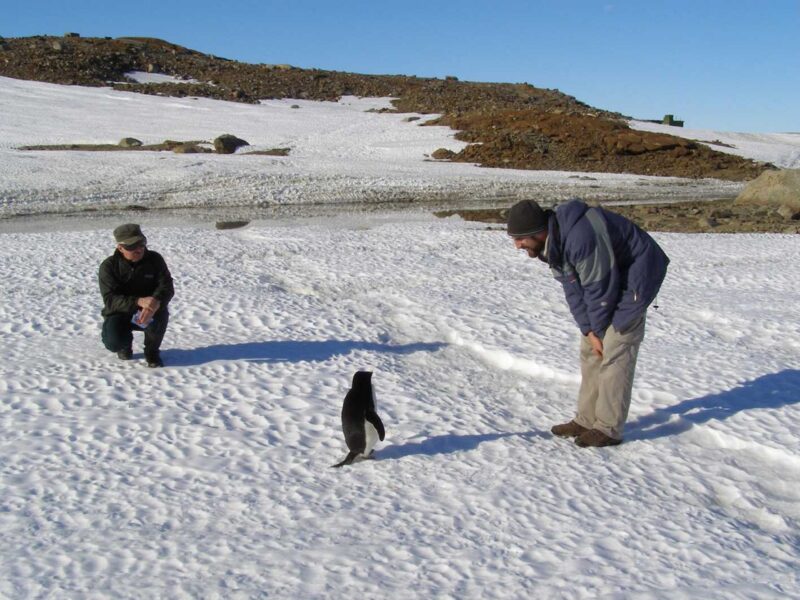
View larger. | Antarctica is home to some plants and animals, including penguins. And microbes. Image via Roux/ Wikipedia.
Genomes and simulating Antarctica
The researchers conducted the laboratory studies in two steps. First they sequenced the genomes – the genetic information of organisms – of the Arthrobacter strains. They compared the genomic traits of the bacteria to other samples collected from around the world. It was the genomic traits that showed that these specific microbes were unique to Antarctica. In fact, 90% of the strains are found nowhere else on Earth.
The team then simulated the conditions of Antarctica in the lab, such as the extreme cold and dryness. Then, they grew strains of Arthrobacter in Petri dishes. These strains tended to grow more slowly than the other test strains. But they did survive and grew.
Nicholas Dragone at CIRES/ University of Colorado Boulder led the new study about microbes in Antarctica. Image via CIRES Center for Education, Engagement and Evaluation/ University of Colorado Boulder/ RECCS.
Ancient birds in Antarctica
Speaking of life in Antarctica, last year scientists said that the fossil of an ancient bird called Vegavis iaai showed how many birds survived the asteroid impact that killed off the dinosaurs about 66 million years ago. The great distance from the impact site in Mexico and Antarctica could have allowed some birds to survive the upheaval.
At the time, Antarctica was ice-free and had a temperate climate with forests of conifers, cycads and ferns. So Vegavis lived among a diverse fauna of other birds, non-avian dinosaurs, insects, reptiles, pterosaurs and small early mammals.
Bottom line: Researchers have discovered that some microbes in Antarctica are unique to the icy continent and are found nowhere else on Earth.
View larger. | Here’s a view of Earth on September 21, 2005, showing the entire region of Antarctica with land ice and its seasonal sea ice. Now, researchers have found microbes in Antarctica that don’t live anywhere else on Earth. Image via Andrzej 22/ NASA/ Wikimedia Commons.
Antarctica is home to a variety of plant and animal life, despite the extreme cold. What about microbes?
Researchers at University of Colorado have discovered microbes in Antarctica soil that are not known to exist anywhere else on Earth.
The microbes are uniquely adapted to the extreme conditions in Antarctica.
Antarctica is a unique environment on Earth, with its own plant and animal life such as penguins. But what about microbes? We think of microbes as being everywhere. That is, the same types of microbes all over the planet. But it turns out that Antarctica is unique that way, too. On August 31, 2026, researchers at CIRES at University of Colorado Boulder said that they’ve discovered microbes in Antarctica that are found nowhere else on Earth. And indeed, the microbial critters are uniquely adapted to the extreme conditions in Antarctica.
Notably, these are specific microbes, not all microbes in Antarctica. But it shows that some life in Antarctica can be different from the rest of the world.
The researchers published the new peer-reviewed findings in Proceedings of the National Academy of Sciences (PNAS) on August 31, 2026.
Microbes found in Antarctica's soil are unique to the continent. In a new study, the researchers analyzed soil samples from Antarctica and similar cold, dry environments like the Tibetan Plateau, Svalbard in the Arctic, and Chile’s Atacama Desert. @pnas.bsky buff.ly/Ds9MBDm
We know that microbes can be found virtually everywhere on Earth. Even Antarctica. But there’s a misperception that the same microbes are everywhere.
Nick Dragone at University of Colorado Boulder led the new study. He said:
There is a long-standing assumption in microbiology that ‘everything is everywhere.’ Antarctica has often been viewed as a possible exception, and our findings support that idea. Some Antarctic soil microbes appear to be distinct from those found in soils elsewhere around the world.
And finding microbes that are endemic – living naturally in only one specific geographic location – in Antarctica has implications for how scientists think microbial life spreads around the planet. Microbes can disperse great distances on winds or ocean currents.
Co-author and CIRES Fellow and Director of the Center for Microbial Exploration Noah Fierer added:
If we do find we’re looking for endemic microorganisms, a good place to start is Antarctica, because it’s an entire continent that is geographically isolated. It also has unique conditions not typically found in other soil environments. Cold is the obvious one, but also super dry; Antarctica is a desert.
Scanning electron image of Arthrobacter bacteria cells. Image via United States Department of Energy/ Wikipedia.
The search is on
The team searched for and collected soil samples from across Antarctica, which was essential to the study.
The researchers tested the soil samples from Antarctica and similar cold, dry environments such as the Tibetan Plateau, Svalbard in the Arctic and Chile’s Atacama Desert. Overall, this included over 100 Antarctic strains in the Arthrobacter group and nearly 500 strains from other locations worldwide. These particular strains are common in soils from Antarctica to Colorado to the tropics. Co-author Byron Adams at Brigham Young University said:
Arthrobacter as a group may be found all over the planet, but when we look closely at individual strains, just like penguins, Antarctica clearly has its own distinctive biological history.
Fierer said:
We already knew that a broad diversity of microbes can survive the inhospitable conditions of Antarctica. Now we know that some of those microbes are also unique to Antarctica and are uniquely adapted to life on the southern continent.
View larger. | Antarctica is home to some plants and animals, including penguins. And microbes. Image via Roux/ Wikipedia.
Genomes and simulating Antarctica
The researchers conducted the laboratory studies in two steps. First they sequenced the genomes – the genetic information of organisms – of the Arthrobacter strains. They compared the genomic traits of the bacteria to other samples collected from around the world. It was the genomic traits that showed that these specific microbes were unique to Antarctica. In fact, 90% of the strains are found nowhere else on Earth.
The team then simulated the conditions of Antarctica in the lab, such as the extreme cold and dryness. Then, they grew strains of Arthrobacter in Petri dishes. These strains tended to grow more slowly than the other test strains. But they did survive and grew.
Nicholas Dragone at CIRES/ University of Colorado Boulder led the new study about microbes in Antarctica. Image via CIRES Center for Education, Engagement and Evaluation/ University of Colorado Boulder/ RECCS.
Ancient birds in Antarctica
Speaking of life in Antarctica, last year scientists said that the fossil of an ancient bird called Vegavis iaai showed how many birds survived the asteroid impact that killed off the dinosaurs about 66 million years ago. The great distance from the impact site in Mexico and Antarctica could have allowed some birds to survive the upheaval.
At the time, Antarctica was ice-free and had a temperate climate with forests of conifers, cycads and ferns. So Vegavis lived among a diverse fauna of other birds, non-avian dinosaurs, insects, reptiles, pterosaurs and small early mammals.
Bottom line: Researchers have discovered that some microbes in Antarctica are unique to the icy continent and are found nowhere else on Earth.