
Have you ever wondered how many stars you can see in a dark sky?
How many stars can you see?
Imagine you’re under a dark sky far away from city lights, on a night with no moon, no clouds and no haze. How many stars could you see with your unaided eye? There’s really no definitive answer to this question, but astronomers use different numbers as theoretical estimates.
Considering all the stars visible in all directions around Earth, the upper end on the estimates is close to 10,000 visible stars. Here’s how one source, astronomytrek.com, came up with that number:
The brighter the star, the lower the apparent magnitude value assigned to it, with the most luminous given a negative number. In total there are 22 stars with magnitudes of between -1 and 1, making them the night sky’s brightest stars. In the meantime, there are 71 stars of 2nd magnitude, 190 stars of 3rd magnitude, 610 of 4th magnitude, 1,929 of 5th magnitude, and 5,946 of 6th magnitude. When we include another 3,150 stars at the limit of our visual acuity of magnitude +6.5, then this adds up to 9,096 stars that it is possible to see in the night sky from both the Northern and Southern Hemispheres with the unaided eye.
And there’s two hemispheres
But one person couldn’t see all those stars at once. For instance, in the Northern Hemisphere, many of the stars visible from the Southern Hemisphere will be hidden below your southern horizon. So, therefore, each hemisphere can only see about 5,000 stars. And, at any given time, half of Earth is in daylight. So only half the estimated number – perhaps 2,500 stars – would be visible from Earth’s night side. Plus, another fraction of those visible stars would be lost in the murk surrounding your horizon. That could bring you down to around 2,000, the most common number you’ll see for these estimates.
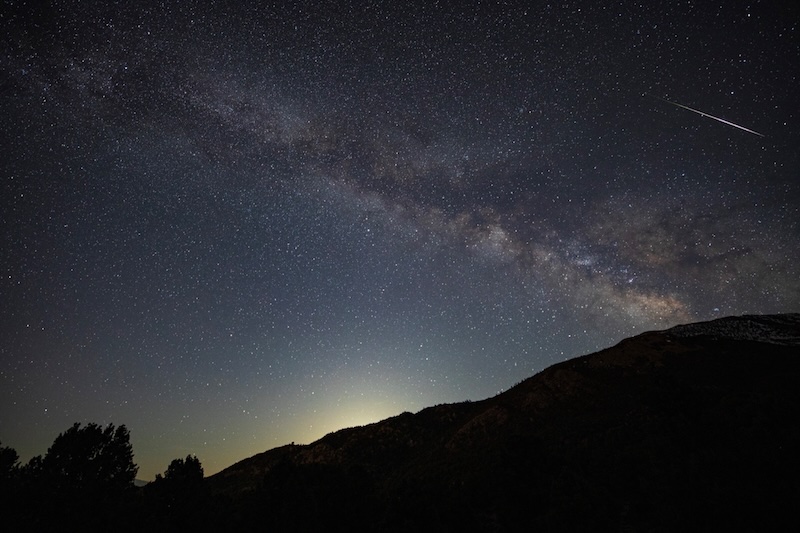
Factors that affect your seeing
Why can’t astronomers agree on the number of visible stars? It’s because we don’t all see the sky in the same way. And even under ideal conditions, there’s a fair amount of variation between how well people can see the stars. Some of the factors include the strength of your vision and your age. As you get older, your eyes become much less sensitive to faint light.
Plus, you have to take into account the brightness of your night sky. Even on a moonless night, the glow of lights from Earth’s surface brightens the sky.
Still, far from city lights – under absolutely perfect conditions of darkness and sky clarity – a young to middle-aged person with normal vision should be able to see thousands of stars.
Photos from our EarthSky Community
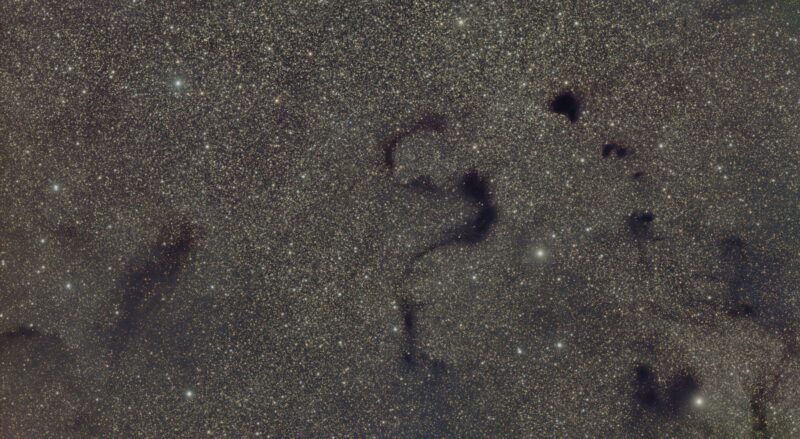
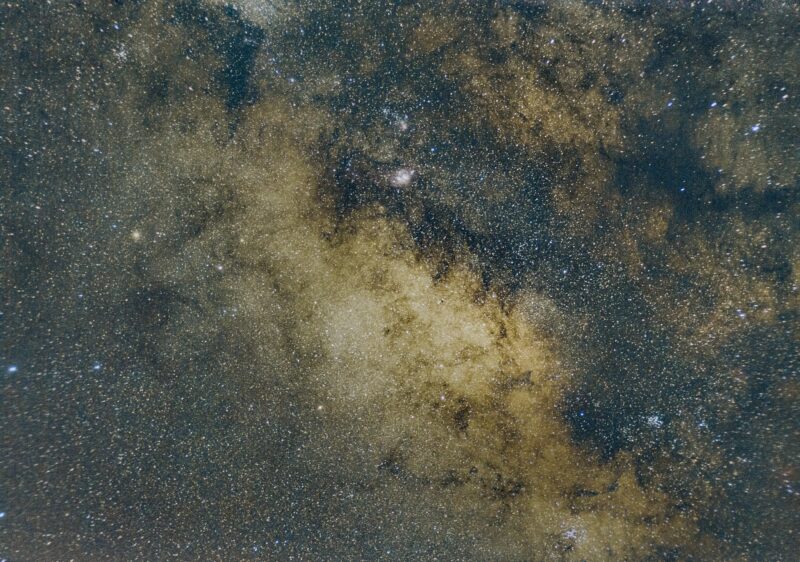
A starry sky
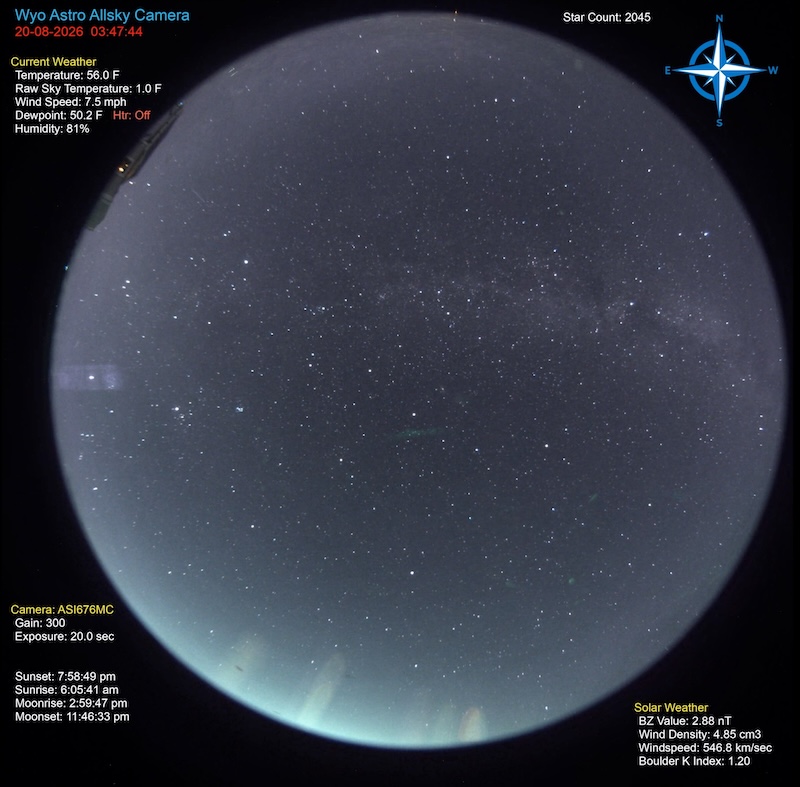
Bottom line: Have you ever wondered how many stars are visible on a given night? It depends on factors including how dark your sky is and what your age is.
Visit the International Dark-Sky Association
What Major World Cities Look Like at Night, Minus the Light Pollution
The post How many stars can you see on a moonless night? first appeared on EarthSky.
from EarthSky https://ift.tt/hLeIsrg
Have you ever wondered how many stars you can see in a dark sky?
How many stars can you see?
Imagine you’re under a dark sky far away from city lights, on a night with no moon, no clouds and no haze. How many stars could you see with your unaided eye? There’s really no definitive answer to this question, but astronomers use different numbers as theoretical estimates.
Considering all the stars visible in all directions around Earth, the upper end on the estimates is close to 10,000 visible stars. Here’s how one source, astronomytrek.com, came up with that number:
The brighter the star, the lower the apparent magnitude value assigned to it, with the most luminous given a negative number. In total there are 22 stars with magnitudes of between -1 and 1, making them the night sky’s brightest stars. In the meantime, there are 71 stars of 2nd magnitude, 190 stars of 3rd magnitude, 610 of 4th magnitude, 1,929 of 5th magnitude, and 5,946 of 6th magnitude. When we include another 3,150 stars at the limit of our visual acuity of magnitude +6.5, then this adds up to 9,096 stars that it is possible to see in the night sky from both the Northern and Southern Hemispheres with the unaided eye.
And there’s two hemispheres
But one person couldn’t see all those stars at once. For instance, in the Northern Hemisphere, many of the stars visible from the Southern Hemisphere will be hidden below your southern horizon. So, therefore, each hemisphere can only see about 5,000 stars. And, at any given time, half of Earth is in daylight. So only half the estimated number – perhaps 2,500 stars – would be visible from Earth’s night side. Plus, another fraction of those visible stars would be lost in the murk surrounding your horizon. That could bring you down to around 2,000, the most common number you’ll see for these estimates.
Factors that affect your seeing
Why can’t astronomers agree on the number of visible stars? It’s because we don’t all see the sky in the same way. And even under ideal conditions, there’s a fair amount of variation between how well people can see the stars. Some of the factors include the strength of your vision and your age. As you get older, your eyes become much less sensitive to faint light.
Plus, you have to take into account the brightness of your night sky. Even on a moonless night, the glow of lights from Earth’s surface brightens the sky.
Still, far from city lights – under absolutely perfect conditions of darkness and sky clarity – a young to middle-aged person with normal vision should be able to see thousands of stars.
Photos from our EarthSky Community
A starry sky
Bottom line: Have you ever wondered how many stars are visible on a given night? It depends on factors including how dark your sky is and what your age is.
Visit the International Dark-Sky Association
What Major World Cities Look Like at Night, Minus the Light Pollution
The post How many stars can you see on a moonless night? first appeared on EarthSky.
from EarthSky https://ift.tt/hLeIsrg

Aucun commentaire:
Enregistrer un commentaire