aads

Euclid Space Warps: Help spot galaxies bending spacetime!

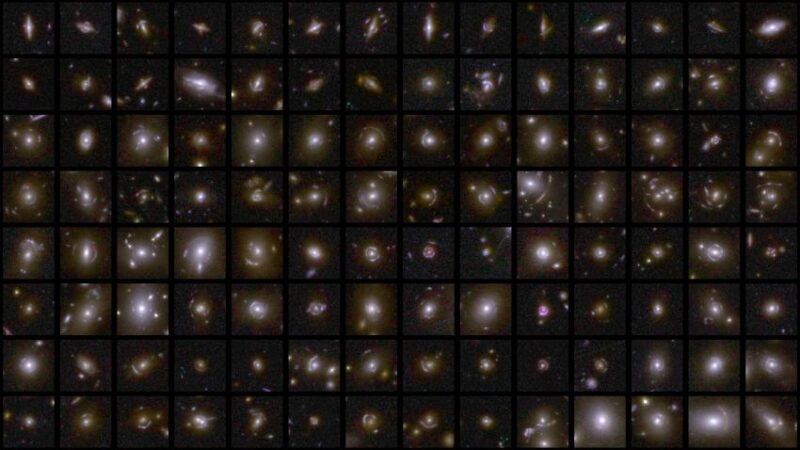
112 tiny galaxy photos with thin arcs of light around each.
These Euclid space telescope images show galaxies bending spacetime, causing light from more distant galaxies to distort around them. A new citizen science project, Space Warps, is enlisting members of the public to find more of these galaxies. Image via ESA/ Euclid/ Euclid Consortium/ NASA/ image processing by M. Walmsley/ M. Huertas-Company/ J.-C. Cuillandre.

ESA originally published this article on April 21, 2026. Edits by EarthSky.

Euclid Space Warps: Help spot galaxies bending spacetime!

With the launch of Space Warps, a new citizen science project, you can now join in the search to find galaxies that are bending the very fabric of the universe.

Hosted on the Zooniverse platform, this project sees members of the public search through never-before-seen images captured by the Euclid space telescope to find rare and elusive strong gravitational lenses. The project aims to shine a light on dark matter in galaxies and provide clues about mysterious dark energy.

Science news, night sky events and beautiful photos, all in one place. Click here to subscribe to EarthSky’s free daily newsletter.

A solid glowing circle with a thin glowing ring around it that has four bright spots along it.
A case of strong gravitational lensing around galaxy NGC 6505. The ring of light plus those 4 glowing lumps are all from one distant galaxy, its light being bent by the galaxy in the foreground. Image via ESA/ Euclid/ Euclid Consortium/ NASA/ Image processing by J.-C. Cuillandre/ G. Anselmi/ T. Li.

Gravity warps spacetime

Warps in spacetime do not only show up in science fiction movies like Interstellar. In real life, we can see the warping effect that gravity has on spacetime in the form of gravitational lensing.

The enormous gravity of a massive object – such as a galaxy or cluster of galaxies – distorts the shape of spacetime and can bend the light rays coming from a distant galaxy behind. By warping spacetime, the foreground galaxy acts like a magnifying glass.

Light from the background object that would be obscured doesn’t travel in a straight line anymore. Instead, it curves around the intervening mass. That often produces multiple images, stretched arcs, or even a complete ring known as an “Einstein ring,” like the one recently discovered by Euclid.

ESA’s Euclid telescope launched in July 2023 and is revolutionizing the studies of strong gravitational lensing by providing very sensitive imaging over large swaths of the sky. This is exactly what is needed to identify rare gravitational lenses.

In March 2025, 500 galaxy-galaxy strong lenses were found nestled in just the first 0.04% of Euclid data, most of them previously unknown. This pioneering catalog was created thanks to the combined effort from citizen scientists, artificial intelligence and researchers.
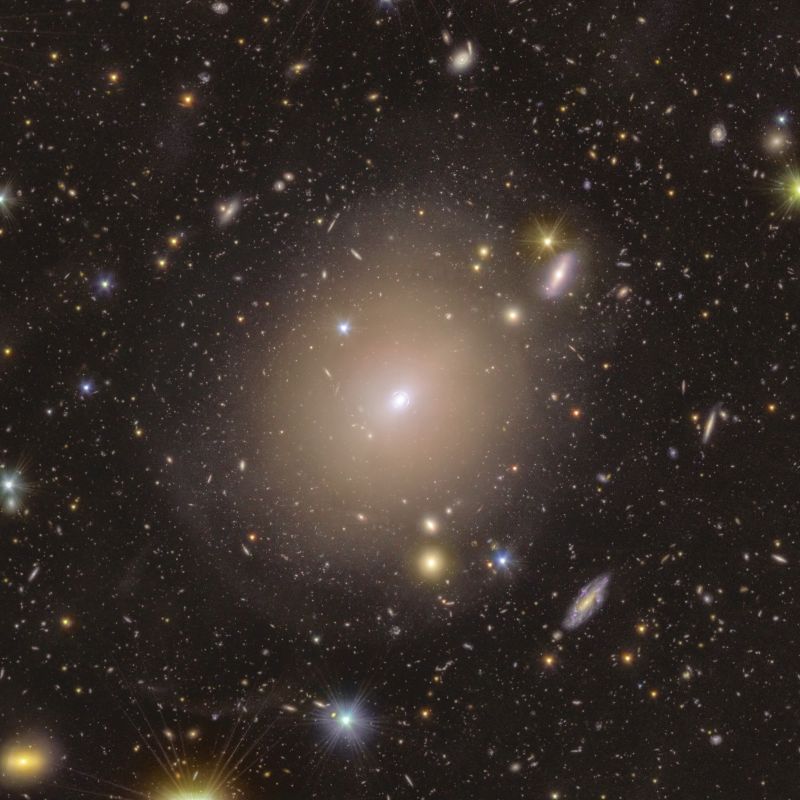
Many small galaxies and one large, fuzzy almost circular one with a tiny, glowing ring around its bright center.
Look closely. Can you spot the ring of light around the center of this galaxy, NGC 6505? ESA’s Euclid telescope captured galaxy NGC 6505 acting as a gravitational lens, bending the light from a more distant galaxy and creating this Einstein ring. Image via ESA/ Euclid/ Euclid Consortium/ NASA. Image processing by J.-C. Cuillandre/ G. Anselmi/ T. Li.

Spot gravitational lenses with Space Warps

As Euclid continues its survey, sending around 100 gigabytes of data back to Earth every day, ESA and the Euclid Consortium once again need help from citizen scientists to identify strong gravitational lenses in a large data set.

For this, the Space Warps team has launched a citizen science project based on new Euclid images, which will be part of the future Euclid Data Release 1. This data is not public yet. So by participating in this new citizen science project, you can get an early glimpse of Euclid’s new images.

For this project, you will be inspecting new high quality imaging data from Euclid in which many previously unknown strong lenses are hiding. About 300,000 images pre-selected by AI algorithms will be shown, fine-tuned with the results from the initial citizen-science Euclid strong lens search.

These are the highest-ranked candidates from a whopping 72 million galaxies from Data Release 1 that were classified by the AI algorithms. Scientists expect that this exquisite high-quality data will reveal more than 10,000 new lenses.

Black background with countless tiny glowing oblong and irregular shapes.
View larger. | A zoomed-in view of Euclid’s Deep Field South. We see countless galaxies, along with a large galaxy cluster and some gravitational lenses. Image via ESA/ Euclid/ Euclid Consortium/ NASA. Image processing by J.-C. Cuillandre/ E. Bertin/ G. Anselmi.

What we can learn from strong lenses

The Euclid mission explores how the universe has expanded and how its structure has changed through cosmic history. It does so using mainly two methods: weak gravitational lensing and a phenomenon known as baryonic acoustic oscillations. From this, scientists can learn more about the role of gravity and the nature of dark matter and dark energy.

Strong gravitational lenses can also provide insights into these central questions. For example, strong lensing features can “weigh” individual galaxies and clusters of galaxies. This reveals the total matter (whether dark or light) and traces the distribution of dark matter.

By studying strong lenses across cosmic time, scientists can trace the expansion of the universe and its apparent acceleration. This will provide additional insight into the role of dark energy.

Aprajita Verma, Space Warps’ co-founder and project lead at the University of Oxford in the U.K., said:

We’ve already seen the success of combining AI with visual inspection by citizen volunteers and scientists on Space Warps, efficiently finding hundreds of high-probability lens candidates in an initial small Euclid search in 2024.

In this brand-new Data Release 1 data, 30 times larger than the initial search and together with our improved AI algorithms, we are expecting to find more than 10,000 high quality lens candidates. This is more than four times the number of lenses than we have been able to find since the first gravitational lens was discovered nearly 50 years ago.

We can’t wait to see what we will find within this unprecedented dataset. Join us on Space Warps to take part in this exciting search!

Bottom line: New citizen science project Space Warps lets you study new Euclid space telescope data to find galaxies bending the fabric of the universe.

Via ESA

Read more: New Euclid images reveal hidden gravitational lenses

The post Euclid Space Warps: Help spot galaxies bending spacetime! first appeared on EarthSky.


from EarthSky https://ift.tt/YA0TONK
112 tiny galaxy photos with thin arcs of light around each.
These Euclid space telescope images show galaxies bending spacetime, causing light from more distant galaxies to distort around them. A new citizen science project, Space Warps, is enlisting members of the public to find more of these galaxies. Image via ESA/ Euclid/ Euclid Consortium/ NASA/ image processing by M. Walmsley/ M. Huertas-Company/ J.-C. Cuillandre.

ESA originally published this article on April 21, 2026. Edits by EarthSky.

Euclid Space Warps: Help spot galaxies bending spacetime!

With the launch of Space Warps, a new citizen science project, you can now join in the search to find galaxies that are bending the very fabric of the universe.

Hosted on the Zooniverse platform, this project sees members of the public search through never-before-seen images captured by the Euclid space telescope to find rare and elusive strong gravitational lenses. The project aims to shine a light on dark matter in galaxies and provide clues about mysterious dark energy.

Science news, night sky events and beautiful photos, all in one place. Click here to subscribe to EarthSky’s free daily newsletter.

A solid glowing circle with a thin glowing ring around it that has four bright spots along it.
A case of strong gravitational lensing around galaxy NGC 6505. The ring of light plus those 4 glowing lumps are all from one distant galaxy, its light being bent by the galaxy in the foreground. Image via ESA/ Euclid/ Euclid Consortium/ NASA/ Image processing by J.-C. Cuillandre/ G. Anselmi/ T. Li.

Gravity warps spacetime

Warps in spacetime do not only show up in science fiction movies like Interstellar. In real life, we can see the warping effect that gravity has on spacetime in the form of gravitational lensing.

The enormous gravity of a massive object – such as a galaxy or cluster of galaxies – distorts the shape of spacetime and can bend the light rays coming from a distant galaxy behind. By warping spacetime, the foreground galaxy acts like a magnifying glass.

Light from the background object that would be obscured doesn’t travel in a straight line anymore. Instead, it curves around the intervening mass. That often produces multiple images, stretched arcs, or even a complete ring known as an “Einstein ring,” like the one recently discovered by Euclid.

ESA’s Euclid telescope launched in July 2023 and is revolutionizing the studies of strong gravitational lensing by providing very sensitive imaging over large swaths of the sky. This is exactly what is needed to identify rare gravitational lenses.

In March 2025, 500 galaxy-galaxy strong lenses were found nestled in just the first 0.04% of Euclid data, most of them previously unknown. This pioneering catalog was created thanks to the combined effort from citizen scientists, artificial intelligence and researchers.

Many small galaxies and one large, fuzzy almost circular one with a tiny, glowing ring around its bright center.
Look closely. Can you spot the ring of light around the center of this galaxy, NGC 6505? ESA’s Euclid telescope captured galaxy NGC 6505 acting as a gravitational lens, bending the light from a more distant galaxy and creating this Einstein ring. Image via ESA/ Euclid/ Euclid Consortium/ NASA. Image processing by J.-C. Cuillandre/ G. Anselmi/ T. Li.

Spot gravitational lenses with Space Warps

As Euclid continues its survey, sending around 100 gigabytes of data back to Earth every day, ESA and the Euclid Consortium once again need help from citizen scientists to identify strong gravitational lenses in a large data set.

For this, the Space Warps team has launched a citizen science project based on new Euclid images, which will be part of the future Euclid Data Release 1. This data is not public yet. So by participating in this new citizen science project, you can get an early glimpse of Euclid’s new images.

For this project, you will be inspecting new high quality imaging data from Euclid in which many previously unknown strong lenses are hiding. About 300,000 images pre-selected by AI algorithms will be shown, fine-tuned with the results from the initial citizen-science Euclid strong lens search.

These are the highest-ranked candidates from a whopping 72 million galaxies from Data Release 1 that were classified by the AI algorithms. Scientists expect that this exquisite high-quality data will reveal more than 10,000 new lenses.

Black background with countless tiny glowing oblong and irregular shapes.
View larger. | A zoomed-in view of Euclid’s Deep Field South. We see countless galaxies, along with a large galaxy cluster and some gravitational lenses. Image via ESA/ Euclid/ Euclid Consortium/ NASA. Image processing by J.-C. Cuillandre/ E. Bertin/ G. Anselmi.

What we can learn from strong lenses

The Euclid mission explores how the universe has expanded and how its structure has changed through cosmic history. It does so using mainly two methods: weak gravitational lensing and a phenomenon known as baryonic acoustic oscillations. From this, scientists can learn more about the role of gravity and the nature of dark matter and dark energy.

Strong gravitational lenses can also provide insights into these central questions. For example, strong lensing features can “weigh” individual galaxies and clusters of galaxies. This reveals the total matter (whether dark or light) and traces the distribution of dark matter.

By studying strong lenses across cosmic time, scientists can trace the expansion of the universe and its apparent acceleration. This will provide additional insight into the role of dark energy.

Aprajita Verma, Space Warps’ co-founder and project lead at the University of Oxford in the U.K., said:

We’ve already seen the success of combining AI with visual inspection by citizen volunteers and scientists on Space Warps, efficiently finding hundreds of high-probability lens candidates in an initial small Euclid search in 2024.

In this brand-new Data Release 1 data, 30 times larger than the initial search and together with our improved AI algorithms, we are expecting to find more than 10,000 high quality lens candidates. This is more than four times the number of lenses than we have been able to find since the first gravitational lens was discovered nearly 50 years ago.

We can’t wait to see what we will find within this unprecedented dataset. Join us on Space Warps to take part in this exciting search!

Bottom line: New citizen science project Space Warps lets you study new Euclid space telescope data to find galaxies bending the fabric of the universe.

Via ESA

Read more: New Euclid images reveal hidden gravitational lenses

The post Euclid Space Warps: Help spot galaxies bending spacetime! first appeared on EarthSky.


from EarthSky https://ift.tt/YA0TONK

Could paranormal experiences be due to low-frequency sound?

Paranormal experiences: Woman standing inside an old, decrepit abandoned building, looking up toward a high ceiling.
Could paranormal experiences be explained by very low-frequency sound? This kind of sound is what scientists call infrasound, and humans can’t hear it. But a new study says our bodies still respond to it. Image via Vera Gorbunova/ Unsplash.
  • Infrasound is low-frequency sound below the range of human hearing. This sound can come from sources such as storms, traffic or even vibrating pipes in buildings.
  • Recent experiments showed people can’t hear infrasound, yet their bodies still react to it. They showed higher stress hormones and increased irritability after exposure to infrasound.
  • This reaction could explain some paranormal experiences. The unease or discomfort in old, abandoned buildings could stem from infrasound due to vibrating pipes, for example.

Frontiers published this original story on April 27, 2026. Edits by EarthSky.

You deserve a daily dose of good news. For the latest in science and the night sky, subscribe to EarthSky’s free daily newsletter.

Could paranormal experiences be due to low-frequency sound?

Humans can’t hear very low-frequency sound, known as infrasound … But our bodies still seem to respond to it. That’s the finding of a new study published on April 27, 2026, in which researchers played infrasound for test participants alongside music.

They found that although the listeners couldn’t accurately detect the infrasound, their irritability and cortisol levels rose. Cortisol is the “stress hormone,” and high levels indicate anxiety. So this stress response suggests our bodies may react to infrasound even when we can’t consciously hear it. That invisible reaction might even help explain why people report unusual experiences in places like supposedly haunted buildings.

Infrasound and paranormal experiences

Infrasound is very low-frequency sound, below 20 Hertz (Hz), which humans typically can’t hear. It can come from natural sources like storms, or from human-made sources like traffic. Some animals use it to communicate, while others avoid it.

Scientists investigating humans’ ability to sense infrasound determined that we can’t detect it, but we do respond to it. They found it’s linked to increased irritability and higher cortisol levels.

Rodney Schmaltz of MacEwan University in Canada is the senior author of the new article in the peer-reviewed journal Frontiers in Behavioral Neuroscience. Schmaltz said:

Infrasound is pervasive in everyday environments, appearing near ventilation systems, traffic and industrial machinery. Many people have exposure to it without knowing it. Our findings suggest that even a brief exposure may shift mood and raise cortisol, which highlights the importance of understanding how infrasound affects people in real-world settings.

Consider visiting a supposedly haunted building. Your mood shifts, you feel agitated, but you can’t see or hear anything unusual. In an old building, there is a good chance that infrasound is present, particularly in basements where aging pipes and ventilation systems produce low-frequency vibrations. If you were told the building was haunted, you might attribute that agitation to something supernatural. In reality, you may simply have been exposed to infrasound.

Registering a stress response

The scientists recruited 36 participants and invited them to sit alone in a room while they played either calming or unsettling music. For half the participants, hidden subwoofer speakers played infrasound at 18 Hz. After listening, the subjects reported their feelings, their emotional rating of the music and whether they thought the infrasound was present. They also gave saliva samples before and after listening.

The scientists found that participants’ salivary cortisol levels were higher if they had been listening to infrasound. These participants also reported feeling more irritable and less interested. And they reported thinking the music was sadder. But they couldn’t tell they were listening to infrasound. Schmaltz said:

This study suggests that the body can respond to infrasound even when we can’t consciously hear it. Participants could not reliably identify whether infrasound was present, and their beliefs about whether it was on had no detectable effect on their cortisol or mood.

Kale Scatterty is the first author of the new study and a Ph.D. student at the University of Alberta. Scatterty said:

Increased irritability and higher cortisol are naturally related, because when people feel more irritated or stressed, cortisol tends to rise as part of the body’s normal stress response. But infrasound exposure had effects on both outcomes that went beyond that natural relationship.

Sounds you don’t hear but your body notices

These results indicate humans can sense but not identify infrasound, though the mechanism remains unclear. They also suggest we may need to investigate whether prolonged infrasound exposure could impact health through consistently elevated cortisol levels and wellbeing issues related to lowered mood and increased irritability.

Trevor Hamilton of MacEwan University, corresponding author, said:

Increased cortisol levels help the body respond to immediate stressors by inducing a state of vigilance. This is an evolutionarily adapted response that helps us in many situations. However, prolonged cortisol release is not a good thing. It can lead to a variety of physiological conditions and alter mental health.

A sepia-toned photo of a very large, old, spooky-looking house.
If something feels off in an old, decrepit house, it could be the vibrations in the pipes. Image via HiQ-Visions/ Pixabay.

Larger studies come next

Because the sample was comparatively small, the scientists carried out sensitivity analyses before drawing conclusions from their results. They confirmed their study could detect moderate to large effects of infrasound, which includes their main findings. However, more research with greater, more diverse participant samples will be needed to fully understand how infrasound influences human emotion and behavior.

Scatterty said:

This study was in many ways a first step towards understanding the effects of infrasound on humans. So far, we’ve only tested a specific frequency. There could be many more frequencies and combinations that have their own differential effects. We also only collected subjective reports of how the participants felt after exposure, without directly observing their responses during the trial.

Schmaltz added:

The first priority would be testing a wider range of frequencies and exposure durations. Infrasound in real environments is rarely a single clean tone. And we don’t yet know how different frequencies or combinations affect mood and physiology. If those patterns become clearer, the findings could eventually inform noise regulations or building design standards. As someone who studies pseudoscience and misinformation, what stands out to me is that infrasound produces real, measurable reactions without any visible or audible source. So, the next time something feels inexplicably off in a basement or old building, consider that the cause might be vibrating pipes rather than restless spirits.

Bottom line: Research shows people can’t hear sounds at very low frequencies, yet they still respond to them. Could these sounds explain paranormal experiences?

Source: Infrasound exposure is linked to aversive responding, negative appraisal, and elevated salivary cortisol in humans

Via Frontiers

Read more: See and hear galaxies evolving in new simulations

Read more: The universe is vibrating, mounting evidence shows

The post Could paranormal experiences be due to low-frequency sound? first appeared on EarthSky.


from EarthSky https://ift.tt/w1uYorG
Paranormal experiences: Woman standing inside an old, decrepit abandoned building, looking up toward a high ceiling.
Could paranormal experiences be explained by very low-frequency sound? This kind of sound is what scientists call infrasound, and humans can’t hear it. But a new study says our bodies still respond to it. Image via Vera Gorbunova/ Unsplash.
  • Infrasound is low-frequency sound below the range of human hearing. This sound can come from sources such as storms, traffic or even vibrating pipes in buildings.
  • Recent experiments showed people can’t hear infrasound, yet their bodies still react to it. They showed higher stress hormones and increased irritability after exposure to infrasound.
  • This reaction could explain some paranormal experiences. The unease or discomfort in old, abandoned buildings could stem from infrasound due to vibrating pipes, for example.

Frontiers published this original story on April 27, 2026. Edits by EarthSky.

You deserve a daily dose of good news. For the latest in science and the night sky, subscribe to EarthSky’s free daily newsletter.

Could paranormal experiences be due to low-frequency sound?

Humans can’t hear very low-frequency sound, known as infrasound … But our bodies still seem to respond to it. That’s the finding of a new study published on April 27, 2026, in which researchers played infrasound for test participants alongside music.

They found that although the listeners couldn’t accurately detect the infrasound, their irritability and cortisol levels rose. Cortisol is the “stress hormone,” and high levels indicate anxiety. So this stress response suggests our bodies may react to infrasound even when we can’t consciously hear it. That invisible reaction might even help explain why people report unusual experiences in places like supposedly haunted buildings.

Infrasound and paranormal experiences

Infrasound is very low-frequency sound, below 20 Hertz (Hz), which humans typically can’t hear. It can come from natural sources like storms, or from human-made sources like traffic. Some animals use it to communicate, while others avoid it.

Scientists investigating humans’ ability to sense infrasound determined that we can’t detect it, but we do respond to it. They found it’s linked to increased irritability and higher cortisol levels.

Rodney Schmaltz of MacEwan University in Canada is the senior author of the new article in the peer-reviewed journal Frontiers in Behavioral Neuroscience. Schmaltz said:

Infrasound is pervasive in everyday environments, appearing near ventilation systems, traffic and industrial machinery. Many people have exposure to it without knowing it. Our findings suggest that even a brief exposure may shift mood and raise cortisol, which highlights the importance of understanding how infrasound affects people in real-world settings.

Consider visiting a supposedly haunted building. Your mood shifts, you feel agitated, but you can’t see or hear anything unusual. In an old building, there is a good chance that infrasound is present, particularly in basements where aging pipes and ventilation systems produce low-frequency vibrations. If you were told the building was haunted, you might attribute that agitation to something supernatural. In reality, you may simply have been exposed to infrasound.

Registering a stress response

The scientists recruited 36 participants and invited them to sit alone in a room while they played either calming or unsettling music. For half the participants, hidden subwoofer speakers played infrasound at 18 Hz. After listening, the subjects reported their feelings, their emotional rating of the music and whether they thought the infrasound was present. They also gave saliva samples before and after listening.

The scientists found that participants’ salivary cortisol levels were higher if they had been listening to infrasound. These participants also reported feeling more irritable and less interested. And they reported thinking the music was sadder. But they couldn’t tell they were listening to infrasound. Schmaltz said:

This study suggests that the body can respond to infrasound even when we can’t consciously hear it. Participants could not reliably identify whether infrasound was present, and their beliefs about whether it was on had no detectable effect on their cortisol or mood.

Kale Scatterty is the first author of the new study and a Ph.D. student at the University of Alberta. Scatterty said:

Increased irritability and higher cortisol are naturally related, because when people feel more irritated or stressed, cortisol tends to rise as part of the body’s normal stress response. But infrasound exposure had effects on both outcomes that went beyond that natural relationship.

Sounds you don’t hear but your body notices

These results indicate humans can sense but not identify infrasound, though the mechanism remains unclear. They also suggest we may need to investigate whether prolonged infrasound exposure could impact health through consistently elevated cortisol levels and wellbeing issues related to lowered mood and increased irritability.

Trevor Hamilton of MacEwan University, corresponding author, said:

Increased cortisol levels help the body respond to immediate stressors by inducing a state of vigilance. This is an evolutionarily adapted response that helps us in many situations. However, prolonged cortisol release is not a good thing. It can lead to a variety of physiological conditions and alter mental health.

A sepia-toned photo of a very large, old, spooky-looking house.
If something feels off in an old, decrepit house, it could be the vibrations in the pipes. Image via HiQ-Visions/ Pixabay.

Larger studies come next

Because the sample was comparatively small, the scientists carried out sensitivity analyses before drawing conclusions from their results. They confirmed their study could detect moderate to large effects of infrasound, which includes their main findings. However, more research with greater, more diverse participant samples will be needed to fully understand how infrasound influences human emotion and behavior.

Scatterty said:

This study was in many ways a first step towards understanding the effects of infrasound on humans. So far, we’ve only tested a specific frequency. There could be many more frequencies and combinations that have their own differential effects. We also only collected subjective reports of how the participants felt after exposure, without directly observing their responses during the trial.

Schmaltz added:

The first priority would be testing a wider range of frequencies and exposure durations. Infrasound in real environments is rarely a single clean tone. And we don’t yet know how different frequencies or combinations affect mood and physiology. If those patterns become clearer, the findings could eventually inform noise regulations or building design standards. As someone who studies pseudoscience and misinformation, what stands out to me is that infrasound produces real, measurable reactions without any visible or audible source. So, the next time something feels inexplicably off in a basement or old building, consider that the cause might be vibrating pipes rather than restless spirits.

Bottom line: Research shows people can’t hear sounds at very low frequencies, yet they still respond to them. Could these sounds explain paranormal experiences?

Source: Infrasound exposure is linked to aversive responding, negative appraisal, and elevated salivary cortisol in humans

Via Frontiers

Read more: See and hear galaxies evolving in new simulations

Read more: The universe is vibrating, mounting evidence shows

The post Could paranormal experiences be due to low-frequency sound? first appeared on EarthSky.


from EarthSky https://ift.tt/w1uYorG

The biggest US supervolcanoes you’ve never heard of

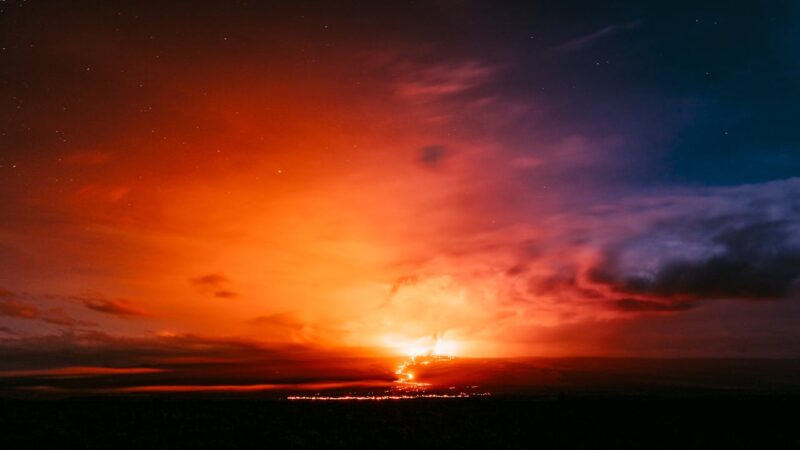
Biggest US supervolcanoes: A bright distant light with some lava and glowing clouds.
Wah Wah Springs in Utah and Nevada and La Garita in Colorado are 2 of the biggest U.S. supervolcanoes. Heard of them? Probably not! Supervolcanoes don’t look like pointy mountains. Instead, they’re collapsed calderas that can erupt for weeks. Image via Dane Amacher/ Pexels.

Science news, night sky events and beautiful photos, all in one place. Click here to subscribe to EarthSky’s free daily newsletter.

The biggest US supervolcanoes you’ve never heard of

When you hear the word supervolcano, you might think of Yellowstone National Park. Some 2 million years ago, the Yellowstone volcano erupted so violently that it covered more than 5,790 square miles (15,000 square kilometers) with ash. Its deposits covered 21 states and parts of Canada.

But there were two other eruptions of supervolcanoes within the United States that were even larger. One was La Garita in Colorado 27.8 million years ago. And the other was at Wah Wah Springs in Utah and Nevada 30 million years ago.

Why haven’t you heard of them?

Despite their enormous size, these supervolcanoes are not widely known outside scientific circles. That’s partly because they’re so old. Erosion has softened their features, and later geological activity has reshaped the land.

Yet both these ancient eruptions – in present-day Colorado and spanning the Utah-Nevada state line – rank among the largest known volcanic events in Earth’s history.

In contrast, Yellowstone is geologically young and still active. Its geysers and hot springs still showcase the land’s volcanic nature. Plus, there’s a chance that Yellowstone will erupt again someday, though another supereruption is far from guaranteed. And it could be tens of thousands of years in the future.

Wah Wah Springs is the largest known US eruption

The Wah Wah Springs Caldera eruption occurred about 30 million years ago. It erupted after the age of the dinosaurs but before the rise of humans. But the rhinos, camels, tortoises and palm trees that lived there at the time are still preserved in the sediments.

Wah Wah Springs is one of the largest volcanic eruptions scientists have ever discovered. And they only did so in 2013.

Scientists from Brigham Young University said that the volcano erupted over the course of a week, releasing some 201 trillion cubic feet (5,700 cubic kilometers) of ash and magma. To put that into perspective, it was about 5,000 times larger than the 1980 eruption of Mount St. Helens.

Ash from Wah Wah Springs blanketed vast regions of what is now the western United States. Some of the debris from this eruption still exists in layers up to 13,000 feet (4 km) thick in southern Utah.


Watch Brigham Young University scientists describe the Wah Wah Springs Caldera supervolcano.

La Garita still shows its scars in Colorado

Another colossal eruption occurred at the La Garita Caldera in southern Colorado some 28 million years ago. It was a time of intense volcanic activity across what we now call the San Juan volcanic field. La Garita belched out around 176 trillion cubic feet (5,000 cubic kilometers) of material that spread across tens of thousands of square miles.

You can still see the results of this supervolcano in the Wheeler Geologic Area near Creede, Colorado. Erosion of the volcanic ash has created needlelike formations. Geologists have named the deposits left behind by this eruption the Fish Canyon Tuff.

Today, it’s still possible to make out the caldera – or the collapsed basin of the volcano – in satellite images of Colorado. The area is directly west of Great Sand Dunes National Park.

Needle-like formation of rock in light and dark colors.
This is the Wheeler Geologic Area, part of the La Garita Wilderness in Colorado. These needle-like spires of rock are remnants of the supervolcano from 28 million years ago. Geologists call this specific deposit the Fish Canyon Tuff. Image via USDA/ US Forest Service.

What makes a supervolcano?

Scientists use the term supervolcano for eruptions that eject more than 240 cubic miles (1,000 cubic kilometers) of material. Both Wah Wah Springs and La Garita far exceed that threshold. Fortunately, both these supervolcanoes are now extinct. Yellowstone is still an active volcanic landscape.

Supervolcanic eruptions don’t look like the cone-shaped volcanoes we often imagine. Instead, they involve massive underground magma chambers. When pressure builds to a breaking point, the ground above collapses, forming a caldera. This huge depression can span dozens of miles.

The eruption itself can last for days or weeks. And it sends towering columns of ash into the atmosphere, triggering flows of superheated gas and rock called pyroclastic flows. Supereruptions, though rare, have global consequences. Ash clouds can block sunlight, alter climate and disrupt ecosystems worldwide. The eruption of Mount Tambora in 1815, just shy of a supereruption, created The Year Without a Summer.

A different kind of landscape

As you can see, tens of millions of years ago, the American West was home to massive volcanic fields. The eruptions from the Wah Wah Springs and La Garita supervolcanoes created a layered terrain. And erosion and tectonic forces wore down these volcanoes and layers of tuff, leaving us with the landscapes we see today.

Bottom line: Two of the biggest US supervolcanoes erupted millions of years ago, and you’ve probably never heard of them: Wah Wah Springs and La Garita.

Read more: Juno spots most extreme volcanic activity on Io to date

Read more: The most recent volcanoes on Mars were surprisingly active

The post The biggest US supervolcanoes you’ve never heard of first appeared on EarthSky.


from EarthSky https://ift.tt/AIgewtn
Biggest US supervolcanoes: A bright distant light with some lava and glowing clouds.
Wah Wah Springs in Utah and Nevada and La Garita in Colorado are 2 of the biggest U.S. supervolcanoes. Heard of them? Probably not! Supervolcanoes don’t look like pointy mountains. Instead, they’re collapsed calderas that can erupt for weeks. Image via Dane Amacher/ Pexels.

Science news, night sky events and beautiful photos, all in one place. Click here to subscribe to EarthSky’s free daily newsletter.

The biggest US supervolcanoes you’ve never heard of

When you hear the word supervolcano, you might think of Yellowstone National Park. Some 2 million years ago, the Yellowstone volcano erupted so violently that it covered more than 5,790 square miles (15,000 square kilometers) with ash. Its deposits covered 21 states and parts of Canada.

But there were two other eruptions of supervolcanoes within the United States that were even larger. One was La Garita in Colorado 27.8 million years ago. And the other was at Wah Wah Springs in Utah and Nevada 30 million years ago.

Why haven’t you heard of them?

Despite their enormous size, these supervolcanoes are not widely known outside scientific circles. That’s partly because they’re so old. Erosion has softened their features, and later geological activity has reshaped the land.

Yet both these ancient eruptions – in present-day Colorado and spanning the Utah-Nevada state line – rank among the largest known volcanic events in Earth’s history.

In contrast, Yellowstone is geologically young and still active. Its geysers and hot springs still showcase the land’s volcanic nature. Plus, there’s a chance that Yellowstone will erupt again someday, though another supereruption is far from guaranteed. And it could be tens of thousands of years in the future.

Wah Wah Springs is the largest known US eruption

The Wah Wah Springs Caldera eruption occurred about 30 million years ago. It erupted after the age of the dinosaurs but before the rise of humans. But the rhinos, camels, tortoises and palm trees that lived there at the time are still preserved in the sediments.

Wah Wah Springs is one of the largest volcanic eruptions scientists have ever discovered. And they only did so in 2013.

Scientists from Brigham Young University said that the volcano erupted over the course of a week, releasing some 201 trillion cubic feet (5,700 cubic kilometers) of ash and magma. To put that into perspective, it was about 5,000 times larger than the 1980 eruption of Mount St. Helens.

Ash from Wah Wah Springs blanketed vast regions of what is now the western United States. Some of the debris from this eruption still exists in layers up to 13,000 feet (4 km) thick in southern Utah.


Watch Brigham Young University scientists describe the Wah Wah Springs Caldera supervolcano.

La Garita still shows its scars in Colorado

Another colossal eruption occurred at the La Garita Caldera in southern Colorado some 28 million years ago. It was a time of intense volcanic activity across what we now call the San Juan volcanic field. La Garita belched out around 176 trillion cubic feet (5,000 cubic kilometers) of material that spread across tens of thousands of square miles.

You can still see the results of this supervolcano in the Wheeler Geologic Area near Creede, Colorado. Erosion of the volcanic ash has created needlelike formations. Geologists have named the deposits left behind by this eruption the Fish Canyon Tuff.

Today, it’s still possible to make out the caldera – or the collapsed basin of the volcano – in satellite images of Colorado. The area is directly west of Great Sand Dunes National Park.

Needle-like formation of rock in light and dark colors.
This is the Wheeler Geologic Area, part of the La Garita Wilderness in Colorado. These needle-like spires of rock are remnants of the supervolcano from 28 million years ago. Geologists call this specific deposit the Fish Canyon Tuff. Image via USDA/ US Forest Service.

What makes a supervolcano?

Scientists use the term supervolcano for eruptions that eject more than 240 cubic miles (1,000 cubic kilometers) of material. Both Wah Wah Springs and La Garita far exceed that threshold. Fortunately, both these supervolcanoes are now extinct. Yellowstone is still an active volcanic landscape.

Supervolcanic eruptions don’t look like the cone-shaped volcanoes we often imagine. Instead, they involve massive underground magma chambers. When pressure builds to a breaking point, the ground above collapses, forming a caldera. This huge depression can span dozens of miles.

The eruption itself can last for days or weeks. And it sends towering columns of ash into the atmosphere, triggering flows of superheated gas and rock called pyroclastic flows. Supereruptions, though rare, have global consequences. Ash clouds can block sunlight, alter climate and disrupt ecosystems worldwide. The eruption of Mount Tambora in 1815, just shy of a supereruption, created The Year Without a Summer.

A different kind of landscape

As you can see, tens of millions of years ago, the American West was home to massive volcanic fields. The eruptions from the Wah Wah Springs and La Garita supervolcanoes created a layered terrain. And erosion and tectonic forces wore down these volcanoes and layers of tuff, leaving us with the landscapes we see today.

Bottom line: Two of the biggest US supervolcanoes erupted millions of years ago, and you’ve probably never heard of them: Wah Wah Springs and La Garita.

Read more: Juno spots most extreme volcanic activity on Io to date

Read more: The most recent volcanoes on Mars were surprisingly active

The post The biggest US supervolcanoes you’ve never heard of first appeared on EarthSky.


from EarthSky https://ift.tt/AIgewtn

April 28 is Jan Oort’s birthday

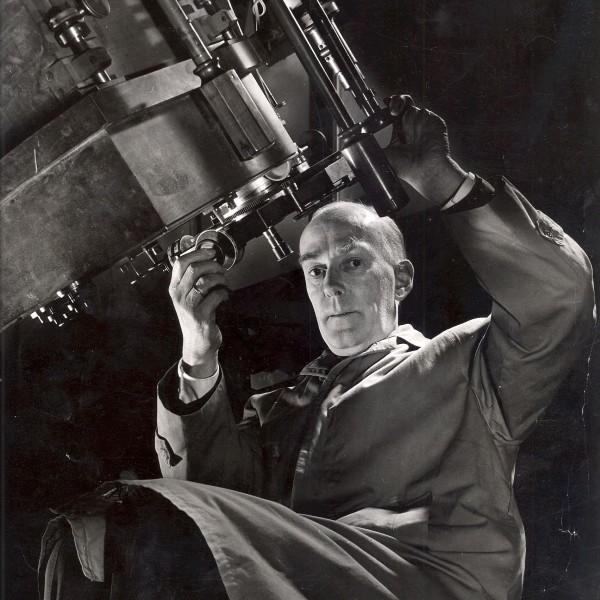
Jan Oort: Black-and-white image of a man at a telescope looking down at the camera.
Jan Oort. Copyright Leiden Observatory. Used with permission.

Jan Oort: Father of the Oort Cloud

Jan Hendrick Oort was born on today’s date – April 28, 1900 – in Franeker, Netherlands. We know his name today because he theorized the existence of the Oort Cloud, a vast comet cloud in the outermost reaches of our solar system.

As early as 1932, Oort also became one of the first to use the term dark matter.

And, when it came to expertise about our home galaxy, the Milky Way, few astronomers in the 20th century were more knowledgeable than Jan Oort.

Jan Oort and the Oort Cloud

1950 was a key year for Oort. That was the year he proposed the theory of the Oort Cloud.

The Oort Cloud is also known as the Öpik-Oort Cloud in honor of Ernst Öpik, an Estonian astronomer. Öpik had independently postulated the existence of a cloud of comets encircling our solar system in 1932.

The theory of this comet reservoir stemmed from astronomers’ observations. They noticed that two types of comets travel into the inner solar system to round the sun that binds them in orbit. Some have relatively short orbital periods, on the order of about 200 years or less. And some comets require much longer, thousands of years, to orbit the sun once.

But where do these comets come from? Oort proposed a reservoir of comets at the outer limits of our solar system. He said that long-period comets are sometimes knocked from their very distant orbits (perhaps by passing stars) to orbits that bring them near our sun.

If it exists, this cloud of comets – the Oort Cloud – contains material leftover from the formation of our solar system, 4 1/2 billion years ago. The comets within it lie as close as about 5,000 times up to about 100,000 times the Earth-sun distance. That’s a distance of up to 93 trillion miles (150 trillion km) away.

The Oort Cloud of comets is not an observed fact. It’s still a theory. But it’s a well-accepted theory by astronomers that has stood the test of time. And it’s thought to explain the origin of long-period comets such as Comet Hale-Bopp.

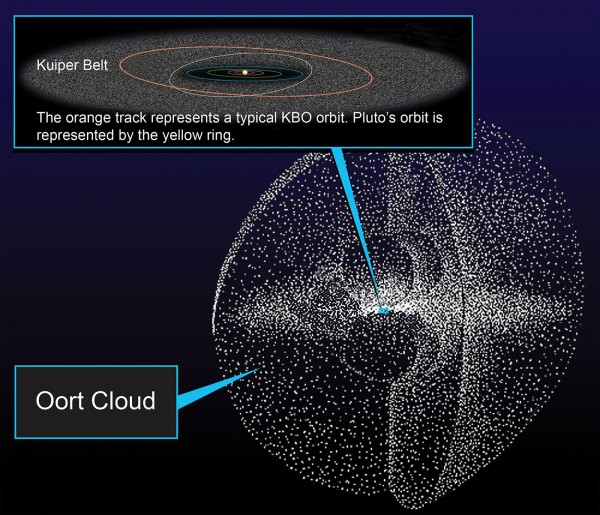
Diagram of a sphere of white dots with solar system invisible at center of sphere.
Artist’s concept of the Oort Cloud, the theoretical comet cloud surrounding our solar system, named for Dutch astronomer Jan Oort. Image via NASA/ Forbes.

Jan Oort solved the comet puzzle

Prior to Oort’s work on the Oort Cloud, astronomers wondered for hundreds of years (or thousands of years, if you count history’s earliest watchers of the skies) where comets originate. Astronomers in the 20th century knew that comets collide with other celestial bodies. They knew comets vaporize when they pass too near the sun. And sometimes those close encounters eject them from our solar system.

And yet there are always new comets coming to our part of the solar system. Why? Where do they come from?

The Oort Cloud answers this paradox of comets that seem to appear out of nowhere.

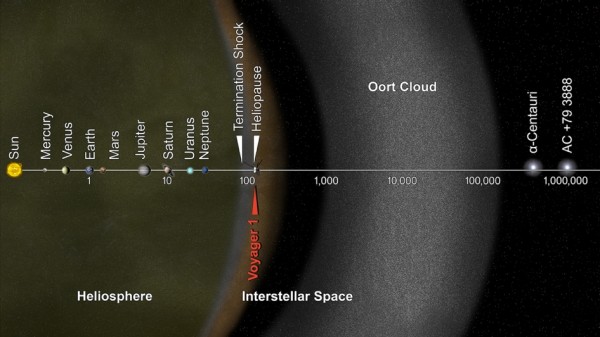
Diagram of solar system with sun at left side past the planets out to the Oort Cloud at right.
Artist’s concept of the solar system including the Oort Cloud. The scale bar is in astronomical units, with each set distance beyond 1 AU representing 10 times the previous distance. One AU is the distance from the sun to the Earth, which is about 93 million miles or 150 million km. NASA’s Voyager 1, humankind’s most distant spacecraft, is around 172 AU. Image via NASA/ JPL-Caltech/ Wikipedia.

In school, he followed his passions

Oort was one of five children. His father, Abraham Hendrikus Oort, was a psychiatrist. Oort’s parents always encouraged him to follow his passions. And so he decided to study physics at the University of Groningen in 1917.

Attending the lectures of astronomer Jacobus Kapteyn was a turning point for Oort. In fact, Kapteyn’s research greatly inspired him and he switched to studying astronomy.

Later, in 1924, Leiden Observatory welcomed Oort, where he began studying high-velocity stars. Two years later, he defended his doctoral thesis on that subject. This was, additionally, four years after the death of his friend and mentor, Professor Kapteyn.

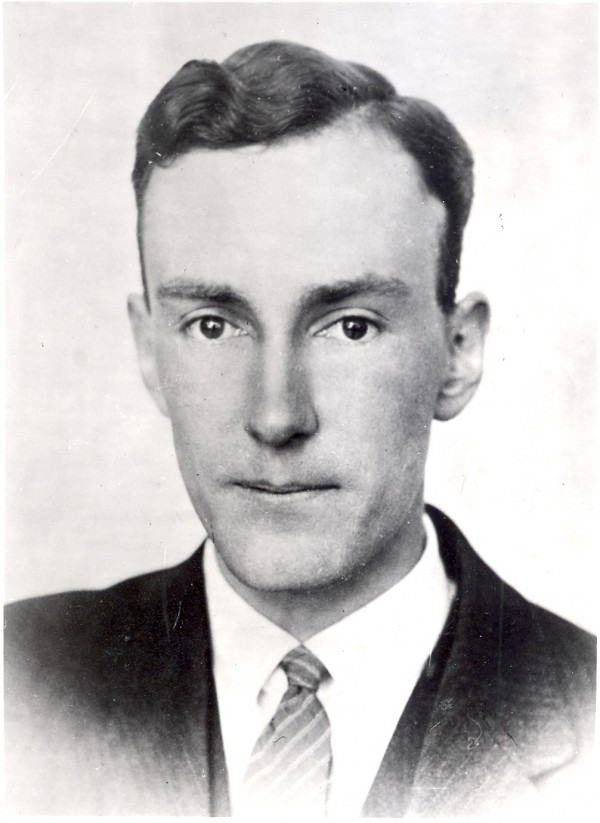
Black and white image of man in suit and tie.
Jan Oort. Copyright Leiden Observatory. Used with permission.

Jan Oort’s early work

In 1926, astronomer Bertil Lindblad explained the stellar motion properties studied by Kapteyn to be the result of the rotation of the Milky Way. He explained it by proposing that stars closer to the center of the galaxy revolve around the galaxy’s center faster than stars farther away from the center. Subsequently, Jan Oort successfully proved and modified Lindblad’s theory in 1927 after observing the velocities of many stars.

During Oort’s studies of star motions in 1932, he noticed that many stars move faster than expected, given their location within the Milky Way. With this in mind, he then used the term dark matter – not as we use it today – but in the sense of ordinary stars that are either dim (or dark) or hidden from us behind other stars.

Read more about Fritz Zwicky, Jan Oort and dark matter here

Oort continued developing the Lindblad theory. It eventually came to be known as the Lindblad-Oort theory because of his contributions.

Later, Oort became a professor at the University of Leiden in 1935. Among other major accomplishments, the young professor determined that our sun is some 30,000 light-years from the center of our Milky Way galaxy. This is still the number we use today. He also calculated that the sun orbits around the center of the galaxy once every 225 million years.

In 1945, the Observatory of Leiden appointed Oort as their Director.

He maintained this position until 1970.

Oort died in 1992, at 92 years old. But his contributions to astronomy live on.

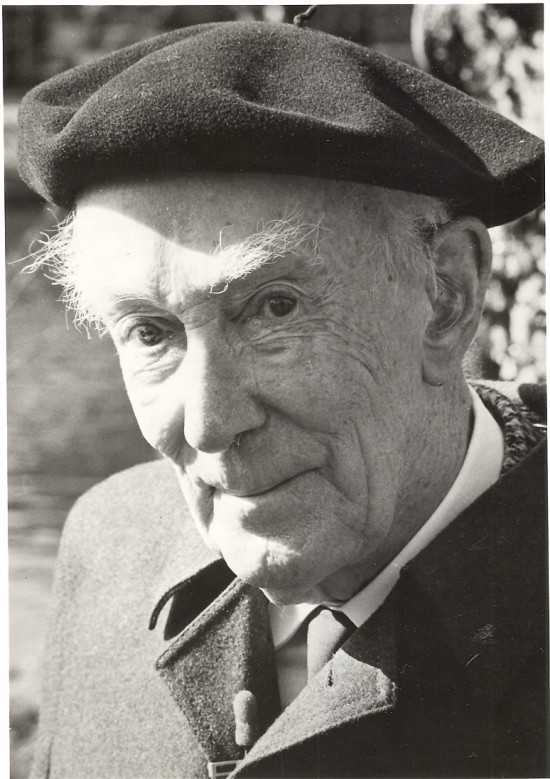
Old man in a beret.
Jan Oort. Copyright Leiden Observatory. Used with permission.

Bottom line: Dutch astronomer Jan Oort was born on April 28, 1900. He visualized a vast reservoir of icy comets on the outskirts of our solar system, which now bears his name.

The post April 28 is Jan Oort’s birthday first appeared on EarthSky.


from EarthSky https://ift.tt/kVxTHaW
Jan Oort: Black-and-white image of a man at a telescope looking down at the camera.
Jan Oort. Copyright Leiden Observatory. Used with permission.

Jan Oort: Father of the Oort Cloud

Jan Hendrick Oort was born on today’s date – April 28, 1900 – in Franeker, Netherlands. We know his name today because he theorized the existence of the Oort Cloud, a vast comet cloud in the outermost reaches of our solar system.

As early as 1932, Oort also became one of the first to use the term dark matter.

And, when it came to expertise about our home galaxy, the Milky Way, few astronomers in the 20th century were more knowledgeable than Jan Oort.

Jan Oort and the Oort Cloud

1950 was a key year for Oort. That was the year he proposed the theory of the Oort Cloud.

The Oort Cloud is also known as the Öpik-Oort Cloud in honor of Ernst Öpik, an Estonian astronomer. Öpik had independently postulated the existence of a cloud of comets encircling our solar system in 1932.

The theory of this comet reservoir stemmed from astronomers’ observations. They noticed that two types of comets travel into the inner solar system to round the sun that binds them in orbit. Some have relatively short orbital periods, on the order of about 200 years or less. And some comets require much longer, thousands of years, to orbit the sun once.

But where do these comets come from? Oort proposed a reservoir of comets at the outer limits of our solar system. He said that long-period comets are sometimes knocked from their very distant orbits (perhaps by passing stars) to orbits that bring them near our sun.

If it exists, this cloud of comets – the Oort Cloud – contains material leftover from the formation of our solar system, 4 1/2 billion years ago. The comets within it lie as close as about 5,000 times up to about 100,000 times the Earth-sun distance. That’s a distance of up to 93 trillion miles (150 trillion km) away.

The Oort Cloud of comets is not an observed fact. It’s still a theory. But it’s a well-accepted theory by astronomers that has stood the test of time. And it’s thought to explain the origin of long-period comets such as Comet Hale-Bopp.

Diagram of a sphere of white dots with solar system invisible at center of sphere.
Artist’s concept of the Oort Cloud, the theoretical comet cloud surrounding our solar system, named for Dutch astronomer Jan Oort. Image via NASA/ Forbes.

Jan Oort solved the comet puzzle

Prior to Oort’s work on the Oort Cloud, astronomers wondered for hundreds of years (or thousands of years, if you count history’s earliest watchers of the skies) where comets originate. Astronomers in the 20th century knew that comets collide with other celestial bodies. They knew comets vaporize when they pass too near the sun. And sometimes those close encounters eject them from our solar system.

And yet there are always new comets coming to our part of the solar system. Why? Where do they come from?

The Oort Cloud answers this paradox of comets that seem to appear out of nowhere.

Diagram of solar system with sun at left side past the planets out to the Oort Cloud at right.
Artist’s concept of the solar system including the Oort Cloud. The scale bar is in astronomical units, with each set distance beyond 1 AU representing 10 times the previous distance. One AU is the distance from the sun to the Earth, which is about 93 million miles or 150 million km. NASA’s Voyager 1, humankind’s most distant spacecraft, is around 172 AU. Image via NASA/ JPL-Caltech/ Wikipedia.

In school, he followed his passions

Oort was one of five children. His father, Abraham Hendrikus Oort, was a psychiatrist. Oort’s parents always encouraged him to follow his passions. And so he decided to study physics at the University of Groningen in 1917.

Attending the lectures of astronomer Jacobus Kapteyn was a turning point for Oort. In fact, Kapteyn’s research greatly inspired him and he switched to studying astronomy.

Later, in 1924, Leiden Observatory welcomed Oort, where he began studying high-velocity stars. Two years later, he defended his doctoral thesis on that subject. This was, additionally, four years after the death of his friend and mentor, Professor Kapteyn.

Black and white image of man in suit and tie.
Jan Oort. Copyright Leiden Observatory. Used with permission.

Jan Oort’s early work

In 1926, astronomer Bertil Lindblad explained the stellar motion properties studied by Kapteyn to be the result of the rotation of the Milky Way. He explained it by proposing that stars closer to the center of the galaxy revolve around the galaxy’s center faster than stars farther away from the center. Subsequently, Jan Oort successfully proved and modified Lindblad’s theory in 1927 after observing the velocities of many stars.

During Oort’s studies of star motions in 1932, he noticed that many stars move faster than expected, given their location within the Milky Way. With this in mind, he then used the term dark matter – not as we use it today – but in the sense of ordinary stars that are either dim (or dark) or hidden from us behind other stars.

Read more about Fritz Zwicky, Jan Oort and dark matter here

Oort continued developing the Lindblad theory. It eventually came to be known as the Lindblad-Oort theory because of his contributions.

Later, Oort became a professor at the University of Leiden in 1935. Among other major accomplishments, the young professor determined that our sun is some 30,000 light-years from the center of our Milky Way galaxy. This is still the number we use today. He also calculated that the sun orbits around the center of the galaxy once every 225 million years.

In 1945, the Observatory of Leiden appointed Oort as their Director.

He maintained this position until 1970.

Oort died in 1992, at 92 years old. But his contributions to astronomy live on.

Old man in a beret.
Jan Oort. Copyright Leiden Observatory. Used with permission.

Bottom line: Dutch astronomer Jan Oort was born on April 28, 1900. He visualized a vast reservoir of icy comets on the outskirts of our solar system, which now bears his name.

The post April 28 is Jan Oort’s birthday first appeared on EarthSky.


from EarthSky https://ift.tt/kVxTHaW

Disabled parrot becomes alpha male through beak jousting


Watch Bruce the kea parrot, who has a disability. Bruce does not have an upper beak, but he’s still an alpha male. Thumbnail image via Ximena Nelson, professor at the University of Canterbury (used with permission).

A disabled kea parrot named Bruce, living at Willowbank Wildlife Reserve in New Zealand, has become the dominant male in his social group thanks to a unique fighting strategy. Researchers from the University of Canterbury said on April 21, 2026, that Bruce – who lacks an upper beak – not only survives but thrives socially by using an original combat technique that no other parrot replicates.

The researchers published their findings in the peer-reviewed journal Current Biology on April 20, 2026.

How a disabled parrot turned a disability into dominance

Scientists observed a captive group of endangered kea parrots at Willowbank Wildlife Reserve in New Zealand. They wanted to understand their social behavior and aggression patterns. Bruce immediately stood out because he had already gained attention for using pebbles as self-care tools in earlier observations. However, this new study focused on how he interacts socially, especially during conflicts.

The research team, led by Alexander Grabham of the University of Canterbury, documented Bruce’s behavior in detail. Then they compared it with other males and females in the group. They recorded 227 agonistic interactions (social conflict behaviors such as threats, fights or dominance displays) involving 12 birds in total (9 males and 3 females).


Want to hear Bruce? Video via Alexander Grabham.

Beak jousting is Bruce’s winning strategy

Bruce built his dominance through what researchers describe as a novel fighting style: beak jousting. Instead of relying on traditional beak clashes like other kea, he uses his exposed lower beak as a spear-like weapon. Grabham explained:

Everything we know about animal contests predicts that the bigger, better-armed competitor should prevail. Missing his entire upper beak should have put Bruce at a serious disadvantage. Yet Bruce, the only disabled bird in the group, was undefeated in his dominance interactions with other males. Bruce was the alpha male.

Bruce extends his neck to strike opponents at close range. But he also runs or jumps forward to increase force. Unlike other males, he consistently uses this method instead of kicking or conventional beak fights. In 73% of cases, his jousting immediately pushes opponents away.

Out of all recorded male interactions, Bruce took part in 36 and won every single one. Overall, he dominated all 162 male-male encounters observed in the group.


Here’s an example of Bruce beak jousting. En garde! Video via co-author Ximena Nelson, professor at the University of Canterbury (used with permission).

Social power and physical advantages

Bruce’s success does not stop at fighting. His dominance gives him clear social benefits. Researchers found he enjoys priority access to food sources and even receives grooming from other males, including beak cleaning … an unusual sign of social acceptance.

In addition, his body shows signs of lower stress. The study reports that Bruce has the lowest levels of corticosterone metabolites among the group. This indicates reduced physiological stress compared to his peers.

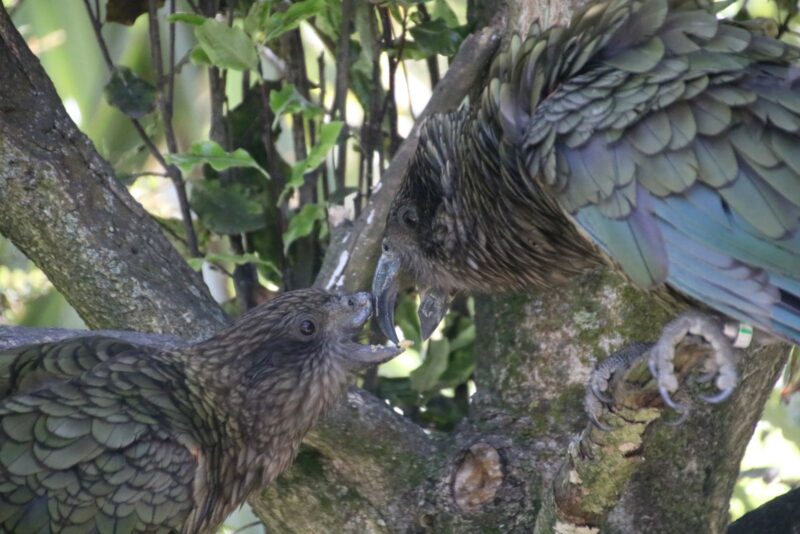
Disabled parrot: One parrot is picking debris off another parrot’s beak as part of grooming.
In this photo, Bruce is getting a little help from his friends to clean his beak. Image via Alexander Grabham (used with permission).

What Bruce’s success reveals about animal intelligence

Bruce’s case shows that intelligence plays a central role in how animals can succeed socially. Rather than relying only on physical ability, success can also come from how effectively an animal adapts and solves problems in its environment. Despite missing his upper beak, he has developed a unique fighting strategy that allows him to dominate his social group. As Grabham commented:

Bruce has not just found a way to compensate for his missing beak; he innovated a completely novel fighting style and turned it to his advantage.

This points to an important evolutionary idea: not all species are equally able to show this kind of adaptation. The study links such behavioral innovation to cognitive flexibility. And that is itself associated in previous research with larger brains and greater problem-solving capacity. In other words, this type of success is more likely in species that already have the neurological capacity for learning and innovation.


No upper beak, still flawless grooming. Video via Alexander Grabham (used with permission).

The disabled parrot has the advantage

The study also suggests that animals are sometimes able to compensate for physical limitations without human assistance. The researchers say that in some cases, animals may adapt so effectively that interventions like prosthetics might not always improve their quality of life, since natural innovation can sometimes outperform assistance. As Grabham noted:

If a disabled animal can innovate its way to success, well-intentioned interventions like prosthetics might not always improve their quality of life. Sometimes the animal can do better without help.

Bruce’s rise to dominance is a reminder that in highly intelligent species like kea, survival isn’t just about physical traits. What humans see as a disability might end up being an advantage for the animal.


No beak, no fear. That’s Bruce. Tough as they come. Video via Alexander Grabham (used with permission).

Bottom line: Bruce the disabled parrot rises to alpha status among his peers. Bruce does not have an upper beak yet uses a unique beak jousting tactic that causes other parrots to submit.

Source: A disabled kea parrot is the alpha male of his circus

Via University of Canterbury

Read more: Monk parakeets: The more social, the richer their language

Read more: Australian lyrebirds have a hidden skill for farming

The post Disabled parrot becomes alpha male through beak jousting first appeared on EarthSky.


from EarthSky https://ift.tt/q9JflxL


Watch Bruce the kea parrot, who has a disability. Bruce does not have an upper beak, but he’s still an alpha male. Thumbnail image via Ximena Nelson, professor at the University of Canterbury (used with permission).

A disabled kea parrot named Bruce, living at Willowbank Wildlife Reserve in New Zealand, has become the dominant male in his social group thanks to a unique fighting strategy. Researchers from the University of Canterbury said on April 21, 2026, that Bruce – who lacks an upper beak – not only survives but thrives socially by using an original combat technique that no other parrot replicates.

The researchers published their findings in the peer-reviewed journal Current Biology on April 20, 2026.

How a disabled parrot turned a disability into dominance

Scientists observed a captive group of endangered kea parrots at Willowbank Wildlife Reserve in New Zealand. They wanted to understand their social behavior and aggression patterns. Bruce immediately stood out because he had already gained attention for using pebbles as self-care tools in earlier observations. However, this new study focused on how he interacts socially, especially during conflicts.

The research team, led by Alexander Grabham of the University of Canterbury, documented Bruce’s behavior in detail. Then they compared it with other males and females in the group. They recorded 227 agonistic interactions (social conflict behaviors such as threats, fights or dominance displays) involving 12 birds in total (9 males and 3 females).


Want to hear Bruce? Video via Alexander Grabham.

Beak jousting is Bruce’s winning strategy

Bruce built his dominance through what researchers describe as a novel fighting style: beak jousting. Instead of relying on traditional beak clashes like other kea, he uses his exposed lower beak as a spear-like weapon. Grabham explained:

Everything we know about animal contests predicts that the bigger, better-armed competitor should prevail. Missing his entire upper beak should have put Bruce at a serious disadvantage. Yet Bruce, the only disabled bird in the group, was undefeated in his dominance interactions with other males. Bruce was the alpha male.

Bruce extends his neck to strike opponents at close range. But he also runs or jumps forward to increase force. Unlike other males, he consistently uses this method instead of kicking or conventional beak fights. In 73% of cases, his jousting immediately pushes opponents away.

Out of all recorded male interactions, Bruce took part in 36 and won every single one. Overall, he dominated all 162 male-male encounters observed in the group.


Here’s an example of Bruce beak jousting. En garde! Video via co-author Ximena Nelson, professor at the University of Canterbury (used with permission).

Social power and physical advantages

Bruce’s success does not stop at fighting. His dominance gives him clear social benefits. Researchers found he enjoys priority access to food sources and even receives grooming from other males, including beak cleaning … an unusual sign of social acceptance.

In addition, his body shows signs of lower stress. The study reports that Bruce has the lowest levels of corticosterone metabolites among the group. This indicates reduced physiological stress compared to his peers.

Disabled parrot: One parrot is picking debris off another parrot’s beak as part of grooming.
In this photo, Bruce is getting a little help from his friends to clean his beak. Image via Alexander Grabham (used with permission).

What Bruce’s success reveals about animal intelligence

Bruce’s case shows that intelligence plays a central role in how animals can succeed socially. Rather than relying only on physical ability, success can also come from how effectively an animal adapts and solves problems in its environment. Despite missing his upper beak, he has developed a unique fighting strategy that allows him to dominate his social group. As Grabham commented:

Bruce has not just found a way to compensate for his missing beak; he innovated a completely novel fighting style and turned it to his advantage.

This points to an important evolutionary idea: not all species are equally able to show this kind of adaptation. The study links such behavioral innovation to cognitive flexibility. And that is itself associated in previous research with larger brains and greater problem-solving capacity. In other words, this type of success is more likely in species that already have the neurological capacity for learning and innovation.


No upper beak, still flawless grooming. Video via Alexander Grabham (used with permission).

The disabled parrot has the advantage

The study also suggests that animals are sometimes able to compensate for physical limitations without human assistance. The researchers say that in some cases, animals may adapt so effectively that interventions like prosthetics might not always improve their quality of life, since natural innovation can sometimes outperform assistance. As Grabham noted:

If a disabled animal can innovate its way to success, well-intentioned interventions like prosthetics might not always improve their quality of life. Sometimes the animal can do better without help.

Bruce’s rise to dominance is a reminder that in highly intelligent species like kea, survival isn’t just about physical traits. What humans see as a disability might end up being an advantage for the animal.


No beak, no fear. That’s Bruce. Tough as they come. Video via Alexander Grabham (used with permission).

Bottom line: Bruce the disabled parrot rises to alpha status among his peers. Bruce does not have an upper beak yet uses a unique beak jousting tactic that causes other parrots to submit.

Source: A disabled kea parrot is the alpha male of his circus

Via University of Canterbury

Read more: Monk parakeets: The more social, the richer their language

Read more: Australian lyrebirds have a hidden skill for farming

The post Disabled parrot becomes alpha male through beak jousting first appeared on EarthSky.


from EarthSky https://ift.tt/q9JflxL

New organics on Mars raise questions about ancient life

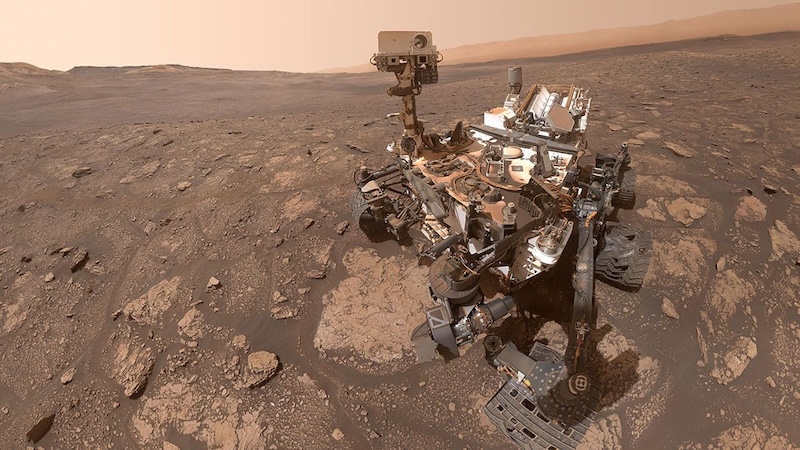
Organics on Mars: Mechanical rover sitting in brownish, rocky terrain, with dusty sky above.
View larger. | The Curiosity rover took this selfie on October 25, 2020. It had just drilled the rock named Mary Anning, located on Mars’ Mount Sharp. It’s within this rock that scientists have now detected diverse organics on Mars. The sample included some organic molecules that scientists had never before seen on Mars. Image via NASA/ JPL-Caltech/ MSSS.
  • NASA’s Curiosity rover has found the most diverse collection of organic molecules ever seen on Mars.
  • The organics include seven new carbon-bearing molecules. Such molecules on Earth form the basis of all biological processes. They make up the structures of cells and tissues, participate in chemical reactions that sustain life, and store and transmit genetic information.
  • The new organics add to the evidence for Mars’ life now or in the past. Mars apparently had (or has) the right chemistry to support life.

Most diverse organic molecules on Mars

There are two active rovers on Mars now. And both Curiosity and Perseverance have found an abundance of organic molecules on Mars in recent years. And now Curiosity has identified the most diverse collection of organic molecules – molecules containing carbon, capable of forming long chains and complex rings – yet seen on Mars. They include organics scientists hadn’t seen before on the red planet.

NASA said on April 21, 2026, that pinpointing them took years of lab work, both in Curiosity’s onboard laboratory and in comparison studies back on Earth. Overall, the rover found 21 carbon-bearing molecules in a rock it first sampled in 2020. Seven of those molecules are new discoveries on Mars.

It isn’t known if any of the organics are related to ancient life. But the scientists said they add to the evidence that Mars had the right chemistry to support life.

Notably, rocks that had been exposed to harsh ultraviolet radiation for billions of years were still able to preserve the organics.

The researchers published the tantalizing peer-reviewed results in Nature Communications on April 21, 2026.

Science news, night sky events and beautiful photos, all in one place. Click here to subscribe to our free daily newsletter.

NASA’s Curiosity Finds Organic Molecules Never Seen Before on Marswww.nasa.gov/missions/mar…

HiRISE Beautiful Mars (NASA) (@uahirise.bsky.social) 2026-04-21T21:25:34.798Z

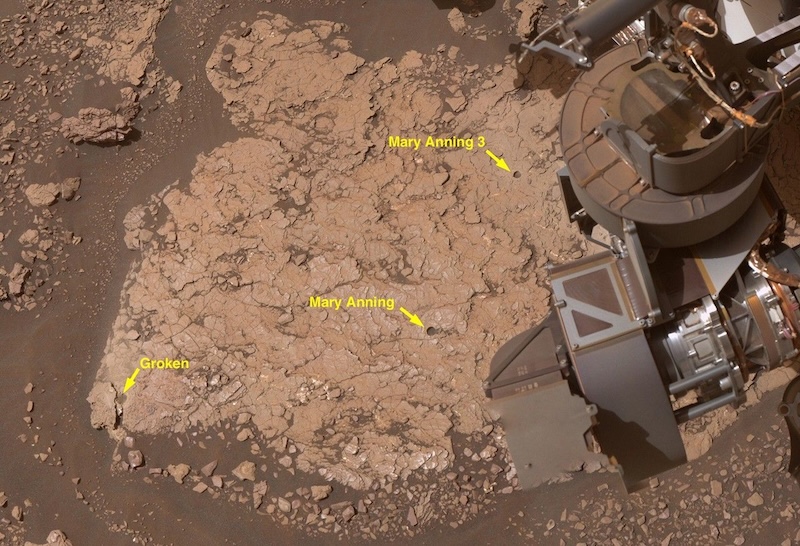
Mary Anning 3

Curiosity found the diverse collection of organics in a drill sample nicknamed Mary Anning 3. It’s one of three holes that the rover drilled in the same rock. The other two holes are named Mary Anning and Groken. (A nearby spot named Mary Anning 2 is one that Curiosity never drilled.) Mary Anning is the name of an early 19th-century English fossil collector and paleontologist.

The rock is on a part of Mount Sharp in Gale Crater where lakes and flowing rivers once existed. The area is rich in clay minerals, which are ideal for preserving organic molecules.

The most interesting organics

One of the most interesting organic molecules researchers found is nitrogen heterocycle. It’s a ring of carbon atoms including nitrogen. These molecules are predecessors to both DNA and RNA. Lead author Amy Williams at the University of Florida in Gainesville said:

That detection is pretty profound because these structures can be chemical precursors to more complex nitrogen-bearing molecules. Nitrogen heterorcycles have never been found before on the Martian surface or confirmed in Martian meteorites.

Curiosity also found benzothiophene, a carbon- and sulfur-bearing molecule that’s been found in many meteorites. Such molecules might have seeded prebiotic chemistry across the early solar system.

Curiosity project scientist Ashwin Vasavada at NASA’s Jet Propulsion Laboratory in Southern California said:

This is Curiosity and our team at their best. It took dozens of scientists and engineers to locate this site, drill the sample, and make these discoveries with our awesome robot. This collection of organic molecules once again increases the prospect that Mars offered a home for life in the ancient past.

Flattish brown rock seen from above. 3 small holes are labeled and part of a robotic arm is on the right side.
View larger. | This is the rock Mary Anning. The sample with the diverse organic molecules came from drill hole Mary Anning 3. Image via NASA/ JPL-Caltech/ MSSS.
Smiling woman wearing a patterned shirt with a white cardigan on top of it.
Amy Williams at the University of Florida is the lead author of the new study about organics on Mars. Image via University of Florida.

Wet chemistry reveals organic molecules

One of the ways Curiosity detects organic molecules is with wet chemistry. The minicab inside the rover, called Sample Analysis at Mars (SAM), can drop samples of powdered rock into small cups containing solvent. The chemical reactions that take place can break apart larger molecules. These molecules can be difficult to detect otherwise. There are several cups. Two of them contain the solvent tetramethylammonium hydroxide (TMAH). Those two cups are reserved for the “highest-value” samples. And Mary Anning 3 was the first sample tested in one of those cups.

As a comparison, the research team also tested the wet chemistry technique back on Earth. They used a piece of the famous Murchison meteorite, which is over 4 billion years old. The results were interesting, indeed. Murchison contains organic molecules, just like the Mary Anning 3 samples. When the scientists exposed the meteorite sample to the TMAH solvent, the larger molecules broke down into smaller ones. These included some of the organics found in Mary Anning 3, including benzothiophene.

This similar breakdown of organics shows that the organic molecules in Mary Anning 3 could indeed have resulted from the breakdown of more complex organic molecules.

Mars rover on reddish rocky terrain and a box to the left showing carbon atoms in zig-zag patterns.
View larger. | Graphic depicting the long-chain organic molecules decane, undecane and dodecane. NASA reported their discovery by Curiosity last year. Image via NASA/ Dan Gallagher.

Largest organic molecules on Mars

The new findings by Curiosity also complement the announcement last year of the largest organic molecules ever found on Mars. Curiosity made that discovery as well.

But determining that for sure (or not) will likely require the samples the rover took to be brought back to Earth for closer study.

Those molecules included the long-chain hydrocarbons decane, undecane and dodecane. Scientists think they are the remains of fatty acids. And they are the most complex organics yet found on Mars. Plus, last February, NASA scientists said that these organics are hard to explain without biology:

As the non-biological sources they considered could not fully explain the abundance of organic compounds, it is therefore reasonable to hypothesize that living things could have formed them.

Brownish rock with 2 parallel bands of white rock and small irregular spots with dark edges between them.
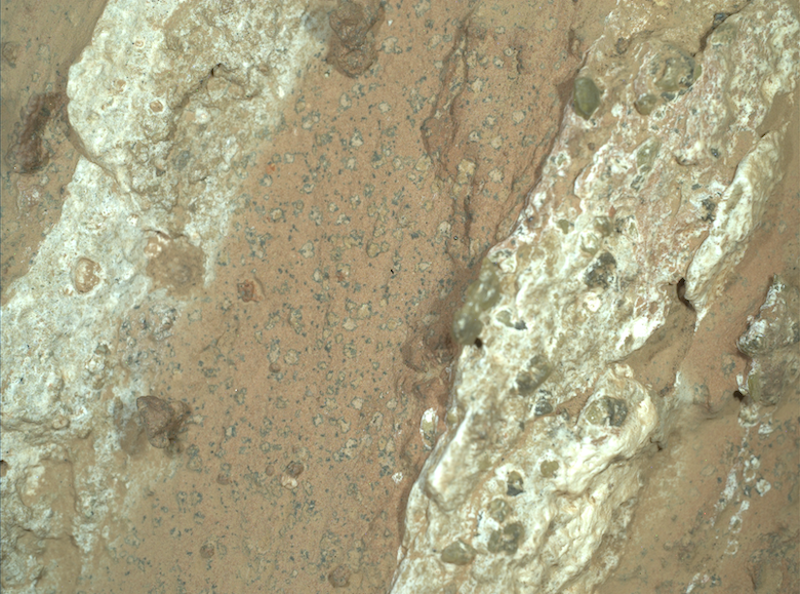
View larger. | Perseverance found this rock – nicknamed Cheyava Falls – on Mars in July 2024. The leopard spots are the small irregular whitish spots with black edges. The poppy seeds are the smaller dark dots. NASA said they may be evidence for microbial life on Mars billions of years ago. Image via NASA/ JPL-Caltech/ MSSS.

Leopard spots and poppy seeds

The findings also come after the Perseverance rover, in Jezero Crater, found intriguing leopard spots and poppy seeds in rocks. First announced in 2024, the chemical signatures of the markings suggest they might be traces of ancient microbial life.

Bottom line: NASA’s Curiosity rover has identified the most diverse collection of organic molecules on Mars ever found. They include some organics never seen before.

Source: Diverse organic molecules on Mars revealed by the first SAM TMAH experiment

Via NASA

Read more: NASA says organics on Mars are hard to explain without life

Read more: Surprisingly big organic molecules on Mars: A hint of life?

The post New organics on Mars raise questions about ancient life first appeared on EarthSky.


from EarthSky https://ift.tt/nKpEsc3
Organics on Mars: Mechanical rover sitting in brownish, rocky terrain, with dusty sky above.
View larger. | The Curiosity rover took this selfie on October 25, 2020. It had just drilled the rock named Mary Anning, located on Mars’ Mount Sharp. It’s within this rock that scientists have now detected diverse organics on Mars. The sample included some organic molecules that scientists had never before seen on Mars. Image via NASA/ JPL-Caltech/ MSSS.
  • NASA’s Curiosity rover has found the most diverse collection of organic molecules ever seen on Mars.
  • The organics include seven new carbon-bearing molecules. Such molecules on Earth form the basis of all biological processes. They make up the structures of cells and tissues, participate in chemical reactions that sustain life, and store and transmit genetic information.
  • The new organics add to the evidence for Mars’ life now or in the past. Mars apparently had (or has) the right chemistry to support life.

Most diverse organic molecules on Mars

There are two active rovers on Mars now. And both Curiosity and Perseverance have found an abundance of organic molecules on Mars in recent years. And now Curiosity has identified the most diverse collection of organic molecules – molecules containing carbon, capable of forming long chains and complex rings – yet seen on Mars. They include organics scientists hadn’t seen before on the red planet.

NASA said on April 21, 2026, that pinpointing them took years of lab work, both in Curiosity’s onboard laboratory and in comparison studies back on Earth. Overall, the rover found 21 carbon-bearing molecules in a rock it first sampled in 2020. Seven of those molecules are new discoveries on Mars.

It isn’t known if any of the organics are related to ancient life. But the scientists said they add to the evidence that Mars had the right chemistry to support life.

Notably, rocks that had been exposed to harsh ultraviolet radiation for billions of years were still able to preserve the organics.

The researchers published the tantalizing peer-reviewed results in Nature Communications on April 21, 2026.

Science news, night sky events and beautiful photos, all in one place. Click here to subscribe to our free daily newsletter.

NASA’s Curiosity Finds Organic Molecules Never Seen Before on Marswww.nasa.gov/missions/mar…

HiRISE Beautiful Mars (NASA) (@uahirise.bsky.social) 2026-04-21T21:25:34.798Z

Mary Anning 3

Curiosity found the diverse collection of organics in a drill sample nicknamed Mary Anning 3. It’s one of three holes that the rover drilled in the same rock. The other two holes are named Mary Anning and Groken. (A nearby spot named Mary Anning 2 is one that Curiosity never drilled.) Mary Anning is the name of an early 19th-century English fossil collector and paleontologist.

The rock is on a part of Mount Sharp in Gale Crater where lakes and flowing rivers once existed. The area is rich in clay minerals, which are ideal for preserving organic molecules.

The most interesting organics

One of the most interesting organic molecules researchers found is nitrogen heterocycle. It’s a ring of carbon atoms including nitrogen. These molecules are predecessors to both DNA and RNA. Lead author Amy Williams at the University of Florida in Gainesville said:

That detection is pretty profound because these structures can be chemical precursors to more complex nitrogen-bearing molecules. Nitrogen heterorcycles have never been found before on the Martian surface or confirmed in Martian meteorites.

Curiosity also found benzothiophene, a carbon- and sulfur-bearing molecule that’s been found in many meteorites. Such molecules might have seeded prebiotic chemistry across the early solar system.

Curiosity project scientist Ashwin Vasavada at NASA’s Jet Propulsion Laboratory in Southern California said:

This is Curiosity and our team at their best. It took dozens of scientists and engineers to locate this site, drill the sample, and make these discoveries with our awesome robot. This collection of organic molecules once again increases the prospect that Mars offered a home for life in the ancient past.

Flattish brown rock seen from above. 3 small holes are labeled and part of a robotic arm is on the right side.
View larger. | This is the rock Mary Anning. The sample with the diverse organic molecules came from drill hole Mary Anning 3. Image via NASA/ JPL-Caltech/ MSSS.
Smiling woman wearing a patterned shirt with a white cardigan on top of it.
Amy Williams at the University of Florida is the lead author of the new study about organics on Mars. Image via University of Florida.

Wet chemistry reveals organic molecules

One of the ways Curiosity detects organic molecules is with wet chemistry. The minicab inside the rover, called Sample Analysis at Mars (SAM), can drop samples of powdered rock into small cups containing solvent. The chemical reactions that take place can break apart larger molecules. These molecules can be difficult to detect otherwise. There are several cups. Two of them contain the solvent tetramethylammonium hydroxide (TMAH). Those two cups are reserved for the “highest-value” samples. And Mary Anning 3 was the first sample tested in one of those cups.

As a comparison, the research team also tested the wet chemistry technique back on Earth. They used a piece of the famous Murchison meteorite, which is over 4 billion years old. The results were interesting, indeed. Murchison contains organic molecules, just like the Mary Anning 3 samples. When the scientists exposed the meteorite sample to the TMAH solvent, the larger molecules broke down into smaller ones. These included some of the organics found in Mary Anning 3, including benzothiophene.

This similar breakdown of organics shows that the organic molecules in Mary Anning 3 could indeed have resulted from the breakdown of more complex organic molecules.

Mars rover on reddish rocky terrain and a box to the left showing carbon atoms in zig-zag patterns.
View larger. | Graphic depicting the long-chain organic molecules decane, undecane and dodecane. NASA reported their discovery by Curiosity last year. Image via NASA/ Dan Gallagher.

Largest organic molecules on Mars

The new findings by Curiosity also complement the announcement last year of the largest organic molecules ever found on Mars. Curiosity made that discovery as well.

But determining that for sure (or not) will likely require the samples the rover took to be brought back to Earth for closer study.

Those molecules included the long-chain hydrocarbons decane, undecane and dodecane. Scientists think they are the remains of fatty acids. And they are the most complex organics yet found on Mars. Plus, last February, NASA scientists said that these organics are hard to explain without biology:

As the non-biological sources they considered could not fully explain the abundance of organic compounds, it is therefore reasonable to hypothesize that living things could have formed them.

Brownish rock with 2 parallel bands of white rock and small irregular spots with dark edges between them.
View larger. | Perseverance found this rock – nicknamed Cheyava Falls – on Mars in July 2024. The leopard spots are the small irregular whitish spots with black edges. The poppy seeds are the smaller dark dots. NASA said they may be evidence for microbial life on Mars billions of years ago. Image via NASA/ JPL-Caltech/ MSSS.

Leopard spots and poppy seeds

The findings also come after the Perseverance rover, in Jezero Crater, found intriguing leopard spots and poppy seeds in rocks. First announced in 2024, the chemical signatures of the markings suggest they might be traces of ancient microbial life.

Bottom line: NASA’s Curiosity rover has identified the most diverse collection of organic molecules on Mars ever found. They include some organics never seen before.

Source: Diverse organic molecules on Mars revealed by the first SAM TMAH experiment

Via NASA

Read more: NASA says organics on Mars are hard to explain without life

Read more: Surprisingly big organic molecules on Mars: A hint of life?

The post New organics on Mars raise questions about ancient life first appeared on EarthSky.


from EarthSky https://ift.tt/nKpEsc3

May’s full moon is called the Flower Moon

Chart showing a disk, the full moon, mid way between two widely space dots, the stars Spica and Antares. They are all above a wavy line representing the horizon.
Two hours after sunset on May 1, the full Flower Moon glows brightly in the east. It’ll lie between red Antares and blue-white Spica. Antares is the brightest star in Scorpius. And Spica is the brightest star in Virgo. It’ll also be near Zubenelgenubi, the brightest star in Libra. The full moon will be visible all night.

There are two full moons in May 2026. The first – on May 1 – is the full Flower Moon. The second full moon – a Blue Moon – falls on May 31. And the May 1st full moon is the first of three full micromoons – or most distant full moons – in a row in 2026.

Don’t miss the next unmissable night sky event. Sign up for our free newsletter for daily night sky updates, as well as the latest science news.

When and where to watch in 2026 for the full Flower Moon: Look for the bright, round moon rising low in the east at sunset on May 1. It will reach its highest point in the sky after midnight. And it will lie low in the west shortly before sunrise on May 2.

Crest of the full moon falls at 17:23 UTC on May 1. That’s 12:23 p.m. CDT on May 1. So the moon will look full and round when it’s setting that morning at sunrise and as it’s rising that evening at sunset.

It’s a micrcomoon: The May 1 full Flower Moon is a micromoon. That’s a moon that’s more distant than an average full moon. In fact, it’s the first of three full micromoons in a row. It’ll be 249,793 miles (402,003 km) away.

This full moon falls on May Day, which lies about midway between the March equinox and the June solstice. It – as well as Groundhog Day, Lammas, and Halloween – is a cross-quarter day.

Chart for the morning of May 1

Chart showing a disk, the full moon, above a wavy line, the southwestern horizon. Left of the disk is a dot, the star Zubenelgenubi and left of that is another dot, the star Antares.
An hour before sunrise on May 1, the full Flower Moon will glow brightly in the west near the moderately bright star Zubenelgenubi. And it’ll lie near red Antares, the brightest star in Scorpius.

The moon is fullest around noon

The moon will reach its fullest phase near noon on May 1 for the those in central time zones. It will appear nearly as full when it lies in the west near sunrise on May 1. And again when it lies in the east near sunset on May 1. At full moon, the sun, Earth, and moon align in space, with Earth in the middle. The moon’s day side – its fully lighted hemisphere – faces us. That’s why the moon looks full.

Chart showing, all in a row, a large starred disk representing the sun, a disk representing Earth, and a small disk representing the moon.
At full moon, the sun, Earth, and moon align in space, with Earth in the middle. The moon’s day side – its fully lighted hemisphere – directly faces us.

It’s the Flower Moon

All the full moons have nicknames. Popular names for May’s full moon include the Planting Moon and the Milky Moon, but the Flower Moon is the most common. As you might expect, the name Flower Moon recognizes the blooming of wildflowers and garden flowers. In the light of May’s full moon, many have an enchanting appearance..

Two charts: The first one shows a disk, the December sun, moving across the sky in a low arc above a wavy line representing the horizon. Another, but higher arc shows a disk, the early May sun, moving across the sky. The second chart shows a disk, the December full moon, moving across the sky in a high arc, and another disk, the early May full moon, moving in a lower arc above a wavy line representing the horizon.
For observers in the Northern Hemisphere, the low arc across the sky of the early May full moon nearly matches that of the December sun. The arc of the early May sun is always much higher than the arc of the early May full moon. And it nearly matches that of the December full moon.

Arc of the May full moon

The moon’s arc across our sky varies from month to month and from season to season. Every full moon rises somewhere along the eastern horizon. It’s opposite the sun as it sets in the west. And every full moon arcs across the sky throughout the night. And then it sets somewhere along the western horizon around dawn.

For us in the Northern Hemisphere, the arc of early May’s full moon is lower than the paths of the full moons since December. However, it is higher than the next two which fall in the overnights of May 30 and June 29 in North America.

Two charts: The first one shows a disk, the December sun, moving across the sky in a high arc above a wavy line representing the horizon. Another, but lower arc shows a disk, the early May sun, moving across the sky. The second chart shows a disk, the December full moon, moving across the sky in a low arc, and another disk, the early May full moon, moving in a higher arc above a wavy line representing the horizon.
For observers in the Southern Hemisphere, the high arc across the sky of the early May full moon nearly matches that of the December sun. The arc of the early May sun is always much lower than the arc of the early May full moon, and nearly matches that of the December full moon.

For those folks in the Southern Hemisphere, the full moon’s arc across the sky is climbing higher with each successive month since December. And it will continue to do so until the full moon nearest the June solstice. In 2026, that will be the June 29 full moon.

Chart showing an arrow passing a disk representing Earth then passing a smaller disk representing the moon. The arrow is directed between two dots, representing two stars, Spica, and Antares.
The May 2026 full moon occurs at 17:23 UTC on May 1 and will lie in the constellation Libra.

The May full moon is in both Virgo and Libra

As seen from the Americas, the almost full moon on the morning of May 1 is located in the direction of the constellation Virgo. When it rises about fourteen hours later in the evening of May 1, it has moved into the next zodiacal constellation eastward, Libra the Scales.

Bottom line: The May full moon occurs near the middle of the day on May 1. It appears full both as it sets in the morning of May 1, and as it rises in the evening of May 1.

The post May’s full moon is called the Flower Moon first appeared on EarthSky.


from EarthSky https://ift.tt/GEtLrgU
Chart showing a disk, the full moon, mid way between two widely space dots, the stars Spica and Antares. They are all above a wavy line representing the horizon.
Two hours after sunset on May 1, the full Flower Moon glows brightly in the east. It’ll lie between red Antares and blue-white Spica. Antares is the brightest star in Scorpius. And Spica is the brightest star in Virgo. It’ll also be near Zubenelgenubi, the brightest star in Libra. The full moon will be visible all night.

There are two full moons in May 2026. The first – on May 1 – is the full Flower Moon. The second full moon – a Blue Moon – falls on May 31. And the May 1st full moon is the first of three full micromoons – or most distant full moons – in a row in 2026.

Don’t miss the next unmissable night sky event. Sign up for our free newsletter for daily night sky updates, as well as the latest science news.

When and where to watch in 2026 for the full Flower Moon: Look for the bright, round moon rising low in the east at sunset on May 1. It will reach its highest point in the sky after midnight. And it will lie low in the west shortly before sunrise on May 2.

Crest of the full moon falls at 17:23 UTC on May 1. That’s 12:23 p.m. CDT on May 1. So the moon will look full and round when it’s setting that morning at sunrise and as it’s rising that evening at sunset.

It’s a micrcomoon: The May 1 full Flower Moon is a micromoon. That’s a moon that’s more distant than an average full moon. In fact, it’s the first of three full micromoons in a row. It’ll be 249,793 miles (402,003 km) away.

This full moon falls on May Day, which lies about midway between the March equinox and the June solstice. It – as well as Groundhog Day, Lammas, and Halloween – is a cross-quarter day.

Chart for the morning of May 1

Chart showing a disk, the full moon, above a wavy line, the southwestern horizon. Left of the disk is a dot, the star Zubenelgenubi and left of that is another dot, the star Antares.
An hour before sunrise on May 1, the full Flower Moon will glow brightly in the west near the moderately bright star Zubenelgenubi. And it’ll lie near red Antares, the brightest star in Scorpius.

The moon is fullest around noon

The moon will reach its fullest phase near noon on May 1 for the those in central time zones. It will appear nearly as full when it lies in the west near sunrise on May 1. And again when it lies in the east near sunset on May 1. At full moon, the sun, Earth, and moon align in space, with Earth in the middle. The moon’s day side – its fully lighted hemisphere – faces us. That’s why the moon looks full.

Chart showing, all in a row, a large starred disk representing the sun, a disk representing Earth, and a small disk representing the moon.
At full moon, the sun, Earth, and moon align in space, with Earth in the middle. The moon’s day side – its fully lighted hemisphere – directly faces us.

It’s the Flower Moon

All the full moons have nicknames. Popular names for May’s full moon include the Planting Moon and the Milky Moon, but the Flower Moon is the most common. As you might expect, the name Flower Moon recognizes the blooming of wildflowers and garden flowers. In the light of May’s full moon, many have an enchanting appearance..

Two charts: The first one shows a disk, the December sun, moving across the sky in a low arc above a wavy line representing the horizon. Another, but higher arc shows a disk, the early May sun, moving across the sky. The second chart shows a disk, the December full moon, moving across the sky in a high arc, and another disk, the early May full moon, moving in a lower arc above a wavy line representing the horizon.
For observers in the Northern Hemisphere, the low arc across the sky of the early May full moon nearly matches that of the December sun. The arc of the early May sun is always much higher than the arc of the early May full moon. And it nearly matches that of the December full moon.

Arc of the May full moon

The moon’s arc across our sky varies from month to month and from season to season. Every full moon rises somewhere along the eastern horizon. It’s opposite the sun as it sets in the west. And every full moon arcs across the sky throughout the night. And then it sets somewhere along the western horizon around dawn.

For us in the Northern Hemisphere, the arc of early May’s full moon is lower than the paths of the full moons since December. However, it is higher than the next two which fall in the overnights of May 30 and June 29 in North America.

Two charts: The first one shows a disk, the December sun, moving across the sky in a high arc above a wavy line representing the horizon. Another, but lower arc shows a disk, the early May sun, moving across the sky. The second chart shows a disk, the December full moon, moving across the sky in a low arc, and another disk, the early May full moon, moving in a higher arc above a wavy line representing the horizon.
For observers in the Southern Hemisphere, the high arc across the sky of the early May full moon nearly matches that of the December sun. The arc of the early May sun is always much lower than the arc of the early May full moon, and nearly matches that of the December full moon.

For those folks in the Southern Hemisphere, the full moon’s arc across the sky is climbing higher with each successive month since December. And it will continue to do so until the full moon nearest the June solstice. In 2026, that will be the June 29 full moon.

Chart showing an arrow passing a disk representing Earth then passing a smaller disk representing the moon. The arrow is directed between two dots, representing two stars, Spica, and Antares.
The May 2026 full moon occurs at 17:23 UTC on May 1 and will lie in the constellation Libra.

The May full moon is in both Virgo and Libra

As seen from the Americas, the almost full moon on the morning of May 1 is located in the direction of the constellation Virgo. When it rises about fourteen hours later in the evening of May 1, it has moved into the next zodiacal constellation eastward, Libra the Scales.

Bottom line: The May full moon occurs near the middle of the day on May 1. It appears full both as it sets in the morning of May 1, and as it rises in the evening of May 1.

The post May’s full moon is called the Flower Moon first appeared on EarthSky.


from EarthSky https://ift.tt/GEtLrgU

adds 2