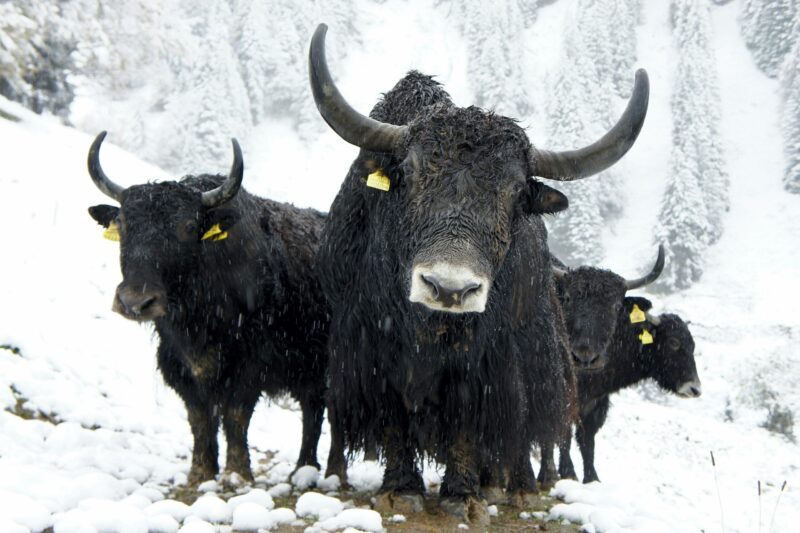
Image via 8Percent Media/ Pexels.
The yak is a robust and resilient mammal that inhabits some of the most inhospitable regions on the planet. Known for their thick, long fur and their ability to withstand extreme cold, yaks graze on plants and can climb through steep terrain. People of the Himalayas and the Tibetan Plateau have relied on the yak as a fundamental ally throughout history.
Science matters. Wonder matters. You matter.
Join our 2025 Donation Campaign today.
Where does the yak live and what does it look like?
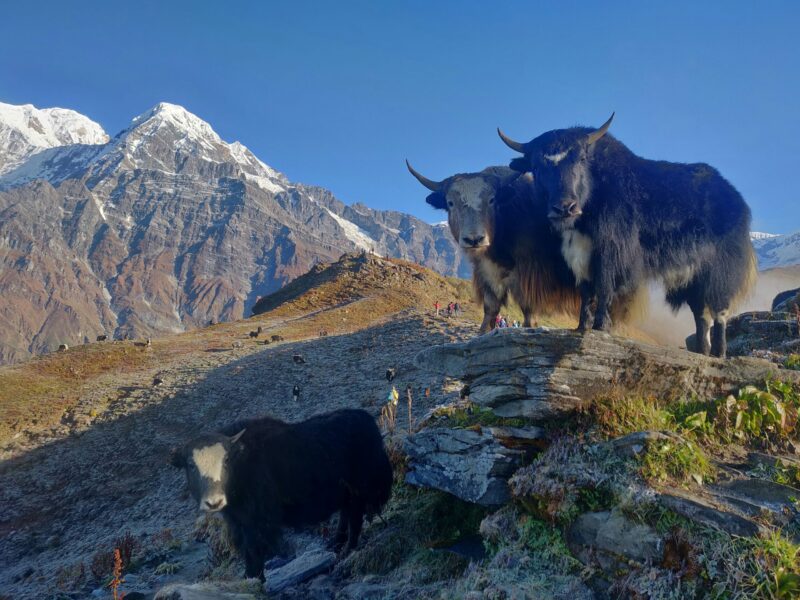
The yak is native to the mountainous regions of the Himalayas, in countries such as China, Nepal, Bhutan and Mongolia. It lives in cold areas, between 9,840 and 19,700 feet (3,000 and 6,000 meters) above sea level, where temperatures can drop below freezing.
Its primary habitat consists of treeless uplands dominated by mountains and plateaus. You’ll usually find them in alpine tundra with a relatively thick carpet of grasses and sedges.
Physically, the yak is imposing. It can measure up to 6.5 feet (2 m) long and weigh between 661 and 2,646 pounds (300 and 1,200 kg), depending on whether it is domesticated or wild. Thick, long fur covers its body and protects it from the cold. And its appearance is even more striking due to its hump and curved horns. Males are usually much larger than females, and wild specimens are noticeably more robust than domesticated ones.
A yak’s amazing abilities
The yak is a true expert at surviving extreme conditions. Its respiratory system is adapted to function effectively in hypoxic environments, that is, areas with little oxygen. This is due to a type of lung cell specific to these mammals. Scientists believe this cell can make yaks’ blood vessels more resilient and fibrous. This could help with the demanding task of breathing with relatively little oxygen.
If other animals — including unadapted humans — were to live at this altitude and with such a lack of oxygen for extended periods of time, they would experience serious lung and heart problems.
Furthermore, its thick fur allows this majestic animal to withstand temperatures as low as -40° (F and C) without problems. Even facing these conditions, this impressive animal can live 20 to 25 years in the wild.
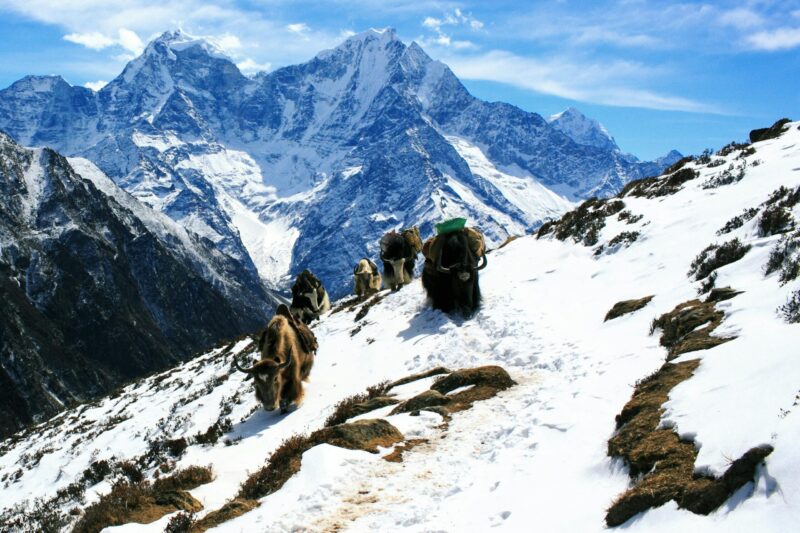
Another of its key abilities is its strength and resilience. People use domesticated yaks as pack animals in mountain passes. That’s because they can carry heavy loads for long distances without becoming easily exhausted. Yaks are also capable of climbing steep terrain, making them ideal companions in mountainous regions where other animals cannot travel.
A yak’s scarce diet
The high-altitude grasslands of the Himalayas may seem arid, but yaks find their daily sustenance in these lands. These impressive herbivores graze for hours every day, traveling great distances in search of grasses, shoots, leaves, mosses and lichens.
Over the years, yaks have developed a unique ability to identify and consume plants that other animals might overlook. Their ability to thrive on a diet of tough, fibrous plants lies in their extraordinary digestive system.
Like other ruminants, yaks have a four-chambered stomach. Each chamber plays a crucial role in breaking down food. Their powerful jaws work tirelessly to grind fibrous vegetation, allowing them to extract every nutrient. Even after swallowing chewed food, the yak regurgitates the cud to chew it further before it passes to the next chamber of its stomach.
When winter descends on the Himalayas, the yak’s diet undergoes a dramatic change, with vegetation buried under the snow. Yaks prefer fresh grass, but they find food even under thick layers of snow. During the lean months, yaks rely on their fat reserves to sustain themselves.
As for water, it can be scarce in the High Himalayas, especially during winter, when rivers freeze. Yaks then eat snow and ice to stay hydrated. Their large, warm snouts efficiently melt the snow, providing them with much-needed water.
The yak’s ability to thrive in the face of such adversity is a testament to its evolutionary prowess. Adapting to such a challenging environment demonstrates its incredible resilience and strength.
The importance of yaks to humans
For humans, yaks are of vital importance, providing meat, milk, wool and leather. Even their dried dung is used as fuel.
In addition, their milk has a high fat content that people use to make butter, cheese and yogurt, essential products in the diet of local communities.
Yak fur is characterized by its heat retention — even when wet — durability, and elasticity. Since these animals shed their fur at the end of winter and the beginning of spring, humans comb yaks to collect their fur. Once washed and treated, people use the fur to make ropes, thread, wool, clothing, tents and blankets, among other things.
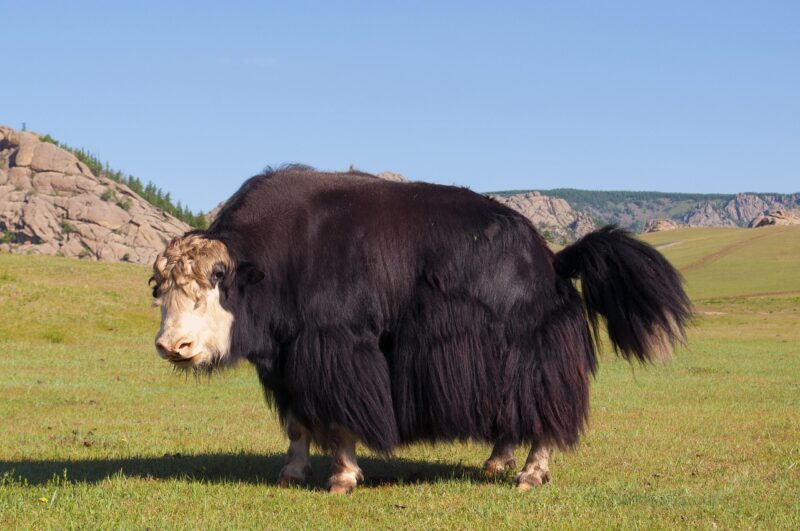
Yaks in the wild
In these majestic mountains, their wild counterparts still roam the Tibetan Plateau, where nature takes its course without human intervention. Yaks embody the indomitable spirit of the mountains, climbing rocky terrain and surviving in extreme conditions.
In the wild, yaks play a vital role in maintaining the delicate balance of their ecosystem. In fact, their hooves help aerate the soil, improving its quality. Furthermore, their nutrient-rich dung acts as a natural fertilizer, supporting a diverse web of life.
They also serve as prey for large predators such as the Tibetan wolf and the snow leopard.
The yak, although often ignored outside its natural habitat, is a symbol of resilience and adaptation, and a true biological and cultural treasure of the Asian mountains.
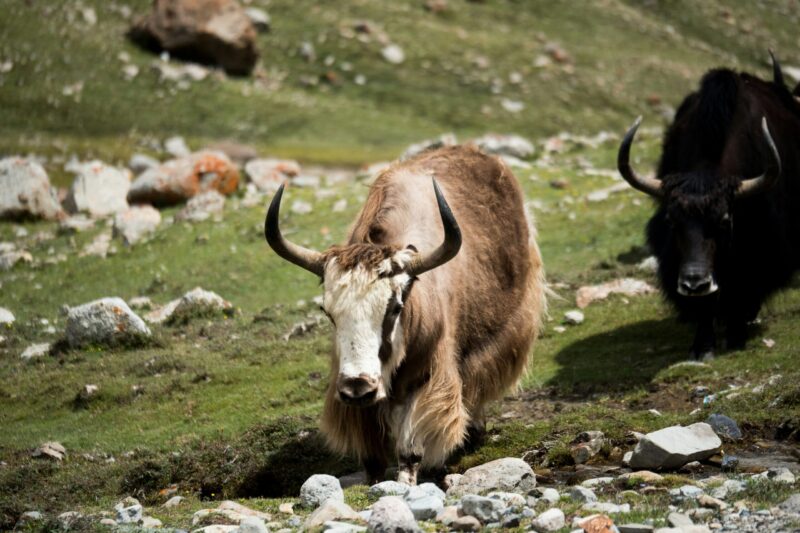
Yak calves
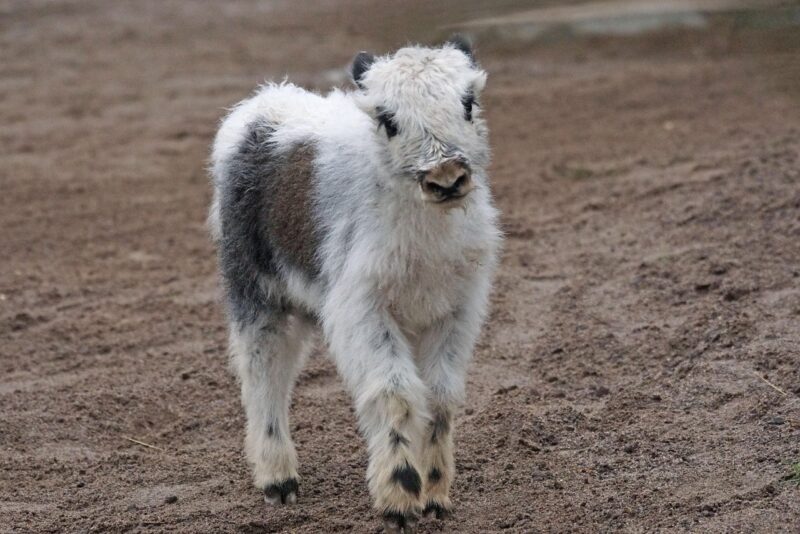
Yak calves are essential to the future and life cycle of this species, as they ensure the continuity of the population and maintain the balance of the high-mountain ecosystems where they live.
Yaks mate in summer and give birth to a single calf the following spring. The gestation period ranges from 257 to 270 days. Females typically give birth only every two years. Caring for and protecting yak calves is key to conserving the species and ensuring its ecological role in the future.


Bottom line: The yak is an imposing animal in the wild and a life saver for people living in the mountainous regions of the Himalayas. This magnificent creature inhabits one of the most inhospitable regions on the planet. How can it withstand the extreme cold?
Read more: Camels are adapted to desert life: Lifeform of the week
The post The yak is an imposing giant of the high mountains first appeared on EarthSky.
from EarthSky https://ift.tt/M1GmNrv
Image via 8Percent Media/ Pexels.
The yak is a robust and resilient mammal that inhabits some of the most inhospitable regions on the planet. Known for their thick, long fur and their ability to withstand extreme cold, yaks graze on plants and can climb through steep terrain. People of the Himalayas and the Tibetan Plateau have relied on the yak as a fundamental ally throughout history.
Science matters. Wonder matters. You matter.
Join our 2025 Donation Campaign today.
Where does the yak live and what does it look like?
The yak is native to the mountainous regions of the Himalayas, in countries such as China, Nepal, Bhutan and Mongolia. It lives in cold areas, between 9,840 and 19,700 feet (3,000 and 6,000 meters) above sea level, where temperatures can drop below freezing.
Its primary habitat consists of treeless uplands dominated by mountains and plateaus. You’ll usually find them in alpine tundra with a relatively thick carpet of grasses and sedges.
Physically, the yak is imposing. It can measure up to 6.5 feet (2 m) long and weigh between 661 and 2,646 pounds (300 and 1,200 kg), depending on whether it is domesticated or wild. Thick, long fur covers its body and protects it from the cold. And its appearance is even more striking due to its hump and curved horns. Males are usually much larger than females, and wild specimens are noticeably more robust than domesticated ones.
A yak’s amazing abilities
The yak is a true expert at surviving extreme conditions. Its respiratory system is adapted to function effectively in hypoxic environments, that is, areas with little oxygen. This is due to a type of lung cell specific to these mammals. Scientists believe this cell can make yaks’ blood vessels more resilient and fibrous. This could help with the demanding task of breathing with relatively little oxygen.
If other animals — including unadapted humans — were to live at this altitude and with such a lack of oxygen for extended periods of time, they would experience serious lung and heart problems.
Furthermore, its thick fur allows this majestic animal to withstand temperatures as low as -40° (F and C) without problems. Even facing these conditions, this impressive animal can live 20 to 25 years in the wild.
Another of its key abilities is its strength and resilience. People use domesticated yaks as pack animals in mountain passes. That’s because they can carry heavy loads for long distances without becoming easily exhausted. Yaks are also capable of climbing steep terrain, making them ideal companions in mountainous regions where other animals cannot travel.
A yak’s scarce diet
The high-altitude grasslands of the Himalayas may seem arid, but yaks find their daily sustenance in these lands. These impressive herbivores graze for hours every day, traveling great distances in search of grasses, shoots, leaves, mosses and lichens.
Over the years, yaks have developed a unique ability to identify and consume plants that other animals might overlook. Their ability to thrive on a diet of tough, fibrous plants lies in their extraordinary digestive system.
Like other ruminants, yaks have a four-chambered stomach. Each chamber plays a crucial role in breaking down food. Their powerful jaws work tirelessly to grind fibrous vegetation, allowing them to extract every nutrient. Even after swallowing chewed food, the yak regurgitates the cud to chew it further before it passes to the next chamber of its stomach.
When winter descends on the Himalayas, the yak’s diet undergoes a dramatic change, with vegetation buried under the snow. Yaks prefer fresh grass, but they find food even under thick layers of snow. During the lean months, yaks rely on their fat reserves to sustain themselves.
As for water, it can be scarce in the High Himalayas, especially during winter, when rivers freeze. Yaks then eat snow and ice to stay hydrated. Their large, warm snouts efficiently melt the snow, providing them with much-needed water.
The yak’s ability to thrive in the face of such adversity is a testament to its evolutionary prowess. Adapting to such a challenging environment demonstrates its incredible resilience and strength.
The importance of yaks to humans
For humans, yaks are of vital importance, providing meat, milk, wool and leather. Even their dried dung is used as fuel.
In addition, their milk has a high fat content that people use to make butter, cheese and yogurt, essential products in the diet of local communities.
Yak fur is characterized by its heat retention — even when wet — durability, and elasticity. Since these animals shed their fur at the end of winter and the beginning of spring, humans comb yaks to collect their fur. Once washed and treated, people use the fur to make ropes, thread, wool, clothing, tents and blankets, among other things.
Yaks in the wild
In these majestic mountains, their wild counterparts still roam the Tibetan Plateau, where nature takes its course without human intervention. Yaks embody the indomitable spirit of the mountains, climbing rocky terrain and surviving in extreme conditions.
In the wild, yaks play a vital role in maintaining the delicate balance of their ecosystem. In fact, their hooves help aerate the soil, improving its quality. Furthermore, their nutrient-rich dung acts as a natural fertilizer, supporting a diverse web of life.
They also serve as prey for large predators such as the Tibetan wolf and the snow leopard.
The yak, although often ignored outside its natural habitat, is a symbol of resilience and adaptation, and a true biological and cultural treasure of the Asian mountains.
Yak calves
Yak calves are essential to the future and life cycle of this species, as they ensure the continuity of the population and maintain the balance of the high-mountain ecosystems where they live.
Yaks mate in summer and give birth to a single calf the following spring. The gestation period ranges from 257 to 270 days. Females typically give birth only every two years. Caring for and protecting yak calves is key to conserving the species and ensuring its ecological role in the future.
Bottom line: The yak is an imposing animal in the wild and a life saver for people living in the mountainous regions of the Himalayas. This magnificent creature inhabits one of the most inhospitable regions on the planet. How can it withstand the extreme cold?
Read more: Camels are adapted to desert life: Lifeform of the week
The post The yak is an imposing giant of the high mountains first appeared on EarthSky.
from EarthSky https://ift.tt/M1GmNrv