
Looking up has never felt more important. Help EarthSky keep bringing the sky to your screen.
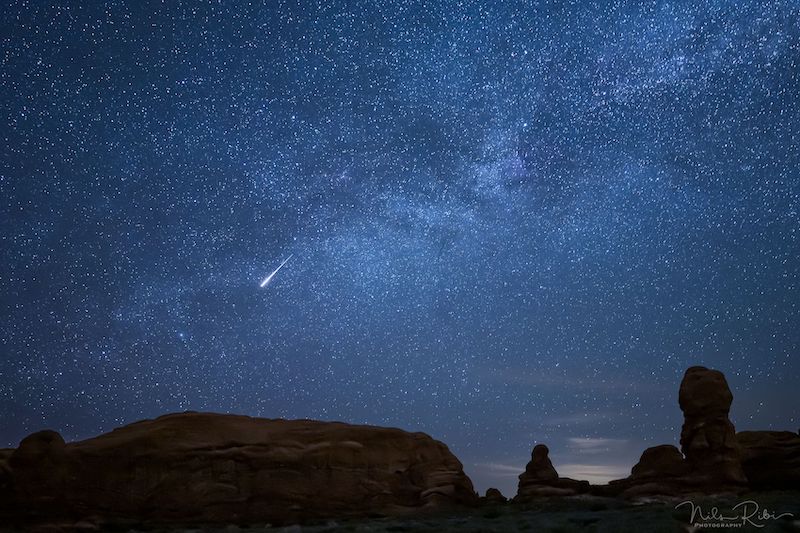
Hooray! It’s meteor time! That’s right, the Lyrid meteor shower ends the meteor drought that’s been happening since early January. They Lyrids are due to peak late at night April 21 through dawn on April 22. And they’ll be followed by the Eta Aquariids on May 5.
When is the next meteor shower? Click here for EarthSky’s meteor shower guide
So, how can you optimize your chances of seeing a great meteor display? Follow the tips below.
1. Know the peak time
Generally, meteor showers happen over many days as Earth encounters a wide stream of icy particles in space. These particles are debris left behind by a comet. So the peak is a point in time when Earth is expected to encounter the greatest number of comet particles. To find the peak dates of meteor showers, try EarthSky’s meteor guide.
And here’s the catch … the peak of the shower comes at the same time for all of us on Earth. Meanwhile, our clocks are saying different times. You’ll often need to adjust from UTC to your local time.
However, the predictions are not always right on the money. And remember … it’s possible to see nice meteor displays in the hours – even days – before or after the predicted peak.
Just remember, meteor showers are part of nature. So naturally, they often defy prediction.
2. Location, location, location
We can’t say this strongly enough. It’s important to have a dark place to observe in the country. Visit EarthSky’s Best Places to Stargaze.
And … you need a wide-open view of the sky. A farmer’s field? Maybe a stretch of country road? Or a campsite with a clear view in one or more directions? That’s because an open sky will increase your chances of seeing some meteors.
3. Oh no! The moon is out
During a meteor shower, a bright moon is not your friend. To be sure, nothing dampens the display of a meteor shower more effectively than a bright moon.
If the moon is out, look at areas of the sky away from the moon. Anything in the moon’s vicinity – including meteors – will likely be washed out by its bright light. And, another tip for watching in moonlight: place some object between yourself and the moon. Observing from the shadow of a barn, or vehicle, even a tree, can help you see more meteors. Basically, place yourself somewhere in the moon’s shadow.
4. Know the expected rate
Here we touch on a topic that sometimes leads to some disappointment, especially among novice meteor-watchers: the rate.
Tables of meteor showers almost always list what is known as the zenithal hourly rate (ZHR) for each shower.
So the ZHR is the number of meteors you’ll see if you’re watching in a very dark sky, with the radiant overhead, when the shower is at its peak. In other words, the ZHR represents the number of meteors you might see per hour given the very best observing conditions during the shower’s maximum.
If the peak occurs when it’s still daylight at your location, if most of the meteors are predominantly faint, if a bright moon is out or if you’re located in a light-polluted area, the total number of meteors you see will be considerably reduced.
5. Don’t worry too much about radiant points
You don’t need to stare all night in a single direction – or even locate the radiant point – to have fun watching the shower. The meteors will appear all over the sky.
But … although you can see meteors shoot up from the horizon before a shower’s radiant rises, you’ll see more meteors after it rises. And you’ll see the most when the radiant is highest in the sky. So, find out the radiant point’s rising time. Then you can pinpoint the best time of night to watch the shower.
And … the radiant point is interesting. If you track meteors backward on the sky’s dome, you’ll find them streaming from their radiant point, a single point within a given constellation. Hence the meteor shower’s name.
6. Watch for an hour or more
Meteor showers will be better if you let your eyes adapt to the dark. That can take as long as 20 minutes. Plus, the meteors tend to come in spurts, followed by lulls. Be patient! You’ll see some.
7. Notice the meteors’ speeds and colors
The Lyrid meteors are medium speed and can produce fireballs, while the Eta Aquariids are swift. The nice thing about a slow meteor shower – such as the Taurids – is if you see one and yell “meteor,” other people can catch it as well.
Plus, the August Perseids can be colorful. Unlike another beloved shower, the December Geminids. The Geminids tend to be bright and white.
8. Watch for meteor trains
A meteor train is a persistent glow in the air left by some meteors after they have faded from view. Trains are from luminous ionized matter left in the wake of this incoming space debris.
9. Bring a blanket, a buddy, a hot drink and a lawn chair
A reclining lawn chair helps you lie back in comfort for an hour or more of meteor-watching.
If several of you are watching, take different parts of the sky. If you see one, shout “Meteor!” Dress warmly; the nights can be cool or cold, even during the spring and summer months. You’ll probably appreciate that blanket and warm drink in the wee hours of the morning. Also, leave your laptops and tablets home; even using the nighttime dark mode will ruin your night vision. And this will be tough on some people: leave your cell phone in your pocket or the car. It can also ruin your night vision.
10. Enjoy nature
Relax and enjoy the night sky. Not every meteor shower is a winner. Sometimes, you may come away from a shower seeing only one meteor. But if that one meteor is bright, and takes a slow path across a starry night sky … it’ll be worth it.
To be successful at observing any meteor shower, you need to get into a kind of zen state, waiting and expecting the meteors to come to you, if you place yourself in a good position (country location, wide open sky) to see them.
Or forget the zen state, and let yourself be guided by this old meteor watcher’s motto:
You might see a lot or you might not see many, but if you stay in the house, you won’t see any.
2025’s Lyrids from EarthSky’s founder
The meteor drought comes to an end in April with the Lyrid meteor shower. After this, we’ll have a major meteor shower nearly every month until the year’s end. The Lyrid meteor shower is active from April 14 to April 30. So you might see a Lyrid meteor any time now. The best time to watch is from the evening of April 21 until moonrise (or even after moonrise) on the morning of April 22. EarthSky’s Deborah Byrd gives you the details in this video. Watch in the player above or on YouTube. Prefer to read? Click here.
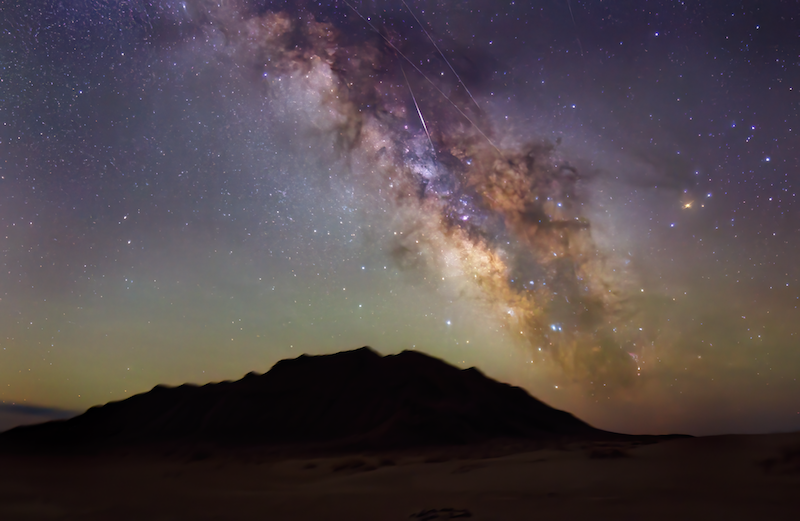
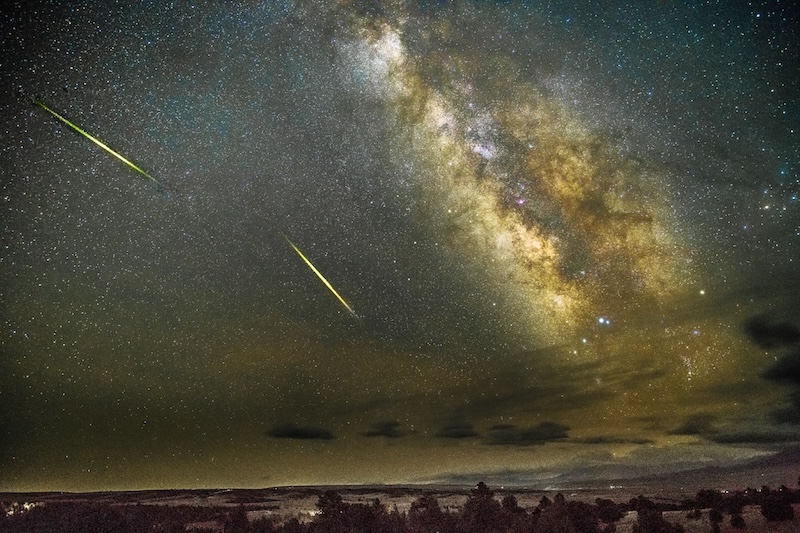
Photos of meteors from EarthSky’s community
More meteor photos
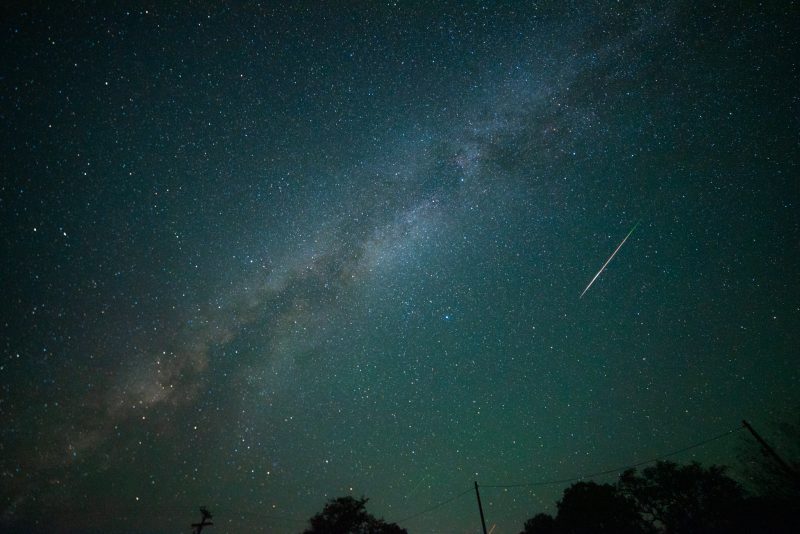
Post your own photos at EarthSky Community Photos
Bottom line: Meteor showers are unpredictable but always a fun and relaxing time. Maximize your viewing with these tips.
When is the next meteor shower? Click here for EarthSky’s meteor shower guide
The post Meteor showers time! 10 easy tips for watching first appeared on EarthSky.
from EarthSky https://ift.tt/SH8i0Ev
Looking up has never felt more important. Help EarthSky keep bringing the sky to your screen.
Hooray! It’s meteor time! That’s right, the Lyrid meteor shower ends the meteor drought that’s been happening since early January. They Lyrids are due to peak late at night April 21 through dawn on April 22. And they’ll be followed by the Eta Aquariids on May 5.
When is the next meteor shower? Click here for EarthSky’s meteor shower guide
So, how can you optimize your chances of seeing a great meteor display? Follow the tips below.
1. Know the peak time
Generally, meteor showers happen over many days as Earth encounters a wide stream of icy particles in space. These particles are debris left behind by a comet. So the peak is a point in time when Earth is expected to encounter the greatest number of comet particles. To find the peak dates of meteor showers, try EarthSky’s meteor guide.
And here’s the catch … the peak of the shower comes at the same time for all of us on Earth. Meanwhile, our clocks are saying different times. You’ll often need to adjust from UTC to your local time.
However, the predictions are not always right on the money. And remember … it’s possible to see nice meteor displays in the hours – even days – before or after the predicted peak.
Just remember, meteor showers are part of nature. So naturally, they often defy prediction.
2. Location, location, location
We can’t say this strongly enough. It’s important to have a dark place to observe in the country. Visit EarthSky’s Best Places to Stargaze.
And … you need a wide-open view of the sky. A farmer’s field? Maybe a stretch of country road? Or a campsite with a clear view in one or more directions? That’s because an open sky will increase your chances of seeing some meteors.
3. Oh no! The moon is out
During a meteor shower, a bright moon is not your friend. To be sure, nothing dampens the display of a meteor shower more effectively than a bright moon.
If the moon is out, look at areas of the sky away from the moon. Anything in the moon’s vicinity – including meteors – will likely be washed out by its bright light. And, another tip for watching in moonlight: place some object between yourself and the moon. Observing from the shadow of a barn, or vehicle, even a tree, can help you see more meteors. Basically, place yourself somewhere in the moon’s shadow.
4. Know the expected rate
Here we touch on a topic that sometimes leads to some disappointment, especially among novice meteor-watchers: the rate.
Tables of meteor showers almost always list what is known as the zenithal hourly rate (ZHR) for each shower.
So the ZHR is the number of meteors you’ll see if you’re watching in a very dark sky, with the radiant overhead, when the shower is at its peak. In other words, the ZHR represents the number of meteors you might see per hour given the very best observing conditions during the shower’s maximum.
If the peak occurs when it’s still daylight at your location, if most of the meteors are predominantly faint, if a bright moon is out or if you’re located in a light-polluted area, the total number of meteors you see will be considerably reduced.
5. Don’t worry too much about radiant points
You don’t need to stare all night in a single direction – or even locate the radiant point – to have fun watching the shower. The meteors will appear all over the sky.
But … although you can see meteors shoot up from the horizon before a shower’s radiant rises, you’ll see more meteors after it rises. And you’ll see the most when the radiant is highest in the sky. So, find out the radiant point’s rising time. Then you can pinpoint the best time of night to watch the shower.
And … the radiant point is interesting. If you track meteors backward on the sky’s dome, you’ll find them streaming from their radiant point, a single point within a given constellation. Hence the meteor shower’s name.
6. Watch for an hour or more
Meteor showers will be better if you let your eyes adapt to the dark. That can take as long as 20 minutes. Plus, the meteors tend to come in spurts, followed by lulls. Be patient! You’ll see some.
7. Notice the meteors’ speeds and colors
The Lyrid meteors are medium speed and can produce fireballs, while the Eta Aquariids are swift. The nice thing about a slow meteor shower – such as the Taurids – is if you see one and yell “meteor,” other people can catch it as well.
Plus, the August Perseids can be colorful. Unlike another beloved shower, the December Geminids. The Geminids tend to be bright and white.
8. Watch for meteor trains
A meteor train is a persistent glow in the air left by some meteors after they have faded from view. Trains are from luminous ionized matter left in the wake of this incoming space debris.
9. Bring a blanket, a buddy, a hot drink and a lawn chair
A reclining lawn chair helps you lie back in comfort for an hour or more of meteor-watching.
If several of you are watching, take different parts of the sky. If you see one, shout “Meteor!” Dress warmly; the nights can be cool or cold, even during the spring and summer months. You’ll probably appreciate that blanket and warm drink in the wee hours of the morning. Also, leave your laptops and tablets home; even using the nighttime dark mode will ruin your night vision. And this will be tough on some people: leave your cell phone in your pocket or the car. It can also ruin your night vision.
10. Enjoy nature
Relax and enjoy the night sky. Not every meteor shower is a winner. Sometimes, you may come away from a shower seeing only one meteor. But if that one meteor is bright, and takes a slow path across a starry night sky … it’ll be worth it.
To be successful at observing any meteor shower, you need to get into a kind of zen state, waiting and expecting the meteors to come to you, if you place yourself in a good position (country location, wide open sky) to see them.
Or forget the zen state, and let yourself be guided by this old meteor watcher’s motto:
You might see a lot or you might not see many, but if you stay in the house, you won’t see any.
2025’s Lyrids from EarthSky’s founder
The meteor drought comes to an end in April with the Lyrid meteor shower. After this, we’ll have a major meteor shower nearly every month until the year’s end. The Lyrid meteor shower is active from April 14 to April 30. So you might see a Lyrid meteor any time now. The best time to watch is from the evening of April 21 until moonrise (or even after moonrise) on the morning of April 22. EarthSky’s Deborah Byrd gives you the details in this video. Watch in the player above or on YouTube. Prefer to read? Click here.
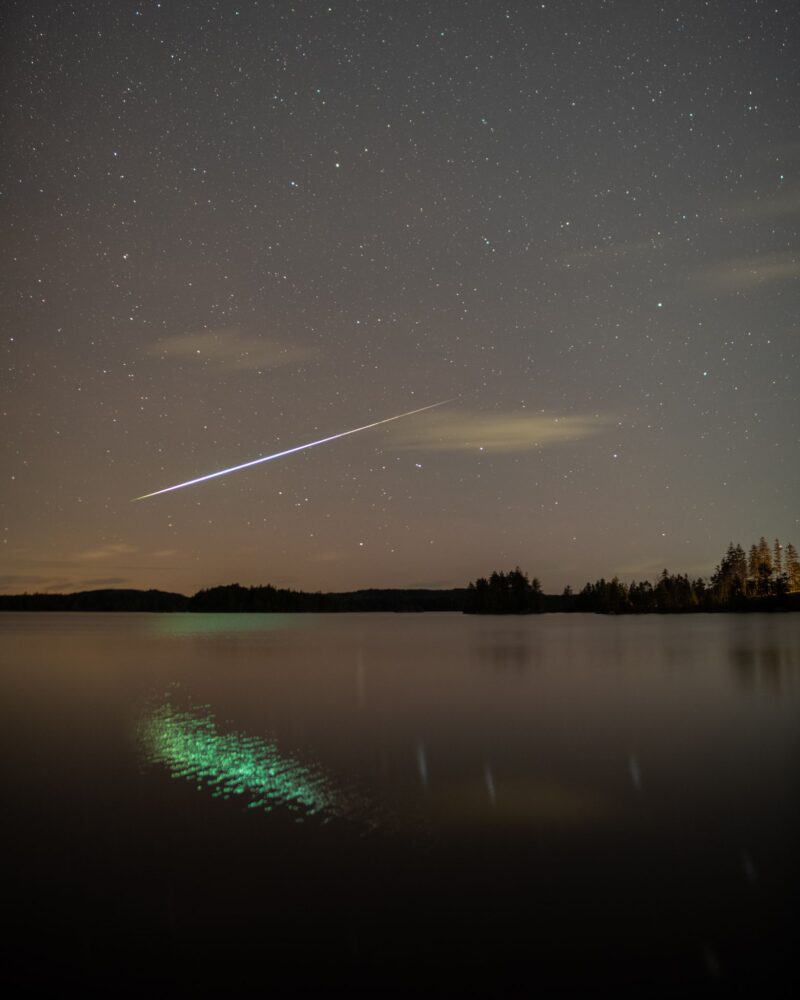
Photos of meteors from EarthSky’s community
More meteor photos
Post your own photos at EarthSky Community Photos
Bottom line: Meteor showers are unpredictable but always a fun and relaxing time. Maximize your viewing with these tips.
When is the next meteor shower? Click here for EarthSky’s meteor shower guide
The post Meteor showers time! 10 easy tips for watching first appeared on EarthSky.
from EarthSky https://ift.tt/SH8i0Ev

Aucun commentaire:
Enregistrer un commentaire