
What is airglow?
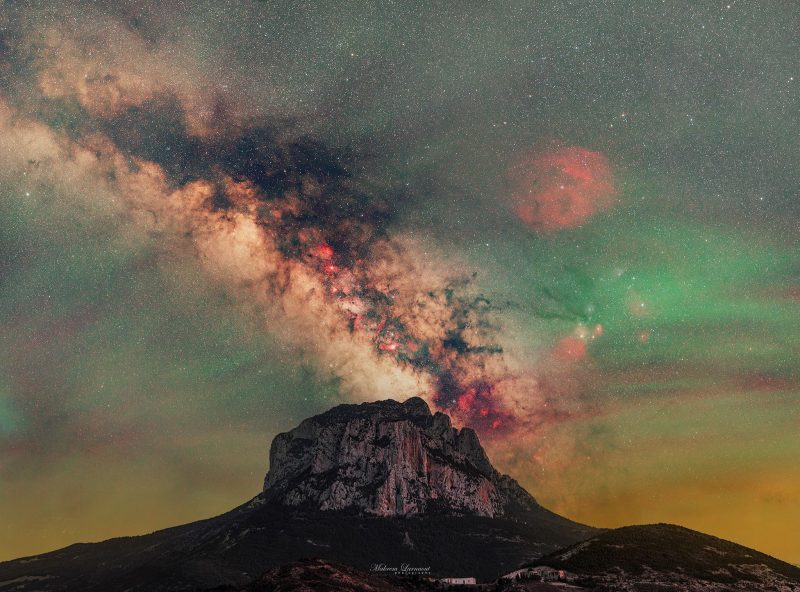
Airglow is the light of excited atoms high in Earth’s atmosphere. And it’s usually too faint for the eye alone to see. But under very dark skies, photographers can capture it. Here’s how NASA’s Earth Observatory describes airglow:
The phenomenon typically occurs when molecules (mostly nitrogen and oxygen) are energized by ultraviolet (UV) radiation from sunlight. To release that energy, atoms in the lower atmosphere bump into each other and lose energy in the collision. But the upper atmosphere is thinner, so atoms are less likely to collide. Instead, they release their energy by emitting photons. And the result is colorful airglow.
Collisions can create airglow, too
But some collisions can also create airglow. In fact, airglow is more common during solar maximum. That’s because the solar activity heats the upper atmosphere, which causes more collisions. Specifically, it causes more collisions that result in greenish light. Spaceweather.com said:
Although airglow does not require solar activity, there is a strong link to the solar cycle. As long ago as 1935, Lord Rayleigh realized that airglow peaks during years around solar maximum. Modern studies (e.g., 2011 and 2015 have confirmed the effect. And airglow is up to 40% brighter when the sun is most active.
Watch a video on airglow
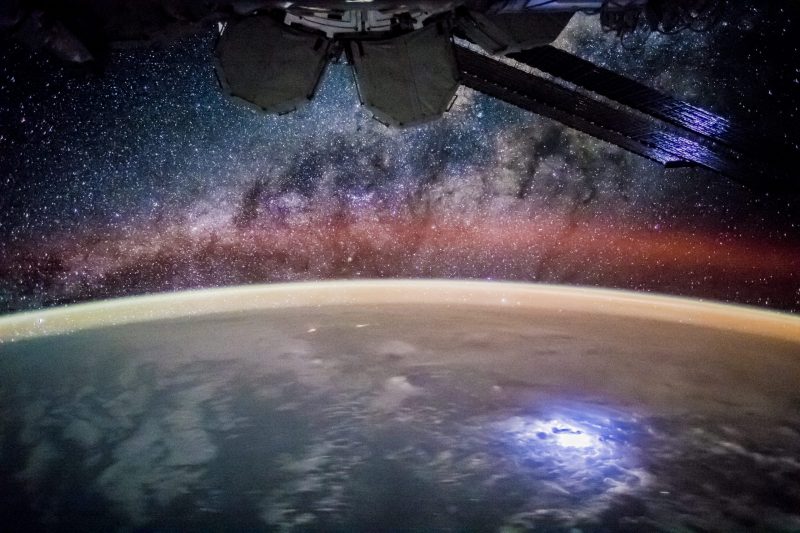
And here’s another view of airglow from the International Space Station.
A photo gallery from our readers
If you have a recent photo of airglow to share, send it to us!
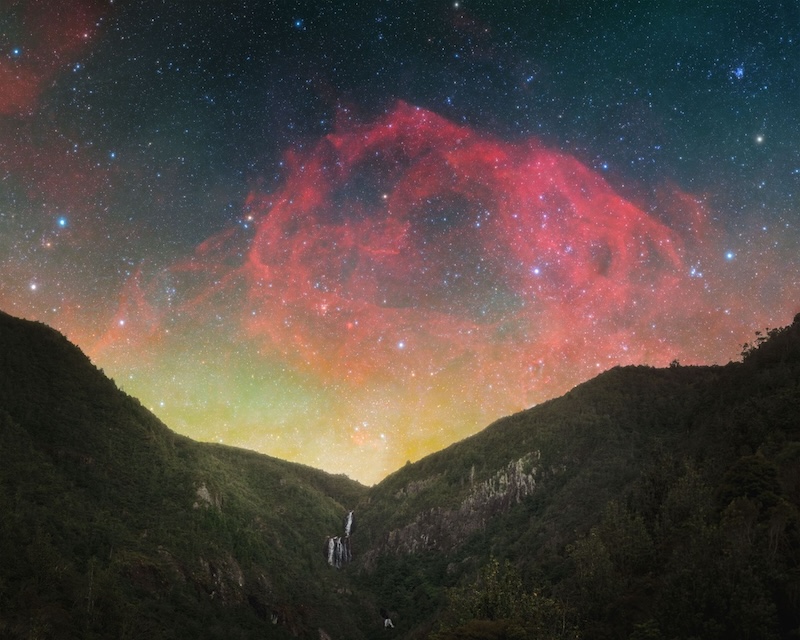
And the sky and foreground were photographed on the same night from the same spot, with the sky taken on a tracked exposure and the landscape untracked. The image reflects the scene as it appeared that night.” Thank you, Julie!
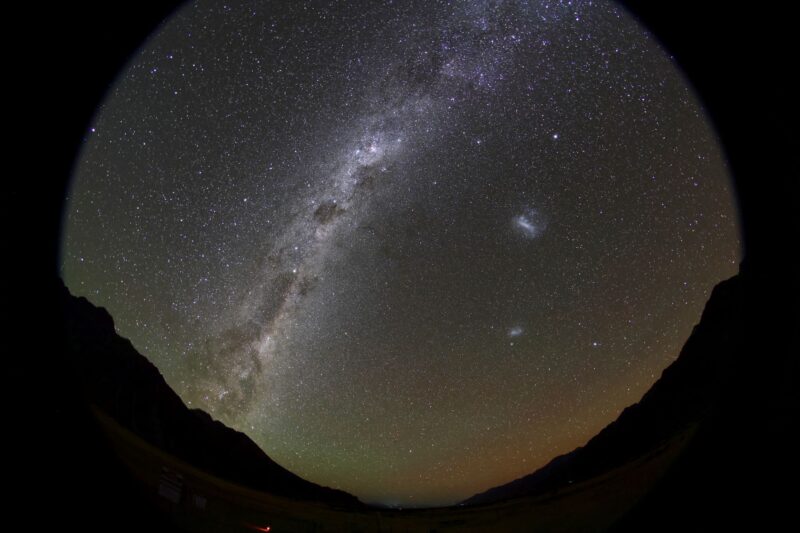

Bottom line: Airglow is a light that occurs high in Earth’s atmosphere. It’s usually too dim to see with the eye, but photographers can capture glorious photographs of it.
The post What is airglow? This glowing light is not an aurora first appeared on EarthSky.
from EarthSky https://ift.tt/hRtrbni
What is airglow?
Airglow is the light of excited atoms high in Earth’s atmosphere. And it’s usually too faint for the eye alone to see. But under very dark skies, photographers can capture it. Here’s how NASA’s Earth Observatory describes airglow:
The phenomenon typically occurs when molecules (mostly nitrogen and oxygen) are energized by ultraviolet (UV) radiation from sunlight. To release that energy, atoms in the lower atmosphere bump into each other and lose energy in the collision. But the upper atmosphere is thinner, so atoms are less likely to collide. Instead, they release their energy by emitting photons. And the result is colorful airglow.
Collisions can create airglow, too
But some collisions can also create airglow. In fact, airglow is more common during solar maximum. That’s because the solar activity heats the upper atmosphere, which causes more collisions. Specifically, it causes more collisions that result in greenish light. Spaceweather.com said:
Although airglow does not require solar activity, there is a strong link to the solar cycle. As long ago as 1935, Lord Rayleigh realized that airglow peaks during years around solar maximum. Modern studies (e.g., 2011 and 2015 have confirmed the effect. And airglow is up to 40% brighter when the sun is most active.
Watch a video on airglow
And here’s another view of airglow from the International Space Station.
A photo gallery from our readers
If you have a recent photo of airglow to share, send it to us!
And the sky and foreground were photographed on the same night from the same spot, with the sky taken on a tracked exposure and the landscape untracked. The image reflects the scene as it appeared that night.” Thank you, Julie!
Bottom line: Airglow is a light that occurs high in Earth’s atmosphere. It’s usually too dim to see with the eye, but photographers can capture glorious photographs of it.
The post What is airglow? This glowing light is not an aurora first appeared on EarthSky.
from EarthSky https://ift.tt/hRtrbni

Aucun commentaire:
Enregistrer un commentaire