
Noctilucent cloud season is here! Images are already showing up on social media of these night-shining clouds.
Noctilucent clouds at the Avebury Stones.#StandingStoneSunday
— Pete Glastonbury (@peteglastonbury.bsky.social) 2026-06-14T01:58:41.945Z
There was a nice display of noctilucent clouds last night. Here's the view from the North York Moors, overlooking Teesside at 23:11 UT. #NoctilucentClouds #Noctilucent #NLCs
— Steve Brown – astronomy and astrophotography (@sjbastro.bsky.social) 2026-06-10T11:11:32.390Z
What are noctilucent clouds?
Noctilucent clouds, or night-shining clouds, are thin clouds high up in Earth’s atmosphere – the mesosphere – as much as 50 miles (80 km) above Earth’s surface. Scientists think they’re made of ice crystals that form on fine dust particles, often from meteors. They can only form when temperatures are incredibly low and when there’s water available to form ice crystals.
So, why do these clouds – which require such cold temperatures – form in the summer? It’s because of the strange dynamics of the atmosphere. At that height in the mesosphere, you actually get the coldest temperatures of the year near the poles in summer. Read on to find out why.
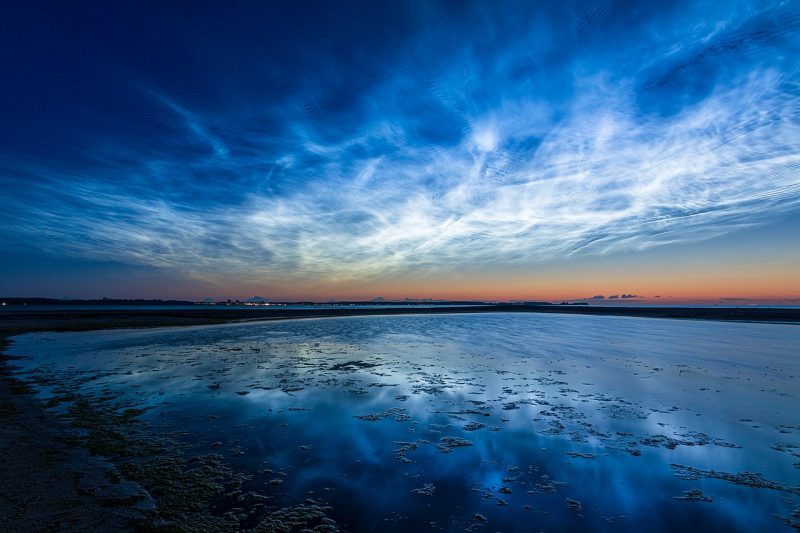
What causes noctilucent clouds?
Here’s how it works: during summer, air close to the ground heats up and rises. Since atmospheric pressure decreases with altitude, the rising air expands. But, when the air expands, it also cools down. This, along with other processes in the upper atmosphere, drives the air even higher causing it to cool even more. As a result, temperatures in the mesosphere can plunge to as low as -225 degrees Fahrenheit (-143 C).
In the Northern Hemisphere, the mesosphere reaches these temperatures by mid-May in most years.
We see noctilucent clouds when most of the sky has grown dark, but the rays from the sun can still reach and reflect off these ethereal, electric-blue clouds. When satellites or astronauts view them from space, they’re referred to as polar mesospheric clouds.
If you want to see them for yourself, now’s the time to look!
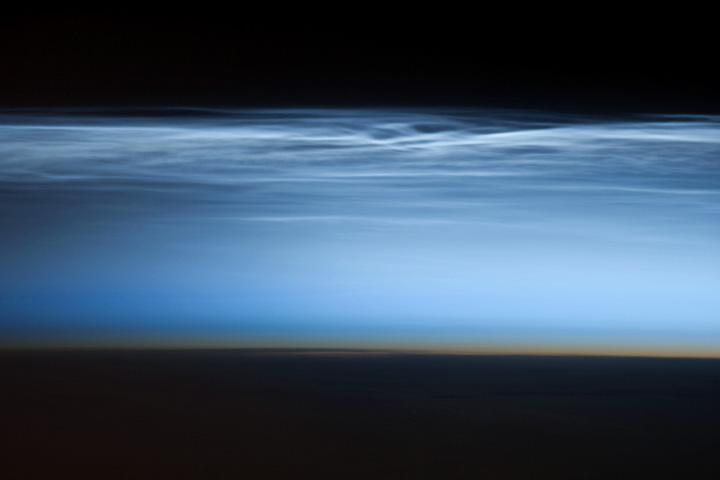
It’s noctilucent cloud season
The season for noctilucent clouds at northerly latitudes is now. People at high latitudes report seeing noctilucent clouds. This happens every year, from about May through August in the Northern Hemisphere, and from November through February in the Southern Hemisphere.
In recent years, northern summertime noctilucent clouds have set records for low-latitude sightings. In 2019, for example, people observed them as far south as Las Vegas (36 degrees north latitude) and Los Angeles (34 degrees north latitude). Usually, though, they’re seen from higher latitudes.
Sighting them at lower latitudes might be due to a couple of things. According to Royal Museums Greenwich:
In the Northern Hemisphere noctilucent clouds have been seen at much lower latitudes than expected. Scientists believe this is a result of climate change, but it could also be due to other factors, such as rocket launches expelling particles into the atmosphere which go on to form noctilucent clouds.
How to see these night-shining clouds
To see noctilucent clouds, you’ll need certain conditions in your favor. One factor is when to look. Right about now – June to July – is typically when noctilucent clouds are most widespread.
You’ll also want to be positioned as far north as possible during the Northern Hemisphere’s peak season. Canada and the U.K. are two locations where you’ll have a better chance to spot night-shining clouds.
Then, look west about 30 minutes after sunset. The farther north you are, the longer throughout the night you can see them. That’s because the sun doesn’t dip as far below your horizon.
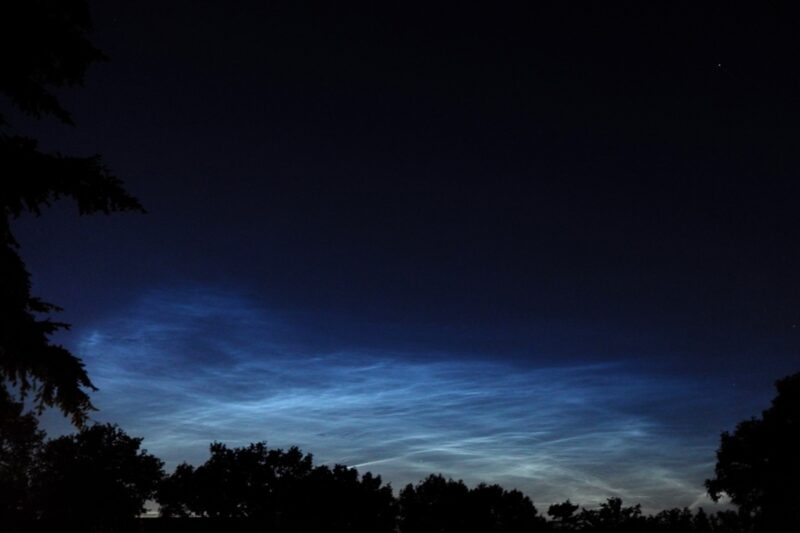
Noctilucent clouds look like electric, luminous tendrils of blue-white light. They are the clouds that glow after other clouds have darkened.
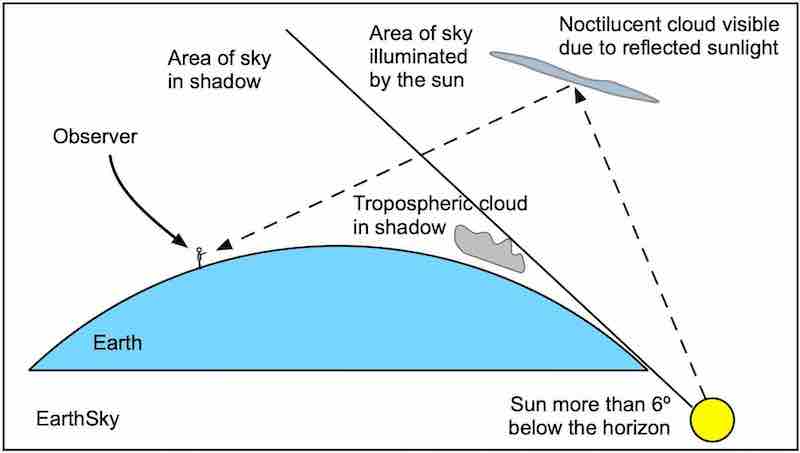
What noctilucent clouds can teach us
Noctilucent clouds are sensitive to atmospheric temperatures. Therefore, they can act as a proxy for information about the wind circulation that causes these temperatures. First of all, they can tell scientists that the circulation exists. They can also tell us something about the strength of the circulation.
Scientists studying these clouds got help from NASA’s Aeronomy of Ice in the Mesosphere (AIM) satellite. This satellite, launched in 2007, observed noctilucent clouds using several onboard instruments to collect information such as temperature, atmospheric gases, ice crystal size and changes in the clouds. It even accounted for the amount of meteoric space dust that enters the atmosphere. The AIM spacecraft re-entered Earth’s atmosphere and burned up in August 2024.
Studies have also shown that as the climate warms, noctilucent clouds become more visible.
Where to watch for noctilucent clouds
As with the aurora, it helps to be closer to the poles to see this phenomenon. You can keep tabs on noctilucent clouds via SpaceWeather’s RealTime Image Gallery, or on Facebook via the group Noctilucent Clouds Around the World.
Noctilucent clouds in 2025
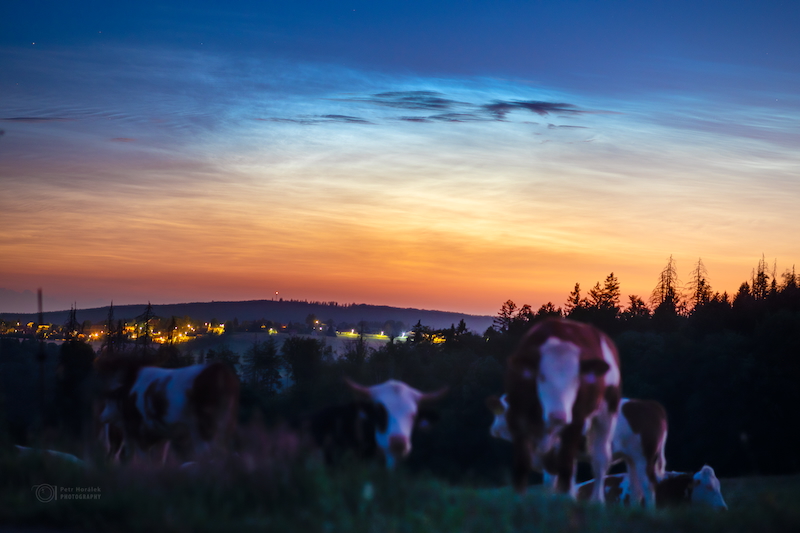
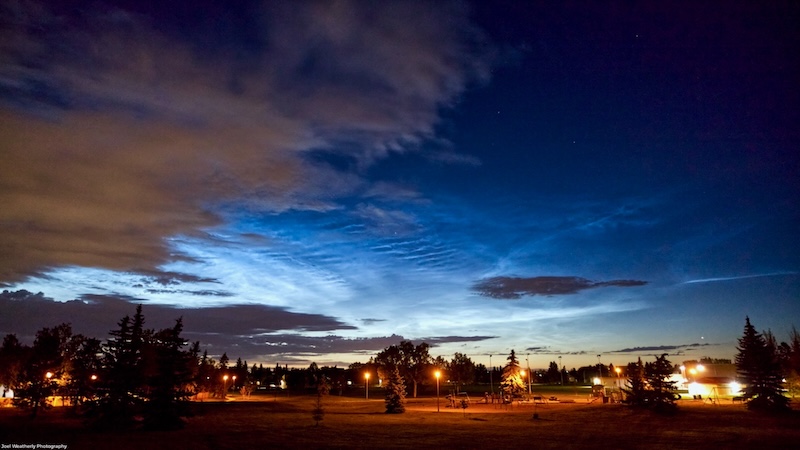
Noctilucent clouds in 2024
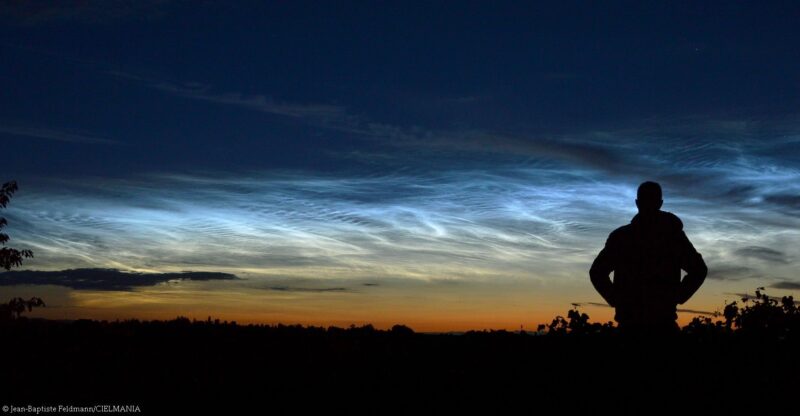
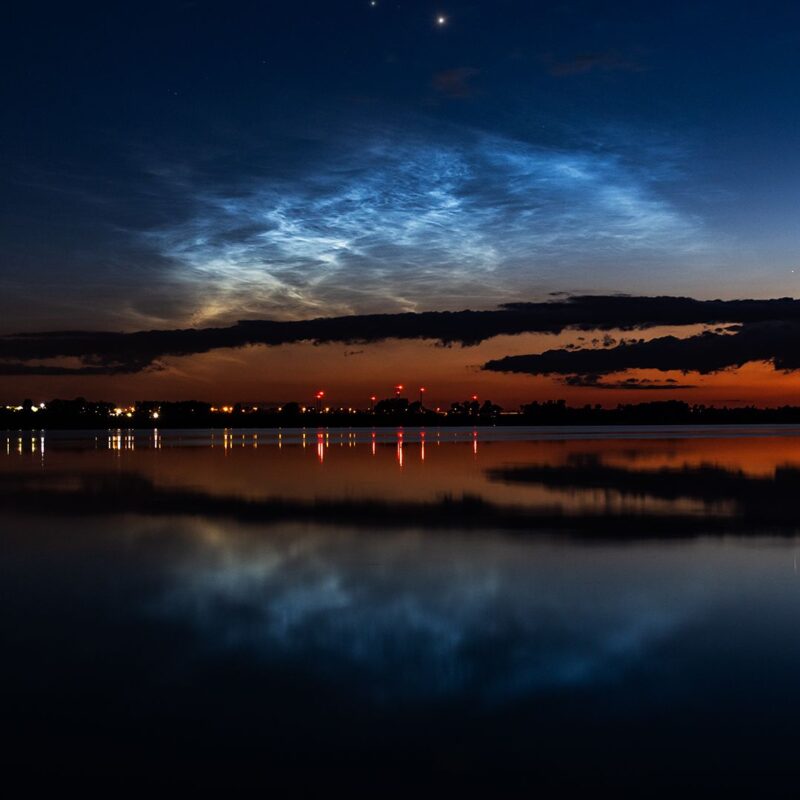
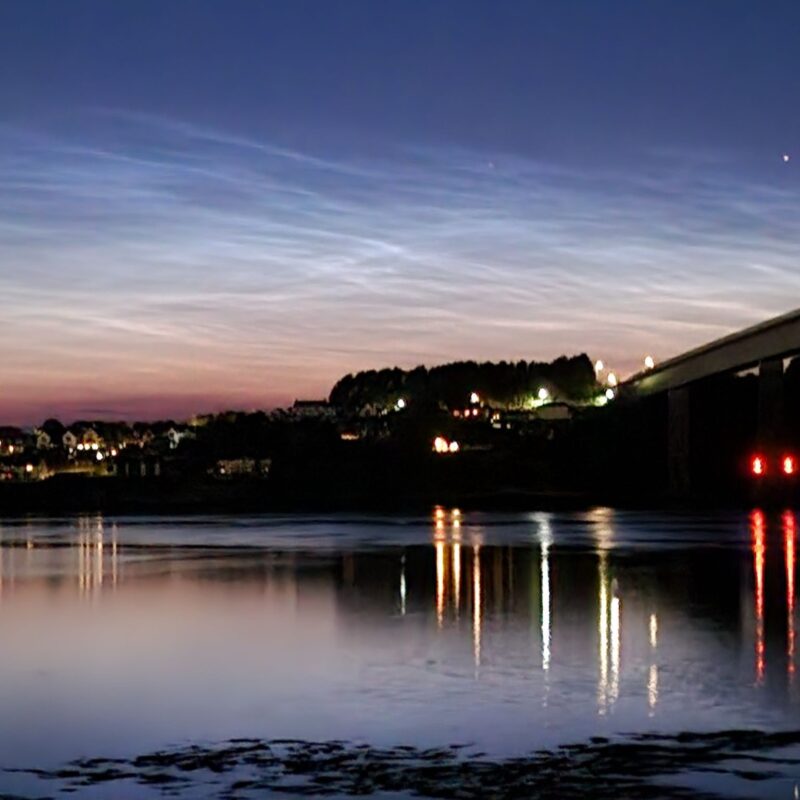
Do you have images of noctilucent clouds to share? We’d love to see them! Submit them to EarthSky Community Photos.
Bottom line: Noctilucent cloud season is underway! Learn about these stunning night-shining clouds and see a gallery here.
Read more: Iridescent clouds have rainbow colors
Read more: Cloud shapes are a useful tool for predicting weather
The post Noctilucent clouds are back: Look for them now! first appeared on EarthSky.
from EarthSky https://ift.tt/zWHBFCK
Noctilucent cloud season is here! Images are already showing up on social media of these night-shining clouds.
Noctilucent clouds at the Avebury Stones.#StandingStoneSunday
— Pete Glastonbury (@peteglastonbury.bsky.social) 2026-06-14T01:58:41.945Z
There was a nice display of noctilucent clouds last night. Here's the view from the North York Moors, overlooking Teesside at 23:11 UT. #NoctilucentClouds #Noctilucent #NLCs
— Steve Brown – astronomy and astrophotography (@sjbastro.bsky.social) 2026-06-10T11:11:32.390Z
What are noctilucent clouds?
Noctilucent clouds, or night-shining clouds, are thin clouds high up in Earth’s atmosphere – the mesosphere – as much as 50 miles (80 km) above Earth’s surface. Scientists think they’re made of ice crystals that form on fine dust particles, often from meteors. They can only form when temperatures are incredibly low and when there’s water available to form ice crystals.
So, why do these clouds – which require such cold temperatures – form in the summer? It’s because of the strange dynamics of the atmosphere. At that height in the mesosphere, you actually get the coldest temperatures of the year near the poles in summer. Read on to find out why.
What causes noctilucent clouds?
Here’s how it works: during summer, air close to the ground heats up and rises. Since atmospheric pressure decreases with altitude, the rising air expands. But, when the air expands, it also cools down. This, along with other processes in the upper atmosphere, drives the air even higher causing it to cool even more. As a result, temperatures in the mesosphere can plunge to as low as -225 degrees Fahrenheit (-143 C).
In the Northern Hemisphere, the mesosphere reaches these temperatures by mid-May in most years.
We see noctilucent clouds when most of the sky has grown dark, but the rays from the sun can still reach and reflect off these ethereal, electric-blue clouds. When satellites or astronauts view them from space, they’re referred to as polar mesospheric clouds.
If you want to see them for yourself, now’s the time to look!
It’s noctilucent cloud season
The season for noctilucent clouds at northerly latitudes is now. People at high latitudes report seeing noctilucent clouds. This happens every year, from about May through August in the Northern Hemisphere, and from November through February in the Southern Hemisphere.
In recent years, northern summertime noctilucent clouds have set records for low-latitude sightings. In 2019, for example, people observed them as far south as Las Vegas (36 degrees north latitude) and Los Angeles (34 degrees north latitude). Usually, though, they’re seen from higher latitudes.
Sighting them at lower latitudes might be due to a couple of things. According to Royal Museums Greenwich:
In the Northern Hemisphere noctilucent clouds have been seen at much lower latitudes than expected. Scientists believe this is a result of climate change, but it could also be due to other factors, such as rocket launches expelling particles into the atmosphere which go on to form noctilucent clouds.
How to see these night-shining clouds
To see noctilucent clouds, you’ll need certain conditions in your favor. One factor is when to look. Right about now – June to July – is typically when noctilucent clouds are most widespread.
You’ll also want to be positioned as far north as possible during the Northern Hemisphere’s peak season. Canada and the U.K. are two locations where you’ll have a better chance to spot night-shining clouds.
Then, look west about 30 minutes after sunset. The farther north you are, the longer throughout the night you can see them. That’s because the sun doesn’t dip as far below your horizon.
Noctilucent clouds look like electric, luminous tendrils of blue-white light. They are the clouds that glow after other clouds have darkened.
What noctilucent clouds can teach us
Noctilucent clouds are sensitive to atmospheric temperatures. Therefore, they can act as a proxy for information about the wind circulation that causes these temperatures. First of all, they can tell scientists that the circulation exists. They can also tell us something about the strength of the circulation.
Scientists studying these clouds got help from NASA’s Aeronomy of Ice in the Mesosphere (AIM) satellite. This satellite, launched in 2007, observed noctilucent clouds using several onboard instruments to collect information such as temperature, atmospheric gases, ice crystal size and changes in the clouds. It even accounted for the amount of meteoric space dust that enters the atmosphere. The AIM spacecraft re-entered Earth’s atmosphere and burned up in August 2024.
Studies have also shown that as the climate warms, noctilucent clouds become more visible.
Where to watch for noctilucent clouds
As with the aurora, it helps to be closer to the poles to see this phenomenon. You can keep tabs on noctilucent clouds via SpaceWeather’s RealTime Image Gallery, or on Facebook via the group Noctilucent Clouds Around the World.
Noctilucent clouds in 2025
Noctilucent clouds in 2024
Do you have images of noctilucent clouds to share? We’d love to see them! Submit them to EarthSky Community Photos.
Bottom line: Noctilucent cloud season is underway! Learn about these stunning night-shining clouds and see a gallery here.
Read more: Iridescent clouds have rainbow colors
Read more: Cloud shapes are a useful tool for predicting weather
The post Noctilucent clouds are back: Look for them now! first appeared on EarthSky.
from EarthSky https://ift.tt/zWHBFCK

Aucun commentaire:
Enregistrer un commentaire