aads

Astro quiz: Test your night sky know-how here!


Astro quiz: Stick figure holding a sign that says quiz time.
Test your night sky know-how with the EarthSky astro quiz! Find the answers at the bottom of this page. Have fun! Image via RibhavAgrawal/ Pixabay.

Question 1: What’s the brightest planet in our sky?

Evening sky with dark trees, crescent moon, and bright point of light.
View at EarthSky Community Photos. | Amheric Hall in Reno, Nevada, captured the moon and a bright planet in 2024. Thanks, Amheric! This planet is brighter than all other planets in Earth’s sky. In fact, it’s so bright you can sometimes spot it in broad daylight. Which planet is it?

Question 2: Do you know the North Star’s proper name?

Arcs of light circling around one spot.
View at EarthSky Community Photos. | Jeff Grubbs in Elgin, Arizona, took a long-exposure photo of the northern sky. It shows all the stars circling around the North Star (or Pole Star). Thanks, Jeff! This star has a proper name, recognized by the International Astronomical Union. What is it?

Question 3: Is the Big Dipper a constellation?

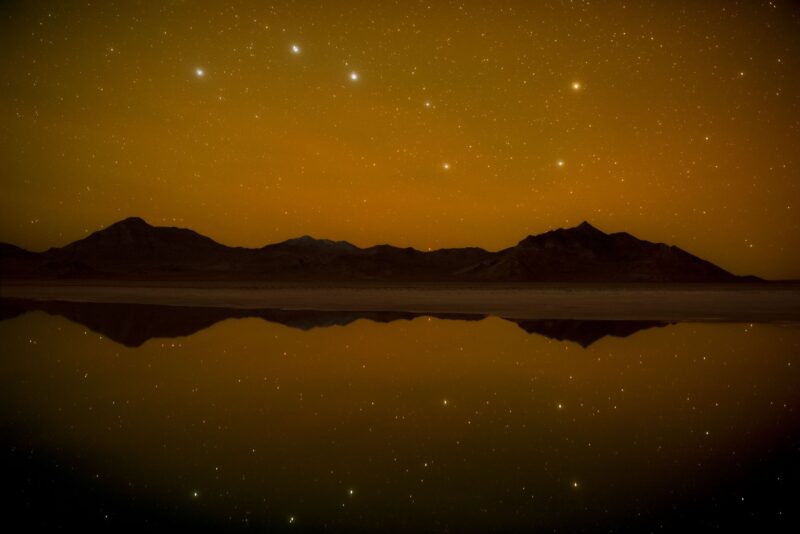
Dark, bronze colored sky with stars of the Big Dipper reflected in water below.
View at EarthSky Community Photos. | Marc Toso captured the Big Dipper from the Bonneville Salt Flats in Utah. Thanks, Marc! Is the Big Dipper a constellation? Yes or no.

Question 4: Can you name these 2 galaxies?

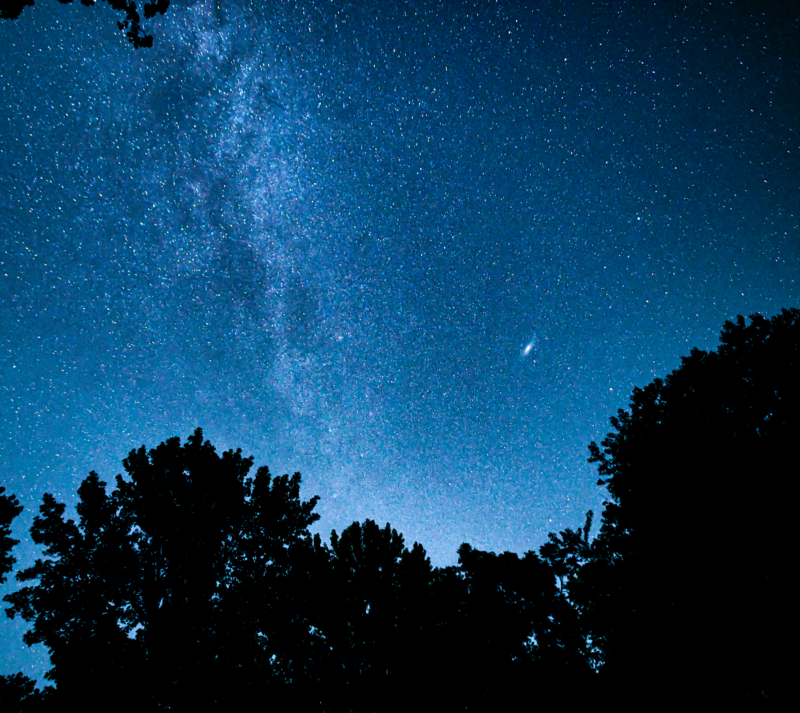
Astro quiz: A cloudy, starry band stretching from trees to top of image and a small bright patch.
View at EarthSky Community Photos. | Chuck Reinhart captured this view of the sky from Vincennes, Indiana. Thanks, Chuck! There are 2 galaxies in this image. Can you name them?

Question 5: Can you name this constellation?

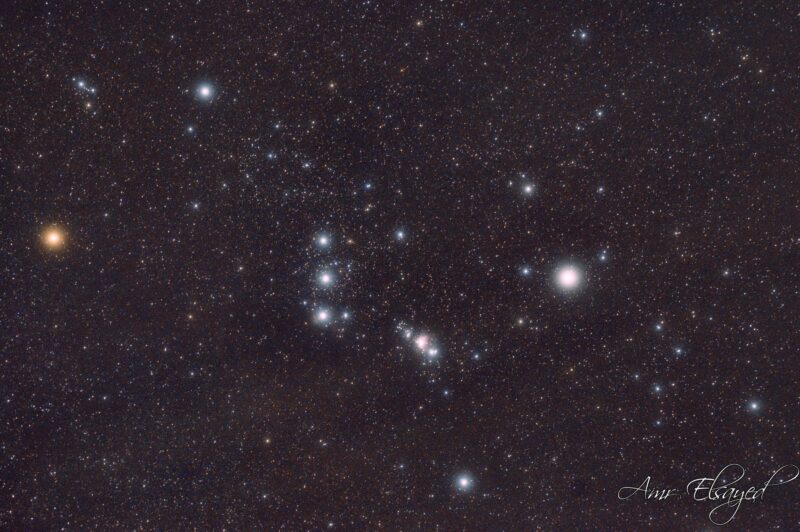
Bright stars with a prominent row of 3, plus a fuzzy patch nearby.
View at EarthSky Community Photos. | Amr Elsayed captured this image from Fayoum, Egypt. Thank you, Amr! Can you name this famous constellation?

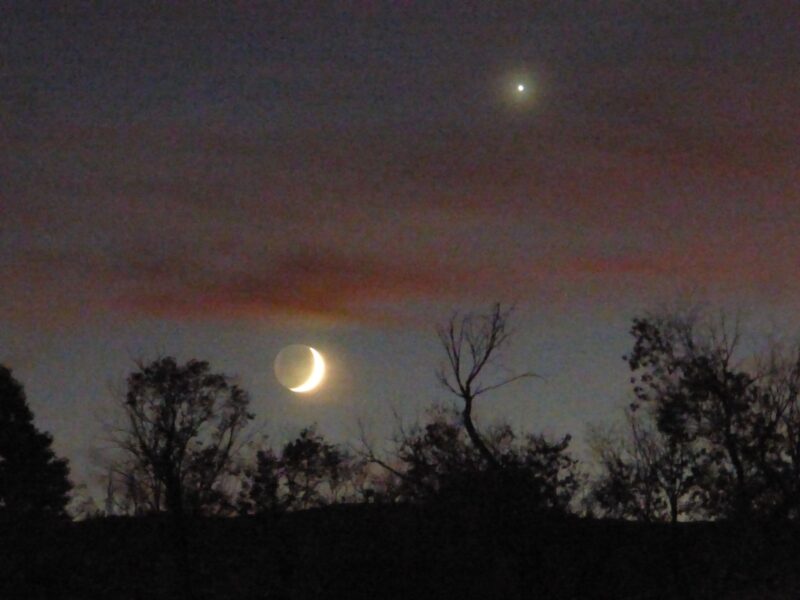
Question 6: Is the early evening crescent moon waxing or waning?

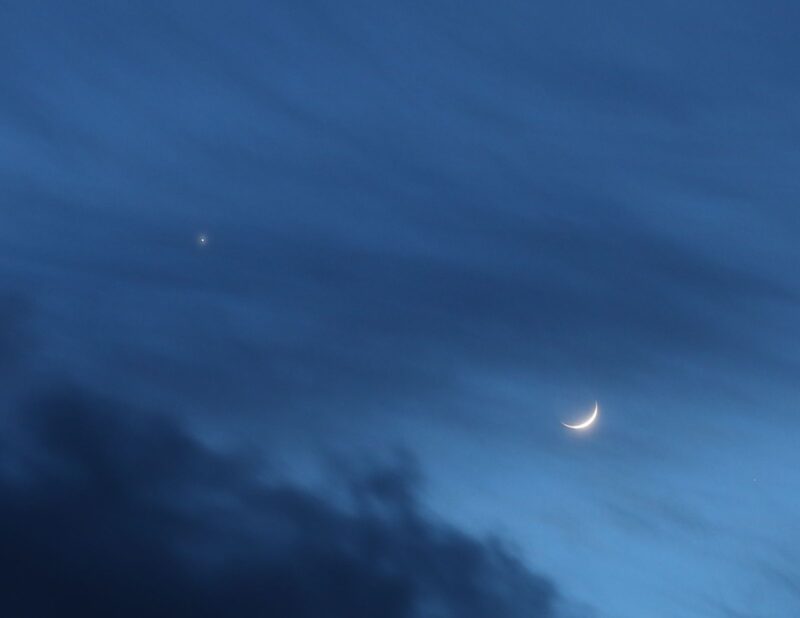
A crescent moon next to Venus and some clouds in a sky that is growing dark.
View at EarthSky Community Photos. | Roberto Ortu in Marina di Torregrande, Sardinia, Italy, captured the crescent moon and Venus on May 18, 2026. Thanks, Roberto! When you see a crescent moon after sunset in the early evening sky, is it waxing or waning?

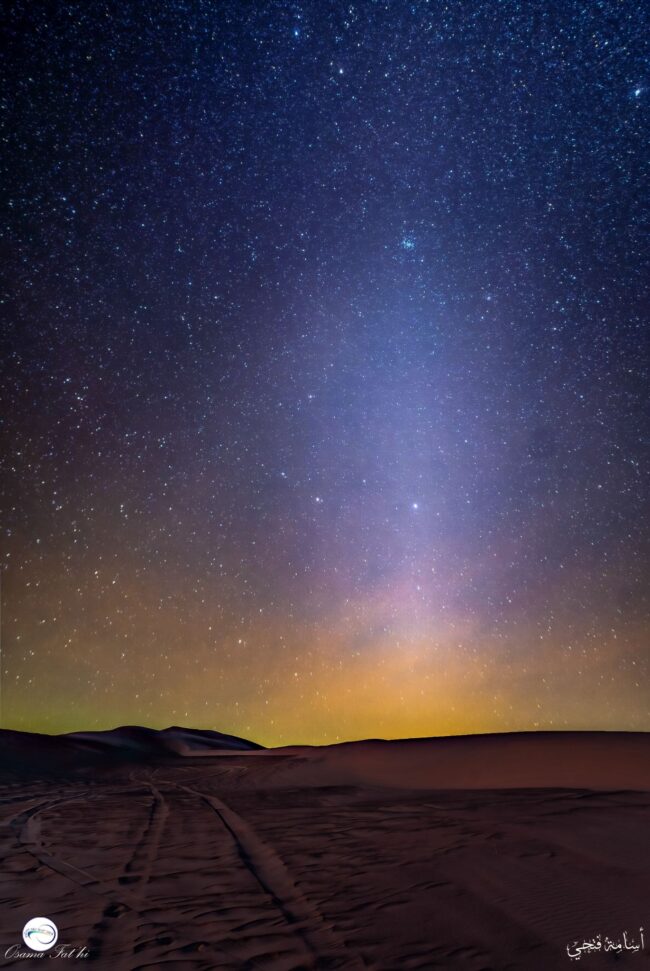
Question 7: What is this mysterious cone of light?

Night sky with a fuzzy glowing column extending upward from the horizon.
View at EarthSky Community Photos. | Osama Fathi in the Western Desert of Egypt captured this mysterious pyramid of light on an autumn morning, extending up from the eastern horizon before dawn. Thanks, Osama! What’s this light called? Hint: It’s sunlight reflecting off dust grains that move in the plane of the solar system. The dust might originate on Mars!

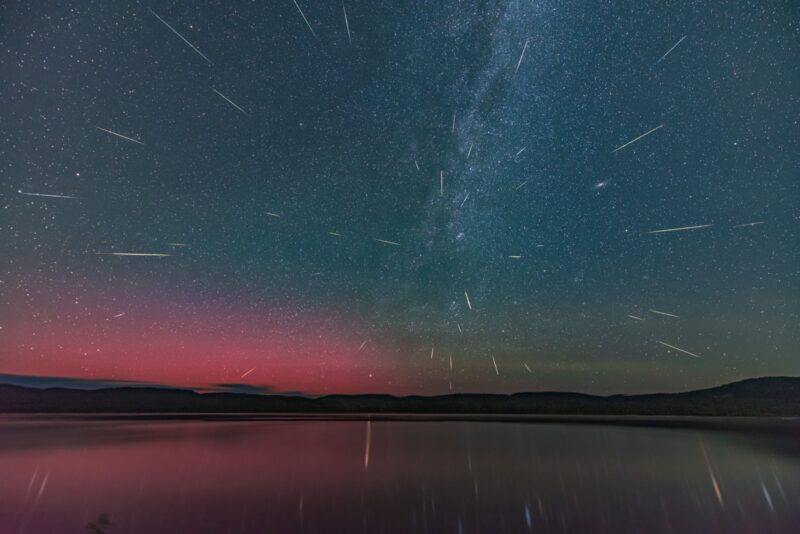
Question 8: Where do most meteors come from?

Starry blue sky with pale reddish area at horizon and many white streaks in the sky reflecting in the water.
View at EarthSky Community Photos. | David Cox from Deep River, Ontario, Canada, shared this composite image of Perseid meteors and the aurora. Thanks, David! We see meteors when tiny bits of debris in space hit Earth’s atmosphere and burn up, emitting light. What is the source of most of the debris that create meteor showers?


Astro quiz answers

Answer 1: Venus – next inward from Earth in orbit around the sun – is our sky’s brightest planet.

Answer 2: The North Star is also called Polaris.

Answer 3: No. It’s an asterism and part of the constellation Ursa Major.

Answer 4: The Milky Way galaxy is our home galaxy in space. And the Andromeda galaxy is the nearest large spiral galaxy to us.

Answer 5: Meet Orion the Hunter, one of the best-known constellations in the night sky.

Answer 6: Waxing.

Answer 7: It’s called the zodiacal light or “false dawn.”

Answer 8: Comets.

Did you get them all? You’re an astronomy rock star!

You deserve a daily dose of good news. For the latest in science and the night sky, subscribe to EarthSky’s free daily newsletter.

Bottom line: How well do you know the night sky? Test yourself with this fun astro quiz, featuring photos from EarthSky’s talented global community.

Do you have a recent photo to share? Submit it to us!

The post Astro quiz: Test your night sky know-how here! first appeared on EarthSky.


from EarthSky https://ift.tt/PwtvBrG
Astro quiz: Stick figure holding a sign that says quiz time.
Test your night sky know-how with the EarthSky astro quiz! Find the answers at the bottom of this page. Have fun! Image via RibhavAgrawal/ Pixabay.

Question 1: What’s the brightest planet in our sky?

Evening sky with dark trees, crescent moon, and bright point of light.
View at EarthSky Community Photos. | Amheric Hall in Reno, Nevada, captured the moon and a bright planet in 2024. Thanks, Amheric! This planet is brighter than all other planets in Earth’s sky. In fact, it’s so bright you can sometimes spot it in broad daylight. Which planet is it?

Question 2: Do you know the North Star’s proper name?

Arcs of light circling around one spot.
View at EarthSky Community Photos. | Jeff Grubbs in Elgin, Arizona, took a long-exposure photo of the northern sky. It shows all the stars circling around the North Star (or Pole Star). Thanks, Jeff! This star has a proper name, recognized by the International Astronomical Union. What is it?

Question 3: Is the Big Dipper a constellation?

Dark, bronze colored sky with stars of the Big Dipper reflected in water below.
View at EarthSky Community Photos. | Marc Toso captured the Big Dipper from the Bonneville Salt Flats in Utah. Thanks, Marc! Is the Big Dipper a constellation? Yes or no.

Question 4: Can you name these 2 galaxies?

Astro quiz: A cloudy, starry band stretching from trees to top of image and a small bright patch.
View at EarthSky Community Photos. | Chuck Reinhart captured this view of the sky from Vincennes, Indiana. Thanks, Chuck! There are 2 galaxies in this image. Can you name them?

Question 5: Can you name this constellation?

Bright stars with a prominent row of 3, plus a fuzzy patch nearby.
View at EarthSky Community Photos. | Amr Elsayed captured this image from Fayoum, Egypt. Thank you, Amr! Can you name this famous constellation?

Question 6: Is the early evening crescent moon waxing or waning?

A crescent moon next to Venus and some clouds in a sky that is growing dark.
View at EarthSky Community Photos. | Roberto Ortu in Marina di Torregrande, Sardinia, Italy, captured the crescent moon and Venus on May 18, 2026. Thanks, Roberto! When you see a crescent moon after sunset in the early evening sky, is it waxing or waning?

Question 7: What is this mysterious cone of light?

Night sky with a fuzzy glowing column extending upward from the horizon.
View at EarthSky Community Photos. | Osama Fathi in the Western Desert of Egypt captured this mysterious pyramid of light on an autumn morning, extending up from the eastern horizon before dawn. Thanks, Osama! What’s this light called? Hint: It’s sunlight reflecting off dust grains that move in the plane of the solar system. The dust might originate on Mars!

Question 8: Where do most meteors come from?

Starry blue sky with pale reddish area at horizon and many white streaks in the sky reflecting in the water.
View at EarthSky Community Photos. | David Cox from Deep River, Ontario, Canada, shared this composite image of Perseid meteors and the aurora. Thanks, David! We see meteors when tiny bits of debris in space hit Earth’s atmosphere and burn up, emitting light. What is the source of most of the debris that create meteor showers?
Astro quiz answers

Answer 1: Venus – next inward from Earth in orbit around the sun – is our sky’s brightest planet.

Answer 2: The North Star is also called Polaris.

Answer 3: No. It’s an asterism and part of the constellation Ursa Major.

Answer 4: The Milky Way galaxy is our home galaxy in space. And the Andromeda galaxy is the nearest large spiral galaxy to us.

Answer 5: Meet Orion the Hunter, one of the best-known constellations in the night sky.

Answer 6: Waxing.

Answer 7: It’s called the zodiacal light or “false dawn.”

Answer 8: Comets.

Did you get them all? You’re an astronomy rock star!

You deserve a daily dose of good news. For the latest in science and the night sky, subscribe to EarthSky’s free daily newsletter.

Bottom line: How well do you know the night sky? Test yourself with this fun astro quiz, featuring photos from EarthSky’s talented global community.

Do you have a recent photo to share? Submit it to us!

The post Astro quiz: Test your night sky know-how here! first appeared on EarthSky.


from EarthSky https://ift.tt/PwtvBrG

Aucun commentaire:

Enregistrer un commentaire

adds 2