

Majestic and ancient, pelicans glide across skies and coastlines with a grace that belies their size. With their enormous beaks and distinctive throat pouches, they are as iconic as waves on the sea. These birds, which have inhabited Earth for more than 30 million years, impress not only with their fishing prowess, but also with their complex social behaviors, adaptability and curious nesting habits.
Behind their unmistakable silhouette lies a fascinating evolutionary story and a communal life full of surprising strategies. To know pelicans is to glimpse a world where the wild and the sophisticated coexist in balance.
What does a pelican look like?
Pelicans are large aquatic birds, easily recognized by their massive beaks and extendable throat pouches, which they use as nets to catch fish. Depending on the species, these birds range from 3 to 6 feet (about 1 to 2 meters) in length. Their wingspan ranges from 6 to 10 feet (about 2 to 3 meters), and they weigh between 1.88 to 28.6 pounds (4 and 13 kilograms).
There are eight species of pelicans found across every continent except Antarctica. Most pelicans are light-colored (white or gray), with the exception of the brown and Peruvian pelicans.
Their legs are short but strong, with webbed feet that enable them to swim with ease. In flight, their long wings and curved necks make them unmistakable silhouettes in the sky.
Despite their large size, pelicans are excellent fliers. They can soar for long periods by riding thermal updrafts. They also fly at great altitudes (13,000 feet or 4,000 meters) and can reach speeds of up to 34 mph (55 kph).
They often fly in flocks, in V-shaped formations, which helps them conserve energy over long distances, especially during migrations.

Their beak is an astonishing tool
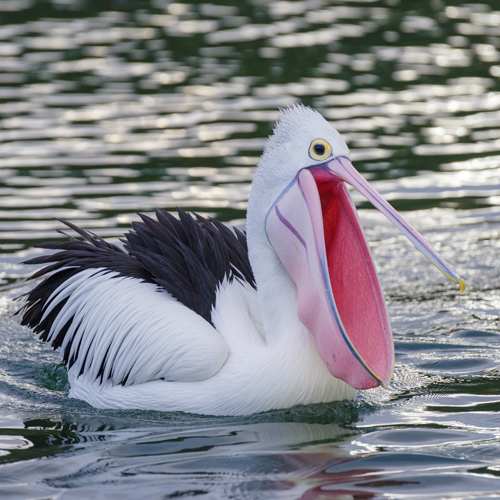
The pelican’s beak is undoubtedly its most striking feature. Long and straight, it can reach up to 20 inches (50 centimeters) in length, depending on the species. But the most remarkable part is the throat pouch hanging from the lower mandible. This elastic pouch functions as a natural fishing net. When the pelican dips its head to catch fish, it opens its beak and the pouch expands to trap water and prey.
Once the beak is closed, the pelican tilts its head to drain the water and then swallows the fish whole. It can also catch fish with the tip of its beak and toss it into the air so it falls into the pouch, leaving the prey helpless and unable to escape.
Although all pelicans belong to the same family (Pelecanidae) and use their large beaks and throat pouches to catch prey, their hunting strategies vary by species and environment. For example, the brown pelican is the only one that dives from the air into the water.
In all cases, pelicans swallow fish whole, usually headfirst to prevent spines from getting stuck. This simple but effective technique makes them among the most efficient fishers in the animal kingdom. In fact, their skill seems to spark envy, as gulls often perch on pelicans’ heads to steal prey directly from their beaks.
Fun facts
Although pelicans have large beaks, their tongues are tiny in comparison. Since the throat pouch does most of the work in catching and holding food, the tongue doesn’t need to be large or strong. It’s usually flat, thin and pointed, just enough to guide food down the throat when the bird tilts its head back to swallow.
Also, like many seabirds, pelicans don’t rely on taste when feeding, so their tongues lack the prominent taste buds found in mammals.
In case you were wondering … When a pelican catches a fish, it usually swallows it immediately. It doesn’t store or carry it around in its pouch. The only exception is when transporting food to regurgitate and feed its chicks. So the idea that pelicans carry food in their pouch is a myth.
Their throat pouch can hold over 3 gallons (13 liters) of water, but they drain the water before swallowing their prey. While it’s true that pelicans can drink salt water, they prefer to drink freshwater when it’s available. They have specialized salt glands in their heads that filter out excess salt from the water they drink, allowing them to survive in marine environments. These glands excrete the excess salt through their nostrils. These glands act like tiny kidneys, filtering the salt from their blood.
As for digestion, the stomach secretes gastric juices, and the small intestine absorbs nutrients. So far, so normal. But did you know that pelicans can regurgitate indigestible parts – like bones or scales – in the form of pellets?
What do pelicans eat?
These beaked birds are omnivorous, though they mainly eat fish that can be up to 12 inches (30 centimeters) long. They can also eat amphibians, crustaceans, turtles and occasionally small birds. Imagine swallowing a turtle whole, shell and all!
Pelicans’ hunting methods depend on factors like habitat, food availability and the presence of other birds or competitors. Some species hunt alone, while others do so in groups.
The brown pelican is more independent, typically hunting solo. It’s also the only one that dives into the water from the air. Other species may hunt alone occasionally but usually cooperate. When working as a team, they swim in semicircles to drive fish into shallow water, then dip their beaks in simultaneously.
It’s also common to see a female pelican teaching her chicks how to fish. Good habits start young.

Life among pelicans
Pelicans are highly social birds and live in large colonies. In the wild, they live between 15 and 20 years.
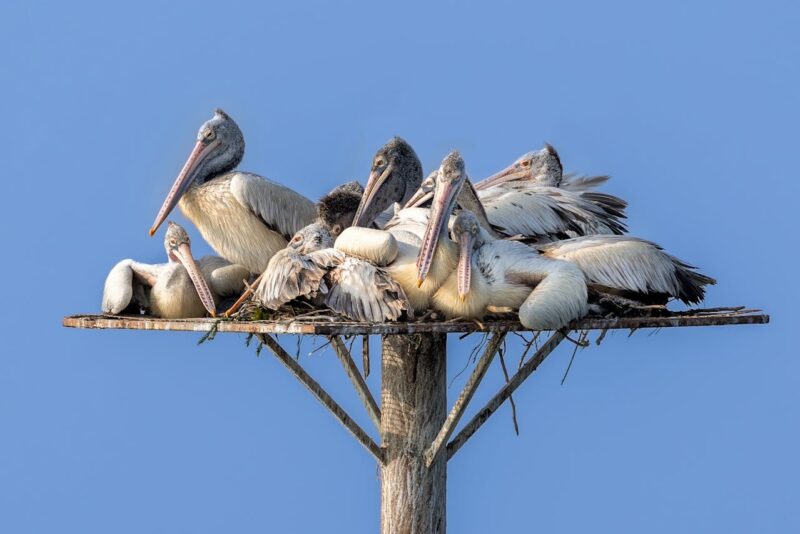
During the breeding season, a male and female form a bond and work together to build a nest, incubate the eggs and care for the young. However, they may choose new partners in the next season.
Pelicans choose different nesting sites depending on the species. Some prefer to nest on the ground – in remote islands, beaches or wetlands – while others nest in trees, shrubs, floating vegetation or mangroves. They usually lay two eggs, and both parents help incubate them for about a month.
Afterward, the chicks are fed for up to three months. By two months, they can already walk and swim. They hatch featherless with pink skin, and as they grow, they develop black or gray feathers, until they get their definitive plumage.
Pelicans know how to flirt!
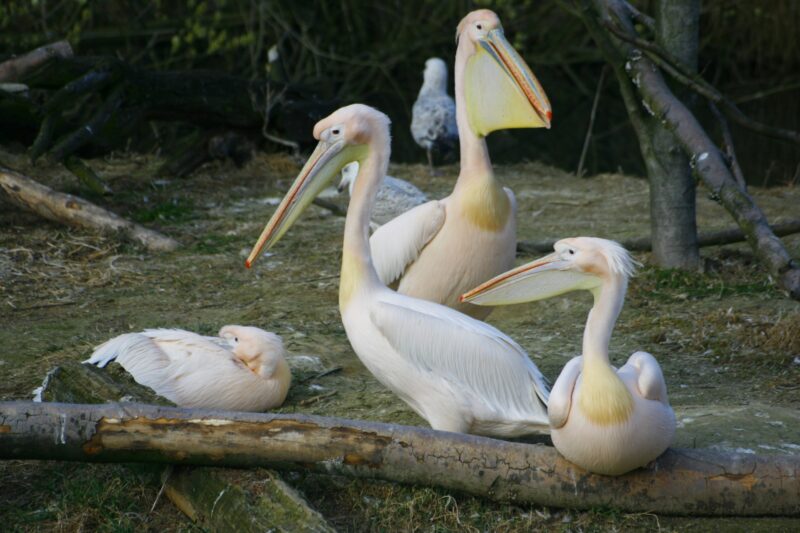
During mating season, some pelicans show color changes in their beaks and throat pouches, turning brighter shades like pink, yellow or blue, an adaptation for sexual attraction.
Additionally, some male pelicans develop a bump on the top of their beaks during mating season. This temporary crest is made of keratin (like fingernails) and disappears once breeding season ends.
Its main function is to attract females. It acts as a sexual ornament, similar to the brighter colors they display during mating season. It may also signal sexual maturity and good health.
Such temporary physical traits are not unique to pelicans, as many birds develop them during courtship, including brighter feathers or special songs.
Conservation and ecological importance
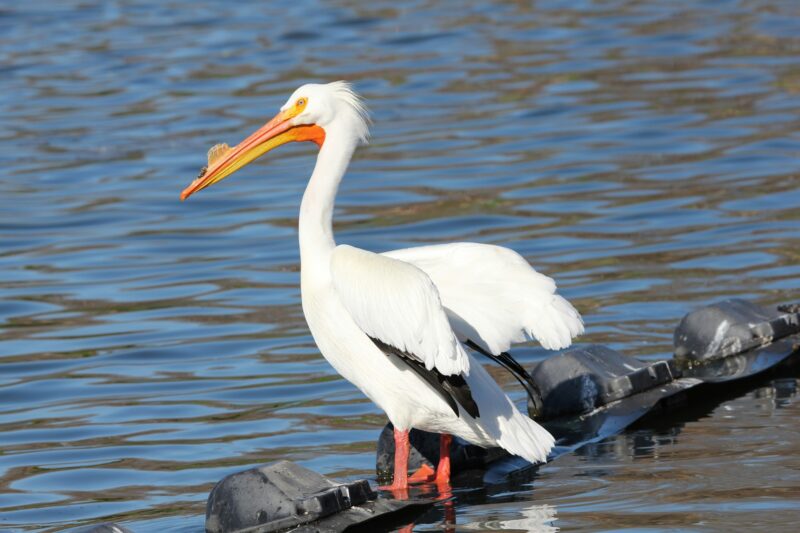
While some species, like the American white pelican, are considered stable, others face threats due to pollution, wetland destruction and overfishing. Protecting pelicans means protecting the health of our seas and lagoons.
The pelican is more than a silhouette in the sky or a coastal figure. It’s a vital link in the ecological chain and a living symbol of the harmony between air, water and land.
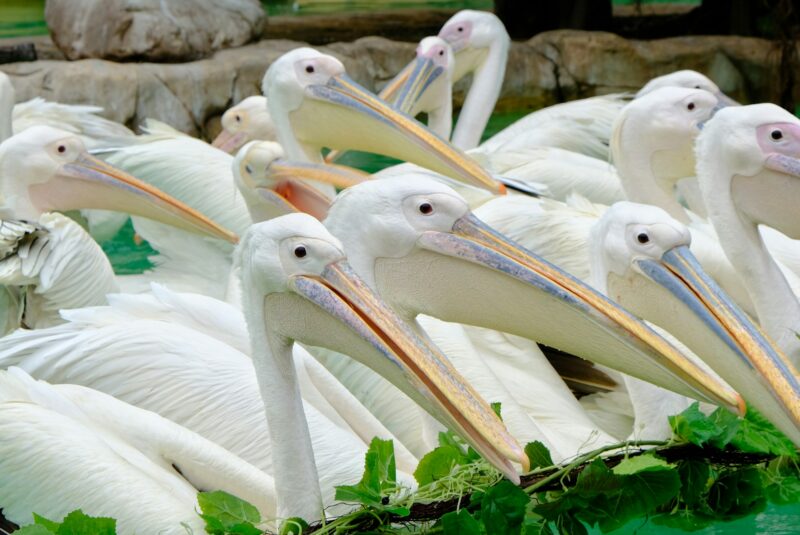
Bottom line: Pelicans have long, elegant necks, but also a distinctive throat pouch and deadly beak. Not even turtles can survive it … Pelicans swallow their prey in a single gulp.
Read more:
Secretary birds are expert snake killers
The shoebill stork is our fierce lifeform of the week
Australian lyrebirds have a hidden skill for farming
The post Pelicans are the masters of air, land and water first appeared on EarthSky.
from EarthSky https://ift.tt/uq4HbEW
Majestic and ancient, pelicans glide across skies and coastlines with a grace that belies their size. With their enormous beaks and distinctive throat pouches, they are as iconic as waves on the sea. These birds, which have inhabited Earth for more than 30 million years, impress not only with their fishing prowess, but also with their complex social behaviors, adaptability and curious nesting habits.
Behind their unmistakable silhouette lies a fascinating evolutionary story and a communal life full of surprising strategies. To know pelicans is to glimpse a world where the wild and the sophisticated coexist in balance.
What does a pelican look like?
Pelicans are large aquatic birds, easily recognized by their massive beaks and extendable throat pouches, which they use as nets to catch fish. Depending on the species, these birds range from 3 to 6 feet (about 1 to 2 meters) in length. Their wingspan ranges from 6 to 10 feet (about 2 to 3 meters), and they weigh between 1.88 to 28.6 pounds (4 and 13 kilograms).
There are eight species of pelicans found across every continent except Antarctica. Most pelicans are light-colored (white or gray), with the exception of the brown and Peruvian pelicans.
Their legs are short but strong, with webbed feet that enable them to swim with ease. In flight, their long wings and curved necks make them unmistakable silhouettes in the sky.
Despite their large size, pelicans are excellent fliers. They can soar for long periods by riding thermal updrafts. They also fly at great altitudes (13,000 feet or 4,000 meters) and can reach speeds of up to 34 mph (55 kph).
They often fly in flocks, in V-shaped formations, which helps them conserve energy over long distances, especially during migrations.
Their beak is an astonishing tool
The pelican’s beak is undoubtedly its most striking feature. Long and straight, it can reach up to 20 inches (50 centimeters) in length, depending on the species. But the most remarkable part is the throat pouch hanging from the lower mandible. This elastic pouch functions as a natural fishing net. When the pelican dips its head to catch fish, it opens its beak and the pouch expands to trap water and prey.
Once the beak is closed, the pelican tilts its head to drain the water and then swallows the fish whole. It can also catch fish with the tip of its beak and toss it into the air so it falls into the pouch, leaving the prey helpless and unable to escape.
Although all pelicans belong to the same family (Pelecanidae) and use their large beaks and throat pouches to catch prey, their hunting strategies vary by species and environment. For example, the brown pelican is the only one that dives from the air into the water.
In all cases, pelicans swallow fish whole, usually headfirst to prevent spines from getting stuck. This simple but effective technique makes them among the most efficient fishers in the animal kingdom. In fact, their skill seems to spark envy, as gulls often perch on pelicans’ heads to steal prey directly from their beaks.
Fun facts
Although pelicans have large beaks, their tongues are tiny in comparison. Since the throat pouch does most of the work in catching and holding food, the tongue doesn’t need to be large or strong. It’s usually flat, thin and pointed, just enough to guide food down the throat when the bird tilts its head back to swallow.
Also, like many seabirds, pelicans don’t rely on taste when feeding, so their tongues lack the prominent taste buds found in mammals.
In case you were wondering … When a pelican catches a fish, it usually swallows it immediately. It doesn’t store or carry it around in its pouch. The only exception is when transporting food to regurgitate and feed its chicks. So the idea that pelicans carry food in their pouch is a myth.
Their throat pouch can hold over 3 gallons (13 liters) of water, but they drain the water before swallowing their prey. While it’s true that pelicans can drink salt water, they prefer to drink freshwater when it’s available. They have specialized salt glands in their heads that filter out excess salt from the water they drink, allowing them to survive in marine environments. These glands excrete the excess salt through their nostrils. These glands act like tiny kidneys, filtering the salt from their blood.
As for digestion, the stomach secretes gastric juices, and the small intestine absorbs nutrients. So far, so normal. But did you know that pelicans can regurgitate indigestible parts – like bones or scales – in the form of pellets?
What do pelicans eat?
These beaked birds are omnivorous, though they mainly eat fish that can be up to 12 inches (30 centimeters) long. They can also eat amphibians, crustaceans, turtles and occasionally small birds. Imagine swallowing a turtle whole, shell and all!
Pelicans’ hunting methods depend on factors like habitat, food availability and the presence of other birds or competitors. Some species hunt alone, while others do so in groups.
The brown pelican is more independent, typically hunting solo. It’s also the only one that dives into the water from the air. Other species may hunt alone occasionally but usually cooperate. When working as a team, they swim in semicircles to drive fish into shallow water, then dip their beaks in simultaneously.
It’s also common to see a female pelican teaching her chicks how to fish. Good habits start young.
Life among pelicans
Pelicans are highly social birds and live in large colonies. In the wild, they live between 15 and 20 years.
During the breeding season, a male and female form a bond and work together to build a nest, incubate the eggs and care for the young. However, they may choose new partners in the next season.
Pelicans choose different nesting sites depending on the species. Some prefer to nest on the ground – in remote islands, beaches or wetlands – while others nest in trees, shrubs, floating vegetation or mangroves. They usually lay two eggs, and both parents help incubate them for about a month.
Afterward, the chicks are fed for up to three months. By two months, they can already walk and swim. They hatch featherless with pink skin, and as they grow, they develop black or gray feathers, until they get their definitive plumage.
Pelicans know how to flirt!
During mating season, some pelicans show color changes in their beaks and throat pouches, turning brighter shades like pink, yellow or blue, an adaptation for sexual attraction.
Additionally, some male pelicans develop a bump on the top of their beaks during mating season. This temporary crest is made of keratin (like fingernails) and disappears once breeding season ends.
Its main function is to attract females. It acts as a sexual ornament, similar to the brighter colors they display during mating season. It may also signal sexual maturity and good health.
Such temporary physical traits are not unique to pelicans, as many birds develop them during courtship, including brighter feathers or special songs.
Conservation and ecological importance
While some species, like the American white pelican, are considered stable, others face threats due to pollution, wetland destruction and overfishing. Protecting pelicans means protecting the health of our seas and lagoons.
The pelican is more than a silhouette in the sky or a coastal figure. It’s a vital link in the ecological chain and a living symbol of the harmony between air, water and land.
Bottom line: Pelicans have long, elegant necks, but also a distinctive throat pouch and deadly beak. Not even turtles can survive it … Pelicans swallow their prey in a single gulp.
Read more:
Secretary birds are expert snake killers
The shoebill stork is our fierce lifeform of the week
Australian lyrebirds have a hidden skill for farming
The post Pelicans are the masters of air, land and water first appeared on EarthSky.
from EarthSky https://ift.tt/uq4HbEW

Aucun commentaire:
Enregistrer un commentaire