
Watch this video about the unique Mexican burrowing toad.
The Mexican burrowing toad, scientifically known as Rhinophrynus dorsalis, has specialized characteristics that make it unique among amphibians. It looks like a deflated balloon and blends in impressively with its environment. And, as its name suggests, this toad is a skillful digger. While you can find it in Mexico, it also lives in areas from southern Texas to Costa Rica.
Physical appearance of the Mexican burrowing toad
There are three orders of amphibians: Those with tails (like salamanders and newts), those without tails (like frogs and toads) and those without legs (like caecilians). This amphibian is a toad, but one that’s quite different from the rest.
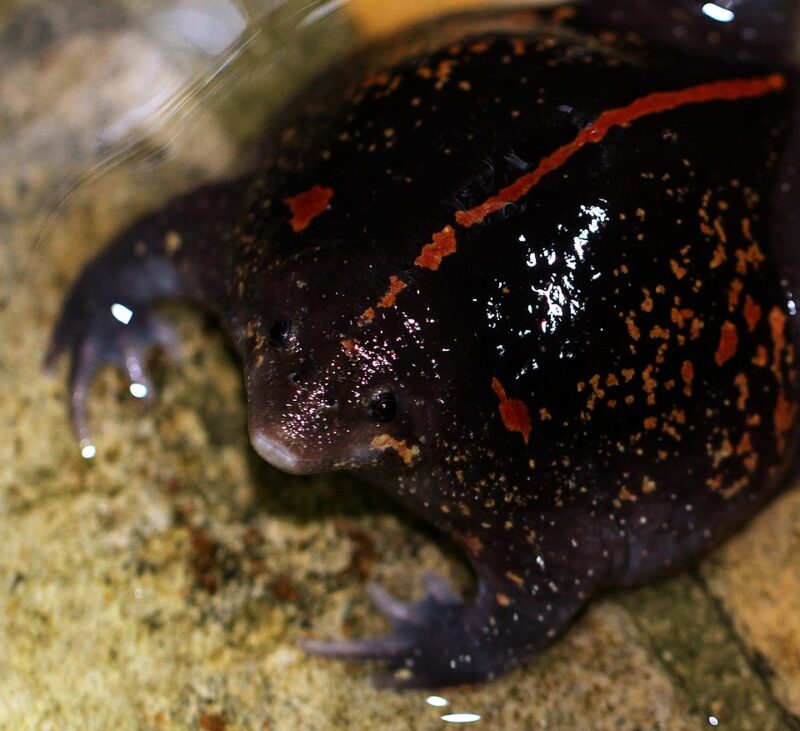
One of the Mexican burrowing toad’s most distinctive characteristics is its specialized snout. Being short, robust and rounded, these snouts can pierce the ground and dig tunnels with great ease. Although its mouth is small, shock-absorbing pads surround it. Furthermore, each cell around the mouth is armed with a strong keratin tip. This likely protects the mouth when the animal pushes forward through the soil.
In addition, its legs are short, strong and great for digging. Its feet have special features for burrowing, including nail-like, keratinized structures at the tips of each toe. The front feet don’t have webbing between the toes, allowing for easier digging, while the heavily webbed back feet are short.
The Mexican burrowing toad also has small, upward-facing eyes, allowing it to monitor its surroundings while remaining partially buried underground. This elusive animal digs with agility and quickly hides to protect itself from predators, such as birds, mammals and snakes.
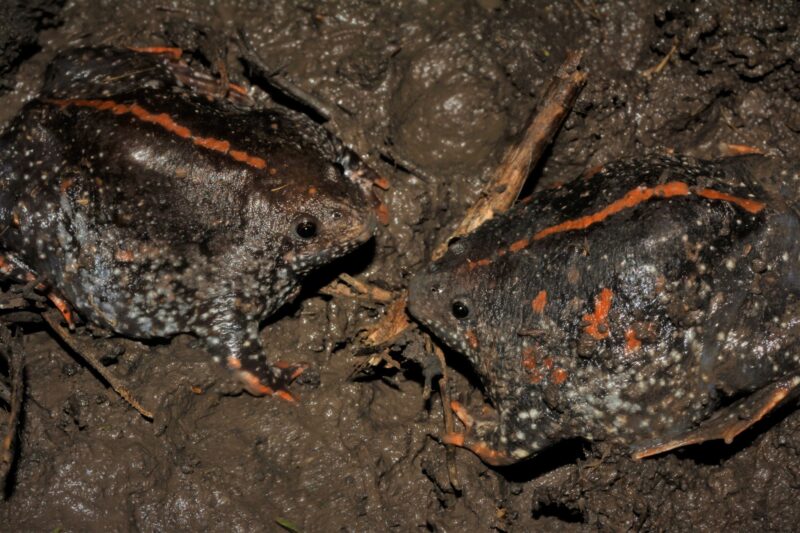
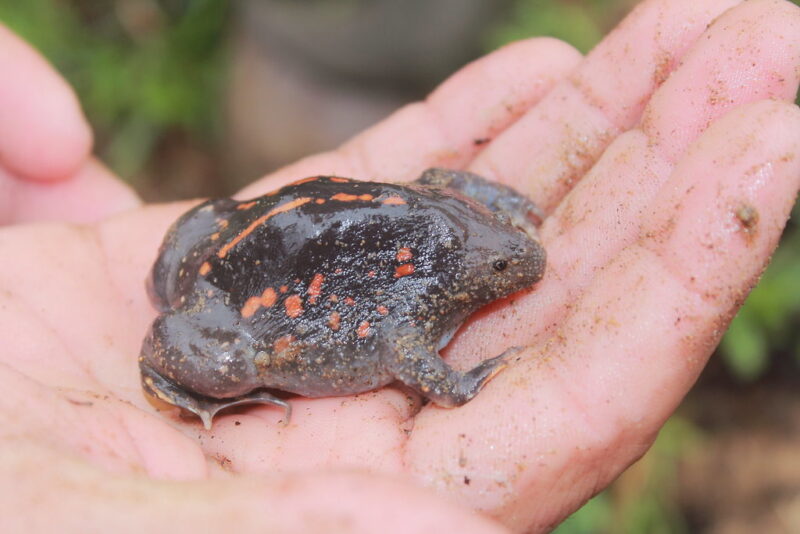
Its body reaches a length of 2.4 to 3.5 inches (6 to 9 cm), although females are considerably larger. They resemble a small deflated balloon with thick, rough skin. The dorsal part is dark brown or almost black, giving it camouflage in the mud as protection from potential predators.
A clear vertebral line extends from the head to the rear. It also has scattered dots and spots in yellow, orange or red, especially on the sides. The belly can be dark brown, purple-blue or gray.

What can the Mexican burrowing toad do?
Mexican burrowing toads prefer tropical and subtropical habitats with distinct rainy and dry seasons. During periods of heavy rain, they live in places with dense vegetation: Mainly grasslands, crop fields, ditches, and ponds. In drier seasons, they burrow in the soil.
In fact, this amphibian is known for its ability to burrow and live underground for long periods. For most of its life, it remains buried in self-excavated tunnels. These tunnels provide protection from temperature changes and lack of water during dry seasons. Its subterranean behavior allows it to escape the intense heat of the surface. It’s also a key adaptation for survival in the arid areas of central and northern Mexico and southern Texas. One of the most remarkable things about this toad is its ability to survive in extreme conditions.
The Mexican burrowing toad has developed a tolerance to dehydration. It stores water in its tissues, making it resilient to water shortages, a useful adaptation in arid and semi-arid environments. Its thick skin acts as a barrier to prevent excessive water loss.
Rainy seasons and tadpoles
Mexican burrowing toads are nocturnal. That means they are most active at night, when temperatures are cooler and humidity is higher. And during the rainy season, the toads emerge from their tunnels at night to reproduce.
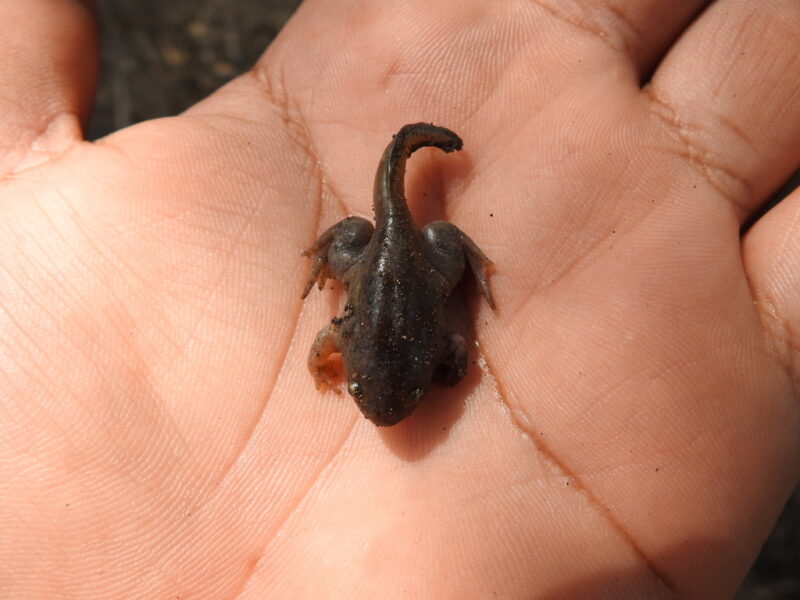
The female lays her eggs in small temporary pools of water, where the young develop into tadpoles. And once the tadpoles have developed, the adults return to their burrows to spend the rest of the year buried.
Fun facts
Different tongue: The toad’s snout is protected by a layer of small, keratinous spines, and its lips are sealed by secretions from glands beneath the lower jaw. These lips feature a double closure along the curved upper jawbone, further reinforced by the jaw’s glands.
In addition, this toad uses a unique method of tongue protrusion, setting it apart from frogs. While most frogs flick their tongues out quickly through their lips, this species stiffens its tongue and extends it by moving the jaw backward. This specialized mechanism helps it capture small insects hiding in burrows.
No neck: This species has no neck and no visible ear holes or tympanum (an external hearing structure).
Balloon shape: When the toad becomes alarmed, it inflates its body and resembles a balloon, with its already short head and limbs almost disappearing.
Endangered species: Although the Mexican burrowing toad is not currently in immediate danger of extinction, its population is threatened by habitat loss due to urban growth and agriculture. Water pollution can also negatively affect tadpoles, as they depend on temporary bodies of water to complete their life cycle.
Why is it important to the ecosystem?
This order of amphibians – anurans – are an important part of ecosystems. Some research has shown that when these animals disappear from habitats (whether due to pollution or destruction), ecosystems are altered. This happens because anurans feed on insects. When these amphibians disappear, populations of harmful species increase. For example, some insects (mosquitoes, bed bugs, crickets, etc.) can become pests.
Furthermore, the increase in insects such as mosquitoes represents a health problem, since they transmit diseases. By increasing their populations and expanding their distribution areas, these insects carry and spread diseases such as malaria and dengue fever at an alarming rate on a global scale.
In turn, anurans also serve as food for larger organisms, such as birds, small mammals and even humans. To ensure their survival, these toads produce thousands of offspring at a time. A considerable advantage is that they do not require parental care. That is, adults do not protect the tadpoles after they hatch.
Furthermore, the tadpoles also play an important role in maintaining the health of freshwater ecosystems. This is because they control the growth of algae in rivers and lakes. Without these tadpoles, other organisms, such as fish, would be affected.
A key role for healthy ecosystems
The Mexican burrowing toad is a clear example of how evolution has endowed living beings with extraordinary adaptations to survive in hostile environments. Its ability to burrow and live underground, its tolerance for dehydration, and its connection to rainfall are just some of the characteristics that make it unique in the animal kingdom.
Protecting its habitat is crucial not just for ensuring its survival, but for maintaining biodiversity where it lives.
Bottom line: The Mexican burrowing toad is an expert digger. It can build long, deep tunnels and live there for long periods of time. It can survive extreme conditions and plays a key role in maintaining healthy ecosystems.
Read more: A rare and elusive frog found again after 130 years
Read more: Frog saunas could help frogs threatened by fungus
The post Unique Mexican burrowing toad looks like a deflated balloon first appeared on EarthSky.
from EarthSky https://ift.tt/upaYzvt
Watch this video about the unique Mexican burrowing toad.
The Mexican burrowing toad, scientifically known as Rhinophrynus dorsalis, has specialized characteristics that make it unique among amphibians. It looks like a deflated balloon and blends in impressively with its environment. And, as its name suggests, this toad is a skillful digger. While you can find it in Mexico, it also lives in areas from southern Texas to Costa Rica.
Physical appearance of the Mexican burrowing toad
There are three orders of amphibians: Those with tails (like salamanders and newts), those without tails (like frogs and toads) and those without legs (like caecilians). This amphibian is a toad, but one that’s quite different from the rest.
One of the Mexican burrowing toad’s most distinctive characteristics is its specialized snout. Being short, robust and rounded, these snouts can pierce the ground and dig tunnels with great ease. Although its mouth is small, shock-absorbing pads surround it. Furthermore, each cell around the mouth is armed with a strong keratin tip. This likely protects the mouth when the animal pushes forward through the soil.
In addition, its legs are short, strong and great for digging. Its feet have special features for burrowing, including nail-like, keratinized structures at the tips of each toe. The front feet don’t have webbing between the toes, allowing for easier digging, while the heavily webbed back feet are short.
The Mexican burrowing toad also has small, upward-facing eyes, allowing it to monitor its surroundings while remaining partially buried underground. This elusive animal digs with agility and quickly hides to protect itself from predators, such as birds, mammals and snakes.
Its body reaches a length of 2.4 to 3.5 inches (6 to 9 cm), although females are considerably larger. They resemble a small deflated balloon with thick, rough skin. The dorsal part is dark brown or almost black, giving it camouflage in the mud as protection from potential predators.
A clear vertebral line extends from the head to the rear. It also has scattered dots and spots in yellow, orange or red, especially on the sides. The belly can be dark brown, purple-blue or gray.
What can the Mexican burrowing toad do?
Mexican burrowing toads prefer tropical and subtropical habitats with distinct rainy and dry seasons. During periods of heavy rain, they live in places with dense vegetation: Mainly grasslands, crop fields, ditches, and ponds. In drier seasons, they burrow in the soil.
In fact, this amphibian is known for its ability to burrow and live underground for long periods. For most of its life, it remains buried in self-excavated tunnels. These tunnels provide protection from temperature changes and lack of water during dry seasons. Its subterranean behavior allows it to escape the intense heat of the surface. It’s also a key adaptation for survival in the arid areas of central and northern Mexico and southern Texas. One of the most remarkable things about this toad is its ability to survive in extreme conditions.
The Mexican burrowing toad has developed a tolerance to dehydration. It stores water in its tissues, making it resilient to water shortages, a useful adaptation in arid and semi-arid environments. Its thick skin acts as a barrier to prevent excessive water loss.
Rainy seasons and tadpoles
Mexican burrowing toads are nocturnal. That means they are most active at night, when temperatures are cooler and humidity is higher. And during the rainy season, the toads emerge from their tunnels at night to reproduce.
The female lays her eggs in small temporary pools of water, where the young develop into tadpoles. And once the tadpoles have developed, the adults return to their burrows to spend the rest of the year buried.
Fun facts
Different tongue: The toad’s snout is protected by a layer of small, keratinous spines, and its lips are sealed by secretions from glands beneath the lower jaw. These lips feature a double closure along the curved upper jawbone, further reinforced by the jaw’s glands.
In addition, this toad uses a unique method of tongue protrusion, setting it apart from frogs. While most frogs flick their tongues out quickly through their lips, this species stiffens its tongue and extends it by moving the jaw backward. This specialized mechanism helps it capture small insects hiding in burrows.
No neck: This species has no neck and no visible ear holes or tympanum (an external hearing structure).
Balloon shape: When the toad becomes alarmed, it inflates its body and resembles a balloon, with its already short head and limbs almost disappearing.
Endangered species: Although the Mexican burrowing toad is not currently in immediate danger of extinction, its population is threatened by habitat loss due to urban growth and agriculture. Water pollution can also negatively affect tadpoles, as they depend on temporary bodies of water to complete their life cycle.
Why is it important to the ecosystem?
This order of amphibians – anurans – are an important part of ecosystems. Some research has shown that when these animals disappear from habitats (whether due to pollution or destruction), ecosystems are altered. This happens because anurans feed on insects. When these amphibians disappear, populations of harmful species increase. For example, some insects (mosquitoes, bed bugs, crickets, etc.) can become pests.
Furthermore, the increase in insects such as mosquitoes represents a health problem, since they transmit diseases. By increasing their populations and expanding their distribution areas, these insects carry and spread diseases such as malaria and dengue fever at an alarming rate on a global scale.
In turn, anurans also serve as food for larger organisms, such as birds, small mammals and even humans. To ensure their survival, these toads produce thousands of offspring at a time. A considerable advantage is that they do not require parental care. That is, adults do not protect the tadpoles after they hatch.
Furthermore, the tadpoles also play an important role in maintaining the health of freshwater ecosystems. This is because they control the growth of algae in rivers and lakes. Without these tadpoles, other organisms, such as fish, would be affected.
A key role for healthy ecosystems
The Mexican burrowing toad is a clear example of how evolution has endowed living beings with extraordinary adaptations to survive in hostile environments. Its ability to burrow and live underground, its tolerance for dehydration, and its connection to rainfall are just some of the characteristics that make it unique in the animal kingdom.
Protecting its habitat is crucial not just for ensuring its survival, but for maintaining biodiversity where it lives.
Bottom line: The Mexican burrowing toad is an expert digger. It can build long, deep tunnels and live there for long periods of time. It can survive extreme conditions and plays a key role in maintaining healthy ecosystems.
Read more: A rare and elusive frog found again after 130 years
Read more: Frog saunas could help frogs threatened by fungus
The post Unique Mexican burrowing toad looks like a deflated balloon first appeared on EarthSky.
from EarthSky https://ift.tt/upaYzvt

Aucun commentaire:
Enregistrer un commentaire