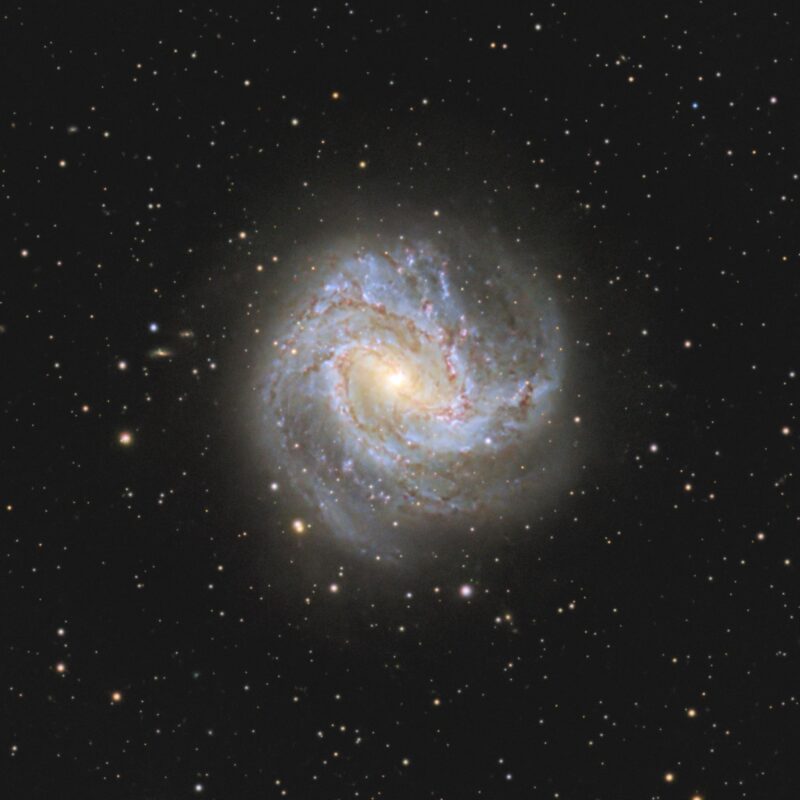
View at EarthSky Community Photos. | Steven Bellavia in Smithfield, Virginia, captured this telescopic view of galaxy Messier 83 on May 11, 2026. Steven wrote: “Even down here in southern Virginia, M83, the Southern Pinwheel Galaxy, only reaches an altitude of 22 degrees. So this is a challenging object to capture. M83, also called the Southern Pinwheel Galaxy, is a barred spiral galaxy in the constellation borders of Hydra and Centaurus. Nicolas-Louis de Lacaille discovered it on February 17, 1752, at the Cape of Good Hope. Charles Messier added it to his catalog in March 1781. At 15 million light-years away, it is one of the closest and brightest barred spiral galaxies in the sky, visible even with binoculars.” Thank you, Steven! See more deep-sky photos from May 2026 below.
The EarthSky community has many talented astrophotographers who capture stunning images of the deep sky. We gathered some of our favorite deep-sky photos from May 2026 for you to enjoy. Do you have images of your own to share? You can submit them to EarthSky here. We’d love to see them and share them!
Deep-sky photos of diffuse nebulae
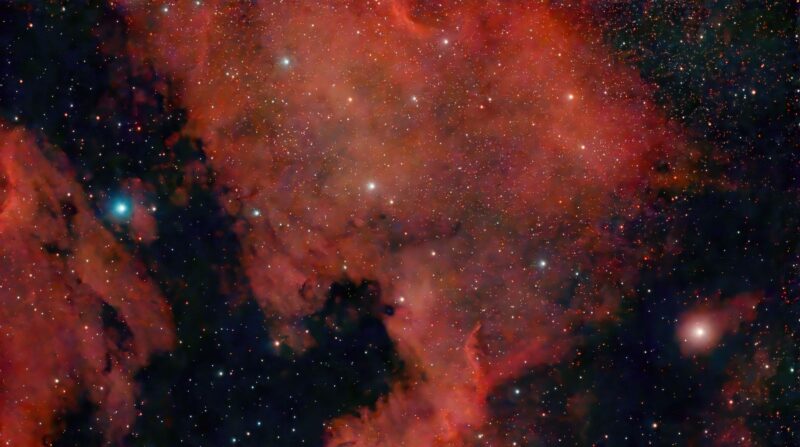
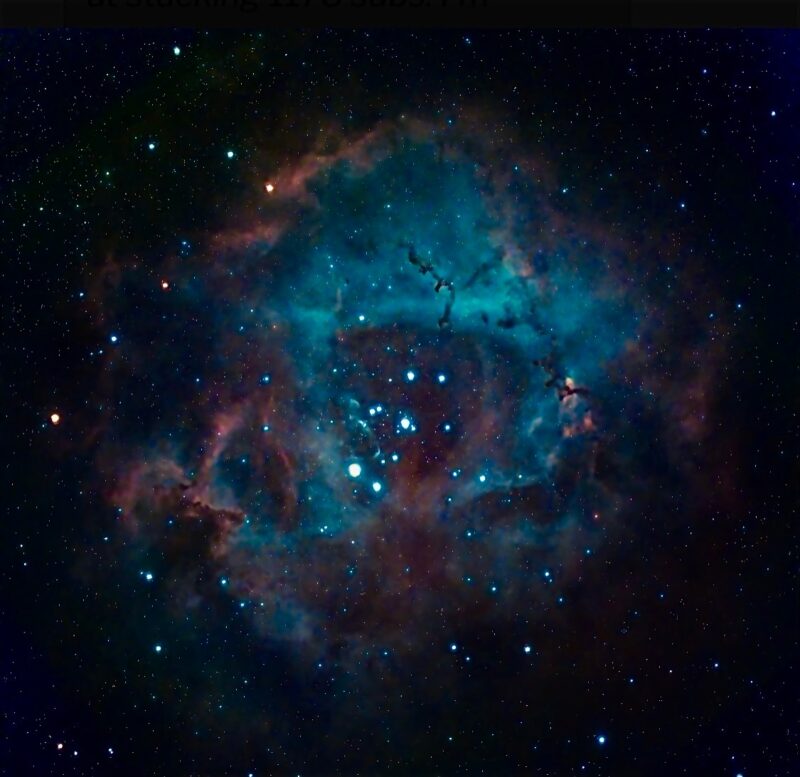
View at EarthSky Community Photos. | Vikash Singh in Dhannad, Jharkhand, India, captured this telescopic view of the North America Nebula on May 8, 2026. Vikash wrote: “NGC 7000, also known as the North America Nebula, from my city Dhanbad using my Dwarf 3 Smart Telescope. Located in the constellation Cygnus near the bright star Deneb, this emission nebula lies around 1,500-2,200 light-years away from Earth and stretches nearly 50 light-years across space.” Thank you, Vikash!View at EarthSky Community Photos. | Jacky Brown in Aurora, Colorado, captured this telescopic view of the Rosette Nebula with its associated star cluster, in the constellation Monoceros, on May 10, 2026. Jacky wrote: “I was actually watching Betelgeuse and got sidetracked to this star cluster. Beautiful object, as always.” Thank you, Jacky!
Planetary nebulae
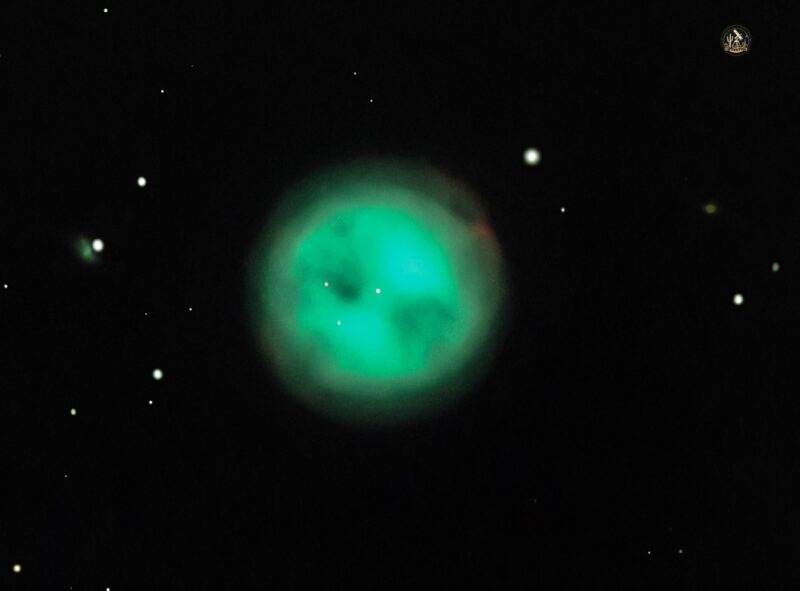
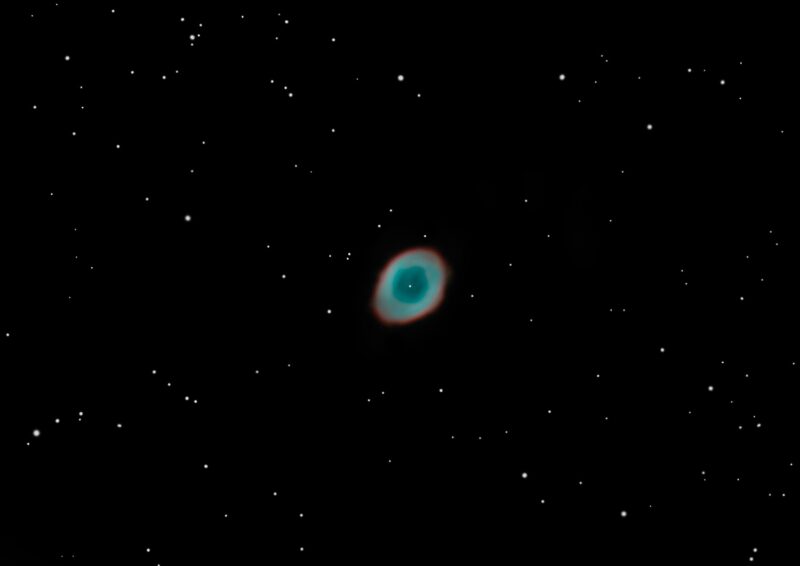
View at EarthSky Community Photos. | Jelieta Walinski at Desert Bloom Observatory in St. David, Arizona, captured this telescopic view of Messier 97, the Owl Nebula in the constellation Ursa Major, on May 15, 2026. Jelieta wrote: “The Owl Nebula, located in the constellation Ursa Major approximately 2,000 light-years from Earth, is a planetary nebula formed from the outer layers of a dying sunlike star. Its distinctive ‘owl-eyed’ appearance emerges from complex shells of glowing gas illuminated by the hot remnant stellar core. This image represents both the beauty and the challenge of modern backyard astrophotography, where even under intrusive artificial light, faint deep-sky objects can still be revealed through patience, precision tracking, and long exposure imaging.” Thank you, Jelieta!View at EarthSky Community Photos. | Jelieta Walinski at Desert Bloom Observatory in St. David, Arizona, captured this telescopic view of Messier 57, the Ring Nebula, in the constellation Lyra, on May 16, 2026. Jelieta wrote: “Captured from Desert Bloom Observatory under intermittent monsoon skies in the Arizona desert, this image reveals the luminous beauty of the Ring Nebula (Messier 57), the glowing remains of a dying star approximately 2,300 light-years from Earth. Its delicate emerald core and expanding outer shell shine like a celestial smoke ring suspended in the darkness of space.” Thank you, Jelieta!
Star clusters
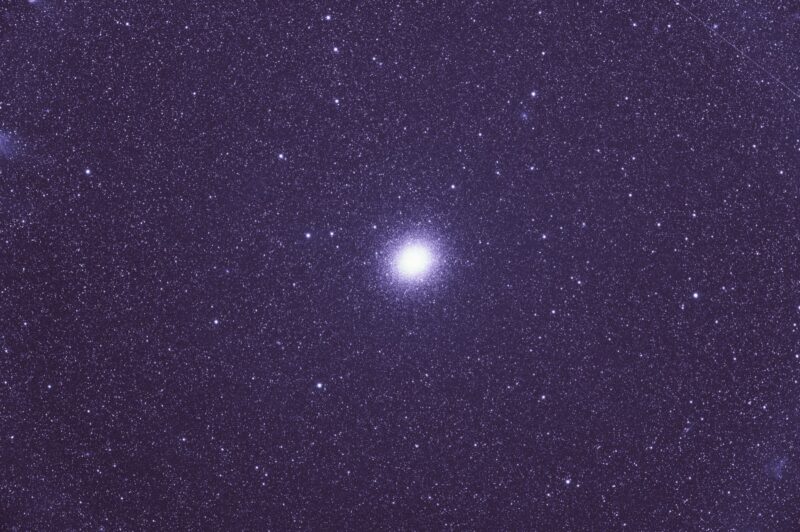
View at EarthSky Community Photos. | Giuseppe Pappa from Sicily, Italy, used a remote telescope in Namibia to capture this view of globular cluster NGC 5139, Omega Centauri, on May 13, 2026. Giuseppe wrote: “May offers the optimal annual window for latitudes around 38-32 degrees north latitude. In this case I took the images from Namibia (remote control). Wide-field capture of the Milky Way’s most massive globular cluster. The flat field of the AG70 astrograph delivers pinpoint stellar profiles across the entire frame, mapping the steep radial density gradient from the structural outskirts to the unresolved core. Due to its multiple stellar populations with distinct chemical profiles and ages, NGC 5139 is classified as a stripped galactic nucleus: the fossil remnant of a dwarf galaxy accreted by the Milky Way.” Thank you, Giuseppe!
Deep-sky photos of distant galaxies
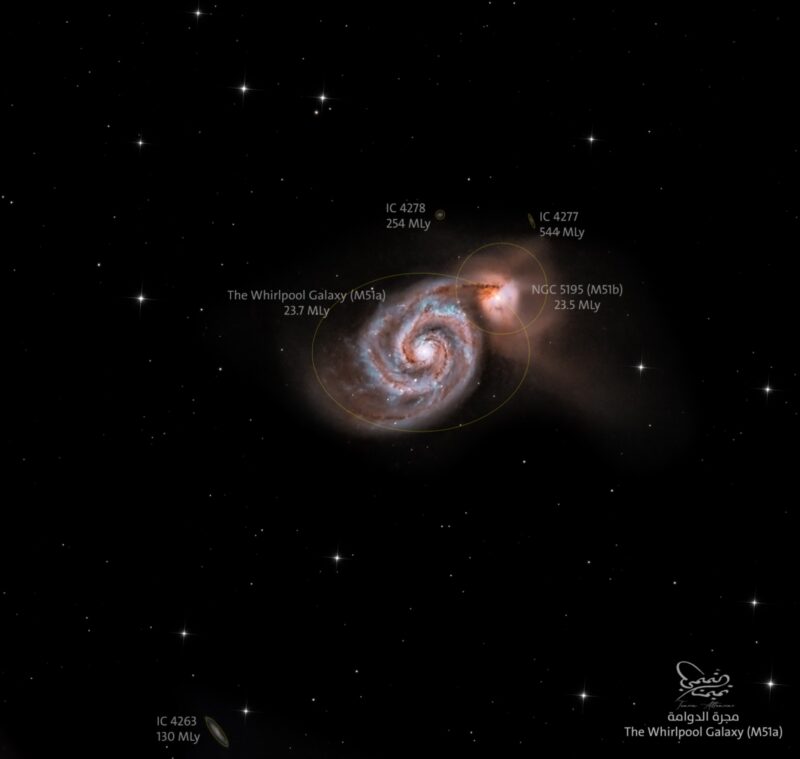
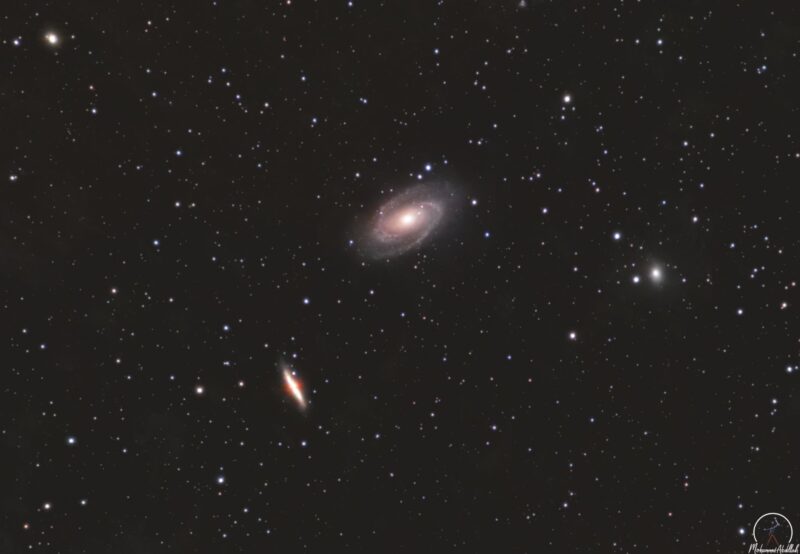
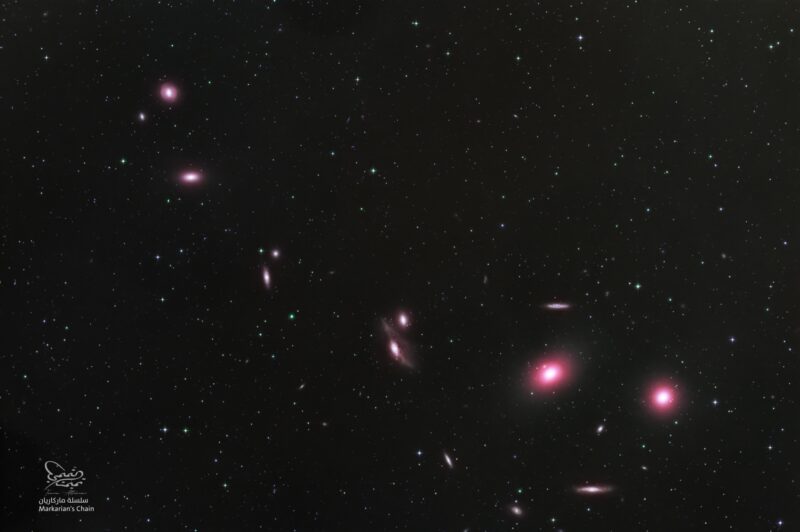
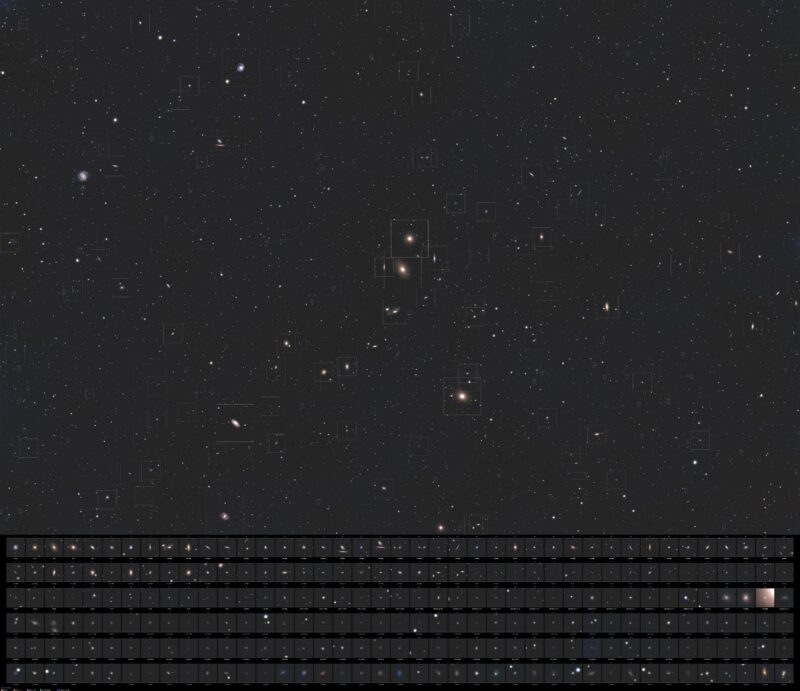
View at EarthSky Community Photos. | Tameem Altameemi in the United Arab Emirates (UAE) captured this telescopic view of Messier 51, the Whirlpool galaxy, on May 9, 2026. Tameem wrote: “Located about 23.5 million light-years away in the constellation Canes Venatici, M51 is one of the most famous interacting spiral galaxies in the night sky. Its striking spiral structure is believed to be enhanced by the gravitational interaction with its companion galaxy NGC 5195, visible beside it. Several distant background galaxies also appear throughout the frame, including IC 4277 and IC 4278, adding depth to this cosmic scene.” Thank you, Tameem!View at EarthSky Community Photos. | Mohammed Abdallah in Suez, Egypt, used a telephoto lens to capture this view of galaxies Messier 81 and Messier 82 on May 6, 2026. Mohammed wrote: “M81 and M82 are interacting galaxies located in Ursa Major, and they are about 12 million light-years away. It’s impressive to think about how many million stars are in front of your eyes.” Thank you, Mohammed!View at EarthSky Community Photos. | Tameem Altameemi in Al Qou’, United Arab Emirates (UAE), captured this telescopic view of Markarian’s Chain of galaxies on May 23, 2026. Tameem wrote: “Markarian’s Chain is a famous curved alignment of galaxies located within the Virgo Cluster, one of the nearest large galaxy clusters to Earth. The chain was named after the Armenian astrophysicist Benjamin Markarian, who noticed that many of these galaxies appear visually connected in a smooth arc across the sky. This region contains a remarkable variety of galaxies, including giant elliptical galaxies, spiral galaxies seen edge-on, and interacting systems shaped by gravitational encounters over millions of years.” Thank you, Tameem!View at EarthSky Community Photos. | Steven Bellavia in Smithfield, Virginia, captured this telescopic view of Markarian’s Chain of galaxies on May 30, 2026. Steven wrote: “The Markarian chain of galaxies and even more field beyond them. The finder chart and poster are courtesy of a free script for PixInsight, developed by Daniel Nimmervoll of Germany. Note that well over 500 galaxies are revealed in this image. I chose to stop at 246.” Thank you, Steven!
Bottom line: Without a doubt, you’ll enjoy this gallery of deep-sky photos from May 2026 by our EarthSky community. If you have a great photo to share, send it in, too. We love to see them!
View at EarthSky Community Photos. | Steven Bellavia in Smithfield, Virginia, captured this telescopic view of galaxy Messier 83 on May 11, 2026. Steven wrote: “Even down here in southern Virginia, M83, the Southern Pinwheel Galaxy, only reaches an altitude of 22 degrees. So this is a challenging object to capture. M83, also called the Southern Pinwheel Galaxy, is a barred spiral galaxy in the constellation borders of Hydra and Centaurus. Nicolas-Louis de Lacaille discovered it on February 17, 1752, at the Cape of Good Hope. Charles Messier added it to his catalog in March 1781. At 15 million light-years away, it is one of the closest and brightest barred spiral galaxies in the sky, visible even with binoculars.” Thank you, Steven! See more deep-sky photos from May 2026 below.
The EarthSky community has many talented astrophotographers who capture stunning images of the deep sky. We gathered some of our favorite deep-sky photos from May 2026 for you to enjoy. Do you have images of your own to share? You can submit them to EarthSky here. We’d love to see them and share them!
Deep-sky photos of diffuse nebulae
View at EarthSky Community Photos. | Vikash Singh in Dhannad, Jharkhand, India, captured this telescopic view of the North America Nebula on May 8, 2026. Vikash wrote: “NGC 7000, also known as the North America Nebula, from my city Dhanbad using my Dwarf 3 Smart Telescope. Located in the constellation Cygnus near the bright star Deneb, this emission nebula lies around 1,500-2,200 light-years away from Earth and stretches nearly 50 light-years across space.” Thank you, Vikash!View at EarthSky Community Photos. | Jacky Brown in Aurora, Colorado, captured this telescopic view of the Rosette Nebula with its associated star cluster, in the constellation Monoceros, on May 10, 2026. Jacky wrote: “I was actually watching Betelgeuse and got sidetracked to this star cluster. Beautiful object, as always.” Thank you, Jacky!
Planetary nebulae
View at EarthSky Community Photos. | Jelieta Walinski at Desert Bloom Observatory in St. David, Arizona, captured this telescopic view of Messier 97, the Owl Nebula in the constellation Ursa Major, on May 15, 2026. Jelieta wrote: “The Owl Nebula, located in the constellation Ursa Major approximately 2,000 light-years from Earth, is a planetary nebula formed from the outer layers of a dying sunlike star. Its distinctive ‘owl-eyed’ appearance emerges from complex shells of glowing gas illuminated by the hot remnant stellar core. This image represents both the beauty and the challenge of modern backyard astrophotography, where even under intrusive artificial light, faint deep-sky objects can still be revealed through patience, precision tracking, and long exposure imaging.” Thank you, Jelieta!View at EarthSky Community Photos. | Jelieta Walinski at Desert Bloom Observatory in St. David, Arizona, captured this telescopic view of Messier 57, the Ring Nebula, in the constellation Lyra, on May 16, 2026. Jelieta wrote: “Captured from Desert Bloom Observatory under intermittent monsoon skies in the Arizona desert, this image reveals the luminous beauty of the Ring Nebula (Messier 57), the glowing remains of a dying star approximately 2,300 light-years from Earth. Its delicate emerald core and expanding outer shell shine like a celestial smoke ring suspended in the darkness of space.” Thank you, Jelieta!
Star clusters
View at EarthSky Community Photos. | Giuseppe Pappa from Sicily, Italy, used a remote telescope in Namibia to capture this view of globular cluster NGC 5139, Omega Centauri, on May 13, 2026. Giuseppe wrote: “May offers the optimal annual window for latitudes around 38-32 degrees north latitude. In this case I took the images from Namibia (remote control). Wide-field capture of the Milky Way’s most massive globular cluster. The flat field of the AG70 astrograph delivers pinpoint stellar profiles across the entire frame, mapping the steep radial density gradient from the structural outskirts to the unresolved core. Due to its multiple stellar populations with distinct chemical profiles and ages, NGC 5139 is classified as a stripped galactic nucleus: the fossil remnant of a dwarf galaxy accreted by the Milky Way.” Thank you, Giuseppe!
Deep-sky photos of distant galaxies
View at EarthSky Community Photos. | Tameem Altameemi in the United Arab Emirates (UAE) captured this telescopic view of Messier 51, the Whirlpool galaxy, on May 9, 2026. Tameem wrote: “Located about 23.5 million light-years away in the constellation Canes Venatici, M51 is one of the most famous interacting spiral galaxies in the night sky. Its striking spiral structure is believed to be enhanced by the gravitational interaction with its companion galaxy NGC 5195, visible beside it. Several distant background galaxies also appear throughout the frame, including IC 4277 and IC 4278, adding depth to this cosmic scene.” Thank you, Tameem!View at EarthSky Community Photos. | Mohammed Abdallah in Suez, Egypt, used a telephoto lens to capture this view of galaxies Messier 81 and Messier 82 on May 6, 2026. Mohammed wrote: “M81 and M82 are interacting galaxies located in Ursa Major, and they are about 12 million light-years away. It’s impressive to think about how many million stars are in front of your eyes.” Thank you, Mohammed!View at EarthSky Community Photos. | Tameem Altameemi in Al Qou’, United Arab Emirates (UAE), captured this telescopic view of Markarian’s Chain of galaxies on May 23, 2026. Tameem wrote: “Markarian’s Chain is a famous curved alignment of galaxies located within the Virgo Cluster, one of the nearest large galaxy clusters to Earth. The chain was named after the Armenian astrophysicist Benjamin Markarian, who noticed that many of these galaxies appear visually connected in a smooth arc across the sky. This region contains a remarkable variety of galaxies, including giant elliptical galaxies, spiral galaxies seen edge-on, and interacting systems shaped by gravitational encounters over millions of years.” Thank you, Tameem!View at EarthSky Community Photos. | Steven Bellavia in Smithfield, Virginia, captured this telescopic view of Markarian’s Chain of galaxies on May 30, 2026. Steven wrote: “The Markarian chain of galaxies and even more field beyond them. The finder chart and poster are courtesy of a free script for PixInsight, developed by Daniel Nimmervoll of Germany. Note that well over 500 galaxies are revealed in this image. I chose to stop at 246.” Thank you, Steven!
Bottom line: Without a doubt, you’ll enjoy this gallery of deep-sky photos from May 2026 by our EarthSky community. If you have a great photo to share, send it in, too. We love to see them!
NASA has created a second perpetual ocean video, building on the incredibly popular original video from 2011.
The new video traces some of the strongest currents, showing surface ocean currents in white and deeper ocean currents in dark blue.
The video helps scientists understand the characteristics of these currents better and ultimately understand how heat is transported globally in the ocean.
This is a visualization of ocean currents around the world. Scientists use NASA’s ocean model, Estimating the Circulation and Climate of the Ocean (ECCO), to visualize the currents. The ECCO ocean circulation model incorporates observations from spacecraft, buoys and other in situ measurements to keep the model accurate. ECCO is a joint project between NASA/ JPL and MIT. The model output used here is from ECCO-2 and covers the years 2021-2023.
In 2011, ECCO2 was used to create a visualization called Perpetual Ocean. Perpetual Ocean continues to be extremely popular, but it only shows ocean currents on the surface.
In this new visualization, we use the ocean’s 3D velocity field to visualize some of the strongest ocean currents. We release virtual particles in the ocean and allow them to move with the ocean’s 3D velocity field. Each particle has a trail so we can see its direction of movement better. The particles initialized above 600 meters (1,970 feet) in depth have a trail length of three days, those initialized deeper than 600 meters have a trail length of six days. The particle trails help identify the strongest currents in the world that are squeezed in narrow belts on the western side of each ocean basin. These are called western boundary currents.
The looping meanders in the boundary currents sometimes form turbulent rings (eddies) that can trap cold or warm waters in their centers and then separate from the main flow. In general, the western boundary currents are warm and salty.
The visualization starts from a global rotating view. Then, it slows down to see the Western Boundary Current along the western edge of the Pacific Ocean along the coasts of Australia and Asia. We zoom in to show the Kuroshio Current off the coast of Japan. Along the Japanese coast, the current exhibits large meanders that can persist for many months in more or less the same location. The Kuroshio Current has a temperature range of 20 to 25 degrees Celsius (68 to 77 F). Its salinity can change seasonally with an average value of 34.5.
Zeroing in on the Indian Ocean and the southern tip of Africa
We then zoom out and move over the Indian Ocean. The Indian Ocean exhibits large variations in salinity. The western Indian Ocean is quite salty (>36) due to overflow inputs from seas such as the Persian Gulf and the Red Sea. The East Indian Ocean is fresher (~35) due to river inputs from India. The Indonesian Throughflow is quite fresh (33-34) and carries freshwater from the Pacific.
We then zoom into the southern tip of Africa. The exchange of water from the Indian Ocean to the South Atlantic occurs here. The Agulhas Current is another Western Boundary current following the slope of the continental shelf closely. The continental shelf along the east coast of southern Africa is quite narrow and steep. This sloping topography stabilizes the Agulhas Current so that it shows no wide meanderings of the type familiar in other boundary currents such as the Kuroshio.
The Agulhas Current overshoots the African continent, moving into the South Atlantic. It then retroflects back to the Indian Ocean. At the retroflection, shedding of warm (20 to 25 degrees C or 68 to 77 F) and salty (~35.5) rings happens. The eddies detached from the current have a lifetime of more than two years traveling across the South Atlantic Ocean. These eddies are what we call the Agulhas Rings.
This clip from NASA’s perpetual ocean video focuses on the southern tip of Africa. Those white eddies are the Agulhas Rings. Image via NASA.
The perpetual ocean video aims for North America
Another Western Boundary Current, called the Gulf Stream, comes into view along the east coast of North America. The Gulf Stream forms at the Florida Straits. It’s one of the fastest currents on Earth with surface speed of up to 2.5 meters per second (5.6 mph).
In the Gulf Stream, cold cores (mostly nticyclonic ones) form when the Gulf Stream meanders eastward, leaving the coast of North Ameraica (off Cape Hatteras in North Carolina). The eddy can be as large as 1,000 km (600 miles) across. Zooming into the Gulf Stream, we can see that the warm surface water (>25 degrees C or 77 F) moves poleward (white particle trails). The Gulf Stream is generally the warmest and saltiest western boundary current. There’s a return current (blue particle trails) underneath at a depth below 500 meters (1,640 feet) moving southward carrying cold waters from the pole.
The loop currents in the Gulf of Mexico are very large eddies persisting in the Gulf. They bring the warm and highly saline Caribbean water into the Gulf. As we zoom out from the Gulf Stream, the salinity version shows that the Atlantic is generally much saltier than the Pacific.
Models like ECCO-2 help scientists to understand the characteristics of these currents better and ultimately understand how heat is transported globally in the ocean.
Bottom line: Watch a mesmerizing perpetual ocean video that shows the movements of the currents and eddies that churn off the eastern coasts of the continents.
NASA has created a second perpetual ocean video, building on the incredibly popular original video from 2011.
The new video traces some of the strongest currents, showing surface ocean currents in white and deeper ocean currents in dark blue.
The video helps scientists understand the characteristics of these currents better and ultimately understand how heat is transported globally in the ocean.
This is a visualization of ocean currents around the world. Scientists use NASA’s ocean model, Estimating the Circulation and Climate of the Ocean (ECCO), to visualize the currents. The ECCO ocean circulation model incorporates observations from spacecraft, buoys and other in situ measurements to keep the model accurate. ECCO is a joint project between NASA/ JPL and MIT. The model output used here is from ECCO-2 and covers the years 2021-2023.
In 2011, ECCO2 was used to create a visualization called Perpetual Ocean. Perpetual Ocean continues to be extremely popular, but it only shows ocean currents on the surface.
In this new visualization, we use the ocean’s 3D velocity field to visualize some of the strongest ocean currents. We release virtual particles in the ocean and allow them to move with the ocean’s 3D velocity field. Each particle has a trail so we can see its direction of movement better. The particles initialized above 600 meters (1,970 feet) in depth have a trail length of three days, those initialized deeper than 600 meters have a trail length of six days. The particle trails help identify the strongest currents in the world that are squeezed in narrow belts on the western side of each ocean basin. These are called western boundary currents.
The looping meanders in the boundary currents sometimes form turbulent rings (eddies) that can trap cold or warm waters in their centers and then separate from the main flow. In general, the western boundary currents are warm and salty.
The visualization starts from a global rotating view. Then, it slows down to see the Western Boundary Current along the western edge of the Pacific Ocean along the coasts of Australia and Asia. We zoom in to show the Kuroshio Current off the coast of Japan. Along the Japanese coast, the current exhibits large meanders that can persist for many months in more or less the same location. The Kuroshio Current has a temperature range of 20 to 25 degrees Celsius (68 to 77 F). Its salinity can change seasonally with an average value of 34.5.
Zeroing in on the Indian Ocean and the southern tip of Africa
We then zoom out and move over the Indian Ocean. The Indian Ocean exhibits large variations in salinity. The western Indian Ocean is quite salty (>36) due to overflow inputs from seas such as the Persian Gulf and the Red Sea. The East Indian Ocean is fresher (~35) due to river inputs from India. The Indonesian Throughflow is quite fresh (33-34) and carries freshwater from the Pacific.
We then zoom into the southern tip of Africa. The exchange of water from the Indian Ocean to the South Atlantic occurs here. The Agulhas Current is another Western Boundary current following the slope of the continental shelf closely. The continental shelf along the east coast of southern Africa is quite narrow and steep. This sloping topography stabilizes the Agulhas Current so that it shows no wide meanderings of the type familiar in other boundary currents such as the Kuroshio.
The Agulhas Current overshoots the African continent, moving into the South Atlantic. It then retroflects back to the Indian Ocean. At the retroflection, shedding of warm (20 to 25 degrees C or 68 to 77 F) and salty (~35.5) rings happens. The eddies detached from the current have a lifetime of more than two years traveling across the South Atlantic Ocean. These eddies are what we call the Agulhas Rings.
This clip from NASA’s perpetual ocean video focuses on the southern tip of Africa. Those white eddies are the Agulhas Rings. Image via NASA.
The perpetual ocean video aims for North America
Another Western Boundary Current, called the Gulf Stream, comes into view along the east coast of North America. The Gulf Stream forms at the Florida Straits. It’s one of the fastest currents on Earth with surface speed of up to 2.5 meters per second (5.6 mph).
In the Gulf Stream, cold cores (mostly nticyclonic ones) form when the Gulf Stream meanders eastward, leaving the coast of North Ameraica (off Cape Hatteras in North Carolina). The eddy can be as large as 1,000 km (600 miles) across. Zooming into the Gulf Stream, we can see that the warm surface water (>25 degrees C or 77 F) moves poleward (white particle trails). The Gulf Stream is generally the warmest and saltiest western boundary current. There’s a return current (blue particle trails) underneath at a depth below 500 meters (1,640 feet) moving southward carrying cold waters from the pole.
The loop currents in the Gulf of Mexico are very large eddies persisting in the Gulf. They bring the warm and highly saline Caribbean water into the Gulf. As we zoom out from the Gulf Stream, the salinity version shows that the Atlantic is generally much saltier than the Pacific.
Models like ECCO-2 help scientists to understand the characteristics of these currents better and ultimately understand how heat is transported globally in the ocean.
Bottom line: Watch a mesmerizing perpetual ocean video that shows the movements of the currents and eddies that churn off the eastern coasts of the continents.
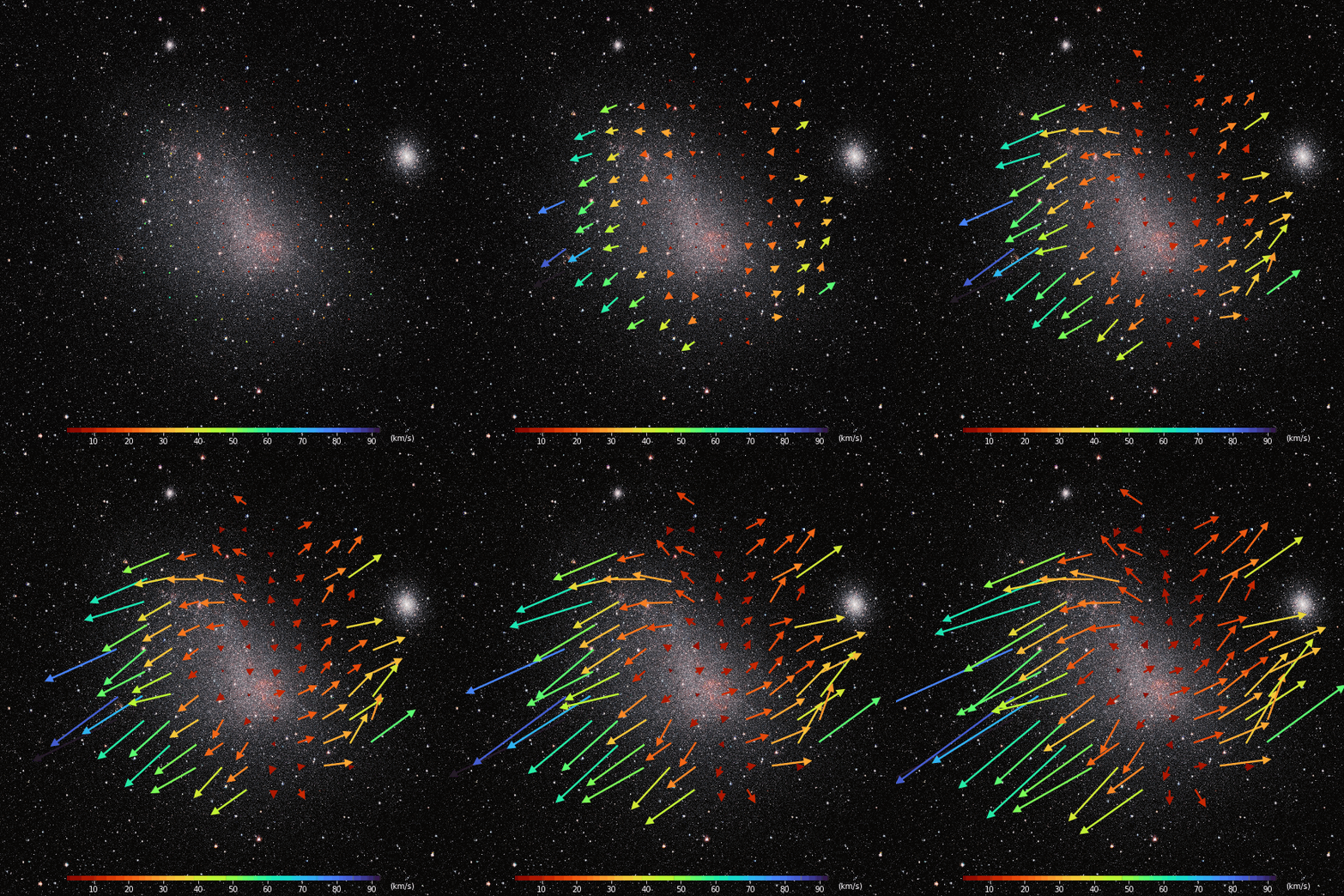
The Small Magellanic Cloud is our galactic neighbor. It’s a satellite galaxy that orbits our Milky Way galaxy. Scientists long assumed it was rotating like other galaxies, but new observations show its stars are expanding outward instead. The arrows show the motion of stars away from the center of the galaxy, and the colors indicate the velocities of the stars. Image via ESO/ VISTA VMC/ AIP/ S. Vijayasree.
The Small and Large Magellanic Clouds are dwarf satellite galaxies of our Milky Way galaxy.
Scientists had thought the Small Magellanic Cloud was rotating, but a new study has found that its stars are racing outwards.
It seems it’s being ripped apart by the gravity of its neighbor, the Large Magellanic Cloud.
The Small and Large Magellanic Clouds are dwarf satellite galaxies orbiting our Milky Way galaxy. Visible with the unaided eye from the Southern Hemisphere, these galaxies appear serene neighbors in southern skies. But on June 2, 2026, scientists from the Leibniz Institute for Astrophysics Potsdam in Germany said that the gravitational pull from the Large Magellanic Cloud is actually ripping the Small Magellanic Cloud apart.
Scientists looked at more than 10 years of observations from the VISTA Survey of the Magellanic Clouds. This allowed them to measure the motions of millions of stars inside the Small Magellanic Cloud. These movements showed the dwarf galaxy was not rotating as once thought. Instead, the galaxy’s stars are racing away from the center. Even the inner stars appear to be heading toward the exit.
The results reveal large-scale tidal expansion throughout the Small Magellanic Cloud galaxy and challenge long-standing assumptions that the Small Magellanic Cloud behaves like a rotating disk. The study shows that the internal motions of stars in the Small Magellanic Cloud are dominated not by orderly rotation, but by gravitational disturbances caused by repeated encounters with the Large Magellanic Cloud over billions of years.
The researchers submitted their study in the Letters to the Editor section of the journal Astronomy & Astrophysics. The journal accepted it for publication on May 21, 2026.
More on the Large and Small Magellanic Clouds
The Large Magellanic Cloud is one of the closest galaxies to us at about 160,000 light-years away. Meanwhile, the Small Magellanic Cloud is a bit farther at about 200,000 light-years away. As some of the closest galaxies to our home galaxy, they stand out as big, misty blobs of light under dark skies.
Scientists estimate the Small Magellanic Cloud contains around 3 billion stars, while the Large Magellanic Cloud houses some 30 billion stars. The Large Magellanic Cloud is in the constellations of Dorado and Mensa. And Tucana the Toucan is home to the Small Magellanic Cloud.
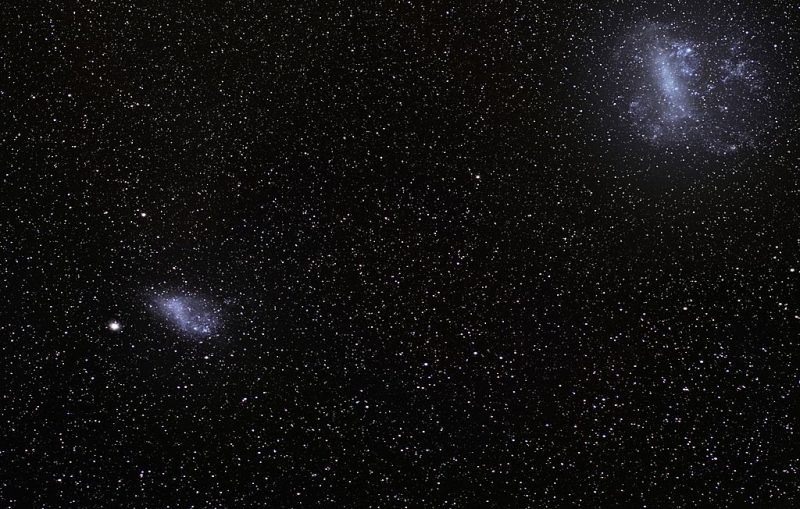
These are the Large (upper right) and Small (lower left) Magellanic Clouds. They look like smudges on a dark night sky, visible from Earth’s Southern Hemisphere. They’re classified as irregular galaxies belonging to our Local Group of galaxies, which also includes our Milky Way galaxy and the Andromeda galaxy. Image via S. Brunier/ ESO.
A disruptive galactic neighbor
The idea that the Large and Small Magellanic Clouds have influence over each other isn’t new. Their interactions have given them distorted shapes, bursts of star formation and streams of gas trailing away from the galaxies.
But the infrared observations spanning more than a decade have allowed astronomers to see a clearer picture of the stellar movements. In fact, the astronomers can see that the stars of the Small Magellanic Cloud are moving outward along a southeast–northwest axis. They said that motion was consistent with the gravitational pull exerted by the neighboring Large Magellanic Cloud.
And it’s not just the outer fringes of stars closest to the Large Magellanic Cloud that are heading outward. The stars even at the Small Magellanic Cloud’s center are heading outward and not rotating around a midpoint.
When might the Small Magellanic Cloud disperse entirely? Well, the stars are moving at an average speed of about 38,000 miles per hour (17 km per second). At that pace, the stars would travel several thousand light-years over the course of a few hundred million years. So while the dwarf galaxy will look distorted sooner rather than later, it still won’t look noticeably different anywhere within our lifetimes.
Past disruptions
Beyond the motions of the stars heading outward from the galaxy, the study also uncovered another distinct motion. This additional motion was northward, and astronomers only found it in the older red giant stars.
The researchers think this motion is leftover from an interaction that occurred more than 2 billion years ago. Life isn’t easy when you have pushy neighbors.
Bottom line: Astronomers have found the stars of our galactic neighbor, the Small Magellanic Cloud, are heading outward. This dwarf galaxy is not rotating, but is in the act of slowly coming apart.
The Small Magellanic Cloud is our galactic neighbor. It’s a satellite galaxy that orbits our Milky Way galaxy. Scientists long assumed it was rotating like other galaxies, but new observations show its stars are expanding outward instead. The arrows show the motion of stars away from the center of the galaxy, and the colors indicate the velocities of the stars. Image via ESO/ VISTA VMC/ AIP/ S. Vijayasree.
The Small and Large Magellanic Clouds are dwarf satellite galaxies of our Milky Way galaxy.
Scientists had thought the Small Magellanic Cloud was rotating, but a new study has found that its stars are racing outwards.
It seems it’s being ripped apart by the gravity of its neighbor, the Large Magellanic Cloud.
The Small and Large Magellanic Clouds are dwarf satellite galaxies orbiting our Milky Way galaxy. Visible with the unaided eye from the Southern Hemisphere, these galaxies appear serene neighbors in southern skies. But on June 2, 2026, scientists from the Leibniz Institute for Astrophysics Potsdam in Germany said that the gravitational pull from the Large Magellanic Cloud is actually ripping the Small Magellanic Cloud apart.
Scientists looked at more than 10 years of observations from the VISTA Survey of the Magellanic Clouds. This allowed them to measure the motions of millions of stars inside the Small Magellanic Cloud. These movements showed the dwarf galaxy was not rotating as once thought. Instead, the galaxy’s stars are racing away from the center. Even the inner stars appear to be heading toward the exit.
The results reveal large-scale tidal expansion throughout the Small Magellanic Cloud galaxy and challenge long-standing assumptions that the Small Magellanic Cloud behaves like a rotating disk. The study shows that the internal motions of stars in the Small Magellanic Cloud are dominated not by orderly rotation, but by gravitational disturbances caused by repeated encounters with the Large Magellanic Cloud over billions of years.
The researchers submitted their study in the Letters to the Editor section of the journal Astronomy & Astrophysics. The journal accepted it for publication on May 21, 2026.
More on the Large and Small Magellanic Clouds
The Large Magellanic Cloud is one of the closest galaxies to us at about 160,000 light-years away. Meanwhile, the Small Magellanic Cloud is a bit farther at about 200,000 light-years away. As some of the closest galaxies to our home galaxy, they stand out as big, misty blobs of light under dark skies.
Scientists estimate the Small Magellanic Cloud contains around 3 billion stars, while the Large Magellanic Cloud houses some 30 billion stars. The Large Magellanic Cloud is in the constellations of Dorado and Mensa. And Tucana the Toucan is home to the Small Magellanic Cloud.
These are the Large (upper right) and Small (lower left) Magellanic Clouds. They look like smudges on a dark night sky, visible from Earth’s Southern Hemisphere. They’re classified as irregular galaxies belonging to our Local Group of galaxies, which also includes our Milky Way galaxy and the Andromeda galaxy. Image via S. Brunier/ ESO.
A disruptive galactic neighbor
The idea that the Large and Small Magellanic Clouds have influence over each other isn’t new. Their interactions have given them distorted shapes, bursts of star formation and streams of gas trailing away from the galaxies.
But the infrared observations spanning more than a decade have allowed astronomers to see a clearer picture of the stellar movements. In fact, the astronomers can see that the stars of the Small Magellanic Cloud are moving outward along a southeast–northwest axis. They said that motion was consistent with the gravitational pull exerted by the neighboring Large Magellanic Cloud.
And it’s not just the outer fringes of stars closest to the Large Magellanic Cloud that are heading outward. The stars even at the Small Magellanic Cloud’s center are heading outward and not rotating around a midpoint.
When might the Small Magellanic Cloud disperse entirely? Well, the stars are moving at an average speed of about 38,000 miles per hour (17 km per second). At that pace, the stars would travel several thousand light-years over the course of a few hundred million years. So while the dwarf galaxy will look distorted sooner rather than later, it still won’t look noticeably different anywhere within our lifetimes.
Past disruptions
Beyond the motions of the stars heading outward from the galaxy, the study also uncovered another distinct motion. This additional motion was northward, and astronomers only found it in the older red giant stars.
The researchers think this motion is leftover from an interaction that occurred more than 2 billion years ago. Life isn’t easy when you have pushy neighbors.
Bottom line: Astronomers have found the stars of our galactic neighbor, the Small Magellanic Cloud, are heading outward. This dwarf galaxy is not rotating, but is in the act of slowly coming apart.
Names for days of the week come from the solar system
Did you know the days of the week are named after objects in our solar system? Sure, Sunday is easy for us to recognize as being named for the sun. And maybe you can even spot Monday as originating from the moon. But how did Mars become Tuesday?
Well, long ago people looked to the sky to keep track of time. The sun rose and set and rose again and people marked a day. The moon was full and then waned until it disappeared and then grew again to full, and people marked a month of time.
Eventually, according to Kristin Heineman of Colorado State University, the ancient Babylonians back in 2,300 BCE began dividing those months into seven-day segments. Why seven? Because these astronomers monitored the bright lights that wandered among the stars: the sun, moon and five visible planets. Unlike the stars, these seven objects shift location each day or night.
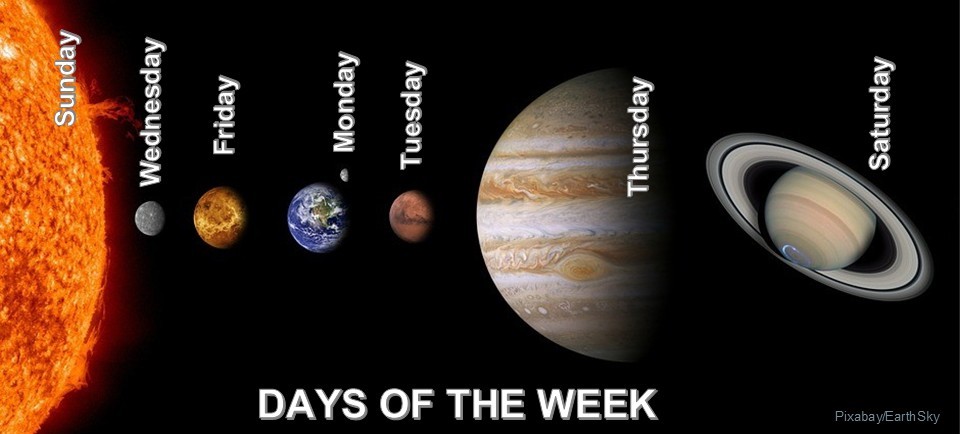
So, the sun, moon and five visible planets became the representatives for each of the days of the week. And, over millennia, the concept of a seven-day week spread around the globe. As the idea spread to other cultures, the names of the week morphed from the gods the planets were named for to gods in other lore with similar attributes.
Sunday is the sun’s day
Sunday is the day of the week that’s easiest to see as having a direct relationship to a solar system object. The name Sunday honored the brightest object in our daytime sky, the sun. Our English word for the sun comes from the Old English version, Sunnandæg, which means “sun’s day.”
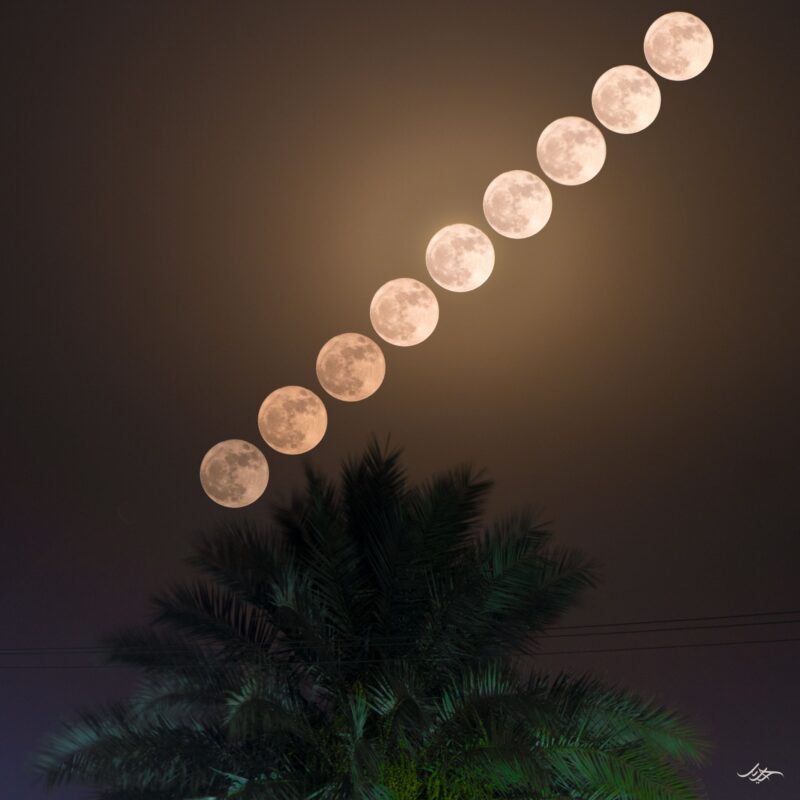
Not surprisingly, then, the name Monday comes from “moon’s day.” The moon is the brightest object we can see in the nighttime sky. So not only were months (or should we say moonths?) originally arranged from one full moon to the next, the moon was also honored with a day of the week. The Old English Monandæg, moon’s day, was how we got our English word Monday.
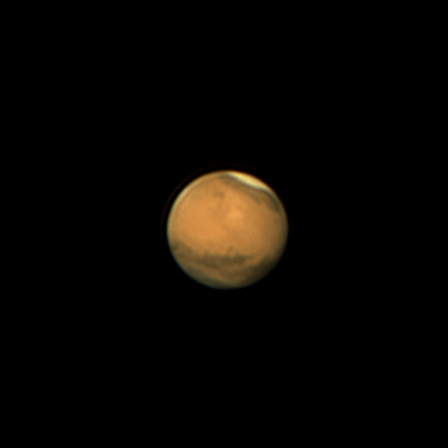
Tuesday is where the days of the week and planets start to look less straightforward. That’s because people of Germanic languages substituted the Roman gods for their own Norse gods. So Mars, the Roman god of war, was switched for the Germanic peoples’ own god of war, Tyr, or Tiw. And then Tiw’s day evolved to become what we know of as Tuesday.
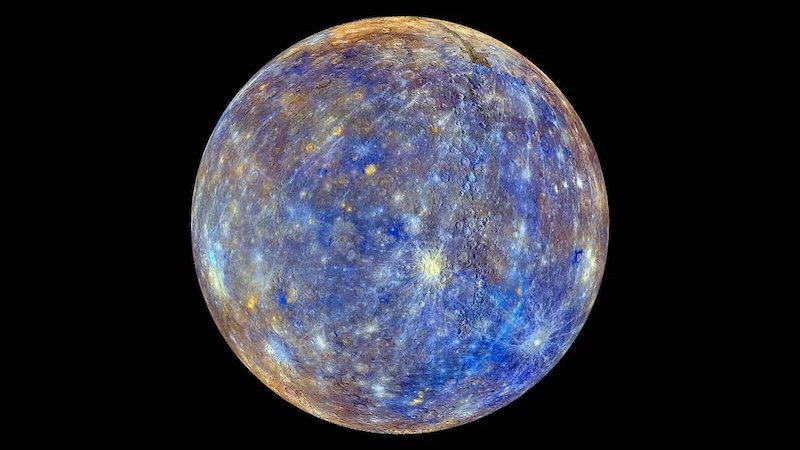
Wednesday was named for Mercury. For Romans, Wednesday was Dies Mercurii, the “day of Mercury.” Germanic people translated the day of Mercury to the day of Woden. Woden, or Odin, was the Norse god of travel and similar to Mercury, the fleet-footed messenger. Over time, “Woden’s day” evolved into Wednesday.
View larger. | This enhanced-color image of Mercury comes from NASA’s MESSENGER spacecraft. The colors bring out the chemical, mineralogical and physical differences among the rocks that make up Mercury’s surface. Image via NASA/ Johns Hopkins University Applied Physics Laboratory/ Carnegie Institution of Washington.This fresco of Mercury, or Hermes, was on a wall in Pompeii. It dates to the 1st century. Image via Wikimedia Commons. Public domain.
Thursday is Jupiter’s day
Thursday is probably much more readily recognizable as being Thor’s day. Thor is the powerful Norse god of thunder. And the equivalent Roman god was Jupiter, the king of the gods.
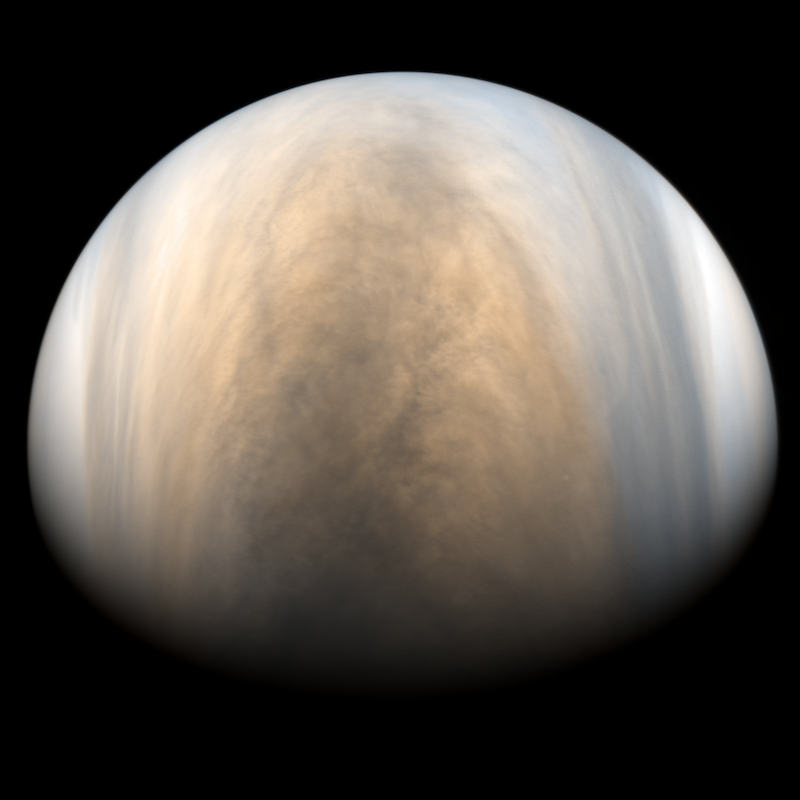
Friday is in honor of Venus, the brightest planet, which the ancients named for the goddess of love and beauty. For Romans it was Dies Veneris, or “day of Venus”. Germanic peoples connected Venus with the goddess Frigg or Freya, leading to “Frigg’s day,” later shortened to Friday.
View larger. | Venus is the brightest planet from Earth and the second-closest planet to the sun. Image via JAXA/ ISAS/ DARTS/ Kevin M. Gill/ Flickr (CC BY 2.0).This is a medieval representation of Venus, the goddess of love. Image via Wikimedia Commons.
Saturday is Saturn’s day
Once we hit the end of the week, we’re back on familiar ground again. Saturday kept its Roman planetary connection almost unchanged. Dies Saturni was the “day of Saturn,” named for the planet Saturn and the Roman god of agriculture and time. Unlike the other weekday names, the English-language version did not swap in a Norse god.
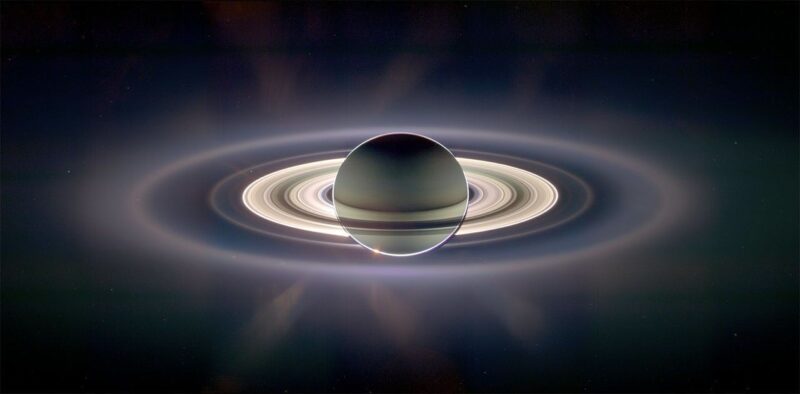
The Cassini spacecraft caught the 6th planet from the sun and its rings like never before. In this image, Saturn’s rings are gloriously backlit with the sun blocked by the planet. Image via NASA/ JPL/ Space Science Institute.This fresco of Saturn was on a wall in Pompeii. Image via Carole Raddato/ Wikimedia Commons.
Bottom line: The names for the days of the week come from the solar system bodies that the ancients could see in the sky.
Names for days of the week come from the solar system
Did you know the days of the week are named after objects in our solar system? Sure, Sunday is easy for us to recognize as being named for the sun. And maybe you can even spot Monday as originating from the moon. But how did Mars become Tuesday?
Well, long ago people looked to the sky to keep track of time. The sun rose and set and rose again and people marked a day. The moon was full and then waned until it disappeared and then grew again to full, and people marked a month of time.
Eventually, according to Kristin Heineman of Colorado State University, the ancient Babylonians back in 2,300 BCE began dividing those months into seven-day segments. Why seven? Because these astronomers monitored the bright lights that wandered among the stars: the sun, moon and five visible planets. Unlike the stars, these seven objects shift location each day or night.
So, the sun, moon and five visible planets became the representatives for each of the days of the week. And, over millennia, the concept of a seven-day week spread around the globe. As the idea spread to other cultures, the names of the week morphed from the gods the planets were named for to gods in other lore with similar attributes.
Sunday is the sun’s day
Sunday is the day of the week that’s easiest to see as having a direct relationship to a solar system object. The name Sunday honored the brightest object in our daytime sky, the sun. Our English word for the sun comes from the Old English version, Sunnandæg, which means “sun’s day.”
Not surprisingly, then, the name Monday comes from “moon’s day.” The moon is the brightest object we can see in the nighttime sky. So not only were months (or should we say moonths?) originally arranged from one full moon to the next, the moon was also honored with a day of the week. The Old English Monandæg, moon’s day, was how we got our English word Monday.
Tuesday is where the days of the week and planets start to look less straightforward. That’s because people of Germanic languages substituted the Roman gods for their own Norse gods. So Mars, the Roman god of war, was switched for the Germanic peoples’ own god of war, Tyr, or Tiw. And then Tiw’s day evolved to become what we know of as Tuesday.
Wednesday was named for Mercury. For Romans, Wednesday was Dies Mercurii, the “day of Mercury.” Germanic people translated the day of Mercury to the day of Woden. Woden, or Odin, was the Norse god of travel and similar to Mercury, the fleet-footed messenger. Over time, “Woden’s day” evolved into Wednesday.
View larger. | This enhanced-color image of Mercury comes from NASA’s MESSENGER spacecraft. The colors bring out the chemical, mineralogical and physical differences among the rocks that make up Mercury’s surface. Image via NASA/ Johns Hopkins University Applied Physics Laboratory/ Carnegie Institution of Washington.This fresco of Mercury, or Hermes, was on a wall in Pompeii. It dates to the 1st century. Image via Wikimedia Commons. Public domain.
Thursday is Jupiter’s day
Thursday is probably much more readily recognizable as being Thor’s day. Thor is the powerful Norse god of thunder. And the equivalent Roman god was Jupiter, the king of the gods.
Friday is in honor of Venus, the brightest planet, which the ancients named for the goddess of love and beauty. For Romans it was Dies Veneris, or “day of Venus”. Germanic peoples connected Venus with the goddess Frigg or Freya, leading to “Frigg’s day,” later shortened to Friday.
View larger. | Venus is the brightest planet from Earth and the second-closest planet to the sun. Image via JAXA/ ISAS/ DARTS/ Kevin M. Gill/ Flickr (CC BY 2.0).This is a medieval representation of Venus, the goddess of love. Image via Wikimedia Commons.
Saturday is Saturn’s day
Once we hit the end of the week, we’re back on familiar ground again. Saturday kept its Roman planetary connection almost unchanged. Dies Saturni was the “day of Saturn,” named for the planet Saturn and the Roman god of agriculture and time. Unlike the other weekday names, the English-language version did not swap in a Norse god.
The Cassini spacecraft caught the 6th planet from the sun and its rings like never before. In this image, Saturn’s rings are gloriously backlit with the sun blocked by the planet. Image via NASA/ JPL/ Space Science Institute.This fresco of Saturn was on a wall in Pompeii. Image via Carole Raddato/ Wikimedia Commons.
Bottom line: The names for the days of the week come from the solar system bodies that the ancients could see in the sky.
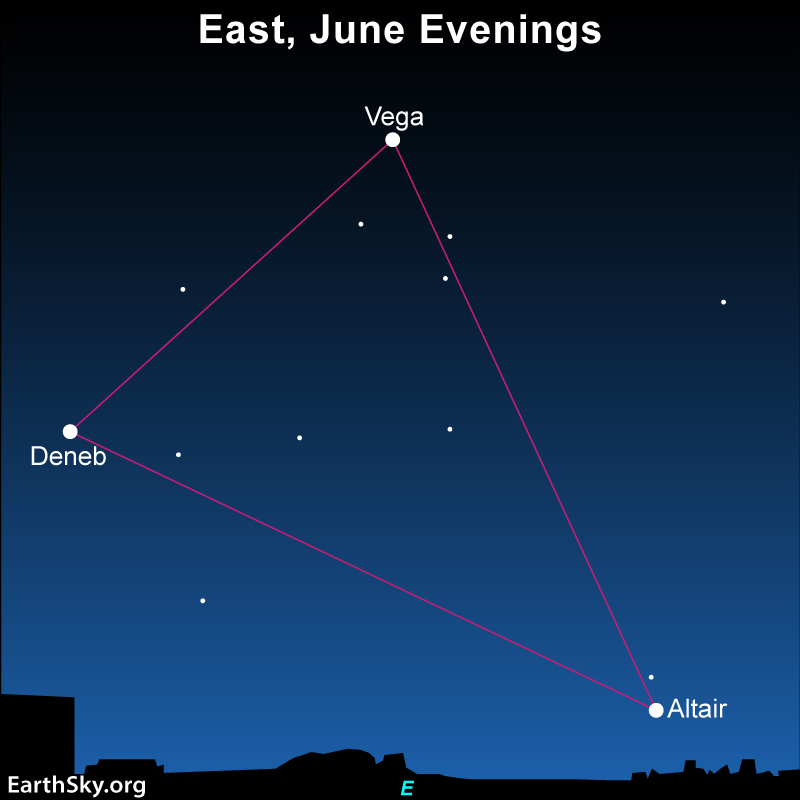
The Summer Triangle, ascending for Northern Hemisphere observers in the east on June evenings. Are you in the Southern Hemisphere? See below. Chart via EarthSky.
Northern summer is Summer Triangle time
During the summertime in the Northern Hemisphere, the days are long. The sun is high in the midday sky. And our summer sky is with us, too. Watch for the famous Summer Triangle, now ascending in the eastern sky on these late June and July evenings.
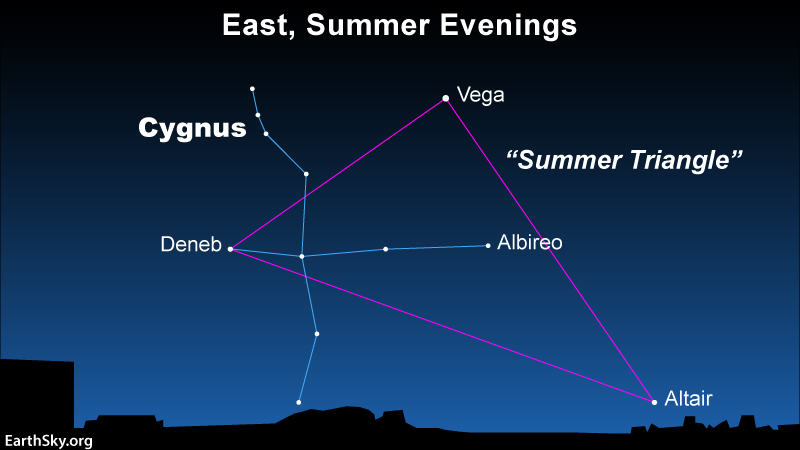
The Summer Triangle isn’t a constellation. It’s an asterism, or noticeable pattern of stars. This pattern consists of three bright stars in three separate constellations: Deneb in the constellation Cygnus the Swan, Vega in the constellation Lyra the Harp, and Altair in the constellation Aquila the Eagle.
Learn to recognize the Summer Triangle asterism now, and you can watch it all summer as it shifts higher in the east, then finally appears high overhead in the late northern summer and early northern autumn sky.
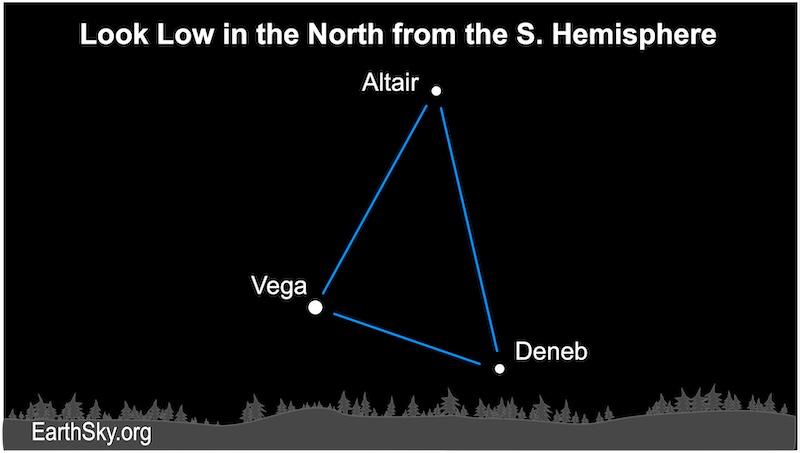
From the Southern Hemisphere, the Summer Triangle appears upside down – as it’s viewed from the Northern Hemisphere – and low above the northern horizon during the southern winter months.
Seeing the Summer Triangle from the Northern Hemisphere
As night falls in June or July, look east for a sparkling blue-white star. That will be Vega, in Lyra the Harp. Reigning at the apex of the celebrated Summer Triangle, Vega is also the brightest of the Summer Triangle’s three stars, which are all bright enough to be seen from many light-polluted cities.
Look to the lower right of Vega to locate the Summer Triangle’s second brightest star. That’s Altair, the brightest star in the constellation Aquila the Eagle. A ruler (12 inches/ 30 cm) held at arm’s length fills the gap between these two stars.
Look to the lower left of Vega for another bright star: Deneb, the brightest in the constellation Cygnus the Swan and the third brightest in the Summer Triangle. An outstretched hand at arm’s length approximates the distance from Vega to Deneb.
It’s difficult to convey the huge size of the Summer Triangle. But you’ll see it. These three bright stars — Vega, Deneb and Altair — will become your summertime favorites.
Once Cygnus the Swan clears the horizon, you can easily see all of the Summer Triangle asterism. It’s a summertime favorite and easy to see.
From the Southern Hemisphere, the Summer Triangle appears flipped upside down and rises low into the northern sky. But, for many at populated latitudes across the Southern Hemisphere, Deneb is close to or below the northern horizon rendering the triangle incomplete for many observers. If you are closer to the South Pole than about 45 degrees S. latitude, you won’t see Deneb.
So we don’t tend to recognize the triangle as it is seen in the north, and even if we do, it’s only visible, briefly, during our winter season. So the name Summer Triangle is somewhat lost on us. Instead, the sight of Vega and Altair rising to the northeast are a clear sign of winter in the southern hemisphere.
Altair reaches a modest altitude of about 35–40 degrees from latitudes like those in New Zealand and Australia.
But Vega sits very low, between about 5–15 degrees from many places down under. For example:
Sydney, Australia (approx. 34° S): Vega reaches a maximum altitude of about 17° above the northern horizon.
Auckland, New Zealand (approx. 37° S): Vega reaches a maximum altitude of about 14° above the northern horizon.
Christchurch, New Zealand (approx. 43.5° S): Vega reaches a maximum altitude of about 7.5° above the northern horizon.
Still, Vega is the 5th-brightest star as seen from Earth as a whole. So it blazes brightly to those with a clear view of the northern horizon. And both Vega and Altair stars act as luminous markers of the Southern Hemisphere’s winter northern sky.
Arching through the sky between these two stars is the glow of the Milky Way, with Vega to the west and Altair to the east. They frame the galaxy as if it were a river flowing between them.
In Japanese tradition, this is celebrated in July during the summer star festival and the story of Tanabata, where Vega and Altair represent two separated lovers, divided by the Milky Way and allowed to meet only once a year.
From the Southern Hemisphere, this cultural imagery remains fitting, as the two stars appear as distant beacons low in the northern sky, divided by the glowing stream of the galaxy.
Looking north from the Southern Hemisphere. Assuming you’re at about 40 degrees S. – to the equator – you can see all of the so-called Summer Triangle during your southern winter months by looking north. If you’re closer to the South Pole than about 40 degrees S. latitude, you likely won’t see Deneb! Technically you can see it from slightly further south. But, in reality, the murk on your northern horizon will likely block it from your view. Chart via EarthSky.
The Summer Triangle is a northern road map to the Milky Way, too
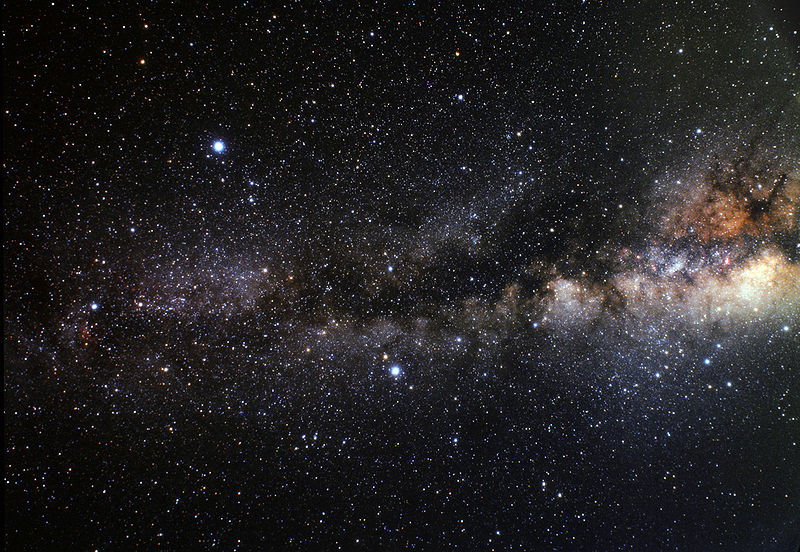
Likewise, from the Northern Hemisphere, if you’re lucky enough to be under a dark sky on a moonless night, you’ll see the great swath of stars passing between the Summer Triangle’s Vega and Altair. For our latitudes, the star Deneb bobs in the middle of this river of stars, which arcs across dark summer skies. This sky river is, of course, the edgewise view into our own Milky Way galaxy. Every star you see with the unaided eye is a member of the Milky Way. And at this time of year, we can see clearly into the galaxy’s flat disk, where most of the stars congregate. By August and September, we’ll have a good view toward the galaxy’s center.
Once northern observers master the Summer Triangle, they can always locate the Milky Way on a clear, dark night. How about making the most of a dark summer night to explore this band of stars, this starlit boulevard with its celestial delights? Use binoculars to reveal the gossamer beauty of the haunting nebulae and bejeweled star clusters along this starlit trail.
The 3 brightest stars in this image make up the asterism of the Summer Triangle, a giant triangle in the sky composed of the bright stars Vega (top left), Altair (lower middle) and Deneb (far left). Also in this image, under a dark sky and on a moonless night, is the Great Rift that passes right through the Milky Way and the Summer Triangle. Image via NASA/ A. Fujii/ ESA.
A word about asterisms
As we mentioned above, asterisms aren’t constellations; they’re just patterns on the sky’s dome. Constellations generally come to us from ancient times. In the 1930s, the International Astronomical Union officially drew the boundaries of the 88 constellations we recognize today.
Meanwhile, you can make up and name your own asterisms, in much the same way you can recognize shapes in puffy clouds on a summer day.
Of course, some asterisms are so obvious that they’re acknowledged around the world. And – especially if you can see it from the Northern Hemisphere – the Summer Triangle is one of these.
Bottom line: For us in the Northern Hemisphere, the Summer Triangle says “summer” in the sky.
The Summer Triangle, ascending for Northern Hemisphere observers in the east on June evenings. Are you in the Southern Hemisphere? See below. Chart via EarthSky.
Northern summer is Summer Triangle time
During the summertime in the Northern Hemisphere, the days are long. The sun is high in the midday sky. And our summer sky is with us, too. Watch for the famous Summer Triangle, now ascending in the eastern sky on these late June and July evenings.
The Summer Triangle isn’t a constellation. It’s an asterism, or noticeable pattern of stars. This pattern consists of three bright stars in three separate constellations: Deneb in the constellation Cygnus the Swan, Vega in the constellation Lyra the Harp, and Altair in the constellation Aquila the Eagle.
Learn to recognize the Summer Triangle asterism now, and you can watch it all summer as it shifts higher in the east, then finally appears high overhead in the late northern summer and early northern autumn sky.
From the Southern Hemisphere, the Summer Triangle appears upside down – as it’s viewed from the Northern Hemisphere – and low above the northern horizon during the southern winter months.
Seeing the Summer Triangle from the Northern Hemisphere
As night falls in June or July, look east for a sparkling blue-white star. That will be Vega, in Lyra the Harp. Reigning at the apex of the celebrated Summer Triangle, Vega is also the brightest of the Summer Triangle’s three stars, which are all bright enough to be seen from many light-polluted cities.
Look to the lower right of Vega to locate the Summer Triangle’s second brightest star. That’s Altair, the brightest star in the constellation Aquila the Eagle. A ruler (12 inches/ 30 cm) held at arm’s length fills the gap between these two stars.
Look to the lower left of Vega for another bright star: Deneb, the brightest in the constellation Cygnus the Swan and the third brightest in the Summer Triangle. An outstretched hand at arm’s length approximates the distance from Vega to Deneb.
It’s difficult to convey the huge size of the Summer Triangle. But you’ll see it. These three bright stars — Vega, Deneb and Altair — will become your summertime favorites.
Once Cygnus the Swan clears the horizon, you can easily see all of the Summer Triangle asterism. It’s a summertime favorite and easy to see.
From the Southern Hemisphere, the Summer Triangle appears flipped upside down and rises low into the northern sky. But, for many at populated latitudes across the Southern Hemisphere, Deneb is close to or below the northern horizon rendering the triangle incomplete for many observers. If you are closer to the South Pole than about 45 degrees S. latitude, you won’t see Deneb.
So we don’t tend to recognize the triangle as it is seen in the north, and even if we do, it’s only visible, briefly, during our winter season. So the name Summer Triangle is somewhat lost on us. Instead, the sight of Vega and Altair rising to the northeast are a clear sign of winter in the southern hemisphere.
Altair reaches a modest altitude of about 35–40 degrees from latitudes like those in New Zealand and Australia.
But Vega sits very low, between about 5–15 degrees from many places down under. For example:
Sydney, Australia (approx. 34° S): Vega reaches a maximum altitude of about 17° above the northern horizon.
Auckland, New Zealand (approx. 37° S): Vega reaches a maximum altitude of about 14° above the northern horizon.
Christchurch, New Zealand (approx. 43.5° S): Vega reaches a maximum altitude of about 7.5° above the northern horizon.
Still, Vega is the 5th-brightest star as seen from Earth as a whole. So it blazes brightly to those with a clear view of the northern horizon. And both Vega and Altair stars act as luminous markers of the Southern Hemisphere’s winter northern sky.
Arching through the sky between these two stars is the glow of the Milky Way, with Vega to the west and Altair to the east. They frame the galaxy as if it were a river flowing between them.
In Japanese tradition, this is celebrated in July during the summer star festival and the story of Tanabata, where Vega and Altair represent two separated lovers, divided by the Milky Way and allowed to meet only once a year.
From the Southern Hemisphere, this cultural imagery remains fitting, as the two stars appear as distant beacons low in the northern sky, divided by the glowing stream of the galaxy.
Looking north from the Southern Hemisphere. Assuming you’re at about 40 degrees S. – to the equator – you can see all of the so-called Summer Triangle during your southern winter months by looking north. If you’re closer to the South Pole than about 40 degrees S. latitude, you likely won’t see Deneb! Technically you can see it from slightly further south. But, in reality, the murk on your northern horizon will likely block it from your view. Chart via EarthSky.
The Summer Triangle is a northern road map to the Milky Way, too
Likewise, from the Northern Hemisphere, if you’re lucky enough to be under a dark sky on a moonless night, you’ll see the great swath of stars passing between the Summer Triangle’s Vega and Altair. For our latitudes, the star Deneb bobs in the middle of this river of stars, which arcs across dark summer skies. This sky river is, of course, the edgewise view into our own Milky Way galaxy. Every star you see with the unaided eye is a member of the Milky Way. And at this time of year, we can see clearly into the galaxy’s flat disk, where most of the stars congregate. By August and September, we’ll have a good view toward the galaxy’s center.
Once northern observers master the Summer Triangle, they can always locate the Milky Way on a clear, dark night. How about making the most of a dark summer night to explore this band of stars, this starlit boulevard with its celestial delights? Use binoculars to reveal the gossamer beauty of the haunting nebulae and bejeweled star clusters along this starlit trail.
The 3 brightest stars in this image make up the asterism of the Summer Triangle, a giant triangle in the sky composed of the bright stars Vega (top left), Altair (lower middle) and Deneb (far left). Also in this image, under a dark sky and on a moonless night, is the Great Rift that passes right through the Milky Way and the Summer Triangle. Image via NASA/ A. Fujii/ ESA.
A word about asterisms
As we mentioned above, asterisms aren’t constellations; they’re just patterns on the sky’s dome. Constellations generally come to us from ancient times. In the 1930s, the International Astronomical Union officially drew the boundaries of the 88 constellations we recognize today.
Meanwhile, you can make up and name your own asterisms, in much the same way you can recognize shapes in puffy clouds on a summer day.
Of course, some asterisms are so obvious that they’re acknowledged around the world. And – especially if you can see it from the Northern Hemisphere – the Summer Triangle is one of these.
Bottom line: For us in the Northern Hemisphere, the Summer Triangle says “summer” in the sky.
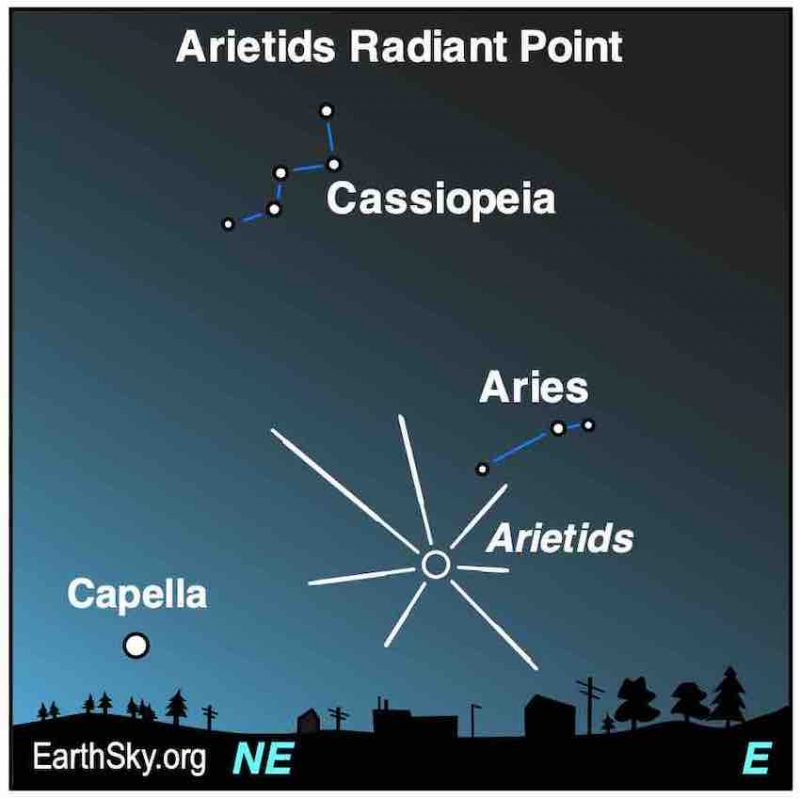
The Arietids are an active shower, but they’re visible mostly in daytime. Watch for them in the sunrise direction in the dark hour before dawn from May 22 to July 3. They’ll be best around June 10. You’ll be looking for meteors that shoot up from the horizon. The radiant is below the constellation Aries the Ram. Chart by EarthSky.
June 2026 daytime meteor shower … the Arietids
Most meteor showers are easy to observe. Just find a dark sky, and look up! But what about meteor showers that happen in the daytime, when the sun is up? The Arietids are sometimes said to be the most active daytime meteor shower. In 2026, their predicted** peak will be around the mornings of June 10. You might catch some Arietids around that morning in the dark hour before dawn.
When to watch: Watch from May 22 to July 3. There’s a predicted** peak for the mornings around June 10, 2026. Watch for them in the sunrise direction in the dark hour before dawn breaks. Nearest moon phase: In 2026, a 3rd quarter moon occurs at 10:00 UTC on June 8. So on the mornings around June 10, a thick waxing crescent moon will interfere with watching for meteors. Watch from a place that’s in the moon shadow or find a distant object to block out the light of the moon. Radiant: The shower’s radiant point – the point in the sky from which the meteors appear to radiate – is in the constellation Aries. You’ll find this constellation in the east before sunrise. Duration of shower: May 22 to July 3. Expected meteors at peak: This is tricky for daytime meteor showers because once the sun comes up, you won’t be able to see them. But the Arietids have a strong zenithal hourly rate (ZHR)! Meteor counts with radar and radio echoes have indicated a rate of 60 meteors per hour, and perhaps as high as 200 meteors per hour. Note: The Arietids are sometimes said to be the most active daytime meteor shower.
The Arietids shower’s radiant point – the point in the sky from which the meteors appear to radiate – is only 30 degrees from the sun. This 30-degree angle – the angle between the sun and the meteor radiant as seen from Earth – is the shower’s elongation.
How to observe the Arietids
So – although most Arietid meteors fly in daylight – you might catch an Arietid in the last dark hour before dawn, any time during the first and second weeks of June.
The trick is to catch them in the narrow window after the radiant rises (or when it is about to rise), but before the visible breaking of dawn. The radiant rises just before the beginning of astronomical twilight – the darkest twilight stage – which is defined as the period of time when the center of the sun is 12 degrees below the horizon to 18 degrees below the horizon. You probably won’t even notice any illumination in the sky during astronomical twilight.
Face east and watch for meteors moving away from the radiant. The meteors will be moving out in all directions from the radiant. Therefore, many will never breach your horizon. But some meteors will move upward in your eastern predawn sky.
How many meteors will you see?
A shower’s zenithal hourly rate is the number of meteors you’ll see in one hour when the radiant is directly overhead and you can see stars as faint as magnitude 6.5.
For daytime meteor showers, we have a couple of problems here. When a daytime meteor shower’s radiant is overhead, it’s daytime. And so you can’t see stars down to magnitude 6.5. But when it’s nighttime and seeing faint stars becomes possible, a daytime meteor shower’s radiant is below your horizon.
So we never have ideal conditions for seeing the Arietids. But they have an awesome hourly rate! Meteor counts with radar and radio echoes have indicated a rate of 60 meteors per hour, and perhaps as high as 200 meteors per hour.
How many will you see on the morning of June 10, or the several mornings around then? Meteor shower peaks often vary between experts. But who knows? And it’d be fun to see any meteors from this (mostly) daytime shower.
You can keep track of the activity of daytime meteor showers, as well as those beyond the limits of visual observing, by visiting the NASA Meteor Shower Portal. You can move the sky globe to see different areas of the sky. Colored dots indicate shower meteors while white dots indicate sporadic (random) activity. The large orange disk indicates the position of the sun, so little activity will be seen in that area of the sky.
Arietids history and parent comet
The Arietids have a fascinating history. Astronomers at the Jodrell Bank Radio Telescope in England first noticed them in 1947. Here’s a paper that discusses this daytime meteor shower, plus three other showers. Scientists made the discovery with radar echoes and confirmed them, in some cases, with photographs.
For many years, no one knew the parent comet for the Arietids. Then, in May 1986, Don Machholz, discovered a comet that became known as 96P/Machholz. This comet might be directly involved with this meteor shower, or the shower’s source might be a part of the Machholz Complex. The Machholz Complex is a combination of two comet groups, eight meteor showers and at least one asteroid all associated with Comet 96P/Machholz.
Bottom line: The Arietids – the most active daytime meteor shower – peak on the mornings around June 10. Watch for them before dawn, but find a way to block out the light of a waxing crescent moon.
**Predicted peak times and dates for meteor showers are from the American Meteor Society. Note that meteor shower peak times can vary.
The Arietids are an active shower, but they’re visible mostly in daytime. Watch for them in the sunrise direction in the dark hour before dawn from May 22 to July 3. They’ll be best around June 10. You’ll be looking for meteors that shoot up from the horizon. The radiant is below the constellation Aries the Ram. Chart by EarthSky.
June 2026 daytime meteor shower … the Arietids
Most meteor showers are easy to observe. Just find a dark sky, and look up! But what about meteor showers that happen in the daytime, when the sun is up? The Arietids are sometimes said to be the most active daytime meteor shower. In 2026, their predicted** peak will be around the mornings of June 10. You might catch some Arietids around that morning in the dark hour before dawn.
When to watch: Watch from May 22 to July 3. There’s a predicted** peak for the mornings around June 10, 2026. Watch for them in the sunrise direction in the dark hour before dawn breaks. Nearest moon phase: In 2026, a 3rd quarter moon occurs at 10:00 UTC on June 8. So on the mornings around June 10, a thick waxing crescent moon will interfere with watching for meteors. Watch from a place that’s in the moon shadow or find a distant object to block out the light of the moon. Radiant: The shower’s radiant point – the point in the sky from which the meteors appear to radiate – is in the constellation Aries. You’ll find this constellation in the east before sunrise. Duration of shower: May 22 to July 3. Expected meteors at peak: This is tricky for daytime meteor showers because once the sun comes up, you won’t be able to see them. But the Arietids have a strong zenithal hourly rate (ZHR)! Meteor counts with radar and radio echoes have indicated a rate of 60 meteors per hour, and perhaps as high as 200 meteors per hour. Note: The Arietids are sometimes said to be the most active daytime meteor shower.
The Arietids shower’s radiant point – the point in the sky from which the meteors appear to radiate – is only 30 degrees from the sun. This 30-degree angle – the angle between the sun and the meteor radiant as seen from Earth – is the shower’s elongation.
How to observe the Arietids
So – although most Arietid meteors fly in daylight – you might catch an Arietid in the last dark hour before dawn, any time during the first and second weeks of June.
The trick is to catch them in the narrow window after the radiant rises (or when it is about to rise), but before the visible breaking of dawn. The radiant rises just before the beginning of astronomical twilight – the darkest twilight stage – which is defined as the period of time when the center of the sun is 12 degrees below the horizon to 18 degrees below the horizon. You probably won’t even notice any illumination in the sky during astronomical twilight.
Face east and watch for meteors moving away from the radiant. The meteors will be moving out in all directions from the radiant. Therefore, many will never breach your horizon. But some meteors will move upward in your eastern predawn sky.
How many meteors will you see?
A shower’s zenithal hourly rate is the number of meteors you’ll see in one hour when the radiant is directly overhead and you can see stars as faint as magnitude 6.5.
For daytime meteor showers, we have a couple of problems here. When a daytime meteor shower’s radiant is overhead, it’s daytime. And so you can’t see stars down to magnitude 6.5. But when it’s nighttime and seeing faint stars becomes possible, a daytime meteor shower’s radiant is below your horizon.
So we never have ideal conditions for seeing the Arietids. But they have an awesome hourly rate! Meteor counts with radar and radio echoes have indicated a rate of 60 meteors per hour, and perhaps as high as 200 meteors per hour.
How many will you see on the morning of June 10, or the several mornings around then? Meteor shower peaks often vary between experts. But who knows? And it’d be fun to see any meteors from this (mostly) daytime shower.
You can keep track of the activity of daytime meteor showers, as well as those beyond the limits of visual observing, by visiting the NASA Meteor Shower Portal. You can move the sky globe to see different areas of the sky. Colored dots indicate shower meteors while white dots indicate sporadic (random) activity. The large orange disk indicates the position of the sun, so little activity will be seen in that area of the sky.
Arietids history and parent comet
The Arietids have a fascinating history. Astronomers at the Jodrell Bank Radio Telescope in England first noticed them in 1947. Here’s a paper that discusses this daytime meteor shower, plus three other showers. Scientists made the discovery with radar echoes and confirmed them, in some cases, with photographs.
For many years, no one knew the parent comet for the Arietids. Then, in May 1986, Don Machholz, discovered a comet that became known as 96P/Machholz. This comet might be directly involved with this meteor shower, or the shower’s source might be a part of the Machholz Complex. The Machholz Complex is a combination of two comet groups, eight meteor showers and at least one asteroid all associated with Comet 96P/Machholz.
Bottom line: The Arietids – the most active daytime meteor shower – peak on the mornings around June 10. Watch for them before dawn, but find a way to block out the light of a waxing crescent moon.
**Predicted peak times and dates for meteor showers are from the American Meteor Society. Note that meteor shower peak times can vary.
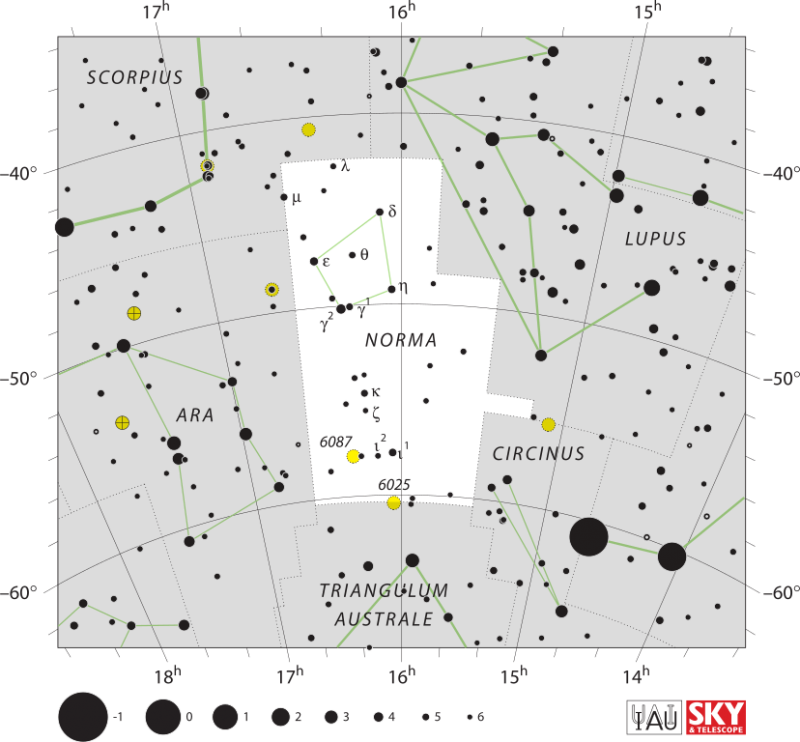
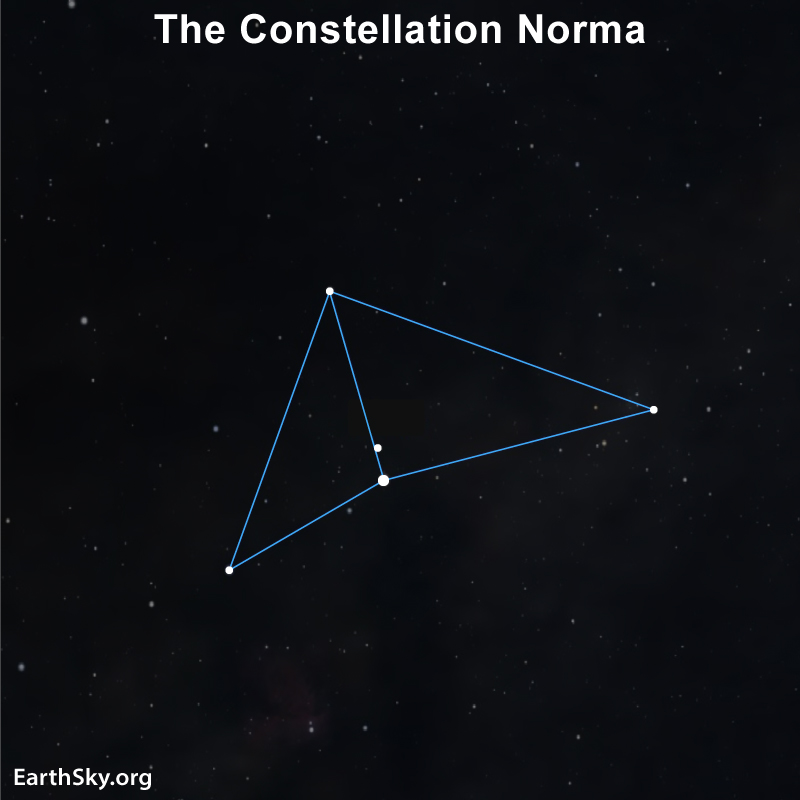
The constellation Norma in the Southern Hemisphere is meant to represent a right angle. Chart via EarthSky.
What is the Great Attractor?
The Great Attractor is a massive gravitational anomaly: an invisible, unimaginably colossal amount of mass in space that astronomers did not expect to find. They know it’s there because it’s pulling on everything around it. It’s like a cosmic tug-of-war champion, pulling millions of galaxies – including our own Local Group of galaxies – toward it. In fact, our local region of space is rushing toward this central point at a blistering speed of about 1.4 million miles per hour (600 km/s). The Virgo Supercluster and the Hydra-Centaurus Supercluster are also defying the smooth expansion of our universe and rushing toward the Great Attractor.
And, at the heart of the Great Attractor, is a giant galaxy cluster called the Norma Cluster. It’s called that because this pull is coming from the direction to our constellation Norma.
The Great Attractor covers such a large expanse of space that it spans Norma plus the neighboring constellation Triangulum Australe, the Southern Triangle.
The galaxy cluster at the heart of the Great Attractor is the Norma Cluster, also known as Abell 3627. And it’s one of the most massive galaxy clusters known.
Stars of Norma
Norma’s stars are dim. Indeed, stargazers in large cities will surely see nothing but sky here. All of the stars are 4th magnitude and dimmer. The brightest star in Norma is magnitude 4.02 Gamma Normae, a double star that is hardly distinguishable from its neighbors. Gamma Normae lies 127 light-years away.
The Norma Cluster isn’t easy to observe, either. It lies behind the plane of the Milky Way galaxy, which obscures our view.
About the name Norma
Norma is an unusual name for a constellation. The 18th-century astronomer Nicolas-Louis de Lacaille named it, along with 13 other constellations in the Southern Hemisphere. Plus, most northern constellations are more older. They’re named for ancient gods and animals. But, generally, Lacaille named constellations for scientific instruments.
Also, Norma is Latin for normal, and it’s supposed to represent a carpenter’s square or level.
For Southern Hemisphere observers, Norma climbs high in the winter sky, often reaching altitudes of around 80 degrees from locations such as New Zealand. It’s highest at midnight around June. And its high elevation and position within the Milky Way produce exceptionally sharp, bright views of dense star fields spanning thousands of light years.
But from latitudes south of about 45°S, Norma becomes circumpolar, meaning it circles the celestial pole and never sets below the horizon.
From Southern Hemisphere locations, where the constellation climbs high into the sky, Norma becomes an exciting region for stargazers and astrophotographers alike, revealing rich nebulae and dense Milky Way star fields that are difficult or impossible to observe from most northern latitudes.
For example, near the border between the constellation Norma and its neighboring constellation, Ara, you can find one of the southern sky’s most spectacular deep-sky treasures. It’s called the Fighting Dragons of Ara Nebula (NGC 6188).
This vast emission nebula spans more than two degrees of sky and is filled with glowing hydrogen gas illuminated by young, hot stars. Dark lanes of interstellar dust weave through the nebula, creating dramatic dragon-like shapes that give the object its popular nickname.
NGC 6188 (Fighting Dragons of Ara Nebula) captured in narrowband HSO over 9 hours with a 400mm telescope. Photo via Daniel Gaussen – Stargaze Mackenzie Photography,Twizel NZ.
Seeing Norma from the Northern Hemisphere
Norma is south of the celestial equator, a great circle around our sky above the earthly equator. With this in mind, it’s best viewed from the Southern Hemisphere. But you can glimpse it from latitudes of 30 degrees N or southward. For example, you can see it from the U.S. state of Florida.
Norma culminates at midnight – or appears highest in the sky at midnight – in June. So the months around June are the best time to glimpse it from the Northern Hemisphere. The constellation sits beside Lupus and south of Scorpius.
Its stars are dim, so your best bet is to first trace out the form of the Scorpion and then look for the dark patch of sky to the south.
The stars of Norma. Image via IAU/ Sky and Telescope/ Wikimedia Commons.
Stars and deep-sky objects in Norma
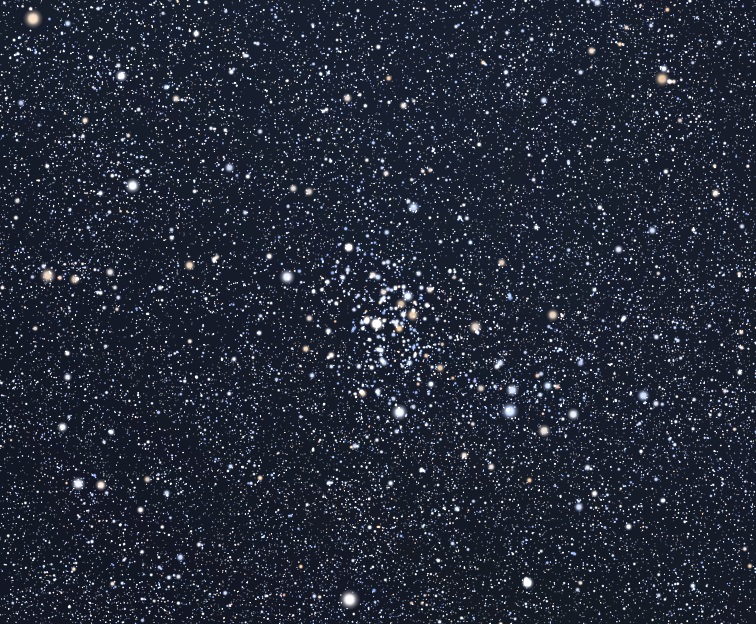
Norma’s location in the Milky Way means that it holds a number of deep-sky observing targets. The star cluster NGC 6067 is magnitude 5.6 and lies 1/2 degree north of Kappa Normae, a magnitude 4.94 star. NGC 6087 is a magnitude 5.4 open cluster almost 4 degrees below NGC 6067. And if you scan the region of Norma in binoculars, you can see at least eight open clusters.
The constellation Norma in the Southern Hemisphere is meant to represent a right angle. Chart via EarthSky.
What is the Great Attractor?
The Great Attractor is a massive gravitational anomaly: an invisible, unimaginably colossal amount of mass in space that astronomers did not expect to find. They know it’s there because it’s pulling on everything around it. It’s like a cosmic tug-of-war champion, pulling millions of galaxies – including our own Local Group of galaxies – toward it. In fact, our local region of space is rushing toward this central point at a blistering speed of about 1.4 million miles per hour (600 km/s). The Virgo Supercluster and the Hydra-Centaurus Supercluster are also defying the smooth expansion of our universe and rushing toward the Great Attractor.
And, at the heart of the Great Attractor, is a giant galaxy cluster called the Norma Cluster. It’s called that because this pull is coming from the direction to our constellation Norma.
The Great Attractor covers such a large expanse of space that it spans Norma plus the neighboring constellation Triangulum Australe, the Southern Triangle.
The galaxy cluster at the heart of the Great Attractor is the Norma Cluster, also known as Abell 3627. And it’s one of the most massive galaxy clusters known.
Stars of Norma
Norma’s stars are dim. Indeed, stargazers in large cities will surely see nothing but sky here. All of the stars are 4th magnitude and dimmer. The brightest star in Norma is magnitude 4.02 Gamma Normae, a double star that is hardly distinguishable from its neighbors. Gamma Normae lies 127 light-years away.
The Norma Cluster isn’t easy to observe, either. It lies behind the plane of the Milky Way galaxy, which obscures our view.
About the name Norma
Norma is an unusual name for a constellation. The 18th-century astronomer Nicolas-Louis de Lacaille named it, along with 13 other constellations in the Southern Hemisphere. Plus, most northern constellations are more older. They’re named for ancient gods and animals. But, generally, Lacaille named constellations for scientific instruments.
Also, Norma is Latin for normal, and it’s supposed to represent a carpenter’s square or level.
For Southern Hemisphere observers, Norma climbs high in the winter sky, often reaching altitudes of around 80 degrees from locations such as New Zealand. It’s highest at midnight around June. And its high elevation and position within the Milky Way produce exceptionally sharp, bright views of dense star fields spanning thousands of light years.
But from latitudes south of about 45°S, Norma becomes circumpolar, meaning it circles the celestial pole and never sets below the horizon.
From Southern Hemisphere locations, where the constellation climbs high into the sky, Norma becomes an exciting region for stargazers and astrophotographers alike, revealing rich nebulae and dense Milky Way star fields that are difficult or impossible to observe from most northern latitudes.
For example, near the border between the constellation Norma and its neighboring constellation, Ara, you can find one of the southern sky’s most spectacular deep-sky treasures. It’s called the Fighting Dragons of Ara Nebula (NGC 6188).
This vast emission nebula spans more than two degrees of sky and is filled with glowing hydrogen gas illuminated by young, hot stars. Dark lanes of interstellar dust weave through the nebula, creating dramatic dragon-like shapes that give the object its popular nickname.
NGC 6188 (Fighting Dragons of Ara Nebula) captured in narrowband HSO over 9 hours with a 400mm telescope. Photo via Daniel Gaussen – Stargaze Mackenzie Photography,Twizel NZ.
Seeing Norma from the Northern Hemisphere
Norma is south of the celestial equator, a great circle around our sky above the earthly equator. With this in mind, it’s best viewed from the Southern Hemisphere. But you can glimpse it from latitudes of 30 degrees N or southward. For example, you can see it from the U.S. state of Florida.
Norma culminates at midnight – or appears highest in the sky at midnight – in June. So the months around June are the best time to glimpse it from the Northern Hemisphere. The constellation sits beside Lupus and south of Scorpius.
Its stars are dim, so your best bet is to first trace out the form of the Scorpion and then look for the dark patch of sky to the south.
The stars of Norma. Image via IAU/ Sky and Telescope/ Wikimedia Commons.
Stars and deep-sky objects in Norma
Norma’s location in the Milky Way means that it holds a number of deep-sky observing targets. The star cluster NGC 6067 is magnitude 5.6 and lies 1/2 degree north of Kappa Normae, a magnitude 4.94 star. NGC 6087 is a magnitude 5.4 open cluster almost 4 degrees below NGC 6067. And if you scan the region of Norma in binoculars, you can see at least eight open clusters.









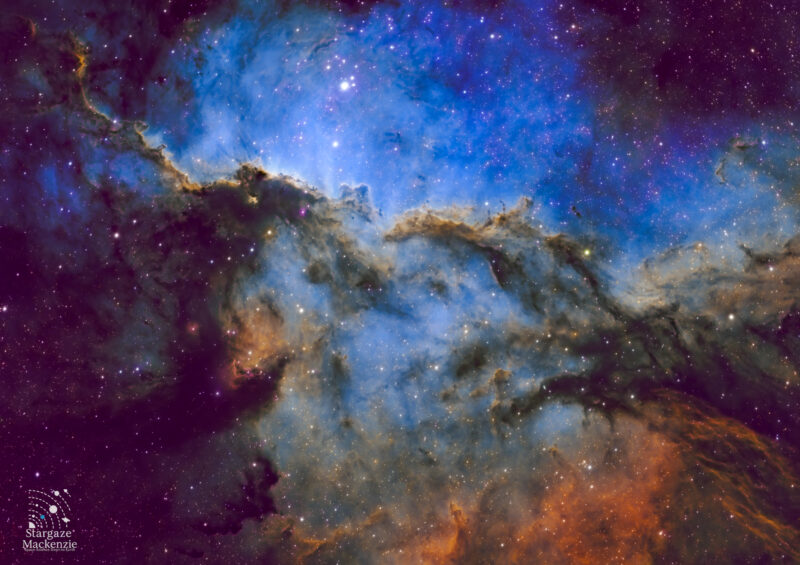 NGC 6188 (Fighting Dragons of Ara Nebula) captured in narrowband HSO over 9 hours with a 400mm telescope. Photo via Daniel Gaussen –