aads

COVID-19: “We’re having to rebuild and adapt because of coronavirus”

Photo of a scientist working in a lab

The word ‘unprecedented’ has been used far too much over the past few months. But that’s exactly what this time has been. This pandemic is a chapter in our personal and working lives that will live with us for a very long time.

The same is true for our charity. Cancer Research UK has been through world wars, recession and other periods of major disruption. We remain – as always – focused on beating cancer and I want to thank everyone who has supported us through this time.

But despite all your amazing work, COVID-19 has placed a huge strain on our income and we’ve had to change our plans for the next few years to adapt to a changed world.

We’re having to scale down our work to reflect our new situation, but our ambition remains that same. And our new plan aims to ensure that Cancer Research UK is, and will stay, at the forefront of the global fight against cancer. It will help us to focus on the areas that will make the biggest impact for people affected by cancer and realise our ambition to improve cancer survival to 3 in 4 by 2034.

What impact has the pandemic had on Cancer Research UK?

COVID-19 threatens to severely impact our cancer research and make our ambition of improving cancer survival to 3 in 4 by 2034 more difficult. We’ve written extensively about the impact of the pandemic on people with cancer, the NHS and clinical trials.

Unfortunately, COVID-19 has also hit our fundraising hard – along with many others. We’re predicting a drop in income of £160 million this year, which is 30% of our income. Over the next three years we expect to lose £300 million.

Our response

We took immediate and decisive action in response, including moving all of our staff to 80% pay, furloughing 60% of staff and cutting £44m from our research. These actions saved us money, but critically they bought us time to develop the longer-term response which is essential to secure our future.

We’ve now finalised our plan for the next three years and agreed it with our trustees. Because of how COVID-19 has hit our income, we will have a lot less to spend on beating cancer, and we’ll have to cut our spend in many other areas – sadly, including by reducing the number of people in our team.

Cuts to research

Cuts to our life saving research are difficult, but sadly unavoidable. We plan to introduce a new research model, moving towards a lower level of funding of £250m a year within four to five years – a cut of £150m from what we had planned to spend.

It’s sadly inevitable that these cuts will deal a significant blow to our ambitions and will slow progress as we make fewer discoveries, fund fewer trials and produce fewer therapeutic and diagnostic innovations to help patients everywhere.

But this cut would very much be a worst-case scenario. We are doing absolutely everything in our power to find more financial support, and are working tirelessly to urge the Government to support our life-saving research.

We’ll also phase our reductions carefully, so that we can minimise the disruption on our life-saving research, and we’ll make sure that the model is flexible. This is so that if we are successful in securing additional funding, we can spend more.

Cuts to other areas too

Of course, we will also be reducing our expenditure right across the charity too, so we can keep to our high standard of ensuring at least 80p in every £1 raised is available to spend on beating cancer.

This means we’ll stop some programmes of work, reduce the amount or scope of other activities, and be the most efficient charity we can be – leading the charity sector in making best use of our resources. We’ll do less, but what we’ll do will be of the highest quality.

Sadly, this will mean reducing the number of people in our team. We will be reducing our staff by 500 roles, which is roughly a quarter (24%) of our workforce, excluding trading (our Cancer Research UK stores).

We’re the charity we are because of our brilliant people, and so it will be very difficult to see people leave.

We’re at the start of this process now, and we’ll know more about specific changes in the coming months. But we’re clear that while we’re scaling back, we’ll continue make progress for people affected by cancer in three key areas – through our world-leading research, our sector-leading policy and influencing work, and through providing personalised cancer information.

Our future

There is a lot about the future beyond COVID-19 which is uncertain. But despite the challenges we face, we won’t give up. I believe completely in the power and potential of the charity – our brilliant staff, world-leading researchers, dedicated volunteers and supporters – to beat cancer.

We’ll still be the largest charitable funder of cancer research in the world, spending £1 billion on our mission to beat cancer over the next 3 years. We will still be the most influential UK charity. We’ll continue to fund the very best scientists in the UK and around the world.

But I also know we can’t do it alone. We need your support more than ever so that together, we will still beat cancer.

Michelle Mitchell is our chief executive


from Cancer Research UK – Science blog https://ift.tt/32jKKpp
Photo of a scientist working in a lab

The word ‘unprecedented’ has been used far too much over the past few months. But that’s exactly what this time has been. This pandemic is a chapter in our personal and working lives that will live with us for a very long time.

The same is true for our charity. Cancer Research UK has been through world wars, recession and other periods of major disruption. We remain – as always – focused on beating cancer and I want to thank everyone who has supported us through this time.

But despite all your amazing work, COVID-19 has placed a huge strain on our income and we’ve had to change our plans for the next few years to adapt to a changed world.

We’re having to scale down our work to reflect our new situation, but our ambition remains that same. And our new plan aims to ensure that Cancer Research UK is, and will stay, at the forefront of the global fight against cancer. It will help us to focus on the areas that will make the biggest impact for people affected by cancer and realise our ambition to improve cancer survival to 3 in 4 by 2034.

What impact has the pandemic had on Cancer Research UK?

COVID-19 threatens to severely impact our cancer research and make our ambition of improving cancer survival to 3 in 4 by 2034 more difficult. We’ve written extensively about the impact of the pandemic on people with cancer, the NHS and clinical trials.

Unfortunately, COVID-19 has also hit our fundraising hard – along with many others. We’re predicting a drop in income of £160 million this year, which is 30% of our income. Over the next three years we expect to lose £300 million.

Our response

We took immediate and decisive action in response, including moving all of our staff to 80% pay, furloughing 60% of staff and cutting £44m from our research. These actions saved us money, but critically they bought us time to develop the longer-term response which is essential to secure our future.

We’ve now finalised our plan for the next three years and agreed it with our trustees. Because of how COVID-19 has hit our income, we will have a lot less to spend on beating cancer, and we’ll have to cut our spend in many other areas – sadly, including by reducing the number of people in our team.

Cuts to research

Cuts to our life saving research are difficult, but sadly unavoidable. We plan to introduce a new research model, moving towards a lower level of funding of £250m a year within four to five years – a cut of £150m from what we had planned to spend.

It’s sadly inevitable that these cuts will deal a significant blow to our ambitions and will slow progress as we make fewer discoveries, fund fewer trials and produce fewer therapeutic and diagnostic innovations to help patients everywhere.

But this cut would very much be a worst-case scenario. We are doing absolutely everything in our power to find more financial support, and are working tirelessly to urge the Government to support our life-saving research.

We’ll also phase our reductions carefully, so that we can minimise the disruption on our life-saving research, and we’ll make sure that the model is flexible. This is so that if we are successful in securing additional funding, we can spend more.

Cuts to other areas too

Of course, we will also be reducing our expenditure right across the charity too, so we can keep to our high standard of ensuring at least 80p in every £1 raised is available to spend on beating cancer.

This means we’ll stop some programmes of work, reduce the amount or scope of other activities, and be the most efficient charity we can be – leading the charity sector in making best use of our resources. We’ll do less, but what we’ll do will be of the highest quality.

Sadly, this will mean reducing the number of people in our team. We will be reducing our staff by 500 roles, which is roughly a quarter (24%) of our workforce, excluding trading (our Cancer Research UK stores).

We’re the charity we are because of our brilliant people, and so it will be very difficult to see people leave.

We’re at the start of this process now, and we’ll know more about specific changes in the coming months. But we’re clear that while we’re scaling back, we’ll continue make progress for people affected by cancer in three key areas – through our world-leading research, our sector-leading policy and influencing work, and through providing personalised cancer information.

Our future

There is a lot about the future beyond COVID-19 which is uncertain. But despite the challenges we face, we won’t give up. I believe completely in the power and potential of the charity – our brilliant staff, world-leading researchers, dedicated volunteers and supporters – to beat cancer.

We’ll still be the largest charitable funder of cancer research in the world, spending £1 billion on our mission to beat cancer over the next 3 years. We will still be the most influential UK charity. We’ll continue to fund the very best scientists in the UK and around the world.

But I also know we can’t do it alone. We need your support more than ever so that together, we will still beat cancer.

Michelle Mitchell is our chief executive


from Cancer Research UK – Science blog https://ift.tt/32jKKpp

Pursuing precision medicine in a flagship lung cancer trial

Modern medicine has always been about advancement. From the earliest herbal remedies to the complexities of brain surgery, the ways in which we’re treated have steadily evolved.

And now, medicine has become more personal.

For the past 5 years, we’ve funded one of the world’s largest precision medicine clinical trials, helmed by Professor Gary Middleton at the University of Birmingham. A £25 million collaboration with pharmaceutical companies and the NHS, the National Lung Matrix Trial has been exploring how patients with non small cell lung cancer respond to more tailored, targeted treatments.

And now, the results are in.

You can stand under my umbrella

Non small cell lung cancer (or NSCLC) is the most common form of lung cancer and makes up 80-85% of all lung cancer cases. It groups together multiple forms of cancer –including adenocarcinoma, squamous cell carcinoma, and large cell carcinoma – because, generally speaking, they behave in a similar way, including how they respond to treatments.

But that doesn’t mean they’re identical.

NSCLC tumours are incredibly diverse when you zoom in and look at their DNA. This got the Birmingham team thinking: how do you find a way to test a treatment for a tumour that can be so different in different people?

The answer: an umbrella trial.

On the surface, it works like any other clinical trial – it involves a group of patients with the condition that take an experimental treatment. The difference in this umbrella trial was that there wasn’t just one treatment – there were 19 – and they were tailored to each person’s tumour. Patients were genetically screened to understand more about their tumour type, with this information used as a biomarker to match them to a targeted treatment.

“That really is what the trial is. It’s using the genotype to match patients to their targeted therapy,” says Middleton “It’s not just having one biomarker targeted by one drug – but multiple biomarkers with multiple drugs so that we can make it a much more effective and efficient screening strategy.”

It’s too simple

An umbrella trial isn’t really one single trial, it’s multiple trials running in parallel, with the different patients (or “cohorts”) monitored by the research team. Because of this, one of the key features of the trial was flexibility – being able to work with their pharmaceutical collaborators to add and retire drugs as and when required to ensure that the different cohorts were receiving the best possible treatment for their tumour.

The trial opened in 2015 and over 4 years, recruited over just under 5,500 patients. However, only 288 people went on to be treated on the trial, 14 of whom received more than one targeted treatment.

The key result was that when focusing on tumours with single driver mutations – one single mutation that drives them to grow rapidly and avoid being destroyed – they were able to provide effective treatment. However, that was far less common in patients whose tumours weren’t just down to a single mutation: the genomically complex cancers.

One of the dangers of lung cancer caused by exposure to tobacco smoke is that it results in these complex tumours, which means more mutations, more genetic alterations and more genetic instability. This results in tumours that are far more difficult to treat and changing over time, meaning that they could become resistant to drugs.

“What is very apparent is that this trial design can pick up very active drugs very quickly. If we’ve got a good drug and a good target, stratified medicine in lung cancer works well. But it does show the stark differences between the genomically simple tumours and the more complicated ones”

By understanding the drugs that have proved effective, researchers will be able to develop even better and more personalised treatments for these patients.

For those with more complex lung cancers, Middleton says that “there’s got to be a lot more work done at the basic discovery science level to understand the causes of genomic instability and how tumours continue to evolve so we can stop that process.”

And there were more lessons to learn when it came to the trial itself, which involved patients who had already completed standard anti-cancer therapy. Unfortunately, a significant number of patients who could have been suitable for treatment were unable to take part because, by the time they would have entered the trial, their lung cancer had progressed too far.

This highlights the importance of making trials faster and more efficient at matching people to targeted drugs, as well as the need to start these trials earlier in the cancer journey, before someone’s cancer becomes very advanced.

But simply recruiting patients early won’t be the solution. Professor Middleton and the team know that targeting tumours more complex tumours will involve more sophisticated screening that takes into account the specifics of a patient’s tumour genetics and a better understanding of personalised medicine.

“The models we test drugs on are too simplistic – they don’t represent the genomic complexity of the tumour, or the trajectory of how they rapidly evolve. We need models that take into account the complexity and trajectory of a human tumour to decide if a drug is going to work.”

Fitter, leaner, meaner

Although they acknowledge the limitations of the study, the Middleton and the team believe these results and the lessons learnt are paving the way forward to the next wave of personalised medicine trials. Currently, they are recruiting patients for further testing, with new personalised treatments being added to the trial.

“I think the one thing I want people to take away is that we can use the lessons learnt to redesign the next wave of stratified medicine studies – I want this to be seen as a landmark trial in precision medicine that opens the way to the next generation of precision medicine trials.”

Alex

Reference

Middleton,G., et al. (2020) The National Lung Matrix Trial of personalised therapy in lung cancer. Nature. DOI: 10.1038/s41586-020-2481-8


from Cancer Research UK – Science blog https://ift.tt/3exH6dY

Modern medicine has always been about advancement. From the earliest herbal remedies to the complexities of brain surgery, the ways in which we’re treated have steadily evolved.

And now, medicine has become more personal.

For the past 5 years, we’ve funded one of the world’s largest precision medicine clinical trials, helmed by Professor Gary Middleton at the University of Birmingham. A £25 million collaboration with pharmaceutical companies and the NHS, the National Lung Matrix Trial has been exploring how patients with non small cell lung cancer respond to more tailored, targeted treatments.

And now, the results are in.

You can stand under my umbrella

Non small cell lung cancer (or NSCLC) is the most common form of lung cancer and makes up 80-85% of all lung cancer cases. It groups together multiple forms of cancer –including adenocarcinoma, squamous cell carcinoma, and large cell carcinoma – because, generally speaking, they behave in a similar way, including how they respond to treatments.

But that doesn’t mean they’re identical.

NSCLC tumours are incredibly diverse when you zoom in and look at their DNA. This got the Birmingham team thinking: how do you find a way to test a treatment for a tumour that can be so different in different people?

The answer: an umbrella trial.

On the surface, it works like any other clinical trial – it involves a group of patients with the condition that take an experimental treatment. The difference in this umbrella trial was that there wasn’t just one treatment – there were 19 – and they were tailored to each person’s tumour. Patients were genetically screened to understand more about their tumour type, with this information used as a biomarker to match them to a targeted treatment.

“That really is what the trial is. It’s using the genotype to match patients to their targeted therapy,” says Middleton “It’s not just having one biomarker targeted by one drug – but multiple biomarkers with multiple drugs so that we can make it a much more effective and efficient screening strategy.”

It’s too simple

An umbrella trial isn’t really one single trial, it’s multiple trials running in parallel, with the different patients (or “cohorts”) monitored by the research team. Because of this, one of the key features of the trial was flexibility – being able to work with their pharmaceutical collaborators to add and retire drugs as and when required to ensure that the different cohorts were receiving the best possible treatment for their tumour.

The trial opened in 2015 and over 4 years, recruited over just under 5,500 patients. However, only 288 people went on to be treated on the trial, 14 of whom received more than one targeted treatment.

The key result was that when focusing on tumours with single driver mutations – one single mutation that drives them to grow rapidly and avoid being destroyed – they were able to provide effective treatment. However, that was far less common in patients whose tumours weren’t just down to a single mutation: the genomically complex cancers.

One of the dangers of lung cancer caused by exposure to tobacco smoke is that it results in these complex tumours, which means more mutations, more genetic alterations and more genetic instability. This results in tumours that are far more difficult to treat and changing over time, meaning that they could become resistant to drugs.

“What is very apparent is that this trial design can pick up very active drugs very quickly. If we’ve got a good drug and a good target, stratified medicine in lung cancer works well. But it does show the stark differences between the genomically simple tumours and the more complicated ones”

By understanding the drugs that have proved effective, researchers will be able to develop even better and more personalised treatments for these patients.

For those with more complex lung cancers, Middleton says that “there’s got to be a lot more work done at the basic discovery science level to understand the causes of genomic instability and how tumours continue to evolve so we can stop that process.”

And there were more lessons to learn when it came to the trial itself, which involved patients who had already completed standard anti-cancer therapy. Unfortunately, a significant number of patients who could have been suitable for treatment were unable to take part because, by the time they would have entered the trial, their lung cancer had progressed too far.

This highlights the importance of making trials faster and more efficient at matching people to targeted drugs, as well as the need to start these trials earlier in the cancer journey, before someone’s cancer becomes very advanced.

But simply recruiting patients early won’t be the solution. Professor Middleton and the team know that targeting tumours more complex tumours will involve more sophisticated screening that takes into account the specifics of a patient’s tumour genetics and a better understanding of personalised medicine.

“The models we test drugs on are too simplistic – they don’t represent the genomic complexity of the tumour, or the trajectory of how they rapidly evolve. We need models that take into account the complexity and trajectory of a human tumour to decide if a drug is going to work.”

Fitter, leaner, meaner

Although they acknowledge the limitations of the study, the Middleton and the team believe these results and the lessons learnt are paving the way forward to the next wave of personalised medicine trials. Currently, they are recruiting patients for further testing, with new personalised treatments being added to the trial.

“I think the one thing I want people to take away is that we can use the lessons learnt to redesign the next wave of stratified medicine studies – I want this to be seen as a landmark trial in precision medicine that opens the way to the next generation of precision medicine trials.”

Alex

Reference

Middleton,G., et al. (2020) The National Lung Matrix Trial of personalised therapy in lung cancer. Nature. DOI: 10.1038/s41586-020-2481-8


from Cancer Research UK – Science blog https://ift.tt/3exH6dY

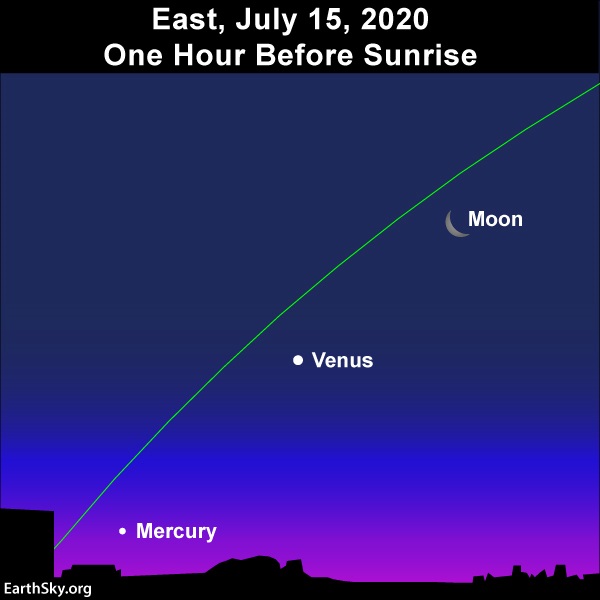
Moon and Venus beautiful before sunrise July 16-19

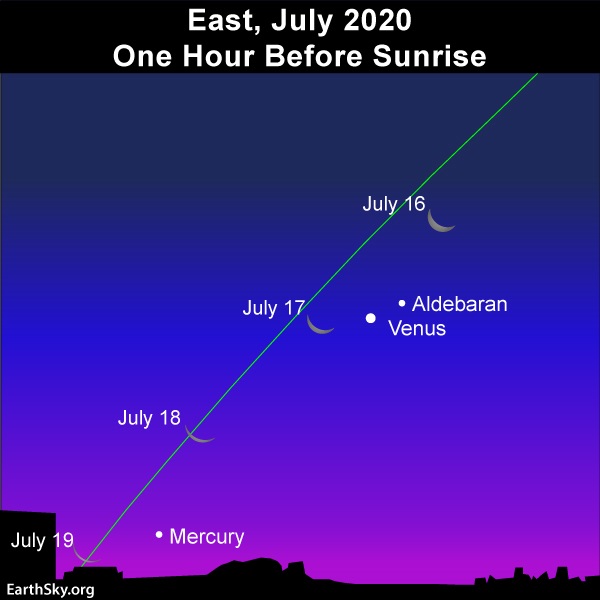
Before daybreak on July 16, 17, 18 and 19, 2020, look east! You’ll see the two brightest objects of nighttime, the moon and the planet Venus, near each other. These two bright worlds will be hard to miss. Some people who are looking carefully might even continue to see them after sunrise. There’s another planet shown on the chart above: Mercury. It’s harder to find. You’ll find more about finding Mercury below.

Watch for the soft glow of earthshine illuminating the dark or night portion of the moon. Earthshine is twice-reflected sunlight. From the moon right now, Earth appears as a large gibbous sphere (more than half lighted but less than full). It’s big and bright in the lunar sky. Just as moonlight illuminates our earthly landscape when our moon is large and nearly full, so this nearly full Earth illuminates the lunar landscape. It’s this light that causes the glow of earthshine, visible whenever the moon is a crescent.

If you have a telescope, you know that Venus is in a crescent phase now, too. We’d love to see your photos. You can submit a photo to EarthSky here.

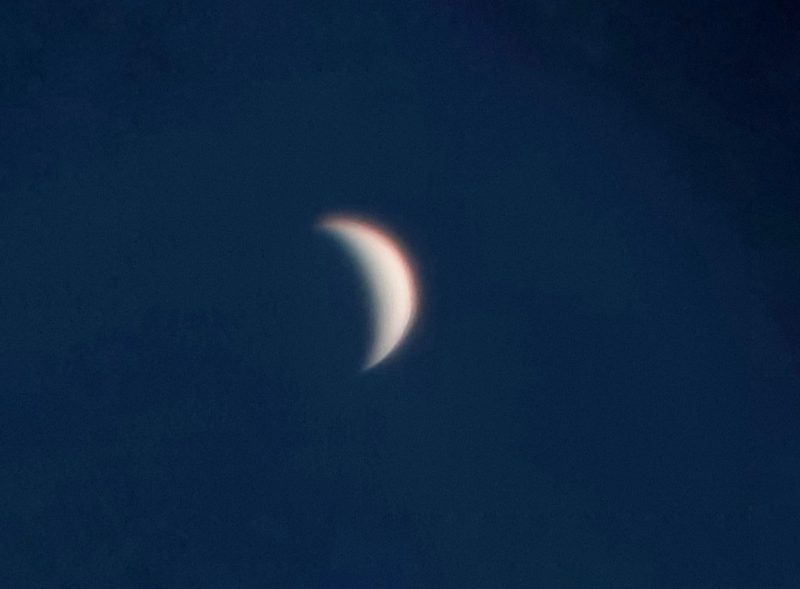
A featureless crescent Venus.

View at EarthSky Community Photos. | Recent photo of crescent Venus, 27.8% illuminated. Aurelian Neacsu in Visina, Dambovita, Romania, captured this image on July 11, 2020. Venus passed between us and the sun on June 3. It’s now a waxing crescent, visible in the east before sunup. You need a telescope to see the crescent shape, but strong binoculars might show you that Venus is something other than perfectly round. Thank you, Aurelian!

Jupiter, Saturn, Mars. In addition to Venus, there are three other bright planets easy to see before sunup now. The second brightest planet – Jupiter – is out from dusk until dawn, and thus it sits low in the western half of the sky before daybreak. Saturn is that bright golden object near Jupiter, just a short hop away all night long. Mars is much higher up, roughly midway between Venus and Jupiter.

Click here to know the moon’s position on the zodiac via Heavens-Above

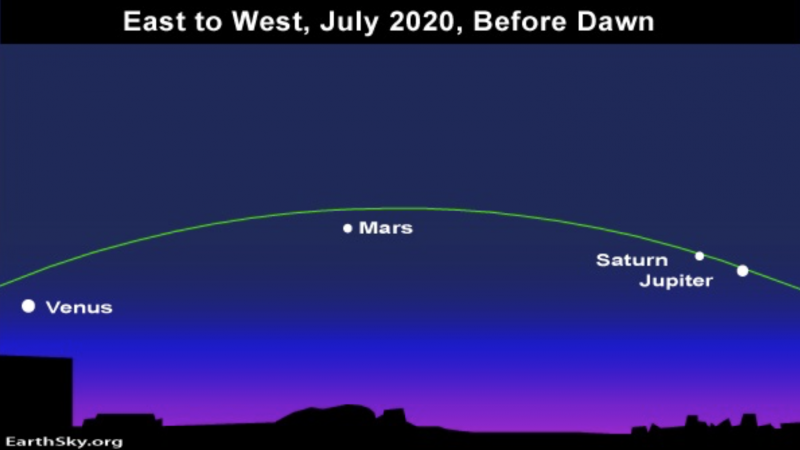
Chart showing the morning sky with ecliptic, Venus, Mars, Saturn and Jupiter marked.

Four brilliant planets light up the July morning sky. Venus, the brightest, shines in the east before sunup. Jupiter, 2nd-brightest, shines in the western half of your sky. Look for Saturn close to Jupiter. Look for Mars roughly midway between Venus and Jupiter. If you search hard – and have good sky conditions near your eastern horizon at dawn – you might catch a 5th planet, Mercury, below Venus, near the coming sunrise.

Mercury. And there’s a fifth planet in the early morning sky. Far and away, Mercury – the solar system’s innermost planet – poses the biggest challenge of these morning planets. You might need binoculars to spot it in the glow of dawn. But if you’re game, the lit side of the lunar crescent serves as your arrow in the sky these next few mornings, pointing to Mercury’s approximate rising spot on the horizon. On July 19, the old whisker-thin lunar crescent will pass to the north of Mercury.

If you live in the U.S. or Canada, find out when Mercury rises into your sky via Old Farmer’s Almanac

For almost any place worldwide, find out when Mercury climbs into your sky via TimeandDate.com

Read more: Mercury in the July morning sky

Bottom line: On the mornings of July 16, 17, 18 and 19, 2020, enjoy the beautiful presence of the waning crescent moon near Venus, the brightest planet. Look for them in the east, the sunrise direction.


from EarthSky https://ift.tt/3h0dp6Z

Before daybreak on July 16, 17, 18 and 19, 2020, look east! You’ll see the two brightest objects of nighttime, the moon and the planet Venus, near each other. These two bright worlds will be hard to miss. Some people who are looking carefully might even continue to see them after sunrise. There’s another planet shown on the chart above: Mercury. It’s harder to find. You’ll find more about finding Mercury below.

Watch for the soft glow of earthshine illuminating the dark or night portion of the moon. Earthshine is twice-reflected sunlight. From the moon right now, Earth appears as a large gibbous sphere (more than half lighted but less than full). It’s big and bright in the lunar sky. Just as moonlight illuminates our earthly landscape when our moon is large and nearly full, so this nearly full Earth illuminates the lunar landscape. It’s this light that causes the glow of earthshine, visible whenever the moon is a crescent.

If you have a telescope, you know that Venus is in a crescent phase now, too. We’d love to see your photos. You can submit a photo to EarthSky here.

A featureless crescent Venus.

View at EarthSky Community Photos. | Recent photo of crescent Venus, 27.8% illuminated. Aurelian Neacsu in Visina, Dambovita, Romania, captured this image on July 11, 2020. Venus passed between us and the sun on June 3. It’s now a waxing crescent, visible in the east before sunup. You need a telescope to see the crescent shape, but strong binoculars might show you that Venus is something other than perfectly round. Thank you, Aurelian!

Jupiter, Saturn, Mars. In addition to Venus, there are three other bright planets easy to see before sunup now. The second brightest planet – Jupiter – is out from dusk until dawn, and thus it sits low in the western half of the sky before daybreak. Saturn is that bright golden object near Jupiter, just a short hop away all night long. Mars is much higher up, roughly midway between Venus and Jupiter.

Click here to know the moon’s position on the zodiac via Heavens-Above

Chart showing the morning sky with ecliptic, Venus, Mars, Saturn and Jupiter marked.

Four brilliant planets light up the July morning sky. Venus, the brightest, shines in the east before sunup. Jupiter, 2nd-brightest, shines in the western half of your sky. Look for Saturn close to Jupiter. Look for Mars roughly midway between Venus and Jupiter. If you search hard – and have good sky conditions near your eastern horizon at dawn – you might catch a 5th planet, Mercury, below Venus, near the coming sunrise.

Mercury. And there’s a fifth planet in the early morning sky. Far and away, Mercury – the solar system’s innermost planet – poses the biggest challenge of these morning planets. You might need binoculars to spot it in the glow of dawn. But if you’re game, the lit side of the lunar crescent serves as your arrow in the sky these next few mornings, pointing to Mercury’s approximate rising spot on the horizon. On July 19, the old whisker-thin lunar crescent will pass to the north of Mercury.

If you live in the U.S. or Canada, find out when Mercury rises into your sky via Old Farmer’s Almanac

For almost any place worldwide, find out when Mercury climbs into your sky via TimeandDate.com

Read more: Mercury in the July morning sky

Bottom line: On the mornings of July 16, 17, 18 and 19, 2020, enjoy the beautiful presence of the waning crescent moon near Venus, the brightest planet. Look for them in the east, the sunrise direction.


from EarthSky https://ift.tt/3h0dp6Z

To find giant black holes, start with our solar system’s center

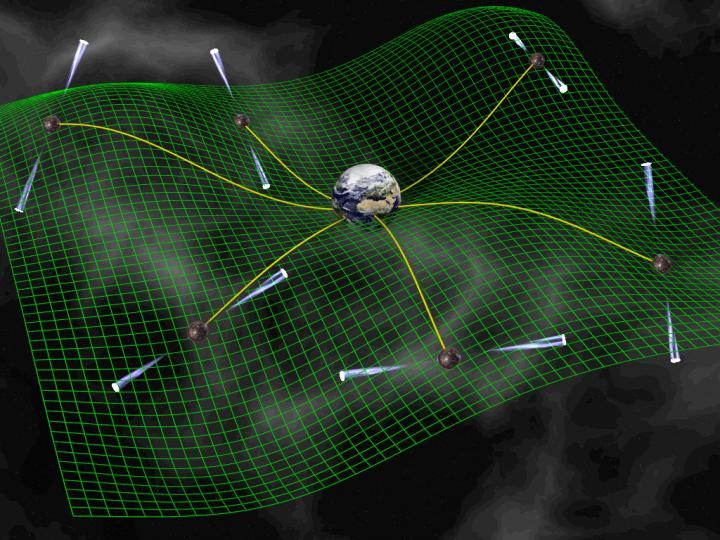
Web-like structure with Earth at the center, wavy lines and small pointed tubes, on a misty background.

Artist’s concept of an array of pulsars, used in a system to find black holes with billions of times our sun’s mass. The best place to start? One idea is to use the gravitational center of our solar system. Image via David Champion/ Vanderbilt University.

Black holes are places where gravity is so immense that light cannot escape. The spacetime surrounding black holes is warped. In recent decades, astronomers have come to believe that largest black holes – supermassive black holes – reside in the hearts of most galaxies. Each is millions or billions of times the mass of our sun. But many supermassive black holes remain undetected. How can scientists find them? Enter gravitational waves, ripples in spacetime, theorized as far back as Albert Einstein, but observed only since 2015. Astronomers now say we can find supermassive black holes by observing the effect of their gravitational waves on the timing of light flashes from pulsars. While conducting this research, these scientists say they’ve also refined our knowledge of the gravitational center – or barycenter – of our solar system.

The new research comes from Stephen Taylor, assistant professor of physics at Vanderbilt University and the North American Nanohertz Observatory for Gravitational Waves (NANOGrav) collaboration. Taylor explained in a statement:

Using the pulsars we observe across the Milky Way galaxy, we are trying to be like a spider sitting in stillness in the middle of her web. How well we understand the solar system’s barycenter is critical as we attempt to sense even the smallest tingle to the web.

This new technique for finding supermassive black holes was announced on June 30, 2020 by Vanderbilt University.

The peer-reviewed paper detailing their findings was published in The Astrophysical Journal last April 21.

Gravitational waves – ripples in space-time – can be generated by pairs of black holes orbiting each other. To find these ripples, Taylor and his colleagues measure the regular flashes of light from pulsars, which are neutron stars that spin extremely fast and blast out beams of light, much like a cosmic lighthouse. The researchers are looking for changes in the arrival rate of these flashes, using NANOGrav data. Like clocks keeping time perfectly, pulsars are known to emit their flashes in a way that’s extremely regular (which is why, when first discovered, it was thought they might be artificial signals from aliens). So slight deviations from the otherwise regular flashing of a pulsar could indicate the passing of gravitational waves.

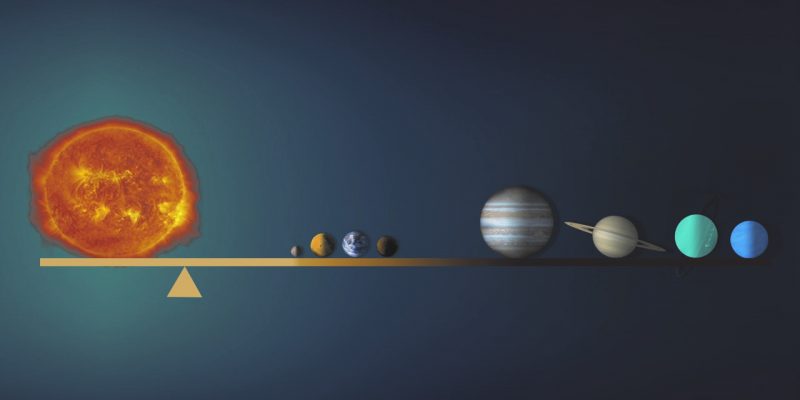
Planets of the solar system depicted as being on a seesaw.

It turns out that the exact gravitational center – the barycenter – of the solar system is not in the middle of the sun, but rather about 330 feet (100 meters) above the sun’s surface, according to the new study. Image via Tonia Klein/ NANOGrav Physics Frontier Center/ Vanderbilt University.

In the statement from these scientists, Taylor said that understanding the exact location of the barycenter of the solar system helps in the search for gravitational waves from supermassive black holes. What is the barycenter, exactly? Perhaps you know that – as in the Earth-moon system, for example – the moon doesn’t orbit the center of Earth. Instead, both Earth and moon orbit around the barycenter, or common center of gravity in the system. In the Earth-moon system, the center of gravity, or barycenter, is inside Earth, but not at the center of Earth. It’s about 2,902 miles (4,671 km) from Earth’s center, or about 75% of the way from Earth’s center to its surface.

Likewise, the barycenter – or center of mass – in our solar system isn’t in the middle of the sun. It’s near the sun’s surface, about 330 feet (100 meters) above the sun’s surface, according to the new study. These scientists’ statement called this point “the location of absolute stillness in our solar system.”

So understanding the location of the exact gravitational center of the solar system helps scientists measure the very slight but detectable changes in pulsar flashes caused by passing gravitational waves. That location has been estimated before, using data from Doppler tracking. This provides the locations and trajectories of objects as they orbit the sun. But that can lead to errors and inconsistent results, showing evidence of gravitational waves that aren’t really there. Co-author Joe Simon said:

The catch is that errors in the masses and orbits will translate to pulsar-timing artifacts that may well look like gravitational waves.

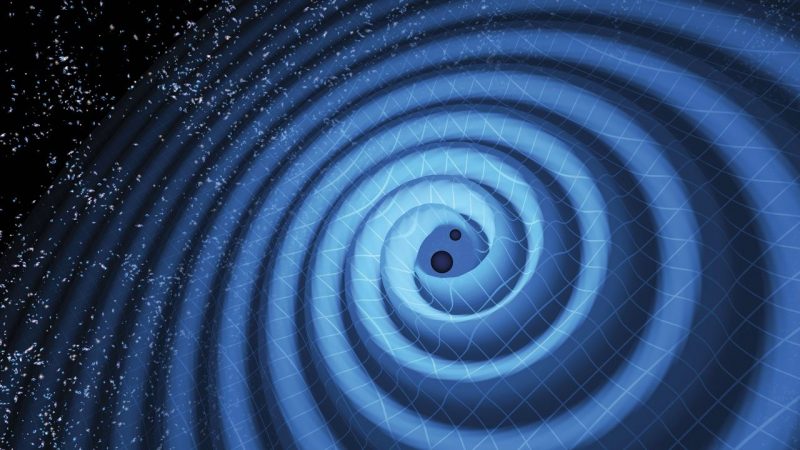
Blue spirals surrounding two small black orbs with stars in background.

Graphic depiction of gravitational waves generated by two black holes orbiting each other. Image via LIGO/ T. Pyle/ Science.

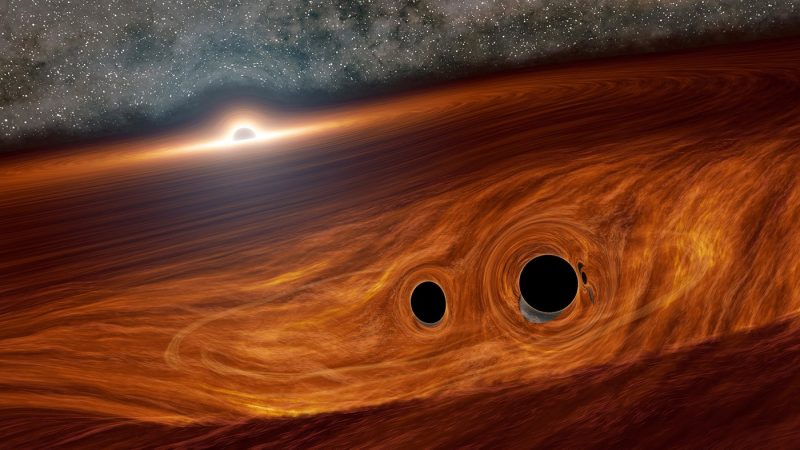
Two black orbs embedded in a red disk of material surrounding another black orb.

Artist’s concept of a peculiar black hole system, in which 2 small black holes are merging in the disk surrounding a 3rd, supermassive black hole. To find the most massive black holes, researchers are measuring the timing of light flashes coming from pulsars, as affected by gravitational waves. Image via Caltech/ R. Hurt (IPAC).

Lead author Michele Vallisneri added:

We weren’t detecting anything significant in our gravitational wave searches between solar system models, but we were getting large systematic differences in our calculations. Typically, more data delivers a more precise result, but there was always an offset in our calculations.

So how do the researchers account for the previous errors and inconsistencies, and improve the accuracy of detecting the gravitational waves? They decided to try a different approach, searching for the gravity waves and the exact gravitational center of the solar system at the same time. And it worked. They were even able to specifically pinpoint the center of gravity in the solar system to within 100 meters! The precise gravitational center of the solar system is not in the center of the sun, as might be presumed. It is actually only about 330 feet above the surface of the sun, according to the paper. This discrepancy is due to the affect of the huge mass of the largest planet, Jupiter. Taylor said:

Our precise observation of pulsars scattered across the galaxy has localized ourselves in the cosmos better than we ever could before. By finding gravitational waves this way, in addition to other experiments, we gain a more holistic overview of all different kinds of black holes in the universe.

Smiling man with arms crossed.

Stephen Taylor at Vanderbilt University, co-author of the new study. Image via Vanderbilt University.

Just a few days ago, it was reported that, for the first time, astronomers had observed visible light from a black hole merger. In this system, two smaller black holes are merging together within a disk of material surrounding a supermassive black hole 12.8 billion light-years away. Such mergers have been detected before by the gravitational waves they create, but this was the first time that a flare-like visible light phenomenon had also been seen. The light comes from the gaseous disk of material surrounding the larger black hole, not from within the black holes themselves.

NANOGrav will continue to collect additional pulsar timing data, and astronomers are confident that this will lead to the unequivocal discovery of more supermassive black holes.

Bottom line: New study says that the best way to find the most massive black holes is to measure gravitational waves at the precise gravitational center of the solar system.

Source: Modeling the Uncertainties of Solar System Ephemerides for Robust Gravitational-wave Searches with Pulsar-timing Arrays

Via Vanderbilt University


from EarthSky https://ift.tt/2CBGerA
Web-like structure with Earth at the center, wavy lines and small pointed tubes, on a misty background.

Artist’s concept of an array of pulsars, used in a system to find black holes with billions of times our sun’s mass. The best place to start? One idea is to use the gravitational center of our solar system. Image via David Champion/ Vanderbilt University.

Black holes are places where gravity is so immense that light cannot escape. The spacetime surrounding black holes is warped. In recent decades, astronomers have come to believe that largest black holes – supermassive black holes – reside in the hearts of most galaxies. Each is millions or billions of times the mass of our sun. But many supermassive black holes remain undetected. How can scientists find them? Enter gravitational waves, ripples in spacetime, theorized as far back as Albert Einstein, but observed only since 2015. Astronomers now say we can find supermassive black holes by observing the effect of their gravitational waves on the timing of light flashes from pulsars. While conducting this research, these scientists say they’ve also refined our knowledge of the gravitational center – or barycenter – of our solar system.

The new research comes from Stephen Taylor, assistant professor of physics at Vanderbilt University and the North American Nanohertz Observatory for Gravitational Waves (NANOGrav) collaboration. Taylor explained in a statement:

Using the pulsars we observe across the Milky Way galaxy, we are trying to be like a spider sitting in stillness in the middle of her web. How well we understand the solar system’s barycenter is critical as we attempt to sense even the smallest tingle to the web.

This new technique for finding supermassive black holes was announced on June 30, 2020 by Vanderbilt University.

The peer-reviewed paper detailing their findings was published in The Astrophysical Journal last April 21.

Gravitational waves – ripples in space-time – can be generated by pairs of black holes orbiting each other. To find these ripples, Taylor and his colleagues measure the regular flashes of light from pulsars, which are neutron stars that spin extremely fast and blast out beams of light, much like a cosmic lighthouse. The researchers are looking for changes in the arrival rate of these flashes, using NANOGrav data. Like clocks keeping time perfectly, pulsars are known to emit their flashes in a way that’s extremely regular (which is why, when first discovered, it was thought they might be artificial signals from aliens). So slight deviations from the otherwise regular flashing of a pulsar could indicate the passing of gravitational waves.

Planets of the solar system depicted as being on a seesaw.

It turns out that the exact gravitational center – the barycenter – of the solar system is not in the middle of the sun, but rather about 330 feet (100 meters) above the sun’s surface, according to the new study. Image via Tonia Klein/ NANOGrav Physics Frontier Center/ Vanderbilt University.

In the statement from these scientists, Taylor said that understanding the exact location of the barycenter of the solar system helps in the search for gravitational waves from supermassive black holes. What is the barycenter, exactly? Perhaps you know that – as in the Earth-moon system, for example – the moon doesn’t orbit the center of Earth. Instead, both Earth and moon orbit around the barycenter, or common center of gravity in the system. In the Earth-moon system, the center of gravity, or barycenter, is inside Earth, but not at the center of Earth. It’s about 2,902 miles (4,671 km) from Earth’s center, or about 75% of the way from Earth’s center to its surface.

Likewise, the barycenter – or center of mass – in our solar system isn’t in the middle of the sun. It’s near the sun’s surface, about 330 feet (100 meters) above the sun’s surface, according to the new study. These scientists’ statement called this point “the location of absolute stillness in our solar system.”

So understanding the location of the exact gravitational center of the solar system helps scientists measure the very slight but detectable changes in pulsar flashes caused by passing gravitational waves. That location has been estimated before, using data from Doppler tracking. This provides the locations and trajectories of objects as they orbit the sun. But that can lead to errors and inconsistent results, showing evidence of gravitational waves that aren’t really there. Co-author Joe Simon said:

The catch is that errors in the masses and orbits will translate to pulsar-timing artifacts that may well look like gravitational waves.

Blue spirals surrounding two small black orbs with stars in background.

Graphic depiction of gravitational waves generated by two black holes orbiting each other. Image via LIGO/ T. Pyle/ Science.

Two black orbs embedded in a red disk of material surrounding another black orb.

Artist’s concept of a peculiar black hole system, in which 2 small black holes are merging in the disk surrounding a 3rd, supermassive black hole. To find the most massive black holes, researchers are measuring the timing of light flashes coming from pulsars, as affected by gravitational waves. Image via Caltech/ R. Hurt (IPAC).

Lead author Michele Vallisneri added:

We weren’t detecting anything significant in our gravitational wave searches between solar system models, but we were getting large systematic differences in our calculations. Typically, more data delivers a more precise result, but there was always an offset in our calculations.

So how do the researchers account for the previous errors and inconsistencies, and improve the accuracy of detecting the gravitational waves? They decided to try a different approach, searching for the gravity waves and the exact gravitational center of the solar system at the same time. And it worked. They were even able to specifically pinpoint the center of gravity in the solar system to within 100 meters! The precise gravitational center of the solar system is not in the center of the sun, as might be presumed. It is actually only about 330 feet above the surface of the sun, according to the paper. This discrepancy is due to the affect of the huge mass of the largest planet, Jupiter. Taylor said:

Our precise observation of pulsars scattered across the galaxy has localized ourselves in the cosmos better than we ever could before. By finding gravitational waves this way, in addition to other experiments, we gain a more holistic overview of all different kinds of black holes in the universe.

Smiling man with arms crossed.

Stephen Taylor at Vanderbilt University, co-author of the new study. Image via Vanderbilt University.

Just a few days ago, it was reported that, for the first time, astronomers had observed visible light from a black hole merger. In this system, two smaller black holes are merging together within a disk of material surrounding a supermassive black hole 12.8 billion light-years away. Such mergers have been detected before by the gravitational waves they create, but this was the first time that a flare-like visible light phenomenon had also been seen. The light comes from the gaseous disk of material surrounding the larger black hole, not from within the black holes themselves.

NANOGrav will continue to collect additional pulsar timing data, and astronomers are confident that this will lead to the unequivocal discovery of more supermassive black holes.

Bottom line: New study says that the best way to find the most massive black holes is to measure gravitational waves at the precise gravitational center of the solar system.

Source: Modeling the Uncertainties of Solar System Ephemerides for Robust Gravitational-wave Searches with Pulsar-timing Arrays

Via Vanderbilt University


from EarthSky https://ift.tt/2CBGerA

Watch ISS spacewalk July 16

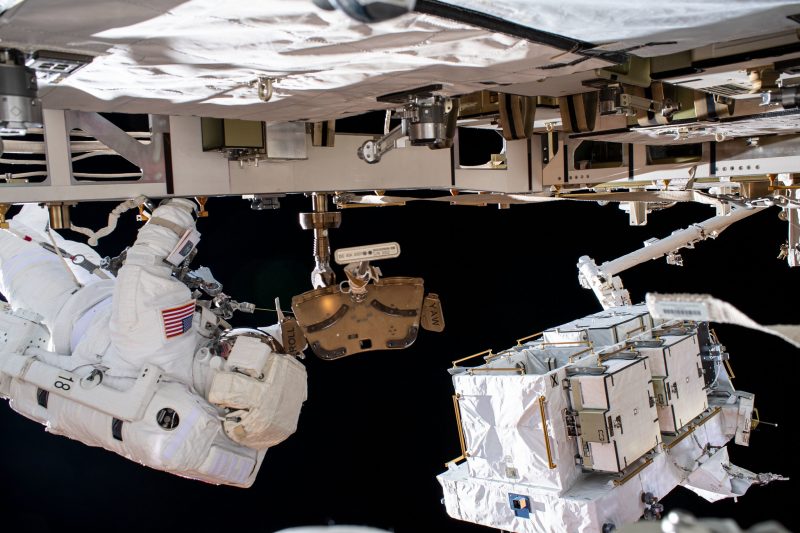
Astronaut in spacesuits outside spacecraft with white-covered box at end of jointed arm.

NASA astronaut Bob Behnken (at left) is pictured during a spacewalk to swap batteries and upgrade power systems on the International Space Station’s Starboard-6 truss structure. Pictured at lower right is an external pallet, gripped by the Canadarm2 robotic arm, that housed the batteries replaced on the orbiting lab. Behnken was joined during the 6-hour, 7-minute excursion by NASA astronaut Chris Cassidy (out of frame). Image via NASA.

On Thursday, July 16, 2020, two NASA astronauts will perform the first in a pair of International Space Station (ISS) spacewalks, to finish a 3.5-year effort to upgrade the station’s power system. NASA TV’s live coverage of the spacewalk will begin on Thursday at 10:00 UTC (6:00 a.m. EDT). The spacewalk itself will begin at around 11:35 UTC (7:35 a.m. EDT), and will last as long as 7 hours. Translate UTC to your time. The second of the spacewalks is scheduled for Tuesday, July 21. Watch here.

NASA astronauts Chris Cassidy and Robert Behnken will replace aging nickel-hydrogen batteries with new lithium-ion batteries on the station’s starboard 6 truss’ 3B power channel. The new batteries were delivered to the station on a Japanese cargo ship in May.

Behnken will be designated extravehicular crewmember 1 for the spacewalk. Look for him in a spacesuit with red stripes. Cassidy will be extravehicular crewmember 2 for both spacewalks, wearing a suit with no stripes.

According to a NASA statement:

When the power upgrades are complete, the astronauts will shift gears and remove two lifting fixtures used for ground processing of the station’s solar arrays prior to their launch. They’ll also begin preparing the Tranquility module for the installation of a commercial airlock provided by NanoRacks and scheduled to arrive on a SpaceX cargo flight later this year. The airlock will be used to deploy commercial and government-sponsored experiments into space.

The last nickel-hydrogen battery will be removed from the truss and stowed when Behnken and Cassidy venture out on the July 21 spacewalk. In all, 12 spacewalks will have been performed since January 2017 to change out batteries for eight power channels used to route electricity on the station.

Bottom line: Watch two ISS astronauts spacewalk on July 16, 2020.

Via NASA


from EarthSky https://ift.tt/38ZJYPR
Astronaut in spacesuits outside spacecraft with white-covered box at end of jointed arm.

NASA astronaut Bob Behnken (at left) is pictured during a spacewalk to swap batteries and upgrade power systems on the International Space Station’s Starboard-6 truss structure. Pictured at lower right is an external pallet, gripped by the Canadarm2 robotic arm, that housed the batteries replaced on the orbiting lab. Behnken was joined during the 6-hour, 7-minute excursion by NASA astronaut Chris Cassidy (out of frame). Image via NASA.

On Thursday, July 16, 2020, two NASA astronauts will perform the first in a pair of International Space Station (ISS) spacewalks, to finish a 3.5-year effort to upgrade the station’s power system. NASA TV’s live coverage of the spacewalk will begin on Thursday at 10:00 UTC (6:00 a.m. EDT). The spacewalk itself will begin at around 11:35 UTC (7:35 a.m. EDT), and will last as long as 7 hours. Translate UTC to your time. The second of the spacewalks is scheduled for Tuesday, July 21. Watch here.

NASA astronauts Chris Cassidy and Robert Behnken will replace aging nickel-hydrogen batteries with new lithium-ion batteries on the station’s starboard 6 truss’ 3B power channel. The new batteries were delivered to the station on a Japanese cargo ship in May.

Behnken will be designated extravehicular crewmember 1 for the spacewalk. Look for him in a spacesuit with red stripes. Cassidy will be extravehicular crewmember 2 for both spacewalks, wearing a suit with no stripes.

According to a NASA statement:

When the power upgrades are complete, the astronauts will shift gears and remove two lifting fixtures used for ground processing of the station’s solar arrays prior to their launch. They’ll also begin preparing the Tranquility module for the installation of a commercial airlock provided by NanoRacks and scheduled to arrive on a SpaceX cargo flight later this year. The airlock will be used to deploy commercial and government-sponsored experiments into space.

The last nickel-hydrogen battery will be removed from the truss and stowed when Behnken and Cassidy venture out on the July 21 spacewalk. In all, 12 spacewalks will have been performed since January 2017 to change out batteries for eight power channels used to route electricity on the station.

Bottom line: Watch two ISS astronauts spacewalk on July 16, 2020.

Via NASA


from EarthSky https://ift.tt/38ZJYPR

Mercury in the July morning sky

The waning crescent moon aligns with the planets Venus and Mercury one hour before sunrise.

Use the waning crescent moon and the brilliant planet Venus to locate Mercury near the horizon.

Mercury – the solar system’s innermost planet – is often hard to spot in Earth’s sky. That’s because this world never strays far from the sun’s glare. At times when Mercury is visible, it’s out for only a short period after sunset or before sunrise. Although Mercury can be bright, its luster is frequently tarnished by the glow of evening dusk or morning dawn. These next several weeks, though, present your opportunity to spot Mercury before sunrise, as the morning darkness is giving way to dawn.

Mercury is only moderately-bright in mid-July 2020, but is brightening day by day. By early August 2020, Mercury will be some 10 times brighter. In mid-July, we are fortunate because we can use the two brightest celestial bodies of nighttime, the moon and the dazzling planet Venus, to help us find Mercury. On July 15 and 16, draw an imaginary line from the moon and past Venus to locate Mercury’s spot near the horizon. If you can’t see Mercury with the unaided eye, try binoculars!

Slender waning crescent moon swings by Venus and then Mercury in the morning sky.

In mid-July 2020, the lit side of the waning crescent moon points to Mercury, the innermost planet. After the moon drops out of the morning sky (around July 20), then use Venus as your guide. Read more.

Although the moon will drop out of the morning sky by around July 19 or 20, 2020, Venus will remain in the morning sky all through Mercury’s morning apparition (which comes to an end on August 17, 2020). Look for Mercury beneath Venus, and rather close to the sunrise point on the horizon, an hour or more before sunup.

At mid-northern latitudes, Mercury will fall too close to the sunrise to be visible after the first week of August 2020. At temperate latitudes in the Southern Hemisphere, Mercury will fade from view in late July/early August.

Mercury reaches its greatest elongation on July 22, 2020, at which juncture Mercury will be 20 degrees west of the sun. After that date, Mercury will slowly fall sunward day by day.

Here are Mercury’s approximate rising times for 40 degrees north latitude, the equator (0 degrees latitude) and 35 degrees south latitude (given an unobstructed eastern horizon):

40 degrees north latitude:
July 15: Mercury rises 66 minutes (1 1/10 hours) before the sun
July 22: Mercury rises 90 minutes (1 1/2 hours) before the sun
August 1: Mercury rises 80 minutes (1 1/3 hours) before the sun

Equator (0 degrees latitude)
July 15: Mercury rises 75 minutes (1 1/4 hours) before sunrise
July 22: Mercury rises 84 minutes (1 2/5 hours) before sunrise
August 1: Mercury rises 66 minutes (1 1/10 hours) before sunrise

35 degrees south latitude
July 15: Mercury rises 80 minutes (1 1/3 hours) before sunrise
July 22: Mercury rises 80 minutes (1 1/3 hours) before sunrise
August 1: Mercury rises 45 minutes (3/4 hour) before sunrise

For more specific information, check out recommended sky almanacs

Mercury is only modestly-bright in mid-July 2020, but the waning crescent moon and the planet Venus help you to locate Mercury from about July 15 to 19, 2020. If you can’t see this world with the eye alone, try binoculars!


from EarthSky https://ift.tt/2ZrQ8VF
The waning crescent moon aligns with the planets Venus and Mercury one hour before sunrise.

Use the waning crescent moon and the brilliant planet Venus to locate Mercury near the horizon.

Mercury – the solar system’s innermost planet – is often hard to spot in Earth’s sky. That’s because this world never strays far from the sun’s glare. At times when Mercury is visible, it’s out for only a short period after sunset or before sunrise. Although Mercury can be bright, its luster is frequently tarnished by the glow of evening dusk or morning dawn. These next several weeks, though, present your opportunity to spot Mercury before sunrise, as the morning darkness is giving way to dawn.

Mercury is only moderately-bright in mid-July 2020, but is brightening day by day. By early August 2020, Mercury will be some 10 times brighter. In mid-July, we are fortunate because we can use the two brightest celestial bodies of nighttime, the moon and the dazzling planet Venus, to help us find Mercury. On July 15 and 16, draw an imaginary line from the moon and past Venus to locate Mercury’s spot near the horizon. If you can’t see Mercury with the unaided eye, try binoculars!

Slender waning crescent moon swings by Venus and then Mercury in the morning sky.

In mid-July 2020, the lit side of the waning crescent moon points to Mercury, the innermost planet. After the moon drops out of the morning sky (around July 20), then use Venus as your guide. Read more.

Although the moon will drop out of the morning sky by around July 19 or 20, 2020, Venus will remain in the morning sky all through Mercury’s morning apparition (which comes to an end on August 17, 2020). Look for Mercury beneath Venus, and rather close to the sunrise point on the horizon, an hour or more before sunup.

At mid-northern latitudes, Mercury will fall too close to the sunrise to be visible after the first week of August 2020. At temperate latitudes in the Southern Hemisphere, Mercury will fade from view in late July/early August.

Mercury reaches its greatest elongation on July 22, 2020, at which juncture Mercury will be 20 degrees west of the sun. After that date, Mercury will slowly fall sunward day by day.

Here are Mercury’s approximate rising times for 40 degrees north latitude, the equator (0 degrees latitude) and 35 degrees south latitude (given an unobstructed eastern horizon):

40 degrees north latitude:
July 15: Mercury rises 66 minutes (1 1/10 hours) before the sun
July 22: Mercury rises 90 minutes (1 1/2 hours) before the sun
August 1: Mercury rises 80 minutes (1 1/3 hours) before the sun

Equator (0 degrees latitude)
July 15: Mercury rises 75 minutes (1 1/4 hours) before sunrise
July 22: Mercury rises 84 minutes (1 2/5 hours) before sunrise
August 1: Mercury rises 66 minutes (1 1/10 hours) before sunrise

35 degrees south latitude
July 15: Mercury rises 80 minutes (1 1/3 hours) before sunrise
July 22: Mercury rises 80 minutes (1 1/3 hours) before sunrise
August 1: Mercury rises 45 minutes (3/4 hour) before sunrise

For more specific information, check out recommended sky almanacs

Mercury is only modestly-bright in mid-July 2020, but the waning crescent moon and the planet Venus help you to locate Mercury from about July 15 to 19, 2020. If you can’t see this world with the eye alone, try binoculars!


from EarthSky https://ift.tt/2ZrQ8VF

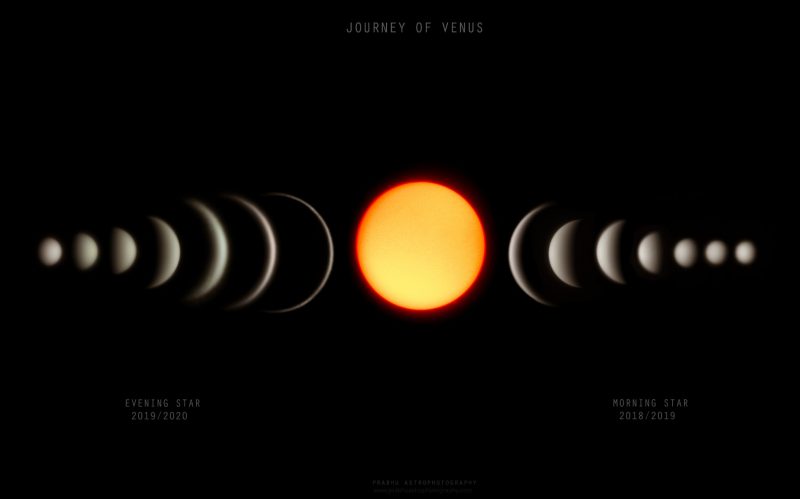
Journey of Venus

A central yellow sun, surrounded on 2 sides by crescent Venuses.

View at EarthSky Community Photos. | Prabhakaran A in Mleiha, UAE created this glorious composite image. He wrote: “This image is a composite captured over 500 days at an interval of 1-month starting from the end of 2018 until mid-2020. A few months have been missed due to cloudy weather.” Read more about this photo below. Thank you, Prabhakaran A!

This composite shows the planet Venus (the crescents and gibbous spheres) and the sun (the large, central, yellow object).

Looking to the immediate right of the sun, Venus is shown in its crescent phase just after its October 26, 2018 inferior conjunction, when it passed between the Earth and sun and entered the morning sky. After every passage of Venus between the Earth and sun, Venus always emerges from the sun’s glare as a thin crescent, visible through telescopes. In this series of photos, the crescent located immediately to the right of the sun, on the side of the photo labeled 2018/2019 was the one captured soonest after the 2018 inferior conjunction. The rest of the photos on that side of the composite show Venus as it waxed in phase, into and throughout the first half of 2019, in the east before sunup. Its superior conjunction came on August 14, 2019. That was when Venus passed on the far side of the sun from Earth. Note that, as the crescents wax larger, Venus itself gets smaller. That’s because – in late 2018 and the first part of 2019 – Venus was racing ahead of Earth in orbit around the sun, and the distance between our two worlds was increasing.

Looking to the left of the sun in this composite, the first image shows Venus after it emerged from the sun’s glare again, following its August 14, 2019 superior conjunction. At that time, Venus appeared in the evening sky, visible to telescope users as a gibbous sphere, waning in phase, as you can see from the images that moved from left to right toward the sun, on the side of the photo marked 2019/2020. During this time, Venus appeared larger and larger in our sky because Venus was catching up to Earth in orbit again, preparing to pass between us and the sun again, which it did last on June 3, 2020.

Thank you, Prabhakaran A! This is a wonderful composite.

If you’re wondering where Venus is now, and in what phase Venus is in now, the image below, from Aurelian Neacsu in Romania, shows Venus on July 11, 2020. Venus is now back in the morning sky, appearing as a waxing crescent to telescope users. And so the cycle continues.

A tiny featureless crescent Venus.

View at EarthSky Community Photos. | Recent photo of crescent Venus, 27.8% illuminated. Aurelian Neacsu in Visina, Dambovita, Romania captured this image on July 11, 2020. Venus passed between us and the sun on June 3. It’s now a waxing crescent, visible in the east before sunup. You need a telescope to see the crescent shape, but strong binoculars might show you that Venus is something other than perfectly round. Thank you, Aurelian!

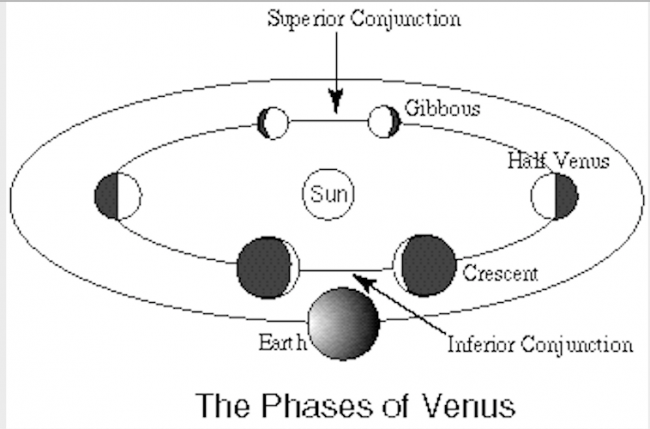
And if you’re having trouble picturing why Venus has phases, and why it grows larger and smaller as seen from Earth, the following illustration might help:

Diagram showing the phases of Venus at inferior and superior conjunction.

Superior conjunction – when Venus swept behind the sun from Earth – last happened on August 14, 2019. Just before and after that time, we saw a nearly full Venus. Inferior conjunction – when Venus swept between us and the sun – last happened on June 3, 2020. Image via UCLA.

Bottom line: A composite image – made of photos acquired over 500 days – showing the waxing and waning of Venus, and the changing size of the planet’s visible disk, as it orbits the sun one step inward from Earth.


from EarthSky https://ift.tt/2Cyxa6Z
A central yellow sun, surrounded on 2 sides by crescent Venuses.

View at EarthSky Community Photos. | Prabhakaran A in Mleiha, UAE created this glorious composite image. He wrote: “This image is a composite captured over 500 days at an interval of 1-month starting from the end of 2018 until mid-2020. A few months have been missed due to cloudy weather.” Read more about this photo below. Thank you, Prabhakaran A!

This composite shows the planet Venus (the crescents and gibbous spheres) and the sun (the large, central, yellow object).

Looking to the immediate right of the sun, Venus is shown in its crescent phase just after its October 26, 2018 inferior conjunction, when it passed between the Earth and sun and entered the morning sky. After every passage of Venus between the Earth and sun, Venus always emerges from the sun’s glare as a thin crescent, visible through telescopes. In this series of photos, the crescent located immediately to the right of the sun, on the side of the photo labeled 2018/2019 was the one captured soonest after the 2018 inferior conjunction. The rest of the photos on that side of the composite show Venus as it waxed in phase, into and throughout the first half of 2019, in the east before sunup. Its superior conjunction came on August 14, 2019. That was when Venus passed on the far side of the sun from Earth. Note that, as the crescents wax larger, Venus itself gets smaller. That’s because – in late 2018 and the first part of 2019 – Venus was racing ahead of Earth in orbit around the sun, and the distance between our two worlds was increasing.

Looking to the left of the sun in this composite, the first image shows Venus after it emerged from the sun’s glare again, following its August 14, 2019 superior conjunction. At that time, Venus appeared in the evening sky, visible to telescope users as a gibbous sphere, waning in phase, as you can see from the images that moved from left to right toward the sun, on the side of the photo marked 2019/2020. During this time, Venus appeared larger and larger in our sky because Venus was catching up to Earth in orbit again, preparing to pass between us and the sun again, which it did last on June 3, 2020.

Thank you, Prabhakaran A! This is a wonderful composite.

If you’re wondering where Venus is now, and in what phase Venus is in now, the image below, from Aurelian Neacsu in Romania, shows Venus on July 11, 2020. Venus is now back in the morning sky, appearing as a waxing crescent to telescope users. And so the cycle continues.

A tiny featureless crescent Venus.

View at EarthSky Community Photos. | Recent photo of crescent Venus, 27.8% illuminated. Aurelian Neacsu in Visina, Dambovita, Romania captured this image on July 11, 2020. Venus passed between us and the sun on June 3. It’s now a waxing crescent, visible in the east before sunup. You need a telescope to see the crescent shape, but strong binoculars might show you that Venus is something other than perfectly round. Thank you, Aurelian!

And if you’re having trouble picturing why Venus has phases, and why it grows larger and smaller as seen from Earth, the following illustration might help:

Diagram showing the phases of Venus at inferior and superior conjunction.

Superior conjunction – when Venus swept behind the sun from Earth – last happened on August 14, 2019. Just before and after that time, we saw a nearly full Venus. Inferior conjunction – when Venus swept between us and the sun – last happened on June 3, 2020. Image via UCLA.

Bottom line: A composite image – made of photos acquired over 500 days – showing the waxing and waning of Venus, and the changing size of the planet’s visible disk, as it orbits the sun one step inward from Earth.


from EarthSky https://ift.tt/2Cyxa6Z

adds 2