aads

Affichage des articles dont le libellé est ScienceBlogs - Where the world discusses science. Afficher tous les articles

Spend More Time With Your Dog This Christmas

Spend More Time With Your Dog This Christmas

As daylight shortens and routines slow down, many people experience a dip in mood and motivation. The run-up to Christmas is marketed as joyful, but for a large number of households it brings family strain and a surprising amount of loneliness. Against this backdrop, it’s no wonder the idea of welcoming a dog into the home feels appealing.

One of the most consistent findings in human–animal studies is that dogs often act as emotional stabilisers. In my 2025 study, pet owners described a sense of companionship that feels different from human relationships. They talked about dogs as warm presences that offer routine, purpose and a steady emotional tone at home.

Many participants said that when a dog is present, expressing emotions becomes easier – whether that is joy, frustration or sadness. Simply having another living being nearby, responding without judgment, can make difficult moments feel more manageable.

These needs often intensify during winter. For many people, this period makes them think about who isn’t present as much as who is. Although a dog cannot replace human relationships, a companion animal can make emotional fluctuations less dramatic. For someone dealing with a difficult December, a dog can provide steadiness during what can otherwise be an emotionally uneven month.

This helps explain the growing popularity of initiatives such as animal-assisted therapy programmes and puppy yoga sessions, where participants interact with dogs that are not their own. Research suggests that even brief contact with unfamiliar or therapy dogs can reduce stress and improve mood, indicating that the psychological benefits of canine interaction do not depend on ownership.

Some studies also suggest that dogs may be particularly effective in buffering stress compared with other companion animals, possibly because of their responsiveness to human social cues. Although these experiences are not a substitute for long-term companionship, they may offer moments of calm, connection and routine.

For people unable or unwilling to commit to dog ownership, lighter forms of contact, such as fostering for a local shelter, walking a friend’s dog or volunteering with rescue organisations, may still provide psychological benefits.


Dogs and social support


During the COVID lockdowns, people who felt strongly bonded to their dogs often reported higher levels of perceived social support. While the dog wasn’t solving practical problems, this relationship appeared to soften feelings of isolation at a time when normal social life was disrupted.

Although the circumstances were very specific, this finding has wider relevance. Many people spend long stretches at home over the Christmas period, sometimes largely alone or without regular social contact. In such situations, having a dog nearby can offer a sense of companionship during what might otherwise be extended periods indoors.

Research shows that dog owners often experience short social encounters while out walking: brief greetings from neighbours, light conversation with other dog owners, or acknowledgement from passersby. These interactions are usually quick, but they can help maintain a sense of belonging during winter, when daylight is short and social activity naturally slows.

Not every owner will have the same experience, and caring for a dog requires time, energy and resources. Even so, for some households, the presence of a dog can make the winter months feel less isolating than they might otherwise be.


Small terrier dog in living room decorated for Christmas

Better company than bickering relatives? Eva Blanco/Shutterstock


Everyday connection


The emotional benefits of companion animals may be particularly relevant for older adults, many of whom live alone. Loneliness in later life is associated with higher risks of depression, cognitive decline and cardiovascular disease. Here, companion animals can play a modest but important role. Everyday routines such as feeding, grooming and going outdoors with a dog provide structure to the day and encourage gentle physical activity.

Even short outings can increase light exposure and offer low-pressure opportunities for social contact – two elements known to support wellbeing in later life. Exposure to natural daylight plays a key role in regulating circadian rhythms, which influence sleep, mood and energy levels.

Outdoor light is more intense than typical indoor lighting, even on overcast days, and is more effective at signalling to the brain when to be alert and when to rest. In adults, reduced daylight exposure is associated with sleep disruption and lower mood, particularly during winter months when days are shorter.

Being greeted at the door or having a dog settle beside the armchair does not replace human company, but it can provide a daily sense of being noticed and needed. Some studies suggest that interacting with a familiar dog can help regulate stress and promote feelings of calm. While these effects should not be overstated, they help explain why many older adults describe their animals as central to their emotional wellbeing.

But research also indicates there is an important caveat: emotional benefits are most likely to grow out of stable, long-term relationships. When dogs are adopted impulsively, that foundation may never develop.

Puppies require training, patience – and early-morning wake-ups. Adult dogs may come with behavioural histories that take time to understand. And all dogs bring financial responsibilities, from vet bills to insurance and food, that continue long after decorations are packed away. These realities are often overlooked in the excitement of December.

But for those prepared to take on the responsibility, a dog can offer far more than a fleeting festive moment. It can provide years of connection and companionship long after the Christmas lights fade.

The Conversation

Panagiota Tragantzopoulou, Visiting Lecturer, University of Westminster. This article is republished from The Conversation under a Creative Commons license. Read the original article.

sb admin
Categories


from ScienceBlogs - Where the world discusses science https://ift.tt/UsY4u87
Spend More Time With Your Dog This Christmas

As daylight shortens and routines slow down, many people experience a dip in mood and motivation. The run-up to Christmas is marketed as joyful, but for a large number of households it brings family strain and a surprising amount of loneliness. Against this backdrop, it’s no wonder the idea of welcoming a dog into the home feels appealing.

One of the most consistent findings in human–animal studies is that dogs often act as emotional stabilisers. In my 2025 study, pet owners described a sense of companionship that feels different from human relationships. They talked about dogs as warm presences that offer routine, purpose and a steady emotional tone at home.

Many participants said that when a dog is present, expressing emotions becomes easier – whether that is joy, frustration or sadness. Simply having another living being nearby, responding without judgment, can make difficult moments feel more manageable.

These needs often intensify during winter. For many people, this period makes them think about who isn’t present as much as who is. Although a dog cannot replace human relationships, a companion animal can make emotional fluctuations less dramatic. For someone dealing with a difficult December, a dog can provide steadiness during what can otherwise be an emotionally uneven month.

This helps explain the growing popularity of initiatives such as animal-assisted therapy programmes and puppy yoga sessions, where participants interact with dogs that are not their own. Research suggests that even brief contact with unfamiliar or therapy dogs can reduce stress and improve mood, indicating that the psychological benefits of canine interaction do not depend on ownership.

Some studies also suggest that dogs may be particularly effective in buffering stress compared with other companion animals, possibly because of their responsiveness to human social cues. Although these experiences are not a substitute for long-term companionship, they may offer moments of calm, connection and routine.

For people unable or unwilling to commit to dog ownership, lighter forms of contact, such as fostering for a local shelter, walking a friend’s dog or volunteering with rescue organisations, may still provide psychological benefits.


Dogs and social support


During the COVID lockdowns, people who felt strongly bonded to their dogs often reported higher levels of perceived social support. While the dog wasn’t solving practical problems, this relationship appeared to soften feelings of isolation at a time when normal social life was disrupted.

Although the circumstances were very specific, this finding has wider relevance. Many people spend long stretches at home over the Christmas period, sometimes largely alone or without regular social contact. In such situations, having a dog nearby can offer a sense of companionship during what might otherwise be extended periods indoors.

Research shows that dog owners often experience short social encounters while out walking: brief greetings from neighbours, light conversation with other dog owners, or acknowledgement from passersby. These interactions are usually quick, but they can help maintain a sense of belonging during winter, when daylight is short and social activity naturally slows.

Not every owner will have the same experience, and caring for a dog requires time, energy and resources. Even so, for some households, the presence of a dog can make the winter months feel less isolating than they might otherwise be.


Small terrier dog in living room decorated for Christmas

Better company than bickering relatives? Eva Blanco/Shutterstock


Everyday connection


The emotional benefits of companion animals may be particularly relevant for older adults, many of whom live alone. Loneliness in later life is associated with higher risks of depression, cognitive decline and cardiovascular disease. Here, companion animals can play a modest but important role. Everyday routines such as feeding, grooming and going outdoors with a dog provide structure to the day and encourage gentle physical activity.

Even short outings can increase light exposure and offer low-pressure opportunities for social contact – two elements known to support wellbeing in later life. Exposure to natural daylight plays a key role in regulating circadian rhythms, which influence sleep, mood and energy levels.

Outdoor light is more intense than typical indoor lighting, even on overcast days, and is more effective at signalling to the brain when to be alert and when to rest. In adults, reduced daylight exposure is associated with sleep disruption and lower mood, particularly during winter months when days are shorter.

Being greeted at the door or having a dog settle beside the armchair does not replace human company, but it can provide a daily sense of being noticed and needed. Some studies suggest that interacting with a familiar dog can help regulate stress and promote feelings of calm. While these effects should not be overstated, they help explain why many older adults describe their animals as central to their emotional wellbeing.

But research also indicates there is an important caveat: emotional benefits are most likely to grow out of stable, long-term relationships. When dogs are adopted impulsively, that foundation may never develop.

Puppies require training, patience – and early-morning wake-ups. Adult dogs may come with behavioural histories that take time to understand. And all dogs bring financial responsibilities, from vet bills to insurance and food, that continue long after decorations are packed away. These realities are often overlooked in the excitement of December.

But for those prepared to take on the responsibility, a dog can offer far more than a fleeting festive moment. It can provide years of connection and companionship long after the Christmas lights fade.

The Conversation

Panagiota Tragantzopoulou, Visiting Lecturer, University of Westminster. This article is republished from The Conversation under a Creative Commons license. Read the original article.

sb admin
Categories


from ScienceBlogs - Where the world discusses science https://ift.tt/UsY4u87

Can scientists detect life without knowing what it looks like?

Can scientists detect life without knowing what it looks like?

When NASA scientists opened the sample return canister from the OSIRIS-REx asteroid sample mission in late 2023, they found something astonishing.

Dust and rock collected from the asteroid Bennu contained many of life’s building blocks, including all five nucleobases used in DNA and RNA, 14 of the 20 amino acids found in proteins, and a rich collection of other organic molecules. These are built primarily from carbon and hydrogen, and they often form the backbone of life’s chemistry.

For decades, scientists have predicted that early asteroids may have delivered the ingredients of life to Earth, and these findings seemed like promising evidence.

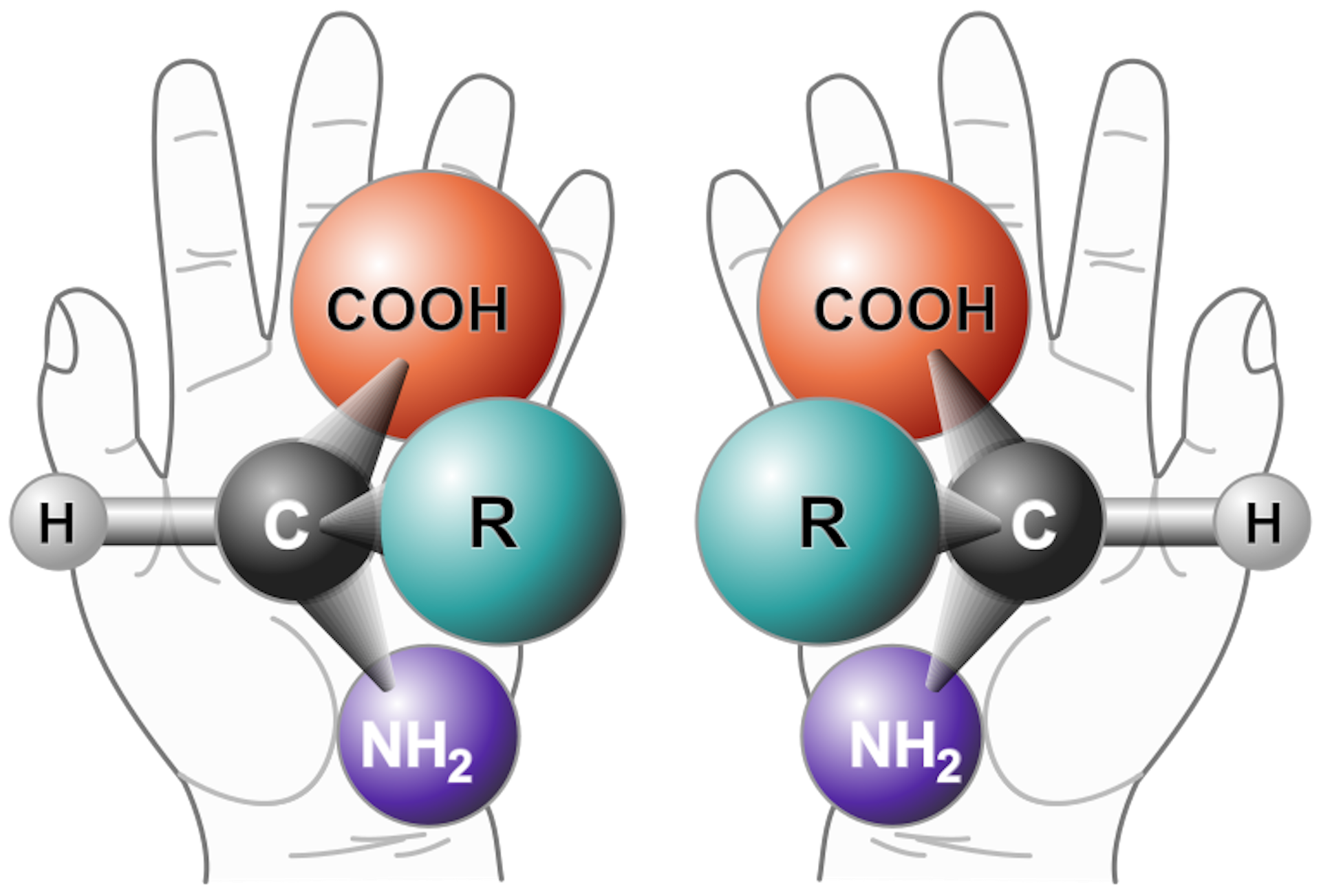
Even more surprising, these amino acids from Bennu were split almost evenly between “left-handed” and “right-handed” forms. Amino acids come in two mirror-image configurations, just like our left and right hands, called chiral forms.

On Earth, almost all biology requires the left-handed versions. If scientists had found a strong left-handed excess in Bennu, it would have suggested that life’s molecular asymmetry might have been inherited directly from space. Instead, the near-equal mixture points to a different story: Life’s left-handed preference likely emerged later, through processes on Earth, rather than being pre-imprinted in the material delivered by asteroids.


A ‘chiral’ molecule is one that is not superposable with another that is its mirror image, even if you rotate it. NASA 

If space rocks can carry familiar ingredients but not the chemical “signature” that life leaves behind, then identifying the true signs of biology becomes extremely complicated.

These discoveries raise a deeper question – one that becomes more urgent as new missions target Mars, the Martian moons and the ocean worlds of our solar system: How do researchers detect life when the chemistry alone begins to look “lifelike”? If nonliving materials can produce rich, organized mixtures of organic molecules, then the traditional signs we use to recognize biology may no longer be enough.

As a computational scientist studying biological signatures, I face this challenge directly. In my astrobiology work, I ask how to determine whether a collection of molecules was formed by complex geochemistry or by extraterrestrial biology, when exploring other planets.

In a new study in the journal PNAS Nexus, my colleagues and I developed a framework called LifeTracer to help answer this question. Instead of searching for a single molecule or structure that proves the presence of biology, we attempted to classify how likely mixtures of compounds preserved in rocks and meteorites were to contain traces of life by examining the full chemical patterns they contain.

Identifying potential biosignatures

The key idea behind our framework is that life produces molecules with purpose, while nonliving chemistry does not. Cells must store energy, build membranes and transmit information. Abiotic chemistry produced by nonliving chemical processes, even when abundant, follows different rules because it is not shaped by metabolism or evolution.

Traditional biosignature approaches focus on searching for specific compounds, such as certain amino acids or lipid structures, or for chiral preferences, like left-handedness.

These signals can be powerful, but they are based entirely on the molecular patterns used by life on Earth. If we assume that alien life uses the same chemistry, we risk missing biology that is similar – but not identical – to our own, or misidentifying nonliving chemistry as a sign of life.

The Bennu results highlight this problem. The asteroid sample contained molecules familiar to life, yet nothing within it appears to have been alive.

To reduce the risk of assuming these molecules indicate life, we assembled a unique dataset of organic materials right at the dividing line between life and nonlife. We used samples from eight carbon-rich meteorites that preserve abiotic chemistry from the early solar system, as well as 10 samples of soils and sedimentary materials from Earth, containing the degraded remnants of biological molecules from past or present life. Each sample contained tens of thousands of organic molecules, many present in low abundance and many whose structures could not be fully identified.

At NASA’s Goddard Space Flight Center, our team of scientists crushed each sample, added solvent and heated it to extract the organics — this process is like brewing tea. Then, we took the “tea” containing the extracted organics and passed it through two filtering columns that separated the complex mixture of organic molecules. Then, the organics were pushed into a chamber where we bombarded them with electrons until they broke into smaller fragments.

Traditionally, chemists use these mass fragments as puzzle pieces to reconstruct each molecular structure, but having tens of thousands of compounds in each sample presented a challenge.

LifeTracer

LifeTracer is a unique approach for data analysis: It works by taking in the fragmented puzzle pieces and analyzing them to find specific patterns, rather than reconstructing each structure.

It characterizes those puzzle pieces by their mass and two other chemical properties and then organizes them into a large matrix describing the set of molecules present in each sample. It then trains a machine learning model to distinguish between the meteorites and the terrestrial materials from Earth’s surface, based on the type of molecules present in each.

One of the most common forms of machine learning is called supervised learning. It works by taking many input and output pairs as examples and learns a rule to go from input to output. Even with only 18 samples as those examples, LifeTracer performed remarkably well. It consistently separated abiotic from biotic origins.

What mattered most to LifeTracer was not the presence of a specific molecule but the overall distribution of chemical fingerprints found in each sample. Meteorite samples tended to contain more volatile compounds – they evaporate or break apart more easily – which reflected the type of chemistry most common in the cold environment of space.

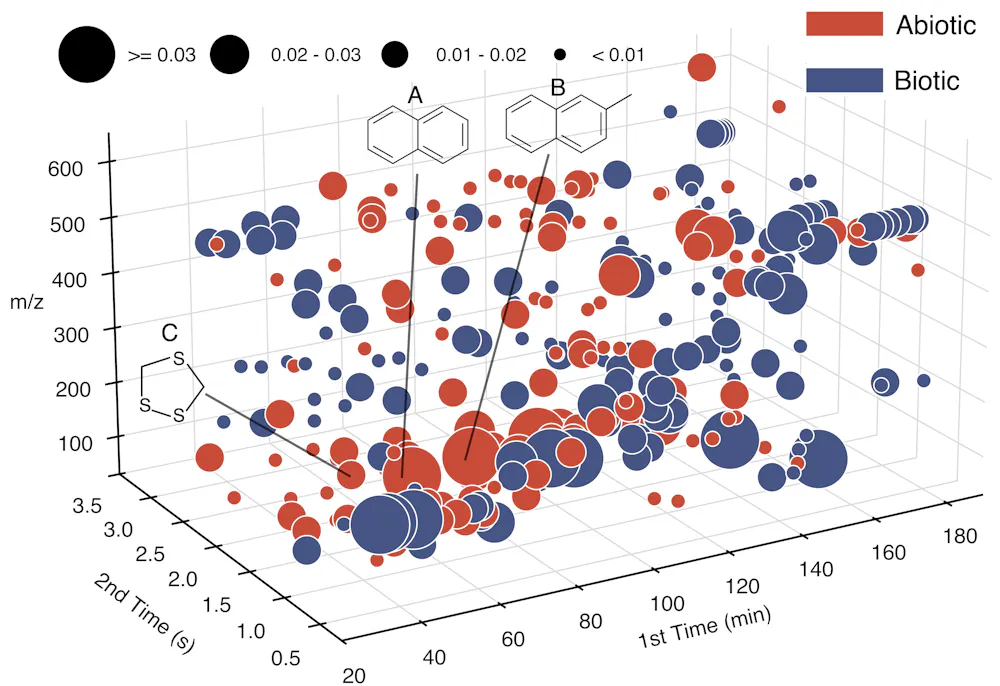
A graph showing a cluster of dots representing molecules, some in red and some in blue.This figure shows compounds identified by LifeTracer, highlighting the most predictive molecular fragments that distinguish abiotic from biotic samples. The compounds in red are linked to abiotic chemistry, while the blue compounds are linked to biotic chemistry. Saeedi et al., 2025, CC BY-NC-ND

Some types of molecules, called polycyclic aromatic hydrocarbons, were present in both groups, but they had distinctive structural differences that the model could parse. A sulfur-containing compound, 1,2,4-trithiolane, emerged as a strong marker for abiotic samples, while terrestrial materials contained products formed through biological process.

These discoveries suggest that the contrast between life and nonlife is not defined by a single chemical clue but by how an entire suite of organic molecules is organized. By focusing on patterns rather than assumptions about which molecules life “should” use, approaches like LifeTracer open up new possibilities for evaluating samples returned from missions to Mars, its moons Phobos and Deimos, Jupiter’s moon Europa and Saturn’s moon Enceladus.

The sample return capsule, a black box, sitting on the ground after touching down.The Bennu asteroid sample return capsule used in the OSIRIS-REx mission. Keegan Barber/NASA via AP

Future samples will likely contain mixtures of organics from multiple sources, some biological and some not. Instead of relying only on a few familiar molecules, we can now assess whether the whole chemical landscape looks more like biology or random geochemistry.

LifeTracer is not a universal life detector. Rather, it provides a foundation for interpreting complex organic mixtures. The Bennu findings remind us that life-friendly chemistry may be widespread across the solar system, but that chemistry alone does not equal biology.

To tell the difference, scientists will need all the tools we can build — not only better spacecraft and instruments, but also smarter ways to read the stories written in the molecules they bring home.

By Amirali Aghazadeh, Assistant Professor of Electrical and Computer Engineering, Georgia Institute of Technology. This article is republished from The Conversation under a Creative Commons license. Read the original article.

The Conversation

sb admin
Categories


from ScienceBlogs - Where the world discusses science https://ift.tt/hSY9N3K
Can scientists detect life without knowing what it looks like?

When NASA scientists opened the sample return canister from the OSIRIS-REx asteroid sample mission in late 2023, they found something astonishing.

Dust and rock collected from the asteroid Bennu contained many of life’s building blocks, including all five nucleobases used in DNA and RNA, 14 of the 20 amino acids found in proteins, and a rich collection of other organic molecules. These are built primarily from carbon and hydrogen, and they often form the backbone of life’s chemistry.

For decades, scientists have predicted that early asteroids may have delivered the ingredients of life to Earth, and these findings seemed like promising evidence.

Even more surprising, these amino acids from Bennu were split almost evenly between “left-handed” and “right-handed” forms. Amino acids come in two mirror-image configurations, just like our left and right hands, called chiral forms.

On Earth, almost all biology requires the left-handed versions. If scientists had found a strong left-handed excess in Bennu, it would have suggested that life’s molecular asymmetry might have been inherited directly from space. Instead, the near-equal mixture points to a different story: Life’s left-handed preference likely emerged later, through processes on Earth, rather than being pre-imprinted in the material delivered by asteroids.


A ‘chiral’ molecule is one that is not superposable with another that is its mirror image, even if you rotate it. NASA 

If space rocks can carry familiar ingredients but not the chemical “signature” that life leaves behind, then identifying the true signs of biology becomes extremely complicated.

These discoveries raise a deeper question – one that becomes more urgent as new missions target Mars, the Martian moons and the ocean worlds of our solar system: How do researchers detect life when the chemistry alone begins to look “lifelike”? If nonliving materials can produce rich, organized mixtures of organic molecules, then the traditional signs we use to recognize biology may no longer be enough.

As a computational scientist studying biological signatures, I face this challenge directly. In my astrobiology work, I ask how to determine whether a collection of molecules was formed by complex geochemistry or by extraterrestrial biology, when exploring other planets.

In a new study in the journal PNAS Nexus, my colleagues and I developed a framework called LifeTracer to help answer this question. Instead of searching for a single molecule or structure that proves the presence of biology, we attempted to classify how likely mixtures of compounds preserved in rocks and meteorites were to contain traces of life by examining the full chemical patterns they contain.

Identifying potential biosignatures

The key idea behind our framework is that life produces molecules with purpose, while nonliving chemistry does not. Cells must store energy, build membranes and transmit information. Abiotic chemistry produced by nonliving chemical processes, even when abundant, follows different rules because it is not shaped by metabolism or evolution.

Traditional biosignature approaches focus on searching for specific compounds, such as certain amino acids or lipid structures, or for chiral preferences, like left-handedness.

These signals can be powerful, but they are based entirely on the molecular patterns used by life on Earth. If we assume that alien life uses the same chemistry, we risk missing biology that is similar – but not identical – to our own, or misidentifying nonliving chemistry as a sign of life.

The Bennu results highlight this problem. The asteroid sample contained molecules familiar to life, yet nothing within it appears to have been alive.

To reduce the risk of assuming these molecules indicate life, we assembled a unique dataset of organic materials right at the dividing line between life and nonlife. We used samples from eight carbon-rich meteorites that preserve abiotic chemistry from the early solar system, as well as 10 samples of soils and sedimentary materials from Earth, containing the degraded remnants of biological molecules from past or present life. Each sample contained tens of thousands of organic molecules, many present in low abundance and many whose structures could not be fully identified.

At NASA’s Goddard Space Flight Center, our team of scientists crushed each sample, added solvent and heated it to extract the organics — this process is like brewing tea. Then, we took the “tea” containing the extracted organics and passed it through two filtering columns that separated the complex mixture of organic molecules. Then, the organics were pushed into a chamber where we bombarded them with electrons until they broke into smaller fragments.

Traditionally, chemists use these mass fragments as puzzle pieces to reconstruct each molecular structure, but having tens of thousands of compounds in each sample presented a challenge.

LifeTracer

LifeTracer is a unique approach for data analysis: It works by taking in the fragmented puzzle pieces and analyzing them to find specific patterns, rather than reconstructing each structure.

It characterizes those puzzle pieces by their mass and two other chemical properties and then organizes them into a large matrix describing the set of molecules present in each sample. It then trains a machine learning model to distinguish between the meteorites and the terrestrial materials from Earth’s surface, based on the type of molecules present in each.

One of the most common forms of machine learning is called supervised learning. It works by taking many input and output pairs as examples and learns a rule to go from input to output. Even with only 18 samples as those examples, LifeTracer performed remarkably well. It consistently separated abiotic from biotic origins.

What mattered most to LifeTracer was not the presence of a specific molecule but the overall distribution of chemical fingerprints found in each sample. Meteorite samples tended to contain more volatile compounds – they evaporate or break apart more easily – which reflected the type of chemistry most common in the cold environment of space.

A graph showing a cluster of dots representing molecules, some in red and some in blue.This figure shows compounds identified by LifeTracer, highlighting the most predictive molecular fragments that distinguish abiotic from biotic samples. The compounds in red are linked to abiotic chemistry, while the blue compounds are linked to biotic chemistry. Saeedi et al., 2025, CC BY-NC-ND

Some types of molecules, called polycyclic aromatic hydrocarbons, were present in both groups, but they had distinctive structural differences that the model could parse. A sulfur-containing compound, 1,2,4-trithiolane, emerged as a strong marker for abiotic samples, while terrestrial materials contained products formed through biological process.

These discoveries suggest that the contrast between life and nonlife is not defined by a single chemical clue but by how an entire suite of organic molecules is organized. By focusing on patterns rather than assumptions about which molecules life “should” use, approaches like LifeTracer open up new possibilities for evaluating samples returned from missions to Mars, its moons Phobos and Deimos, Jupiter’s moon Europa and Saturn’s moon Enceladus.

The sample return capsule, a black box, sitting on the ground after touching down.The Bennu asteroid sample return capsule used in the OSIRIS-REx mission. Keegan Barber/NASA via AP

Future samples will likely contain mixtures of organics from multiple sources, some biological and some not. Instead of relying only on a few familiar molecules, we can now assess whether the whole chemical landscape looks more like biology or random geochemistry.

LifeTracer is not a universal life detector. Rather, it provides a foundation for interpreting complex organic mixtures. The Bennu findings remind us that life-friendly chemistry may be widespread across the solar system, but that chemistry alone does not equal biology.

To tell the difference, scientists will need all the tools we can build — not only better spacecraft and instruments, but also smarter ways to read the stories written in the molecules they bring home.

By Amirali Aghazadeh, Assistant Professor of Electrical and Computer Engineering, Georgia Institute of Technology. This article is republished from The Conversation under a Creative Commons license. Read the original article.

The Conversation

sb admin
Categories


from ScienceBlogs - Where the world discusses science https://ift.tt/hSY9N3K

TWA 7 b: James Webb Space Telescope Finds Its First New Exoplanet

TWA 7 b: James Webb Space Telescope Finds Its First New Exoplanet

The James Webb Space Telescope, launched in 2021 and on active duty since 2022, has gotten its legs viewing already known exoplanets but can now take credit for its first direct image of a previously unknown one. 

Exoplanets have been detected since 1992 when two, named named Poltergeist and Phobetor, were found orbiting the pulsar PSR B1257+12.

Since then they have become key targets in astronomy, in hopes that capturing snapshots in time can help us understand how planetary systems form. Thousands have been detected indirectly but because they are less bright due to being 'drowned out' by light from their star, direct observation is a challenge. So the two most common methods of detection look for its effect rather than direct viewing. Transit photometry uses a small drop of luminosity from the star when its planet, as seen from here, is in front of it, while radial velocity detects a star’s speed variations caused by the planet’s gravitational influence.

To help, Centre national de la recherche scientifique in France developed a coronagraph attachment for the JWST’s MIRI instrument which can reproduce the effect observed during an eclipse. Such masking makes objects around a star easier to observe.


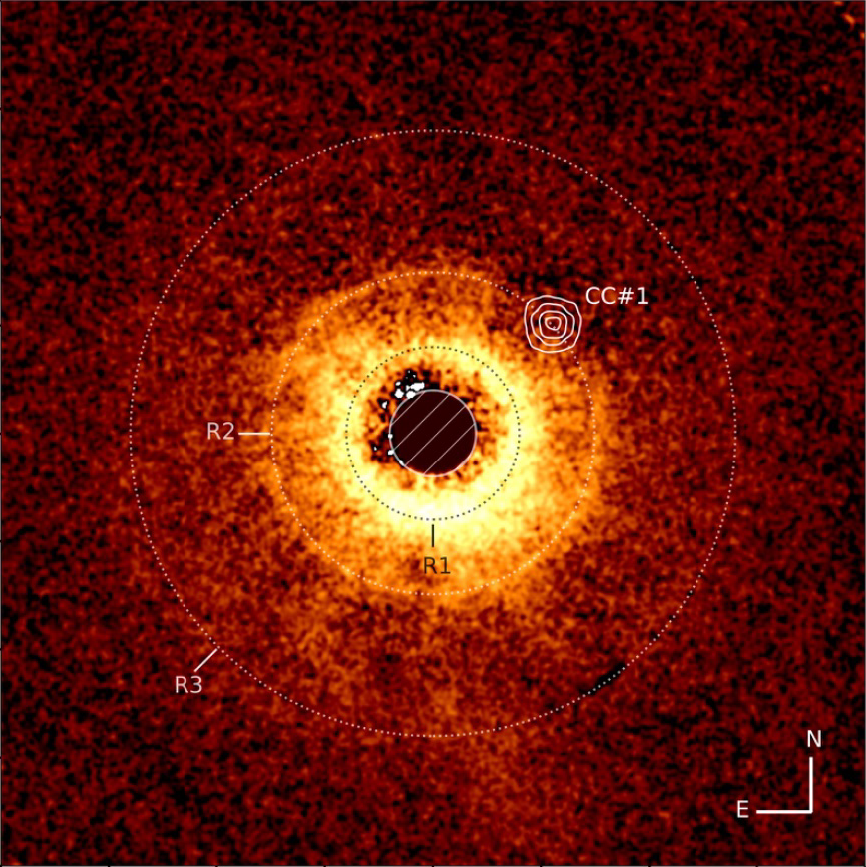
TWA 7 from the Very Large Telescope’s SPHERE instrument with an image from JWST’s MIRI overlayed reveals the empty area around TWA 7 B in the R2 ring (CC #1). ©A.-M. Lagrange et al. / ESO / JWST

With infinite stars it's necessary to find targets of opportunity so astronomers focus on younger stars where the planets are still hot and the system discs can be viewed by us 'from above' - pole on.

TWA 7 has three distinct rings, one very narrow and surrounded by two empty areas with almost no matter.  JWST was able to find a source within the heart of this narrow ring - an exoplanet. 

The new planet is comparable in size to Saturn, but that is 10 times lighter than those captured in previous images, and has been named TWA 7 b.


sb admin Wed, 06/25/2025 - 10:36
Categories


from ScienceBlogs - Where the world discusses science https://ift.tt/bRx0Joj
TWA 7 b: James Webb Space Telescope Finds Its First New Exoplanet

The James Webb Space Telescope, launched in 2021 and on active duty since 2022, has gotten its legs viewing already known exoplanets but can now take credit for its first direct image of a previously unknown one. 

Exoplanets have been detected since 1992 when two, named named Poltergeist and Phobetor, were found orbiting the pulsar PSR B1257+12.

Since then they have become key targets in astronomy, in hopes that capturing snapshots in time can help us understand how planetary systems form. Thousands have been detected indirectly but because they are less bright due to being 'drowned out' by light from their star, direct observation is a challenge. So the two most common methods of detection look for its effect rather than direct viewing. Transit photometry uses a small drop of luminosity from the star when its planet, as seen from here, is in front of it, while radial velocity detects a star’s speed variations caused by the planet’s gravitational influence.

To help, Centre national de la recherche scientifique in France developed a coronagraph attachment for the JWST’s MIRI instrument which can reproduce the effect observed during an eclipse. Such masking makes objects around a star easier to observe.


TWA 7 from the Very Large Telescope’s SPHERE instrument with an image from JWST’s MIRI overlayed reveals the empty area around TWA 7 B in the R2 ring (CC #1). ©A.-M. Lagrange et al. / ESO / JWST

With infinite stars it's necessary to find targets of opportunity so astronomers focus on younger stars where the planets are still hot and the system discs can be viewed by us 'from above' - pole on.

TWA 7 has three distinct rings, one very narrow and surrounded by two empty areas with almost no matter.  JWST was able to find a source within the heart of this narrow ring - an exoplanet. 

The new planet is comparable in size to Saturn, but that is 10 times lighter than those captured in previous images, and has been named TWA 7 b.


sb admin Wed, 06/25/2025 - 10:36
Categories


from ScienceBlogs - Where the world discusses science https://ift.tt/bRx0Joj

Curiosity Found New Carbon Molecules On Mars. What Does It Mean For Alien Life?

Curiosity Found New Carbon Molecules On Mars. What Does It Mean For Alien Life?

Nasa’s Curiosity Mars rover has detected the largest organic (carbon-containing) molecules ever found on the red planet. The discovery is one of the most significant findings in the search for evidence of past life on Mars. This is because, on Earth at least, relatively complex, long-chain carbon molecules are involved in biology. These molecules could actually be fragments of fatty acids, which are found in, for example, the membranes surrounding biological cells.


Scientists think that, if life ever emerged on Mars, it was probably microbial in nature. Because microbes are so small, it’s difficult to be definitive about any potential evidence for life found on Mars. Such evidence needs more powerful scientific instruments that are too large to be put on a rover.


Curiosity rover near the site of Mont Mercou on Mars. Source: NASA/JPL-Caltech/MSSS


The organic molecules found by Curiosity consist of carbon atoms linked in long chains, with other elements bonded to them, like hydrogen and oxygen. They come from a 3.7-billion-year-old rock dubbed Cumberland, encountered by the rover at a presumed dried-up lakebed in Mars’s Gale Crater. Scientists used the Sample Analysis at Mars (Sam) instrument on the Nasa rover to make their discovery.


Scientists were actually looking for evidence of amino acids, which are the building blocks of proteins and therefore key components of life as we know it. But this unexpected finding is almost as exciting. The research is published in Proceedings of the National Academies of Science.


Among the molecules were decane, which has 10 carbon atoms and 22 hydrogen atoms, and dodecane, with 12 carbons and 26 hydrogen atoms. These are known as alkanes, which fall under the umbrella of the chemical compounds known as hydrocarbons.


It’s an exciting time in the search for life on Mars. In March this year, scientists presented evidence of features in a different rock sampled elsewhere on Mars by the Perseverance rover. These features, dubbed “leopard spots” and “poppy seeds”, could have been produced by the action of microbial life in the distant past, or not. The findings were presented at a US conference and have not yet been published in a peer reviewed journal.


The Mars Sample Return mission, a collaboration between Nasa and the European Space Agency, offers hope that samples of rock collected and stored by Perseverance could be brought to Earth for study in laboratories. The powerful instruments available in terrestrial labs could finally confirm whether or not there is clear evidence for past life on Mars. However, in 2023, an independent review board criticized increases in Mars Sample Return’s budget. This prompted the agencies to rethink how the mission could be carried out. They are currently studying two revised options.


Signs of life?


Cumberland was found in a region of Gale Crater called Yellowknife Bay. This area contains rock formations that look suspiciously like those formed when sediment builds up at the bottom of a lake. One of Curiosity’s scientific goals is to examine the prospect that past conditions on Mars would have been suitable for the development of life, so an ancient lakebed is the perfect place to look for them.

Cumberland
The Martian rock known as Cumberland, which was sampled in the study. Credit: NASA/JPL-Caltech/MSSS


The researchers think that the alkane molecules may once have been components of more complex fatty acid molecules. On Earth, fatty acids are components of fats and oils. They are produced through biological activity in processes that help form cell membranes, for example. The suggested presence of fatty acids in this rock sample has been around for several years, but the new paper details the full evidence.

Fatty acids are long, linear hydrocarbon molecules with a carboxyl group (COOH) at one end and a methyl group (CH3) at the other, forming a chain of carbon and hydrogen atoms.

A fat molecule consists of two main components: glycerol and fatty acids. Glycerol is an alcohol molecule with three carbon atoms, five hydrogens, and three hydroxyl (chemically bonded oxygen and hydrogen, OH) groups. Fatty acids may have 4-36 carbon atoms; however, most of them have 12-18. The longest carbon chains found in Cumberland are 12 atoms long.

Mars sample return

Mars Sample Return will deliver Mars rocks to Earth for study. This artist’s impression shows the ascent vehicle leaving Mars with rock samples. Nasa/JPL-Caltech


Organic molecules preserved in ancient Martian rocks provide a critical record of the past habitability of Mars and could be chemical biosignatures (signs that life was once there).


The sample from Cumberland has been analyzed by the Sam instrument many times, using different experimental techniques, and has shown evidence of clay minerals, as well as the first (smaller and simpler) organic molecules found on Mars, back in 2015. These included several classes of chlorinated and sulphur-containing organic compounds in Gale crater sedimentary rocks, with chemical structures of up to six carbon atoms. The new discovery doubles the number of carbon atoms found in a single molecule on Mars.


The alkane molecules are significant in the search for biosignatures on Mars, but how they actually formed remains unclear. They could also be derived through geological or other chemical mechanisms that do not involve fatty acids or life. These are known as abiotic sources. However, the fact that they exist intact today in samples that have been exposed to a harsh environment for many millions of years gives astrobiologists (scientists who study the possibility of life beyond Earth) hope that evidence of ancient life might still be detectable today.


It is possible the sample contains even longer chain organic molecules. It may also contain more complex molecules that are indicative of life, rather than geological processes. Unfortunately, Sam is not capable of detecting those, so the next step is to deliver Martian rock and soil to more capable laboratories on the Earth. Mars Sample Return would do this with the samples already gathered by the Perseverance Mars rover. All that’s needed now is the budget.


By Derek Ward-Thompson, Professor of Astrophysics, University of Central Lancashire and Megan Argo, Senior Lecturer in Astronomy, University of Central Lancashire. This article is republished from The Conversation under a Creative Commons license. Read the original article.The Conversation

sb admin Fri, 03/28/2025 - 13:12
Categories


from ScienceBlogs - Where the world discusses science https://ift.tt/2bskvCc
Curiosity Found New Carbon Molecules On Mars. What Does It Mean For Alien Life?

Nasa’s Curiosity Mars rover has detected the largest organic (carbon-containing) molecules ever found on the red planet. The discovery is one of the most significant findings in the search for evidence of past life on Mars. This is because, on Earth at least, relatively complex, long-chain carbon molecules are involved in biology. These molecules could actually be fragments of fatty acids, which are found in, for example, the membranes surrounding biological cells.


Scientists think that, if life ever emerged on Mars, it was probably microbial in nature. Because microbes are so small, it’s difficult to be definitive about any potential evidence for life found on Mars. Such evidence needs more powerful scientific instruments that are too large to be put on a rover.


Curiosity rover near the site of Mont Mercou on Mars. Source: NASA/JPL-Caltech/MSSS


The organic molecules found by Curiosity consist of carbon atoms linked in long chains, with other elements bonded to them, like hydrogen and oxygen. They come from a 3.7-billion-year-old rock dubbed Cumberland, encountered by the rover at a presumed dried-up lakebed in Mars’s Gale Crater. Scientists used the Sample Analysis at Mars (Sam) instrument on the Nasa rover to make their discovery.


Scientists were actually looking for evidence of amino acids, which are the building blocks of proteins and therefore key components of life as we know it. But this unexpected finding is almost as exciting. The research is published in Proceedings of the National Academies of Science.


Among the molecules were decane, which has 10 carbon atoms and 22 hydrogen atoms, and dodecane, with 12 carbons and 26 hydrogen atoms. These are known as alkanes, which fall under the umbrella of the chemical compounds known as hydrocarbons.


It’s an exciting time in the search for life on Mars. In March this year, scientists presented evidence of features in a different rock sampled elsewhere on Mars by the Perseverance rover. These features, dubbed “leopard spots” and “poppy seeds”, could have been produced by the action of microbial life in the distant past, or not. The findings were presented at a US conference and have not yet been published in a peer reviewed journal.


The Mars Sample Return mission, a collaboration between Nasa and the European Space Agency, offers hope that samples of rock collected and stored by Perseverance could be brought to Earth for study in laboratories. The powerful instruments available in terrestrial labs could finally confirm whether or not there is clear evidence for past life on Mars. However, in 2023, an independent review board criticized increases in Mars Sample Return’s budget. This prompted the agencies to rethink how the mission could be carried out. They are currently studying two revised options.


Signs of life?


Cumberland was found in a region of Gale Crater called Yellowknife Bay. This area contains rock formations that look suspiciously like those formed when sediment builds up at the bottom of a lake. One of Curiosity’s scientific goals is to examine the prospect that past conditions on Mars would have been suitable for the development of life, so an ancient lakebed is the perfect place to look for them.

Cumberland
The Martian rock known as Cumberland, which was sampled in the study. Credit: NASA/JPL-Caltech/MSSS


The researchers think that the alkane molecules may once have been components of more complex fatty acid molecules. On Earth, fatty acids are components of fats and oils. They are produced through biological activity in processes that help form cell membranes, for example. The suggested presence of fatty acids in this rock sample has been around for several years, but the new paper details the full evidence.

Fatty acids are long, linear hydrocarbon molecules with a carboxyl group (COOH) at one end and a methyl group (CH3) at the other, forming a chain of carbon and hydrogen atoms.

A fat molecule consists of two main components: glycerol and fatty acids. Glycerol is an alcohol molecule with three carbon atoms, five hydrogens, and three hydroxyl (chemically bonded oxygen and hydrogen, OH) groups. Fatty acids may have 4-36 carbon atoms; however, most of them have 12-18. The longest carbon chains found in Cumberland are 12 atoms long.

Mars sample return

Mars Sample Return will deliver Mars rocks to Earth for study. This artist’s impression shows the ascent vehicle leaving Mars with rock samples. Nasa/JPL-Caltech


Organic molecules preserved in ancient Martian rocks provide a critical record of the past habitability of Mars and could be chemical biosignatures (signs that life was once there).


The sample from Cumberland has been analyzed by the Sam instrument many times, using different experimental techniques, and has shown evidence of clay minerals, as well as the first (smaller and simpler) organic molecules found on Mars, back in 2015. These included several classes of chlorinated and sulphur-containing organic compounds in Gale crater sedimentary rocks, with chemical structures of up to six carbon atoms. The new discovery doubles the number of carbon atoms found in a single molecule on Mars.


The alkane molecules are significant in the search for biosignatures on Mars, but how they actually formed remains unclear. They could also be derived through geological or other chemical mechanisms that do not involve fatty acids or life. These are known as abiotic sources. However, the fact that they exist intact today in samples that have been exposed to a harsh environment for many millions of years gives astrobiologists (scientists who study the possibility of life beyond Earth) hope that evidence of ancient life might still be detectable today.


It is possible the sample contains even longer chain organic molecules. It may also contain more complex molecules that are indicative of life, rather than geological processes. Unfortunately, Sam is not capable of detecting those, so the next step is to deliver Martian rock and soil to more capable laboratories on the Earth. Mars Sample Return would do this with the samples already gathered by the Perseverance Mars rover. All that’s needed now is the budget.


By Derek Ward-Thompson, Professor of Astrophysics, University of Central Lancashire and Megan Argo, Senior Lecturer in Astronomy, University of Central Lancashire. This article is republished from The Conversation under a Creative Commons license. Read the original article.The Conversation

sb admin Fri, 03/28/2025 - 13:12
Categories


from ScienceBlogs - Where the world discusses science https://ift.tt/2bskvCc

Crowdsourced Geospatial Data Will Mean A 'Seismic Shift'

Crowdsourced Geospatial Data Will Mean A 'Seismic Shift'

Astronomy has long been dominated by expert amateurs but with geospatial data everywhere, thanks to widely available internet and smartphones, it is not just that directions that were once only available in a paper map are now updated on your phone in real time to account for traffic.

It is changing the relationships of science also. Crowdsourced scientific data will go from obscure folding protein folding of 15 years ago to relevance everywhere.

That evolution will continue to be driven by how the data is gathered.

Credit: Xiao Huang, Emory University


According to the authors, urban planning, transportation and environmental monitoring have been particularly impacted by crowdsourcing information, with “unprecedented real-time sights and community-driven perspectives, often leading to more responsive and adaptive decision-making processes,” thanks to user-generated data.


The same type of data is informing the commercial sector, as well, with better-informed customer-centric product development and marketing strategies. The significance of this shift lies in its empowerment of ordinary individuals to contribute to and influence fields traditionally dominated by experts and authorities. This democratization has not only diversified the types of data available but has also led to richer, more multifaceted insighted into human behavior and environmental changes.


Despite such a shift, however, the researchers said a comprehensive, overarching perspective to connect the various data sources, such as social media platforms, with the application domains, such as public health or remote sensing, is still needed.


“We aim to bridge this gap and provide a holistic view of the use and potential of crowdsourcing geospatial data,” said Emory University professor Xiao Huang. “In this study, we conduct an exhaustive analysis of the current efforts, possibilities and obstacles associated with crowdsourced geospatial data across two fundamental perspectives: human observations and Earth observations.”


Earth observations refers to the work of large entities, such as academic institutions or government bodies to record data, as opposed to human observations made on social media, for example. In coupling these two perspectives, the researchers identified seven specific challenges: ensuring data quality and accuracy; protecting data privacy; training and educating non-experts; sustaining data collection; navigating legal and ethical issues; and interpreting data. Their paper summarizes the current state of affairs in each area, as well as a potential pathway forward.


“Crowdsourced geospatial data has a critical role and vast potential in enhancing human and Earth observations,” Huang said. “This data, contributed by the general public through various platforms, offers high-resolution spatiotemporal observations that traditional methods might miss. This comprehensive review paper underscores the democratization of data collection and its implications for various sectors, emphasizing the necessity of integrating these non-traditional data sources for more comprehensive and nuanced understanding and decision making.”


The researchers identified three primary future directions: expanding the scope of geospatial crowdsourcing by harnessing the power of the crowd; pioneering a sustainable crowdsourcing ecosystem, from motivation to retention; and translating crowdsourced geospatial data into real-world impact.

sb admin Thu, 02/01/2024 - 22:10
Categories


from ScienceBlogs - Where the world discusses science https://ift.tt/otIZADl
Crowdsourced Geospatial Data Will Mean A 'Seismic Shift'

Astronomy has long been dominated by expert amateurs but with geospatial data everywhere, thanks to widely available internet and smartphones, it is not just that directions that were once only available in a paper map are now updated on your phone in real time to account for traffic.

It is changing the relationships of science also. Crowdsourced scientific data will go from obscure folding protein folding of 15 years ago to relevance everywhere.

That evolution will continue to be driven by how the data is gathered.

Credit: Xiao Huang, Emory University


According to the authors, urban planning, transportation and environmental monitoring have been particularly impacted by crowdsourcing information, with “unprecedented real-time sights and community-driven perspectives, often leading to more responsive and adaptive decision-making processes,” thanks to user-generated data.


The same type of data is informing the commercial sector, as well, with better-informed customer-centric product development and marketing strategies. The significance of this shift lies in its empowerment of ordinary individuals to contribute to and influence fields traditionally dominated by experts and authorities. This democratization has not only diversified the types of data available but has also led to richer, more multifaceted insighted into human behavior and environmental changes.


Despite such a shift, however, the researchers said a comprehensive, overarching perspective to connect the various data sources, such as social media platforms, with the application domains, such as public health or remote sensing, is still needed.


“We aim to bridge this gap and provide a holistic view of the use and potential of crowdsourcing geospatial data,” said Emory University professor Xiao Huang. “In this study, we conduct an exhaustive analysis of the current efforts, possibilities and obstacles associated with crowdsourced geospatial data across two fundamental perspectives: human observations and Earth observations.”


Earth observations refers to the work of large entities, such as academic institutions or government bodies to record data, as opposed to human observations made on social media, for example. In coupling these two perspectives, the researchers identified seven specific challenges: ensuring data quality and accuracy; protecting data privacy; training and educating non-experts; sustaining data collection; navigating legal and ethical issues; and interpreting data. Their paper summarizes the current state of affairs in each area, as well as a potential pathway forward.


“Crowdsourced geospatial data has a critical role and vast potential in enhancing human and Earth observations,” Huang said. “This data, contributed by the general public through various platforms, offers high-resolution spatiotemporal observations that traditional methods might miss. This comprehensive review paper underscores the democratization of data collection and its implications for various sectors, emphasizing the necessity of integrating these non-traditional data sources for more comprehensive and nuanced understanding and decision making.”


The researchers identified three primary future directions: expanding the scope of geospatial crowdsourcing by harnessing the power of the crowd; pioneering a sustainable crowdsourcing ecosystem, from motivation to retention; and translating crowdsourced geospatial data into real-world impact.

sb admin Thu, 02/01/2024 - 22:10
Categories


from ScienceBlogs - Where the world discusses science https://ift.tt/otIZADl

Red Light Myopia Therapy Can Injure Your Retina

Red Light Myopia Therapy Can Injure Your Retina

Over the last few years, low-level red light (LLRL) therapy has become popular to control myopia, or nearsightedness, especially in children. In LLRL therapy, children are instructed to look into a red light-emitting instrument for three minutes, twice a day, five days a week, for the duration of the treatment period, which could last years. 


Studies reported the treatment as effective and responsible for significant reduction in myopia progression and it is already being used to address myopia in over 100,000 pediatric patients.  


Despite passing clinical trials it's not safe in all cases, so stricter standards need to be created, according to University of Houston Professor Lisa Ostrin, who says the therapy can put the retina at risk of photochemical and thermal damage


Photo courtesy of GETTY Images, provided by the University of Houston

 

Ostrin examined two different LLRL devices, and while both instruments were confirmed to be Class-1 laser products, as defined by International Electrotechnical Commission standards, according to Ostrin they are unsafe to view continuously for the required treatment duration of three minutes.  


Class-1 lasers are low-powered devices that are considered safe from all potential hazards when viewed accidentally and briefly. Examples of Class-1 lasers are laser printers, CD players and digital video disc (DVD) devices. Class-1 lasers are not meant to be viewed directly for extended periods. 


 “We found that the red-light instruments for myopia exceed safety limits,” said Ostrin. “For both LLRL devices evaluated here, three minutes of continuous viewing approached or surpassed the luminance dose MPE, putting the retina at risk of photochemical damage.” 

sb admin Mon, 01/29/2024 - 14:18
Categories


from ScienceBlogs - Where the world discusses science https://ift.tt/QtJkH64
Red Light Myopia Therapy Can Injure Your Retina

Over the last few years, low-level red light (LLRL) therapy has become popular to control myopia, or nearsightedness, especially in children. In LLRL therapy, children are instructed to look into a red light-emitting instrument for three minutes, twice a day, five days a week, for the duration of the treatment period, which could last years. 


Studies reported the treatment as effective and responsible for significant reduction in myopia progression and it is already being used to address myopia in over 100,000 pediatric patients.  


Despite passing clinical trials it's not safe in all cases, so stricter standards need to be created, according to University of Houston Professor Lisa Ostrin, who says the therapy can put the retina at risk of photochemical and thermal damage


Photo courtesy of GETTY Images, provided by the University of Houston


Ostrin examined two different LLRL devices, and while both instruments were confirmed to be Class-1 laser products, as defined by International Electrotechnical Commission standards, according to Ostrin they are unsafe to view continuously for the required treatment duration of three minutes.  


Class-1 lasers are low-powered devices that are considered safe from all potential hazards when viewed accidentally and briefly. Examples of Class-1 lasers are laser printers, CD players and digital video disc (DVD) devices. Class-1 lasers are not meant to be viewed directly for extended periods. 


 “We found that the red-light instruments for myopia exceed safety limits,” said Ostrin. “For both LLRL devices evaluated here, three minutes of continuous viewing approached or surpassed the luminance dose MPE, putting the retina at risk of photochemical damage.” 

sb admin Mon, 01/29/2024 - 14:18
Categories


from ScienceBlogs - Where the world discusses science https://ift.tt/QtJkH64

No, COVID-19 Vaccines Do Not Cause Infertility - Not Getting It Might

No, COVID-19 Vaccines Do Not Cause Infertility - Not Getting It Might

Despite claims of anti-vaccine activists no different than groups that used to claim vaccines cause autism, COVID-19 vaccines do not impact fecundability—the probability of conception per menstrual cycle—in female or male partners who received the Pfizer-BioNTech, Moderna, or Johnson & Johnson vaccines.

The prospective study instead indicates that COVID-19 infection among males may temporarily reduce fertility— an outcome that could be avoidable through vaccination.

Lead author Dr. Amelia Wesselink, epidemiologist at  Boston University School of Public Health, and colleagues analyzed survey data on COVID-19 vaccination and infection, and fecundability, among female and male participants in the BUSPH-based Pregnancy Study Online (PRESTO), an ongoing NIH-funded study that enrolls women trying to conceive, and follows them from preconception through six months after delivery. Participants included 2,126 women in the US and Canada who provided information on sociodemographics, lifestyle, medical factors, and characteristics of their partners from December 2020 to September 2021, and the participants were followed in the study through November 2021.

The researchers calculated the per menstrual cycle probability of conception using self-reported dates of participants’ last menstrual period, typical menstrual cycle length, and pregnancy status. Fertility rates among female participants who received at least one dose of a vaccine were nearly identical to unvaccinated female participants. Fecundability was also similar for male partners who had received at least one dose of a COVID-19 vaccine compared with unvaccinated male participants. Additional analyses that considered the number of vaccine doses, brand of vaccine, infertility history, occupation, and geographic region also indicated no effect of vaccination on fertility.

While COVID-19 infection was not strongly associated with fertility, men who tested positive for COVID within 60 days of a given cycle had reduced fertility compared to men who never tested positive, or men who tested positive at least 60 days prior. This data supports previous research that has linked COVID-19 infection in men with poor sperm quality and other reproductive dysfunction.

“These data provide reassuring evidence that COVID vaccination in either partner does not affect fertility among couples trying to conceive,” says study senior author Dr. Lauren Wise, professor of epidemiology at BUSPH. “The prospective study design, large sample size, and geographically heterogeneous study population are study strengths, as was our control for many variables such as age, socioeconomic status, preexisting health conditions, occupation, and stress levels.”

The new data also help quell concerns about COVID-19 vaccines and fertility that arose from anecdotal reports of females experiencing menstrual cycle changes following vaccination.

sb admin Thu, 01/20/2022 - 20:17
Categories


from ScienceBlogs - Where the world discusses science https://ift.tt/32h1ZKq
No, COVID-19 Vaccines Do Not Cause Infertility - Not Getting It Might

Despite claims of anti-vaccine activists no different than groups that used to claim vaccines cause autism, COVID-19 vaccines do not impact fecundability—the probability of conception per menstrual cycle—in female or male partners who received the Pfizer-BioNTech, Moderna, or Johnson & Johnson vaccines.

The prospective study instead indicates that COVID-19 infection among males may temporarily reduce fertility— an outcome that could be avoidable through vaccination.

Lead author Dr. Amelia Wesselink, epidemiologist at  Boston University School of Public Health, and colleagues analyzed survey data on COVID-19 vaccination and infection, and fecundability, among female and male participants in the BUSPH-based Pregnancy Study Online (PRESTO), an ongoing NIH-funded study that enrolls women trying to conceive, and follows them from preconception through six months after delivery. Participants included 2,126 women in the US and Canada who provided information on sociodemographics, lifestyle, medical factors, and characteristics of their partners from December 2020 to September 2021, and the participants were followed in the study through November 2021.

The researchers calculated the per menstrual cycle probability of conception using self-reported dates of participants’ last menstrual period, typical menstrual cycle length, and pregnancy status. Fertility rates among female participants who received at least one dose of a vaccine were nearly identical to unvaccinated female participants. Fecundability was also similar for male partners who had received at least one dose of a COVID-19 vaccine compared with unvaccinated male participants. Additional analyses that considered the number of vaccine doses, brand of vaccine, infertility history, occupation, and geographic region also indicated no effect of vaccination on fertility.

While COVID-19 infection was not strongly associated with fertility, men who tested positive for COVID within 60 days of a given cycle had reduced fertility compared to men who never tested positive, or men who tested positive at least 60 days prior. This data supports previous research that has linked COVID-19 infection in men with poor sperm quality and other reproductive dysfunction.

“These data provide reassuring evidence that COVID vaccination in either partner does not affect fertility among couples trying to conceive,” says study senior author Dr. Lauren Wise, professor of epidemiology at BUSPH. “The prospective study design, large sample size, and geographically heterogeneous study population are study strengths, as was our control for many variables such as age, socioeconomic status, preexisting health conditions, occupation, and stress levels.”

The new data also help quell concerns about COVID-19 vaccines and fertility that arose from anecdotal reports of females experiencing menstrual cycle changes following vaccination.

sb admin Thu, 01/20/2022 - 20:17
Categories


from ScienceBlogs - Where the world discusses science https://ift.tt/32h1ZKq

Liangzhu, Venice of the Stone Age, Collapsed Due To Climate Change

Liangzhu, Venice of the Stone Age, Collapsed Due To Climate Change

In the Yangtze Delta, about 160 kilometres southwest of Shanghai, the archeological ruins of Liangzhu City are located. There, a highly advanced culture blossomed about 5,300 years ago, thanks to the engineering of large hydraulic structures.

The walled city had a complex system of navigable canals, dams and water reservoirs. This system made it possible to cultivate very large agricultural areas throughout the year. In the history of human civilization, it is one of the first examples of highly developed communities based on a water infrastructure.

And they did it all without metal.

Long undiscovered, the archaeological site is now considered a well-preserved record of Chinese civilisation dating back more than 5000 years and was declared a UNESCO World Heritage Site in 2019. However, the advanced civilization of this city came to an abrupt end.

"A thin layer of clay was found on the preserved ruins, which points to a possible connection between the demise of the advanced civilization and floods of the Yangtze River or floods from the East China Sea. No evidence could be found for human causes such as warlike conflicts," explains Christoph Spötl of the University of Innsbruck. 


The dripstones of Shennong Cave (pictured) and Jiulong Cave provide an accurate glimpse into the time of the Liangzhu culture's collapse about 4300 years ago. Credit: Haiwei Zhang

Dripstones store the answer

Caves and their deposits, such as dripstones, are among the most important climate archives that exist. They allow the reconstruction of climatic conditions above the caves up to several 100,000 years into the past. Since it is still not clear what caused the sudden collapse of the Liangzhu culture, the research team searched for suitable archives in order to investigate a possible climatic cause of this collapse.

Geologist Haiwei Zhang from Xi'an Jiaotong University in Xi'an took samples of stalagmites from the two caves Shennong and Jiulong, which are located southwest of the excavation site.

Data from the stalagmites show that between 4345 and 4324 years ago there was a period of extremely high precipitation. Evidence for this was provided by the isotope records of carbon, which were measured at the University of Innsbruck. The precise dating was done by uranium-thorium analyses at Xi'an Jiaotong University, whose measurement accuracy is ± 30 years.

The massive monsoon rains probably led to such severe flooding of the Yangtze and its branches that even the sophisticated dams and canals could no longer withstand these masses of water, destroying Liangzhu City and forcing people to flee. The very humid climatic conditions continued intermittently for another 300 years, as the geologists show from the cave data.

Citation: Haiwei Zhang, Hai Cheng, Ashish Sinha, Christoph Spötl, Yanjun Cai et al. Collapse of the Liangzhu and other Neolithic cultures in the lower Yangtze region in response to climate changeSci. Adv., 2021 DOI: 10.1126/sciadv.abi9275

sb admin Thu, 12/02/2021 - 03:41
Categories


from ScienceBlogs - Where the world discusses science https://ift.tt/3lxQgOh
Liangzhu, Venice of the Stone Age, Collapsed Due To Climate Change

In the Yangtze Delta, about 160 kilometres southwest of Shanghai, the archeological ruins of Liangzhu City are located. There, a highly advanced culture blossomed about 5,300 years ago, thanks to the engineering of large hydraulic structures.

The walled city had a complex system of navigable canals, dams and water reservoirs. This system made it possible to cultivate very large agricultural areas throughout the year. In the history of human civilization, it is one of the first examples of highly developed communities based on a water infrastructure.

And they did it all without metal.

Long undiscovered, the archaeological site is now considered a well-preserved record of Chinese civilisation dating back more than 5000 years and was declared a UNESCO World Heritage Site in 2019. However, the advanced civilization of this city came to an abrupt end.

"A thin layer of clay was found on the preserved ruins, which points to a possible connection between the demise of the advanced civilization and floods of the Yangtze River or floods from the East China Sea. No evidence could be found for human causes such as warlike conflicts," explains Christoph Spötl of the University of Innsbruck. 


The dripstones of Shennong Cave (pictured) and Jiulong Cave provide an accurate glimpse into the time of the Liangzhu culture's collapse about 4300 years ago. Credit: Haiwei Zhang

Dripstones store the answer

Caves and their deposits, such as dripstones, are among the most important climate archives that exist. They allow the reconstruction of climatic conditions above the caves up to several 100,000 years into the past. Since it is still not clear what caused the sudden collapse of the Liangzhu culture, the research team searched for suitable archives in order to investigate a possible climatic cause of this collapse.

Geologist Haiwei Zhang from Xi'an Jiaotong University in Xi'an took samples of stalagmites from the two caves Shennong and Jiulong, which are located southwest of the excavation site.

Data from the stalagmites show that between 4345 and 4324 years ago there was a period of extremely high precipitation. Evidence for this was provided by the isotope records of carbon, which were measured at the University of Innsbruck. The precise dating was done by uranium-thorium analyses at Xi'an Jiaotong University, whose measurement accuracy is ± 30 years.

The massive monsoon rains probably led to such severe flooding of the Yangtze and its branches that even the sophisticated dams and canals could no longer withstand these masses of water, destroying Liangzhu City and forcing people to flee. The very humid climatic conditions continued intermittently for another 300 years, as the geologists show from the cave data.

Citation: Haiwei Zhang, Hai Cheng, Ashish Sinha, Christoph Spötl, Yanjun Cai et al. Collapse of the Liangzhu and other Neolithic cultures in the lower Yangtze region in response to climate changeSci. Adv., 2021 DOI: 10.1126/sciadv.abi9275

sb admin Thu, 12/02/2021 - 03:41
Categories


from ScienceBlogs - Where the world discusses science https://ift.tt/3lxQgOh

Genetically Rescued Organism: Toward A Solution For Sudden Oak Death

Genetically Rescued Organism: Toward A Solution For Sudden Oak Death

Sudden oak death, caused by the pathogen Phythophthora ramorum, is one of the most ecologically devastating forest diseases in North America, responsible for the deaths of millions of oaks and tanoaks along the coast.

Science to the rescue? After the success of genetically modified organisms in things like insulin and food, a recent trend is Genetically Rescued Organisms. These GROs would use science to create natural resistance, like a vaccine for plants, and reduce the impact of altered species composition, released carbon pools, and greater fire risk the deaths bring.

Before that can happen, scientists need to better understand the basic biology of Phythophthora ramorum, including how well it sporulates on common plants.


Image by RegalShave from Pixabay

Scientists at the University of California, Davis, set out to investigate the sporulation potential of this pathogen on common California plant species. They collected leaves from 13 common plant hosts in the Big Sur-region and inoculated them with the causal pathogen. They found that most of the species produced spores, though there was a ride range, with bay laurel and tanoak producing significantly more sporangia than the other species. They also observed an inconsistent relationship between sporulation and lesion size, indicating that visual symptoms are not a reliable metric of sporulation potential.

 “Our study is the first to investigate the sporulation capacity on a wide range of common coastal California native plant species and with a large enough sample size to statistically distinguish between species," explained first author Dr. Lisa Rosenthal. "It largely confirms what was previously reported in observational field studies – that tanoak and bay laurel are the main drivers of sudden oak death infections—but also indicates that many other hosts are capable of producing spores.”

Citation: Lisa M. Rosenthal, Sebastian N. Fajardo, and David M. Rizzo, Sporulation Potential of Phytophthora ramorum Differs Among Common California Plant Species in the Big Sur Region, Plant Disease 17 Aug 2021 https://doi.org/10.1094/PDIS-03-20-0485-RE

sb admin Mon, 11/08/2021 - 17:47
Categories


from ScienceBlogs - Where the world discusses science https://ift.tt/308YLYk
Genetically Rescued Organism: Toward A Solution For Sudden Oak Death

Sudden oak death, caused by the pathogen Phythophthora ramorum, is one of the most ecologically devastating forest diseases in North America, responsible for the deaths of millions of oaks and tanoaks along the coast.

Science to the rescue? After the success of genetically modified organisms in things like insulin and food, a recent trend is Genetically Rescued Organisms. These GROs would use science to create natural resistance, like a vaccine for plants, and reduce the impact of altered species composition, released carbon pools, and greater fire risk the deaths bring.

Before that can happen, scientists need to better understand the basic biology of Phythophthora ramorum, including how well it sporulates on common plants.


Image by RegalShave from Pixabay

Scientists at the University of California, Davis, set out to investigate the sporulation potential of this pathogen on common California plant species. They collected leaves from 13 common plant hosts in the Big Sur-region and inoculated them with the causal pathogen. They found that most of the species produced spores, though there was a ride range, with bay laurel and tanoak producing significantly more sporangia than the other species. They also observed an inconsistent relationship between sporulation and lesion size, indicating that visual symptoms are not a reliable metric of sporulation potential.

 “Our study is the first to investigate the sporulation capacity on a wide range of common coastal California native plant species and with a large enough sample size to statistically distinguish between species," explained first author Dr. Lisa Rosenthal. "It largely confirms what was previously reported in observational field studies – that tanoak and bay laurel are the main drivers of sudden oak death infections—but also indicates that many other hosts are capable of producing spores.”

Citation: Lisa M. Rosenthal, Sebastian N. Fajardo, and David M. Rizzo, Sporulation Potential of Phytophthora ramorum Differs Among Common California Plant Species in the Big Sur Region, Plant Disease 17 Aug 2021 https://doi.org/10.1094/PDIS-03-20-0485-RE

sb admin Mon, 11/08/2021 - 17:47
Categories


from ScienceBlogs - Where the world discusses science https://ift.tt/308YLYk

Doomscrolling COVID-19 News Takes an Emotional Toll - Here is How to Prevent That

Doomscrolling COVID-19 News Takes an Emotional Toll - Here is How to Prevent That

Picture this: it’s April 2020, you’re between Zoom meetings, and scrolling through your social media newsfeed. Headlines like “Death toll continues to rise”, “COVID-19 may cause long-term health implications” and “Health-care systems overwhelmed” flash across your screen. Your mood takes a dive, but you can’t stop scrolling.

If this scenario rings true for you, you’re not alone. Research shows people have a tendency to seek out information during uncertain times – it’s a natural coping mechanism. But is persistent information-seeking on social media, sometimes called doomscrolling, helpful during a pandemic, or any time?

Research on the effects of bad news on mood more generally suggest exposure to negative COVID news is likely to be detrimental to our emotional wellbeing. And indeed, early evidence on the effects of COVID news consumption on mental distress reflected this. For instance, one study conducted in March 2020 involving more than 6,000 Americans found that the more time participants spent consuming COVID news in a day, the unhappier they felt.

These findings are striking but leave a few key questions unanswered. Does doomscrolling make people unhappy, or are unhappy people just more likely to doomscroll? How much time spent doomscrolling is a problem? And what would happen if, instead of doomscrolling, we were “kindness scrolling” – reading about humanity’s positive responses to a global crisis?

To find out, we conducted a study where we showed hundreds of people real-world content on either Twitter or YouTube for two to four minutes. The Twitter feeds and YouTube videos featured either general news about COVID, or news about kindness during COVID. We then measured these participants’ moods using a questionnaire, and compared their moods with participants who did not engage with any content at all.

People who were shown general COVID-related news experienced lower moods than people who were shown nothing at all. Meanwhile, people who were shown COVID news stories involving acts of kindness didn’t experience the same decline in mood, but also didn’t gain the boost in mood we’d predicted.

These findings suggest that spending as little as two to four minutes consuming negative news about COVID-19 can have a detrimental impact on our mood.

Although we didn’t see an improvement in mood among participants who were shown positive news stories involving acts of kindness, this may be because the stories were still related to COVID. In other research, positive news stories have been associated with improvements in mood.

Making your social media a more positive place

Our research was published earlier this month. Ironically, news coverage of our findings, with headlines such as “Just five minutes spent on social media is enough to make you miserable, study finds”, could be part of a person’s doomscrolling content.

But we didn’t find that all social media use makes people miserable. Rather, we found that consuming negative content about COVID via Twitter or YouTube in the midst of a pandemic does.

So what can we do to look after ourselves, and make our time on social media more pleasurable?

doomscrolling and mood

We found that just a few minutes consuming negative news about COVID-19 can have a detrimental impact on our mood. Nuchylee/Shutterstock


One option is to delete our social media accounts altogether. Figures show almost half of Facebook users in the UK and the US considered leaving the platform in 2020.

But how realistic is it to distance ourselves from platforms that connect nearly half of the world’s population, particularly when these platforms offer social interactions at a time when face-to-face interactions can be risky, or impossible?

Given that avoidance might not be practical, here are some other ways to make your experience on social media more positive.

  1. Be mindful of what you consume on social media. If you log on to connect with other people, focus on the personal news and photos shared instead of the latest headlines.

  2. Seek out content that makes you happy to balance out your newsfeed. This may be images of cute kittens, beautiful landscapes, drool-worthy food videos or something else. You could even follow a social media account dedicated to sharing only happy and positive news.

  3. Use social media to promote positivity and kindness. Sharing good things that are happening in your life can improve your mood, and your positive mood can spread to others. You may also like to compliment others on social media. While this might sound awkward, people will appreciate it more than you think.

Importantly, we’re not suggesting that you avoid all news and negative content. We need to know what’s happening in the world. However, we should also be mindful of our mental health.

As the pandemic continues to alter our lives and newsfeeds, our findings highlight the importance of being aware of the emotional toll negative news takes on us. But there are steps we can take to mitigate this toll and make our social media a happier place.

By Kathryn Buchanan, Lecturer, Psychology Department, University of Essex; Gillian Sandstrom, Senior Lecturer, Department of Psychology, University of Essex; Lara Aknin, Distinguished Associate Professor of Psychology, Simon Fraser University, and Shaaba Lotun, PhD candidate, Department of Psychology, University of EssexThis article is republished from The Conversation under a Creative Commons license. Read the original article.

The Conversation

sb admin Fri, 10/22/2021 - 18:03
Categories


from ScienceBlogs - Where the world discusses science https://ift.tt/3psJz2B
Doomscrolling COVID-19 News Takes an Emotional Toll - Here is How to Prevent That

Picture this: it’s April 2020, you’re between Zoom meetings, and scrolling through your social media newsfeed. Headlines like “Death toll continues to rise”, “COVID-19 may cause long-term health implications” and “Health-care systems overwhelmed” flash across your screen. Your mood takes a dive, but you can’t stop scrolling.

If this scenario rings true for you, you’re not alone. Research shows people have a tendency to seek out information during uncertain times – it’s a natural coping mechanism. But is persistent information-seeking on social media, sometimes called doomscrolling, helpful during a pandemic, or any time?

Research on the effects of bad news on mood more generally suggest exposure to negative COVID news is likely to be detrimental to our emotional wellbeing. And indeed, early evidence on the effects of COVID news consumption on mental distress reflected this. For instance, one study conducted in March 2020 involving more than 6,000 Americans found that the more time participants spent consuming COVID news in a day, the unhappier they felt.

These findings are striking but leave a few key questions unanswered. Does doomscrolling make people unhappy, or are unhappy people just more likely to doomscroll? How much time spent doomscrolling is a problem? And what would happen if, instead of doomscrolling, we were “kindness scrolling” – reading about humanity’s positive responses to a global crisis?

To find out, we conducted a study where we showed hundreds of people real-world content on either Twitter or YouTube for two to four minutes. The Twitter feeds and YouTube videos featured either general news about COVID, or news about kindness during COVID. We then measured these participants’ moods using a questionnaire, and compared their moods with participants who did not engage with any content at all.

People who were shown general COVID-related news experienced lower moods than people who were shown nothing at all. Meanwhile, people who were shown COVID news stories involving acts of kindness didn’t experience the same decline in mood, but also didn’t gain the boost in mood we’d predicted.

These findings suggest that spending as little as two to four minutes consuming negative news about COVID-19 can have a detrimental impact on our mood.

Although we didn’t see an improvement in mood among participants who were shown positive news stories involving acts of kindness, this may be because the stories were still related to COVID. In other research, positive news stories have been associated with improvements in mood.

Making your social media a more positive place

Our research was published earlier this month. Ironically, news coverage of our findings, with headlines such as “Just five minutes spent on social media is enough to make you miserable, study finds”, could be part of a person’s doomscrolling content.

But we didn’t find that all social media use makes people miserable. Rather, we found that consuming negative content about COVID via Twitter or YouTube in the midst of a pandemic does.

So what can we do to look after ourselves, and make our time on social media more pleasurable?

doomscrolling and mood

We found that just a few minutes consuming negative news about COVID-19 can have a detrimental impact on our mood. Nuchylee/Shutterstock


One option is to delete our social media accounts altogether. Figures show almost half of Facebook users in the UK and the US considered leaving the platform in 2020.

But how realistic is it to distance ourselves from platforms that connect nearly half of the world’s population, particularly when these platforms offer social interactions at a time when face-to-face interactions can be risky, or impossible?

Given that avoidance might not be practical, here are some other ways to make your experience on social media more positive.

  1. Be mindful of what you consume on social media. If you log on to connect with other people, focus on the personal news and photos shared instead of the latest headlines.

  2. Seek out content that makes you happy to balance out your newsfeed. This may be images of cute kittens, beautiful landscapes, drool-worthy food videos or something else. You could even follow a social media account dedicated to sharing only happy and positive news.

  3. Use social media to promote positivity and kindness. Sharing good things that are happening in your life can improve your mood, and your positive mood can spread to others. You may also like to compliment others on social media. While this might sound awkward, people will appreciate it more than you think.

Importantly, we’re not suggesting that you avoid all news and negative content. We need to know what’s happening in the world. However, we should also be mindful of our mental health.

As the pandemic continues to alter our lives and newsfeeds, our findings highlight the importance of being aware of the emotional toll negative news takes on us. But there are steps we can take to mitigate this toll and make our social media a happier place.

By Kathryn Buchanan, Lecturer, Psychology Department, University of Essex; Gillian Sandstrom, Senior Lecturer, Department of Psychology, University of Essex; Lara Aknin, Distinguished Associate Professor of Psychology, Simon Fraser University, and Shaaba Lotun, PhD candidate, Department of Psychology, University of EssexThis article is republished from The Conversation under a Creative Commons license. Read the original article.

The Conversation

sb admin Fri, 10/22/2021 - 18:03
Categories


from ScienceBlogs - Where the world discusses science https://ift.tt/3psJz2B

Appreciating van Leeuwenhoek: The Cloth Merchant Who Discovered Microbes

Appreciating van Leeuwenhoek: The Cloth Merchant Who Discovered Microbes

Imagine trying to cope with a pandemic like COVID-19 in a world where microscopic life was unknown. Prior to the 17th century, people were limited by what they could see with their own two eyes. But then a Dutch cloth merchant changed everything.

His name was Antonie van Leeuwenhoek, and he lived from 1632 to 1723. Although untrained in science, Leeuwenhoek became the greatest lens-maker of his day, discovered microscopic life forms and is known today as the “father of microbiology.”

Visualizing ‘animalcules’ with a ‘small see-er’

Antonie van Leeuwenhoek

Leeuwenhoek opened the door to a vast, previously unseen world. J. Verolje/Wellcome Collection, CC BY

Leeuwenhoek didn’t set out to identify microbes. Instead, he was trying to assess the quality of thread. He developed a method for making lenses by heating thin filaments of glass to make tiny spheres. His lenses were of such high quality he saw things no one else could.

This enabled him to train his microscope – literally, “small see-er” – on a new and largely unexpected realm: objects, including organisms, far too small to be seen by the naked eye. He was the first to visualize red blood cells, blood flow in capillaries and sperm.

van Leeuwenhoek bacteria

Drawings from a Leeuwenhoek letter in 1683 illustrating human mouth bacteria. Huydang2910, CC BY-SA

Leeuwenhoek was also the first human being to see a bacterium – and the importance of this discovery for microbiology and medicine can hardly be overstated. Yet he was reluctant to publish his findings, due to his lack of formal education. Eventually, friends prevailed upon him to do so.

He wrote, “Whenever I found out anything remarkable, I thought it my duty to put down my discovery on paper, so that all ingenious people might be informed thereof.” He was guided by his curiosity and joy in discovery, asserting “I’ve taken no notice of those who have said why take so much trouble and what good is it?”

When he reported visualizing “animalcules” (tiny animals) swimming in a drop of pond water, members of the scientific community questioned his reliability. After his findings were corroborated by reliable religious and scientific authorities, they were published, and in 1680 he was invited to join the Royal Society in London, then the world’s premier scientific body.

Leeuwenhoek was not the world’s only microscopist. In England, his contemporary Robert Hooke coined the term “cell” to describe the basic unit of life and published his “Micrographia,” featuring incredibly detailed images of insects and the like, which became the first scientific best-seller. Hooke, however, did not identify bacteria.

Despite Leuwenhoek’s prowess as a lens-maker, even he could not see viruses. They are about 1/100th the size of bacteria, much too small to be visualized by light microscopes, which because of the physics of light can magnify only thousands of times. Viruses weren’t visualized until 1931 with the invention of electron microscopes, which could magnify by the millions.

microscope dots

An image of the hepatitis virus courtesy of the electron microscope. E.H. Cook, Jr./CDC via Associated Press

A vast, previously unseen world

Leeuwenhoek and his successors opened up, by far, the largest realm of life. For example, all the bacteria on Earth outweigh humans by more than 1,100 times and outnumber us by an unimaginable margin. There is fossil evidence that bacteria were among the first life forms on Earth, dating back over 3 billion years, and today it is thought the planet houses about 5 nonillion (1 followed by 30 zeroes) bacteria.

Some species of bacteria cause diseases, such as cholera, syphilis and strep throat; while others, known as extremophiles, can survive at temperatures beyond the boiling and freezing points of water, from the upper reaches of the atmosphere to the deepest points of the oceans. Also, the number of harmless bacterial cells on and in our bodies likely outnumber the human ones.

Viruses, which include the coronavirus SARS-CoV-2 that causes COVID-19, outnumber bacteria by a factor of 100, meaning there are more of them on Earth than stars in the universe. They, too, are found everywhere, from the upper atmosphere to the ocean depths.

human rhinovirus

A visualization of the human rhinovirus 14, one of many viruses that cause the common cold. Protein spikes are colored white for clarity. Thomas Splettstoesser, CC BY-SA

Strangely, viruses probably do not qualify as living organisms. They can replicate only by infecting other organisms’ cells, where they hijack cellular systems to make copies of themselves, sometimes causing the death of the infected cell.

It is important to remember that microbes such as bacteria and viruses do far more than cause disease, and many are vital to life. For example, bacteria synthesize vitamin B12, without which most living organisms would not be able to make DNA.

Likewise, viruses cause diseases such as the common cold, influenza and COVID-19, but they also play a vital role in transferring genes between species, which helps to increase genetic diversity and propel evolution. Today researchers use viruses to treat diseases such as cancer.

Scientists’ understanding of microbes has progressed a long way since Leeuwenhoek, including the development of antibiotics against bacteria and vaccines against viruses including SARS-CoV-2.

But it was Leeuwenhoek who first opened people’s eyes to life’s vast microscopic realm, a discovery that continues to transform the world.

richard gunderman

By Richard Gunderman, Chancellor's Professor of Medicine, Liberal Arts, and Philanthropy, Indiana University. This article is republished from The Conversation under a Creative Commons license. Read the original article.


sb admin Tue, 04/06/2021 - 10:49
Categories


from ScienceBlogs - Where the world discusses science https://ift.tt/2Q4YfVR
Appreciating van Leeuwenhoek: The Cloth Merchant Who Discovered Microbes

Imagine trying to cope with a pandemic like COVID-19 in a world where microscopic life was unknown. Prior to the 17th century, people were limited by what they could see with their own two eyes. But then a Dutch cloth merchant changed everything.

His name was Antonie van Leeuwenhoek, and he lived from 1632 to 1723. Although untrained in science, Leeuwenhoek became the greatest lens-maker of his day, discovered microscopic life forms and is known today as the “father of microbiology.”

Visualizing ‘animalcules’ with a ‘small see-er’

Antonie van Leeuwenhoek

Leeuwenhoek opened the door to a vast, previously unseen world. J. Verolje/Wellcome Collection, CC BY

Leeuwenhoek didn’t set out to identify microbes. Instead, he was trying to assess the quality of thread. He developed a method for making lenses by heating thin filaments of glass to make tiny spheres. His lenses were of such high quality he saw things no one else could.

This enabled him to train his microscope – literally, “small see-er” – on a new and largely unexpected realm: objects, including organisms, far too small to be seen by the naked eye. He was the first to visualize red blood cells, blood flow in capillaries and sperm.

van Leeuwenhoek bacteria

Drawings from a Leeuwenhoek letter in 1683 illustrating human mouth bacteria. Huydang2910, CC BY-SA

Leeuwenhoek was also the first human being to see a bacterium – and the importance of this discovery for microbiology and medicine can hardly be overstated. Yet he was reluctant to publish his findings, due to his lack of formal education. Eventually, friends prevailed upon him to do so.

He wrote, “Whenever I found out anything remarkable, I thought it my duty to put down my discovery on paper, so that all ingenious people might be informed thereof.” He was guided by his curiosity and joy in discovery, asserting “I’ve taken no notice of those who have said why take so much trouble and what good is it?”

When he reported visualizing “animalcules” (tiny animals) swimming in a drop of pond water, members of the scientific community questioned his reliability. After his findings were corroborated by reliable religious and scientific authorities, they were published, and in 1680 he was invited to join the Royal Society in London, then the world’s premier scientific body.

Leeuwenhoek was not the world’s only microscopist. In England, his contemporary Robert Hooke coined the term “cell” to describe the basic unit of life and published his “Micrographia,” featuring incredibly detailed images of insects and the like, which became the first scientific best-seller. Hooke, however, did not identify bacteria.

Despite Leuwenhoek’s prowess as a lens-maker, even he could not see viruses. They are about 1/100th the size of bacteria, much too small to be visualized by light microscopes, which because of the physics of light can magnify only thousands of times. Viruses weren’t visualized until 1931 with the invention of electron microscopes, which could magnify by the millions.

microscope dots

An image of the hepatitis virus courtesy of the electron microscope. E.H. Cook, Jr./CDC via Associated Press

A vast, previously unseen world

Leeuwenhoek and his successors opened up, by far, the largest realm of life. For example, all the bacteria on Earth outweigh humans by more than 1,100 times and outnumber us by an unimaginable margin. There is fossil evidence that bacteria were among the first life forms on Earth, dating back over 3 billion years, and today it is thought the planet houses about 5 nonillion (1 followed by 30 zeroes) bacteria.

Some species of bacteria cause diseases, such as cholera, syphilis and strep throat; while others, known as extremophiles, can survive at temperatures beyond the boiling and freezing points of water, from the upper reaches of the atmosphere to the deepest points of the oceans. Also, the number of harmless bacterial cells on and in our bodies likely outnumber the human ones.

Viruses, which include the coronavirus SARS-CoV-2 that causes COVID-19, outnumber bacteria by a factor of 100, meaning there are more of them on Earth than stars in the universe. They, too, are found everywhere, from the upper atmosphere to the ocean depths.

human rhinovirus

A visualization of the human rhinovirus 14, one of many viruses that cause the common cold. Protein spikes are colored white for clarity. Thomas Splettstoesser, CC BY-SA

Strangely, viruses probably do not qualify as living organisms. They can replicate only by infecting other organisms’ cells, where they hijack cellular systems to make copies of themselves, sometimes causing the death of the infected cell.

It is important to remember that microbes such as bacteria and viruses do far more than cause disease, and many are vital to life. For example, bacteria synthesize vitamin B12, without which most living organisms would not be able to make DNA.

Likewise, viruses cause diseases such as the common cold, influenza and COVID-19, but they also play a vital role in transferring genes between species, which helps to increase genetic diversity and propel evolution. Today researchers use viruses to treat diseases such as cancer.

Scientists’ understanding of microbes has progressed a long way since Leeuwenhoek, including the development of antibiotics against bacteria and vaccines against viruses including SARS-CoV-2.

But it was Leeuwenhoek who first opened people’s eyes to life’s vast microscopic realm, a discovery that continues to transform the world.

richard gunderman

By Richard Gunderman, Chancellor's Professor of Medicine, Liberal Arts, and Philanthropy, Indiana University. This article is republished from The Conversation under a Creative Commons license. Read the original article.


sb admin Tue, 04/06/2021 - 10:49
Categories


from ScienceBlogs - Where the world discusses science https://ift.tt/2Q4YfVR

The Increase in Infant Milk Formulas and Why It Matters

The Increase in Infant Milk Formulas and Why It Matters

Breastfeeding can play an especially important role in early-life nutrition. It can benefit children’s future school performance and economic prospects in later life, as well as the mother’s health.

Health authorities across the world endorse the World Health Organization’s (WHO) recommendation that newborns should where possible exclusively breastfeed from the first hour of life until six months of age, and thereafter receive safe and nutritious foods with continued breastfeeding up to two years of age or beyond.

Despite this, our recent study shows that global commercial milk formula sales are booming. Between 2005 and 2019, world milk formula sales more than doubled from 3.5kg to 7.4kg per child. Total sales grew from 1 million tonnes to 2.1 million tonnes.

This growth in sales was seen in all types of formula, including “standard” formula for infants (0-6 months), “follow-up” formula (7-12 months), toddler milks (13-36 months), and so-called “specialised” formulas. So more children from a wider range of age groups are consuming formula.

Rapid growth has occurred in many highly-populated countries, including the Middle East, north Africa, eastern Europe, central Asia, and parts of Latin America. The most remarkable growth has been in east and south-east Asia. China, in particular, accounted for only 14% of global formula sales in 2005 – but now accounts for 33% of all sales.

In south Asia and west and central Africa, the amount sold to each customer remains low and show no signs of growth. In Europe and North America, although per customer sales volumes remain high, they plateaued or slightly decreased between 2005-2019.

Infant formula sare booming

Infant formula sales have doubled between 2005 and 2019. 279photo Studio/ Shutterstock

Behind the sales ‘boom’

There are medical reasons for using safe and adequate breastmilk substitutes. And some women find continuing breastfeeding difficult depending on their circumstances, and may use formula as an alternative or complement to breastfeeding. Our study also shows decisions and practices around formula use can be strongly shaped by wider societal forces, such as commercial marketing, rather than individual choice.

It’s known that milk formula sales increase as countries become richer and more urbanised, and as more mothers enter into formal employment. Asia’s formula sales boom may be partly explained by millions of women entering the paid workforce, especially in the region’s vast manufacturing zones.

Millions of women worldwide also lack adequate paid maternity leave and social protection. This means the decision to formula feed may only be done out of necessity, to avoid losing employment and income. We also know that many hospitals and healthcare settings aren’t equipped to help women establish breastfeeding, with few maternal and newborn care facilities worldwide meeting standards of care for breastfeeding mothers and newborns.

Commercial factors are also important. Just five companies control 57% of the global formula milk industry, worth US$56.6 billion (£42.5 billion) The industry spends an estimated US$5 billion on marketing every year, which powerfully shapes social norms about feeding babies and children.

Marketing messages can portray formula as modern, scientific and comparable or superior to breastmilk. The growth of social media enables companies to target mothers with personalised product offerings and ads.

Hospitals are a key marketing channel, too. Companies often engage health professionals to promote formula feeding. In many countries, health professionals are directly compensated to promote formula. But more commonly, companies influence health professionals indirectly by sponsoring their associations, conferences and education.

A grocery store aisle full of baby and toddler formula products.

Companies cross-promote products by using the same packaging. ValeStock/ Shutterstock

Companies also cross-promote their entire product range of follow-up and toddler milks by using packing and labelling that resembles standard infant formula. This allows companies to get around the stricter prohibitions on infant formula marketing.

Marketing regulations are also important. The fact that formula sales are booming in China but have flat-lined at low levels in India partly reflects contrasting regulatory environments – with regulations on marketing being stricter and more comprehensive in India.

Despite an international code to stop aggressive and inappropriate marketing of breast-milk substitutes, most governments haven’t fully incorporated it into law. And even when laws exist, marketing violations by formula companies often go unpunished. The formula industry has also been able to lobby against any strengthening of regulation, partly by promoting their own – much weaker – corporate policies on marketing.

Health concerns

Breastmilk and breastfeeding where it is possible has numerous advantages over formula and bottle feeding – which is why the growth of formula sales is concerning.

Breastfeeding has been shown to reduce the likelihood of children developing infections, and reduces a child’s risk of developing chronic disease like obesity and diabetes later in life. Breastfeeding is also associated with lower risk of developing breast and cervical cancer, or diabetes among mothers.

Rising consumption of formula milk by toddlers and young children is also a worry, as these products are often ultra-processed, expensive, loaded with sugar and can introduce poor dietary habits. Their increased use could further contribute to increases of overweight and obese children globally.

Formula isn’t a sterile product and can be dangerous when prepared in unhygienic conditions, or when over-diluted or over-concentrated. It lacks the immune-boosting and other important elements of breastmilk, further increasing the risk of malnutrition and infectious illness. As a result, universal breastfeeding in place of formula use could prevent an estimated 823,000 child deaths every year (mainly in low- and middle-income countries), including 595,000 deaths from diarrhoea and pneumonia, and an estimated 20,000 maternal deaths from breast cancer (mainly in high income countries).

The global surge in formula sales is clearly a problem for global health. Given the power of the corporate milk formula industry to influence behaviour and understanding, more needs to be done to ensure that all mothers and children are protected from inappropriate promotion, and that they are enabled to breastfeed as long as they want to. This means strengthening laws that ban harmful marketing practices, expanding access to paid maternity leave, and ensuring that all healthcare facilities meet global standards.The Conversation

David McCoy, Professor of Global Public Health, Queen Mary University of London; Julie P. Smith, Honorary Associate Professor, Australian National University, and Phillip Baker, Research Fellow, Institute for Physical Activity and Nutrition, Deakin University, Deakin University

This article is republished from The Conversation under a Creative Commons license. Read the original article.

sb admin Mon, 12/07/2020 - 18:21
Categories


from ScienceBlogs - Where the world discusses science https://ift.tt/3lQ8Q1n
The Increase in Infant Milk Formulas and Why It Matters

Breastfeeding can play an especially important role in early-life nutrition. It can benefit children’s future school performance and economic prospects in later life, as well as the mother’s health.

Health authorities across the world endorse the World Health Organization’s (WHO) recommendation that newborns should where possible exclusively breastfeed from the first hour of life until six months of age, and thereafter receive safe and nutritious foods with continued breastfeeding up to two years of age or beyond.

Despite this, our recent study shows that global commercial milk formula sales are booming. Between 2005 and 2019, world milk formula sales more than doubled from 3.5kg to 7.4kg per child. Total sales grew from 1 million tonnes to 2.1 million tonnes.

This growth in sales was seen in all types of formula, including “standard” formula for infants (0-6 months), “follow-up” formula (7-12 months), toddler milks (13-36 months), and so-called “specialised” formulas. So more children from a wider range of age groups are consuming formula.

Rapid growth has occurred in many highly-populated countries, including the Middle East, north Africa, eastern Europe, central Asia, and parts of Latin America. The most remarkable growth has been in east and south-east Asia. China, in particular, accounted for only 14% of global formula sales in 2005 – but now accounts for 33% of all sales.

In south Asia and west and central Africa, the amount sold to each customer remains low and show no signs of growth. In Europe and North America, although per customer sales volumes remain high, they plateaued or slightly decreased between 2005-2019.

Infant formula sare booming

Infant formula sales have doubled between 2005 and 2019. 279photo Studio/ Shutterstock

Behind the sales ‘boom’

There are medical reasons for using safe and adequate breastmilk substitutes. And some women find continuing breastfeeding difficult depending on their circumstances, and may use formula as an alternative or complement to breastfeeding. Our study also shows decisions and practices around formula use can be strongly shaped by wider societal forces, such as commercial marketing, rather than individual choice.

It’s known that milk formula sales increase as countries become richer and more urbanised, and as more mothers enter into formal employment. Asia’s formula sales boom may be partly explained by millions of women entering the paid workforce, especially in the region’s vast manufacturing zones.

Millions of women worldwide also lack adequate paid maternity leave and social protection. This means the decision to formula feed may only be done out of necessity, to avoid losing employment and income. We also know that many hospitals and healthcare settings aren’t equipped to help women establish breastfeeding, with few maternal and newborn care facilities worldwide meeting standards of care for breastfeeding mothers and newborns.

Commercial factors are also important. Just five companies control 57% of the global formula milk industry, worth US$56.6 billion (£42.5 billion) The industry spends an estimated US$5 billion on marketing every year, which powerfully shapes social norms about feeding babies and children.

Marketing messages can portray formula as modern, scientific and comparable or superior to breastmilk. The growth of social media enables companies to target mothers with personalised product offerings and ads.

Hospitals are a key marketing channel, too. Companies often engage health professionals to promote formula feeding. In many countries, health professionals are directly compensated to promote formula. But more commonly, companies influence health professionals indirectly by sponsoring their associations, conferences and education.

A grocery store aisle full of baby and toddler formula products.

Companies cross-promote products by using the same packaging. ValeStock/ Shutterstock

Companies also cross-promote their entire product range of follow-up and toddler milks by using packing and labelling that resembles standard infant formula. This allows companies to get around the stricter prohibitions on infant formula marketing.

Marketing regulations are also important. The fact that formula sales are booming in China but have flat-lined at low levels in India partly reflects contrasting regulatory environments – with regulations on marketing being stricter and more comprehensive in India.

Despite an international code to stop aggressive and inappropriate marketing of breast-milk substitutes, most governments haven’t fully incorporated it into law. And even when laws exist, marketing violations by formula companies often go unpunished. The formula industry has also been able to lobby against any strengthening of regulation, partly by promoting their own – much weaker – corporate policies on marketing.

Health concerns

Breastmilk and breastfeeding where it is possible has numerous advantages over formula and bottle feeding – which is why the growth of formula sales is concerning.

Breastfeeding has been shown to reduce the likelihood of children developing infections, and reduces a child’s risk of developing chronic disease like obesity and diabetes later in life. Breastfeeding is also associated with lower risk of developing breast and cervical cancer, or diabetes among mothers.

Rising consumption of formula milk by toddlers and young children is also a worry, as these products are often ultra-processed, expensive, loaded with sugar and can introduce poor dietary habits. Their increased use could further contribute to increases of overweight and obese children globally.

Formula isn’t a sterile product and can be dangerous when prepared in unhygienic conditions, or when over-diluted or over-concentrated. It lacks the immune-boosting and other important elements of breastmilk, further increasing the risk of malnutrition and infectious illness. As a result, universal breastfeeding in place of formula use could prevent an estimated 823,000 child deaths every year (mainly in low- and middle-income countries), including 595,000 deaths from diarrhoea and pneumonia, and an estimated 20,000 maternal deaths from breast cancer (mainly in high income countries).

The global surge in formula sales is clearly a problem for global health. Given the power of the corporate milk formula industry to influence behaviour and understanding, more needs to be done to ensure that all mothers and children are protected from inappropriate promotion, and that they are enabled to breastfeed as long as they want to. This means strengthening laws that ban harmful marketing practices, expanding access to paid maternity leave, and ensuring that all healthcare facilities meet global standards.The Conversation

David McCoy, Professor of Global Public Health, Queen Mary University of London; Julie P. Smith, Honorary Associate Professor, Australian National University, and Phillip Baker, Research Fellow, Institute for Physical Activity and Nutrition, Deakin University, Deakin University

This article is republished from The Conversation under a Creative Commons license. Read the original article.

sb admin Mon, 12/07/2020 - 18:21
Categories


from ScienceBlogs - Where the world discusses science https://ift.tt/3lQ8Q1n

Greenland Could Lose Ice Faster Than Any Century Since The Last Ice Age Ended

Greenland Could Lose Ice Faster Than Any Century Since The Last Ice Age Ended

A new estimate using sheet modeling finds that Greenland's rate of ice loss this century could outpace that of any century over the past 12,000 years, when the last Ice Age ended.

Scientists used reconstructions of ancient climate to drive the model, and validated the model against real-world measurements of the ice sheet's contemporary and ancient size.

The study brought together climate modelers, ice core scientists, remote sensing experts and paleoclimate researchers. The team used an ice sheet model to simulate changes to the southwestern sector of the Greenland Ice Sheet, starting from the beginning of the Holocene epoch 12,000 years ago and extending forward 80 years to 2100. Data came from ice cores to create maps of temperatures and precipitation in the study region that were used to drive the ice sheet model simulations up to the year 1850 while other published climate data were used to drive the simulations after that date.

Infographic describing the study's findings. Image: Bob Wilder / University at Buffalo
Infographic describing the study's findings. Image: Bob Wilder / University at Buffalo

Scientists tested the model's accuracy by comparing results of the model's simulations to historical measurements. The modeled results matched up well with data tied to actual measurements of the ice sheet made by satellites and aerial surveys in recent decades, and with field work identifying the ice sheet's ancient boundaries. 

"We built an extremely detailed geologic history of how the margin of the southwestern Greenland Ice Sheet moved through time by measuring beryllium-10 in boulders that sit on moraines," says co-author Nicolás Young, PhD, associate research professor at LDEO. "Moraines are large piles of debris that you can find on the landscape that mark the former edge of an ice sheet or glacier. A beryllium-10 measurement tells you how long that boulder and moraine have been sitting there, and therefore tells you when the ice sheet was at that exact spot and deposited that boulder. Amazingly, the model reproduced the geologic reconstruction really well. This gave us confidence that the ice sheet model was performing well and giving us meaningful results. You can model anything you want and your model will always spit out an answer, but we need some way to determine if the model is doing a good job."

Though the project focused on southwestern Greenland, research shows that changes in the rates of ice loss there tend to correspond tightly with changes across the entire ice sheet. 


sb admin Wed, 09/30/2020 - 14:38
Categories


from ScienceBlogs - Where the world discusses science https://ift.tt/3l1znIZ
Greenland Could Lose Ice Faster Than Any Century Since The Last Ice Age Ended

A new estimate using sheet modeling finds that Greenland's rate of ice loss this century could outpace that of any century over the past 12,000 years, when the last Ice Age ended.

Scientists used reconstructions of ancient climate to drive the model, and validated the model against real-world measurements of the ice sheet's contemporary and ancient size.

The study brought together climate modelers, ice core scientists, remote sensing experts and paleoclimate researchers. The team used an ice sheet model to simulate changes to the southwestern sector of the Greenland Ice Sheet, starting from the beginning of the Holocene epoch 12,000 years ago and extending forward 80 years to 2100. Data came from ice cores to create maps of temperatures and precipitation in the study region that were used to drive the ice sheet model simulations up to the year 1850 while other published climate data were used to drive the simulations after that date.

Infographic describing the study's findings. Image: Bob Wilder / University at Buffalo
Infographic describing the study's findings. Image: Bob Wilder / University at Buffalo

Scientists tested the model's accuracy by comparing results of the model's simulations to historical measurements. The modeled results matched up well with data tied to actual measurements of the ice sheet made by satellites and aerial surveys in recent decades, and with field work identifying the ice sheet's ancient boundaries. 

"We built an extremely detailed geologic history of how the margin of the southwestern Greenland Ice Sheet moved through time by measuring beryllium-10 in boulders that sit on moraines," says co-author Nicolás Young, PhD, associate research professor at LDEO. "Moraines are large piles of debris that you can find on the landscape that mark the former edge of an ice sheet or glacier. A beryllium-10 measurement tells you how long that boulder and moraine have been sitting there, and therefore tells you when the ice sheet was at that exact spot and deposited that boulder. Amazingly, the model reproduced the geologic reconstruction really well. This gave us confidence that the ice sheet model was performing well and giving us meaningful results. You can model anything you want and your model will always spit out an answer, but we need some way to determine if the model is doing a good job."

Though the project focused on southwestern Greenland, research shows that changes in the rates of ice loss there tend to correspond tightly with changes across the entire ice sheet. 


sb admin Wed, 09/30/2020 - 14:38
Categories


from ScienceBlogs - Where the world discusses science https://ift.tt/3l1znIZ

Fork-Tailed Flycatchers Make Sounds With Their Feathers in Different Accents

Fork-Tailed Flycatchers Make Sounds With Their Feathers in Different Accents

(Inside Science) -- The fork-tailed flycatcher whistles with its wings in two different accents, potentially more evidence this bird is splitting into two species, a new study finds.

Birds are known for the songs they can sing, but dozens of species also use their feathers to generate sounds. For instance, peacocks can rattle their quills together, and the crested pigeon's wings whistle when they fly.

In the new study, researchers investigated fork-tailed flycatchers -- 1-ounce birds found throughout the Americas that resemble black-and-gray swallows. The males sport foot-long scissor-shaped tails as ornaments to help attract mates, and they also spread these giant feathers to help turn sharply while hunting by using the plumes as air brakes, said study lead author Valentina Gómez-Bahamón, an evolutionary biologist at the Field Museum in Chicago.

When these birds fly -- sometimes as fast as 65 miles per hour -- they produce a high-pitched trill. Males often fly quickly when they fight each other during mating season, Gómez-Bahamón noted. The birds also fly quickly when fighting off intruders near their nests.

The scientists studied two known subspecies of fork-tailed flycatchers: a migratory one that breeds in the southern part of South America but spends winter closer to the equator, and a nonmigratory one that spends the whole year in the northern part of the continent.

The scientists first captured the birds with "mist nets" -- fine webbing stretched between two poles like a volleyball net -- and recorded audio and video of them as they flew away after they were released. The researchers also set up a taxidermy hawk in a field with a hidden camera, and when the fork-tailed flycatchers swooped in to attack, the researchers recorded how the flycatchers’ feathers moved and what sounds they made. The whole project took three years.

"Recording a fast-flying fighting bird is really hard," Gómez-Bahamón said. "It took many attempts."

The audio and video footage, as well as experiments with fork-tailed flycatcher plumes in a wind tunnel, revealed the birds create these trills with fluttering feathers. Airflow causes these plumes to vibrate with short repetitive whistles, much like the sounds one can whistle using a blade of grass.

Gómez-Bahamón and her colleagues discovered the migratory subspecies made higher-pitched trills with their feathers than their nonmigratory cousins.

The migrating males possess wing feathers with skinnier tips than those of their homebody brethren. These may have evolved to make it easier to fly longer distances. The researchers suggested a group of migratory fork-tailed flycatchers ceased to be migratory, and as their wing feathers thickened because they no longer made long journeys, they ended up sounding different from those of their migratory relatives.

"This is super-challenging work -- these birds are really aerial, and they're not tame," said evolutionary ornithologist Richard Prum at Yale University, who did not take part in this research. "I was amazed at the detail of the analysis they were capable of doing."

Aside from escapes and fights, males of both subspecies trill with their wings in the early morning when it is still dark, likely as displays to females, Gómez-Bahamón said. The birds sing songs, are quiet for a moment, and then perform a short flight where one can hear the fluttering.

Since wing fluttering may help the birds communicate during mating season, Gómez-Bahamón and her colleagues suggest the feather “accents” they found may help further drive the subspecies apart. Eventually, the two types of flycatchers may evolve into fully separate species that cannot interbreed with one another. "Differences in migratory behavior can cascade to other behavioral traits," Gómez-Bahamón said.

Future research will investigate whether related species display similar behavior. The scientists will also explore whether female fork-tailed flycatchers prefer sounds from males of their subspecies, Gómez-Bahamón said. Ornithologist Juan Ignacio Areta at the Institute of Bio and Geosciences of Northwest Argentina, who did not participate in this study, wonders how preventing the birds from making feather trills might influence mate choice. "Answering these exciting questions is difficult, and requires a lot of carefully designed field experiments," he said.

The scientists detailed their findings Sept. 22 in the journal Integrative and Comparative Biology.

Charles Q. Choi is a science reporter who has written for Scientific American, The New York Times, Wired, Science, Nature, and National Geographic News, among others. Reprinted with permission from Inside Science, an editorially independent news product of the American Institute of Physics, a nonprofit organization dedicated to advancing, promoting and serving the physical sciences.

sb admin Thu, 09/24/2020 - 10:46
Categories


from ScienceBlogs - Where the world discusses science https://ift.tt/365KWL8
Fork-Tailed Flycatchers Make Sounds With Their Feathers in Different Accents

(Inside Science) -- The fork-tailed flycatcher whistles with its wings in two different accents, potentially more evidence this bird is splitting into two species, a new study finds.

Birds are known for the songs they can sing, but dozens of species also use their feathers to generate sounds. For instance, peacocks can rattle their quills together, and the crested pigeon's wings whistle when they fly.

In the new study, researchers investigated fork-tailed flycatchers -- 1-ounce birds found throughout the Americas that resemble black-and-gray swallows. The males sport foot-long scissor-shaped tails as ornaments to help attract mates, and they also spread these giant feathers to help turn sharply while hunting by using the plumes as air brakes, said study lead author Valentina Gómez-Bahamón, an evolutionary biologist at the Field Museum in Chicago.

When these birds fly -- sometimes as fast as 65 miles per hour -- they produce a high-pitched trill. Males often fly quickly when they fight each other during mating season, Gómez-Bahamón noted. The birds also fly quickly when fighting off intruders near their nests.

The scientists studied two known subspecies of fork-tailed flycatchers: a migratory one that breeds in the southern part of South America but spends winter closer to the equator, and a nonmigratory one that spends the whole year in the northern part of the continent.

The scientists first captured the birds with "mist nets" -- fine webbing stretched between two poles like a volleyball net -- and recorded audio and video of them as they flew away after they were released. The researchers also set up a taxidermy hawk in a field with a hidden camera, and when the fork-tailed flycatchers swooped in to attack, the researchers recorded how the flycatchers’ feathers moved and what sounds they made. The whole project took three years.

"Recording a fast-flying fighting bird is really hard," Gómez-Bahamón said. "It took many attempts."

The audio and video footage, as well as experiments with fork-tailed flycatcher plumes in a wind tunnel, revealed the birds create these trills with fluttering feathers. Airflow causes these plumes to vibrate with short repetitive whistles, much like the sounds one can whistle using a blade of grass.

Gómez-Bahamón and her colleagues discovered the migratory subspecies made higher-pitched trills with their feathers than their nonmigratory cousins.

The migrating males possess wing feathers with skinnier tips than those of their homebody brethren. These may have evolved to make it easier to fly longer distances. The researchers suggested a group of migratory fork-tailed flycatchers ceased to be migratory, and as their wing feathers thickened because they no longer made long journeys, they ended up sounding different from those of their migratory relatives.

"This is super-challenging work -- these birds are really aerial, and they're not tame," said evolutionary ornithologist Richard Prum at Yale University, who did not take part in this research. "I was amazed at the detail of the analysis they were capable of doing."

Aside from escapes and fights, males of both subspecies trill with their wings in the early morning when it is still dark, likely as displays to females, Gómez-Bahamón said. The birds sing songs, are quiet for a moment, and then perform a short flight where one can hear the fluttering.

Since wing fluttering may help the birds communicate during mating season, Gómez-Bahamón and her colleagues suggest the feather “accents” they found may help further drive the subspecies apart. Eventually, the two types of flycatchers may evolve into fully separate species that cannot interbreed with one another. "Differences in migratory behavior can cascade to other behavioral traits," Gómez-Bahamón said.

Future research will investigate whether related species display similar behavior. The scientists will also explore whether female fork-tailed flycatchers prefer sounds from males of their subspecies, Gómez-Bahamón said. Ornithologist Juan Ignacio Areta at the Institute of Bio and Geosciences of Northwest Argentina, who did not participate in this study, wonders how preventing the birds from making feather trills might influence mate choice. "Answering these exciting questions is difficult, and requires a lot of carefully designed field experiments," he said.

The scientists detailed their findings Sept. 22 in the journal Integrative and Comparative Biology.

Charles Q. Choi is a science reporter who has written for Scientific American, The New York Times, Wired, Science, Nature, and National Geographic News, among others. Reprinted with permission from Inside Science, an editorially independent news product of the American Institute of Physics, a nonprofit organization dedicated to advancing, promoting and serving the physical sciences.

sb admin Thu, 09/24/2020 - 10:46
Categories


from ScienceBlogs - Where the world discusses science https://ift.tt/365KWL8

Should A Doctor Prescribe A Walk In The Park?

Should A Doctor Prescribe A Walk In The Park?

Has your doctor recommended you go for regular jogs in the park, countryside walks, community food growing sessions, or some other nature-based activity? These so-called “green prescriptions” are typically given alongside conventional therapies and have existed in various forms for a number of years.

In recognition of the potential health benefits of green prescriptions, the UK government has just announced a £4 million investment in a two-year pilot as part of its post-COVID-19 recovery plan, with plans to scale up in the future.

There is increasing evidence of the benefits of contact with nature, and the World Health Organization has identified ten ways in which nature impacts positively on our physical and mental health. When parks and other greenspaces are accessible and inclusive they can promote physical activity, psychological relaxation and social cohesion.

There is even evidence to suggest that contact with microbes in the environment can “train” our immune systems and reinforce the microbial communities on our skin, and in our airways and guts. These “microbiomes” could play a role in how our bodies respond to infectious diseases such as COVID-19 and to secondary infections. Microbes from the environment could also potentially supplement our bodies with fatty acids such as butyrate, which are linked to reduced inflammation and may promote mental health.

Green prescriptions therefore have huge potential. But if they are to work, they need to be seen as the start of a much more holistic mode of health and social care delivery: part of a post-COVID “new normal”. This would chime strongly both with the renewed appreciation of nature and the surge in community mobilization and action we saw under the lockdown.

This needs to go beyond simply substituting green for conventional prescriptions. Instead we should provide greener, more natural settings and practices for health, social care, education, transport and active travel. A good example is the GoGoGreen project at a primary school we have worked with in Sheffield. There, greening a school playground not only created a barrier against air pollution from vehicle emissions but also provided multiple other benefits to the school community and started a conversation about cleaner modes of travel.

Green prescribing cannot be seen as a low-cost alternative to conventional treatments. To be effective it still demands investment and resources. The two year pilot is welcome, but if it is to be successful in the long-run the government must make a firm commitment to scaling-up while also addressing systemic issues such as social inequality. All this will take time, and if this holistic approach is not adopted then people in crisis with more immediate priorities will be less likely to go on that prescribed walk in the woods.

Our own research on improving wellbeing through urban nature in Sheffield confirms that people in more deprived communities, with poorer health and shorter life expectancies, don’t have the same levels of access to high quality, well-maintained greenspaces. These are the people that arguably most need green prescriptions, but if they don’t have the basic access then those prescriptions are unlikely to be effective. What’s more, many doctors are not aware of green prescribing, nor do they have a firm understanding of the benefits or know how to get involved.

Our research also reveals that context is critical and green prescriptions need to be rooted in their local area and closely related to the people and places who are going to use them. A wealthy white pensioner in a rural area is likely to have very different experience of and access to nature compared with a young working class person of color in an inner city. A formulaic top-down approach is unlikely to work for both these people.

Recommendations

To sum up, this is what we need to make green prescriptions a success.

They have to be part of a systemic approach to incorporating nature-based interventions and nature-based thinking in urban infrastructure and service provision.

The prescribing process needs to be made easy, for doctors, social care professionals and patients. GPs often lack time and resources, while patients may lack motivation and confidence, or have little previous positive experiences of nature.

Green prescribing also needs to be seen as one part of a holistic health-promotion strategy based on a planetary health perspective. In order to care for ourselves, we also need to care for our environments.

Finally, we need new ways of working with local organisations and communities to understand what’s needed in local contexts, and to build skills and capacity.

By Anna Jorgensen, Chair in Urban Natural Environments, Health and Wellbeing, University of Sheffield and Jake M. Robinson, PhD Researcher, Department of Landscape, University of Sheffield. Jorgensen receives funding from the British Academy and the European Commission. Robinson receives funding from the Economic and Social Research Council (ESRC). He is affiliated with inVIVO Planetary Health, the Healthy Urban Microbiome Initiative and Greener Practice. This article is republished from The Conversation under a Creative Commons license. Read the original article. The Conversation

sb admin Fri, 07/24/2020 - 15:39
Categories


from ScienceBlogs - Where the world discusses science https://ift.tt/2OPJ7Ii
Should A Doctor Prescribe A Walk In The Park?

Has your doctor recommended you go for regular jogs in the park, countryside walks, community food growing sessions, or some other nature-based activity? These so-called “green prescriptions” are typically given alongside conventional therapies and have existed in various forms for a number of years.

In recognition of the potential health benefits of green prescriptions, the UK government has just announced a £4 million investment in a two-year pilot as part of its post-COVID-19 recovery plan, with plans to scale up in the future.

There is increasing evidence of the benefits of contact with nature, and the World Health Organization has identified ten ways in which nature impacts positively on our physical and mental health. When parks and other greenspaces are accessible and inclusive they can promote physical activity, psychological relaxation and social cohesion.

There is even evidence to suggest that contact with microbes in the environment can “train” our immune systems and reinforce the microbial communities on our skin, and in our airways and guts. These “microbiomes” could play a role in how our bodies respond to infectious diseases such as COVID-19 and to secondary infections. Microbes from the environment could also potentially supplement our bodies with fatty acids such as butyrate, which are linked to reduced inflammation and may promote mental health.

Green prescriptions therefore have huge potential. But if they are to work, they need to be seen as the start of a much more holistic mode of health and social care delivery: part of a post-COVID “new normal”. This would chime strongly both with the renewed appreciation of nature and the surge in community mobilization and action we saw under the lockdown.

This needs to go beyond simply substituting green for conventional prescriptions. Instead we should provide greener, more natural settings and practices for health, social care, education, transport and active travel. A good example is the GoGoGreen project at a primary school we have worked with in Sheffield. There, greening a school playground not only created a barrier against air pollution from vehicle emissions but also provided multiple other benefits to the school community and started a conversation about cleaner modes of travel.

Green prescribing cannot be seen as a low-cost alternative to conventional treatments. To be effective it still demands investment and resources. The two year pilot is welcome, but if it is to be successful in the long-run the government must make a firm commitment to scaling-up while also addressing systemic issues such as social inequality. All this will take time, and if this holistic approach is not adopted then people in crisis with more immediate priorities will be less likely to go on that prescribed walk in the woods.

Our own research on improving wellbeing through urban nature in Sheffield confirms that people in more deprived communities, with poorer health and shorter life expectancies, don’t have the same levels of access to high quality, well-maintained greenspaces. These are the people that arguably most need green prescriptions, but if they don’t have the basic access then those prescriptions are unlikely to be effective. What’s more, many doctors are not aware of green prescribing, nor do they have a firm understanding of the benefits or know how to get involved.

Our research also reveals that context is critical and green prescriptions need to be rooted in their local area and closely related to the people and places who are going to use them. A wealthy white pensioner in a rural area is likely to have very different experience of and access to nature compared with a young working class person of color in an inner city. A formulaic top-down approach is unlikely to work for both these people.

Recommendations

To sum up, this is what we need to make green prescriptions a success.

They have to be part of a systemic approach to incorporating nature-based interventions and nature-based thinking in urban infrastructure and service provision.

The prescribing process needs to be made easy, for doctors, social care professionals and patients. GPs often lack time and resources, while patients may lack motivation and confidence, or have little previous positive experiences of nature.

Green prescribing also needs to be seen as one part of a holistic health-promotion strategy based on a planetary health perspective. In order to care for ourselves, we also need to care for our environments.

Finally, we need new ways of working with local organisations and communities to understand what’s needed in local contexts, and to build skills and capacity.

By Anna Jorgensen, Chair in Urban Natural Environments, Health and Wellbeing, University of Sheffield and Jake M. Robinson, PhD Researcher, Department of Landscape, University of Sheffield. Jorgensen receives funding from the British Academy and the European Commission. Robinson receives funding from the Economic and Social Research Council (ESRC). He is affiliated with inVIVO Planetary Health, the Healthy Urban Microbiome Initiative and Greener Practice. This article is republished from The Conversation under a Creative Commons license. Read the original article. The Conversation

sb admin Fri, 07/24/2020 - 15:39
Categories


from ScienceBlogs - Where the world discusses science https://ift.tt/2OPJ7Ii

adds 2