
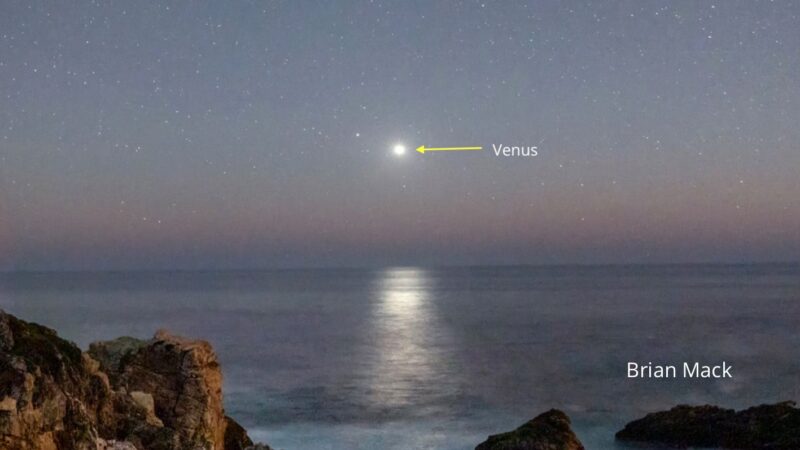
Venus brightest in the morning? Now’s the time
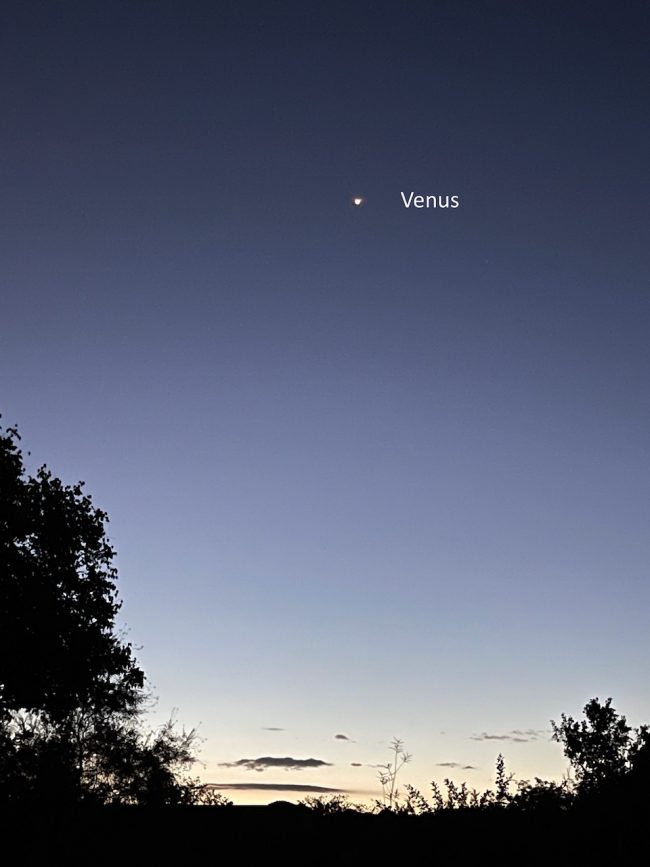
Venus is blazing in the morning sky now. You’ll see it easily before sunrise. Venus always outshines all other objects in our sky, except the sun and moon. But it’s at its brightest for 2026 now, before dawn. So UFO reports are probably increasing! But you’ll know better. It’s not a UFO in the eastern morning twilight. It’s Venus, the 2nd planet from the sun.
This inner world passed between us and the sun on October 23-24, 2026. That’s called an inferior conjunction, of Venus. At such times Earth (3rd planet from the sun), Venus and the sun make a line in space, with Venus in the middle.
And now Venus pulling ahead of Earth in the race of the planets around the sun. Whenever that happens — about five weeks before and after inferior conjunction — Venus shines at greatest brilliancy in our sky. Greatest brilliancy for Venus in the morning sky will fall on November 29, 2026.
Venus reached its peak brilliancy in the evening sky on September 18, about five weeks before it dropped into the sunset glare for its inferior conjunction. Around September 18, Venus was brighter than it’s been for all of 2026. And now it’ll reach greatest brilliancy in the morning sky on November 29! You can’t miss it. Venus won’t appear this bright to us again in the evening sky until April 2028. And the next time Venus will reach greatest brilliancy in the morning sky is July 2028.
How bright is Venus now?
Venus is always the brightest planet. But it’s especially blazing around now.
It’ll reach its maximum brightness at 14 UTC on November 29. Then it’ll shine at magnitude -4.4. That’s much, much brighter than any star.
Venus is so bright now that — if you look carefully — you can see it in the daytime. Want to learn how? See this article: How to see Venus in the daytime.
Why does Venus look brightest?
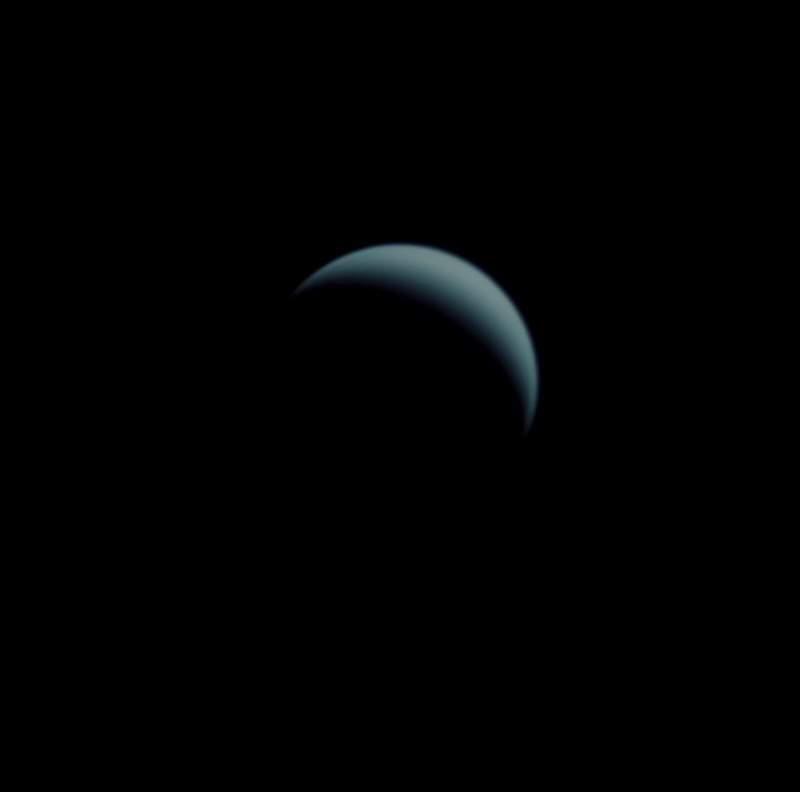
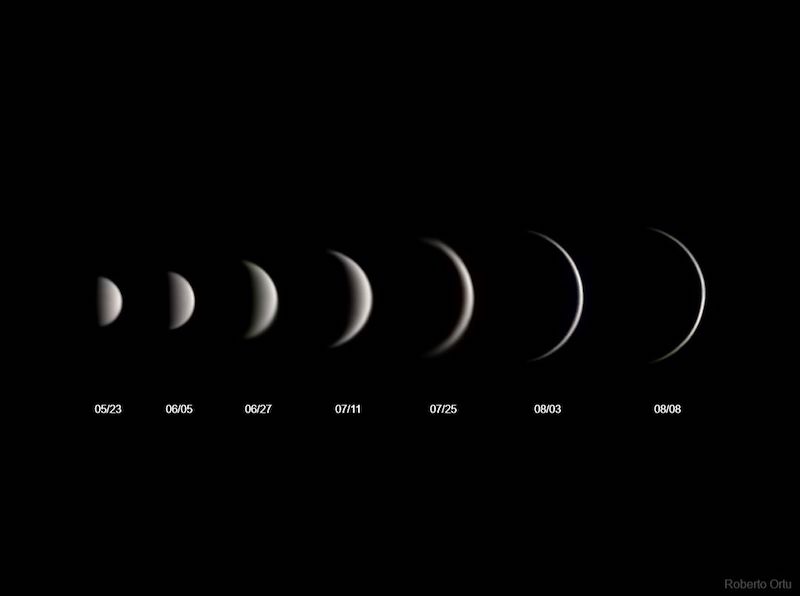
If you saw Venus through a telescope now, you’d find it in a crescent phase. And it’s only when we see Venus as a crescent that this world comes close enough to us to appear brightest in our sky.
Greatest brilliancy for Venus is a combination of two factors: Venus’ disk size in our sky, and its phase in our sky.
Venus was at superior conjunction – on the opposite side of the sun from Earth – on January 6, 2026. At superior conjunction, when Venus is on the far side of the sun from us, we see it at its full phase. But, at such times, Venus is far across the solar system from us. So its disk size is small as seen from Earth.
And that’s why you sometimes hear the term greatest illuminated extent for Venus at greatest brilliancy. The combination of a relatively large disk size — with a phase that’s not too small — is what gives Venus its incredible brightness in our sky at greatest brilliancy.
Disk size. If you could see Venus through a telescope now, you’d find the planet as a relatively large disk (around 40 arcseconds). That’s because it just passed between us and the sun. So it’s still relatively close to us now.
Phase. The absolute thinnest phase of Venus happened when it went between us and the sun on October 23-24. Then its day side was almost entirely turned away from us. Why almost? It’s because Venus rarely goes exactly between us and the sun. Such events are called transits of Venus. The next one won’t be until December 10-11, 2117!
Afer inferior conjunciton, the phase of Venus increases steadily. It looks through a telescope like a tiny waxing crescent moon. We are seeing more and more of its day side as it flees ahead of us i norbit around the sun.
So its disk is still relatively large, because it’s still relatively close to us. And its phase is larger than when it was between us and the sun. Voila! Greatest brillinacy.
As the weeks and months pass, Venus’ phase will increase. But its disk size will shrink. So it’ll appear fainter in our sky. But it’ll still be the brightest planet!
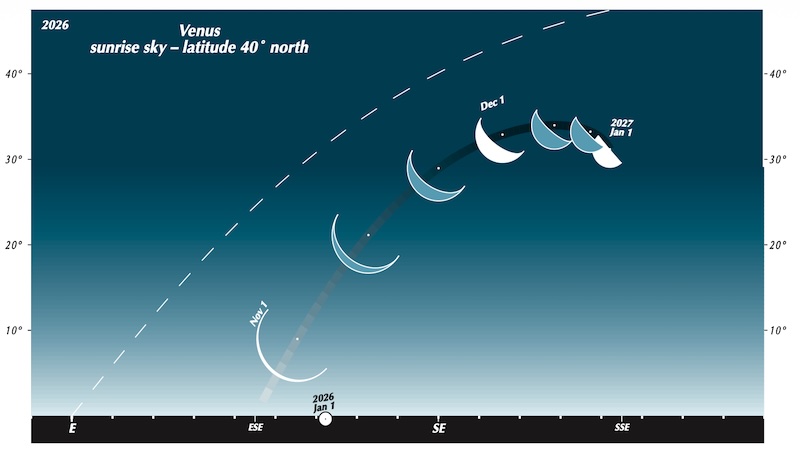
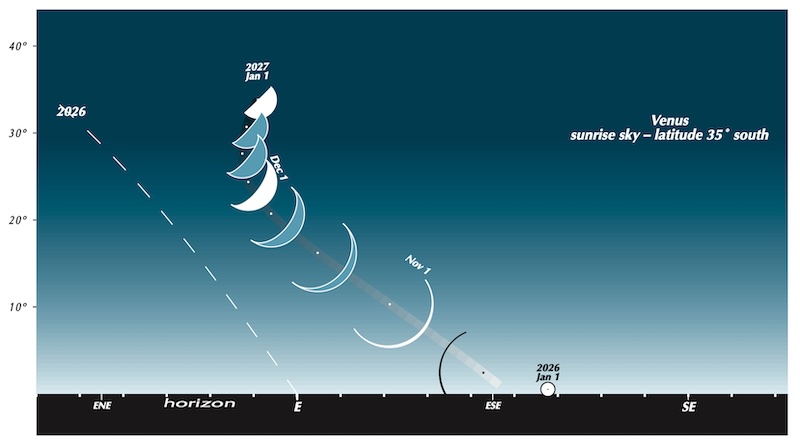
Venus charts for 2026, from Guy Ottewell
Venus photos from our community

Bottom line: Venus will be brightest in the morning sky around November 29, 2026. After that, Venus will next be at its brightest again — this time in the evening sky — in April 2028.
Planet-observing is easy: Top tips here
EarthSky’s monthly planet guide, updated daily: Visible planets and more
The post Venus brightest before dawn on November 29 first appeared on EarthSky.
from EarthSky https://ift.tt/qbtkurD
Venus brightest in the morning? Now’s the time
Venus is blazing in the morning sky now. You’ll see it easily before sunrise. Venus always outshines all other objects in our sky, except the sun and moon. But it’s at its brightest for 2026 now, before dawn. So UFO reports are probably increasing! But you’ll know better. It’s not a UFO in the eastern morning twilight. It’s Venus, the 2nd planet from the sun.
This inner world passed between us and the sun on October 23-24, 2026. That’s called an inferior conjunction, of Venus. At such times Earth (3rd planet from the sun), Venus and the sun make a line in space, with Venus in the middle.
And now Venus pulling ahead of Earth in the race of the planets around the sun. Whenever that happens — about five weeks before and after inferior conjunction — Venus shines at greatest brilliancy in our sky. Greatest brilliancy for Venus in the morning sky will fall on November 29, 2026.
Venus reached its peak brilliancy in the evening sky on September 18, about five weeks before it dropped into the sunset glare for its inferior conjunction. Around September 18, Venus was brighter than it’s been for all of 2026. And now it’ll reach greatest brilliancy in the morning sky on November 29! You can’t miss it. Venus won’t appear this bright to us again in the evening sky until April 2028. And the next time Venus will reach greatest brilliancy in the morning sky is July 2028.
How bright is Venus now?
Venus is always the brightest planet. But it’s especially blazing around now.
It’ll reach its maximum brightness at 14 UTC on November 29. Then it’ll shine at magnitude -4.4. That’s much, much brighter than any star.
Venus is so bright now that — if you look carefully — you can see it in the daytime. Want to learn how? See this article: How to see Venus in the daytime.
Why does Venus look brightest?
If you saw Venus through a telescope now, you’d find it in a crescent phase. And it’s only when we see Venus as a crescent that this world comes close enough to us to appear brightest in our sky.
Greatest brilliancy for Venus is a combination of two factors: Venus’ disk size in our sky, and its phase in our sky.
Venus was at superior conjunction – on the opposite side of the sun from Earth – on January 6, 2026. At superior conjunction, when Venus is on the far side of the sun from us, we see it at its full phase. But, at such times, Venus is far across the solar system from us. So its disk size is small as seen from Earth.
And that’s why you sometimes hear the term greatest illuminated extent for Venus at greatest brilliancy. The combination of a relatively large disk size — with a phase that’s not too small — is what gives Venus its incredible brightness in our sky at greatest brilliancy.
Disk size. If you could see Venus through a telescope now, you’d find the planet as a relatively large disk (around 40 arcseconds). That’s because it just passed between us and the sun. So it’s still relatively close to us now.
Phase. The absolute thinnest phase of Venus happened when it went between us and the sun on October 23-24. Then its day side was almost entirely turned away from us. Why almost? It’s because Venus rarely goes exactly between us and the sun. Such events are called transits of Venus. The next one won’t be until December 10-11, 2117!
Afer inferior conjunciton, the phase of Venus increases steadily. It looks through a telescope like a tiny waxing crescent moon. We are seeing more and more of its day side as it flees ahead of us i norbit around the sun.
So its disk is still relatively large, because it’s still relatively close to us. And its phase is larger than when it was between us and the sun. Voila! Greatest brillinacy.
As the weeks and months pass, Venus’ phase will increase. But its disk size will shrink. So it’ll appear fainter in our sky. But it’ll still be the brightest planet!
Venus charts for 2026, from Guy Ottewell
Venus photos from our community
Bottom line: Venus will be brightest in the morning sky around November 29, 2026. After that, Venus will next be at its brightest again — this time in the evening sky — in April 2028.
Planet-observing is easy: Top tips here
EarthSky’s monthly planet guide, updated daily: Visible planets and more
The post Venus brightest before dawn on November 29 first appeared on EarthSky.
from EarthSky https://ift.tt/qbtkurD

Aucun commentaire:
Enregistrer un commentaire