
Science news, night sky events and beautiful photos, all in one place. Click here to subscribe to EarthSky’s free daily newsletter.
Could Taurid meteors bring an airburst in 2026?
Last year, we told you about a new study suggesting the yearly Taurid meteor shower — and its associated Halloween fireballs — might bring an increased risk of an airburst in 2032 and 2036. The lead author of that study, physicist and planetary defense expert Mark Boslough of the University of New Mexico, contacted EarthSky this week.
His new calculations now suggest a risk of airburst from the Taurids in 2026. But he says the possibility rests on two big, unproven assumptions. Let’s dive in.
In the 2025 study, researchers described a hypothetical swarm of larger objects within the Taurid meteor stream. The study suggested Earth could pass near this swarm in 2032 and 2036, potentially increasing the risk of an airburst in our atmosphere. What’s an airburst? It’s an explosion in Earth’s atmosphere caused by an incoming space rock. The most famous airburst happened in the Tunguska region of Siberia in 1908. And the Chelyabinsk meteor in 2013 — which broke windows in six Russian cities — was also an airburst.
Boslough has now outlined a more speculative possibility: Could more Taurid objects — related to the famous 1908 Tunguska explosion — still be out there in space? And if so, could they return to Earth’s vicinity in 2026?
Tunguska and the Taurids
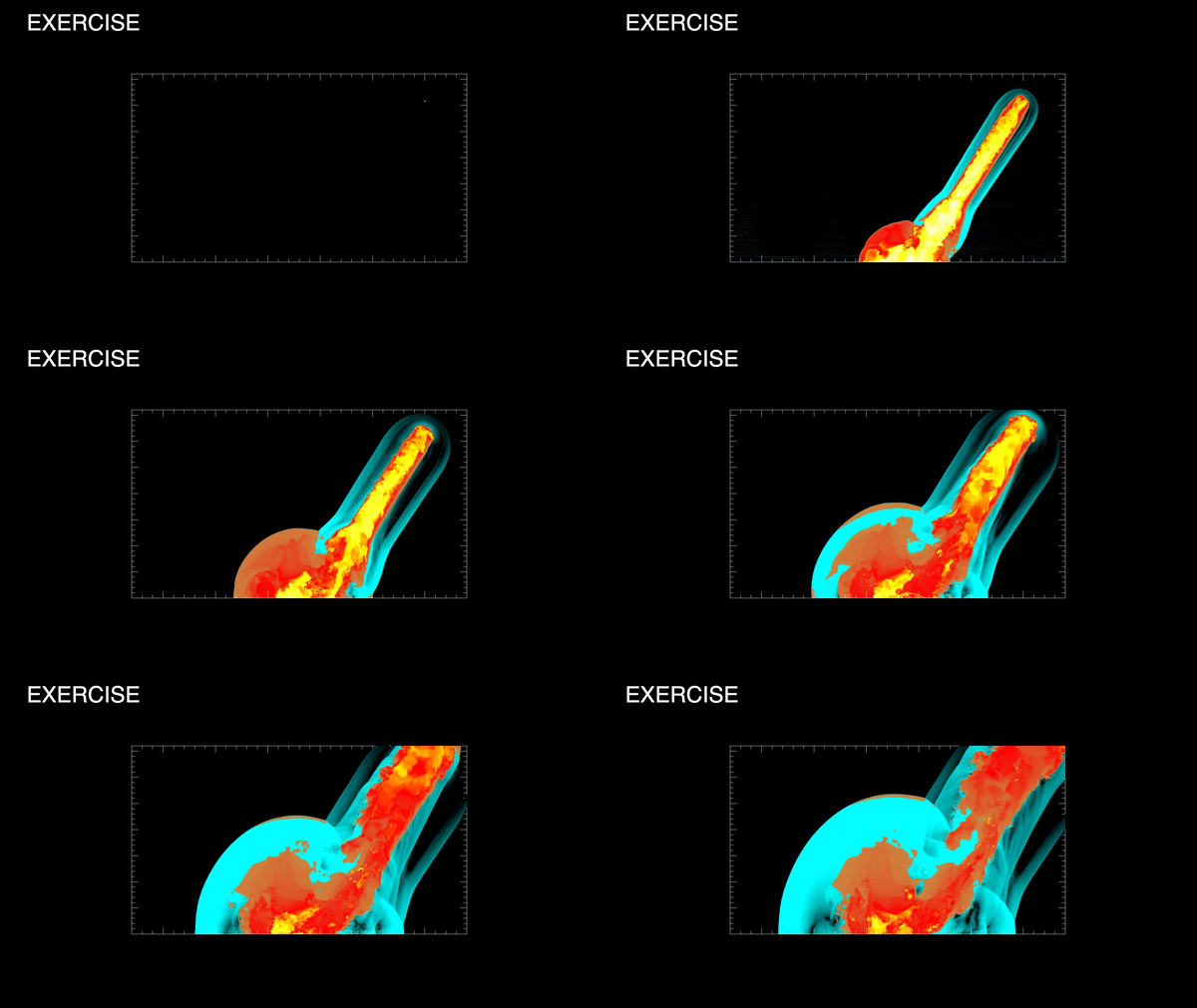
The Tunguska event flattened forestland in Siberia. Scientists say it happened when a space rock created an airburst in the atmosphere. And some researchers have linked the Tunguska event to the Beta Taurids, a daytime meteor shower associated with the same stream of debris that produces the better-known North and South Taurids in October and November.
Boslough’s 2025 study related to hypothetical objects — associated with the Taurid meteor stream — that might be in an resonance orbit with Earth. An orbital resonance is two orbiting bodies whose orbital periods are related by some ratio.
In other words, was the object that created the Tunguska event a solitary object in space? Or was it part of a cluster of objects, which in turn are associated with the well-known Taurid meteor shower? And if so are there still objects out there in space in a resonance orbit with Earth — an orbit that will bring them back to our vicinity?
We don’t know the answers to these questions. But Boslough estimates that — if they exist — such objects would orbit the sun 18 times for every 61 Earth orbits (an 18:61 resonance orbit with Earth).
So if the Tunguska object did belong to a cluster of debris in that particular resonance orbit, then the cluster — perhaps containing objects big enough to create another airburst — might return to Earth’s vicinity every 61 years. 1908 + 61 = 1969. And 1969 + 61 = 2030. So what does that mean for 2026?
Mark Boslough told EarthSky that, yes, an object in a 61-year resonance orbit would return in June 1930. But, he said:
So imagine if the Tunguska object had missed the Earth in 1908. Then it could return in 2030. The Halloween 2026 date is significant because the same resonance that creates a close June encounter in 2030 creates a close encounter around Halloween, four years earlier (2026).
…The good thing about the Taurid resonant swarm hypothesis is that it’s testable. And we will know for sure in 2032 if it really exists.
Of course, these are all events based on hypotheticals. As Boslough told EarthSky, this might only happen:
…IF the Tunguska object was part of a cluster, and IF it had the same orbital elements as the hypothetical swarm (both are big ifs). I will be the first to caution that this is highly speculative because of those two big IFs. We do not know if either are true.
Read on for more insight from the 2025 study.
Halloween fireballs
The term Halloween fireballs refers to the unusually bright meteors (fireballs) produced in some years (but not all years) by the Taurid meteor shower. This shower peaks every year in late October and early November. So if you’re a meteor watcher, there’s a good chance you’ve seen a Halloween fireball already.
Most meteor showers come from comets. When a comet comes in toward the sun, it warms up and releases a trail of debris – dust particles and rocks – along its path. Earth frequently crosses comet paths in its own orbit around the sun. The bits of comet dust and rock enter our atmosphere and burn up due to friction with the air … and voila! We have a meteor shower.
The Taurid shower is a bit different. Astronomers believe it might be the result of a large object that broke up, creating Comet Encke and several asteroids. And scientists think that one of those asteroids – 2004 TG10 – is the parent to the Taurid meteor shower. This asteroid, which the Spacewatch program discovered on October 8, 2004, has an orbit that matches Comet Encke.
And there are multiple Taurid meteor showers. The South and North Taurids are November meteor showers, and the Beta Taurids in June are a daylight shower. They are all associated with Comet Encke and its debris.
Do the Taurid fireballs suggest larger-sized objects moving within the Taurid meteor stream? Some astronomers have even suggested there could be large asteroids hiding in the Taurid stream. But we don’t know if that’s the case.
A matter of planetary defense
Still, it’s a possibility we have to take seriously. Astronomer Mark Boslough said that investigating the possibility of the Taurid meteors producing airbursts is a matter of planetary defense. That’s because, in the past, airbursts have wreaked havoc on the ground.
Boslough said:
Planetary defense is the multidisciplinary and internationally coordinated effort to protect the Earth and its inhabitants from impacts by near-Earth objects. It requires surveys to discover and track near-Earth objects, campaigns to characterize those that are hazardous, modeling efforts to understand and predict impact effects and associated consequences, and mitigation through impact avoidance and/or civil defense.
Researching the Halloween fireballs
The researchers looked at observational data on the Taurid meteors. They found:
… the risk from airburst-sized near-Earth objects, which are small enough to explode in the atmosphere instead of striking the ground, might be larger than currently estimated.
The debris that lights up the Taurid meteors or Halloween fireballs is in harmony with Jupiter’s orbit. For every seven orbits of the sun the debris stream makes, Jupiter makes two orbits. This puts it in resonance with Jupiter. So part of its stream approaches Jupiter at regular intervals. And Jupiter’s large gravity might help organize that stream into dense clusters. The researchers said if Jupiter is indeed having this affect on the swarm, Earth could pass near these denser clusters in 2032 and 2036.
Thus we have the increased risk of airbursts in Earth’s atmosphere.

Bottom line: A researcher from the University of New Mexico said the Taurid meteor shower could bring an increased risk of an airburst in 2026. But it’s based on some pretty big IFs.
The post Could the Taurid meteors bring a risk of airbursts in 2026? first appeared on EarthSky.
from EarthSky https://ift.tt/6r0VLsN
Science news, night sky events and beautiful photos, all in one place. Click here to subscribe to EarthSky’s free daily newsletter.
Could Taurid meteors bring an airburst in 2026?
Last year, we told you about a new study suggesting the yearly Taurid meteor shower — and its associated Halloween fireballs — might bring an increased risk of an airburst in 2032 and 2036. The lead author of that study, physicist and planetary defense expert Mark Boslough of the University of New Mexico, contacted EarthSky this week.
His new calculations now suggest a risk of airburst from the Taurids in 2026. But he says the possibility rests on two big, unproven assumptions. Let’s dive in.
In the 2025 study, researchers described a hypothetical swarm of larger objects within the Taurid meteor stream. The study suggested Earth could pass near this swarm in 2032 and 2036, potentially increasing the risk of an airburst in our atmosphere. What’s an airburst? It’s an explosion in Earth’s atmosphere caused by an incoming space rock. The most famous airburst happened in the Tunguska region of Siberia in 1908. And the Chelyabinsk meteor in 2013 — which broke windows in six Russian cities — was also an airburst.
Boslough has now outlined a more speculative possibility: Could more Taurid objects — related to the famous 1908 Tunguska explosion — still be out there in space? And if so, could they return to Earth’s vicinity in 2026?
Tunguska and the Taurids
The Tunguska event flattened forestland in Siberia. Scientists say it happened when a space rock created an airburst in the atmosphere. And some researchers have linked the Tunguska event to the Beta Taurids, a daytime meteor shower associated with the same stream of debris that produces the better-known North and South Taurids in October and November.
Boslough’s 2025 study related to hypothetical objects — associated with the Taurid meteor stream — that might be in an resonance orbit with Earth. An orbital resonance is two orbiting bodies whose orbital periods are related by some ratio.
In other words, was the object that created the Tunguska event a solitary object in space? Or was it part of a cluster of objects, which in turn are associated with the well-known Taurid meteor shower? And if so are there still objects out there in space in a resonance orbit with Earth — an orbit that will bring them back to our vicinity?
We don’t know the answers to these questions. But Boslough estimates that — if they exist — such objects would orbit the sun 18 times for every 61 Earth orbits (an 18:61 resonance orbit with Earth).
So if the Tunguska object did belong to a cluster of debris in that particular resonance orbit, then the cluster — perhaps containing objects big enough to create another airburst — might return to Earth’s vicinity every 61 years. 1908 + 61 = 1969. And 1969 + 61 = 2030. So what does that mean for 2026?
Mark Boslough told EarthSky that, yes, an object in a 61-year resonance orbit would return in June 1930. But, he said:
So imagine if the Tunguska object had missed the Earth in 1908. Then it could return in 2030. The Halloween 2026 date is significant because the same resonance that creates a close June encounter in 2030 creates a close encounter around Halloween, four years earlier (2026).
…The good thing about the Taurid resonant swarm hypothesis is that it’s testable. And we will know for sure in 2032 if it really exists.
Of course, these are all events based on hypotheticals. As Boslough told EarthSky, this might only happen:
…IF the Tunguska object was part of a cluster, and IF it had the same orbital elements as the hypothetical swarm (both are big ifs). I will be the first to caution that this is highly speculative because of those two big IFs. We do not know if either are true.
Read on for more insight from the 2025 study.
Halloween fireballs
The term Halloween fireballs refers to the unusually bright meteors (fireballs) produced in some years (but not all years) by the Taurid meteor shower. This shower peaks every year in late October and early November. So if you’re a meteor watcher, there’s a good chance you’ve seen a Halloween fireball already.
Most meteor showers come from comets. When a comet comes in toward the sun, it warms up and releases a trail of debris – dust particles and rocks – along its path. Earth frequently crosses comet paths in its own orbit around the sun. The bits of comet dust and rock enter our atmosphere and burn up due to friction with the air … and voila! We have a meteor shower.
The Taurid shower is a bit different. Astronomers believe it might be the result of a large object that broke up, creating Comet Encke and several asteroids. And scientists think that one of those asteroids – 2004 TG10 – is the parent to the Taurid meteor shower. This asteroid, which the Spacewatch program discovered on October 8, 2004, has an orbit that matches Comet Encke.
And there are multiple Taurid meteor showers. The South and North Taurids are November meteor showers, and the Beta Taurids in June are a daylight shower. They are all associated with Comet Encke and its debris.
Do the Taurid fireballs suggest larger-sized objects moving within the Taurid meteor stream? Some astronomers have even suggested there could be large asteroids hiding in the Taurid stream. But we don’t know if that’s the case.
A matter of planetary defense
Still, it’s a possibility we have to take seriously. Astronomer Mark Boslough said that investigating the possibility of the Taurid meteors producing airbursts is a matter of planetary defense. That’s because, in the past, airbursts have wreaked havoc on the ground.
Boslough said:
Planetary defense is the multidisciplinary and internationally coordinated effort to protect the Earth and its inhabitants from impacts by near-Earth objects. It requires surveys to discover and track near-Earth objects, campaigns to characterize those that are hazardous, modeling efforts to understand and predict impact effects and associated consequences, and mitigation through impact avoidance and/or civil defense.
Researching the Halloween fireballs
The researchers looked at observational data on the Taurid meteors. They found:
… the risk from airburst-sized near-Earth objects, which are small enough to explode in the atmosphere instead of striking the ground, might be larger than currently estimated.
The debris that lights up the Taurid meteors or Halloween fireballs is in harmony with Jupiter’s orbit. For every seven orbits of the sun the debris stream makes, Jupiter makes two orbits. This puts it in resonance with Jupiter. So part of its stream approaches Jupiter at regular intervals. And Jupiter’s large gravity might help organize that stream into dense clusters. The researchers said if Jupiter is indeed having this affect on the swarm, Earth could pass near these denser clusters in 2032 and 2036.
Thus we have the increased risk of airbursts in Earth’s atmosphere.
Bottom line: A researcher from the University of New Mexico said the Taurid meteor shower could bring an increased risk of an airburst in 2026. But it’s based on some pretty big IFs.
The post Could the Taurid meteors bring a risk of airbursts in 2026? first appeared on EarthSky.
from EarthSky https://ift.tt/6r0VLsN

Aucun commentaire:
Enregistrer un commentaire