
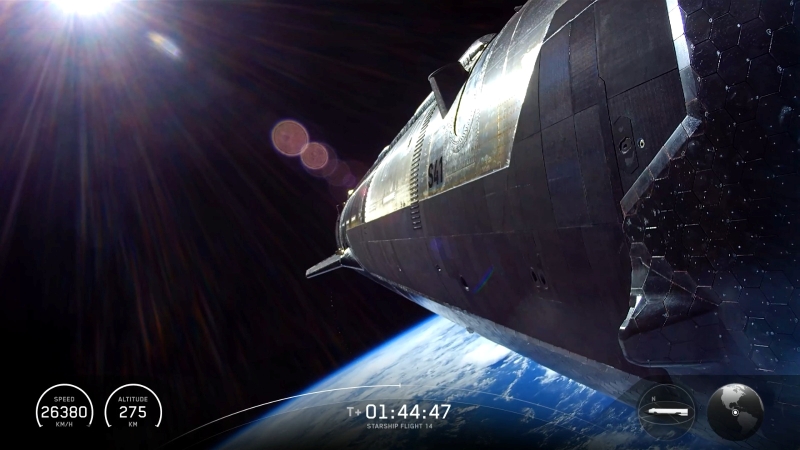
SpaceX reached a milestone yesterday, September 28, 2026, as its colossal Starship spacecraft reached Earth’s orbit for the first time. It was a much-needed success — though far from flawless — for a vehicle intended to take humans to the lunar surface as soon as 2028.
The rocket, which is the largest and most powerful ever built, launched for its 14th test flight from Starbase, Texas, at 7:48 CDT (12:48 UTC). The boosting phase was a success. But after the booster separated, one of the upper stage’s six engines failed. We heard much deliberation from mission control, and it seemed another disappointing day for SpaceX was on the cards. But SpaceX ultimately pushed ahead, and 25 minutes after its launch — and three years after its first test flight — Starship reached Earth’s orbit.
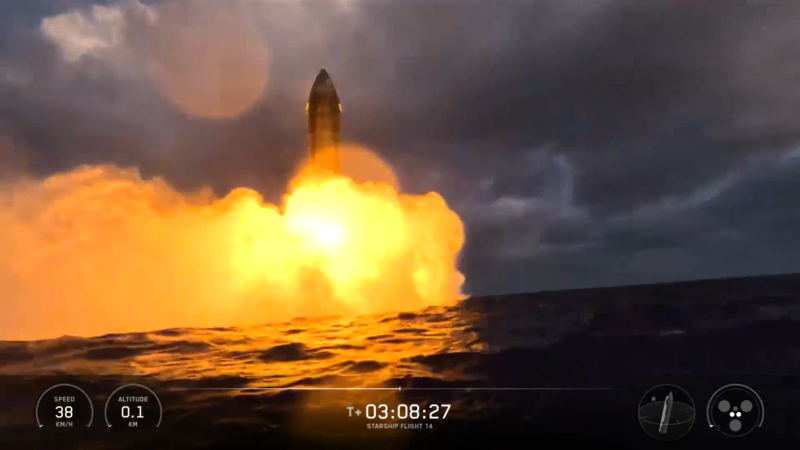
Starship was meant to circle Earth six times on a 10-hour voyage. But SpaceX pulled the plug after only three hours, bringing the ship down to an explosive splashdown in the Pacific Ocean. SpaceX have since announced that this decision to shorten the flight was taken “out of an abundance of caution given the engine issue experienced during ascent”.
However, despite the mission being cut short, SpaceX had time to successfully deploy 26 Starlink V3 satellites into orbit. Unlike previous missions, which had released dummy satellites, these were real additions to the Starlink system.
So, while not without its issues, this was a test that SpaceX will likely be happy with. It comes following a 13th test in July that saw the booster fail in its landing attempt, and after a shocking explosion on the launchpad in June.
First journey into Earth orbit
This 14th test flight was SpaceX’s first attempt to bring Starship into full Earth orbit. Previous missions had taken suborbital trajectories which ensured that, if SpaceX were to lose control of the rocket (as has happened before), it would come down in the ocean. When in orbit, the risks of a rogue spacecraft are much harder to manage.
And, despite the ultimate success of test flight 14, Starship didn’t entirely behave itself this time round.
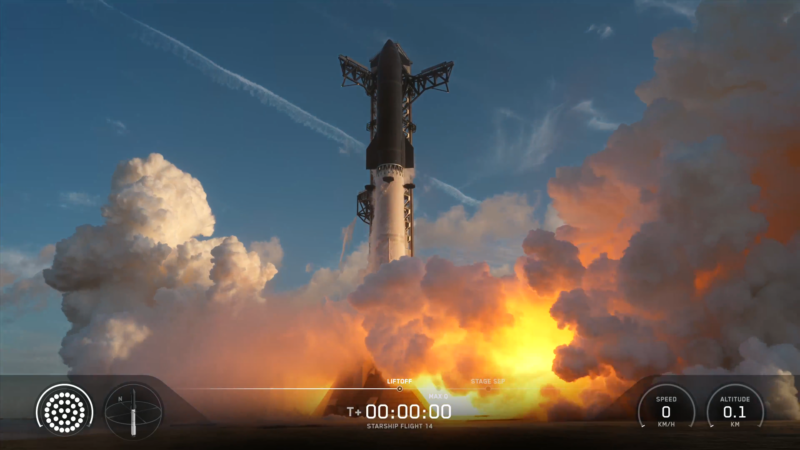
The test began with another spectacular launch for the rocket, which stands 394 feet (120 meters) tall on the launch pad. The booster lifted off with all 33 engines running, although one failed during the ascent.
Having boosted Starship’s upper stage out of Earth’s lower atmosphere, the booster separated and performed its trademark flip before boosting back to Earth, with 26 of the intended 28 engines lit. And only 11 of the intended 13 engines lit for its landing burn, which still righted the booster and brought it to a controlled splashdown in the Gulf of Mexico. SpaceX had not planned to catch the booster in its giant mechanical “chopsticks” as it had done in 2024. This is set to be attempted again in flight 15.
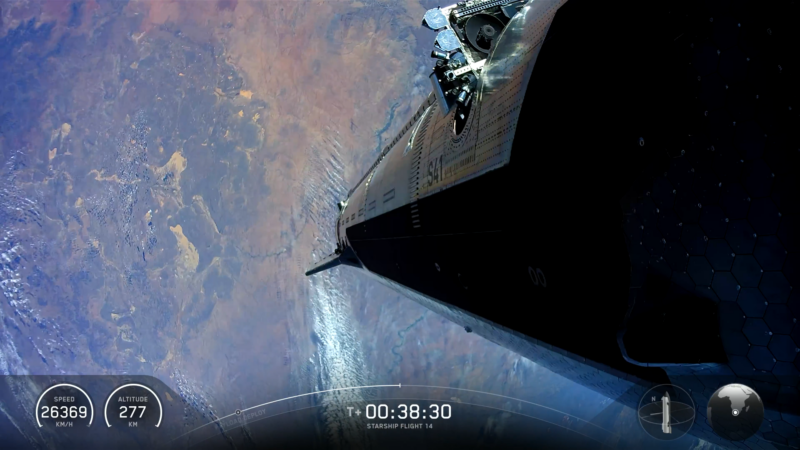
After this boost, things took a troubling turn for Starship. With one of the upper stage’s six raptor engines switching off unexpectedly, it seemed the orbital attempt would have to be called off. The presenter on SpaceX’s stream initially suggested as much. But mission control ultimately decided to go ahead. Starship fired a single booster for just 19 seconds to push it up into orbit, some 171 miles (275 km) above the Earth’s surface.
Cause for concern?
Cruising at 17,400 miles per hour (28,000 km/h), Starship returned breathtaking shots of our planet. And it opened its bay doors to deposit 26 Starlink satellites into orbit within just 30 minutes.
This pace of deployment naturally raises questions of how this spacecraft could play a part in the worsening congestion above our world. Read more on the dangers of satellites and space junk, or watch this video with astronomer Jonathan McDowell.
Another concern with these launches is their environmental impact. While SpaceX’s aim with Starship is to build a fully reusable spacecraft, this testing phase has seen many huge explosions in the Gulf and beyond.
Yesterday, it was the upper stage’s turn to explode dramatically after an initially gentle splashdown in the Pacific. Read more about the environmental cost of these test flights. Or watch an interesting video science communicator Hank Green made about the topic.
What’s next for Starship?
While not a perfect test, Starship’s successful entry to Earth orbit will come as a relief not only to SpaceX, but to NASA.
Starship is integral to NASA’s Artemis program, which is aiming to return humans to the lunar surface as early as 2028. Earlier this year, NASA’s Orion capsule carried humans round the moon for the first time in 50 years. But the Orion capsule can’t get humans to the lunar surface. That’s where Starship is meant to come in.
SpaceX has a contract with NASA to provide a Human Landing System variant of Starship, which will ferry astronauts to the lunar surface on the Artemis 4 mission, currently targeted for early 2028. But Starship is currently behind schedule, even despite the other huge delays to the Artemis program.
SpaceX now has a rival for this job: Jeff Bezos’ Blue Origin. Blue Origin now also has a contract for the Artemis program. The current plan is for both Starship and Blue Origin’s Blue Moon lunar lander to be tested in low-Earth orbit during the Artemis 3 mission, currently set for 2027. This should see Starship and Blue Moon dock with Orion, which will have four astronauts on board.
Despite the success of this latest test, Starship surely has a long way to go before NASA will allow it to carry its astronauts.
Bottom line: SpaceX’s Starship spacecraft finally reached Earth orbit in its 14th test flight yesterday, September 28. Though successful, the flight was not without its flaws.
Read more: Another SpaceX Starship explosion! Huge fireball during test
The post Starship reaches Earth’s orbit for 1st time first appeared on EarthSky.
from EarthSky https://ift.tt/bRPNW48
SpaceX reached a milestone yesterday, September 28, 2026, as its colossal Starship spacecraft reached Earth’s orbit for the first time. It was a much-needed success — though far from flawless — for a vehicle intended to take humans to the lunar surface as soon as 2028.
The rocket, which is the largest and most powerful ever built, launched for its 14th test flight from Starbase, Texas, at 7:48 CDT (12:48 UTC). The boosting phase was a success. But after the booster separated, one of the upper stage’s six engines failed. We heard much deliberation from mission control, and it seemed another disappointing day for SpaceX was on the cards. But SpaceX ultimately pushed ahead, and 25 minutes after its launch — and three years after its first test flight — Starship reached Earth’s orbit.
Starship was meant to circle Earth six times on a 10-hour voyage. But SpaceX pulled the plug after only three hours, bringing the ship down to an explosive splashdown in the Pacific Ocean. SpaceX have since announced that this decision to shorten the flight was taken “out of an abundance of caution given the engine issue experienced during ascent”.
However, despite the mission being cut short, SpaceX had time to successfully deploy 26 Starlink V3 satellites into orbit. Unlike previous missions, which had released dummy satellites, these were real additions to the Starlink system.
So, while not without its issues, this was a test that SpaceX will likely be happy with. It comes following a 13th test in July that saw the booster fail in its landing attempt, and after a shocking explosion on the launchpad in June.
First journey into Earth orbit
This 14th test flight was SpaceX’s first attempt to bring Starship into full Earth orbit. Previous missions had taken suborbital trajectories which ensured that, if SpaceX were to lose control of the rocket (as has happened before), it would come down in the ocean. When in orbit, the risks of a rogue spacecraft are much harder to manage.
And, despite the ultimate success of test flight 14, Starship didn’t entirely behave itself this time round.
The test began with another spectacular launch for the rocket, which stands 394 feet (120 meters) tall on the launch pad. The booster lifted off with all 33 engines running, although one failed during the ascent.
Having boosted Starship’s upper stage out of Earth’s lower atmosphere, the booster separated and performed its trademark flip before boosting back to Earth, with 26 of the intended 28 engines lit. And only 11 of the intended 13 engines lit for its landing burn, which still righted the booster and brought it to a controlled splashdown in the Gulf of Mexico. SpaceX had not planned to catch the booster in its giant mechanical “chopsticks” as it had done in 2024. This is set to be attempted again in flight 15.
After this boost, things took a troubling turn for Starship. With one of the upper stage’s six raptor engines switching off unexpectedly, it seemed the orbital attempt would have to be called off. The presenter on SpaceX’s stream initially suggested as much. But mission control ultimately decided to go ahead. Starship fired a single booster for just 19 seconds to push it up into orbit, some 171 miles (275 km) above the Earth’s surface.
Cause for concern?
Cruising at 17,400 miles per hour (28,000 km/h), Starship returned breathtaking shots of our planet. And it opened its bay doors to deposit 26 Starlink satellites into orbit within just 30 minutes.
This pace of deployment naturally raises questions of how this spacecraft could play a part in the worsening congestion above our world. Read more on the dangers of satellites and space junk, or watch this video with astronomer Jonathan McDowell.
Another concern with these launches is their environmental impact. While SpaceX’s aim with Starship is to build a fully reusable spacecraft, this testing phase has seen many huge explosions in the Gulf and beyond.
Yesterday, it was the upper stage’s turn to explode dramatically after an initially gentle splashdown in the Pacific. Read more about the environmental cost of these test flights. Or watch an interesting video science communicator Hank Green made about the topic.
What’s next for Starship?
While not a perfect test, Starship’s successful entry to Earth orbit will come as a relief not only to SpaceX, but to NASA.
Starship is integral to NASA’s Artemis program, which is aiming to return humans to the lunar surface as early as 2028. Earlier this year, NASA’s Orion capsule carried humans round the moon for the first time in 50 years. But the Orion capsule can’t get humans to the lunar surface. That’s where Starship is meant to come in.
SpaceX has a contract with NASA to provide a Human Landing System variant of Starship, which will ferry astronauts to the lunar surface on the Artemis 4 mission, currently targeted for early 2028. But Starship is currently behind schedule, even despite the other huge delays to the Artemis program.
SpaceX now has a rival for this job: Jeff Bezos’ Blue Origin. Blue Origin now also has a contract for the Artemis program. The current plan is for both Starship and Blue Origin’s Blue Moon lunar lander to be tested in low-Earth orbit during the Artemis 3 mission, currently set for 2027. This should see Starship and Blue Moon dock with Orion, which will have four astronauts on board.
Despite the success of this latest test, Starship surely has a long way to go before NASA will allow it to carry its astronauts.
Bottom line: SpaceX’s Starship spacecraft finally reached Earth orbit in its 14th test flight yesterday, September 28. Though successful, the flight was not without its flaws.
Read more: Another SpaceX Starship explosion! Huge fireball during test
The post Starship reaches Earth’s orbit for 1st time first appeared on EarthSky.
from EarthSky https://ift.tt/bRPNW48

Aucun commentaire:
Enregistrer un commentaire