

- Venus is bright enough to see in daylight when the sky is clear and you know exactly where to look.
- One way is to use the moon as a guide. Or look when Venus is highest in the sky. Or, when Venus is up before sunrise, track it after sunrise.
- Never look at the sun with your unprotected eyes. When searching for Venus in daylight, position the sun behind a building.
Why can you see Venus in daylight?
After the sun and moon, Venus is the brightest natural object in our sky.
It appears so bright because it’s relatively close to Earth, and is nearly as large as Earth. But, most importantly, Venus is covered with highly reflective clouds. It reflects approximately 75% of the sunlight shining on it back into space.
Still, Venus can be difficult to find against a bright blue sky. You need to know its location before you begin looking. How can you know at any given time whether Venus is up in the morning or the evening? A great way is to check EarthSky’s visible planets guide. It’s updated daily and will tell you when and where Venus is currently visible.
Or use an astronomy app such as Stellarium.
Right now – September 13, 2026 — Venus is in the west after sunset. It’ll pass between the Earth and sun on October 23-24, 2026. Afterwards, it’ll return to the east before dawn. You should begin to see it before dawn in early November, 2026.
Safety warning: Never look directly at the sun. Do not use binoculars, a telescope or a camera to search for Venus in daylight. If possible, stand where a tree trunk or building completely blocks the sun.
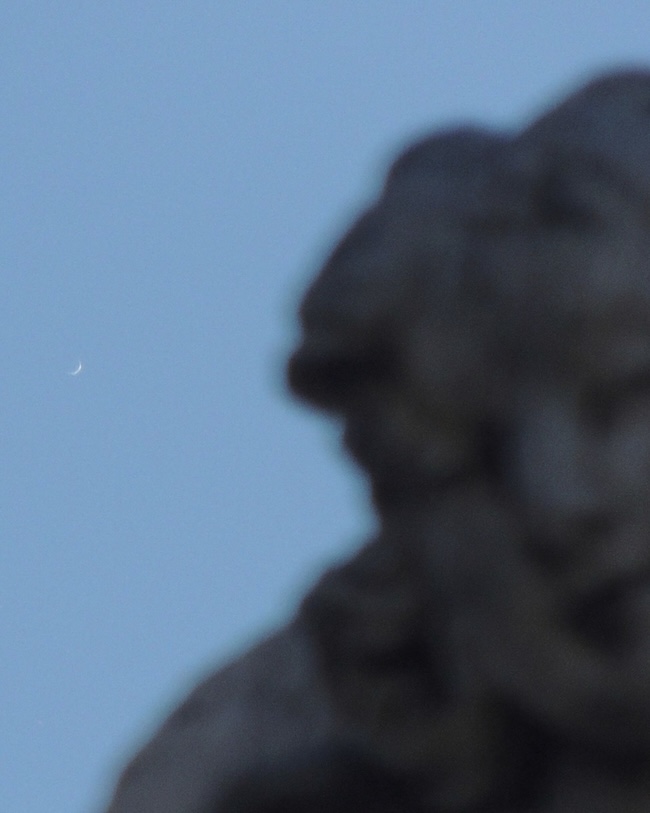
Tip #1 for seeing Venus in daylight: Use the moon
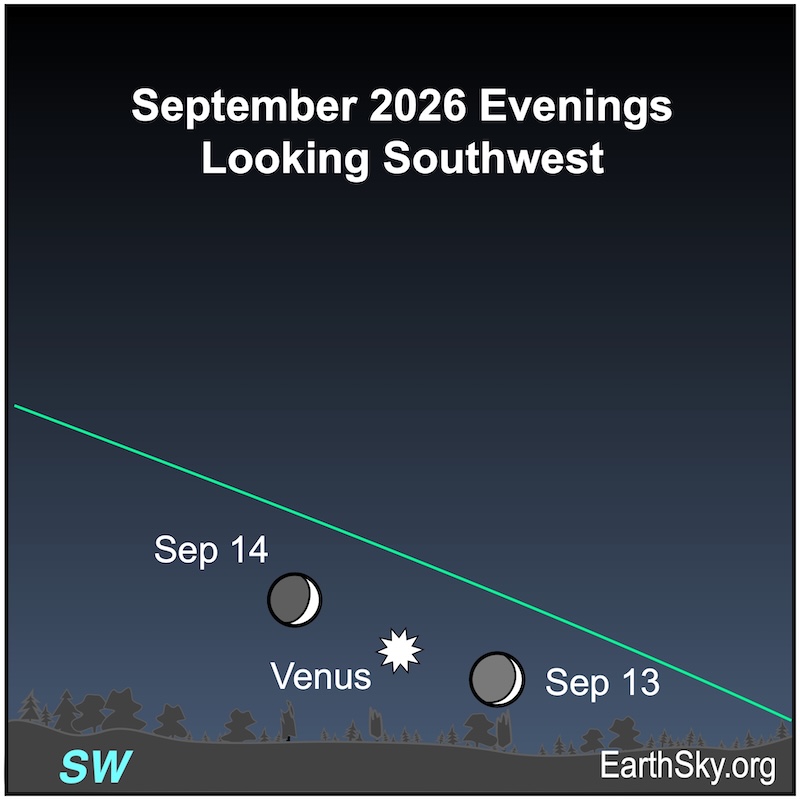
Venus is bright enough to appear as a tiny white point in a blue daytime sky. The easiest way to find it — when Venus is in the evening sky, as it is now – is to use the moon as a guide.
Then, on a clear sunny day, find the moon first with your unaided eyes. And use the app to determine which direction Venus lies from the moon and how far apart they appear. Venus will look like a tiny white point.
Remember to keep the sun hidden behind a building.
Tip #2: Look for Venus high in the sky
On days when Venus is above your horizon in daylight, it reaches its highest point in the sky as it crosses your local meridian (an imaginery line across the sky over your head, between your sky’s due north and due south points). Astronomers call this crossing a meridian transit, or culmination, of Venus.
Venus can be easier to find around this time because — at meridian transit — it’s as high above the horizon as it will be that day.
An astronomy app can provide the time of Venus’s meridian transit, along with its altitude, or height above your horizon. It’ll also give you the compass direction of Venus. That direction varies with your location, the season and the time of day. So follow the app rather than assuming Venus will be due south or north.
As always, before you look, position yourself so that a solid structure blocks the sun.
Tip #3: Track Venus after sunrise
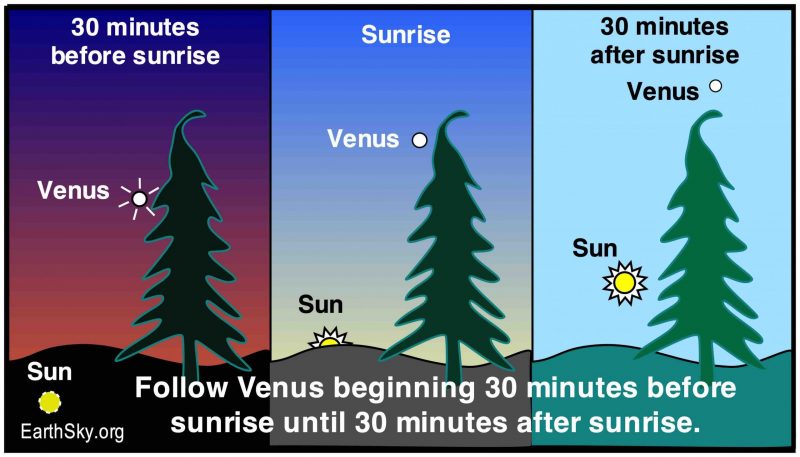
Another way — useful when Venus comes back to the morning sky this November — is to locate Venus before sunrise and follow it as the sky brightens. Again, an astronomy app can also show you exactly where to look. But you don’t need an app. You can just watch. This is often the easiest method for finding Venus in daylight, but it only works when Venus is visible in the morning (which it will be, again, by early November 2026).
Just find the planet before sunrise, when it will be the brightest starlike object in that part of the sky. Note its position relative to a building, pole or other fixed landmark. Continue watching as the eastern sky brightens at dawn. Venus will become less obvious after sunrise, but, if you keep watching, you can keep it in view. If you look away, use your landmark to return to Venus as dawn is breaking.
Stop if the sun approaches your line of sight, and never use binoculars or a telescope to search for the planet.
Good luck!
Have you photographed Venus in daylight? Submit your image to EarthSky.
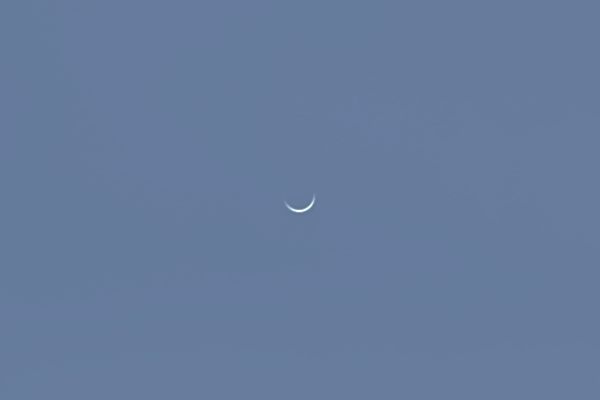
Bottom line: You can see Venus in daylight when the sky is clear and you know where to look. Use the moon as a guide, track Venus through sunrise or use an astronomy app to find it when it is highest in the sky. Always keep the sun safely out of view.
Source: Eye safety from the American Astronomical Society
Read more: Why is Venus so bright?
Read more: Top 10 space objects to see during the day
The post See Venus in the daytime: Here are 3 tips first appeared on EarthSky.
from EarthSky https://ift.tt/kuET90z
- Venus is bright enough to see in daylight when the sky is clear and you know exactly where to look.
- One way is to use the moon as a guide. Or look when Venus is highest in the sky. Or, when Venus is up before sunrise, track it after sunrise.
- Never look at the sun with your unprotected eyes. When searching for Venus in daylight, position the sun behind a building.
Why can you see Venus in daylight?
After the sun and moon, Venus is the brightest natural object in our sky.
It appears so bright because it’s relatively close to Earth, and is nearly as large as Earth. But, most importantly, Venus is covered with highly reflective clouds. It reflects approximately 75% of the sunlight shining on it back into space.
Still, Venus can be difficult to find against a bright blue sky. You need to know its location before you begin looking. How can you know at any given time whether Venus is up in the morning or the evening? A great way is to check EarthSky’s visible planets guide. It’s updated daily and will tell you when and where Venus is currently visible.
Or use an astronomy app such as Stellarium.
Right now – September 13, 2026 — Venus is in the west after sunset. It’ll pass between the Earth and sun on October 23-24, 2026. Afterwards, it’ll return to the east before dawn. You should begin to see it before dawn in early November, 2026.
Safety warning: Never look directly at the sun. Do not use binoculars, a telescope or a camera to search for Venus in daylight. If possible, stand where a tree trunk or building completely blocks the sun.
Tip #1 for seeing Venus in daylight: Use the moon
Venus is bright enough to appear as a tiny white point in a blue daytime sky. The easiest way to find it — when Venus is in the evening sky, as it is now – is to use the moon as a guide.
Then, on a clear sunny day, find the moon first with your unaided eyes. And use the app to determine which direction Venus lies from the moon and how far apart they appear. Venus will look like a tiny white point.
Remember to keep the sun hidden behind a building.
Tip #2: Look for Venus high in the sky
On days when Venus is above your horizon in daylight, it reaches its highest point in the sky as it crosses your local meridian (an imaginery line across the sky over your head, between your sky’s due north and due south points). Astronomers call this crossing a meridian transit, or culmination, of Venus.
Venus can be easier to find around this time because — at meridian transit — it’s as high above the horizon as it will be that day.
An astronomy app can provide the time of Venus’s meridian transit, along with its altitude, or height above your horizon. It’ll also give you the compass direction of Venus. That direction varies with your location, the season and the time of day. So follow the app rather than assuming Venus will be due south or north.
As always, before you look, position yourself so that a solid structure blocks the sun.
Tip #3: Track Venus after sunrise
Another way — useful when Venus comes back to the morning sky this November — is to locate Venus before sunrise and follow it as the sky brightens. Again, an astronomy app can also show you exactly where to look. But you don’t need an app. You can just watch. This is often the easiest method for finding Venus in daylight, but it only works when Venus is visible in the morning (which it will be, again, by early November 2026).
Just find the planet before sunrise, when it will be the brightest starlike object in that part of the sky. Note its position relative to a building, pole or other fixed landmark. Continue watching as the eastern sky brightens at dawn. Venus will become less obvious after sunrise, but, if you keep watching, you can keep it in view. If you look away, use your landmark to return to Venus as dawn is breaking.
Stop if the sun approaches your line of sight, and never use binoculars or a telescope to search for the planet.
Good luck!
Have you photographed Venus in daylight? Submit your image to EarthSky.
Bottom line: You can see Venus in daylight when the sky is clear and you know where to look. Use the moon as a guide, track Venus through sunrise or use an astronomy app to find it when it is highest in the sky. Always keep the sun safely out of view.
Source: Eye safety from the American Astronomical Society
Read more: Why is Venus so bright?
Read more: Top 10 space objects to see during the day
The post See Venus in the daytime: Here are 3 tips first appeared on EarthSky.
from EarthSky https://ift.tt/kuET90z

Aucun commentaire:
Enregistrer un commentaire