
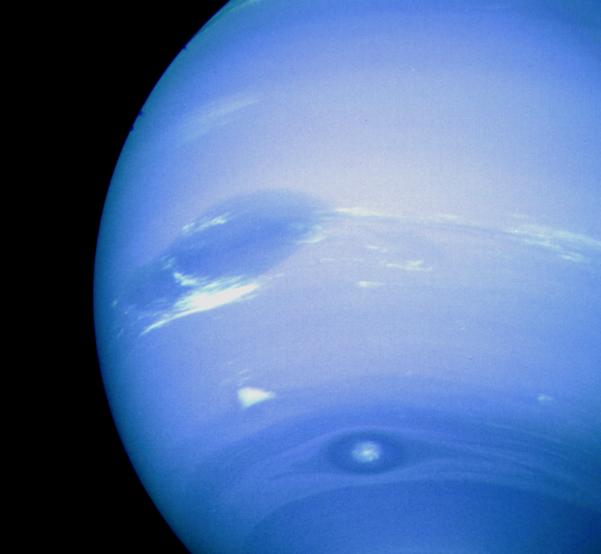
Today in science: Discovery of Neptune
Astronomers found the outermost major planet in our solar system — Neptune — on September 23, 1846. It was the first planet to be discovered through mathematics.
Johann Gottfried Galle, Urbain Jean Joseph Le Verrier and John Couch Adams all worked independently to help find this distant world, which isn’t visible to the eye. Their separate endeavors led to an international dispute as to who should get the credit for Neptune’s discovery.
A telescope is necessary to see Neptune. However, it wasn’t the key to Neptune’s discovery. Instead, it came from astronomers’ analysis of data related to the orbit of Uranus. Astronomers noticed that Uranus wasn’t quite where their mathematical models said it would be. And in trying to explain that, they came to discover Neptune. Here’s how.
Deviations in the orbit of Uranus led to discovering Neptune
There were many different explanations considered at the time for why Uranus was deviating from its predicted orbit. One idea was that Newton’s law of universal gravitation ceased to work or worked differently at such great distances from our sun.
But assuming that gravity works the same throughout space, what could be causing the discrepancies in Uranus’ orbit? Astronomers started to consider whether another planet could be lying beyond Uranus and influencing it with its gravity.
The French astronomer Urbain Le Verrier began using mathematics to try to locate the mystery planet’s position in June 1845. The British astronomer John Couch Adams was also working on this problem. Neither was aware of the other’s calculations.
Le Verrier made a prediction and gave it to astronomer Johann Gottfried Galle to test at the Berlin Observatory. And on September 23, 1846, Galle used Le Verrier’s calculations to find Neptune. It was only 1° off Le Verrier’s predicted position, and 12° off Adams’ prediction.
Who really discovered Neptune?
After Neptune’s discovery, an international dispute arose concerning who was the ‘real’ discoverer of the new planet, Le Verrier or Adams. The existing political tensions between France and Great Britain amplified this conflict. Today, both of them — and Galle, who was the first to knowingly see the new planet through a telescope — share the credit for the discovery.
Ironically, as it turns out, both Le Verrier and Adams had been very lucky. Their predictions contained errors, but happened to put Neptune in roughly the right place around 1840–1850, when they were looking for it.
Galileo recorded Neptune as a faint star
By the way, it was possible to discover Neptune simply by using a telescope. Like all planets in our solar system — because it’s closer to us than the stars — it can be seen from Earth to move relative to the starry background.
The great astronomer Galileo, using one of the first telescopes, apparently recorded Neptune in 1612, but thought it was a star. If he had watched it over several weeks, he’d have noticed its unusual motion.
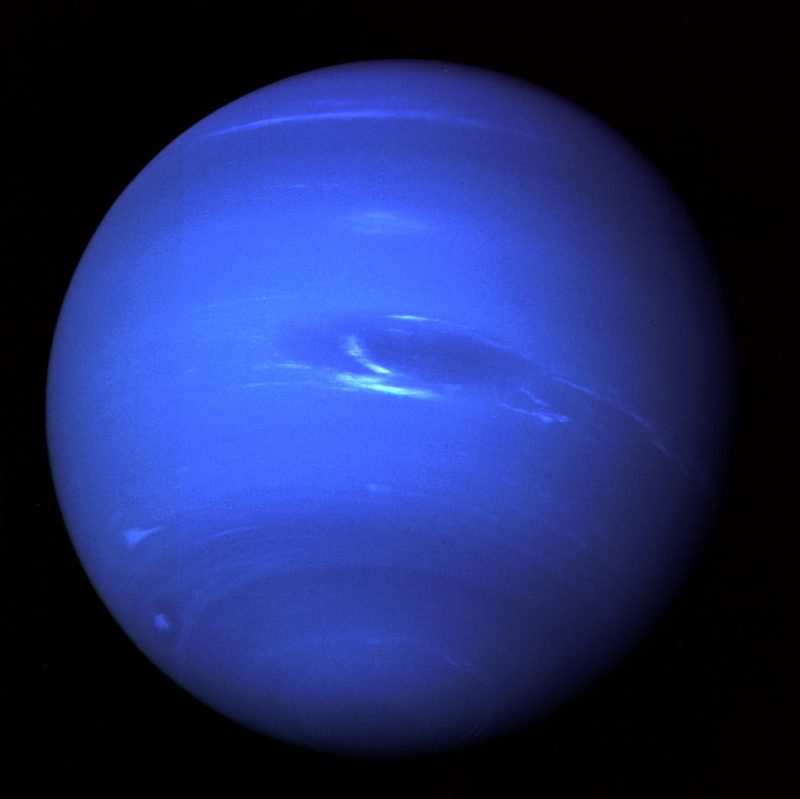
Bottom line: Neptune, the outermost major planet in our solar system, was found on September 23, 1846. It was the first planet to be discovered not solely by looking in the sky … but by using mathematics.
Read more: Neptune at opposition on September 26, 2026
Read more: Voyager 2 confirms Neptune’s rings on August 22 in 1989
The post Neptune discovered on this date 180 years ago first appeared on EarthSky.
from EarthSky https://ift.tt/dzc1qfl
Today in science: Discovery of Neptune
Astronomers found the outermost major planet in our solar system — Neptune — on September 23, 1846. It was the first planet to be discovered through mathematics.
Johann Gottfried Galle, Urbain Jean Joseph Le Verrier and John Couch Adams all worked independently to help find this distant world, which isn’t visible to the eye. Their separate endeavors led to an international dispute as to who should get the credit for Neptune’s discovery.
A telescope is necessary to see Neptune. However, it wasn’t the key to Neptune’s discovery. Instead, it came from astronomers’ analysis of data related to the orbit of Uranus. Astronomers noticed that Uranus wasn’t quite where their mathematical models said it would be. And in trying to explain that, they came to discover Neptune. Here’s how.
Deviations in the orbit of Uranus led to discovering Neptune
There were many different explanations considered at the time for why Uranus was deviating from its predicted orbit. One idea was that Newton’s law of universal gravitation ceased to work or worked differently at such great distances from our sun.
But assuming that gravity works the same throughout space, what could be causing the discrepancies in Uranus’ orbit? Astronomers started to consider whether another planet could be lying beyond Uranus and influencing it with its gravity.
The French astronomer Urbain Le Verrier began using mathematics to try to locate the mystery planet’s position in June 1845. The British astronomer John Couch Adams was also working on this problem. Neither was aware of the other’s calculations.
Le Verrier made a prediction and gave it to astronomer Johann Gottfried Galle to test at the Berlin Observatory. And on September 23, 1846, Galle used Le Verrier’s calculations to find Neptune. It was only 1° off Le Verrier’s predicted position, and 12° off Adams’ prediction.
Who really discovered Neptune?
After Neptune’s discovery, an international dispute arose concerning who was the ‘real’ discoverer of the new planet, Le Verrier or Adams. The existing political tensions between France and Great Britain amplified this conflict. Today, both of them — and Galle, who was the first to knowingly see the new planet through a telescope — share the credit for the discovery.
Ironically, as it turns out, both Le Verrier and Adams had been very lucky. Their predictions contained errors, but happened to put Neptune in roughly the right place around 1840–1850, when they were looking for it.
Galileo recorded Neptune as a faint star
By the way, it was possible to discover Neptune simply by using a telescope. Like all planets in our solar system — because it’s closer to us than the stars — it can be seen from Earth to move relative to the starry background.
The great astronomer Galileo, using one of the first telescopes, apparently recorded Neptune in 1612, but thought it was a star. If he had watched it over several weeks, he’d have noticed its unusual motion.
Bottom line: Neptune, the outermost major planet in our solar system, was found on September 23, 1846. It was the first planet to be discovered not solely by looking in the sky … but by using mathematics.
Read more: Neptune at opposition on September 26, 2026
Read more: Voyager 2 confirms Neptune’s rings on August 22 in 1989
The post Neptune discovered on this date 180 years ago first appeared on EarthSky.
from EarthSky https://ift.tt/dzc1qfl

Aucun commentaire:
Enregistrer un commentaire