
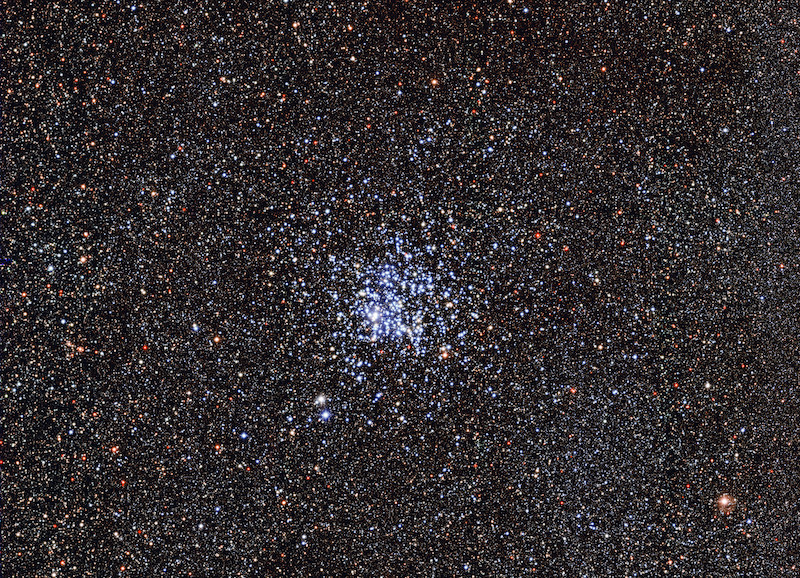
The Wild Duck cluster, also known as Messier 11 or M11, is a distant open star cluster. That is, a loosely bound collection of stars that were born from the same gas cloud.
The Wild Duck cluster lies in the direction of the constellation Scutum the Shield. Its distance of 6,120 light-years means it’s quite faint. So, you’ll need binoculars or a telescope to see it. Here’s how.
How to find the Wild Duck cluster
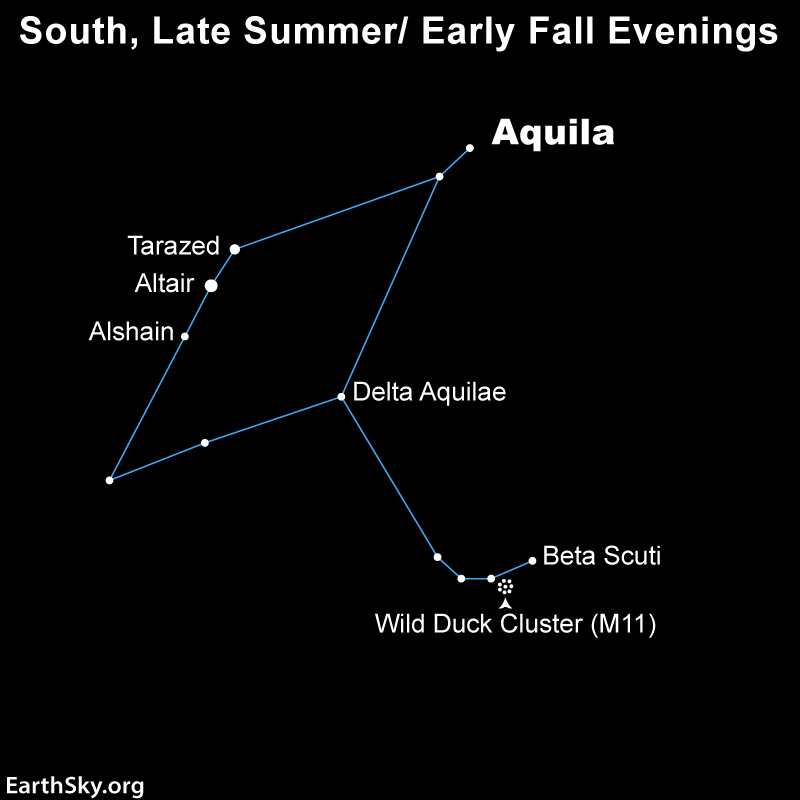
To find M11, first locate the bright star Altair in the sky. It is the brightest star in the constellation Aquila the Eagle, and the second brightest star in the Summer Triangle. Altair is flanked on each side by the two moderately bright stars Tarazed and Alshain.
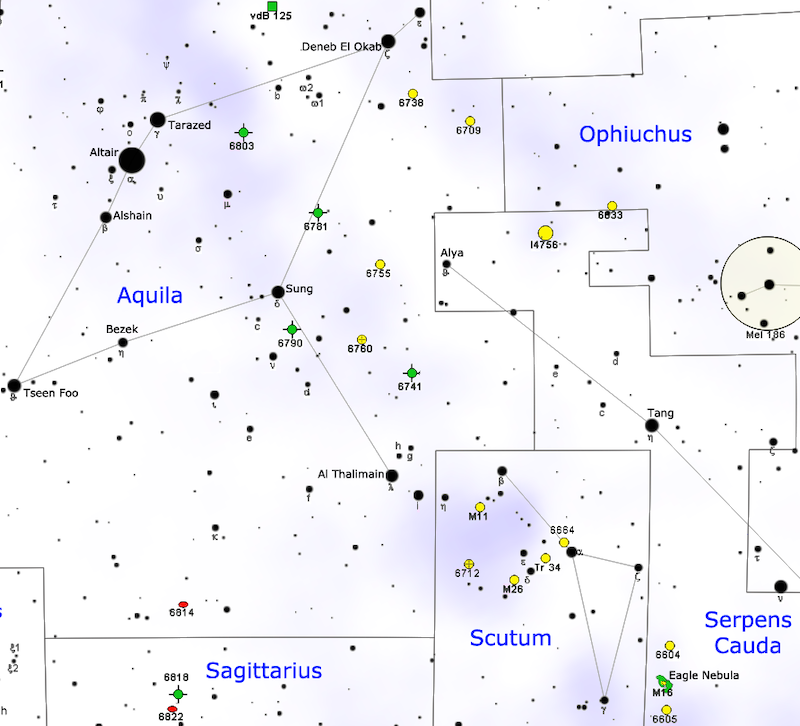
From Altair, following the chart below, you can star-hop toward the Wild Duck cluster. Delta Aquilae is your first hop, about 8 degrees from Altair. (For reference, the width of four fingers held at arm’s length is about 8 degrees in the sky.)
Then, using binoculars, keep going downward a bit more than twice the Altair-Delta Aquilae distance, until you see a semicircle of stars that pretty much fills your binocular field. The Wild Duck cluster pops out as a hazy star-like object just beneath this semicircle star pattern.
When to look
Tthe Wild Duck cluster appears best when it’s relatively high in the southern sky. In the Northern Hemisphere, that’s in the wee hours before sunrise in spring, late night in early summer, and mid-evening in late summer and early fall.
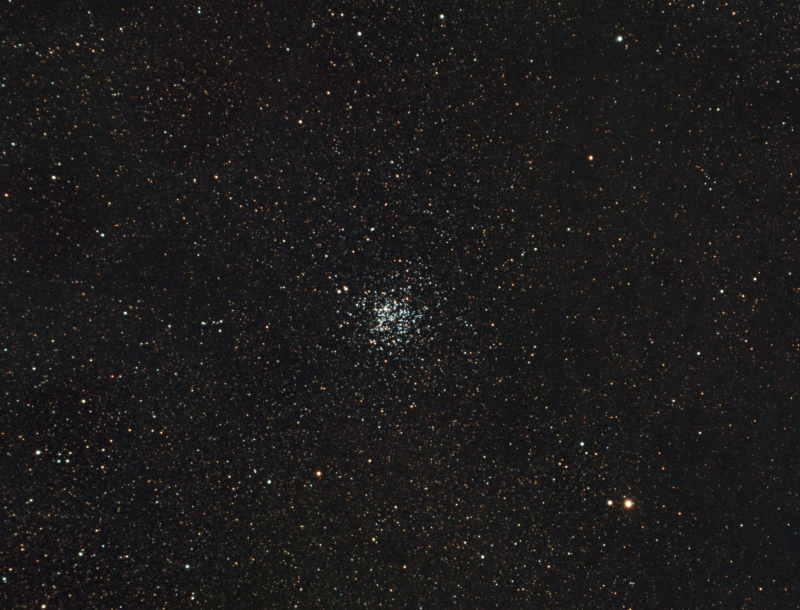
The science of M11
M11 is an open star cluster like the Pleiades and the Hyades, but it’s much farther away. The Pleiades cluster lies 444 light-years away and the Hyades cluster is just 153 light-years away. Compare those to the Wild Duck cluster, which sits about 6,120 light-years away.
Basically, an open star cluster is a group of stars that formed from the same giant cloud of mostly molecular hydrogen. These gas and dust clouds are nebulae that contain stellar nurseries. Initially, the young stars are loosely bound together by gravity, and they eventually disperse over time.
With about 3,000 stars, M11 is one of the most massive open star clusters known. The hottest, bluest stars congregate at the center. Scientists think the cluster formed between 250 to 316 million years ago. Astronomers refer to it as a metal-rich cluster because a nearby supernova likely seeded its molecular cloud with heavier elements, or more metallic elements in the language of astronomers.
The history of the Wild Duck cluster
In 1733, English naturalist William Derham was able to resolve the Wild Duck cluster as individual stars through a telescope. Not long after, in 1764, French astronomer Charles Messier added it to his famous catalog. Originally, M11 got its unusual name of the Wild Duck cluster from Admiral William Henry Smyth. While observing the cluster through a telescope in 1835, Smyth noted a V-shaped pattern of its brightest stars that reminded him of the flight formation of wild ducks.
The Wild Duck cluster is positioned at RA: 18h 51m 5s; Dec: -6° 16′ 12″.
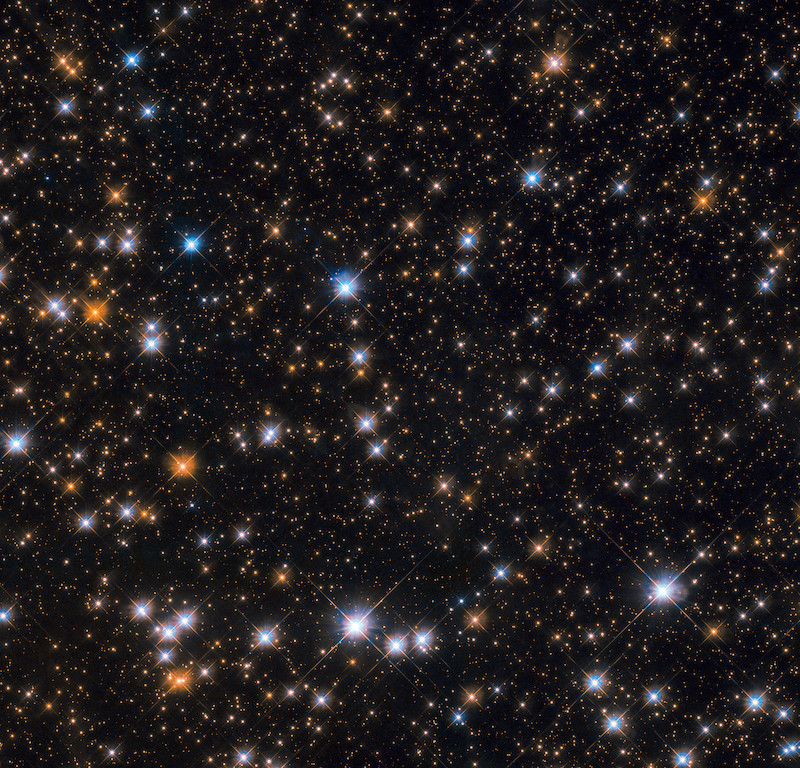
Bottom line: The Wild Duck cluster, also known as M11, is an open star cluster in the constellation Scutum that appears best through binoculars or a telescope.
The post The Wild Duck cluster, M11, a lovely open cluster in Scutum first appeared on EarthSky.
from EarthSky https://ift.tt/zhqvNrf
The Wild Duck cluster, also known as Messier 11 or M11, is a distant open star cluster. That is, a loosely bound collection of stars that were born from the same gas cloud.
The Wild Duck cluster lies in the direction of the constellation Scutum the Shield. Its distance of 6,120 light-years means it’s quite faint. So, you’ll need binoculars or a telescope to see it. Here’s how.
How to find the Wild Duck cluster
To find M11, first locate the bright star Altair in the sky. It is the brightest star in the constellation Aquila the Eagle, and the second brightest star in the Summer Triangle. Altair is flanked on each side by the two moderately bright stars Tarazed and Alshain.
From Altair, following the chart below, you can star-hop toward the Wild Duck cluster. Delta Aquilae is your first hop, about 8 degrees from Altair. (For reference, the width of four fingers held at arm’s length is about 8 degrees in the sky.)
Then, using binoculars, keep going downward a bit more than twice the Altair-Delta Aquilae distance, until you see a semicircle of stars that pretty much fills your binocular field. The Wild Duck cluster pops out as a hazy star-like object just beneath this semicircle star pattern.
When to look
Tthe Wild Duck cluster appears best when it’s relatively high in the southern sky. In the Northern Hemisphere, that’s in the wee hours before sunrise in spring, late night in early summer, and mid-evening in late summer and early fall.
The science of M11
M11 is an open star cluster like the Pleiades and the Hyades, but it’s much farther away. The Pleiades cluster lies 444 light-years away and the Hyades cluster is just 153 light-years away. Compare those to the Wild Duck cluster, which sits about 6,120 light-years away.
Basically, an open star cluster is a group of stars that formed from the same giant cloud of mostly molecular hydrogen. These gas and dust clouds are nebulae that contain stellar nurseries. Initially, the young stars are loosely bound together by gravity, and they eventually disperse over time.
With about 3,000 stars, M11 is one of the most massive open star clusters known. The hottest, bluest stars congregate at the center. Scientists think the cluster formed between 250 to 316 million years ago. Astronomers refer to it as a metal-rich cluster because a nearby supernova likely seeded its molecular cloud with heavier elements, or more metallic elements in the language of astronomers.
The history of the Wild Duck cluster
In 1733, English naturalist William Derham was able to resolve the Wild Duck cluster as individual stars through a telescope. Not long after, in 1764, French astronomer Charles Messier added it to his famous catalog. Originally, M11 got its unusual name of the Wild Duck cluster from Admiral William Henry Smyth. While observing the cluster through a telescope in 1835, Smyth noted a V-shaped pattern of its brightest stars that reminded him of the flight formation of wild ducks.
The Wild Duck cluster is positioned at RA: 18h 51m 5s; Dec: -6° 16′ 12″.
Bottom line: The Wild Duck cluster, also known as M11, is an open star cluster in the constellation Scutum that appears best through binoculars or a telescope.
The post The Wild Duck cluster, M11, a lovely open cluster in Scutum first appeared on EarthSky.
from EarthSky https://ift.tt/zhqvNrf

Aucun commentaire:
Enregistrer un commentaire