
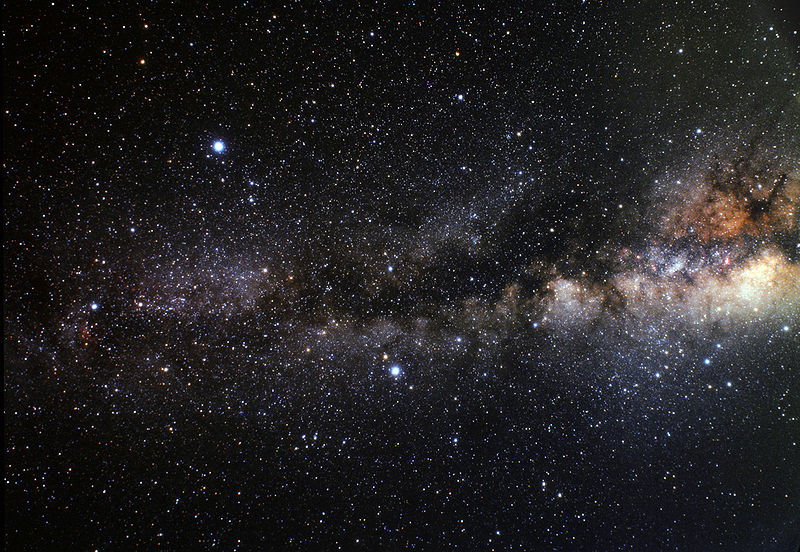
- The Milky Way is the edgewise view into our home galaxy. It has an estimated 100 to 400 billion stars. So why does it contain a great dark patch?
- The dark patch is a region of vast star-forming clouds called the Great Rift. This long swath of gaseous interstellar clouds darkens a stretch of the starry band of the Milky Way in our sky.
- You need a dark sky to see the Great Rift. If you do see it, know that new stars are being born there, shrouded in their gas-and-dust cocoons.
The Great Rift: How to see it
A moonless night in August is an ideal time to look for the Great Rift in the starry band of the Milky Way. Under a dark sky, far from city lights, the Milky Way is easy to see stretching across the sky at this time of year. The Great Rift appears as dark lanes of dust running the length of the starlit Milky Way band.
You can see the Milky Way most easily in the evening from around June or July through about October. From a Northern Hemisphere location, you’ll see the thickest part of the Milky Way above the southern horizon. From the Southern Hemisphere, the thickest part of the Milky Way appears more overhead.
The Milky Way band looks milky white, which is where it gets its name. The skies aren’t black like ink between stars in the Milky Way. So you’ll know when you see the Great Rift, which looks as if someone took a marker and colored parts of the Milky Way darker.

Constellations along the Great Rift
The Great Rift begins just above the constellation Sagittarius the Archer. Follow the Milky Way up until you see a black area in the Milky Way, just before you get to the constellation Cygnus the Swan. Cygnus is shaped like a cross. Deneb is the brightest star in Cygnus and part of the famous Summer Triangle asterism. You can see the Great Rift inside the Summer Triangle.
Be sure to keep your binoculars handy for any Milky Way viewing session. There are many interesting star-forming regions, star clusters and millions of stars that will capture your attention.
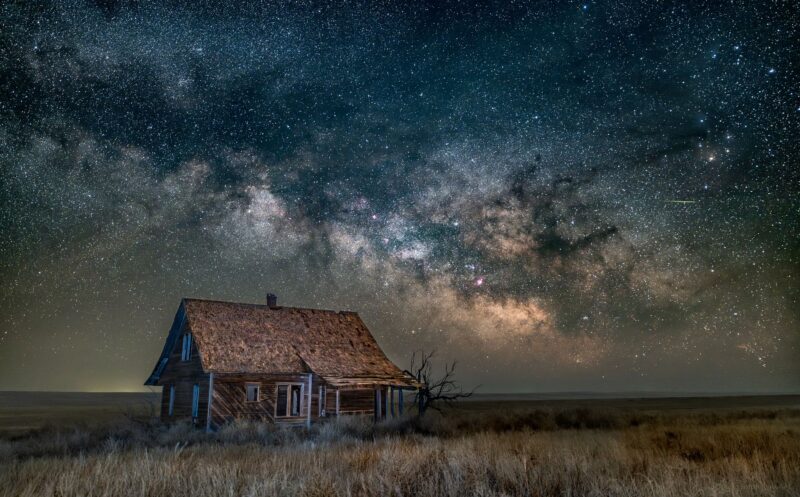
The Great Rift is dark due to dust
Stars are formed from great clouds of gas and dust in our Milky Way galaxy and other galaxies. When we look up at the starry band of the Milky Way and see the Great Rift, we are looking into our galaxy’s star-forming regions. Imagine the vast number of new stars that will emerge, in time, from these clouds of dust.
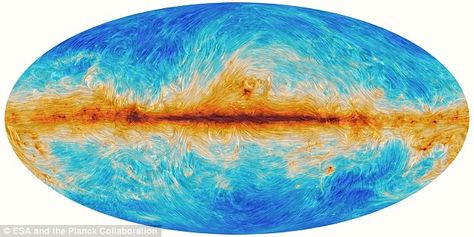
Ancient cultures focused on dark areas, not light areas
You know those paintings where if you look at the light areas you see one thing, but in the dark areas you see something else?
The Great Rift is a bit like that. A few ancient cultures in Central and South America saw the dark areas of the Milky Way as constellations. These dark constellations had a variety of myths associated with them. For example, one important dark constellation was Yacana the Llama. It rises above Cuzco, the ancient city of the Incas, every year in November.
There are several Aboriginal Australian myths about the Great Rift. Some groups believe that ancestor spirits reside by this river in the sky, with the stars along its banks representing fish or their campfires. Others identify it with the Rainbow Serpent, often associated with water, life, and creation. Another interpretation involves the Emu in the Sky, a constellation formed by the dark patches of the Great Rift.
By the way, the other famous area of the sky that is obscured by molecular dust is visible from the Southern Hemisphere. It’s the famous Coalsack nebula near the Southern Cross, also known as the constellation Crux. The Coalsack is another region of star-forming activity in our night sky, much like the Great Rift.
Bottom line: The Great Rift or Dark Rift is a darkened swath of the Milky Way where new stars are forming. It’s best seen from a rural location away from light pollution.
Summer Triangle: Star pattern of the season
What is the Milky Way? It’s our home galaxy
The post The Great Rift is a dark swath in the Milky Way first appeared on EarthSky.
from EarthSky https://ift.tt/CJ4udK9
- The Milky Way is the edgewise view into our home galaxy. It has an estimated 100 to 400 billion stars. So why does it contain a great dark patch?
- The dark patch is a region of vast star-forming clouds called the Great Rift. This long swath of gaseous interstellar clouds darkens a stretch of the starry band of the Milky Way in our sky.
- You need a dark sky to see the Great Rift. If you do see it, know that new stars are being born there, shrouded in their gas-and-dust cocoons.
The Great Rift: How to see it
A moonless night in August is an ideal time to look for the Great Rift in the starry band of the Milky Way. Under a dark sky, far from city lights, the Milky Way is easy to see stretching across the sky at this time of year. The Great Rift appears as dark lanes of dust running the length of the starlit Milky Way band.
You can see the Milky Way most easily in the evening from around June or July through about October. From a Northern Hemisphere location, you’ll see the thickest part of the Milky Way above the southern horizon. From the Southern Hemisphere, the thickest part of the Milky Way appears more overhead.
The Milky Way band looks milky white, which is where it gets its name. The skies aren’t black like ink between stars in the Milky Way. So you’ll know when you see the Great Rift, which looks as if someone took a marker and colored parts of the Milky Way darker.
Constellations along the Great Rift
The Great Rift begins just above the constellation Sagittarius the Archer. Follow the Milky Way up until you see a black area in the Milky Way, just before you get to the constellation Cygnus the Swan. Cygnus is shaped like a cross. Deneb is the brightest star in Cygnus and part of the famous Summer Triangle asterism. You can see the Great Rift inside the Summer Triangle.
Be sure to keep your binoculars handy for any Milky Way viewing session. There are many interesting star-forming regions, star clusters and millions of stars that will capture your attention.
The Great Rift is dark due to dust
Stars are formed from great clouds of gas and dust in our Milky Way galaxy and other galaxies. When we look up at the starry band of the Milky Way and see the Great Rift, we are looking into our galaxy’s star-forming regions. Imagine the vast number of new stars that will emerge, in time, from these clouds of dust.
Ancient cultures focused on dark areas, not light areas
You know those paintings where if you look at the light areas you see one thing, but in the dark areas you see something else?
The Great Rift is a bit like that. A few ancient cultures in Central and South America saw the dark areas of the Milky Way as constellations. These dark constellations had a variety of myths associated with them. For example, one important dark constellation was Yacana the Llama. It rises above Cuzco, the ancient city of the Incas, every year in November.
There are several Aboriginal Australian myths about the Great Rift. Some groups believe that ancestor spirits reside by this river in the sky, with the stars along its banks representing fish or their campfires. Others identify it with the Rainbow Serpent, often associated with water, life, and creation. Another interpretation involves the Emu in the Sky, a constellation formed by the dark patches of the Great Rift.
By the way, the other famous area of the sky that is obscured by molecular dust is visible from the Southern Hemisphere. It’s the famous Coalsack nebula near the Southern Cross, also known as the constellation Crux. The Coalsack is another region of star-forming activity in our night sky, much like the Great Rift.
Bottom line: The Great Rift or Dark Rift is a darkened swath of the Milky Way where new stars are forming. It’s best seen from a rural location away from light pollution.
Summer Triangle: Star pattern of the season
What is the Milky Way? It’s our home galaxy
The post The Great Rift is a dark swath in the Milky Way first appeared on EarthSky.
from EarthSky https://ift.tt/CJ4udK9

Aucun commentaire:
Enregistrer un commentaire