
14 years ago on August 5: A nail-biter of a Mars landing
On August 5, 2012, NASA achieved one of the most challenging feats in planetary exploration: landing the Curiosity rover safely on Mars. The rover was not just another spacecraft reaching the red planet — it was a 1-ton (900 kg) mobile laboratory that needed a completely new landing system to reach the surface.
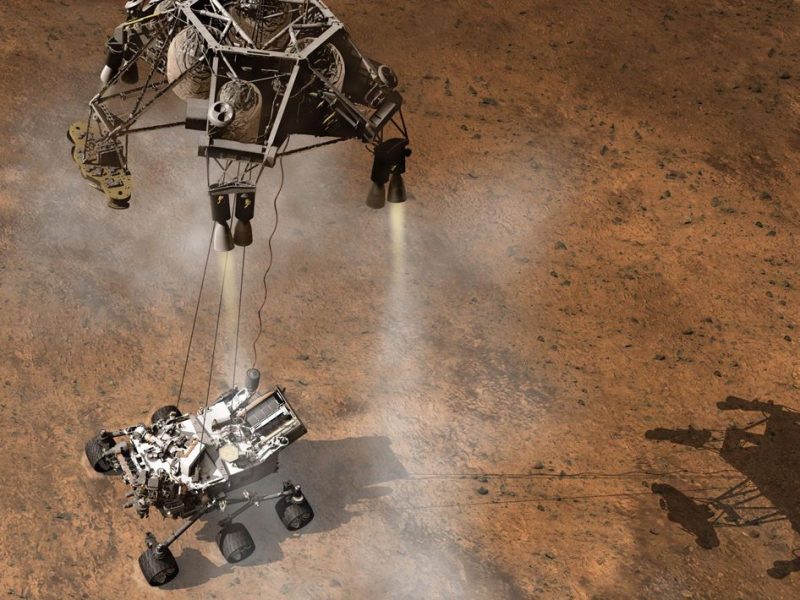
After entering Mars’ atmosphere at around 13,000 miles per hour (about 21,000 kph), Curiosity had only seven minutes to slow down, navigate through the thin Mars atmosphere, deploy a parachute and be lowered gently to the ground by a rocket-powered “sky crane.” Engineers couldn’t control the landing in real time; they could only wait for the signals to arrive from Mars.
Those seven minutes became known as the “seven minutes of terror” — a dramatic name for a sequence in which years of engineering had to work perfectly on another planet.
Getting there is easy, but landing there is not
Years before the landing of Curiosity, in 2003, veteran NASA official Firouz Naderi summed up Mars’ historical significance for space exploration:
Mars is a favorite target.
We – the United States and former USSR – have been going to Mars for 40 years. The first time we flew by a planet, it was Mars. The first time we orbited a planet, it was Mars. And the first time we landed on a planet it was Mars. The first time we roved around the surface of a planet, it was Mars. We go there often.
At that time – around the turn of this century – the world was averaging about two failures for every three spacecraft launched toward Mars, according to NASA. In fact, there were a total of 39 Mars missions launched and 25 failures, or partial failures, by the year 2000, according to Wikipedia.
But then we got better at it. And as the video above shows, Curiosity’s landing used a combination of complicated new technologies, including a new guided entry system and a rocket-powered sky crane that used cables to lower the 1-ton (900 kg) robot rover to the Martian surface.
Mars Curiosity rover is still going strong
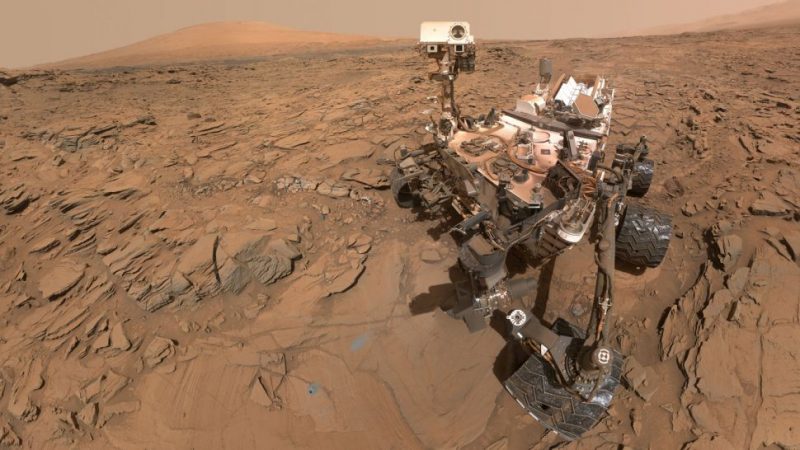
Since 2012, Curiosity has been crawling across Mars’ surface and exploring Gale crater. The rover has traveled more than 20 miles (32 km) across Mars. It has learned, among many other things, that Gale crater might once have held a great salty lake.
Read more: Mars rover Curiosity heads for intriguing ‘spiderwebs’
Read more: Martian rock crushed by Curiosity hides a surprise!
Perseverance was the next to land
Curiosity was followed to Mars by another robot rover, Perseverance, which launched from Earth on July 30, 2020. Finally, Perseverance touched down on Mars landing in Jezero crater on February 18, 2021. Perseverance is largely the same design as Curiosity. When the $2.4 billion spacecraft carrying it reached Mars, it also hit the atmosphere at high speed (more than 12,000 miles per hour or 19,000 kph) and then came to a complete stop on Mars’ surface seven minutes later. Like Curiosity, it landed via “sky crane,” but with one big difference: the sky crane technology was now tried-and-true.
Still, as with Curiosity, space engineers surely experienced a nail-biting seven minutes, waiting to hear that the Perseverance rover had set down successfully, as gently as it could, on Mars’ surface.
There, it joined the other rovers in the search for life on Mars and an exploration of the planet’s surface, atmosphere and history. Perseverance brought with it a special helicopter named Ingenuity, that explored the Martian surface as well until its mission ended in January 2024.
Why focus so many spacecraft on Mars?
Read more from the NY Times: Too much Mars? This is an interesting discussion between two veteran space journalists about why Mars seems to absorb so much of the oxygen – and budgetary resources – in the rooms where explorations of our solar system are decided.
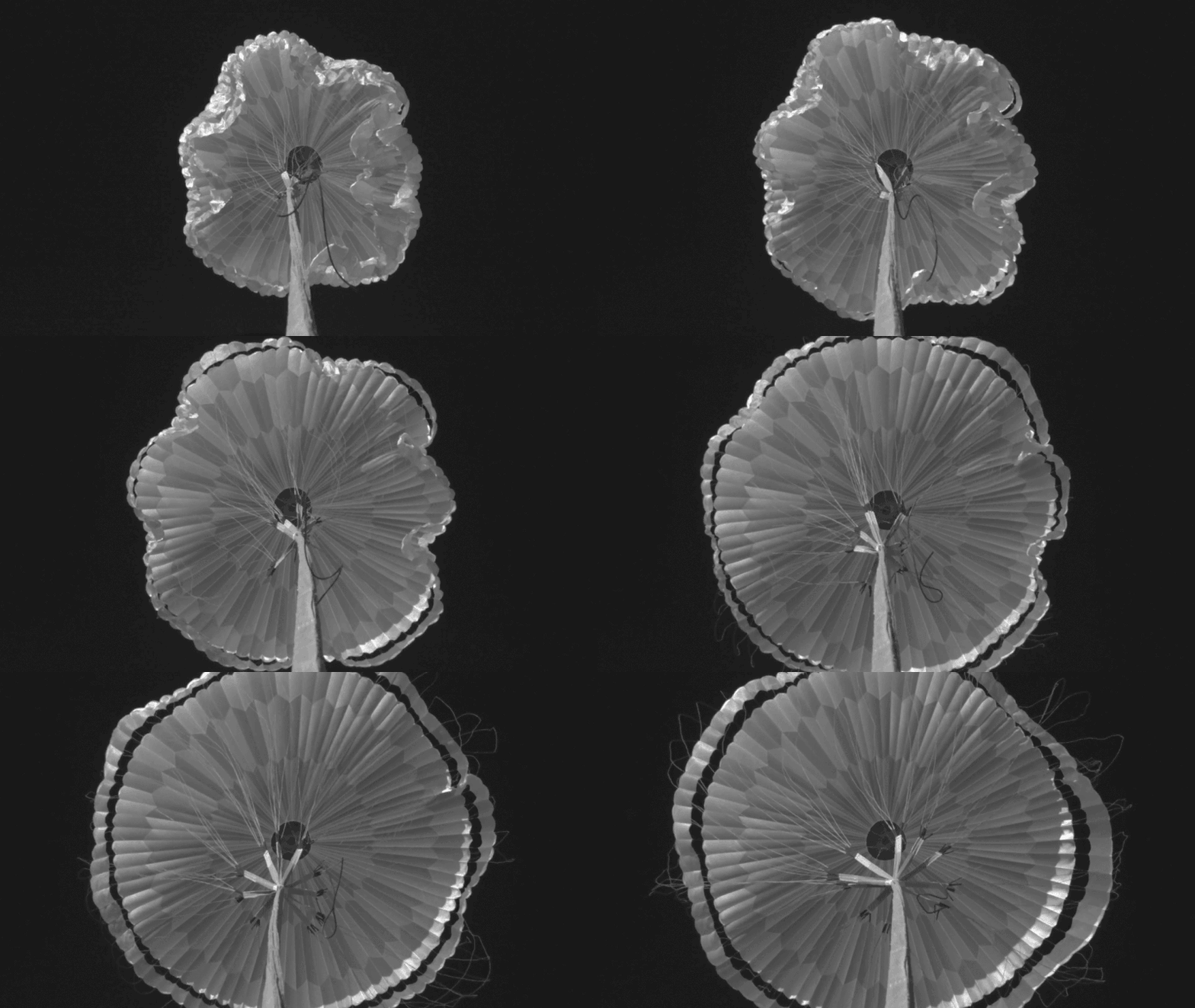
Why is landing on Mars so hard? This 2017 video from MinutePhysics does a great job of explaining it:
Bottom line: Watch a NASA video describing the final seven minutes of the Curiosity rover’s chilling descent to the surface of Mars 14 years ago on August 5, 2012.
Read more: Curiosity rover on Mars snags highest-resolution panorama yet
Read more: Mars rover measures key life ingredient
The post Mars Curiosity rover’s 7 minutes of terror 14 years ago first appeared on EarthSky.
from EarthSky https://ift.tt/dWpJ6vY
14 years ago on August 5: A nail-biter of a Mars landing
On August 5, 2012, NASA achieved one of the most challenging feats in planetary exploration: landing the Curiosity rover safely on Mars. The rover was not just another spacecraft reaching the red planet — it was a 1-ton (900 kg) mobile laboratory that needed a completely new landing system to reach the surface.
After entering Mars’ atmosphere at around 13,000 miles per hour (about 21,000 kph), Curiosity had only seven minutes to slow down, navigate through the thin Mars atmosphere, deploy a parachute and be lowered gently to the ground by a rocket-powered “sky crane.” Engineers couldn’t control the landing in real time; they could only wait for the signals to arrive from Mars.
Those seven minutes became known as the “seven minutes of terror” — a dramatic name for a sequence in which years of engineering had to work perfectly on another planet.
Getting there is easy, but landing there is not
Years before the landing of Curiosity, in 2003, veteran NASA official Firouz Naderi summed up Mars’ historical significance for space exploration:
Mars is a favorite target.
We – the United States and former USSR – have been going to Mars for 40 years. The first time we flew by a planet, it was Mars. The first time we orbited a planet, it was Mars. And the first time we landed on a planet it was Mars. The first time we roved around the surface of a planet, it was Mars. We go there often.
At that time – around the turn of this century – the world was averaging about two failures for every three spacecraft launched toward Mars, according to NASA. In fact, there were a total of 39 Mars missions launched and 25 failures, or partial failures, by the year 2000, according to Wikipedia.
But then we got better at it. And as the video above shows, Curiosity’s landing used a combination of complicated new technologies, including a new guided entry system and a rocket-powered sky crane that used cables to lower the 1-ton (900 kg) robot rover to the Martian surface.
Mars Curiosity rover is still going strong
Since 2012, Curiosity has been crawling across Mars’ surface and exploring Gale crater. The rover has traveled more than 20 miles (32 km) across Mars. It has learned, among many other things, that Gale crater might once have held a great salty lake.
Read more: Mars rover Curiosity heads for intriguing ‘spiderwebs’
Read more: Martian rock crushed by Curiosity hides a surprise!
Perseverance was the next to land
Curiosity was followed to Mars by another robot rover, Perseverance, which launched from Earth on July 30, 2020. Finally, Perseverance touched down on Mars landing in Jezero crater on February 18, 2021. Perseverance is largely the same design as Curiosity. When the $2.4 billion spacecraft carrying it reached Mars, it also hit the atmosphere at high speed (more than 12,000 miles per hour or 19,000 kph) and then came to a complete stop on Mars’ surface seven minutes later. Like Curiosity, it landed via “sky crane,” but with one big difference: the sky crane technology was now tried-and-true.
Still, as with Curiosity, space engineers surely experienced a nail-biting seven minutes, waiting to hear that the Perseverance rover had set down successfully, as gently as it could, on Mars’ surface.
There, it joined the other rovers in the search for life on Mars and an exploration of the planet’s surface, atmosphere and history. Perseverance brought with it a special helicopter named Ingenuity, that explored the Martian surface as well until its mission ended in January 2024.
Why focus so many spacecraft on Mars?
Read more from the NY Times: Too much Mars? This is an interesting discussion between two veteran space journalists about why Mars seems to absorb so much of the oxygen – and budgetary resources – in the rooms where explorations of our solar system are decided.
Why is landing on Mars so hard? This 2017 video from MinutePhysics does a great job of explaining it:
Bottom line: Watch a NASA video describing the final seven minutes of the Curiosity rover’s chilling descent to the surface of Mars 14 years ago on August 5, 2012.
Read more: Curiosity rover on Mars snags highest-resolution panorama yet
Read more: Mars rover measures key life ingredient
The post Mars Curiosity rover’s 7 minutes of terror 14 years ago first appeared on EarthSky.
from EarthSky https://ift.tt/dWpJ6vY

Aucun commentaire:
Enregistrer un commentaire