
Lake Powell hits record low

In late July, we told you Lake Powell in the Glen Canyon National Recreation Area of Utah was shrinking. On July 29, the lake level was at 3,522.78 feet. The record for the lowest level on Lake Powell is 3,519.92 feet, which it reached on April 13, 2023. But in August, Lake Powell broke the record low. Now, as of August 31, 2026, it’s at 3,517.97 feet and still dropping.
At full capacity, the lake holds more than 23 million acre-feet of water (28 billion cubic meters).
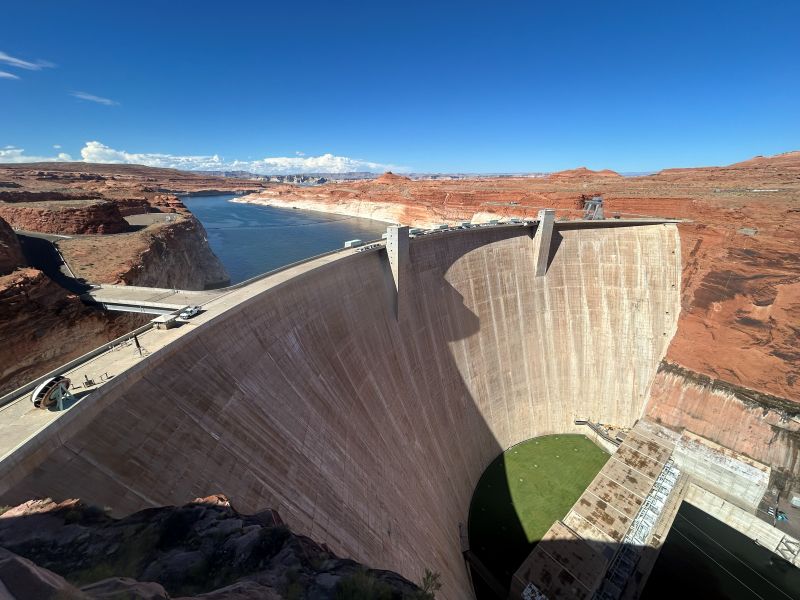
Could Lake Powell hit dead pool? Dead pool is when water in a reservoir drops so low that it can’t flow downstream from the dam. It would have serious consequences for the people and farmland downstream. There is also a turbine at the base of Glen Canyon Dam. If the water level were to drop low enough, the turbine would lose capacity to produce power. As of August 31, Lake Powell is 147.97 ft above dead pool. That’s a steady drop from late July, when it was 152.78 ft above dead pool. But it’s still a ways from dead pool. A July report from the Bureau of Reclamation said Lake Powell could hit dead pool in spring 2027.
It’s not a natural lake
Lake Powell is a human-made reservoir on the Colorado River that runs from Arizona into Utah. The completion of Glen Canyon Dam on the Colorado River in 1963 created Lake Powell. When full, it’s the 2nd-largest reservoir in the United States, behind Lake Mead. But drought over the past decades has caused Lake Powell to shrink. As of late summer 2026, it had reached its lowest summer level ever, at only about 22% capacity.
Is there hope for rain and snow?
We are currently in the middle of monsoon season in the American Southwest. And there has been rain. But, unfortunately, that rain often comes in one big outburst, creating dangerous flash flooding conditions. Heavy rainfall fell in the Grand Canyon area on Saturday, August 29, 2026, destroying small bridges in the Phantom Ranch area of the park and washing away a worker’s bunkhouse. Currently, one person has been killed and 15 are still unaccounted for. Some 50 people were airlifted out of the canyon by helicopter and numerous areas of the park are closed.
So far, halfway through monsoon season, the rains haven’t made much of a dent in the drought. We are also entering not only an El Niño year, but very likely a supercharged one. So there is some hope that El Niño could lead to increased snowfall this winter. But at this point we still must wait to see how the season unfolds.
Why are Lakes Powell and Mead and the Colorado River shrinking?
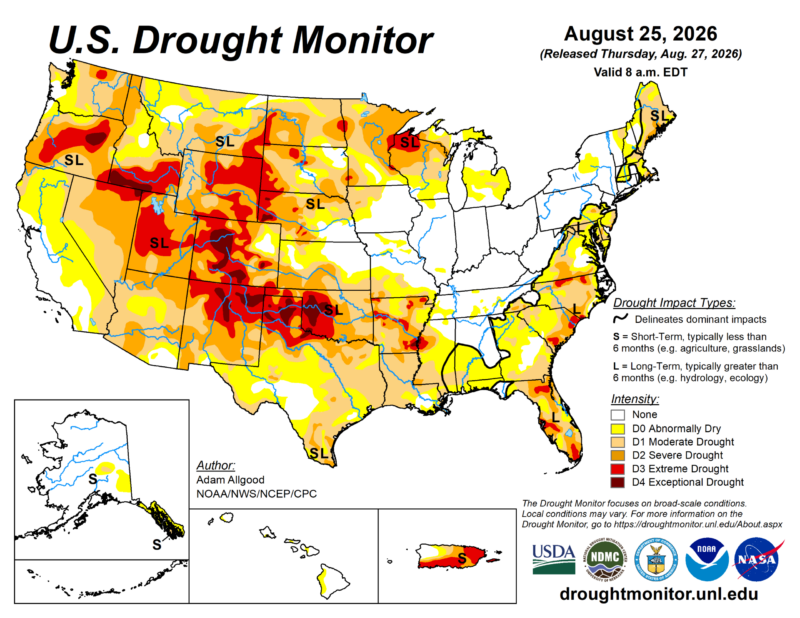
There are a number of factors putting stress on these bodies of water. One is the increased demand as our population grows. The water downstream is used for drinking, but the majority of it is used in farming. And climate change has also been another big factor, leading to hotter weather, more evaporation, less precipitation and smaller snowpack. Plus, one major factor for the low water level this year is the incredibly dry winter this region of the country experienced in 2025-2026.
A water supply crisis
Lake Mead and Lake Powell hold nearly 60% of the Colorado River Basin’s water. Some 40 million people rely on this water. But currently, those lakes are at their lowest level in about 70 years. As the July report said:
Lake Powell and Lake Mead essentially comprise one gigantic reservoir, separated into two parts by the Grand Canyon.
Every day going forward, until runoff from the 2026-2027 winter snowpack begins next spring, a new record low will likely be set. This is a significant moment in the evolving Colorado River water supply crisis.
Recreation on Lake Powell is also dwindling
Mid-summer, there were still people boating in Lake Powell. But that’s getting more difficult as the majority of boat launches are now closed. The boat ramp at Bullfrog Marina has been extended so much that at this point, an observer noted, it’s long enough for a small plane to land on it.
If you want to visit and bring your own boat, make sure you check this page to be sure a launch site is open for your needs.
Bottom line: Lake Powell has now hit its lowest level ever. Despite the monsoonal rains, like the flash floods that hit the Grand Canyon over the weekend, the water level continues to drop.
Source: A Significant Moment in the Colorado River Water Supply Crisis
The post Lake Powell hits record low, continues to drop first appeared on EarthSky.
from EarthSky https://ift.tt/dyZBkrm
Lake Powell hits record low
In late July, we told you Lake Powell in the Glen Canyon National Recreation Area of Utah was shrinking. On July 29, the lake level was at 3,522.78 feet. The record for the lowest level on Lake Powell is 3,519.92 feet, which it reached on April 13, 2023. But in August, Lake Powell broke the record low. Now, as of August 31, 2026, it’s at 3,517.97 feet and still dropping.
At full capacity, the lake holds more than 23 million acre-feet of water (28 billion cubic meters).
Could Lake Powell hit dead pool? Dead pool is when water in a reservoir drops so low that it can’t flow downstream from the dam. It would have serious consequences for the people and farmland downstream. There is also a turbine at the base of Glen Canyon Dam. If the water level were to drop low enough, the turbine would lose capacity to produce power. As of August 31, Lake Powell is 147.97 ft above dead pool. That’s a steady drop from late July, when it was 152.78 ft above dead pool. But it’s still a ways from dead pool. A July report from the Bureau of Reclamation said Lake Powell could hit dead pool in spring 2027.
It’s not a natural lake
Lake Powell is a human-made reservoir on the Colorado River that runs from Arizona into Utah. The completion of Glen Canyon Dam on the Colorado River in 1963 created Lake Powell. When full, it’s the 2nd-largest reservoir in the United States, behind Lake Mead. But drought over the past decades has caused Lake Powell to shrink. As of late summer 2026, it had reached its lowest summer level ever, at only about 22% capacity.
Is there hope for rain and snow?
We are currently in the middle of monsoon season in the American Southwest. And there has been rain. But, unfortunately, that rain often comes in one big outburst, creating dangerous flash flooding conditions. Heavy rainfall fell in the Grand Canyon area on Saturday, August 29, 2026, destroying small bridges in the Phantom Ranch area of the park and washing away a worker’s bunkhouse. Currently, one person has been killed and 15 are still unaccounted for. Some 50 people were airlifted out of the canyon by helicopter and numerous areas of the park are closed.
So far, halfway through monsoon season, the rains haven’t made much of a dent in the drought. We are also entering not only an El Niño year, but very likely a supercharged one. So there is some hope that El Niño could lead to increased snowfall this winter. But at this point we still must wait to see how the season unfolds.
Why are Lakes Powell and Mead and the Colorado River shrinking?
There are a number of factors putting stress on these bodies of water. One is the increased demand as our population grows. The water downstream is used for drinking, but the majority of it is used in farming. And climate change has also been another big factor, leading to hotter weather, more evaporation, less precipitation and smaller snowpack. Plus, one major factor for the low water level this year is the incredibly dry winter this region of the country experienced in 2025-2026.
A water supply crisis
Lake Mead and Lake Powell hold nearly 60% of the Colorado River Basin’s water. Some 40 million people rely on this water. But currently, those lakes are at their lowest level in about 70 years. As the July report said:
Lake Powell and Lake Mead essentially comprise one gigantic reservoir, separated into two parts by the Grand Canyon.
Every day going forward, until runoff from the 2026-2027 winter snowpack begins next spring, a new record low will likely be set. This is a significant moment in the evolving Colorado River water supply crisis.
Recreation on Lake Powell is also dwindling
Mid-summer, there were still people boating in Lake Powell. But that’s getting more difficult as the majority of boat launches are now closed. The boat ramp at Bullfrog Marina has been extended so much that at this point, an observer noted, it’s long enough for a small plane to land on it.
If you want to visit and bring your own boat, make sure you check this page to be sure a launch site is open for your needs.
Bottom line: Lake Powell has now hit its lowest level ever. Despite the monsoonal rains, like the flash floods that hit the Grand Canyon over the weekend, the water level continues to drop.
Source: A Significant Moment in the Colorado River Water Supply Crisis
The post Lake Powell hits record low, continues to drop first appeared on EarthSky.
from EarthSky https://ift.tt/dyZBkrm

Aucun commentaire:
Enregistrer un commentaire