
The crest of the August full Sturgeon Moon falls at 4:18 UTC on August 28 (11:18 p.m. CDT on August 27).
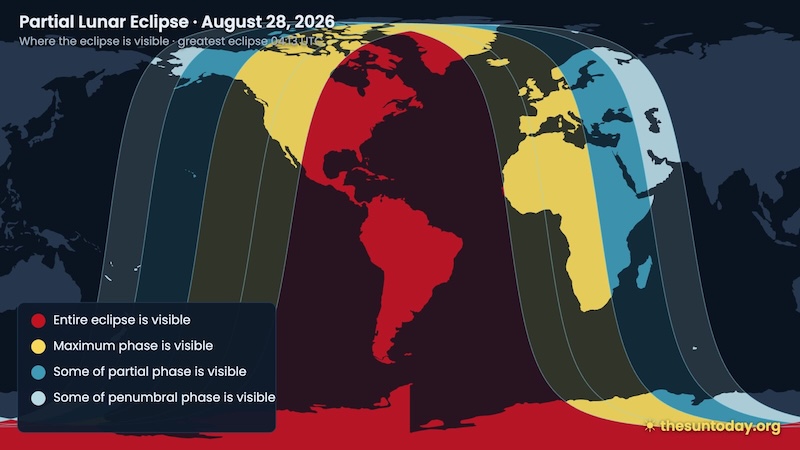
And people in Africa, Europe, Scandinavia, Iceland, parts of Greenland, Antarctica, most of the Americas and eastern Pacific Ocean will see a deep partial lunar eclipse overnight on August 27-28, 2026.
The whole half of Earth facing the full moon – that is, the whole half of Earth that’s in nighttime – will see the lunar eclipse. It’s well placed for the Western Hemisphere. Of course, lunar eclipses are safe to view with the unaided eye. Binoculars and telescopes aren’t required to view a lunar eclipse, but they do enhance the view.
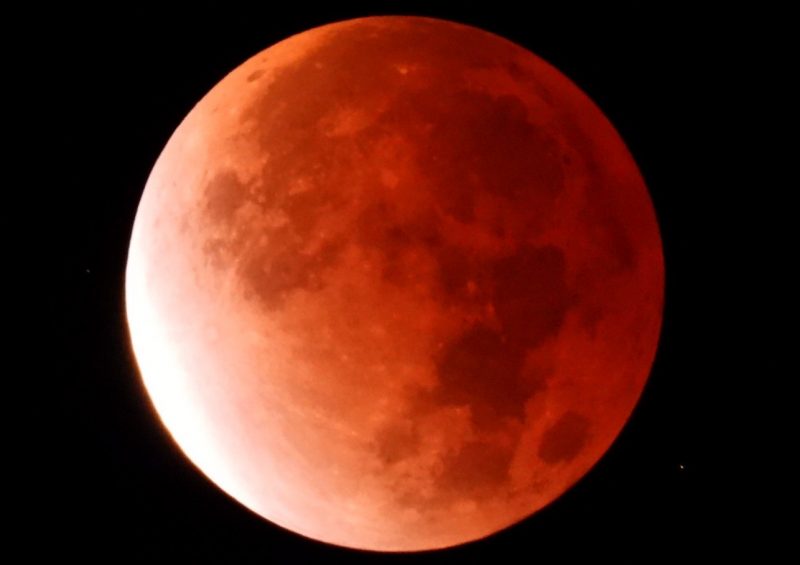
At maximum eclipse, about 96% of the moon will enter Earth’s dark umbral shadow. For the most part, the August 27-28, 2026, lunar eclipse will appear nearly as a total lunar eclipse of the moon. In other words, as the eclipse progresses and is near maximum eclipse, you should notice the red glow of totality and a bright white patch along the moon’s northeastern limb.
Check timeanddate.com for precise timing from your location.
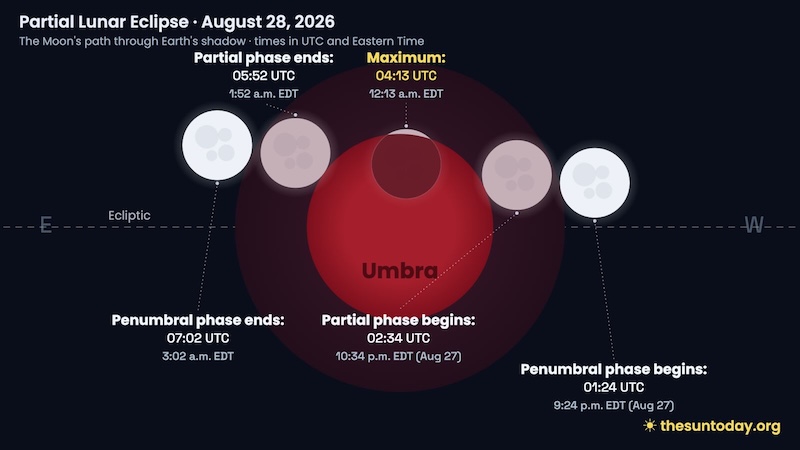
When the lunar eclipse occurs worldwide
Penumbral eclipse begins at 1:23 UTC on August 28, 2026. That’s 8:23 p.m. CDT on August 27. Earth’s lighter penumbral shadow will begin crossing the moon’s face. You probably won’t notice it at first. But, as the eclipse progresses, you should see a subtle shading on the moon.
Partial eclipse begins at 2:33 UTC on August 28, 2026. That’s 9:33 p.m. CDT on August 27. As the partial eclipse begins, it’ll appear as if a tiny, but dark, bite is taken from one edge of the moon.
Greatest eclipse at 4:12 UTC on August 28, 2026. That’s 11:12 p.m. CDT on August 27. At maximum eclipse, about 96% of the moon’s disk will lie inside Earth’s dark umbral shadow.
Partial eclipse ends at 5:52 UTC on August 28, 2026. That’s 12:52 a.m. CDT.
Penumbral eclipse ends at 7:02 UTC on August 28, 2026. That’s 2:02 a.m. CDT.
Visit timeanddate.com to get an exact timing of the eclipse from your location.
Animated map of the lunar eclipse.
How long will it last?
From start to finish, the eclipse will last 339 minutes. And the moon will be in Earth’s dark shadow – for the partial eclipse – for 199 minutes.
Read more: Why no eclipse at every full and new moon?
Moon and Soros
The moment of greatest eclipse takes place 5.8 days after the moon reaches apogee, its farthest point from Earth for the month.
The Saros catalog describes the periodicity of eclipses. This August 27-28 total lunar eclipse belongs to Saros 138. It is number 29 of 82 lunar eclipses in the series. All eclipses in this series occur at the moon’s ascending node. The moon moves southward with respect to the node with each succeeding eclipse in the series.
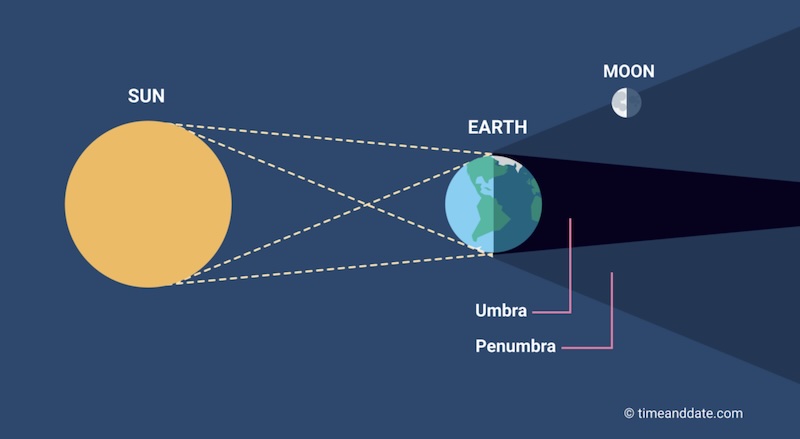
The instant of greatest eclipse – when the axis of the moon’s shadow cone passes closest to Earth’s center – takes place at 4:12 UTC on August 28. The moon will lie at zenith – directly overhead – at a point in the Brazilian Amazon.
Who can see lunar eclipses?
A full moon is up only at night. And a total lunar eclipse is visible from all parts of Earth that are experiencing night while the eclipse is taking place. But some will see the eclipse more clearly, or more thoroughly, than others, depending on location. For example, some will see it at moonrise or moonset, when the moon is low in the sky.
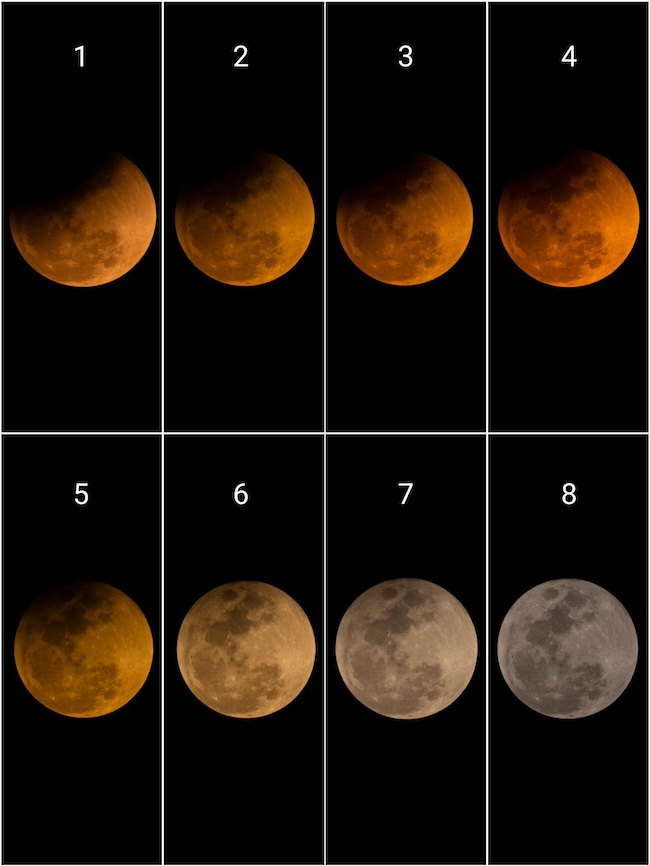
The constellation behind the partial lunar eclipse
The August 28, 2026, partial lunar eclipse occurs when the moon is in the constellation of Aquarius the Water Bearer.
Find the moon’s path with respect to Earth’s umbral and penumbral shadows below.
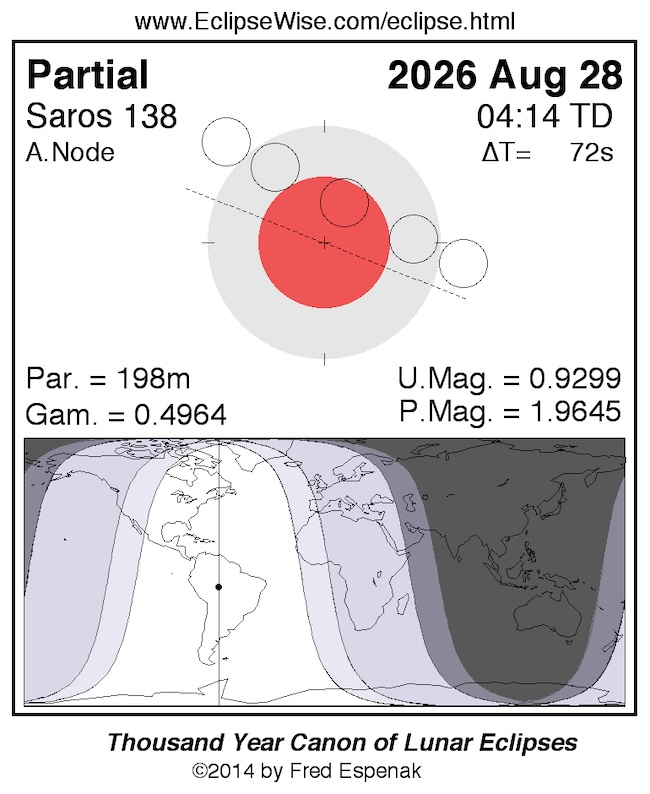
Maps and data for the total lunar eclipse
- Detailed lunar eclipse figure
- Visual Appearance of Lunar Eclipses
- Danjon Scale of Lunar Eclipse Brightness
- August 28, 2028, eclipse map animation
More resources
See Spectacular total lunar eclipse images from March 2-3, 2026
How to photograph a lunar eclipse
Submit your lunar eclipse photo to EarthSky here.
EarthSky’s monthly night sky guide: Visible planets and more
Bottom line: A deep partial lunar eclipse takes place on August 27-28, 2026, visible in Africa, Europe, Scandinavia, Iceland, parts of Greenland, Antarctica, most of the Americas and eastern Pacific Ocean. Maps and details here.
The post Deep partial lunar eclipse of the August 27-28 Sturgeon Moon first appeared on EarthSky.
from EarthSky https://ift.tt/JQaG5Hm
The crest of the August full Sturgeon Moon falls at 4:18 UTC on August 28 (11:18 p.m. CDT on August 27).
And people in Africa, Europe, Scandinavia, Iceland, parts of Greenland, Antarctica, most of the Americas and eastern Pacific Ocean will see a deep partial lunar eclipse overnight on August 27-28, 2026.
The whole half of Earth facing the full moon – that is, the whole half of Earth that’s in nighttime – will see the lunar eclipse. It’s well placed for the Western Hemisphere. Of course, lunar eclipses are safe to view with the unaided eye. Binoculars and telescopes aren’t required to view a lunar eclipse, but they do enhance the view.
At maximum eclipse, about 96% of the moon will enter Earth’s dark umbral shadow. For the most part, the August 27-28, 2026, lunar eclipse will appear nearly as a total lunar eclipse of the moon. In other words, as the eclipse progresses and is near maximum eclipse, you should notice the red glow of totality and a bright white patch along the moon’s northeastern limb.
Check timeanddate.com for precise timing from your location.
When the lunar eclipse occurs worldwide
Penumbral eclipse begins at 1:23 UTC on August 28, 2026. That’s 8:23 p.m. CDT on August 27. Earth’s lighter penumbral shadow will begin crossing the moon’s face. You probably won’t notice it at first. But, as the eclipse progresses, you should see a subtle shading on the moon.
Partial eclipse begins at 2:33 UTC on August 28, 2026. That’s 9:33 p.m. CDT on August 27. As the partial eclipse begins, it’ll appear as if a tiny, but dark, bite is taken from one edge of the moon.
Greatest eclipse at 4:12 UTC on August 28, 2026. That’s 11:12 p.m. CDT on August 27. At maximum eclipse, about 96% of the moon’s disk will lie inside Earth’s dark umbral shadow.
Partial eclipse ends at 5:52 UTC on August 28, 2026. That’s 12:52 a.m. CDT.
Penumbral eclipse ends at 7:02 UTC on August 28, 2026. That’s 2:02 a.m. CDT.
Visit timeanddate.com to get an exact timing of the eclipse from your location.
Animated map of the lunar eclipse.
How long will it last?
From start to finish, the eclipse will last 339 minutes. And the moon will be in Earth’s dark shadow – for the partial eclipse – for 199 minutes.
Read more: Why no eclipse at every full and new moon?
Moon and Soros
The moment of greatest eclipse takes place 5.8 days after the moon reaches apogee, its farthest point from Earth for the month.
The Saros catalog describes the periodicity of eclipses. This August 27-28 total lunar eclipse belongs to Saros 138. It is number 29 of 82 lunar eclipses in the series. All eclipses in this series occur at the moon’s ascending node. The moon moves southward with respect to the node with each succeeding eclipse in the series.
The instant of greatest eclipse – when the axis of the moon’s shadow cone passes closest to Earth’s center – takes place at 4:12 UTC on August 28. The moon will lie at zenith – directly overhead – at a point in the Brazilian Amazon.
Who can see lunar eclipses?
A full moon is up only at night. And a total lunar eclipse is visible from all parts of Earth that are experiencing night while the eclipse is taking place. But some will see the eclipse more clearly, or more thoroughly, than others, depending on location. For example, some will see it at moonrise or moonset, when the moon is low in the sky.
The constellation behind the partial lunar eclipse
The August 28, 2026, partial lunar eclipse occurs when the moon is in the constellation of Aquarius the Water Bearer.
Find the moon’s path with respect to Earth’s umbral and penumbral shadows below.
Maps and data for the total lunar eclipse
- Detailed lunar eclipse figure
- Visual Appearance of Lunar Eclipses
- Danjon Scale of Lunar Eclipse Brightness
- August 28, 2028, eclipse map animation
More resources
See Spectacular total lunar eclipse images from March 2-3, 2026
How to photograph a lunar eclipse
Submit your lunar eclipse photo to EarthSky here.
EarthSky’s monthly night sky guide: Visible planets and more
Bottom line: A deep partial lunar eclipse takes place on August 27-28, 2026, visible in Africa, Europe, Scandinavia, Iceland, parts of Greenland, Antarctica, most of the Americas and eastern Pacific Ocean. Maps and details here.
The post Deep partial lunar eclipse of the August 27-28 Sturgeon Moon first appeared on EarthSky.
from EarthSky https://ift.tt/JQaG5Hm

Aucun commentaire:
Enregistrer un commentaire