
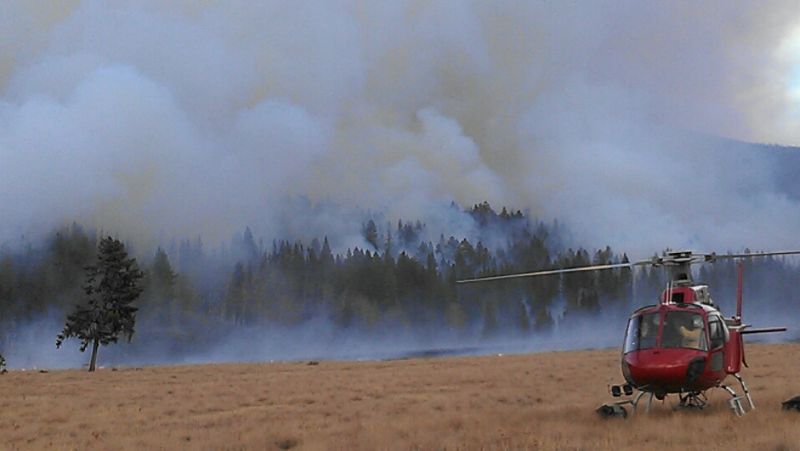
How does smoke from distant wildfires affect birds?
Wildfires in the United States are increasing in severity, both in terms of size and frequency. Wildfire smoke can travel far, and there is a growing awareness of how this can harm the health of people. It can trigger respiratory irritation, asthma flare-ups and even heart attacks. Are birds also at risk?
Populations of many species are declining, and understanding the risks they face is important for their conservation. Scientists currently think that, yes, birds can be harmed by smoke from distant fires. But there is a lot more that needs to be learned.
No escape for birds
Exposure to large amounts of smoke is obviously harmful to people and wildlife. Smoke is chock full of toxic components, like carbon monoxide, hydrogen cyanide and other harmful gases, as well as heavy metals. Thick smoke kills fast.
But what about those hazy days during the fire season? Are birds similarly troubled by chronically unclean air? Afterall, they cannot escape indoors during smoke outbreaks and turn on an air filter.
Scientists are studying these sorts of questions. Here is a brief snapshot.
Effects on body mass
One study last year found that the weight and body size of house wren (Troglodytes aedon) nestlings decreased on smoky days.
This could have been due to less successful foraging by the parent or the direct effects of smoke on nestlings, or a combination of factors. The question of whether skinnier nestlings fare well or poorly as juveniles needs further study. In general, though, when a bird fledges, more heft equates to better chances for survival.
Another study found, similarly, that birds recaptured at the San Francisco Bay Bird Observatory gained less weight when particulate levels were high. This data came from bird banding events from 2000 to 2021.
Effects on vocalizations
Scientists at Cornell University found that wildfire smoke reduced the vocalizations of grassland birds in New York.
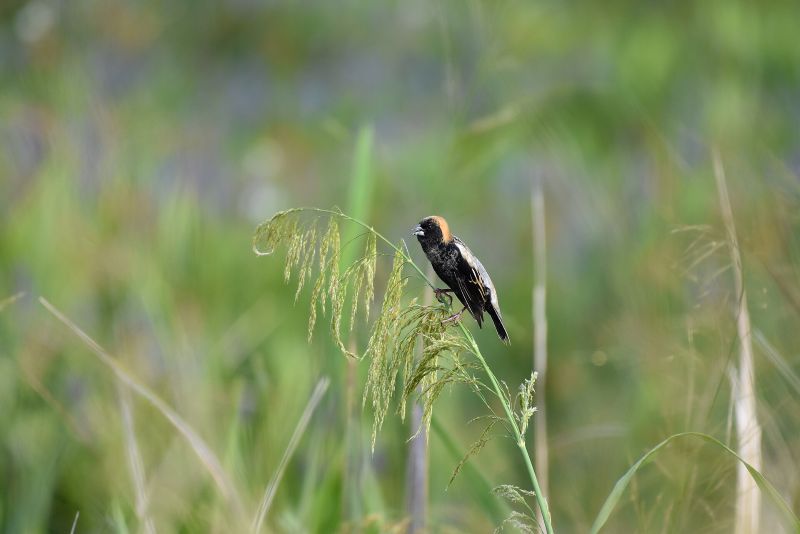
The most pronounced effects were observed in bobolinks (Dolichonyx oryzivorus) during an intense smoke outbreak at the start of the breeding season. Other birds were impacted too, including savannah sparrows (Passerculus sandwichensis) and common yellowthroats (Geothlypis trichas). Later during the breeding season, when smoke was less intense, some birds’ vocalizations increased.
A 2024 study revealed reductions in the sounds produced by birds during an intense smoke outbreak in central and eastern Washington during 2020.
Bird vocalizations are important for mate attraction and territory defense during the breeding season. Later, these calls and songs are critical for interactions between parents and offspring. There are complexities in the impacts of smoke on bird vocalizations. For example, differences among species or variable effects at different times of the year. These warrant further attention.
Watch: Lyrebirds are amazing impersonators
Effects on migration
When one team of scientists fitted tule greater white-fronted geese (Anser albifrons elgasi) with GPS transmitters, they found that the geese altered their migration patterns during smoke events. Specifically, the birds either stopped migrating or changed the direction and altitude of their flights. Ultimately, this meant that the birds had to travel longer and farther to reach their destination.
Migrating birds have heightened energy demands and are particularly vulnerable to disturbances. In 2020 – a bad year for wildfire smoke – large numbers of birds were found dead or dying along migration routes in the western United States.
Some deaths were attributed to a winter storm in the Rocky Mountains, which caused mass starvation in insectivorous birds (birds that eat insects) traveling down the Central Flyway. However, many non-insectivorous birds traveling along the Pacific Flyway also died. Quite possibly, high levels of wildfire smoke contributed to their demise.
There are still a lot of unknowns about how wildfire smoke can affect migrating birds.
Read more: Hummingbirds snooze when energy is low
Effects on biodiversity
One team of scientists analyzed data obtained from the North American Breeding Bird Survey during 2008 to 2022. They found that wildfire pollution was associated with declines in the number of species present, a measure called species richness. Declines in species abundance and diversity were also observed.
Read more: Lights out for birds during spring migration!
How can you help?
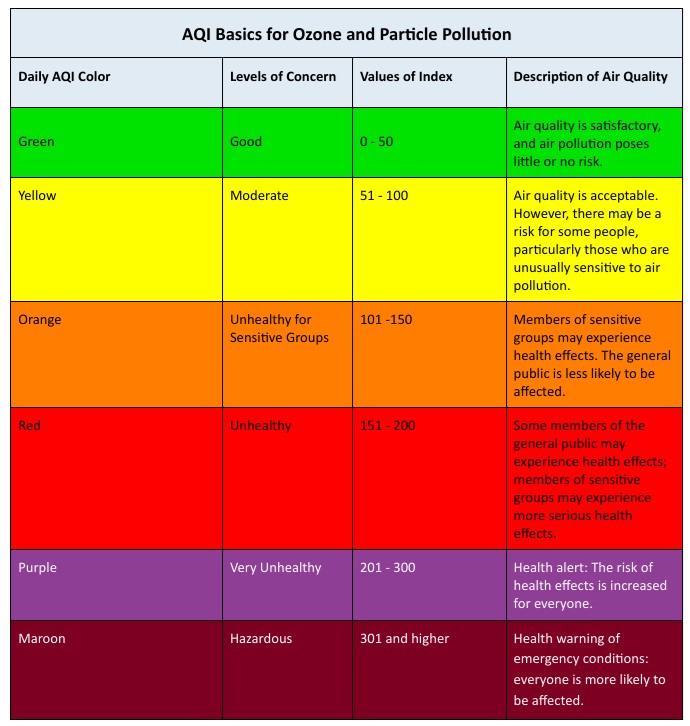
eBird is a great place to record your bird observations. The comment section in eBird allows space for the recording of field notes about the weather. Many people also use the RainCrow app for this purpose. If you are out birding and smell smoke in the air, include that information too. Even better, include data on the air quality index (AQI) for fine particulate matter (PM2.5). The AQI for PM2.5 is a good proxy for wildfire smoke in the atmosphere.
But please use caution and avoid birding when the air quality is poor. If you do find yourself outdoors during a hazardous smoke event, wear a mask.
Project Phoenix is a community science project focused on learning how wildfire smoke impacts West Coast birds. Find out how to get involved here.
Bottom line: Smoke from distant wildfires can affect birds in several ways, such as through changes in health, vocalization behavior and migratory patterns.
Read more: Bird migration forecasts get a boost from AI
The post How does smoke from wildfires affect birds? first appeared on EarthSky.
from EarthSky https://ift.tt/hJPs6GQ
How does smoke from distant wildfires affect birds?
Wildfires in the United States are increasing in severity, both in terms of size and frequency. Wildfire smoke can travel far, and there is a growing awareness of how this can harm the health of people. It can trigger respiratory irritation, asthma flare-ups and even heart attacks. Are birds also at risk?
Populations of many species are declining, and understanding the risks they face is important for their conservation. Scientists currently think that, yes, birds can be harmed by smoke from distant fires. But there is a lot more that needs to be learned.
No escape for birds
Exposure to large amounts of smoke is obviously harmful to people and wildlife. Smoke is chock full of toxic components, like carbon monoxide, hydrogen cyanide and other harmful gases, as well as heavy metals. Thick smoke kills fast.
But what about those hazy days during the fire season? Are birds similarly troubled by chronically unclean air? Afterall, they cannot escape indoors during smoke outbreaks and turn on an air filter.
Scientists are studying these sorts of questions. Here is a brief snapshot.
Effects on body mass
One study last year found that the weight and body size of house wren (Troglodytes aedon) nestlings decreased on smoky days.
This could have been due to less successful foraging by the parent or the direct effects of smoke on nestlings, or a combination of factors. The question of whether skinnier nestlings fare well or poorly as juveniles needs further study. In general, though, when a bird fledges, more heft equates to better chances for survival.
Another study found, similarly, that birds recaptured at the San Francisco Bay Bird Observatory gained less weight when particulate levels were high. This data came from bird banding events from 2000 to 2021.
Effects on vocalizations
Scientists at Cornell University found that wildfire smoke reduced the vocalizations of grassland birds in New York.
The most pronounced effects were observed in bobolinks (Dolichonyx oryzivorus) during an intense smoke outbreak at the start of the breeding season. Other birds were impacted too, including savannah sparrows (Passerculus sandwichensis) and common yellowthroats (Geothlypis trichas). Later during the breeding season, when smoke was less intense, some birds’ vocalizations increased.
A 2024 study revealed reductions in the sounds produced by birds during an intense smoke outbreak in central and eastern Washington during 2020.
Bird vocalizations are important for mate attraction and territory defense during the breeding season. Later, these calls and songs are critical for interactions between parents and offspring. There are complexities in the impacts of smoke on bird vocalizations. For example, differences among species or variable effects at different times of the year. These warrant further attention.
Watch: Lyrebirds are amazing impersonators
Effects on migration
When one team of scientists fitted tule greater white-fronted geese (Anser albifrons elgasi) with GPS transmitters, they found that the geese altered their migration patterns during smoke events. Specifically, the birds either stopped migrating or changed the direction and altitude of their flights. Ultimately, this meant that the birds had to travel longer and farther to reach their destination.
Migrating birds have heightened energy demands and are particularly vulnerable to disturbances. In 2020 – a bad year for wildfire smoke – large numbers of birds were found dead or dying along migration routes in the western United States.
Some deaths were attributed to a winter storm in the Rocky Mountains, which caused mass starvation in insectivorous birds (birds that eat insects) traveling down the Central Flyway. However, many non-insectivorous birds traveling along the Pacific Flyway also died. Quite possibly, high levels of wildfire smoke contributed to their demise.
There are still a lot of unknowns about how wildfire smoke can affect migrating birds.
Read more: Hummingbirds snooze when energy is low
Effects on biodiversity
One team of scientists analyzed data obtained from the North American Breeding Bird Survey during 2008 to 2022. They found that wildfire pollution was associated with declines in the number of species present, a measure called species richness. Declines in species abundance and diversity were also observed.
Read more: Lights out for birds during spring migration!
How can you help?
eBird is a great place to record your bird observations. The comment section in eBird allows space for the recording of field notes about the weather. Many people also use the RainCrow app for this purpose. If you are out birding and smell smoke in the air, include that information too. Even better, include data on the air quality index (AQI) for fine particulate matter (PM2.5). The AQI for PM2.5 is a good proxy for wildfire smoke in the atmosphere.
But please use caution and avoid birding when the air quality is poor. If you do find yourself outdoors during a hazardous smoke event, wear a mask.
Project Phoenix is a community science project focused on learning how wildfire smoke impacts West Coast birds. Find out how to get involved here.
Bottom line: Smoke from distant wildfires can affect birds in several ways, such as through changes in health, vocalization behavior and migratory patterns.
Read more: Bird migration forecasts get a boost from AI
The post How does smoke from wildfires affect birds? first appeared on EarthSky.
from EarthSky https://ift.tt/hJPs6GQ

Aucun commentaire:
Enregistrer un commentaire