
Watch a video about the 1908 Tunguska explosion.
The Tunguska explosion: June 30, 1908
On June 30, 1908, the largest asteroid impact in recorded history occurred on a warm summer morning in a remote part of Siberia, Russia. Now, we observe Asteroid Day each year on June 30, on the anniversary of what’s now known as the Tunguska explosion.
The explosion happened over sparsely populated forestland north of the Podkamennaya Tunguska River, in what is present-day Krasnoyarsk Krai.
The blast released enough energy to kill reindeer and flatten an estimated 80 million trees over an area of 830 square miles (2,150 square km). Witnesses reported seeing a bluish light nearly as bright as the sun moving across the sky. They said a flash and a sound similar to artillery fire followed the fireball. And, according to the American Physical Society, a powerful shockwave broke windows hundreds of miles away, knocking people off their feet.
Yet, ultimately, decades passed before anyone could explain the event.
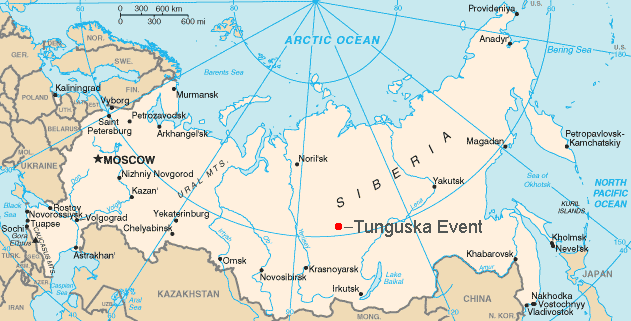
Tunguska explosion: One of the largest in recorded history
A mysterious aspect of the Tunguska event was that, surprisingly, no one ever found a crater. But even without a crater, scientists still categorized it as an impact event. They now believe the incoming object never struck Earth. Instead, it exploded in the atmosphere, causing what’s known as an air burst. This type of atmospheric explosion was still enough to cause massive damage to the forest in the region.
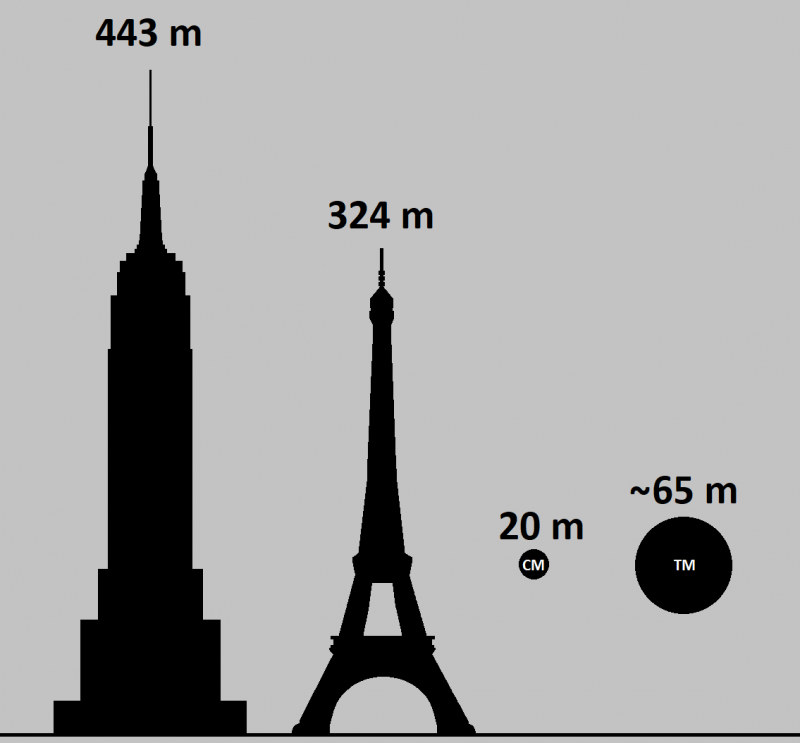
Scientists determined the object was most likely a stony asteroid approximately 165-260 feet (50-80 m) in diameter, traveling at a speed of about 33,500 miles per hour (54,000 kph) and exploded 3 to 6 miles (5 to 10 km) above Earth’s surface.
The Tunguska explosion was equal to about 4 megatons of TNT. That would make it 250 times more powerful than the atom bomb dropped on Hiroshima.
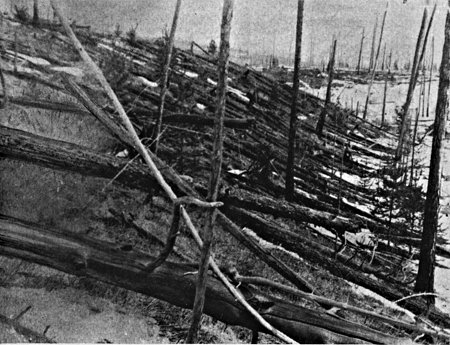
Understanding the Tunguska explosion
Why did it take so long for scientists to understand what caused the Tunguska event? It took almost two decades for the first scientific expedition to reach this remote site in central Siberia. The region was extremely isolated, with no roads, railways or nearby settlements, making access possible only through long and difficult expeditions across the taiga.
This delay was further extended by major historical disruptions, including World War I, the Russian Revolution and the Russian Civil War, which made large-scale scientific travel and funding nearly impossible for many years.
It was not until 1927 that the first major scientific expedition, led by Leonid Kulik, finally reached the site. By then, much of the immediate physical evidence had already degraded or disappeared due to the passage of time and natural regeneration of the forest.
As a result of the delayed investigation and the lack of typical impact evidence such as a crater or large meteorite fragments, early interpretations remained uncertain, allowing speculative explanations to emerge before the true nature of the event was eventually understood. Some concocted wild theories to explain the Tunguska event. People claimed a stricken alien spacecraft caused the destruction. Later, they pointed to a mini-black-hole or a particle of antimatter.
The truth is just as interesting, and perhaps more terrifying … because it can happen again.
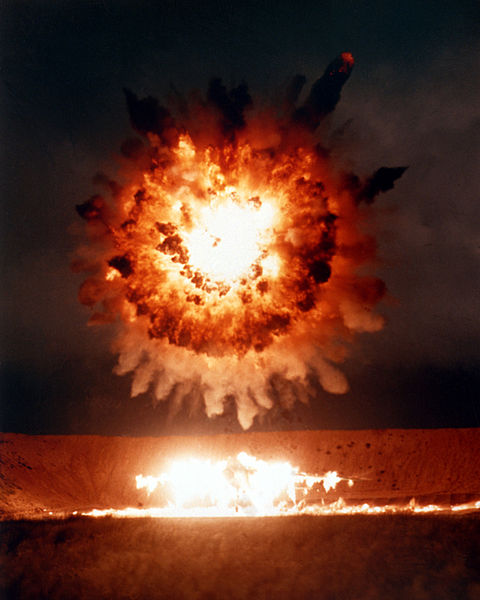
The Chelyabinsk meteor impact
Interestingly, the Tunguska event basically did happen again with the Chelyabinsk meteor, 105 years later. On February 15, 2013, a similar – although smaller – airburst occurred over the city of Chelyabinsk, Russia, 1,500 miles (2,400 km) to the west of Tunguska.
Deborah Byrd :
Vapor trail left by the Chelyabinsk meteor, as captured by Flickr user Alex Alishevskikh.
Many people were driving and st… pic.twitter.com/2tT1CIwIfy
— Sky Observer (@SkyObserve) September 5, 2017
The Chelyabinsk event provided vital clues as to what happened during the Tunguska event. As NASA explained, new evidence arrived to help solve the mystery of Tunguska:
This highly documented fireball created an opportunity for researchers to apply modern computer modeling techniques to explain what was seen, heard and felt.
The models were used with video observations of the fireball and maps of the damage on the ground to reconstruct the original size, motion and speed of the Chelyabinsk object. The resulting interpretation is that Chelyabinsk was most likely a stony asteroid the size of a five-story building [50–70 feet or 15–21 meters] that broke apart 15 miles (24 kilometers) above the ground. This generated a shock wave equivalent to a 550-kiloton explosion. The explosion’s shockwave blew out roughly a million windows and injured more than a thousand people. Fortunately, the force of the explosion was not enough to knock down trees or structures.
Per current understanding of the asteroid population, an object like the Chelyabinsk meteor can impact Earth every 10 to 100 years on average.
Studying the Tunguska explosion to prepare for future events
In 2019, scientists published new research about the Tunguska event in a series of papers in a special issue of the journal Icarus. A workshop held at NASA’s Ames Research Center in Silicon Valley and sponsored by the NASA Planetary Defense Coordination Office inspired the research.
The theme of the workshop was Reexamining the astronomical cold case of the 1908 Tunguska impact event.
Read more about NASA’s research on the Tunguska explosion
In recent decades – due to the Tunguska event and other smaller impacts – astronomers have come to take the possibility of catastrophic comet and asteroid impacts seriously. They now have observing programs to watch for near-Earth objects (NEOs). At regular meetings they discuss what might happen if we do find a large object on a collision course with Earth.
DART’s successful asteroid mission
DART – the Double Asteroid Redirection Test – was a huge hit, quite literally. The spacecraft smashed into an asteroid moon – called Didymos B, or Dimorphos – on September 26, 2022. The goal was to prove that we can send a spacecraft to push an asteroid slightly in its orbit. It was practice for a possible future scenario in which we find a hazardous asteroid barreling toward Earth. NASA said on October 11, 2022, that analysis of data obtained from the DART mission shows the spacecraft did, indeed, successfully alter the orbit of Dimorphos.
Read more: Remember when DART struck an asteroid? New surprises!
Hera’s asteroid mission
ESA’s Hera mission launched on October 7, 2024. The Hera mission will journey to Didymos to study DART’s impact. It’s expected to reach Didymos in late December 2026.
Lorien Wheeler, a researcher at NASA Ames Research Center, working on NASA’s Asteroid Threat Assessment Project, said:
Because there are so few observed cases, a lot of uncertainty remains about how large asteroids break up in the atmosphere and how much damage they could cause on the ground. However, recent advancements in computational models, along with analyses of the Chelyabinsk and other meteor events, are helping to improve our understanding of these factors so that we can better evaluate potential asteroid threats in the future.
Astronomer David Morrison, also at NASA Ames Research Center, commented:
Tunguska is the largest cosmic impact witnessed by modern humans. It also is characteristic of the sort of impact we are likely to have to protect against in the future.
Bottom line: The Tunguska explosion on June 30, 1908, was the largest asteroid impact in recorded history. It flattened 830 square miles (2,150 square km) of Siberian forest. Researchers are preparing for future Tunguska-sized events.
Science matters. Wonder matters. You matter. Join our 2025 Donation Campaign today.
Read more: Detecting asteroids near the sun with NEOMIR
Read more: New Mars and Deimos pics from revealing Hera flyby
The post The Tunguska explosion rocked Siberia 118 years ago first appeared on EarthSky.
from EarthSky https://ift.tt/1lvhct2
Watch a video about the 1908 Tunguska explosion.
The Tunguska explosion: June 30, 1908
On June 30, 1908, the largest asteroid impact in recorded history occurred on a warm summer morning in a remote part of Siberia, Russia. Now, we observe Asteroid Day each year on June 30, on the anniversary of what’s now known as the Tunguska explosion.
The explosion happened over sparsely populated forestland north of the Podkamennaya Tunguska River, in what is present-day Krasnoyarsk Krai.
The blast released enough energy to kill reindeer and flatten an estimated 80 million trees over an area of 830 square miles (2,150 square km). Witnesses reported seeing a bluish light nearly as bright as the sun moving across the sky. They said a flash and a sound similar to artillery fire followed the fireball. And, according to the American Physical Society, a powerful shockwave broke windows hundreds of miles away, knocking people off their feet.
Yet, ultimately, decades passed before anyone could explain the event.
Tunguska explosion: One of the largest in recorded history
A mysterious aspect of the Tunguska event was that, surprisingly, no one ever found a crater. But even without a crater, scientists still categorized it as an impact event. They now believe the incoming object never struck Earth. Instead, it exploded in the atmosphere, causing what’s known as an air burst. This type of atmospheric explosion was still enough to cause massive damage to the forest in the region.
Scientists determined the object was most likely a stony asteroid approximately 165-260 feet (50-80 m) in diameter, traveling at a speed of about 33,500 miles per hour (54,000 kph) and exploded 3 to 6 miles (5 to 10 km) above Earth’s surface.
The Tunguska explosion was equal to about 4 megatons of TNT. That would make it 250 times more powerful than the atom bomb dropped on Hiroshima.
Understanding the Tunguska explosion
Why did it take so long for scientists to understand what caused the Tunguska event? It took almost two decades for the first scientific expedition to reach this remote site in central Siberia. The region was extremely isolated, with no roads, railways or nearby settlements, making access possible only through long and difficult expeditions across the taiga.
This delay was further extended by major historical disruptions, including World War I, the Russian Revolution and the Russian Civil War, which made large-scale scientific travel and funding nearly impossible for many years.
It was not until 1927 that the first major scientific expedition, led by Leonid Kulik, finally reached the site. By then, much of the immediate physical evidence had already degraded or disappeared due to the passage of time and natural regeneration of the forest.
As a result of the delayed investigation and the lack of typical impact evidence such as a crater or large meteorite fragments, early interpretations remained uncertain, allowing speculative explanations to emerge before the true nature of the event was eventually understood. Some concocted wild theories to explain the Tunguska event. People claimed a stricken alien spacecraft caused the destruction. Later, they pointed to a mini-black-hole or a particle of antimatter.
The truth is just as interesting, and perhaps more terrifying … because it can happen again.
The Chelyabinsk meteor impact
Interestingly, the Tunguska event basically did happen again with the Chelyabinsk meteor, 105 years later. On February 15, 2013, a similar – although smaller – airburst occurred over the city of Chelyabinsk, Russia, 1,500 miles (2,400 km) to the west of Tunguska.
Deborah Byrd :
Vapor trail left by the Chelyabinsk meteor, as captured by Flickr user Alex Alishevskikh.
Many people were driving and st… pic.twitter.com/2tT1CIwIfy
— Sky Observer (@SkyObserve) September 5, 2017
The Chelyabinsk event provided vital clues as to what happened during the Tunguska event. As NASA explained, new evidence arrived to help solve the mystery of Tunguska:
This highly documented fireball created an opportunity for researchers to apply modern computer modeling techniques to explain what was seen, heard and felt.
The models were used with video observations of the fireball and maps of the damage on the ground to reconstruct the original size, motion and speed of the Chelyabinsk object. The resulting interpretation is that Chelyabinsk was most likely a stony asteroid the size of a five-story building [50–70 feet or 15–21 meters] that broke apart 15 miles (24 kilometers) above the ground. This generated a shock wave equivalent to a 550-kiloton explosion. The explosion’s shockwave blew out roughly a million windows and injured more than a thousand people. Fortunately, the force of the explosion was not enough to knock down trees or structures.
Per current understanding of the asteroid population, an object like the Chelyabinsk meteor can impact Earth every 10 to 100 years on average.
Studying the Tunguska explosion to prepare for future events
In 2019, scientists published new research about the Tunguska event in a series of papers in a special issue of the journal Icarus. A workshop held at NASA’s Ames Research Center in Silicon Valley and sponsored by the NASA Planetary Defense Coordination Office inspired the research.
The theme of the workshop was Reexamining the astronomical cold case of the 1908 Tunguska impact event.
Read more about NASA’s research on the Tunguska explosion
In recent decades – due to the Tunguska event and other smaller impacts – astronomers have come to take the possibility of catastrophic comet and asteroid impacts seriously. They now have observing programs to watch for near-Earth objects (NEOs). At regular meetings they discuss what might happen if we do find a large object on a collision course with Earth.
DART’s successful asteroid mission
DART – the Double Asteroid Redirection Test – was a huge hit, quite literally. The spacecraft smashed into an asteroid moon – called Didymos B, or Dimorphos – on September 26, 2022. The goal was to prove that we can send a spacecraft to push an asteroid slightly in its orbit. It was practice for a possible future scenario in which we find a hazardous asteroid barreling toward Earth. NASA said on October 11, 2022, that analysis of data obtained from the DART mission shows the spacecraft did, indeed, successfully alter the orbit of Dimorphos.
Read more: Remember when DART struck an asteroid? New surprises!
Hera’s asteroid mission
ESA’s Hera mission launched on October 7, 2024. The Hera mission will journey to Didymos to study DART’s impact. It’s expected to reach Didymos in late December 2026.
Lorien Wheeler, a researcher at NASA Ames Research Center, working on NASA’s Asteroid Threat Assessment Project, said:
Because there are so few observed cases, a lot of uncertainty remains about how large asteroids break up in the atmosphere and how much damage they could cause on the ground. However, recent advancements in computational models, along with analyses of the Chelyabinsk and other meteor events, are helping to improve our understanding of these factors so that we can better evaluate potential asteroid threats in the future.
Astronomer David Morrison, also at NASA Ames Research Center, commented:
Tunguska is the largest cosmic impact witnessed by modern humans. It also is characteristic of the sort of impact we are likely to have to protect against in the future.
Bottom line: The Tunguska explosion on June 30, 1908, was the largest asteroid impact in recorded history. It flattened 830 square miles (2,150 square km) of Siberian forest. Researchers are preparing for future Tunguska-sized events.
Science matters. Wonder matters. You matter. Join our 2025 Donation Campaign today.
Read more: Detecting asteroids near the sun with NEOMIR
Read more: New Mars and Deimos pics from revealing Hera flyby
The post The Tunguska explosion rocked Siberia 118 years ago first appeared on EarthSky.
from EarthSky https://ift.tt/1lvhct2

Aucun commentaire:
Enregistrer un commentaire