
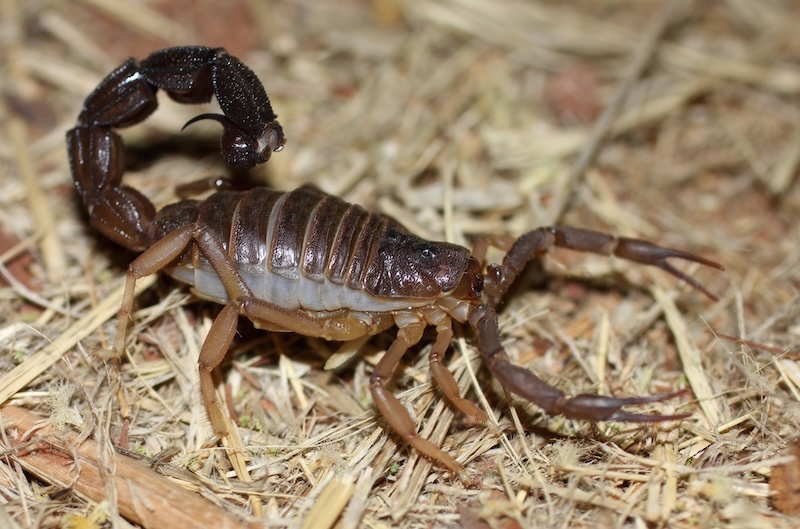
- Scorpion stings and pinches are particularly painful because the stingers and pincers are reinforced with metal.
- Now, a new study of 18 scorpion species has revealed in new detail how these metals are distributed.
- The results reveal how natural selection favors certain types of metals for different purposes in scorpions.
Scorpion stingers and pincers contain metal!
Scorpions are infamous for their imposing pincers and venomous stingers. They use these formidable appendages to defend themselves and attack prey. But why are scorpion stings and pinches so powerful? Metal.
Scientists have long known that scorpion stingers and pincers are often fortified with metals. But is this the case with all scorpions? And with different predation and defense techniques across different scorpion species, do their metal deposits vary too?
In April 2026, researchers published a study that explored these questions.
In it, they analyzed 18 species from a wide range of scorpion families (a term for a group of related animals). They uncovered interesting new details as to how these metals were distributed in pincers and stingers. And their findings offered fresh insight into how natural selection favors certain types of metal deposits for different purposes.
Sam Campbell of the University of Queensland led this research. He said, in a statement:
Scorpions are incredible hunters, and while we knew that metals strengthen the weapons in some species’ arsenals, we don’t know if all scorpions’ weapons contain metal, and if so, whether this metal enrichment relates to how they hunt.
We decided to use microanalytical techniques to unravel where and how these metals are distributed in the scorpions’ weapons to offer a clue as to how and why metal enrichment has been carried through the scorpion family tree.
The research team published their study in the peer-reviewed Journal of the Royal Society Interface on April 29, 2026.
Scorpion stings and pinches vary
Overall, there are about 3,000 species of scorpion, found in all continents except Antarctica. And with such a wide diversity of species comes a wide range of predatory and defense behaviors.
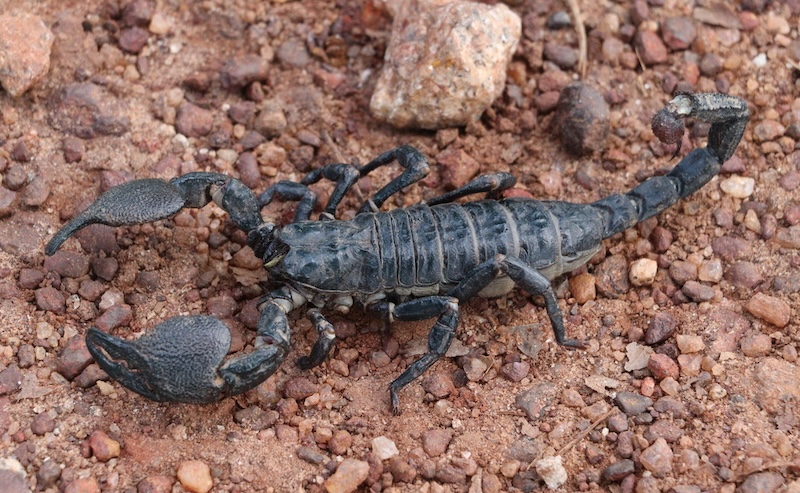
Some scorpions routinely subdue their prey using their stingers to inject venom. But others rarely use them except to quell difficult prey. Scorpions with large powerful pincers use them to crush prey, but have small stingers. Conversely, others have large stingers and small pincers.
The Smithsonian National Museum of Natural History has a collection of preserved scorpions from around the world. In addition to x-ray analysis, the research team performed high-resolution electron microscopy on 18 of these specimens. They specifically examined the pincers and stingers.
Scorpion stings and pinches are zinc-powered
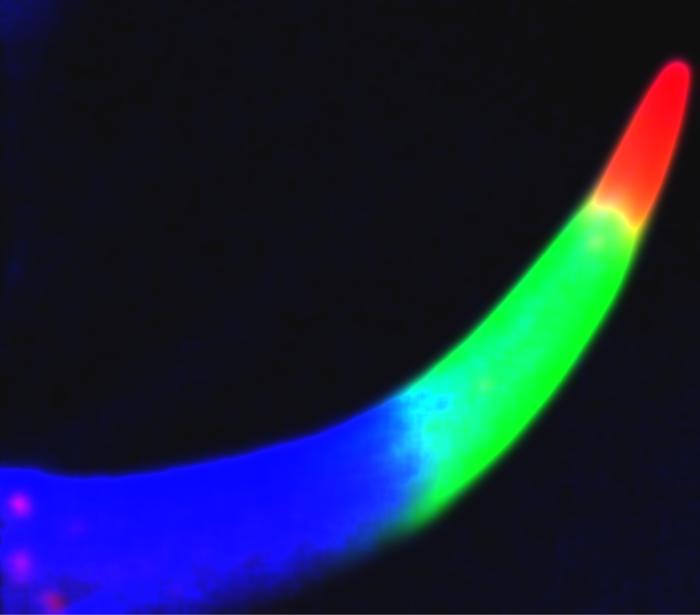
In the scorpion stingers, the researchers found zinc at the tip of the needle-like structure. But many of the scorpions had a sharp transition to manganese below this point.
Meanwhile, in the outer part of the pincers, called the tarsus, the researchers found zinc. In addition, some scorpion pincers also contained iron. Interestingly, the metal only reinforced the cutting edge of the pincer. That’s the side of the tarsus that endures the most stress from struggling prey.
Edward Vicenzi, at the National Museum of Natural History, commented:
The National Museum of Natural History’s large scorpion collection allowed us to analyze metal enrichment in a wide range of scorpion species, more than have ever been studied before using these techniques. The microscopic-scale methods we used allowed us to identify individual transition metals in extremely high detail, showing us how nature skillfully engineered these metals in the scorpion’s weapons.
Unexpected findings
The scientists thought they’d find higher levels of zinc in chunky, powerful pincers, to be used for crushing prey. But instead, they discovered that scorpions with long, slender pincers had higher levels of zinc.
Campbell said:
This points to a role for zinc beyond hardness, perhaps playing a bigger role in durability. After all, long claws need to grasp prey and prevent it from escaping before being injected by venom. This is an interesting finding because it suggests an evolutionary relationship between how a weapon is used and the specific properties of the metal that reinforces it.
Bottom line: Scientists found that the stingers and pincers in 18 scorpion species contain deposits of zinc, manganese and iron, varying depending on how each species uses its appendages.
Source: Heavy metal predators: diverse elemental enrichment across the weapons of scorpions
Via Smithsonian National Museum of Natural History
Read more about scorpions and watch a video
Read more: Komodo dragons have iron-coated teeth
The post Why are scorpion stings so painful? Metal stingers! first appeared on EarthSky.
from EarthSky https://ift.tt/t5dD6eK
- Scorpion stings and pinches are particularly painful because the stingers and pincers are reinforced with metal.
- Now, a new study of 18 scorpion species has revealed in new detail how these metals are distributed.
- The results reveal how natural selection favors certain types of metals for different purposes in scorpions.
Scorpion stingers and pincers contain metal!
Scorpions are infamous for their imposing pincers and venomous stingers. They use these formidable appendages to defend themselves and attack prey. But why are scorpion stings and pinches so powerful? Metal.
Scientists have long known that scorpion stingers and pincers are often fortified with metals. But is this the case with all scorpions? And with different predation and defense techniques across different scorpion species, do their metal deposits vary too?
In April 2026, researchers published a study that explored these questions.
In it, they analyzed 18 species from a wide range of scorpion families (a term for a group of related animals). They uncovered interesting new details as to how these metals were distributed in pincers and stingers. And their findings offered fresh insight into how natural selection favors certain types of metal deposits for different purposes.
Sam Campbell of the University of Queensland led this research. He said, in a statement:
Scorpions are incredible hunters, and while we knew that metals strengthen the weapons in some species’ arsenals, we don’t know if all scorpions’ weapons contain metal, and if so, whether this metal enrichment relates to how they hunt.
We decided to use microanalytical techniques to unravel where and how these metals are distributed in the scorpions’ weapons to offer a clue as to how and why metal enrichment has been carried through the scorpion family tree.
The research team published their study in the peer-reviewed Journal of the Royal Society Interface on April 29, 2026.
Scorpion stings and pinches vary
Overall, there are about 3,000 species of scorpion, found in all continents except Antarctica. And with such a wide diversity of species comes a wide range of predatory and defense behaviors.
Some scorpions routinely subdue their prey using their stingers to inject venom. But others rarely use them except to quell difficult prey. Scorpions with large powerful pincers use them to crush prey, but have small stingers. Conversely, others have large stingers and small pincers.
The Smithsonian National Museum of Natural History has a collection of preserved scorpions from around the world. In addition to x-ray analysis, the research team performed high-resolution electron microscopy on 18 of these specimens. They specifically examined the pincers and stingers.
Scorpion stings and pinches are zinc-powered
In the scorpion stingers, the researchers found zinc at the tip of the needle-like structure. But many of the scorpions had a sharp transition to manganese below this point.
Meanwhile, in the outer part of the pincers, called the tarsus, the researchers found zinc. In addition, some scorpion pincers also contained iron. Interestingly, the metal only reinforced the cutting edge of the pincer. That’s the side of the tarsus that endures the most stress from struggling prey.
Edward Vicenzi, at the National Museum of Natural History, commented:
The National Museum of Natural History’s large scorpion collection allowed us to analyze metal enrichment in a wide range of scorpion species, more than have ever been studied before using these techniques. The microscopic-scale methods we used allowed us to identify individual transition metals in extremely high detail, showing us how nature skillfully engineered these metals in the scorpion’s weapons.
Unexpected findings
The scientists thought they’d find higher levels of zinc in chunky, powerful pincers, to be used for crushing prey. But instead, they discovered that scorpions with long, slender pincers had higher levels of zinc.
Campbell said:
This points to a role for zinc beyond hardness, perhaps playing a bigger role in durability. After all, long claws need to grasp prey and prevent it from escaping before being injected by venom. This is an interesting finding because it suggests an evolutionary relationship between how a weapon is used and the specific properties of the metal that reinforces it.
Bottom line: Scientists found that the stingers and pincers in 18 scorpion species contain deposits of zinc, manganese and iron, varying depending on how each species uses its appendages.
Source: Heavy metal predators: diverse elemental enrichment across the weapons of scorpions
Via Smithsonian National Museum of Natural History
Read more about scorpions and watch a video
Read more: Komodo dragons have iron-coated teeth
The post Why are scorpion stings so painful? Metal stingers! first appeared on EarthSky.
from EarthSky https://ift.tt/t5dD6eK

Aucun commentaire:
Enregistrer un commentaire