
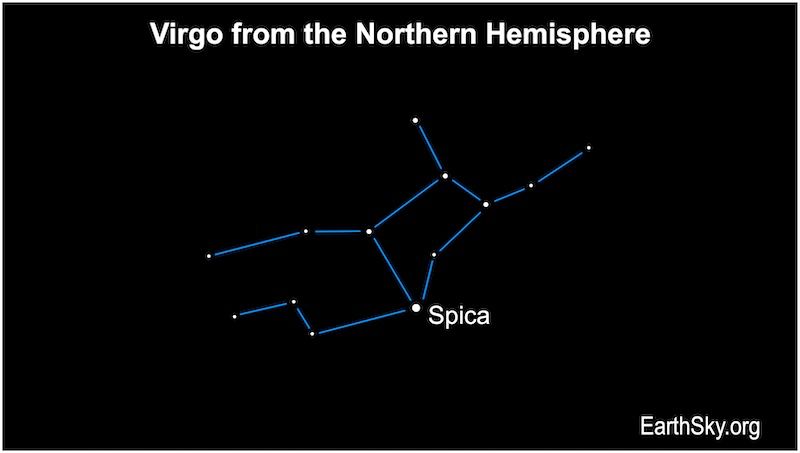
The constellation Virgo the Maiden
Virgo the Maiden is the largest constellation of the zodiac. And the 12 constellations of the zodiac are important because they define the sun’s path across our sky. So both Northern and Southern Hemisphere stargazers can see Virgo equally well. May and June are excellent times to look for it!
Virgo appears high above the southern horizon on May and June evenings for us in the Northern Hemisphere. Remember … it follows the path of the sun. The same is true from the Southern Hemisphere, but, from there, one faces northward to see the sun’s daily path across our sky. So Southern Hemisphere dwellers look northward to see Virgo on May and June evenings.
And Virgo is big. It’s the biggest zodiacal constellation and 2nd-largest constellation overall (after Hydra the Water Snake). It’s large and dim, with only one bright star. This star is called Spica.
Virgo represents a harvest goddess
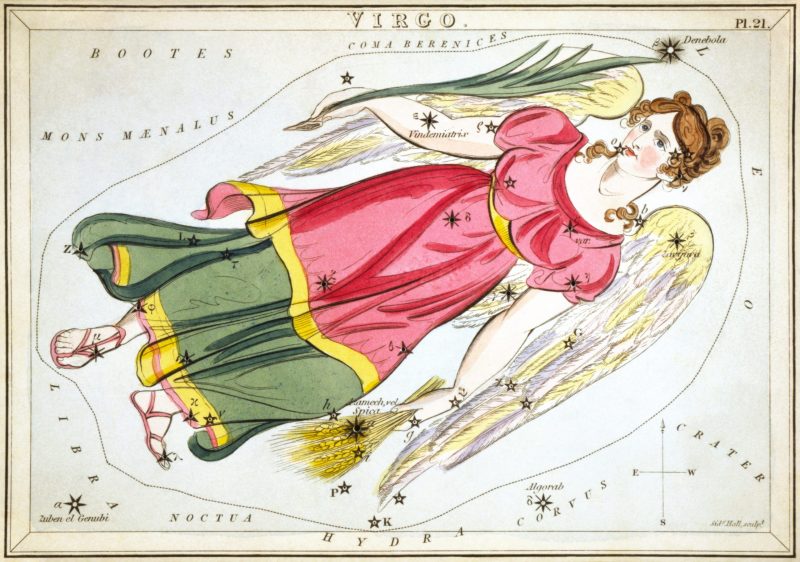
Virgo the Maiden is typically seen as goddess of the harvest. And the bright star Spica marks a bundle of wheat held in the Maiden’s left hand.
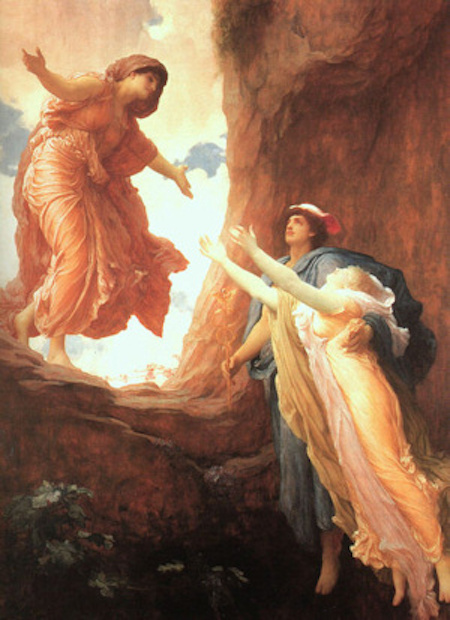
In fact, the constellation Virgo is linked to one of the best known of all Greek myths, that of Demeter and Persephone. According to the myth, it once was always springtime on Earth. That was due to Demeter, an Earth goddess, who deeply loved her daughter Persephone. But then the god of the underworld, Hades, spied Persephone, fell in love with her and kidnapped her.
Demeter was overcome with grief. She abandoned her role as an Earth goddess. And so the world’s fruitfulness and fertility suffered. As often happened in Greek myths, Zeus – king of the gods – intervened. He insisted that Hades return Persephone to Demeter. But Zeus set a condition. He said Persephone must not eat until she returned to her home. That’s when Hades gave Persephone a pomegranate. It’s said that Persephone ate just six seeds.
So Persephone returned to her mother. But – because of the pomegranate – she has to return to the underworld for six months every year.
Now, it’s said, spring returns to the Northern Hemisphere each year when Persephone reunites with Demeter. Then northern winter season reigns again when Persephone dwells in the underworld.
From the perspective of the Northern Hemisphere, Virgo is absent from early evening sky in late autumn, winter and early spring. Virgo’s return to the sky at nightfall – in the months of April, May and June – coincides with the northern spring.
See Virgo from the Northern Hemisphere
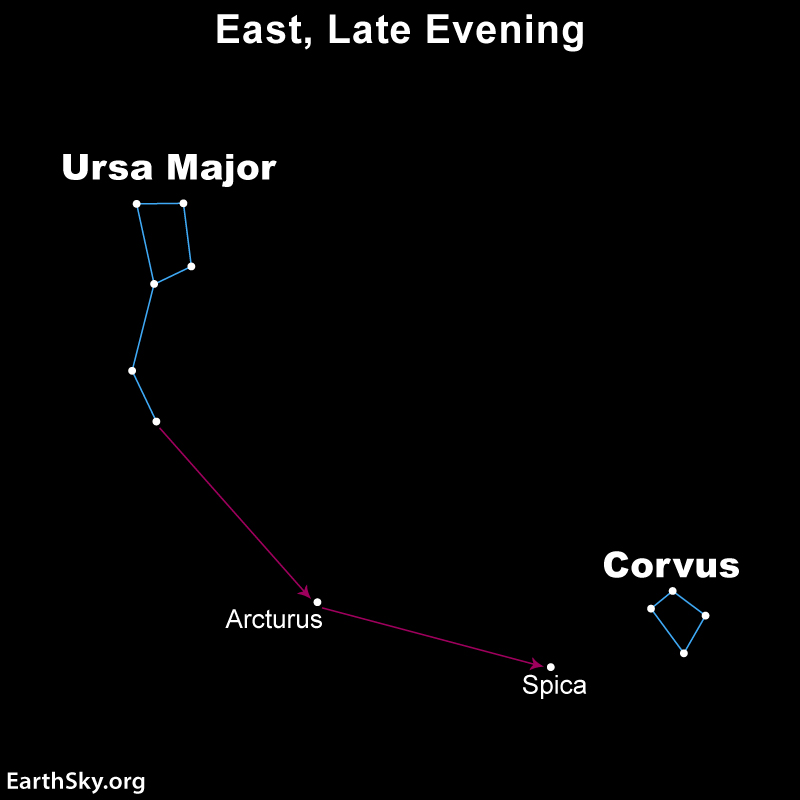
From the Northern Hemisphere, there’s an easy trick to finding this constellation and its brightest star. Just remember this mnemonic: Follow the arc to Arcturus and speed on (or “drive a spike”) to Spica. If you can see the Big Dipper in the northern sky, you can follow the curve of its handle outward to a bright orange star. That’s Arcturus in the constellation Boötes.
Then “speed on” (or “drive a spike”) to Spica in Virgo.
The Big Dipper, Arcturus and Spica are all so bright you can see them from inside cities. Just know you need a dark sky to trace the large figure of Virgo on the sky’s dome. Visit EarthSky’s Best Places to Stargaze.
See Virgo from the Southern Hemisphere
Via Daniel Gaussen, Founder & Guide – Stargaze Mackenzie – New Zealand
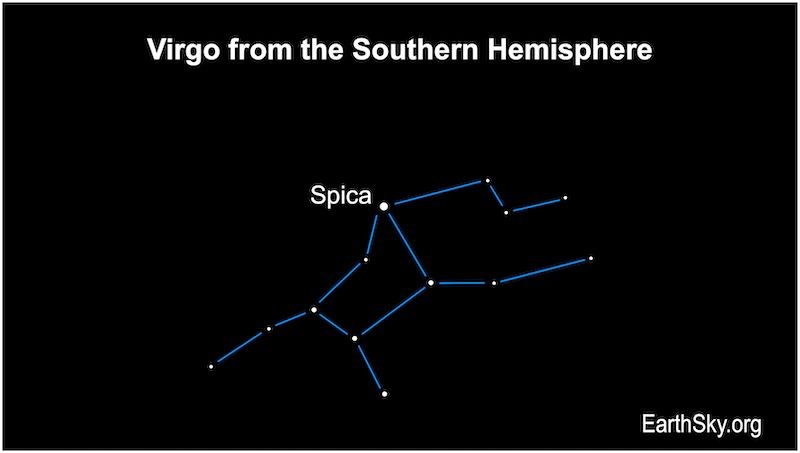
For Southern Hemisphere observers, Virgo is one of the most prominent constellations of the autumn evening sky during May and June. Instead of looking south as Northern Hemisphere observers do, Southern Hemisphere stargazers should look toward the northern sky, where Virgo crosses the meridian high above the horizon.
The constellation appears upside down compared with Northern Hemisphere star charts, a reminder that our view of the celestial sphere is reversed. Despite this different orientation, the bright blue-white star Spica remains easy to identify as Virgo’s brightest star.
One of the easiest ways to find Spica is by using the Spring Triangle, named in the north (but seen during autumn in the south), formed by Spica, Arcturus, and Regulus. During May and June evenings, these three bright stars dominate the northern sky, with Spica the highest of the three stars.
For observers in New Zealand’s South Island (around 45 degrees south latitude), Spica reaches an altitude of about 61 degrees when crossing the meridian, while from Auckland (37 degrees south latitude) it culminates around 53 degrees above the northern horizon.
Look for the distinctive shape of Virgo extending below Spica. The constellation forms a large, somewhat rectangular pattern of stars, although these stars are much fainter than Virgo’s brightest star.
Virgo’s position along the ecliptic means the moon and planets frequently pass through the constellation. Southern Hemisphere observers are also well placed to explore the rich galaxy fields of the Virgo Cluster.
The stars of the Maiden
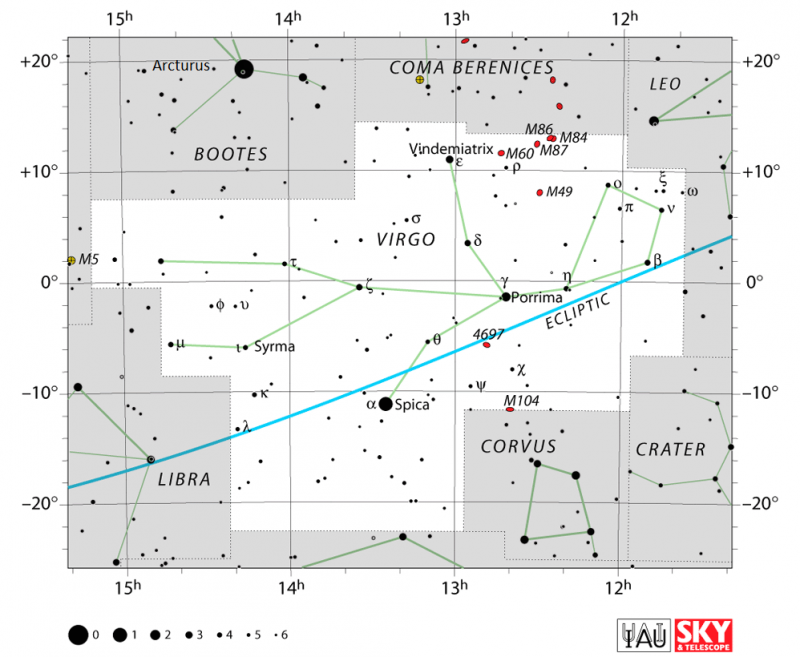
Spica is a blue-white 1st-magnitude star near the center of Virgo. It’s the 15th-brightest star in the night sky. Spica shines at magnitude 1.04 and lies 250 light-years from Earth.
The 2nd-brightest star in Virgo is much fainter. It lies northwest of Spica on the sky’s dome. It’s Gamma Virginis, or Porrima, a moderately bright star at magnitude 2.74. It’s known as a binary star system, some 38 light-years away.
Virgo’s 3rd-brightest star is at the northern reaches of the constellation. Vindemiatrix shines at magnitude 2.82. It’s located 109 light-years away.
The Virgo Cluster
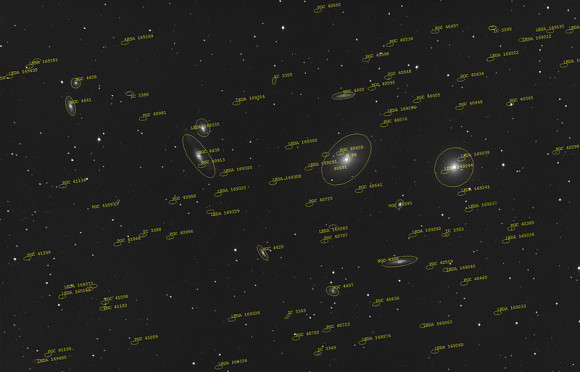
Virgo is famous for its thousands of galaxies. One grouping – the Virgo Cluster – is near the border with Coma Berenices, west of Vindemiatrix. The Virgo Cluster is the nearest large group of galaxies to the Milky Way. And it lies at the center of our Local Supercluster of galaxies. The Local Group of galaxies, which includes the Milky Way, is also part of the Local Supercluster.
Additionally, the gravitational pull from the Virgo Cluster in the Local Supercluster is slowing the escape velocity of the Milky Way and our Local Group. So the Virgo cluster is one of the few places in the universe we are speeding toward. Therefore, the galaxies in the Virgo Cluster are some of the few we see with a blueshift instead of a redshift. One day, these many galaxies will merge into one huge conglomeration.
In fact, the galaxy with one of the highest blueshifts lies right on the border of Virgo and Coma Berenices. This galaxy, M90, is moving rapidly among the other objects in the Virgo Cluster. That’s because it’s also being stripped of gas and dust due to its close quarters with the other galaxies. At magnitude 9.5, you can see this galaxy in a telescope across the 60 million light-year span.
In addition, other galaxies between 8th and 9th magnitude in this location are M49, M58, M59, M60, M84, M86, M87, and M89. Even more galaxies come into view if you scan along the line between Virgo and Coma Berenices.
M87, or Virgo A
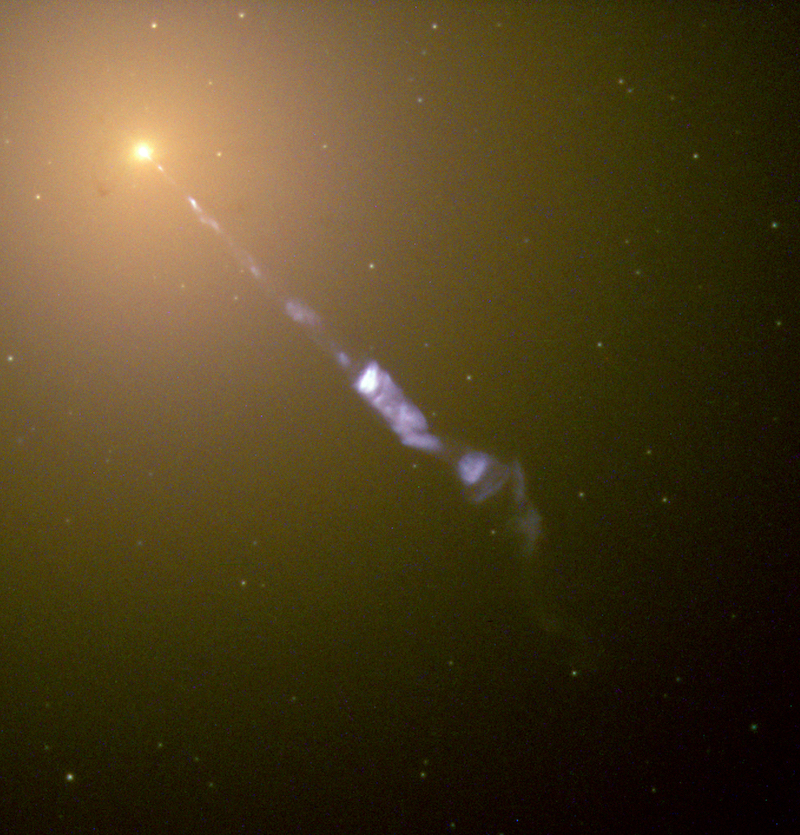
M87 is a special galaxy located in the direction of Virgo. It’s part of the Virgo Cluster. It shines at magnitude 8.6 and is therefore easy to detect in any telescope and even in some binoculars. M87 lies about 60 million light-years away. Its potato-shaped clump of stars extends well over half a million light-years across, about five times our Milky Way’s diameter. Meanwhile, the galaxy’s halo is about a million light-years, and maybe larger.
M87 is home to the largest known number of globular star clusters. For comparison, the Milky Way has about 200 globulars, while M87 has thousands.
Another amazing feature of M87 is the jet that extends outward from its core for thousands of light-years. A monster black hole at the galaxy’s core is the source of the jet. In fact, M87’s black hole was the 1st ever imaged, in 2019. That image was enhanced and released with more detail in April 2023.
The Sombrero Galaxy
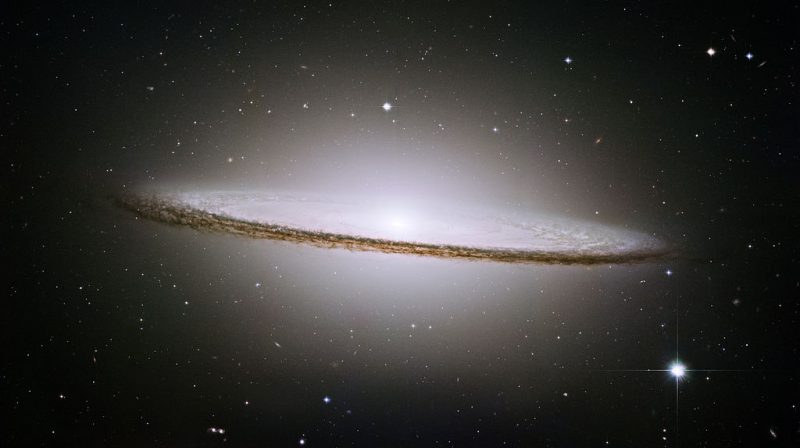
Not to be overlooked is another bright and notable galaxy that’s apart from the large Virgo Cluster: M104, or the Sombrero Galaxy. It’s located on the southeastern border of the constellation next to Corvus the Crow. Without a doubt, M104 is a stunning galaxy in photographs. Even better, at magnitude 8.3, you can see it in small telescopes. It’s an edge-on, dusty spiral galaxy with a bright core. M104 lies approximately 55 million light-years away.
The constellations of the zodiac
Meet Taurus the Bull in the evening sky
Gemini the Twins, home to 2 bright stars
Meet Cancer the Crab and its Beehive Cluster
Leo the Lion and its backward question mark
Virgo the Maiden in northern spring skies
Meet Libra the Scales, a zodiacal constellation
Scorpius the Scorpion is a summertime delight
Sagittarius the Archer and its famous Teapot
Capricornus the Sea-goat has an arrowhead shape
Meet Aquarius the Water Bearer and its stars
Meet Pisces the Fish, 1st constellation of the zodiac
Say hello to Aries the Ram
Is Ophiuchus the 13th constellation of the zodiac?
Bottom line: Virgo the Maiden is the largest of the zodiac constellations. It’s large and faint, but its brightest star Spica is easy to find.
The post Virgo the Maiden represents a harvest goddess first appeared on EarthSky.
from EarthSky https://ift.tt/7qxrf9Y
The constellation Virgo the Maiden
Virgo the Maiden is the largest constellation of the zodiac. And the 12 constellations of the zodiac are important because they define the sun’s path across our sky. So both Northern and Southern Hemisphere stargazers can see Virgo equally well. May and June are excellent times to look for it!
Virgo appears high above the southern horizon on May and June evenings for us in the Northern Hemisphere. Remember … it follows the path of the sun. The same is true from the Southern Hemisphere, but, from there, one faces northward to see the sun’s daily path across our sky. So Southern Hemisphere dwellers look northward to see Virgo on May and June evenings.
And Virgo is big. It’s the biggest zodiacal constellation and 2nd-largest constellation overall (after Hydra the Water Snake). It’s large and dim, with only one bright star. This star is called Spica.
Virgo represents a harvest goddess
Virgo the Maiden is typically seen as goddess of the harvest. And the bright star Spica marks a bundle of wheat held in the Maiden’s left hand.
In fact, the constellation Virgo is linked to one of the best known of all Greek myths, that of Demeter and Persephone. According to the myth, it once was always springtime on Earth. That was due to Demeter, an Earth goddess, who deeply loved her daughter Persephone. But then the god of the underworld, Hades, spied Persephone, fell in love with her and kidnapped her.
Demeter was overcome with grief. She abandoned her role as an Earth goddess. And so the world’s fruitfulness and fertility suffered. As often happened in Greek myths, Zeus – king of the gods – intervened. He insisted that Hades return Persephone to Demeter. But Zeus set a condition. He said Persephone must not eat until she returned to her home. That’s when Hades gave Persephone a pomegranate. It’s said that Persephone ate just six seeds.
So Persephone returned to her mother. But – because of the pomegranate – she has to return to the underworld for six months every year.
Now, it’s said, spring returns to the Northern Hemisphere each year when Persephone reunites with Demeter. Then northern winter season reigns again when Persephone dwells in the underworld.
From the perspective of the Northern Hemisphere, Virgo is absent from early evening sky in late autumn, winter and early spring. Virgo’s return to the sky at nightfall – in the months of April, May and June – coincides with the northern spring.
See Virgo from the Northern Hemisphere
From the Northern Hemisphere, there’s an easy trick to finding this constellation and its brightest star. Just remember this mnemonic: Follow the arc to Arcturus and speed on (or “drive a spike”) to Spica. If you can see the Big Dipper in the northern sky, you can follow the curve of its handle outward to a bright orange star. That’s Arcturus in the constellation Boötes.
Then “speed on” (or “drive a spike”) to Spica in Virgo.
The Big Dipper, Arcturus and Spica are all so bright you can see them from inside cities. Just know you need a dark sky to trace the large figure of Virgo on the sky’s dome. Visit EarthSky’s Best Places to Stargaze.
See Virgo from the Southern Hemisphere
Via Daniel Gaussen, Founder & Guide – Stargaze Mackenzie – New Zealand
For Southern Hemisphere observers, Virgo is one of the most prominent constellations of the autumn evening sky during May and June. Instead of looking south as Northern Hemisphere observers do, Southern Hemisphere stargazers should look toward the northern sky, where Virgo crosses the meridian high above the horizon.
The constellation appears upside down compared with Northern Hemisphere star charts, a reminder that our view of the celestial sphere is reversed. Despite this different orientation, the bright blue-white star Spica remains easy to identify as Virgo’s brightest star.
One of the easiest ways to find Spica is by using the Spring Triangle, named in the north (but seen during autumn in the south), formed by Spica, Arcturus, and Regulus. During May and June evenings, these three bright stars dominate the northern sky, with Spica the highest of the three stars.
For observers in New Zealand’s South Island (around 45 degrees south latitude), Spica reaches an altitude of about 61 degrees when crossing the meridian, while from Auckland (37 degrees south latitude) it culminates around 53 degrees above the northern horizon.
Look for the distinctive shape of Virgo extending below Spica. The constellation forms a large, somewhat rectangular pattern of stars, although these stars are much fainter than Virgo’s brightest star.
Virgo’s position along the ecliptic means the moon and planets frequently pass through the constellation. Southern Hemisphere observers are also well placed to explore the rich galaxy fields of the Virgo Cluster.
The stars of the Maiden
Spica is a blue-white 1st-magnitude star near the center of Virgo. It’s the 15th-brightest star in the night sky. Spica shines at magnitude 1.04 and lies 250 light-years from Earth.
The 2nd-brightest star in Virgo is much fainter. It lies northwest of Spica on the sky’s dome. It’s Gamma Virginis, or Porrima, a moderately bright star at magnitude 2.74. It’s known as a binary star system, some 38 light-years away.
Virgo’s 3rd-brightest star is at the northern reaches of the constellation. Vindemiatrix shines at magnitude 2.82. It’s located 109 light-years away.
The Virgo Cluster
Virgo is famous for its thousands of galaxies. One grouping – the Virgo Cluster – is near the border with Coma Berenices, west of Vindemiatrix. The Virgo Cluster is the nearest large group of galaxies to the Milky Way. And it lies at the center of our Local Supercluster of galaxies. The Local Group of galaxies, which includes the Milky Way, is also part of the Local Supercluster.
Additionally, the gravitational pull from the Virgo Cluster in the Local Supercluster is slowing the escape velocity of the Milky Way and our Local Group. So the Virgo cluster is one of the few places in the universe we are speeding toward. Therefore, the galaxies in the Virgo Cluster are some of the few we see with a blueshift instead of a redshift. One day, these many galaxies will merge into one huge conglomeration.
In fact, the galaxy with one of the highest blueshifts lies right on the border of Virgo and Coma Berenices. This galaxy, M90, is moving rapidly among the other objects in the Virgo Cluster. That’s because it’s also being stripped of gas and dust due to its close quarters with the other galaxies. At magnitude 9.5, you can see this galaxy in a telescope across the 60 million light-year span.
In addition, other galaxies between 8th and 9th magnitude in this location are M49, M58, M59, M60, M84, M86, M87, and M89. Even more galaxies come into view if you scan along the line between Virgo and Coma Berenices.
M87, or Virgo A
M87 is a special galaxy located in the direction of Virgo. It’s part of the Virgo Cluster. It shines at magnitude 8.6 and is therefore easy to detect in any telescope and even in some binoculars. M87 lies about 60 million light-years away. Its potato-shaped clump of stars extends well over half a million light-years across, about five times our Milky Way’s diameter. Meanwhile, the galaxy’s halo is about a million light-years, and maybe larger.
M87 is home to the largest known number of globular star clusters. For comparison, the Milky Way has about 200 globulars, while M87 has thousands.
Another amazing feature of M87 is the jet that extends outward from its core for thousands of light-years. A monster black hole at the galaxy’s core is the source of the jet. In fact, M87’s black hole was the 1st ever imaged, in 2019. That image was enhanced and released with more detail in April 2023.
The Sombrero Galaxy
Not to be overlooked is another bright and notable galaxy that’s apart from the large Virgo Cluster: M104, or the Sombrero Galaxy. It’s located on the southeastern border of the constellation next to Corvus the Crow. Without a doubt, M104 is a stunning galaxy in photographs. Even better, at magnitude 8.3, you can see it in small telescopes. It’s an edge-on, dusty spiral galaxy with a bright core. M104 lies approximately 55 million light-years away.
The constellations of the zodiac
Meet Taurus the Bull in the evening sky
Gemini the Twins, home to 2 bright stars
Meet Cancer the Crab and its Beehive Cluster
Leo the Lion and its backward question mark
Virgo the Maiden in northern spring skies
Meet Libra the Scales, a zodiacal constellation
Scorpius the Scorpion is a summertime delight
Sagittarius the Archer and its famous Teapot
Capricornus the Sea-goat has an arrowhead shape
Meet Aquarius the Water Bearer and its stars
Meet Pisces the Fish, 1st constellation of the zodiac
Say hello to Aries the Ram
Is Ophiuchus the 13th constellation of the zodiac?
Bottom line: Virgo the Maiden is the largest of the zodiac constellations. It’s large and faint, but its brightest star Spica is easy to find.
The post Virgo the Maiden represents a harvest goddess first appeared on EarthSky.
from EarthSky https://ift.tt/7qxrf9Y

Aucun commentaire:
Enregistrer un commentaire