
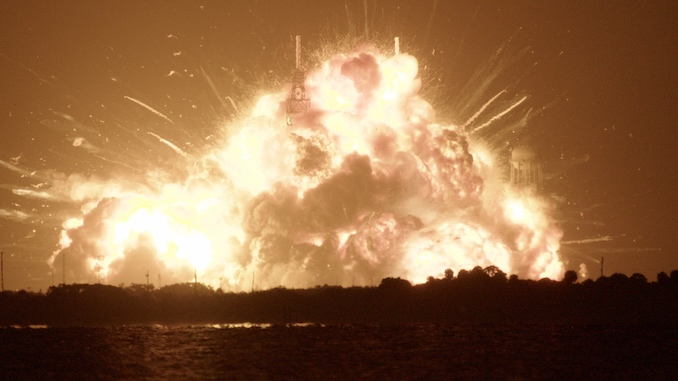
Jeff Bezos’ space company Blue Origin, experienced a major setback late Friday when its New Glenn mega-rocket exploded during testing at a launch site in Cape Canaveral, Florida. It was one of the largest rocket explosions in U.S. history. Blue Origin later confirmed the explosion, as did Jeff Bezos, who said in a statement:
All personnel are accounted for and safe. It’s too early to know the root cause, but we’re already working to find it. Very rough day, but we’ll rebuild whatever needs rebuilding and get back to flying.
The explosion happened at approximately 9 p.m. EDT on the night of May 28, 2026. At 8:31 p.m. EDT, Blue Origin released this official statement:
We experienced an anomaly during today’s hotfire test. All personnel have been accounted for. We will provide updates as we learn more.
https://ift.tt/ap2P5by
What sort of rocket was it?
The Blue Origin rocket is one of the largest operational or near-operational rockets on Earth. It belonged to the class of Heavy Lift Launch Vehicles (HLLVs). These rockets are about 98 meters (322 feet) tall, or roughly the height of a 32-story building.
NASA had just announced earlier this week that Blue Origin would play a major role in carrying payloads to the moon for its planned moon base. And this is the rocket design that will play a role in those moon missions.
This Blue Origin rocket is designed to carry up to 45 metric tons (nearly 100,000 pounds) of cargo to Low-Earth Orbit (LEO) in its fully reusable configuration. That’s roughly equivalent to launching three fully loaded commercial school buses into space at the exact same time.
The Blue Origin explosion came during testing
Blue Origin was performing a test ahead of an anticipated launch of the new rocket in the coming weeks. The coming launch was supposed to carry Amazon Leo internet satellites to space.
So the rocket was likely fully fueled, contributing to what is one of the largest rocket explosions in U.S. history and the worst failure in Blue Origin’s existence, according to media sources.
Prior to this, Blue Origin’s most notable inflight anomaly was an uncrewed New Shepard suborbital mission (NS-23) in 2022, which safely triggered its capsule escape system. And, before last night’s explosion, the company had never lost a massive, orbital-class vehicle like the New Glenn, let alone experienced a catastrophic pad explosion of this magnitude.
While the explosion caused significant damage to Launch Complex 36, Amazon luckily confirmed that the 48 Project Kuiper (Leo) internet satellites scheduled for the upcoming flight were not yet loaded onto the rocket during the test. So they are safe.
What sort of test was it?
A static fire test (also called a static hotfire test) is a common pre-launch procedure in aerospace engineering. During the test, a rocket’s engines are ignited at full thrust while the vehicle is securely clamped down to the launchpad.
The primary goal is to test the rocket’s propulsion system and overall readiness under flight-like conditions without actually letting it lift off.
Likely next steps for Blue Origin?
Now, Blue Origin is likely to shift from preparation to investigation and recovery. Because the New Glenn is central to both commercial contracts and NASA’s lunar timeline, the company faces intense pressure.
Their primary next steps probably include:
- A “root cause” Investigation. Before any rocket can clear for flight, Blue Origin — coordinating with Space Launch Delta 45 and the Federal Aviation Administration (FAA) — must determine exactly what triggered the anomaly.
- Rebuilding Launch Complex 36 at Cape Canaverl. The explosion of a 98-meter mega-rocket completely loaded with liquefied natural gas and liquid oxygen inflicts severe damage on pad infrastructure. Blue Origin will need to clear the debris and rebuild the heavily damaged launch mount, umbilical towers, fuel lines, and electrical systems. Jeff Bezos acknowledged the scale of this task in his statement, when he said, “We’ll rebuild whatever needs rebuilding and get back to flying.”
- Rescheduling the flight profile. The destroyed rocket was supposed to launch 48 of Amazon’s Project Kuiper internet satellites. While those satellites are safe because they hadn’t been integrated onto the rocket yet, Blue Origin will have to manufacture a brand-new New Glenn first stage and reschedule the flight.
- Mitigating delays for NASA’s moon missions. This failure heavily impacts NASA’s upcoming lunar schedule.
Bottom line: Blue Origin experienced a setback late Friday when its New Glenn mega-rocket exploded during testing at a launch site in Cape Canaveral, Florida.
The post Blue Origin mega-rocket explodes on launch pad first appeared on EarthSky.
from EarthSky https://ift.tt/vKOcA32
Jeff Bezos’ space company Blue Origin, experienced a major setback late Friday when its New Glenn mega-rocket exploded during testing at a launch site in Cape Canaveral, Florida. It was one of the largest rocket explosions in U.S. history. Blue Origin later confirmed the explosion, as did Jeff Bezos, who said in a statement:
All personnel are accounted for and safe. It’s too early to know the root cause, but we’re already working to find it. Very rough day, but we’ll rebuild whatever needs rebuilding and get back to flying.
The explosion happened at approximately 9 p.m. EDT on the night of May 28, 2026. At 8:31 p.m. EDT, Blue Origin released this official statement:
We experienced an anomaly during today’s hotfire test. All personnel have been accounted for. We will provide updates as we learn more.
https://ift.tt/ap2P5by
What sort of rocket was it?
The Blue Origin rocket is one of the largest operational or near-operational rockets on Earth. It belonged to the class of Heavy Lift Launch Vehicles (HLLVs). These rockets are about 98 meters (322 feet) tall, or roughly the height of a 32-story building.
NASA had just announced earlier this week that Blue Origin would play a major role in carrying payloads to the moon for its planned moon base. And this is the rocket design that will play a role in those moon missions.
This Blue Origin rocket is designed to carry up to 45 metric tons (nearly 100,000 pounds) of cargo to Low-Earth Orbit (LEO) in its fully reusable configuration. That’s roughly equivalent to launching three fully loaded commercial school buses into space at the exact same time.
The Blue Origin explosion came during testing
Blue Origin was performing a test ahead of an anticipated launch of the new rocket in the coming weeks. The coming launch was supposed to carry Amazon Leo internet satellites to space.
So the rocket was likely fully fueled, contributing to what is one of the largest rocket explosions in U.S. history and the worst failure in Blue Origin’s existence, according to media sources.
Prior to this, Blue Origin’s most notable inflight anomaly was an uncrewed New Shepard suborbital mission (NS-23) in 2022, which safely triggered its capsule escape system. And, before last night’s explosion, the company had never lost a massive, orbital-class vehicle like the New Glenn, let alone experienced a catastrophic pad explosion of this magnitude.
While the explosion caused significant damage to Launch Complex 36, Amazon luckily confirmed that the 48 Project Kuiper (Leo) internet satellites scheduled for the upcoming flight were not yet loaded onto the rocket during the test. So they are safe.
What sort of test was it?
A static fire test (also called a static hotfire test) is a common pre-launch procedure in aerospace engineering. During the test, a rocket’s engines are ignited at full thrust while the vehicle is securely clamped down to the launchpad.
The primary goal is to test the rocket’s propulsion system and overall readiness under flight-like conditions without actually letting it lift off.
Likely next steps for Blue Origin?
Now, Blue Origin is likely to shift from preparation to investigation and recovery. Because the New Glenn is central to both commercial contracts and NASA’s lunar timeline, the company faces intense pressure.
Their primary next steps probably include:
- A “root cause” Investigation. Before any rocket can clear for flight, Blue Origin — coordinating with Space Launch Delta 45 and the Federal Aviation Administration (FAA) — must determine exactly what triggered the anomaly.
- Rebuilding Launch Complex 36 at Cape Canaverl. The explosion of a 98-meter mega-rocket completely loaded with liquefied natural gas and liquid oxygen inflicts severe damage on pad infrastructure. Blue Origin will need to clear the debris and rebuild the heavily damaged launch mount, umbilical towers, fuel lines, and electrical systems. Jeff Bezos acknowledged the scale of this task in his statement, when he said, “We’ll rebuild whatever needs rebuilding and get back to flying.”
- Rescheduling the flight profile. The destroyed rocket was supposed to launch 48 of Amazon’s Project Kuiper internet satellites. While those satellites are safe because they hadn’t been integrated onto the rocket yet, Blue Origin will have to manufacture a brand-new New Glenn first stage and reschedule the flight.
- Mitigating delays for NASA’s moon missions. This failure heavily impacts NASA’s upcoming lunar schedule.
Bottom line: Blue Origin experienced a setback late Friday when its New Glenn mega-rocket exploded during testing at a launch site in Cape Canaveral, Florida.
The post Blue Origin mega-rocket explodes on launch pad first appeared on EarthSky.
from EarthSky https://ift.tt/vKOcA32

Aucun commentaire:
Enregistrer un commentaire