
May 2026 meteors … the Eta Aquariids
When to watch: The best morning to watch is May 5, 2026, in the hours before dawn. The American Meteor Society is listing 3:51 UTC on May 5 as the shower’s predicted** peak time. The fact is that the peak of this shower stretches out over several days. So you can expect elevated numbers of meteors a few days before and after the peak time. The mornings of both May 4 and May 6 are also good times to watch!
Nearest moon phase: The last quarter moon will fall at 21:10 UTC on May 9. So, there will be a waning gibbous moon in the post-midnight sky, that sets after sunrise. So the sky before dawn on the mornings around the predicted peak for the 2025 Eta Aquariids will compete with a bright gibbous moon. Find a way to block out the moon for a better view of the sky.
The radiant: will rise in the wee hours, climbing toward its highest point at dawn. That’s why the hours before dawn will be the best time to watch this shower.
Duration of shower: April 15 to May 27. This time period is when we’re passing through the Eta Aquariid meteor stream in space!
Expected meteors at peak, under ideal conditions: The zenithal hourly rate (ZHR) of this shower (the rate at the shower’s peak, under a dark sky, with no moon, when the radiant is high in the sky) is 60. In 2026, a waning gibbous moon will severely affect this shower, reducing hourly rates. And be aware that the shower is best for latitudes like those in the southern half of the U.S. or even farther south, in the Southern Hemisphere. These are swift meteors that produce a high percentage of persistent trains.
Note: The Eta Aquariids’ radiant will be on the ecliptic, which will ride low in the sky on spring mornings as seen from far northerly latitudes. This shower favors more southerly latitudes (like those in the southern U.S. or the Southern Hemisphere), where the radiant appears higher in the morning sky. It’s often the Southern Hemisphere’s best meteor shower of the year.
Read more: Meteors in moonlight: 6 tips for watching
More about this shower’s radiant
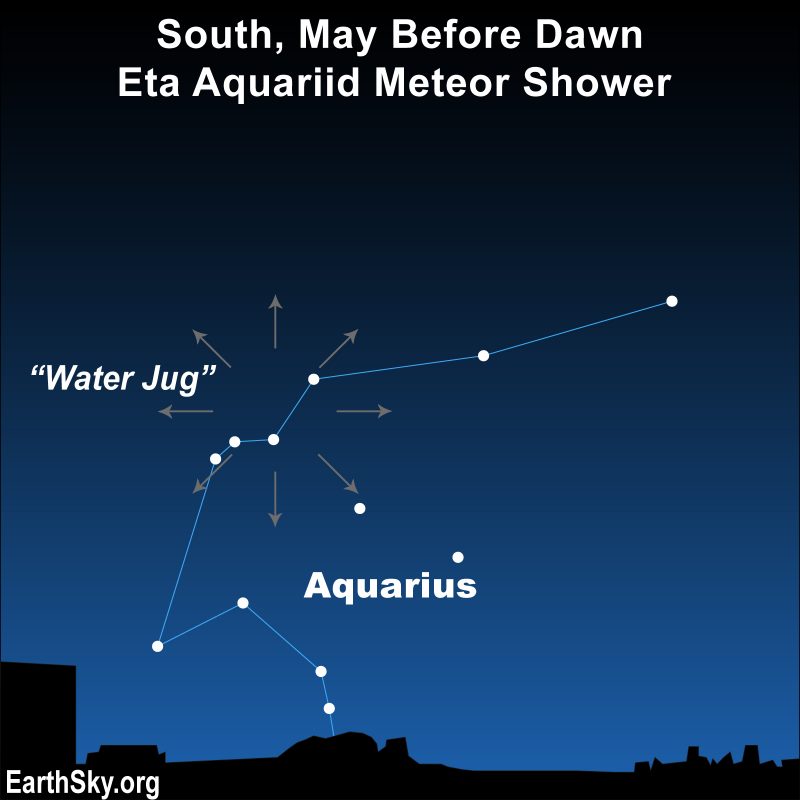
If you trace the paths of the Eta Aquariid meteors backward, they all seem to radiate from a point in the constellation Aquarius the Water Bearer. This point on the sky’s dome is called the radiant of the meteor shower. It nearly aligns with the faint star Eta Aquarii, and the meteor shower takes its name from this star.
Eta Aquarii is one of the four stars making up the Y-shaped Water Jar asterism in the northern part of Aquarius. If you can find the Water Jar in the constellation Aquarius, you’ve located the radiant point for the Eta Aquariid meteors. The alignment of the radiant and the star is, of course, coincidental. Eta Aquarii is some 170 light-years away – trillions upon trillions of miles away – while the Eta Aquariid meteors burn up nearby – only 60 miles (100 km) above Earth’s surface.
Meteor shower radiants are sometimes misunderstood by casual meteor-watchers. You don’t need to know where they are to watch a meteor shower. That’s because the meteors fly every way across the sky, in front of numerous constellations. However, the higher a shower’s radiant appears in your sky, the more meteors you’re likely to see. For the Eta Aquariids, the radiant soars highest in the nighttime sky just before dawn. That’s one of the reasons why you can expect to see the most meteors in the wee morning hours.
How to view a meteor shower
As with all meteors in annual showers, no special equipment is required to watch the Eta Aquariids. But a little luck always helps.
Find a dark, open sky away from artificial lights, and sprawl out on a reclining lawn chair.
Make yourself comfortable with a hot flask of your favorite beverage. Keep warm but not so snug that you fall asleep!
Meteor watching is a lot like fishing. Sometimes you catch a good number of them, and sometimes you don’t.
Meteor showers: Tips for watching the show
The Eta Aquariids’ parent comet
This section is by the late, great Don Machholz (1952-2022), who discovered 12 comets …
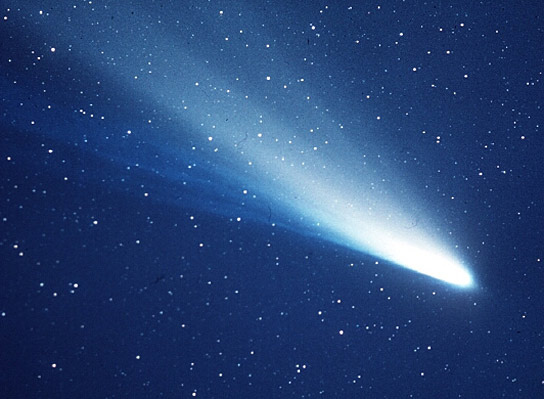
The object responsible for the Eta Aquariid meteor shower – that is, its parent comet – is the famous Halley’s comet. This comet is in a retrograde orbit around the sun. That means it runs around the sun in the opposite direction from Earth and all the other planets. As a result, we pass near its path twice, one time along the outbound portion of the comet’s orbit. That happens every early May, causing the Eta Aquariid meteor shower. The other time is along the inbound portion of the comet’s orbit, and that passage causes the Orionid meteor shower in late October of each year.
Halley’s comet orbits the sun on an average of every 76 years (the range is from 74 through 79 years due to perturbations of the planets). So, in most years, the comet is nowhere near when we sweep through its orbit, and when debris left behind by the comet enters our atmosphere to create Halley’s two meteor showers.
Perhaps you saw Halley’s comet when it returned last, in 1985/86. It has been observed since the year 240 BCE. Presently, the comet is traveling heading back toward the sun at about 0.6 miles a second (0.9 km/sec).
In December of 2023, the comet reached its farthest point from the sun, which binds it in orbit. Then – pulled inexorably by the sun’s gravity – it curved around and is heading back toward the inner solar system again. Halley’s comet will be back in 2061.
While waiting for Halley’s comet to return, watch for the next best thing: the Eta Aquariid meteor shower in early May.
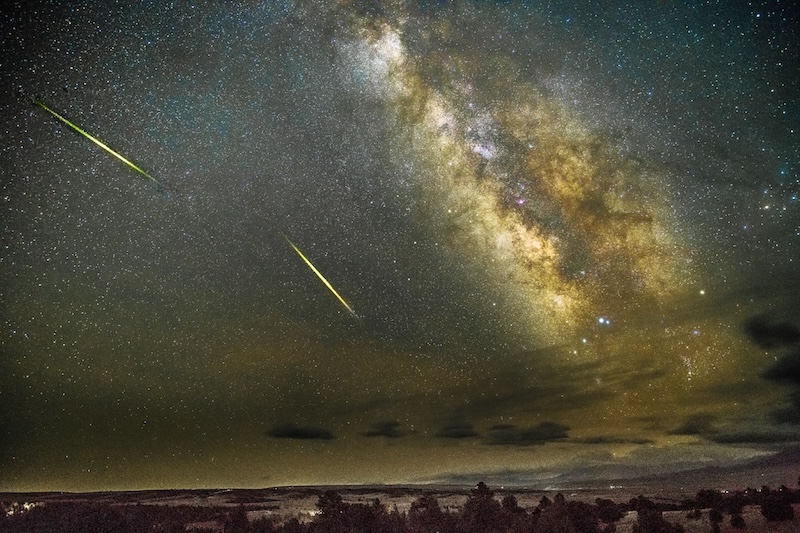
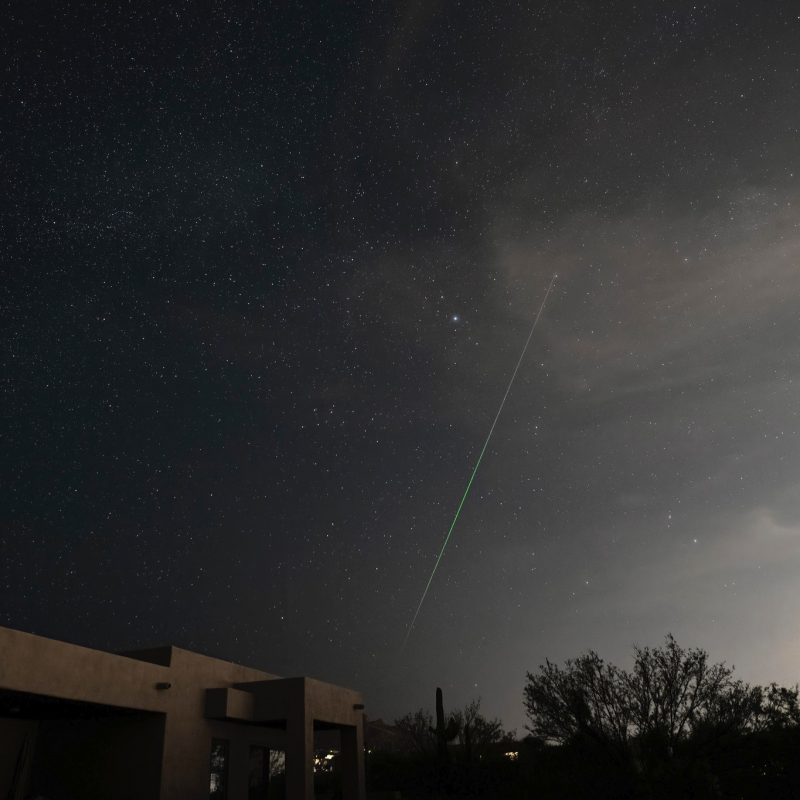
Eta Aquariid meteor shower photos from EarthSky’s community
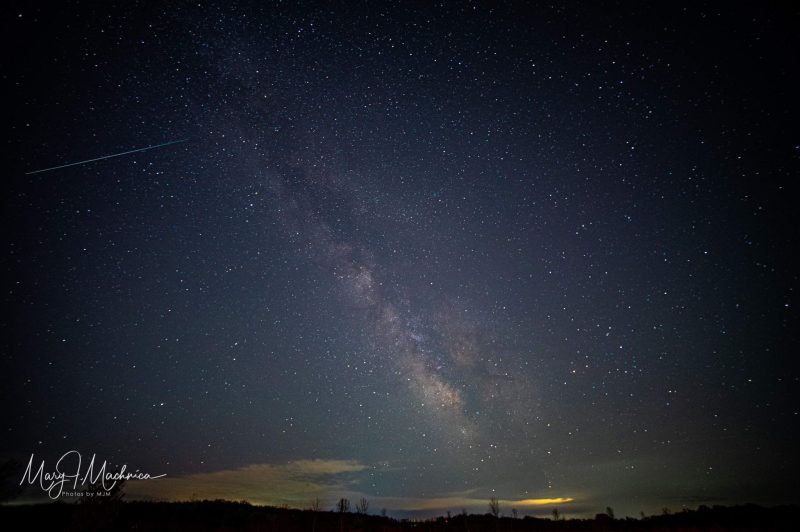
Bottom line: May’s Eta Aquariid meteor shower is best in 2026 on the morning of May 5. Be sure to watch in the hours before dawn. Find a way to block out the waning gibbous moon.
Read more: Why the Eta Aquariids are best from the Southern Hemisphere.
Visit EarthSky’s meteor shower guide
Report a fireball (very bright meteor) to the American Meteor Society: it’s fun and easy!
Learn how to shoot photos of meteors
**Predicted peak times and dates for meteor showers are from the American Meteor Society. Note that meteor shower peak times can vary. Back to top.
The post 2026 Eta Aquariid meteor shower best before dawn on May 5 first appeared on EarthSky.
from EarthSky https://ift.tt/q1tLhSX
May 2026 meteors … the Eta Aquariids
When to watch: The best morning to watch is May 5, 2026, in the hours before dawn. The American Meteor Society is listing 3:51 UTC on May 5 as the shower’s predicted** peak time. The fact is that the peak of this shower stretches out over several days. So you can expect elevated numbers of meteors a few days before and after the peak time. The mornings of both May 4 and May 6 are also good times to watch!
Nearest moon phase: The last quarter moon will fall at 21:10 UTC on May 9. So, there will be a waning gibbous moon in the post-midnight sky, that sets after sunrise. So the sky before dawn on the mornings around the predicted peak for the 2025 Eta Aquariids will compete with a bright gibbous moon. Find a way to block out the moon for a better view of the sky.
The radiant: will rise in the wee hours, climbing toward its highest point at dawn. That’s why the hours before dawn will be the best time to watch this shower.
Duration of shower: April 15 to May 27. This time period is when we’re passing through the Eta Aquariid meteor stream in space!
Expected meteors at peak, under ideal conditions: The zenithal hourly rate (ZHR) of this shower (the rate at the shower’s peak, under a dark sky, with no moon, when the radiant is high in the sky) is 60. In 2026, a waning gibbous moon will severely affect this shower, reducing hourly rates. And be aware that the shower is best for latitudes like those in the southern half of the U.S. or even farther south, in the Southern Hemisphere. These are swift meteors that produce a high percentage of persistent trains.
Note: The Eta Aquariids’ radiant will be on the ecliptic, which will ride low in the sky on spring mornings as seen from far northerly latitudes. This shower favors more southerly latitudes (like those in the southern U.S. or the Southern Hemisphere), where the radiant appears higher in the morning sky. It’s often the Southern Hemisphere’s best meteor shower of the year.
Read more: Meteors in moonlight: 6 tips for watching
More about this shower’s radiant
If you trace the paths of the Eta Aquariid meteors backward, they all seem to radiate from a point in the constellation Aquarius the Water Bearer. This point on the sky’s dome is called the radiant of the meteor shower. It nearly aligns with the faint star Eta Aquarii, and the meteor shower takes its name from this star.
Eta Aquarii is one of the four stars making up the Y-shaped Water Jar asterism in the northern part of Aquarius. If you can find the Water Jar in the constellation Aquarius, you’ve located the radiant point for the Eta Aquariid meteors. The alignment of the radiant and the star is, of course, coincidental. Eta Aquarii is some 170 light-years away – trillions upon trillions of miles away – while the Eta Aquariid meteors burn up nearby – only 60 miles (100 km) above Earth’s surface.
Meteor shower radiants are sometimes misunderstood by casual meteor-watchers. You don’t need to know where they are to watch a meteor shower. That’s because the meteors fly every way across the sky, in front of numerous constellations. However, the higher a shower’s radiant appears in your sky, the more meteors you’re likely to see. For the Eta Aquariids, the radiant soars highest in the nighttime sky just before dawn. That’s one of the reasons why you can expect to see the most meteors in the wee morning hours.
How to view a meteor shower
As with all meteors in annual showers, no special equipment is required to watch the Eta Aquariids. But a little luck always helps.
Find a dark, open sky away from artificial lights, and sprawl out on a reclining lawn chair.
Make yourself comfortable with a hot flask of your favorite beverage. Keep warm but not so snug that you fall asleep!
Meteor watching is a lot like fishing. Sometimes you catch a good number of them, and sometimes you don’t.
Meteor showers: Tips for watching the show
The Eta Aquariids’ parent comet
This section is by the late, great Don Machholz (1952-2022), who discovered 12 comets …
The object responsible for the Eta Aquariid meteor shower – that is, its parent comet – is the famous Halley’s comet. This comet is in a retrograde orbit around the sun. That means it runs around the sun in the opposite direction from Earth and all the other planets. As a result, we pass near its path twice, one time along the outbound portion of the comet’s orbit. That happens every early May, causing the Eta Aquariid meteor shower. The other time is along the inbound portion of the comet’s orbit, and that passage causes the Orionid meteor shower in late October of each year.
Halley’s comet orbits the sun on an average of every 76 years (the range is from 74 through 79 years due to perturbations of the planets). So, in most years, the comet is nowhere near when we sweep through its orbit, and when debris left behind by the comet enters our atmosphere to create Halley’s two meteor showers.
Perhaps you saw Halley’s comet when it returned last, in 1985/86. It has been observed since the year 240 BCE. Presently, the comet is traveling heading back toward the sun at about 0.6 miles a second (0.9 km/sec).
In December of 2023, the comet reached its farthest point from the sun, which binds it in orbit. Then – pulled inexorably by the sun’s gravity – it curved around and is heading back toward the inner solar system again. Halley’s comet will be back in 2061.
While waiting for Halley’s comet to return, watch for the next best thing: the Eta Aquariid meteor shower in early May.
Eta Aquariid meteor shower photos from EarthSky’s community
Bottom line: May’s Eta Aquariid meteor shower is best in 2026 on the morning of May 5. Be sure to watch in the hours before dawn. Find a way to block out the waning gibbous moon.
Read more: Why the Eta Aquariids are best from the Southern Hemisphere.
Visit EarthSky’s meteor shower guide
Report a fireball (very bright meteor) to the American Meteor Society: it’s fun and easy!
Learn how to shoot photos of meteors
**Predicted peak times and dates for meteor showers are from the American Meteor Society. Note that meteor shower peak times can vary. Back to top.
The post 2026 Eta Aquariid meteor shower best before dawn on May 5 first appeared on EarthSky.
from EarthSky https://ift.tt/q1tLhSX

Aucun commentaire:
Enregistrer un commentaire