
What is a galaxy?
A galaxy is a vast island of gas, dust and stars in an ocean of space. Typically, galaxies are millions of light-years apart. Galaxies are the building blocks of our universe. Their distribution isn’t random, as one might suppose. Instead, galaxies reside along unimaginably long filaments across the universe, forming a cosmic web of star cities.
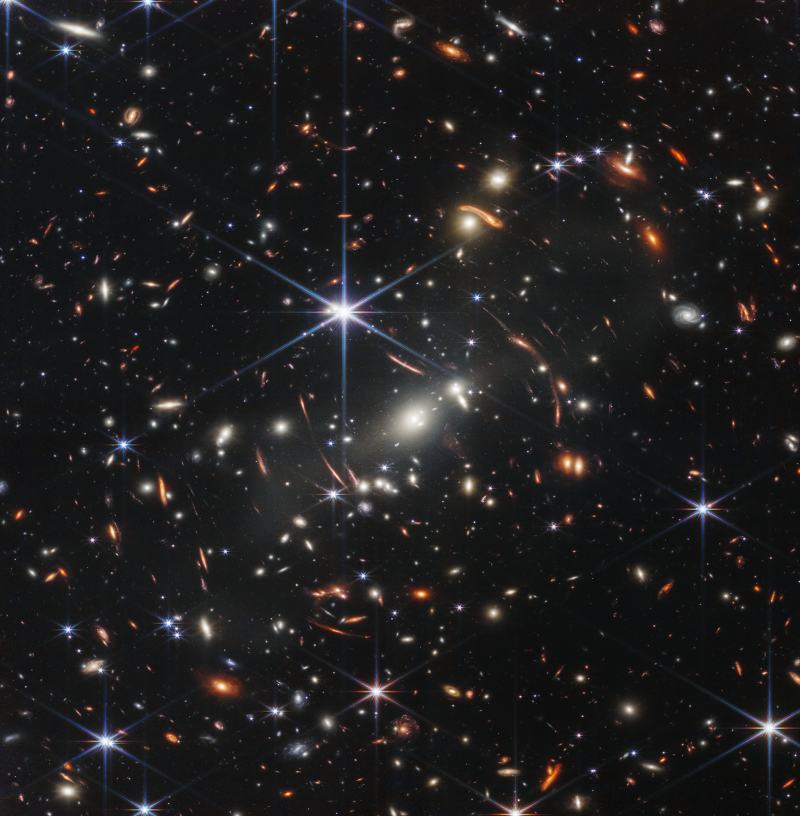
A galaxy can contain hundreds of billions of stars and be many thousands of light-years across. Our own galaxy, the Milky Way, is around 100,000 light-years in diameter. That’s about 587,900 trillion miles, or nearly a million trillion kilometers.
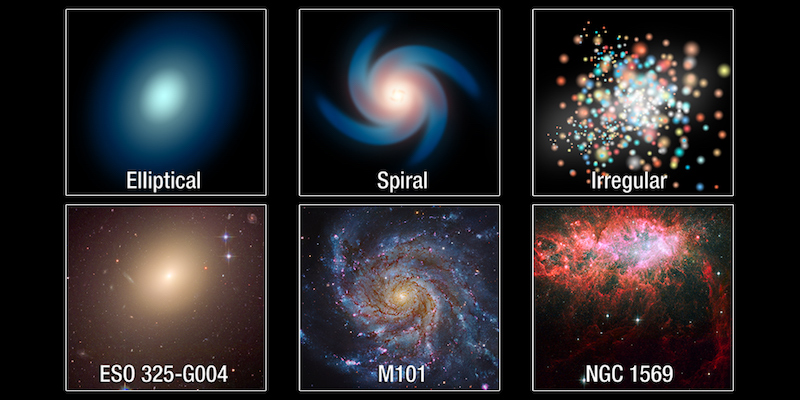
The three types of galaxies are spiral, elliptical or irregular.
Galaxy sizes vary widely, ranging from very small to unbelievably enormous. Small dwarf galaxies contain about 100 million stars. Giant galaxies contain more than a trillion stars.
Also, there are an estimated two hundred billion galaxies in the universe.
The discovery of other galaxies
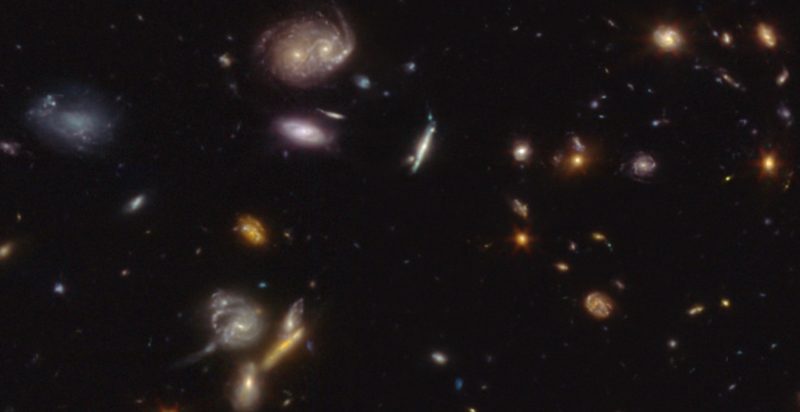
The famous astronomer Edwin P. Hubble first classified galaxies based on their visual appearance in the late 1920s and 30s. In fact, Hubble’s classification of galaxies remains in use today. Of course, since Hubble’s time, like any effective classification system, it has evolved from ongoing observations. Hubble identified several basic types of galaxies, each containing subtypes.
Spiral galaxies are more mysterious than we thought! @KarenLMasters, @vrooje and hundreds of thousands of volunteers @GalaxyZoo have shown that the ‘Hubble Tuning Fork’ method of categorisation is wrong ??https://t.co/EUu9BhBUef pic.twitter.com/QFZgrXHjtU
— Royal Astronomical Society (@RoyalAstroSoc) June 11, 2019
Before Hubble’s study of galaxies, we believed that our galaxy was the only one in the universe. Astronomers thought that the smudges of light they saw through their telescopes were in fact nebulae within our own galaxy. However, Hubble discovered that these nebulae were galaxies. Additionally, it was Hubble who demonstrated, by measuring their velocities, that they lie at vast distances from us.
Galaxies are light-years away
These galaxies lie millions of light-years beyond the Milky Way. The distances are so huge these galaxies appear tiny in all but the largest telescopes. Moreover, Hubble demonstrated that, wherever he looked, galaxies were receding from us in all directions. And the farther away they are, the faster they are receding. Thus, Hubble had discovered that the universe is expanding.
Spiral galaxies
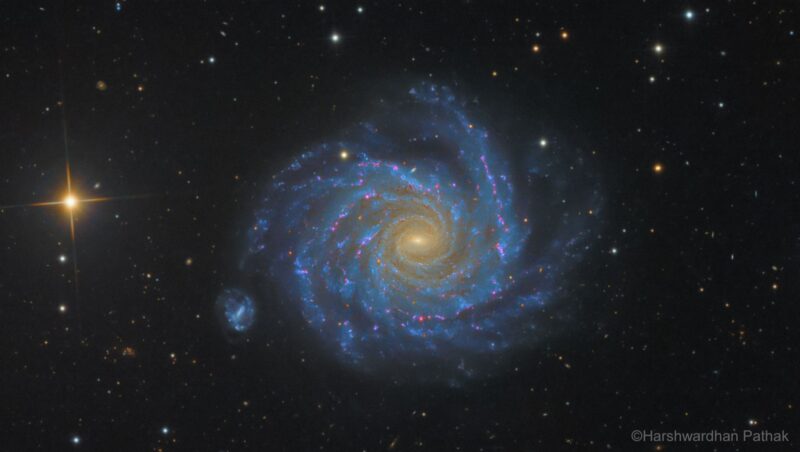
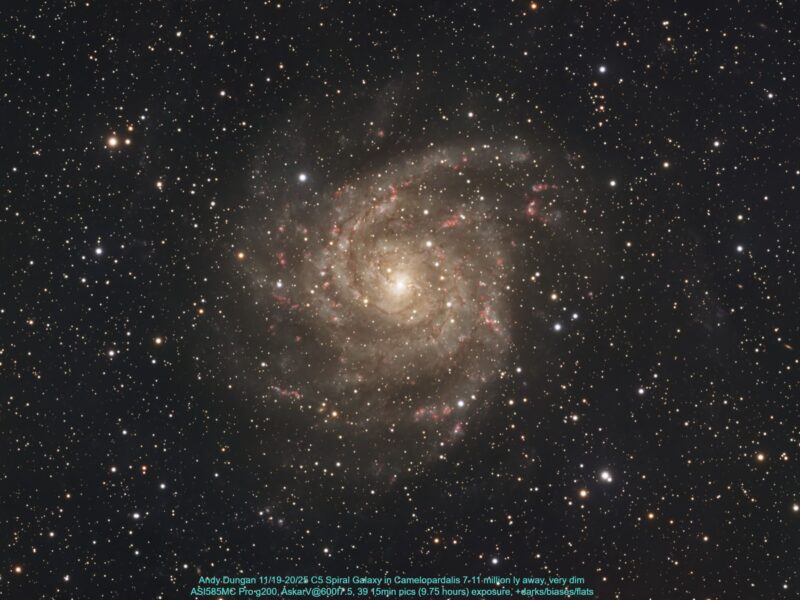
The most common type of galaxy is a spiral galaxy. The Milky Way is a spiral galaxy. Spiral galaxies have majestic, sweeping arms, thousands of light-years long. They contain millions upon millions of stars. Their spiral arms stand out because of bright stars, glowing gas and dust. Spiral galaxies are active with star formation.
Also, spiral galaxies have a bright center, made up of a dense concentration of stars. There are so many stars that from a distance the galaxy’s center looks like a solid ball. This ball of stars is known as the galactic bulge.
Also, there are two types of spiral galaxies. There are regular spirals and barred spirals. If the spiral has bars, they extend off the central bulge. Then, the spiral arms start at the end of the bar. In fact, the Milky Way Galaxy is a barred spiral galaxy.
Read more: Wow! See 19 spiral galaxies in stunning Webb images
Elliptical and irregular galaxies
Elliptical galaxies are the universe’s largest galaxies. In fact, giant elliptical galaxies can be about 300,000 light-years across. But dwarf elliptical galaxies – the most common elliptical – are only a few thousand light-years across. There are several shapes of elliptical galaxies, ranging from circular to football-shaped.
Overall, 1/3 of all galaxies are elliptical galaxies. Elliptical galaxies contain very little gas and dust compared to a spiral or irregular galaxy. They are no longer actively forming stars. The stars in elliptical galaxies are older stars and contain very few heavier elements.
Irregular-shaped galaxies have all sorts of different shapes but they don’t look like a spiral or elliptical galaxy.
Irregular galaxies can have very little dust or a lot. Plus, they can show active star-forming regions or have little-to-no star formation occurring. They seemed plentiful in the early universe.
Our Milky Way Galaxy
The Milky Way, in fact, falls into one of Hubble’s spiral galaxy sub-types. It’s a barred spiral, which means it has a bar of stars protruding out from each side of its center. As the spiral arms sweep out in their graceful and enormous arcs, the ends of the bars are the anchors. This is a recent discovery and it’s unknown how bars form in a galaxy. Our solar system is situated about 2/3 of the way out from the galactic center toward the periphery of the galaxy, embedded in one of these spiral arms.
Another recent discovery is that the disk of the Milky Way is warped, like a long-playing vinyl record left too long in the sun. Exactly why is unknown, but it may be the result of a gravitational encounter with another galaxy early in the Milky Way’s history.
It also appears that all galaxies rotate. For example, the Milky Way takes 226 million years to spin around once. Since its creation, the Earth has traveled 20 times around the galaxy.
Galaxies come in clusters
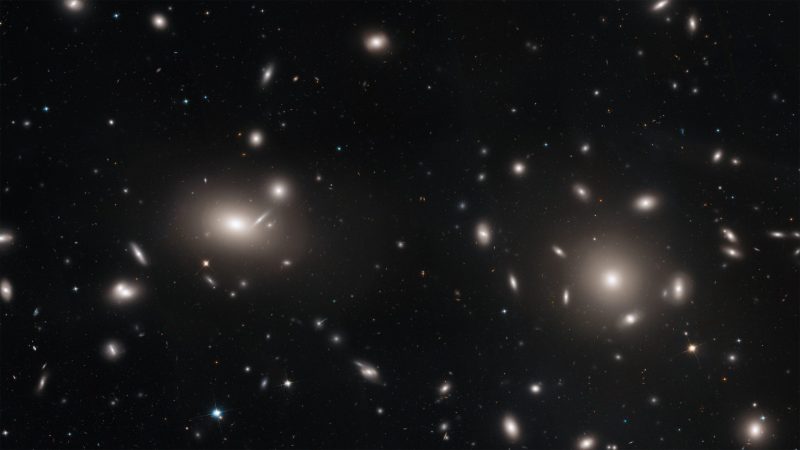
Galaxies group together in clusters. Our own galaxy is part of what is called the Local Group, and it contains at least 80 galaxies. The three large galaxies in the Local Group are the Andromeda Galaxy, the Milky Way Galaxy and the Triangulum Galaxy. The rest of the galaxies in our local group are dwarf galaxies.
Ultimately, galaxy clusters themselves group into superclusters. Our Local Group is part of the Virgo Supercluster.
The “glue” that binds stars into galaxies, galaxies into clusters, clusters into superclusters and superclusters into filaments is – of course – gravity. In fact, gravity is the universe’s construction worker, which sculpts all the structures we see in the cosmos.
The Universe is Infinite. However our existence in our current Galaxy Cluster is Finite. Time is also a factor… Our Galaxy Clusters actually expand into the void of space over time. pic.twitter.com/EAOcisPdZn
— Gustavo Suárez (@gsuarez333) February 26, 2023
Galaxies are flying apart
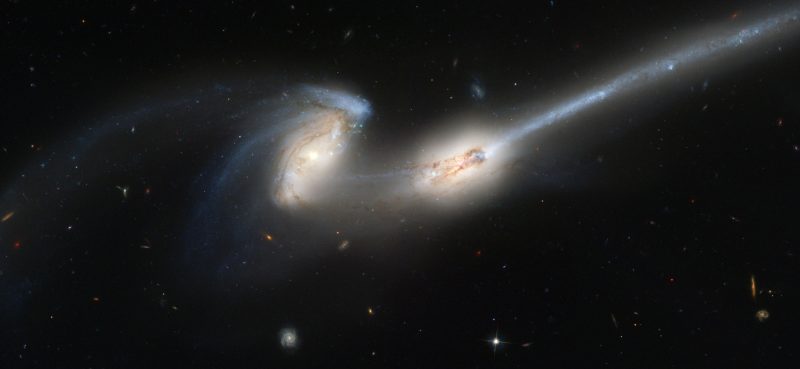
Most galaxies are flying apart from each other. But those astronomically close to each other will be gravitationally bound to each other. Caught in an inexorable gravitational dance, eventually they merge, passing through each other over millions of years. They eventually form a single, amorphous elliptical galaxy. Gravity shockwaves compress huge clouds of interstellar gas and dust during such mergers, giving rise to new generations of stars.
The Milky Way is caught in such a gravitational embrace with M31, aka the Andromeda Galaxy, which is 2 1/2 million light-years distant. Both galaxies are moving toward each other because of gravitational attraction: they will merge in about 6 billion years. However, huge halos of gas surround both galaxies and may extend for millions of light-years. And it was discovered that the halos of the Milky Way and M31 have already started to touch.
Galaxy mergers and companion galaxies
Galaxy mergers are common. The universe is full of examples of galaxies in various stages of merging together, their structures disrupted and distorted by gravity, forming bizarre and beautiful shapes.
Then, at the lower end of the galactic size scale, there are so-called dwarf galaxies. They consist of a few hundred to up to several billion stars. Their origin is not clear. Typically, they have no clearly defined structure. Astronomers believe they were born in the same way as larger galaxies like the Milky Way, but for whatever reason they stopped growing. Ensnared by the gravity of a larger galaxy, they orbit its periphery. The Milky Way has around 60 dwarf galaxies orbiting it that we know of, although some models predict there should be many more.
Read more: ‘String of pearls’ star clusters form when galaxies collide
Our closest neighbors: The Magellanic Clouds
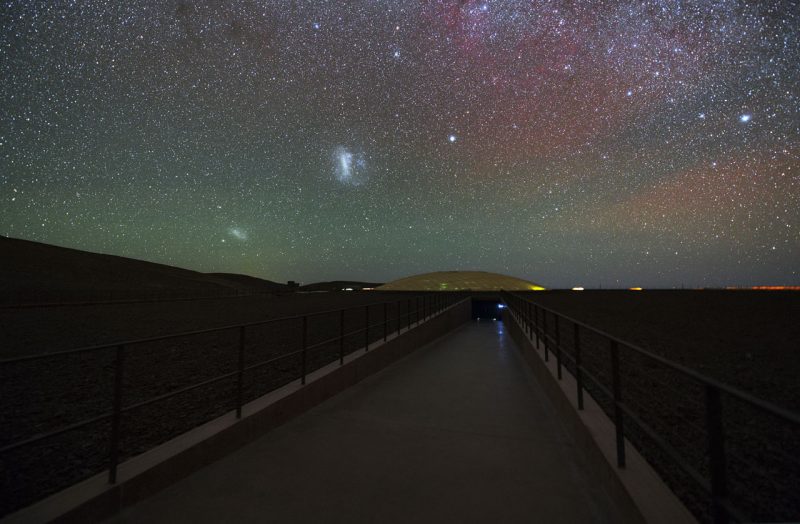
The two most famous dwarf galaxies for us earthlings are, of course, the Large and Small Magellanic Clouds, visible to the unaided eye in Earth’s Southern Hemisphere sky.
Eventually, these and other dwarf galaxies will rip apart under the titanic pull of the Milky Way’s gravity. This will leave behind a barely noticeable stream of stars across the sky, slowly dissipating over eons.
Supermassive black holes lurk in galaxy centers
At the center of most galaxies lurks a supermassive black hole, of millions or even billions of solar masses. For example, TON 618, has a mass 66 billion times that of our sun. The one at the center of our own Milky Way galaxy possesses 4.6 million solar masses.
The origin and evolution of supermassive black holes remains a mystery. A few years ago, astronomers uncovered a surprising fact: in spiral galaxies, the mass of the supermassive black hole has a direct linear relationship with the mass of the galactic bulge. The more mass the black hole has, the more stars there are in the bulge. No one knows exactly what the significance of this relationship may be. However, its existence seems to indicate that the growth of a galaxy’s stellar population is linked to that of its supermassive black hole.
This discovery comes at a time when astronomers are beginning to realize that a supermassive black hole may control the fate of its host galaxy. The copious amount of electromagnetic radiation emitted from the maelstrom of material orbiting the central black hole. This is known as the accretion disk, and the radiation may push away and dissipate the clouds of interstellar hydrogen from which new stars form. This acts as an inhibitor on the galaxy’s ability to give birth to new stars. Ultimately, the activity of supermassive black holes may link to the emergence of life itself. This is an area that is undergoing extensive research.
While astronomers still know very little about exactly how galaxies formed in the first place – we see them in their nascent state only a few hundred million years after the Big Bang – the study of galaxies is an endless voyage of discovery.
Dark matter, not a black hole, could power Milky Way’s heart
Wow! Thousands of new black holes just found
Read more: Oldest-known black hole is eating its galaxy
We discovered other galaxies exist about a century ago
Around a hundred years ago we realized that other galaxies exist besides our own. Since then, we have learned so much about these grand, majestic star cities. And there is still much to learn.
Some galaxies from our EarthSky Community Photos


Bottom line: A galaxy is a vast island of gas, dust and stars in an ocean of space. There are three types of galaxies. Learn about these starry islands in space.
Read more: New map of Andromeda Galaxy and its colossal ecosystem
Read more: Milky Way’s farthest stars reach halfway to Andromeda
The post What’s a galaxy? All you need to know about galaxies first appeared on EarthSky.
from EarthSky https://ift.tt/WLlpVoh
What is a galaxy?
A galaxy is a vast island of gas, dust and stars in an ocean of space. Typically, galaxies are millions of light-years apart. Galaxies are the building blocks of our universe. Their distribution isn’t random, as one might suppose. Instead, galaxies reside along unimaginably long filaments across the universe, forming a cosmic web of star cities.
A galaxy can contain hundreds of billions of stars and be many thousands of light-years across. Our own galaxy, the Milky Way, is around 100,000 light-years in diameter. That’s about 587,900 trillion miles, or nearly a million trillion kilometers.
The three types of galaxies are spiral, elliptical or irregular.
Galaxy sizes vary widely, ranging from very small to unbelievably enormous. Small dwarf galaxies contain about 100 million stars. Giant galaxies contain more than a trillion stars.
Also, there are an estimated two hundred billion galaxies in the universe.
The discovery of other galaxies
The famous astronomer Edwin P. Hubble first classified galaxies based on their visual appearance in the late 1920s and 30s. In fact, Hubble’s classification of galaxies remains in use today. Of course, since Hubble’s time, like any effective classification system, it has evolved from ongoing observations. Hubble identified several basic types of galaxies, each containing subtypes.
Spiral galaxies are more mysterious than we thought! @KarenLMasters, @vrooje and hundreds of thousands of volunteers @GalaxyZoo have shown that the ‘Hubble Tuning Fork’ method of categorisation is wrong ??https://t.co/EUu9BhBUef pic.twitter.com/QFZgrXHjtU
— Royal Astronomical Society (@RoyalAstroSoc) June 11, 2019
Before Hubble’s study of galaxies, we believed that our galaxy was the only one in the universe. Astronomers thought that the smudges of light they saw through their telescopes were in fact nebulae within our own galaxy. However, Hubble discovered that these nebulae were galaxies. Additionally, it was Hubble who demonstrated, by measuring their velocities, that they lie at vast distances from us.
Galaxies are light-years away
These galaxies lie millions of light-years beyond the Milky Way. The distances are so huge these galaxies appear tiny in all but the largest telescopes. Moreover, Hubble demonstrated that, wherever he looked, galaxies were receding from us in all directions. And the farther away they are, the faster they are receding. Thus, Hubble had discovered that the universe is expanding.
Spiral galaxies
The most common type of galaxy is a spiral galaxy. The Milky Way is a spiral galaxy. Spiral galaxies have majestic, sweeping arms, thousands of light-years long. They contain millions upon millions of stars. Their spiral arms stand out because of bright stars, glowing gas and dust. Spiral galaxies are active with star formation.
Also, spiral galaxies have a bright center, made up of a dense concentration of stars. There are so many stars that from a distance the galaxy’s center looks like a solid ball. This ball of stars is known as the galactic bulge.
Also, there are two types of spiral galaxies. There are regular spirals and barred spirals. If the spiral has bars, they extend off the central bulge. Then, the spiral arms start at the end of the bar. In fact, the Milky Way Galaxy is a barred spiral galaxy.
Read more: Wow! See 19 spiral galaxies in stunning Webb images
Elliptical and irregular galaxies
Elliptical galaxies are the universe’s largest galaxies. In fact, giant elliptical galaxies can be about 300,000 light-years across. But dwarf elliptical galaxies – the most common elliptical – are only a few thousand light-years across. There are several shapes of elliptical galaxies, ranging from circular to football-shaped.
Overall, 1/3 of all galaxies are elliptical galaxies. Elliptical galaxies contain very little gas and dust compared to a spiral or irregular galaxy. They are no longer actively forming stars. The stars in elliptical galaxies are older stars and contain very few heavier elements.
Irregular-shaped galaxies have all sorts of different shapes but they don’t look like a spiral or elliptical galaxy.
Irregular galaxies can have very little dust or a lot. Plus, they can show active star-forming regions or have little-to-no star formation occurring. They seemed plentiful in the early universe.
Our Milky Way Galaxy
The Milky Way, in fact, falls into one of Hubble’s spiral galaxy sub-types. It’s a barred spiral, which means it has a bar of stars protruding out from each side of its center. As the spiral arms sweep out in their graceful and enormous arcs, the ends of the bars are the anchors. This is a recent discovery and it’s unknown how bars form in a galaxy. Our solar system is situated about 2/3 of the way out from the galactic center toward the periphery of the galaxy, embedded in one of these spiral arms.
Another recent discovery is that the disk of the Milky Way is warped, like a long-playing vinyl record left too long in the sun. Exactly why is unknown, but it may be the result of a gravitational encounter with another galaxy early in the Milky Way’s history.
It also appears that all galaxies rotate. For example, the Milky Way takes 226 million years to spin around once. Since its creation, the Earth has traveled 20 times around the galaxy.
Galaxies come in clusters
Galaxies group together in clusters. Our own galaxy is part of what is called the Local Group, and it contains at least 80 galaxies. The three large galaxies in the Local Group are the Andromeda Galaxy, the Milky Way Galaxy and the Triangulum Galaxy. The rest of the galaxies in our local group are dwarf galaxies.
Ultimately, galaxy clusters themselves group into superclusters. Our Local Group is part of the Virgo Supercluster.
The “glue” that binds stars into galaxies, galaxies into clusters, clusters into superclusters and superclusters into filaments is – of course – gravity. In fact, gravity is the universe’s construction worker, which sculpts all the structures we see in the cosmos.
The Universe is Infinite. However our existence in our current Galaxy Cluster is Finite. Time is also a factor… Our Galaxy Clusters actually expand into the void of space over time. pic.twitter.com/EAOcisPdZn
— Gustavo Suárez (@gsuarez333) February 26, 2023
Galaxies are flying apart
Most galaxies are flying apart from each other. But those astronomically close to each other will be gravitationally bound to each other. Caught in an inexorable gravitational dance, eventually they merge, passing through each other over millions of years. They eventually form a single, amorphous elliptical galaxy. Gravity shockwaves compress huge clouds of interstellar gas and dust during such mergers, giving rise to new generations of stars.
The Milky Way is caught in such a gravitational embrace with M31, aka the Andromeda Galaxy, which is 2 1/2 million light-years distant. Both galaxies are moving toward each other because of gravitational attraction: they will merge in about 6 billion years. However, huge halos of gas surround both galaxies and may extend for millions of light-years. And it was discovered that the halos of the Milky Way and M31 have already started to touch.
Galaxy mergers and companion galaxies
Galaxy mergers are common. The universe is full of examples of galaxies in various stages of merging together, their structures disrupted and distorted by gravity, forming bizarre and beautiful shapes.
Then, at the lower end of the galactic size scale, there are so-called dwarf galaxies. They consist of a few hundred to up to several billion stars. Their origin is not clear. Typically, they have no clearly defined structure. Astronomers believe they were born in the same way as larger galaxies like the Milky Way, but for whatever reason they stopped growing. Ensnared by the gravity of a larger galaxy, they orbit its periphery. The Milky Way has around 60 dwarf galaxies orbiting it that we know of, although some models predict there should be many more.
Read more: ‘String of pearls’ star clusters form when galaxies collide
Our closest neighbors: The Magellanic Clouds
The two most famous dwarf galaxies for us earthlings are, of course, the Large and Small Magellanic Clouds, visible to the unaided eye in Earth’s Southern Hemisphere sky.
Eventually, these and other dwarf galaxies will rip apart under the titanic pull of the Milky Way’s gravity. This will leave behind a barely noticeable stream of stars across the sky, slowly dissipating over eons.
Supermassive black holes lurk in galaxy centers
At the center of most galaxies lurks a supermassive black hole, of millions or even billions of solar masses. For example, TON 618, has a mass 66 billion times that of our sun. The one at the center of our own Milky Way galaxy possesses 4.6 million solar masses.
The origin and evolution of supermassive black holes remains a mystery. A few years ago, astronomers uncovered a surprising fact: in spiral galaxies, the mass of the supermassive black hole has a direct linear relationship with the mass of the galactic bulge. The more mass the black hole has, the more stars there are in the bulge. No one knows exactly what the significance of this relationship may be. However, its existence seems to indicate that the growth of a galaxy’s stellar population is linked to that of its supermassive black hole.
This discovery comes at a time when astronomers are beginning to realize that a supermassive black hole may control the fate of its host galaxy. The copious amount of electromagnetic radiation emitted from the maelstrom of material orbiting the central black hole. This is known as the accretion disk, and the radiation may push away and dissipate the clouds of interstellar hydrogen from which new stars form. This acts as an inhibitor on the galaxy’s ability to give birth to new stars. Ultimately, the activity of supermassive black holes may link to the emergence of life itself. This is an area that is undergoing extensive research.
While astronomers still know very little about exactly how galaxies formed in the first place – we see them in their nascent state only a few hundred million years after the Big Bang – the study of galaxies is an endless voyage of discovery.
Dark matter, not a black hole, could power Milky Way’s heart
Wow! Thousands of new black holes just found
Read more: Oldest-known black hole is eating its galaxy
We discovered other galaxies exist about a century ago
Around a hundred years ago we realized that other galaxies exist besides our own. Since then, we have learned so much about these grand, majestic star cities. And there is still much to learn.
Some galaxies from our EarthSky Community Photos
Bottom line: A galaxy is a vast island of gas, dust and stars in an ocean of space. There are three types of galaxies. Learn about these starry islands in space.
Read more: New map of Andromeda Galaxy and its colossal ecosystem
Read more: Milky Way’s farthest stars reach halfway to Andromeda
The post What’s a galaxy? All you need to know about galaxies first appeared on EarthSky.
from EarthSky https://ift.tt/WLlpVoh

Aucun commentaire:
Enregistrer un commentaire