
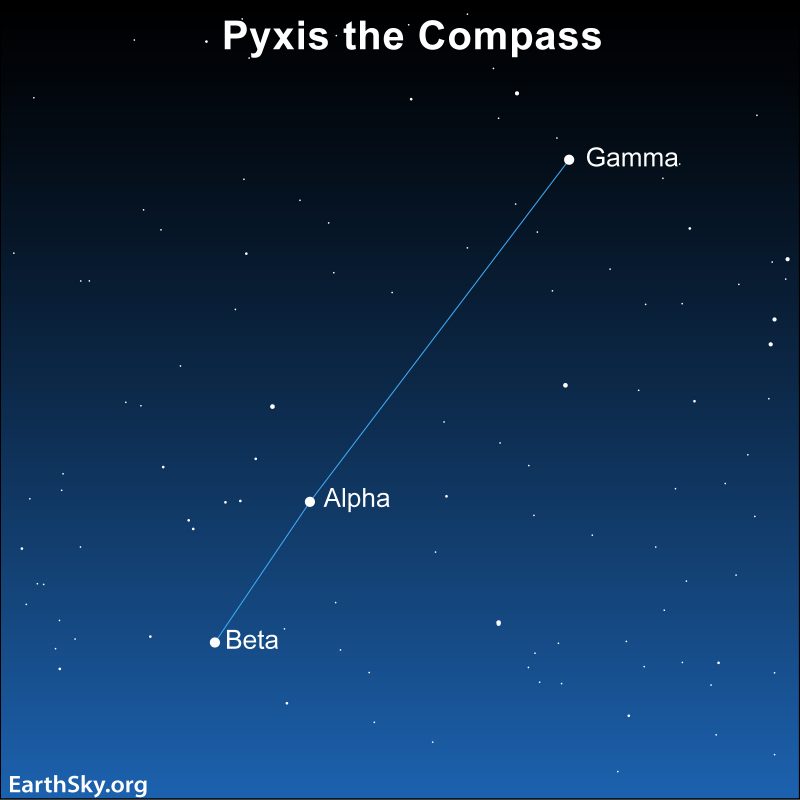
The constellation Pyxis the Compass
March is a good month to view the constellation Pyxis the Compass. That’s assuming you’re far enough south on Earth’s globe. Pyxis is one of the 14 constellations that the French astronomer Nicolas-Louis de Lacaille created in the 1700s. It represents a ship’s compass. Conveniently, this ship’s compass lies on our sky’s dome next to the three constellations, Puppis, Vela and Carina, elements that made up the former constellation of Argo Navis. That was the great starry Ship that once sailed the southern skies.
By the way, don’t confuse Pyxis the Compass with Circinus. That’s a different constellation that represents a drawing compass.
Pyxis lies southeast of Canis Major the Greater Dog, with its very bright star Sirius. From Sirius, look toward the east to the quiet part of the sky where Pyxis resides. See the photo below.
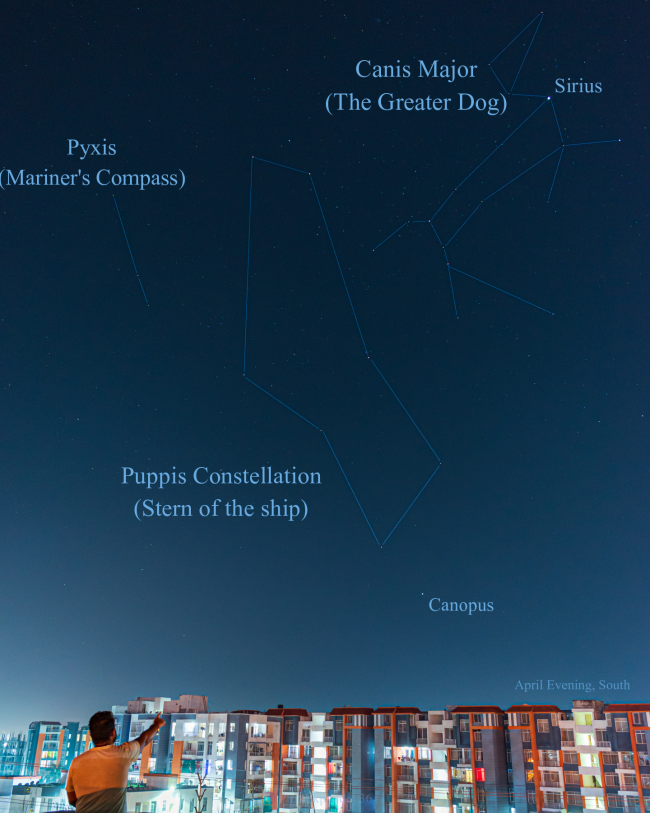
The stars of Pyxis
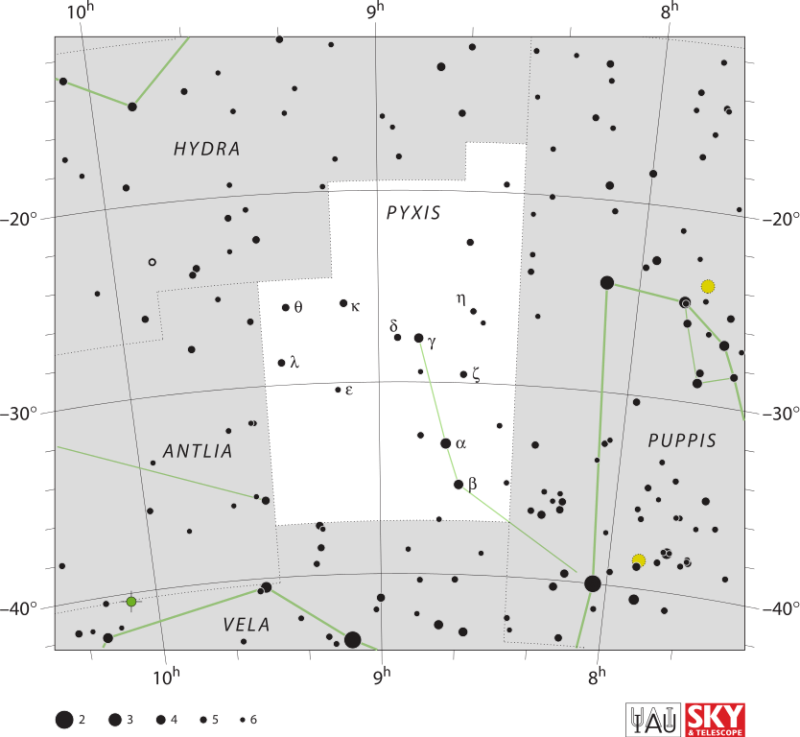
The Alpha and Beta stars of Pyxis lie in the southern part of the constellation. More specifically, Alpha Pyxidis is magnitude 3.68 and lies 845 light-years away. Likewise, just over 2 degrees to the south is Beta Pyxidis at magnitude 3.97 and lying 388 light-years away.
In addition, both Alpha and Beta have faint star clusters lying a half degree to the northwest. Alpha’s star cluster is NGC 2658 at magnitude 9.2. And Beta’s star cluster is NGC 2635 at magnitude 11.2. So with this in mind, you’ll want binoculars or a telescope to track them down. In particular, NGC 2635 is a real challenge.
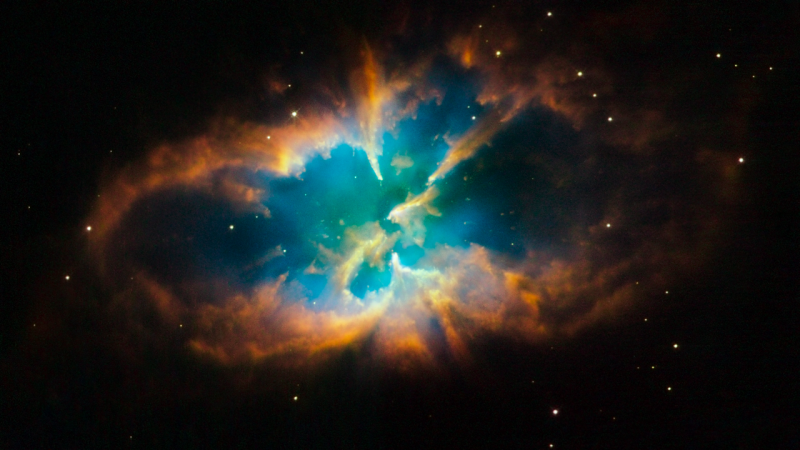
However, there are two other deep-sky targets in Pyxis that are somewhat brighter. First, there’s NGC 2627. It’s a magnitude 8.4 star cluster lying 3 1/2 degrees northwest of Alpha, or just 1/2 degree southwest of Zeta Pyxidis, a magnitude 4.86 star. Then, the second one lies in the southeast corner of the constellation. It’s NGC 2818, a planetary nebula shining at magnitude 11.6. Which we can see in the glorious Hubble photo, below.
Bottom line: Pyxis the Compass is a constellation lying in southern skies. But Northern Hemisphere viewers can get a glimpse of in March. Nicolas-Louis de Lacaille created the constellation in the 1700s.
The post Pyxis the Compass shines in the March night sky first appeared on EarthSky.
from EarthSky https://ift.tt/eBRbHnU
The constellation Pyxis the Compass
March is a good month to view the constellation Pyxis the Compass. That’s assuming you’re far enough south on Earth’s globe. Pyxis is one of the 14 constellations that the French astronomer Nicolas-Louis de Lacaille created in the 1700s. It represents a ship’s compass. Conveniently, this ship’s compass lies on our sky’s dome next to the three constellations, Puppis, Vela and Carina, elements that made up the former constellation of Argo Navis. That was the great starry Ship that once sailed the southern skies.
By the way, don’t confuse Pyxis the Compass with Circinus. That’s a different constellation that represents a drawing compass.
Pyxis lies southeast of Canis Major the Greater Dog, with its very bright star Sirius. From Sirius, look toward the east to the quiet part of the sky where Pyxis resides. See the photo below.
The stars of Pyxis
The Alpha and Beta stars of Pyxis lie in the southern part of the constellation. More specifically, Alpha Pyxidis is magnitude 3.68 and lies 845 light-years away. Likewise, just over 2 degrees to the south is Beta Pyxidis at magnitude 3.97 and lying 388 light-years away.
In addition, both Alpha and Beta have faint star clusters lying a half degree to the northwest. Alpha’s star cluster is NGC 2658 at magnitude 9.2. And Beta’s star cluster is NGC 2635 at magnitude 11.2. So with this in mind, you’ll want binoculars or a telescope to track them down. In particular, NGC 2635 is a real challenge.
However, there are two other deep-sky targets in Pyxis that are somewhat brighter. First, there’s NGC 2627. It’s a magnitude 8.4 star cluster lying 3 1/2 degrees northwest of Alpha, or just 1/2 degree southwest of Zeta Pyxidis, a magnitude 4.86 star. Then, the second one lies in the southeast corner of the constellation. It’s NGC 2818, a planetary nebula shining at magnitude 11.6. Which we can see in the glorious Hubble photo, below.
Bottom line: Pyxis the Compass is a constellation lying in southern skies. But Northern Hemisphere viewers can get a glimpse of in March. Nicolas-Louis de Lacaille created the constellation in the 1700s.
The post Pyxis the Compass shines in the March night sky first appeared on EarthSky.
from EarthSky https://ift.tt/eBRbHnU

Aucun commentaire:
Enregistrer un commentaire