
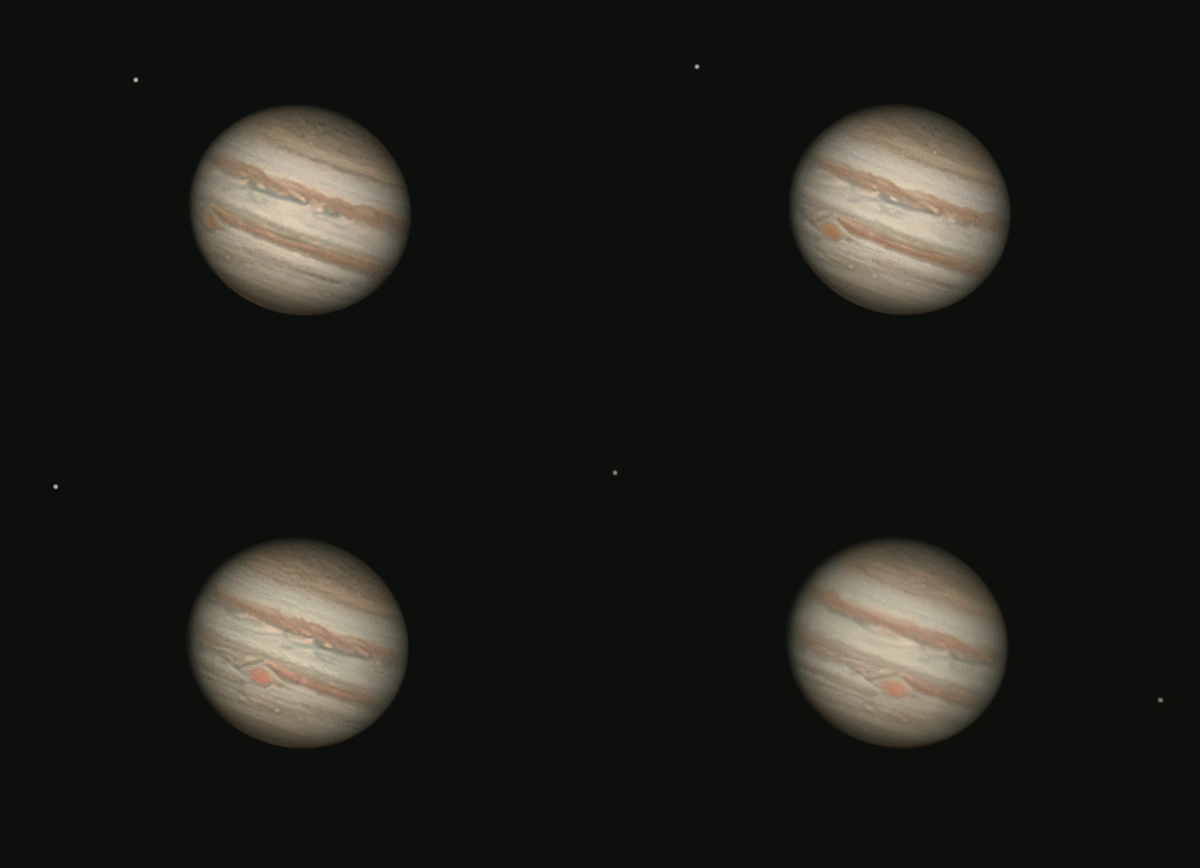
Jupiter closest to Earth January 9, 2026
Have you noticed a very bright object in the east earlier each evening? That’s the giant planet Jupiter, now brighter than all the stars!
Jupiter’s closest point to the Earth for 2026 comes on January 9. That’s when the distance between the Earth and Jupiter will be at its least for 2026. Jupiter will be 393 million miles, or 633 million km, away from Earth (and 484 million miles, or 780 million km, away from the sun). This translates to 35 light-minutes away from Earth.
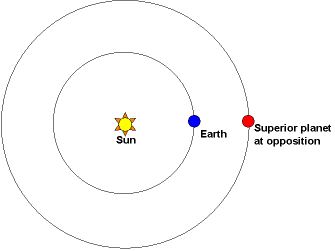
Less than 24 hours later – at 8 UTC (2 a.m. CST) on January 10, 2026 – Jupiter will reach opposition, when it’s opposite the sun in our sky. That’ll happen as Earth flies (more or less) between the sun and Jupiter.
So Jupiter is closest less than a day before we go between it and the sun. Why? Why wouldn’t those two events happen simultaneously?
Why isn’t Jupiter closest at opposition?
Opposition happens when Earth and Jupiter line up with the sun. But because both planets are moving on curved, slightly tilted paths, the moment of perfect alignment isn’t always the exact moment of closest distance. Earth can pass closest to Jupiter a little before or after opposition — sometimes by just hours, sometimes by a day or two.
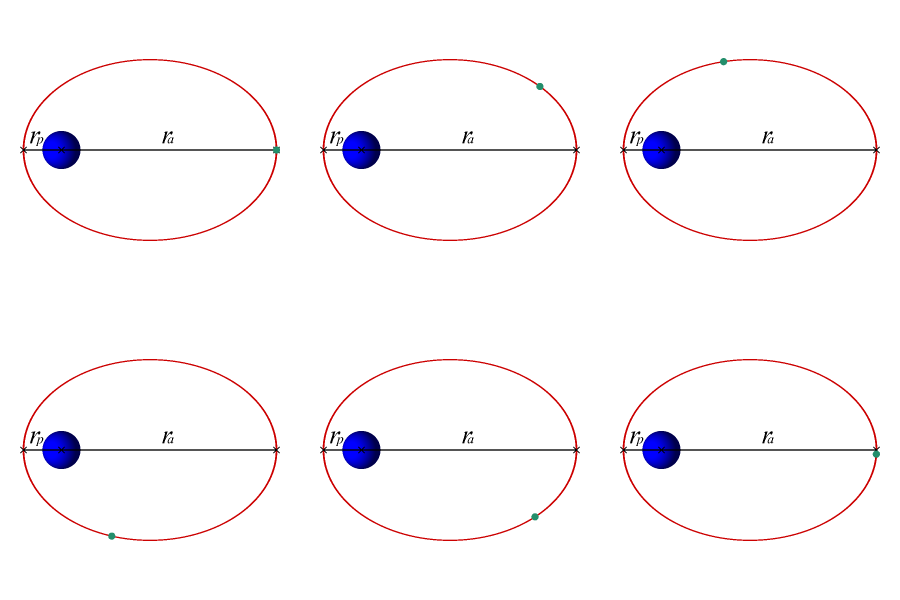
When Jupiter reached opposition on September 26, 2022, it was closer to Earth than at any time in about 70 years. That’s because 2022 was a perihelion year for Jupiter — the point in its 12-year orbit when the giant planet was closest to the sun. During that opposition, Jupiter was just 367 million miles (591 million km) from Earth.
So here’s the key idea: it was the close timing between Jupiter’s once-a-year opposition and its once-every-12-years perihelion that produced that unusually close approach in 2022.
Every year since then, as Earth has passed between Jupiter and the sun, the distance between our two planets has been a little greater. That’s because Jupiter has been moving farther from the sun with each passing day since perihelion.
In fact, Jupiter will keep getting farther from the sun until 2028, when it reaches aphelion — the farthest point in its orbit. As a result, in years like 2026, Jupiter’s closest approach comes a day or so before opposition.
After 2028, Jupiter will begin moving closer to the sun again. And then the timing flips: Jupiter’s closest point to Earth will tend to come hours or a day or so after opposition, instead of before.
Bottom line: Jupiter’s closest point to the Earth in 2026, is on January 9. The distance between the sun and Jupiter will be 393 million miles, or 633 million km.
2022 Geocentric ephemeris for Jupiter
2023 Geocentric ephemeris for Jupiter
2024 Geocentric ephemeris for Jupiter
2025 Geocentric ephemeris for Jupiter
2026 Geocentric ephemeris for Jupiter
2022 Geocentric ephemeris for sun
2023 Geocentric ephemeris for sun
2024 Geocentric ephemeris for sun
2025 Geocentric ephemeris for sun
2026 Geocentric ephemeris for sun
Read more How to see and enjoy Jupiter’s moons
The post Why is Jupiter closest to Earth 1 day before opposition? first appeared on EarthSky.
from EarthSky https://ift.tt/F3IbJxo
Jupiter closest to Earth January 9, 2026
Have you noticed a very bright object in the east earlier each evening? That’s the giant planet Jupiter, now brighter than all the stars!
Jupiter’s closest point to the Earth for 2026 comes on January 9. That’s when the distance between the Earth and Jupiter will be at its least for 2026. Jupiter will be 393 million miles, or 633 million km, away from Earth (and 484 million miles, or 780 million km, away from the sun). This translates to 35 light-minutes away from Earth.
Less than 24 hours later – at 8 UTC (2 a.m. CST) on January 10, 2026 – Jupiter will reach opposition, when it’s opposite the sun in our sky. That’ll happen as Earth flies (more or less) between the sun and Jupiter.
So Jupiter is closest less than a day before we go between it and the sun. Why? Why wouldn’t those two events happen simultaneously?
Why isn’t Jupiter closest at opposition?
Opposition happens when Earth and Jupiter line up with the sun. But because both planets are moving on curved, slightly tilted paths, the moment of perfect alignment isn’t always the exact moment of closest distance. Earth can pass closest to Jupiter a little before or after opposition — sometimes by just hours, sometimes by a day or two.
When Jupiter reached opposition on September 26, 2022, it was closer to Earth than at any time in about 70 years. That’s because 2022 was a perihelion year for Jupiter — the point in its 12-year orbit when the giant planet was closest to the sun. During that opposition, Jupiter was just 367 million miles (591 million km) from Earth.
So here’s the key idea: it was the close timing between Jupiter’s once-a-year opposition and its once-every-12-years perihelion that produced that unusually close approach in 2022.
Every year since then, as Earth has passed between Jupiter and the sun, the distance between our two planets has been a little greater. That’s because Jupiter has been moving farther from the sun with each passing day since perihelion.
In fact, Jupiter will keep getting farther from the sun until 2028, when it reaches aphelion — the farthest point in its orbit. As a result, in years like 2026, Jupiter’s closest approach comes a day or so before opposition.
After 2028, Jupiter will begin moving closer to the sun again. And then the timing flips: Jupiter’s closest point to Earth will tend to come hours or a day or so after opposition, instead of before.
Bottom line: Jupiter’s closest point to the Earth in 2026, is on January 9. The distance between the sun and Jupiter will be 393 million miles, or 633 million km.
2022 Geocentric ephemeris for Jupiter
2023 Geocentric ephemeris for Jupiter
2024 Geocentric ephemeris for Jupiter
2025 Geocentric ephemeris for Jupiter
2026 Geocentric ephemeris for Jupiter
2022 Geocentric ephemeris for sun
2023 Geocentric ephemeris for sun
2024 Geocentric ephemeris for sun
2025 Geocentric ephemeris for sun
2026 Geocentric ephemeris for sun
Read more How to see and enjoy Jupiter’s moons
The post Why is Jupiter closest to Earth 1 day before opposition? first appeared on EarthSky.
from EarthSky https://ift.tt/F3IbJxo

Aucun commentaire:
Enregistrer un commentaire