

By Richard Butler, University of Birmingham
EarthSky’s 2026 lunar calendar is available now. Get yours today! Makes a great gift.
The most exciting dinosaur discoveries of 2025
In 2025, dinosaurs were everywhere. In May, the BBC revived their landmark series Walking With Dinosaurs, while July saw the release of Jurassic World Rebirth, the seventh film in the extinction-proof Jurassic Park franchise.
Rising auction prices for dinosaur skeletons were a rich source of media headlines and academic concern. And a record-breaking number of visitors (6.3 million in 2024–2025) flocked to the Natural History Museum in London, where dinosaurs are a key draw.
A golden era in dinosaur science is driving this fascination with dinosaurs. Around 1,400 dinosaur species are now known from more than 90 countries, with the rate of discovery accelerating in the last two decades. The year 2025 has so far seen the discovery of 44 new dinosaur species – nearly one a week.
Many new discoveries come from paleontological hotspots, such as Argentina, China, Mongolia and the US, but dinosaur fossils are also being found in many other places, from a Serbian village to the rainswept coast of north-west Scotland. Even as a researcher, it is hard to keep track, but here is a personal view of some of the year’s highlights.

The dome-headed Zavacephale rinpoche
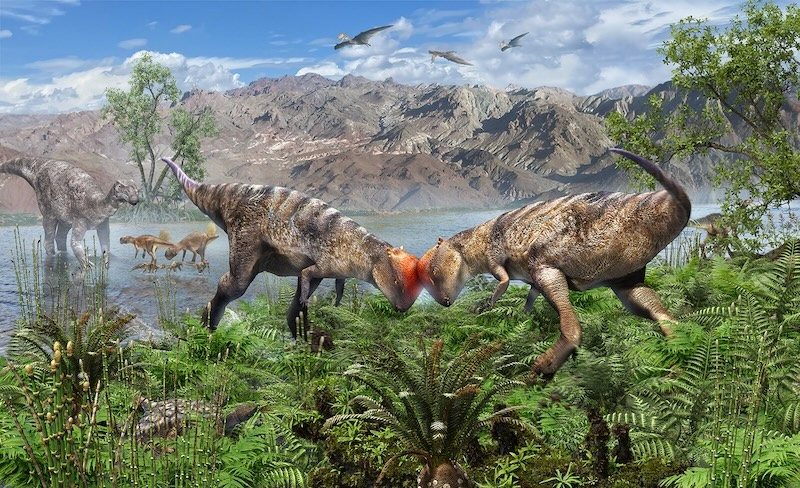
Some fossils are so exciting that when first shown at academic conferences, they draw audible gasps even from experienced palaeontologists. Zavacephale is one of these. The stunning skeleton of this one-meter-long (3 feet) plant-eating dinosaur was discovered in 110-million-year-old rocks in the Gobi Desert of Mongolia and described by palaeontologist Tsogtbaatar Chinzorig and colleagues.
Zavacephale is the oldest known member of the pachycephalosaurs, a group of dinosaurs famed for their domed skulls, probably used to butt heads like today’s bighorn sheep. Pachycephalosaurs have long been one of the most enigmatic dinosaur groups, and the discovery of Zavacephale is critical to understanding their early evolution.
Find out more: New pachycephalosaur, a dome-headed dinosaur, from Mongolia
The sail-backed Istiorachis macarthurae
Dinosaur fossils have been common discoveries in the rapidly eroding Cretaceous Period-aged cliffs of the Isle of Wight, off the south coast of England, for nearly two centuries. Yet, even here, there is much to learn. Jeremy Lockwood, a retired doctor turned dinosaur expert, has since 2021 named three new species of large ornithopods, one of the most common groups of plant-eating dinosaurs. These new species are closely related to Iguanodon, a four-legged ornithopod from Belgium with a very distinctive thumb spike.
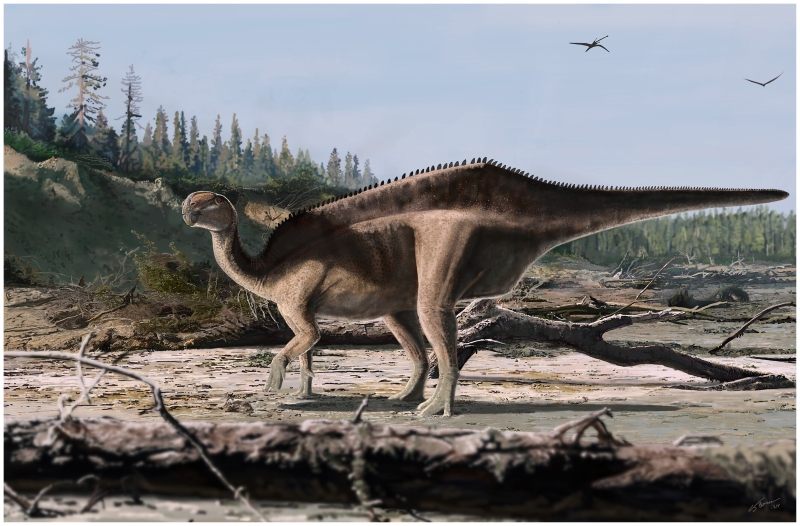
Lockwood’s latest discovery, the six-meter-long (20 feet) Istiorachis, is another herbivorous ornithopod with a striking sail-like structure running along its back. This sail may have been a display structure used to attract mates and to deter predators by making this 128-million-year-old animal look bigger.
The spikey-armored Spicomellus afer
Spicomellus was named in 2021 based on an incomplete rib from 165-million-year-old rocks in Morocco. It is a rib unlike that in any other animal, alive or extinct, with a series of long spines fused to its surface. In 2025, I was part of a team led by researcher Susie Maidment, that described a much more complete skeleton. It revealed one of the strangest dinosaurs ever discovered.
The new fossils show that Spicomellus is the oldest known member of the ankylosaurs, heavily armoured, low and squat plant-eaters described by Maidment as resembling “walking coffee tables”.
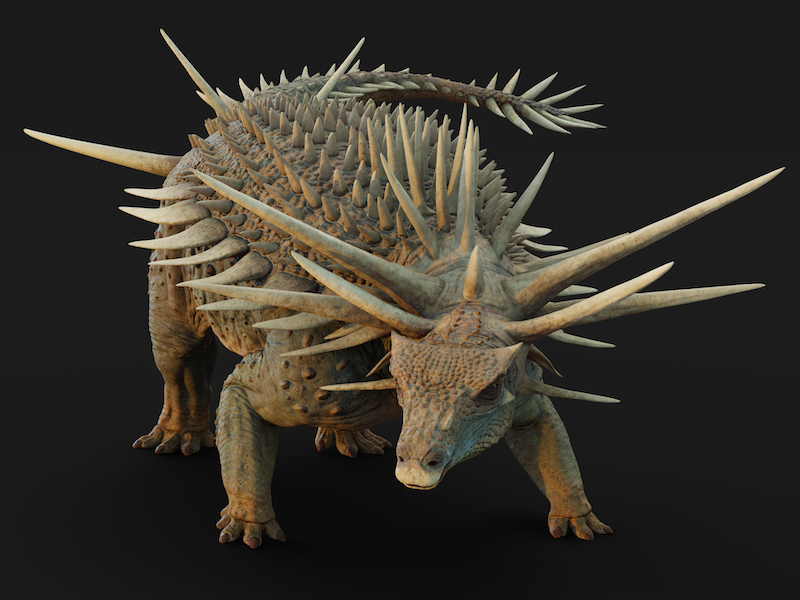
Spicomellus is characterised by its bizarre armour, bristling with long spines all over the body, including a bony collar around the neck with spines the length of golf clubs sticking out of it. Dubbed the “punk rock dinosaur” by the BBC, Spicomellus is changing our understanding of ankylosaur evolution, but also highlighting the importance of the Moroccan fossil record.
Find out more: Bizarre ankylosaur with spikes is unlike any known dinosaur
The T. rex-resembling Nanotyrannus lethaeus
For many years, one of the fiercest debates in dinosaur palaeontology has been about Nanotyrannus, a 66-million-year-old predator from Montana in the US. Nanotyrannus was first named in 1988, and suggested to be a small tyrannosaurid, around 5 meters (16 feet) long, that lived alongside the giant Tyrannosaurus rex. But many other palaeontologists disagreed, suggesting that fossils of Nanotyrannus were just young individuals of T rex.
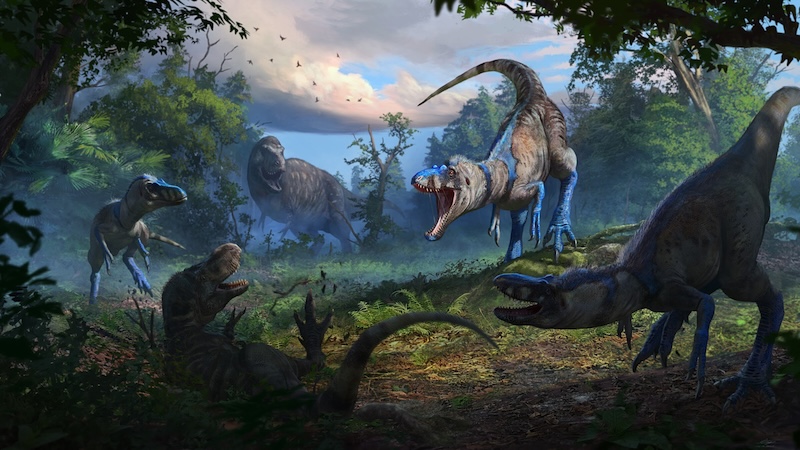
In 2025, palaeontologists Lindsay Zanno and James Napoli published a description of a new Nanotyrannus fossil specimen, preserved as part of the Duelling Dinosaurs fossil alongside a herbivorous Triceratops. They showed that this Nanotyrannus was nearly an adult, but also that it was different from T rex in lots of ways that cannot be explained by growth, including a longer hand.
A subsequent study on the original Nanotyrannus demonstrated that this specimen was also fully grown. Together, these studies end a 35-year-long controversy and reveal Nanotyrannus as a slender, agile pursuit predator, built for speed.
Find out more: Nanotyrannus, a T. rex mini-me, coexisted with the big guys
The long-necked Huayracursor jaguensis
Gigantic, four-legged, long-necked, plant-eating sauropod dinosaurs of the Jurassic and Cretaceous periods, such as Brachiosaurus, were the largest animals to ever walk the Earth, weighing up to 70 tonnes (equivalent of 12 African elephants). The year 2025 saw many new sauropod discoveries, including a Jurassic Highway of trackways announced by our team from a quarry in Oxfordshire, UK.
Important new information on sauropod origins came from the Triassic Period rocks of Argentina, long a key source of dinosaur discoveries. The 2m-long Huayracursor was described from 228-million-year-old rocks in the Andes, making it one of the oldest known sauropod ancestors. It has a much longer neck than other species from the dawn of dinosaur evolution, revealing the earliest stages in the evolution of the extreme neck elongation seen in later sauropods.
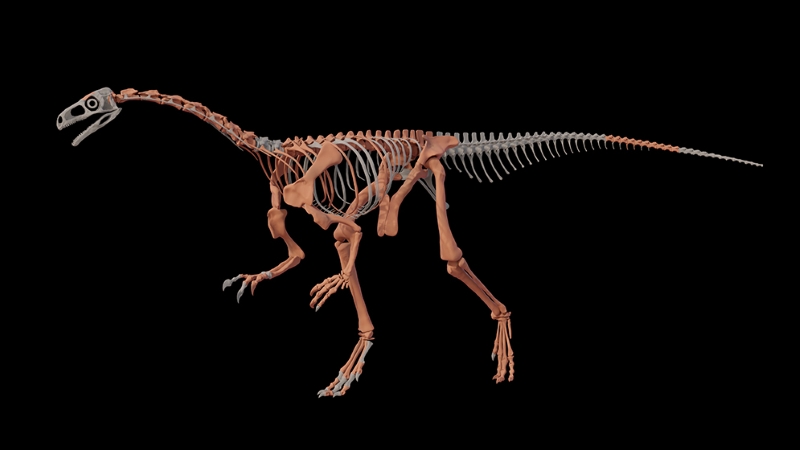
The year 2025 was another remarkable year for dinosaur discovery and 2026 will have a lot to live up to. But I’m looking forward to seeing what surprises the new year brings.
Richard Butler, Professor of Palaeobiology, University of Birmingham
Bottom line: 2025 was an amazing year for dinosaur discoveries, from dome-headed dinos to mini T. rexes. Here are some of the most exciting discoveries of the past year.
This article is republished from The Conversation under a Creative Commons license. Read the original article.
Read more: Rare fossils show how duck-billed dinosaurs appeared in life
The post The most exciting dinosaur discoveries of 2025 first appeared on EarthSky.
from EarthSky https://ift.tt/SWE4JYB
By Richard Butler, University of Birmingham
EarthSky’s 2026 lunar calendar is available now. Get yours today! Makes a great gift.
The most exciting dinosaur discoveries of 2025
In 2025, dinosaurs were everywhere. In May, the BBC revived their landmark series Walking With Dinosaurs, while July saw the release of Jurassic World Rebirth, the seventh film in the extinction-proof Jurassic Park franchise.
Rising auction prices for dinosaur skeletons were a rich source of media headlines and academic concern. And a record-breaking number of visitors (6.3 million in 2024–2025) flocked to the Natural History Museum in London, where dinosaurs are a key draw.
A golden era in dinosaur science is driving this fascination with dinosaurs. Around 1,400 dinosaur species are now known from more than 90 countries, with the rate of discovery accelerating in the last two decades. The year 2025 has so far seen the discovery of 44 new dinosaur species – nearly one a week.
Many new discoveries come from paleontological hotspots, such as Argentina, China, Mongolia and the US, but dinosaur fossils are also being found in many other places, from a Serbian village to the rainswept coast of north-west Scotland. Even as a researcher, it is hard to keep track, but here is a personal view of some of the year’s highlights.
The dome-headed Zavacephale rinpoche
Some fossils are so exciting that when first shown at academic conferences, they draw audible gasps even from experienced palaeontologists. Zavacephale is one of these. The stunning skeleton of this one-meter-long (3 feet) plant-eating dinosaur was discovered in 110-million-year-old rocks in the Gobi Desert of Mongolia and described by palaeontologist Tsogtbaatar Chinzorig and colleagues.
Zavacephale is the oldest known member of the pachycephalosaurs, a group of dinosaurs famed for their domed skulls, probably used to butt heads like today’s bighorn sheep. Pachycephalosaurs have long been one of the most enigmatic dinosaur groups, and the discovery of Zavacephale is critical to understanding their early evolution.
Find out more: New pachycephalosaur, a dome-headed dinosaur, from Mongolia
The sail-backed Istiorachis macarthurae
Dinosaur fossils have been common discoveries in the rapidly eroding Cretaceous Period-aged cliffs of the Isle of Wight, off the south coast of England, for nearly two centuries. Yet, even here, there is much to learn. Jeremy Lockwood, a retired doctor turned dinosaur expert, has since 2021 named three new species of large ornithopods, one of the most common groups of plant-eating dinosaurs. These new species are closely related to Iguanodon, a four-legged ornithopod from Belgium with a very distinctive thumb spike.
Lockwood’s latest discovery, the six-meter-long (20 feet) Istiorachis, is another herbivorous ornithopod with a striking sail-like structure running along its back. This sail may have been a display structure used to attract mates and to deter predators by making this 128-million-year-old animal look bigger.
The spikey-armored Spicomellus afer
Spicomellus was named in 2021 based on an incomplete rib from 165-million-year-old rocks in Morocco. It is a rib unlike that in any other animal, alive or extinct, with a series of long spines fused to its surface. In 2025, I was part of a team led by researcher Susie Maidment, that described a much more complete skeleton. It revealed one of the strangest dinosaurs ever discovered.
The new fossils show that Spicomellus is the oldest known member of the ankylosaurs, heavily armoured, low and squat plant-eaters described by Maidment as resembling “walking coffee tables”.
Spicomellus is characterised by its bizarre armour, bristling with long spines all over the body, including a bony collar around the neck with spines the length of golf clubs sticking out of it. Dubbed the “punk rock dinosaur” by the BBC, Spicomellus is changing our understanding of ankylosaur evolution, but also highlighting the importance of the Moroccan fossil record.
Find out more: Bizarre ankylosaur with spikes is unlike any known dinosaur
The T. rex-resembling Nanotyrannus lethaeus
For many years, one of the fiercest debates in dinosaur palaeontology has been about Nanotyrannus, a 66-million-year-old predator from Montana in the US. Nanotyrannus was first named in 1988, and suggested to be a small tyrannosaurid, around 5 meters (16 feet) long, that lived alongside the giant Tyrannosaurus rex. But many other palaeontologists disagreed, suggesting that fossils of Nanotyrannus were just young individuals of T rex.
In 2025, palaeontologists Lindsay Zanno and James Napoli published a description of a new Nanotyrannus fossil specimen, preserved as part of the Duelling Dinosaurs fossil alongside a herbivorous Triceratops. They showed that this Nanotyrannus was nearly an adult, but also that it was different from T rex in lots of ways that cannot be explained by growth, including a longer hand.
A subsequent study on the original Nanotyrannus demonstrated that this specimen was also fully grown. Together, these studies end a 35-year-long controversy and reveal Nanotyrannus as a slender, agile pursuit predator, built for speed.
Find out more: Nanotyrannus, a T. rex mini-me, coexisted with the big guys
The long-necked Huayracursor jaguensis
Gigantic, four-legged, long-necked, plant-eating sauropod dinosaurs of the Jurassic and Cretaceous periods, such as Brachiosaurus, were the largest animals to ever walk the Earth, weighing up to 70 tonnes (equivalent of 12 African elephants). The year 2025 saw many new sauropod discoveries, including a Jurassic Highway of trackways announced by our team from a quarry in Oxfordshire, UK.
Important new information on sauropod origins came from the Triassic Period rocks of Argentina, long a key source of dinosaur discoveries. The 2m-long Huayracursor was described from 228-million-year-old rocks in the Andes, making it one of the oldest known sauropod ancestors. It has a much longer neck than other species from the dawn of dinosaur evolution, revealing the earliest stages in the evolution of the extreme neck elongation seen in later sauropods.
The year 2025 was another remarkable year for dinosaur discovery and 2026 will have a lot to live up to. But I’m looking forward to seeing what surprises the new year brings.
Richard Butler, Professor of Palaeobiology, University of Birmingham
Bottom line: 2025 was an amazing year for dinosaur discoveries, from dome-headed dinos to mini T. rexes. Here are some of the most exciting discoveries of the past year.
This article is republished from The Conversation under a Creative Commons license. Read the original article.
Read more: Rare fossils show how duck-billed dinosaurs appeared in life
The post The most exciting dinosaur discoveries of 2025 first appeared on EarthSky.
from EarthSky https://ift.tt/SWE4JYB

Aucun commentaire:
Enregistrer un commentaire