
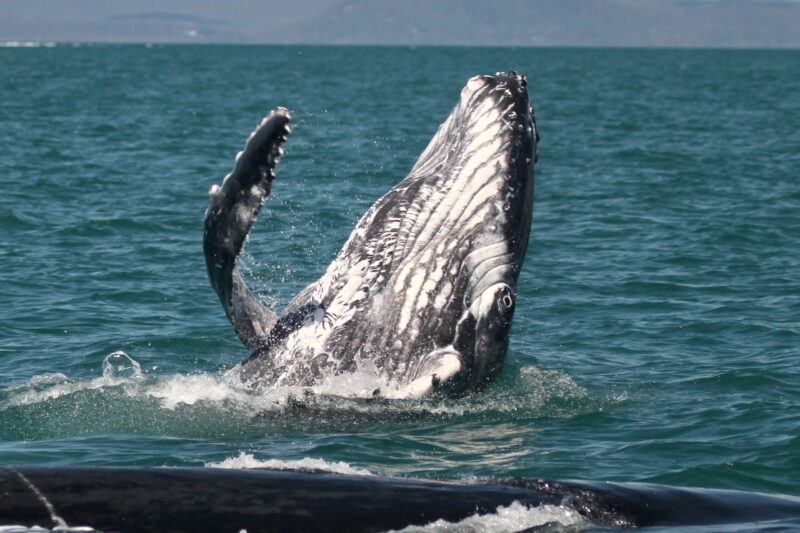
For two seasons in Moreton Bay, Australia, researchers from Griffith University have taken on a unique study by attaching suction-cup cameras to humpback whale calves. They wanted to track how mothers care for their calves.
The researchers said on November 12, 2025, that the footage shows Moreton Bay is a critical nursery and rest area for humpbacks during migration.
Humpback whales and a hidden nursery
The researchers took the first-known underwater footage of humpback calves nursing in Moreton Bay, Australia. The team – led by Stephanie Stack and Susan Bengston Nash of Griffith University – gently attached cameras with suction cups to the whale calves. The cameras stayed in place long enough to show frequent nursing sessions in about half the calves they tagged. This footage provides evidence that the bay offers crucial shelter, calm waters and a resting space during the migration season. Stack said:
To our knowledge, this is the first documented use of camera-equipped suction-cup tags on humpback whale calves in Australia. It is also one of the few global datasets that combine video, fine-scale movement, and acoustic data for humpback whale calves.
As the team reviewed their hours of footage, they noticed patterns that had never been formally documented in the region. Mother–calf pairs appeared in consistently high numbers throughout the 2024 and 2025 seasons. Some adult whales visited the bay alone, suggesting they sought refuge in its sheltered waters. The researchers also saw groups with multiple mother–calf pairs mingling together, an activity not previously recorded for Moreton Bay.
Thirteen successful CATS (Customized Animal Tracking Solutions) camera tag deployments produced 35 hours and 37 minutes of video, acoustic recordings and movement data. The researchers also found calves preferred the quieter, shallower corners of the bay for nursing, which suggests that noise levels influence where mothers guide their young.
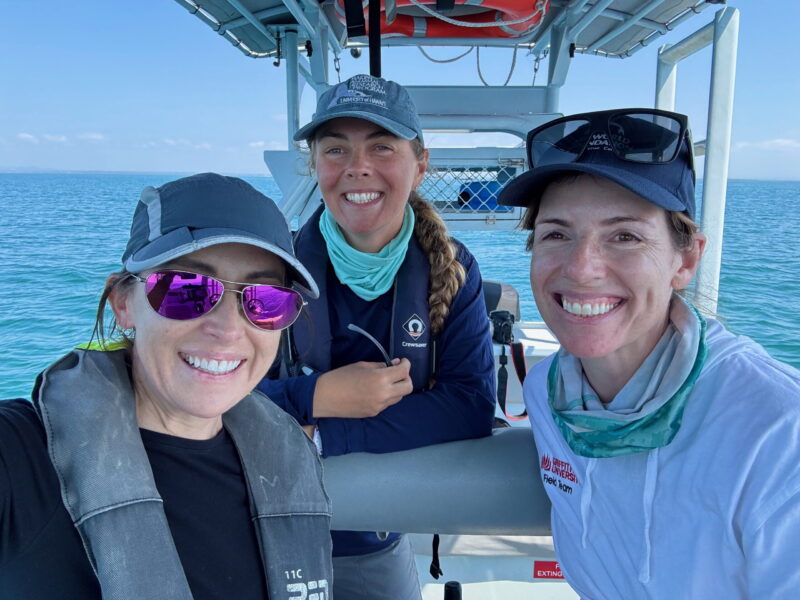
Collaboration with the University of Hawaii, Quandamooka Traditional Owners and several industry partners grounded the project in both cultural knowledge and scientific expertise.
Humpback whales and the future of Moreton Bay
Their observations also supported Bengston Nash’s ARC Linkage project Life in the Shipping Lane, which examines how shipping activity influences whale behavior on Quandamooka Country, where Moreton Bay is located.
The findings come as the Queensland Government considers new zoning laws for Moreton Bay. According to Bengston Nash, the study highlights the need for stronger protection measures. She said:
Our growing understanding of the bay’s critical role in the whales’ life-history warrants a holistic assessment of its ecological, social, and cultural value.
But the team also documented serious risks. Recreational boats frequently passed through areas where whales rested. And several animals carried propeller scars: evidence of past vessel strikes. Bengston Nash noted:
Both years, we observed high levels of vessel traffic in places where whales were resting. The number of whales with propeller scars underscores the need for greater caution from boaters.
Marine advocates now call for expanded slow-speed zones during peak migration months and clearer public safety campaigns to protect both whales and boaters.
Whales nursing. Whale moms don’t nurse their calf through direct contact. Instead, they release milk directly into the water. Video via Stephanie Stack/ Griffith University.
Protecting a cultural and ecological treasure
Collaboration with the Quandamooka Traditional Owners was central to the project. The Quandamooka people are the original custodians of Moreton Bay – including the Goenpul and Ngugi clans – and have maintained a deep connection to these waters for thousands of years.
Their traditional ecological knowledge provided valuable insights into whale behavior, seasonal movements and the bay’s sensitive habitats. By working closely with the community, the research team ensured that all fieldwork respected cultural values and supported indigenous-led stewardship initiatives. This partnership also strengthens ongoing efforts to integrate cultural perspectives into conservation planning, helping protect both the whales and the cultural heritage of Moreton Bay.
Researchers now hope to integrate indigenous ecological insights directly into long-term management plans. This includes community-led monitoring, educational programs for visitors and expanded co-governance in sensitive whale zones. This collaborative approach, they say, offers the best chance to safeguard the bay as both a cultural sanctuary and a thriving nursery for generations of humpback whales yet to make their first migration.
Calf swimming next to mom. Video via Stephanie Stack/ Griffith University.
Bottom line: Researchers found that Moreton Bay in Australia is a critical nursery for migrating humpback whales. The research raises urgent calls for stronger protection of the busy coastal waters.
Read more: Humpback whales communicate with us using “smoke” rings
Read more: Do whales and dolphins play together? Images and video here
The post Humpback whales use Moreton Bay as a key calf refuge first appeared on EarthSky.
from EarthSky https://ift.tt/ve5PZrx
For two seasons in Moreton Bay, Australia, researchers from Griffith University have taken on a unique study by attaching suction-cup cameras to humpback whale calves. They wanted to track how mothers care for their calves.
The researchers said on November 12, 2025, that the footage shows Moreton Bay is a critical nursery and rest area for humpbacks during migration.
Humpback whales and a hidden nursery
The researchers took the first-known underwater footage of humpback calves nursing in Moreton Bay, Australia. The team – led by Stephanie Stack and Susan Bengston Nash of Griffith University – gently attached cameras with suction cups to the whale calves. The cameras stayed in place long enough to show frequent nursing sessions in about half the calves they tagged. This footage provides evidence that the bay offers crucial shelter, calm waters and a resting space during the migration season. Stack said:
To our knowledge, this is the first documented use of camera-equipped suction-cup tags on humpback whale calves in Australia. It is also one of the few global datasets that combine video, fine-scale movement, and acoustic data for humpback whale calves.
As the team reviewed their hours of footage, they noticed patterns that had never been formally documented in the region. Mother–calf pairs appeared in consistently high numbers throughout the 2024 and 2025 seasons. Some adult whales visited the bay alone, suggesting they sought refuge in its sheltered waters. The researchers also saw groups with multiple mother–calf pairs mingling together, an activity not previously recorded for Moreton Bay.
Thirteen successful CATS (Customized Animal Tracking Solutions) camera tag deployments produced 35 hours and 37 minutes of video, acoustic recordings and movement data. The researchers also found calves preferred the quieter, shallower corners of the bay for nursing, which suggests that noise levels influence where mothers guide their young.
Collaboration with the University of Hawaii, Quandamooka Traditional Owners and several industry partners grounded the project in both cultural knowledge and scientific expertise.
Humpback whales and the future of Moreton Bay
Their observations also supported Bengston Nash’s ARC Linkage project Life in the Shipping Lane, which examines how shipping activity influences whale behavior on Quandamooka Country, where Moreton Bay is located.
The findings come as the Queensland Government considers new zoning laws for Moreton Bay. According to Bengston Nash, the study highlights the need for stronger protection measures. She said:
Our growing understanding of the bay’s critical role in the whales’ life-history warrants a holistic assessment of its ecological, social, and cultural value.
But the team also documented serious risks. Recreational boats frequently passed through areas where whales rested. And several animals carried propeller scars: evidence of past vessel strikes. Bengston Nash noted:
Both years, we observed high levels of vessel traffic in places where whales were resting. The number of whales with propeller scars underscores the need for greater caution from boaters.
Marine advocates now call for expanded slow-speed zones during peak migration months and clearer public safety campaigns to protect both whales and boaters.
Whales nursing. Whale moms don’t nurse their calf through direct contact. Instead, they release milk directly into the water. Video via Stephanie Stack/ Griffith University.
Protecting a cultural and ecological treasure
Collaboration with the Quandamooka Traditional Owners was central to the project. The Quandamooka people are the original custodians of Moreton Bay – including the Goenpul and Ngugi clans – and have maintained a deep connection to these waters for thousands of years.
Their traditional ecological knowledge provided valuable insights into whale behavior, seasonal movements and the bay’s sensitive habitats. By working closely with the community, the research team ensured that all fieldwork respected cultural values and supported indigenous-led stewardship initiatives. This partnership also strengthens ongoing efforts to integrate cultural perspectives into conservation planning, helping protect both the whales and the cultural heritage of Moreton Bay.
Researchers now hope to integrate indigenous ecological insights directly into long-term management plans. This includes community-led monitoring, educational programs for visitors and expanded co-governance in sensitive whale zones. This collaborative approach, they say, offers the best chance to safeguard the bay as both a cultural sanctuary and a thriving nursery for generations of humpback whales yet to make their first migration.
Calf swimming next to mom. Video via Stephanie Stack/ Griffith University.
Bottom line: Researchers found that Moreton Bay in Australia is a critical nursery for migrating humpback whales. The research raises urgent calls for stronger protection of the busy coastal waters.
Read more: Humpback whales communicate with us using “smoke” rings
Read more: Do whales and dolphins play together? Images and video here
The post Humpback whales use Moreton Bay as a key calf refuge first appeared on EarthSky.
from EarthSky https://ift.tt/ve5PZrx

Aucun commentaire:
Enregistrer un commentaire