Comet Lemmon (C/2025 A6) has been the best comet of 2025. And it favors Northern Hemisphere observers. Comet Lemmon has been just at the edge of visibility with the unaided eye from a dark-sky site in late October and early November. Right now it’s competing with a bright moon, but you can still see it with the aid of binoculars.
The comet was closest to Earth on October 21, 2025. And Comet Lemmon will reach its closest point to the sun on November 8.
Comet Lemmon favors Northern Hemisphere viewers. It spent much of October near the Big Dipper. But on northern fall evenings, the Big Dipper is quite low on the horizon. So the farther north you are, the better your chances. Reports are that the comet has reached about magnitude 4, which makes it a pretty good target, even for beginning observers.
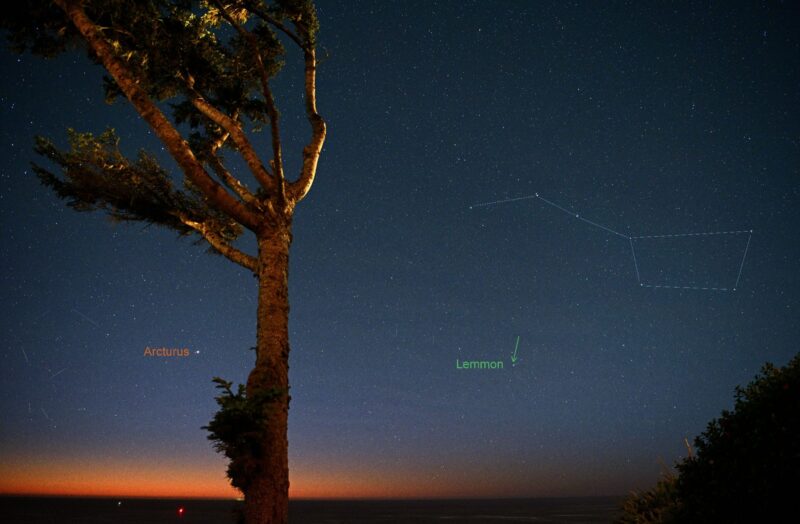
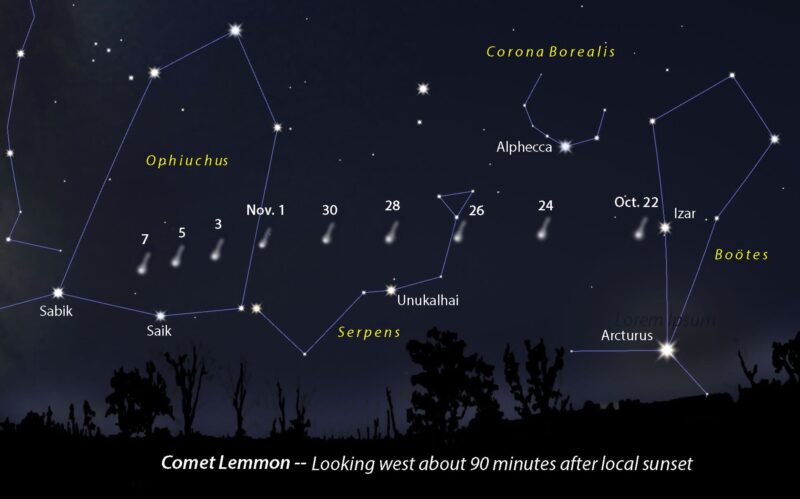
So Comet Lemmon is at its brightest around now. Use the charts here to find its location in the sky.
Finder chart for Comet Lemmon (C/2025 A6) in the evening sky as soon as true darkness falls. That might be some 90 minutes after sunset. Face northwest and use binoculars to help spot it and then see if it’s visible to the unaided eye. Image via Bob King (Astro Bob). Used with permission.
Other comets in the sky now
Comet Lemmon is just one of a number of comets currently in our sky. The most famous is probably the interstellar comet, 3I/ATLAS, which was closest to the sun in late October.
Another comet that recently came upon the scene is Comet SWAN. But for that one you’ll definitely need optical aid.
View at EarthSky Community Photos. | Steven Bellavia in Smithfield, Virginia, captured Comet Lemmon on October 2, 2025. Steven wrote: “C/2025 A6 (Lemmon), as it approaches perihelion, on November 8, 2025. I was easily able to see the head in my Celestron 15×70 SkyMaster Pro binoculars.” Thank you, Steven!
History of Comet C/2025 A6 Lemmon
Astronomers using the 60-inch (1.5-meter) telescope at Mt. Lemmon, Arizona, discovered this comet back on January 3, 2025. There are also precovery images of the comet in PanSTARRS data from as early as November 12, 2024. The term precovery is one that astronomers use to mean pre-discovery recovery. So the comet was on images earlier than those in which it was discovered. But they did not realize it was there until they went back and looked for it. Using these extended data, astronomers have been able to calculate its orbit. And it has an orbit that takes it about 1,350 years to circle the sun once.
Images of Comet Lemmon
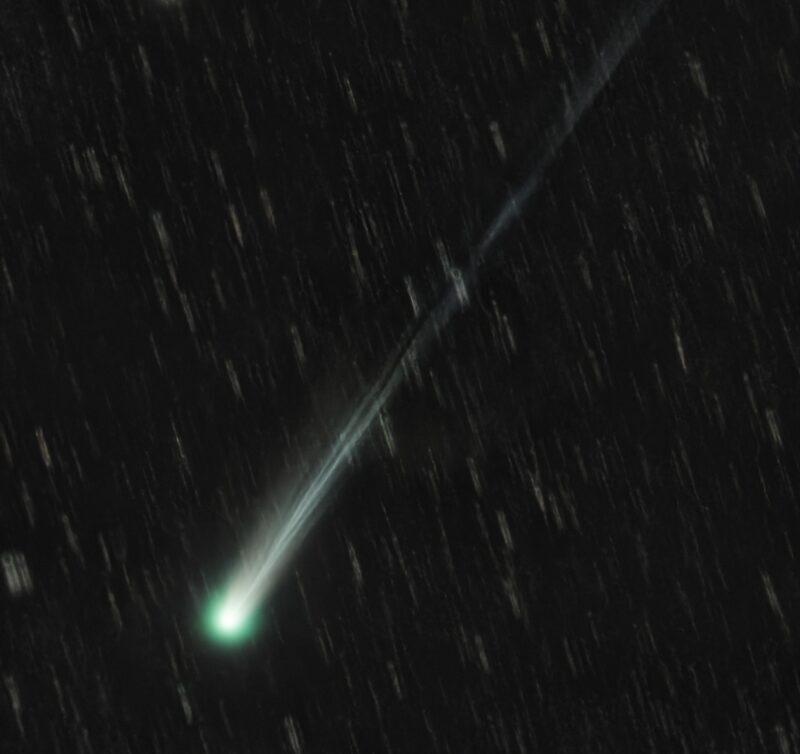
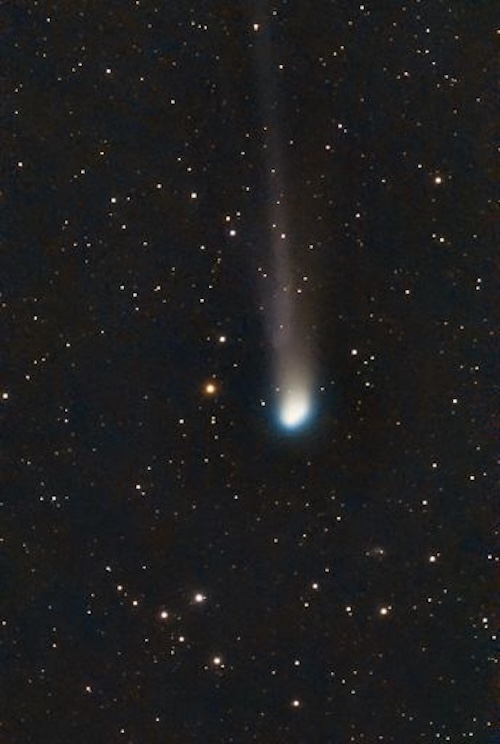
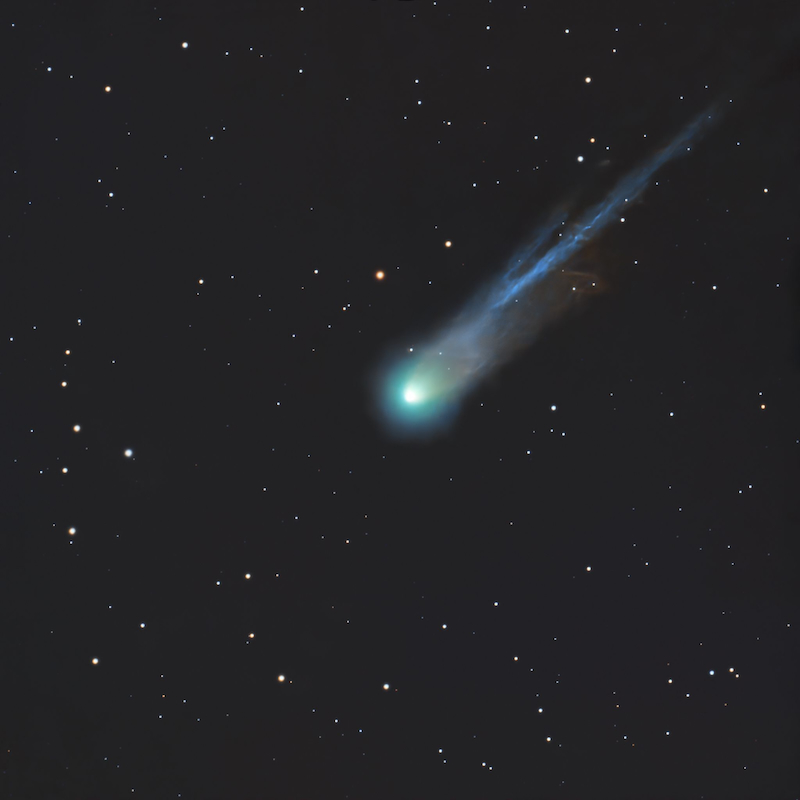
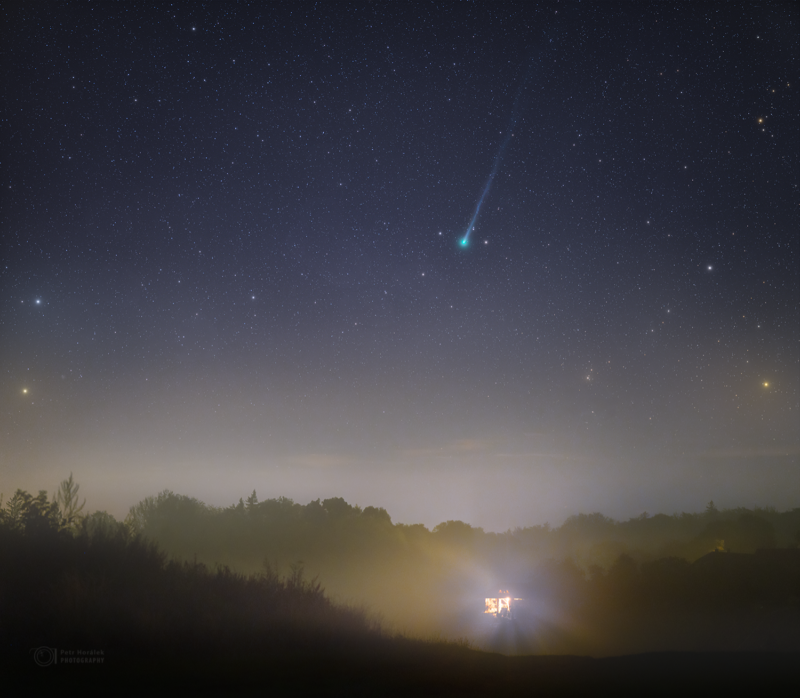
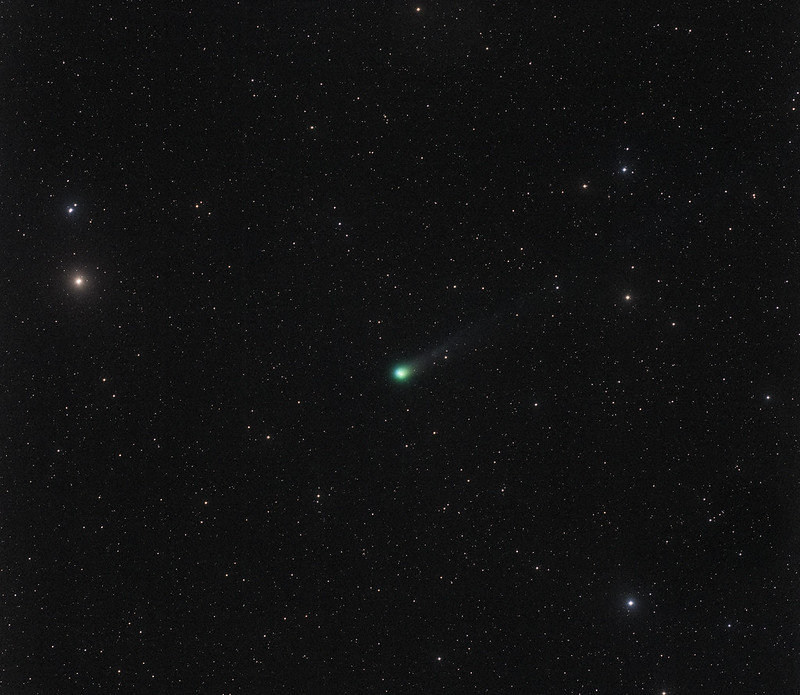
View at EarthSky Community Photos. | Craig Patterson captured this image of Comet Lemmon on October 10, 2025, from Lubbock, Texas. Thank you, Craig!View at EarthSky Community Photos. | Stéphane Picard captured Comet C/2025 A6 from Quispamsis, New Brunswick, Canada, on October 4, 2025. Stéphane wrote: “Comet C/2025 A6 Lemmon is hanging near the Big Dipper in the early morning hours before sunrise. Although not visible to the unaided eye yet, it may become visible later this month. It is currently heading inwards towards our sun at a speed of almost 60 km/s (134,200 mph).” Thank you, Stéphane!View at EarthSky Community Photos. | Mario Rana in Hampton, Virginia, caught the comet on October 4, 2025. Thank you, Mario.View at EarthSky Community Photos. | Petr Horálek in Prosec u Sece, Czech Republic, captured Comet Lemmon on October 1, 2025. Petr wrote: “The beautiful comet is now located in Ursa Major and starts to be circumpolar from northern mid-latitudes. My observation was truly dramatic, as the approaching fog made the view and photography increasingly challenging. Eventually, here is the result, showing a truly significant ion tail of the comet, visible even in small binoculars. Small, but lovely comet, indeed!” Thank you, Petr!
More images
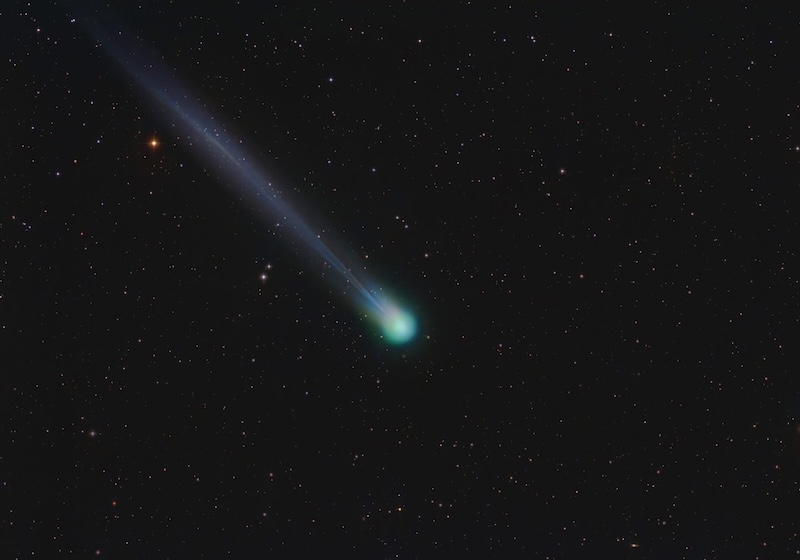
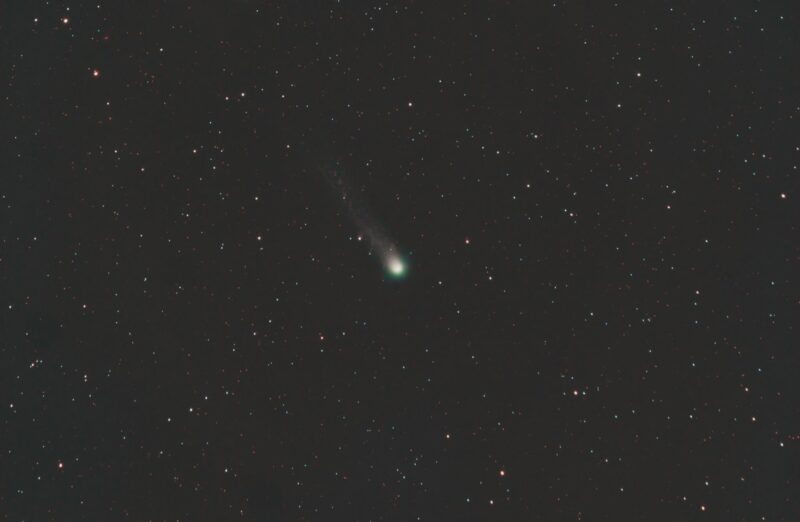
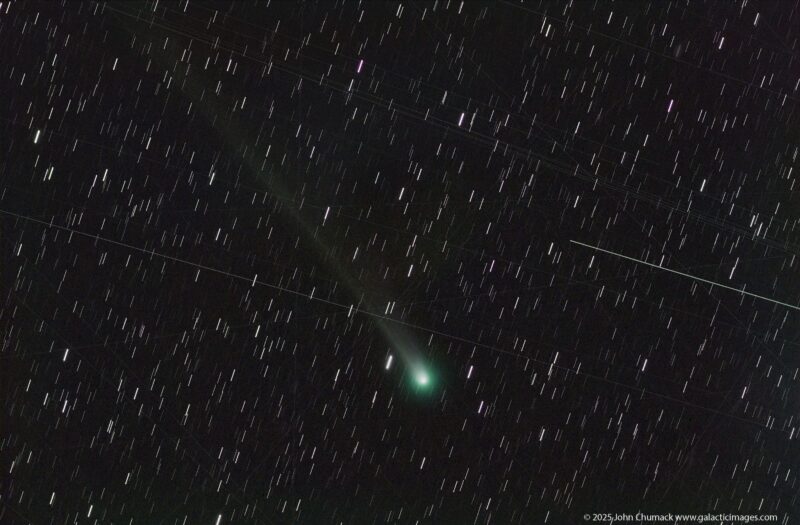
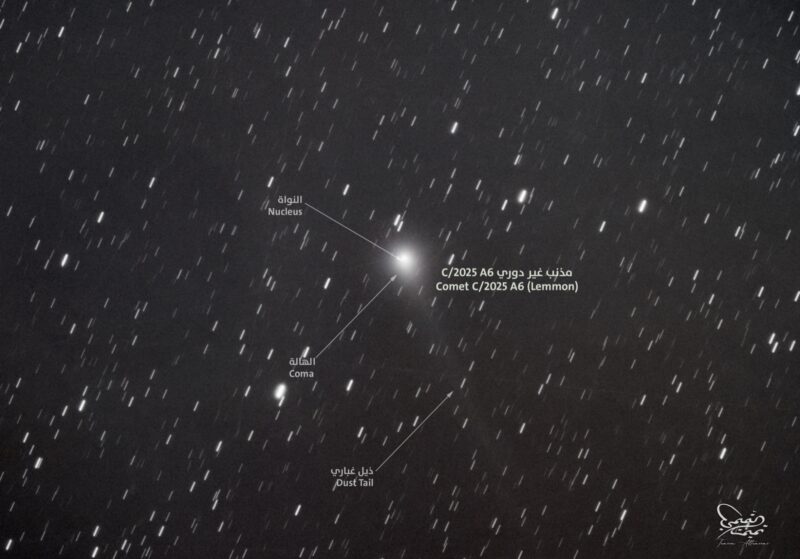
View at EarthSky Community Photos. | David Hoskin in Halifax, Nova Scotia, Canada, captured Comet A6 Lemmon on September 29, 2025. David wrote: “The comet continues to brighten and may, from a dark site, become visible to the unaided eye by late October.” Thank you, David!Eliot Herman captured Comet A6 Lemmon using a remote iTelescope on September 29, 2025. Thank you, Eliot!View at EarthSky Community Photos. | John Chumack in Yellow Springs, Ohio, captured Comet Lemmon (C/2025 A6) along with some satellite trails on September 27, 2025. John wrote: “Early Saturday morning I had to wait an hour longer just for it to clear the trees in the northeast. I was finally able to image it around 6:00 a.m., with dawn rising fast, and the satellite traffic was crazy.” Thank you, John!View at EarthSky Community Photos. | Tameem Altameemi in the United Arab Emirates captured Comet Lemmon on September 19, 2025. Tameem wrote: “This non-periodic comet is currently shining at magnitude +8, making it a fine telescopic target. In the image, you can see the bright nucleus at the core, the surrounding coma of gas and dust, and a faint dust tail stretching away from the sun. Unlike periodic comets that return on a regular cycle, C/2025 A6 follows a very elongated orbit and may not return for thousands of years, if ever.” Thank you, Tameem!
Bottom line: Comet Lemmon reaches its closest point to the sun on November 8. See a finder chart and some great images of it here.
Comet Lemmon (C/2025 A6) has been the best comet of 2025. And it favors Northern Hemisphere observers. Comet Lemmon has been just at the edge of visibility with the unaided eye from a dark-sky site in late October and early November. Right now it’s competing with a bright moon, but you can still see it with the aid of binoculars.
The comet was closest to Earth on October 21, 2025. And Comet Lemmon will reach its closest point to the sun on November 8.
Comet Lemmon favors Northern Hemisphere viewers. It spent much of October near the Big Dipper. But on northern fall evenings, the Big Dipper is quite low on the horizon. So the farther north you are, the better your chances. Reports are that the comet has reached about magnitude 4, which makes it a pretty good target, even for beginning observers.
So Comet Lemmon is at its brightest around now. Use the charts here to find its location in the sky.
Finder chart for Comet Lemmon (C/2025 A6) in the evening sky as soon as true darkness falls. That might be some 90 minutes after sunset. Face northwest and use binoculars to help spot it and then see if it’s visible to the unaided eye. Image via Bob King (Astro Bob). Used with permission.
Other comets in the sky now
Comet Lemmon is just one of a number of comets currently in our sky. The most famous is probably the interstellar comet, 3I/ATLAS, which was closest to the sun in late October.
Another comet that recently came upon the scene is Comet SWAN. But for that one you’ll definitely need optical aid.
View at EarthSky Community Photos. | Steven Bellavia in Smithfield, Virginia, captured Comet Lemmon on October 2, 2025. Steven wrote: “C/2025 A6 (Lemmon), as it approaches perihelion, on November 8, 2025. I was easily able to see the head in my Celestron 15×70 SkyMaster Pro binoculars.” Thank you, Steven!
History of Comet C/2025 A6 Lemmon
Astronomers using the 60-inch (1.5-meter) telescope at Mt. Lemmon, Arizona, discovered this comet back on January 3, 2025. There are also precovery images of the comet in PanSTARRS data from as early as November 12, 2024. The term precovery is one that astronomers use to mean pre-discovery recovery. So the comet was on images earlier than those in which it was discovered. But they did not realize it was there until they went back and looked for it. Using these extended data, astronomers have been able to calculate its orbit. And it has an orbit that takes it about 1,350 years to circle the sun once.
Images of Comet Lemmon
View at EarthSky Community Photos. | Craig Patterson captured this image of Comet Lemmon on October 10, 2025, from Lubbock, Texas. Thank you, Craig!View at EarthSky Community Photos. | Stéphane Picard captured Comet C/2025 A6 from Quispamsis, New Brunswick, Canada, on October 4, 2025. Stéphane wrote: “Comet C/2025 A6 Lemmon is hanging near the Big Dipper in the early morning hours before sunrise. Although not visible to the unaided eye yet, it may become visible later this month. It is currently heading inwards towards our sun at a speed of almost 60 km/s (134,200 mph).” Thank you, Stéphane!View at EarthSky Community Photos. | Mario Rana in Hampton, Virginia, caught the comet on October 4, 2025. Thank you, Mario.View at EarthSky Community Photos. | Petr Horálek in Prosec u Sece, Czech Republic, captured Comet Lemmon on October 1, 2025. Petr wrote: “The beautiful comet is now located in Ursa Major and starts to be circumpolar from northern mid-latitudes. My observation was truly dramatic, as the approaching fog made the view and photography increasingly challenging. Eventually, here is the result, showing a truly significant ion tail of the comet, visible even in small binoculars. Small, but lovely comet, indeed!” Thank you, Petr!
More images
View at EarthSky Community Photos. | David Hoskin in Halifax, Nova Scotia, Canada, captured Comet A6 Lemmon on September 29, 2025. David wrote: “The comet continues to brighten and may, from a dark site, become visible to the unaided eye by late October.” Thank you, David!Eliot Herman captured Comet A6 Lemmon using a remote iTelescope on September 29, 2025. Thank you, Eliot!View at EarthSky Community Photos. | John Chumack in Yellow Springs, Ohio, captured Comet Lemmon (C/2025 A6) along with some satellite trails on September 27, 2025. John wrote: “Early Saturday morning I had to wait an hour longer just for it to clear the trees in the northeast. I was finally able to image it around 6:00 a.m., with dawn rising fast, and the satellite traffic was crazy.” Thank you, John!View at EarthSky Community Photos. | Tameem Altameemi in the United Arab Emirates captured Comet Lemmon on September 19, 2025. Tameem wrote: “This non-periodic comet is currently shining at magnitude +8, making it a fine telescopic target. In the image, you can see the bright nucleus at the core, the surrounding coma of gas and dust, and a faint dust tail stretching away from the sun. Unlike periodic comets that return on a regular cycle, C/2025 A6 follows a very elongated orbit and may not return for thousands of years, if ever.” Thank you, Tameem!
Bottom line: Comet Lemmon reaches its closest point to the sun on November 8. See a finder chart and some great images of it here.


Aucun commentaire:
Enregistrer un commentaire