
Webb’s Cosmos book review
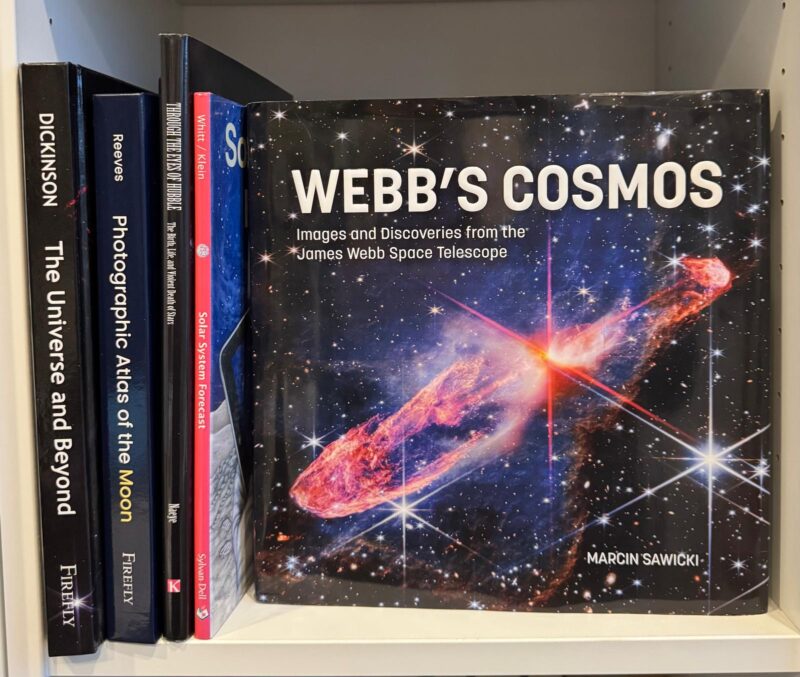
If you’re looking for some astronomical eye candy for holiday gift giving, look no further. Webb’s Cosmos just came out on November 18, 2025. Authored by Marcin Sawicki and published by Firefly Books, the coffee-table style book showcases the first years of the James Webb Space Telescope’s explorations. Explore the universe at your own pace. You can read the book front to back, just focus on images and captions, or skip around and see what grabs your fancy.
Webb gives us a unique view with its infrared eyes. It’s able to see through dusty veils into stellar nurseries, the cores of galaxies and even young galaxies in the early universe.
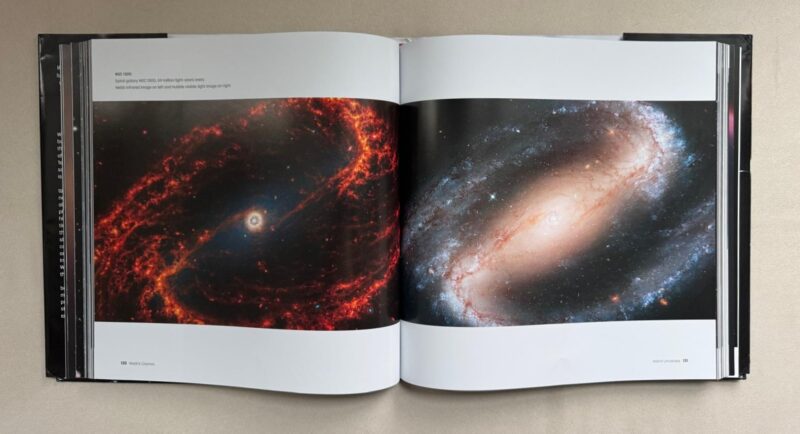
And it’s not just Webb images we see in the book. We also get to see comparisons of Webb’s infrared view versus the Hubble Space Telescope’s visible-light view. In fact, there is an extended section where we get to see galaxies through Webb’s eyes next to Hubble’s visible view.
What’s inside
Like many other books of its type, it gives you a basic rundown of the science for each image you see. For example, there are explanations on the birth of stars and their life cycle. Plus you learn about the death of stars and how heavy elements are all forged in the cores of stars and then scattered in the universe in supernovas. Plus we learn about galaxies, mergers, and how looking at distant galaxies is the same as looking back in time.
Spectroscopy
One of the more informative sections I found was when they dove into spectroscopy. Spectroscopy, where astronomers look at the peaks in the light spectrum from an object, isn’t as riveting as gazing at whirling spiral galaxies pulsing with star birth. But it’s an essential tool for how astronomers learn about these distant bodies.
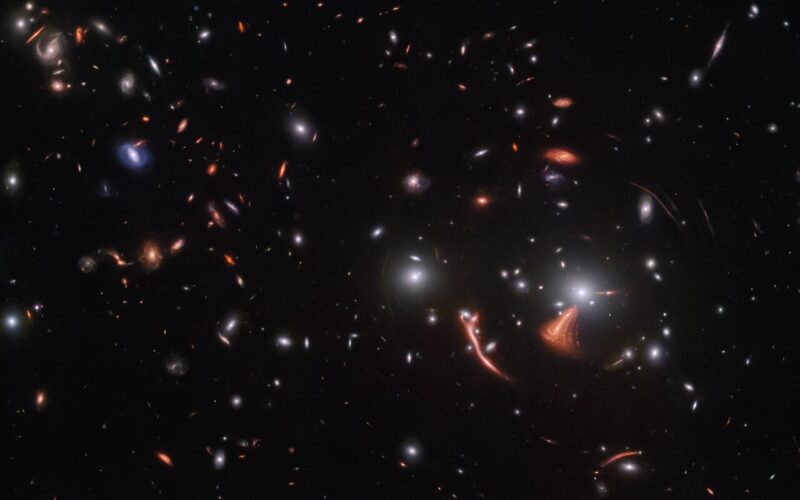
For example, we can look at a massive galaxy cluster captured by Webb and see arcs of light around it. These arcs are distant galaxies gravitationally lensed by the foreground object. In some of the images, we see distorted galaxies as if through a fun house mirror.
And many times, these galaxies appear in multiple spots in a ring around the intervening cluster. So how do scientists know that two or more smears of light from behind a galaxy cluster are images of the same distant, lensed galaxy? By spectroscopy. When they look at the spectroscopic data from these objects, sometimes they match, because they are the same galaxy seen in multiple places.
Spectroscopy also provides astronomers insight into how far back in time they are looking. How much an object’s light is redshifted – shifted toward the red end of the spectrum – helps astronomers know how far away it is. And with Webb, astronomers can see farther back in time than ever before.
A peek at the pics inside Webb’s Cosmos
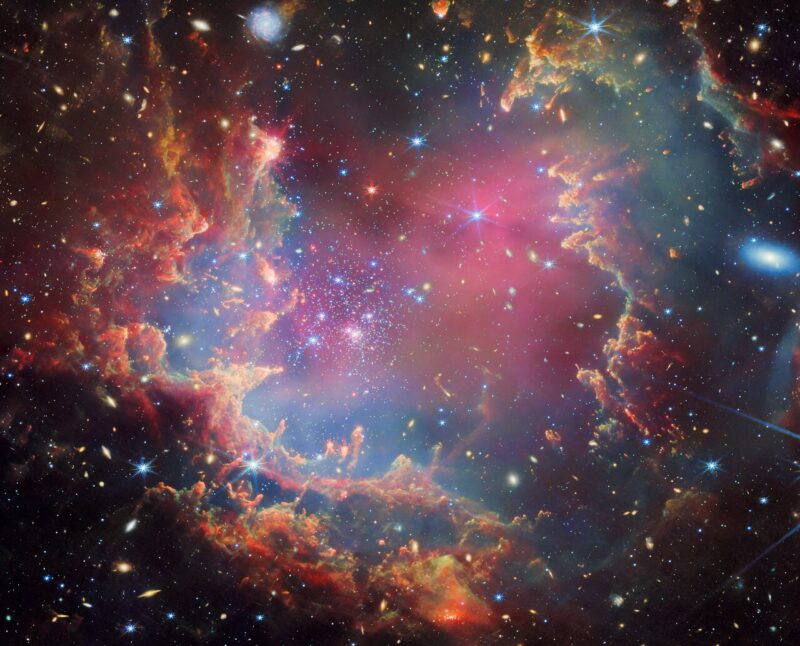
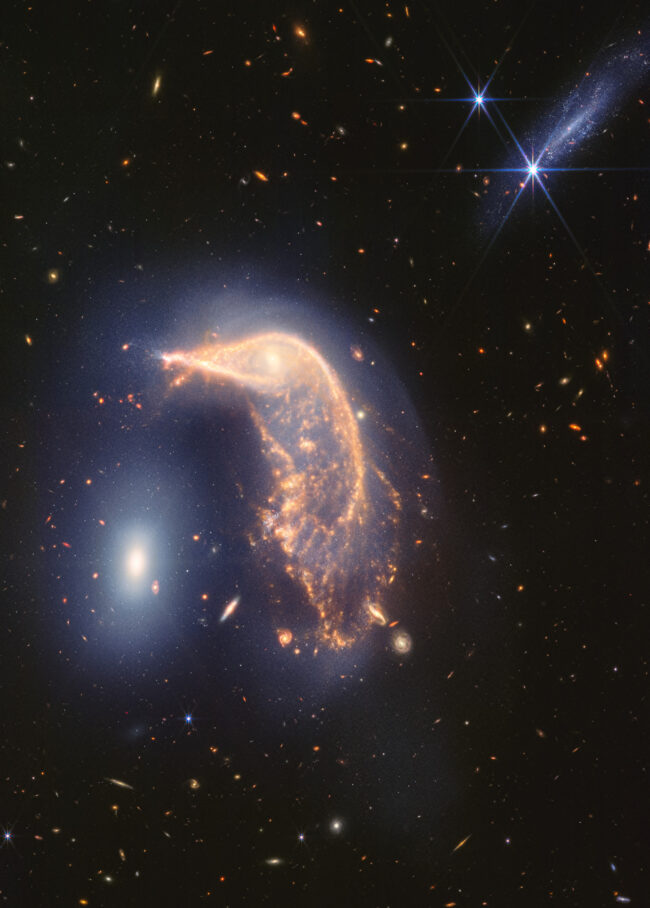
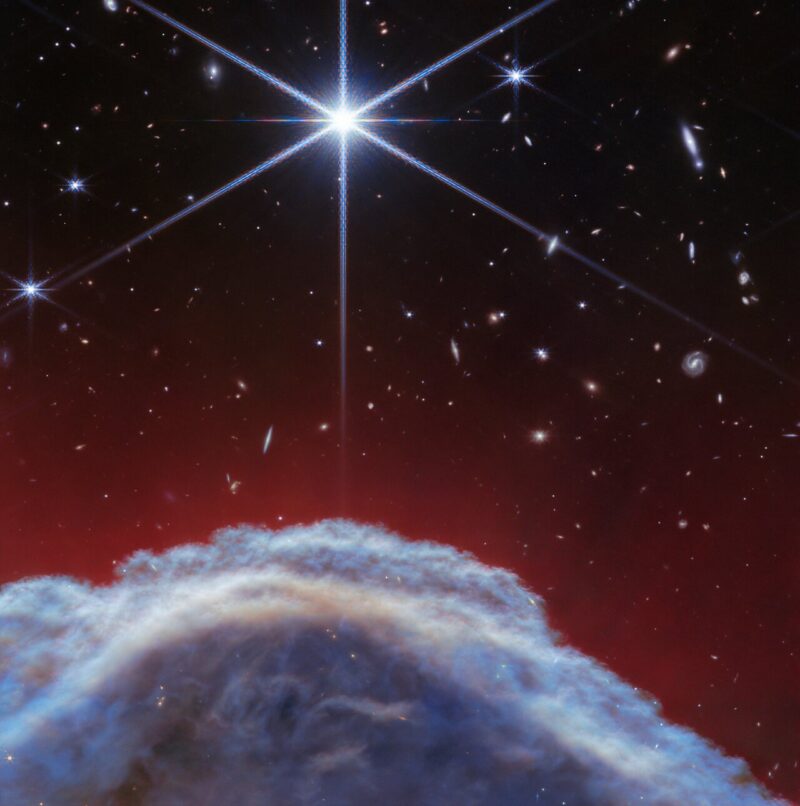
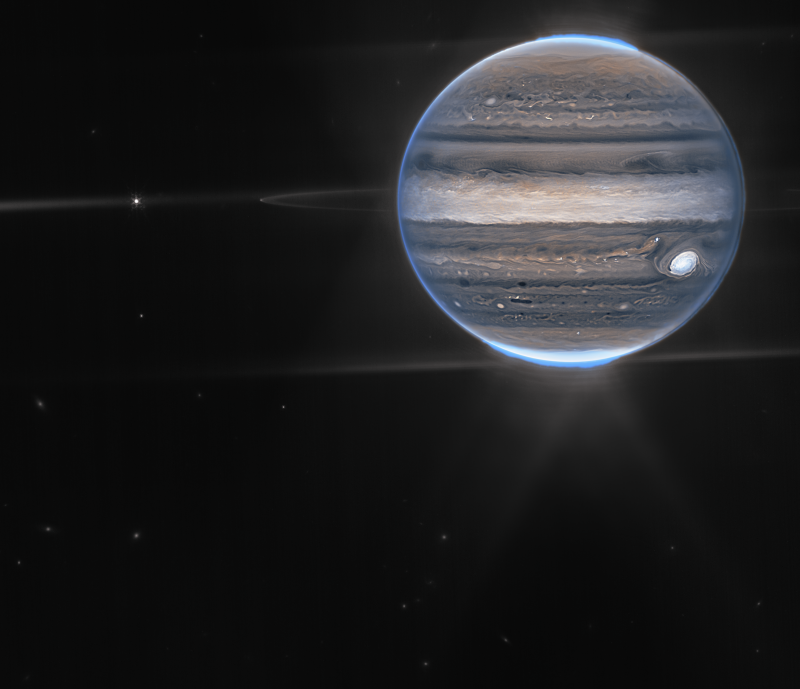
Here are a few more of the amazing images you’ll find inside “Webb’s Cosmos”:
Bottom line: “Webb’s Cosmos” is a new coffee-table book displaying some of Webb’s greatest images. Learn more about the book here.
The post A peek inside Webb’s Cosmos, in media we love first appeared on EarthSky.
from EarthSky https://ift.tt/MPKE713
Webb’s Cosmos book review
If you’re looking for some astronomical eye candy for holiday gift giving, look no further. Webb’s Cosmos just came out on November 18, 2025. Authored by Marcin Sawicki and published by Firefly Books, the coffee-table style book showcases the first years of the James Webb Space Telescope’s explorations. Explore the universe at your own pace. You can read the book front to back, just focus on images and captions, or skip around and see what grabs your fancy.
Webb gives us a unique view with its infrared eyes. It’s able to see through dusty veils into stellar nurseries, the cores of galaxies and even young galaxies in the early universe.
And it’s not just Webb images we see in the book. We also get to see comparisons of Webb’s infrared view versus the Hubble Space Telescope’s visible-light view. In fact, there is an extended section where we get to see galaxies through Webb’s eyes next to Hubble’s visible view.
What’s inside
Like many other books of its type, it gives you a basic rundown of the science for each image you see. For example, there are explanations on the birth of stars and their life cycle. Plus you learn about the death of stars and how heavy elements are all forged in the cores of stars and then scattered in the universe in supernovas. Plus we learn about galaxies, mergers, and how looking at distant galaxies is the same as looking back in time.
Spectroscopy
One of the more informative sections I found was when they dove into spectroscopy. Spectroscopy, where astronomers look at the peaks in the light spectrum from an object, isn’t as riveting as gazing at whirling spiral galaxies pulsing with star birth. But it’s an essential tool for how astronomers learn about these distant bodies.
For example, we can look at a massive galaxy cluster captured by Webb and see arcs of light around it. These arcs are distant galaxies gravitationally lensed by the foreground object. In some of the images, we see distorted galaxies as if through a fun house mirror.
And many times, these galaxies appear in multiple spots in a ring around the intervening cluster. So how do scientists know that two or more smears of light from behind a galaxy cluster are images of the same distant, lensed galaxy? By spectroscopy. When they look at the spectroscopic data from these objects, sometimes they match, because they are the same galaxy seen in multiple places.
Spectroscopy also provides astronomers insight into how far back in time they are looking. How much an object’s light is redshifted – shifted toward the red end of the spectrum – helps astronomers know how far away it is. And with Webb, astronomers can see farther back in time than ever before.
A peek at the pics inside Webb’s Cosmos
Here are a few more of the amazing images you’ll find inside “Webb’s Cosmos”:
Bottom line: “Webb’s Cosmos” is a new coffee-table book displaying some of Webb’s greatest images. Learn more about the book here.
The post A peek inside Webb’s Cosmos, in media we love first appeared on EarthSky.
from EarthSky https://ift.tt/MPKE713

Aucun commentaire:
Enregistrer un commentaire