
Watch this video about the amazing snow leopard. Image via strichpunkt/ Pixabay.
In the icy heights of Central Asia, among snow-covered peaks and remote valleys, lives a feline as elusive as it is majestic: the snow leopard (Panthera uncia). Also known as the ghost of the mountains, this predator is so hard to spot that for centuries it was considered almost a legend. Its gray, spotted coat blends perfectly with the rocky landscape, making it a master of stealth and camouflage.
Beyond its hypnotic beauty and mysterious lifestyle, the snow leopard has captured the imagination of scientists, explorers and local communities alike. How does it survive in one of the most extreme environments on the planet? What secrets does this Himalayan creature hide? Discover curious facts about the snow leopard, and find out about its habitat, diet and the concerning state of its conservation.
Fascinating facts about the snow leopard
In addition to its impressive camouflage skills, the snow leopard has other fascinating traits that make it a jewel of the animal kingdom.
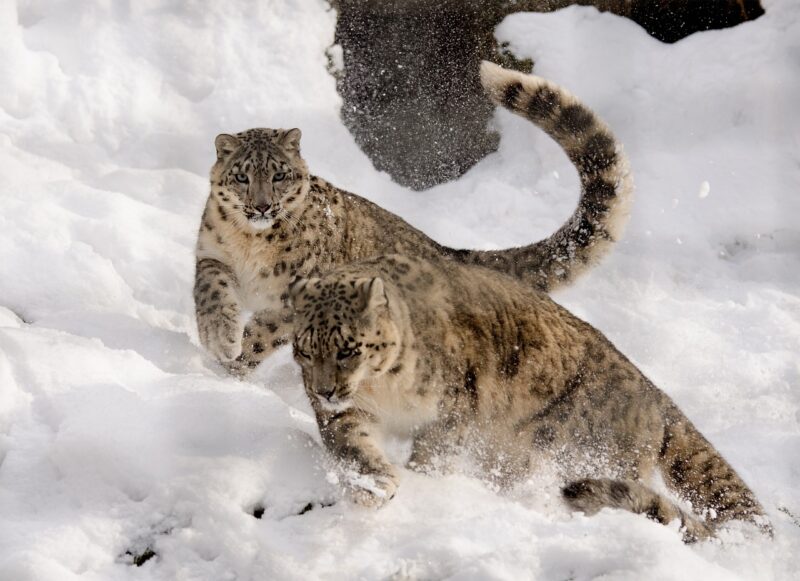
One of the most curious is its adaptation to the extreme climate: its fur is not only long and dense, but even the soles of its feet are covered in hair, which protects it from the cold, like built-in thermal boots. Likewise, its paws are wide and act like natural snowshoes, allowing it to walk on deep snow without sinking.
This mammal measures between 2.5 and 5 feet (75 and 150 cm) in length, not including the tail. The tail alone can be almost as long as its body, reaching 3 to 3.3 feet (90–100 cm). It helps maintain balance on steep terrain and also serves as a warm wrap against the extreme cold. Moreover, this impressive feline can leap up to 50 feet (15 meters) horizontally in a single bound, making it one of the best jumpers in the animal kingdom.
It’s also interesting to note that snow leopards have extremely sharp eyesight, capable of detecting prey hundreds of feet away, even among snow and rocks. But when they’re not hunting, they can go days without moving much, resting in hidden caves or rocky outcrops.
Another surprising detail is that, although we associate them with snow, snow leopards can also live in arid and mountainous regions with little precipitation, showing a great capacity for adaptation.
And unlike other big cats, the snow leopard doesn’t roar. It makes sounds like meows, growls or a loud purr known as chuffing.
Little ghosts in the making
The snow leopard’s life cycle begins deep in the summer, between June and August, when mountain conditions are somewhat more forgiving. After a gestation period of about 90 to 100 days, the female gives birth to one to three cubs in a sheltered den, usually a cave or rocky crevice lined with her own fur to keep the cubs warm.
At birth, the cubs are completely dependent on their mother. They weigh about 10 to 21 ounces (300 to 600 grams), have their eyes closed and have soft grayish fur already marked with their characteristic spots. They don’t open their eyes until after the first week and don’t begin to walk until around five weeks old.
During the first months, the mother rarely leaves the den, hunting nearby and returning to nurse her young. The cubs start eating meat at around two months old. But they’re not fully weaned until three or four months. By five or six months, they can follow their mother on longer outings, learning the survival skills they’ll need on their own.

Growing up
However, the childhood of these little ones is full of risks. Harsh environmental conditions, predators and food scarcity present constant challenges. Only about 30% to 50% of the cubs reach adulthood. That’s why every successful birth is a reason for hope in the conservation of the species.
The cubs stay with their mother until they are 18 to 22 months old, at which point they become independent. They then begin their solitary lives in the mountains, continuing the cycle of the mysterious ghost of the mountains.
Why a ghost?
This is a solitary animal, unmatched in camouflage, living in inaccessible areas. Even with the help of advanced technology – like motion- or heat-activated camera traps placed in its natural habitat – spotting a snow leopard remains a rare event.
These devices often remain in remote areas for weeks or even months, hoping to capture a fleeting image of the feline. However, its elusive nature and ability to move across steep, rugged mountain terrain make sightings incredibly rare.
This scarcity of observations has contributed to the aura of mystery surrounding the species. It is known as the ghost of the mountains not just because of the pale color of its fur, which blends into the snowy surroundings, but also because of how difficult it is to track and study in the wild.
Its solitary and reserved behavior is not just a biological trait but a key adaptation to the harsh conditions of its environment, where discretion is synonymous with survival.

Habitat of the snow leopard
The snow leopard inhabits the mountainous regions of Central Asia, in countries including Nepal, India, China, Mongolia, Pakistan, and Afghanistan. It prefers altitudes ranging from 9,800 to 18,000 feet (3,000 to 5,500 meters) above sea level, though it may descend to lower valleys in winter in search of food. Its habitat includes steep rocky slopes, deep gorges, and alpine zones where few species can survive.
It is mainly crepuscular, that is, most active during the twilight hours of dawn and dusk. It lives and hunts alone, except during the mating season or when a mother is raising her young. And a snow leopard marks its territory with urine, feces or scratch marks to warn other leopards of its presence and avoid encounters.
Each individual can occupy a vast territory – hundreds of square miles in some regions – and they tend to avoid each other. The only sustained social relationship occurs between mother and cubs, who stay together for about 18 to 22 months.

What do they eat?
Because this species lives in harsh, mountainous areas with scarce prey, solitude reduces competition for food. Being solitary also reduces the risk of conflicts and detection by prey or humans.
Its diet is carnivorous and quite varied. It feeds on animals such as ibex, blue sheep (bharal), marmots, hares and occasionally birds. It may also prey on domestic livestock. This often brings it into conflict with local human communities. Its ability to stalk silently and strike swiftly makes it a highly efficient hunter.

Conservation status
This magnificent animal is a symbol of strength, wisdom and protection. In fact, it holds an important role in the culture of several Central Asian communities. Some regions consider the snow leopard sacred. It’s the national symbol of countries such as Kazakhstan and Kyrgyzstan.
The snow leopard is classified as vulnerable by the International Union for Conservation of Nature (IUCN). Between 4,000 and 6,500 individuals remain in the wild, though the exact number is hard to determine due to the inaccessibility of its habitat.
The main threats it faces are poaching (for its fur and bones), habitat loss due to human expansion, and climate change, which alters its mountain ecosystems. Additionally, conflict with local herders over livestock predation also contributes to its decline.
However, conservation initiatives exist in several countries, including monitoring programs using camera traps, environmental education, financial compensation for herders and international efforts like the Snow Leopard Trust. This trust aims to protect this enigmatic feline before it vanishes from the heights forever.
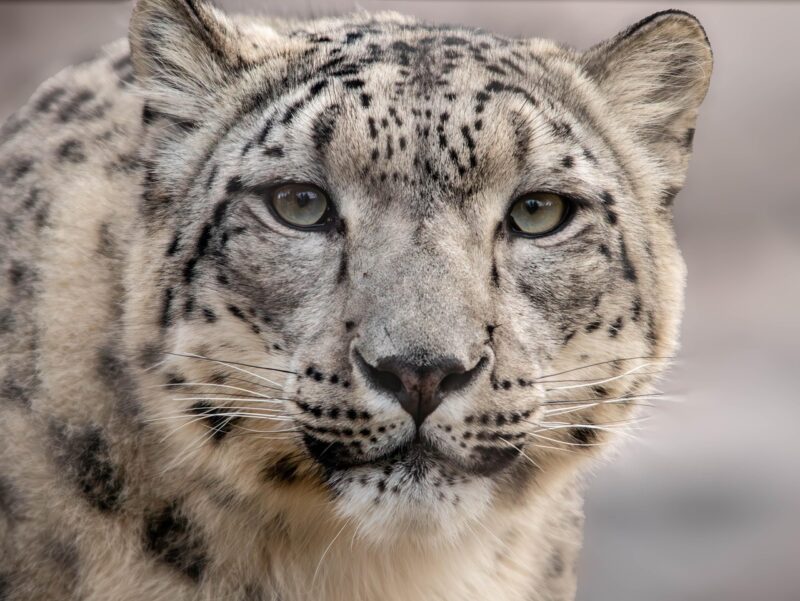
Bottom line: The snow leopard is almost invisible in the snow. Its amazing camouflage has led people to call it the “ghost of the mountains.”
Read more: The yak is an imposing giant of the high mountains
Read more: Tigers are the biggest cats: Lifeform of the week
The post Meet the snow leopard: the ghost of the mountains first appeared on EarthSky.
from EarthSky https://ift.tt/vr4djhu
Watch this video about the amazing snow leopard. Image via strichpunkt/ Pixabay.
In the icy heights of Central Asia, among snow-covered peaks and remote valleys, lives a feline as elusive as it is majestic: the snow leopard (Panthera uncia). Also known as the ghost of the mountains, this predator is so hard to spot that for centuries it was considered almost a legend. Its gray, spotted coat blends perfectly with the rocky landscape, making it a master of stealth and camouflage.
Beyond its hypnotic beauty and mysterious lifestyle, the snow leopard has captured the imagination of scientists, explorers and local communities alike. How does it survive in one of the most extreme environments on the planet? What secrets does this Himalayan creature hide? Discover curious facts about the snow leopard, and find out about its habitat, diet and the concerning state of its conservation.
Fascinating facts about the snow leopard
In addition to its impressive camouflage skills, the snow leopard has other fascinating traits that make it a jewel of the animal kingdom.
One of the most curious is its adaptation to the extreme climate: its fur is not only long and dense, but even the soles of its feet are covered in hair, which protects it from the cold, like built-in thermal boots. Likewise, its paws are wide and act like natural snowshoes, allowing it to walk on deep snow without sinking.
This mammal measures between 2.5 and 5 feet (75 and 150 cm) in length, not including the tail. The tail alone can be almost as long as its body, reaching 3 to 3.3 feet (90–100 cm). It helps maintain balance on steep terrain and also serves as a warm wrap against the extreme cold. Moreover, this impressive feline can leap up to 50 feet (15 meters) horizontally in a single bound, making it one of the best jumpers in the animal kingdom.
It’s also interesting to note that snow leopards have extremely sharp eyesight, capable of detecting prey hundreds of feet away, even among snow and rocks. But when they’re not hunting, they can go days without moving much, resting in hidden caves or rocky outcrops.
Another surprising detail is that, although we associate them with snow, snow leopards can also live in arid and mountainous regions with little precipitation, showing a great capacity for adaptation.
And unlike other big cats, the snow leopard doesn’t roar. It makes sounds like meows, growls or a loud purr known as chuffing.
Little ghosts in the making
The snow leopard’s life cycle begins deep in the summer, between June and August, when mountain conditions are somewhat more forgiving. After a gestation period of about 90 to 100 days, the female gives birth to one to three cubs in a sheltered den, usually a cave or rocky crevice lined with her own fur to keep the cubs warm.
At birth, the cubs are completely dependent on their mother. They weigh about 10 to 21 ounces (300 to 600 grams), have their eyes closed and have soft grayish fur already marked with their characteristic spots. They don’t open their eyes until after the first week and don’t begin to walk until around five weeks old.
During the first months, the mother rarely leaves the den, hunting nearby and returning to nurse her young. The cubs start eating meat at around two months old. But they’re not fully weaned until three or four months. By five or six months, they can follow their mother on longer outings, learning the survival skills they’ll need on their own.
Growing up
However, the childhood of these little ones is full of risks. Harsh environmental conditions, predators and food scarcity present constant challenges. Only about 30% to 50% of the cubs reach adulthood. That’s why every successful birth is a reason for hope in the conservation of the species.
The cubs stay with their mother until they are 18 to 22 months old, at which point they become independent. They then begin their solitary lives in the mountains, continuing the cycle of the mysterious ghost of the mountains.
Why a ghost?
This is a solitary animal, unmatched in camouflage, living in inaccessible areas. Even with the help of advanced technology – like motion- or heat-activated camera traps placed in its natural habitat – spotting a snow leopard remains a rare event.
These devices often remain in remote areas for weeks or even months, hoping to capture a fleeting image of the feline. However, its elusive nature and ability to move across steep, rugged mountain terrain make sightings incredibly rare.
This scarcity of observations has contributed to the aura of mystery surrounding the species. It is known as the ghost of the mountains not just because of the pale color of its fur, which blends into the snowy surroundings, but also because of how difficult it is to track and study in the wild.
Its solitary and reserved behavior is not just a biological trait but a key adaptation to the harsh conditions of its environment, where discretion is synonymous with survival.
Habitat of the snow leopard
The snow leopard inhabits the mountainous regions of Central Asia, in countries including Nepal, India, China, Mongolia, Pakistan, and Afghanistan. It prefers altitudes ranging from 9,800 to 18,000 feet (3,000 to 5,500 meters) above sea level, though it may descend to lower valleys in winter in search of food. Its habitat includes steep rocky slopes, deep gorges, and alpine zones where few species can survive.
It is mainly crepuscular, that is, most active during the twilight hours of dawn and dusk. It lives and hunts alone, except during the mating season or when a mother is raising her young. And a snow leopard marks its territory with urine, feces or scratch marks to warn other leopards of its presence and avoid encounters.
Each individual can occupy a vast territory – hundreds of square miles in some regions – and they tend to avoid each other. The only sustained social relationship occurs between mother and cubs, who stay together for about 18 to 22 months.
What do they eat?
Because this species lives in harsh, mountainous areas with scarce prey, solitude reduces competition for food. Being solitary also reduces the risk of conflicts and detection by prey or humans.
Its diet is carnivorous and quite varied. It feeds on animals such as ibex, blue sheep (bharal), marmots, hares and occasionally birds. It may also prey on domestic livestock. This often brings it into conflict with local human communities. Its ability to stalk silently and strike swiftly makes it a highly efficient hunter.
Conservation status
This magnificent animal is a symbol of strength, wisdom and protection. In fact, it holds an important role in the culture of several Central Asian communities. Some regions consider the snow leopard sacred. It’s the national symbol of countries such as Kazakhstan and Kyrgyzstan.
The snow leopard is classified as vulnerable by the International Union for Conservation of Nature (IUCN). Between 4,000 and 6,500 individuals remain in the wild, though the exact number is hard to determine due to the inaccessibility of its habitat.
The main threats it faces are poaching (for its fur and bones), habitat loss due to human expansion, and climate change, which alters its mountain ecosystems. Additionally, conflict with local herders over livestock predation also contributes to its decline.
However, conservation initiatives exist in several countries, including monitoring programs using camera traps, environmental education, financial compensation for herders and international efforts like the Snow Leopard Trust. This trust aims to protect this enigmatic feline before it vanishes from the heights forever.
Bottom line: The snow leopard is almost invisible in the snow. Its amazing camouflage has led people to call it the “ghost of the mountains.”
Read more: The yak is an imposing giant of the high mountains
Read more: Tigers are the biggest cats: Lifeform of the week
The post Meet the snow leopard: the ghost of the mountains first appeared on EarthSky.
from EarthSky https://ift.tt/vr4djhu

Aucun commentaire:
Enregistrer un commentaire