
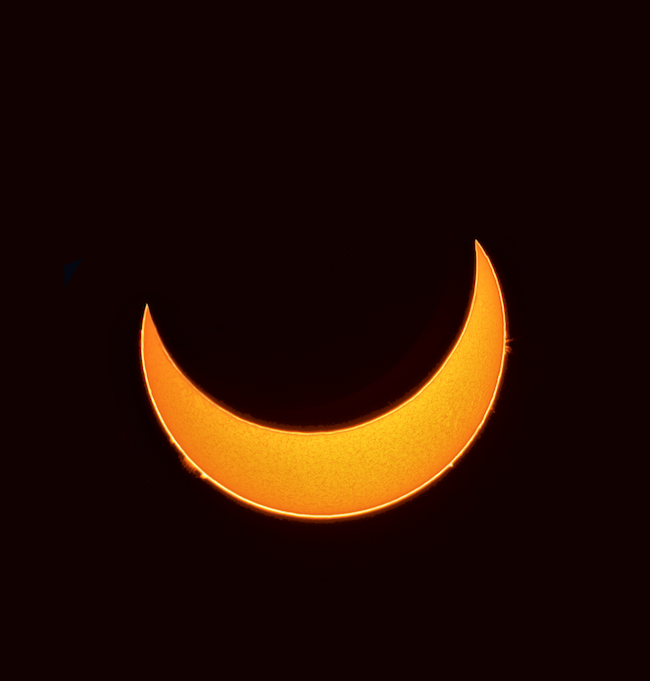
Partial solar eclipse
The partial solar eclipse of September 21, 2025, is visible in the South Pacific including New Zealand and parts of Antarctica. It’s the last eclipse of 2025.
When and where to watch: The September 21, 2025, partial solar eclipse is visible from the South Pacific including New Zealand and parts of Antarctica. The partial eclipse starts at sunrise at 17:29 UTC. The partial eclipse remains visible through 21:53 UTC when the shadow leaves Earth.
Maximum eclipse is at 19:41 UTC when 85% of the sun will be hidden behind the moon.
Note: This is a deep partial eclipse.
Countries where the eclipse is visible
The number one rule for solar eclipse observing is to make sure you protect your eyes by using an appropriate filter. Purchase eclipse viewers from the EarthSky Store.
Moon, constellation, Saros
This partial solar eclipse occurs 4.6 days before the moon reaches apogee, its farthest point from Earth.
During the eclipse, the sun is in front of the constellation Virgo.
The eclipse belongs to Saros 154 in the Saros catalog of eclipses that describes their periodicity. It is number 7 of 71 eclipses in the series. All eclipses in this series occur at the moon’s descending node. The moon moves northward with respect to the node with each succeeding eclipse in the series.
Read more: Partial solar eclipse of September 21, 2025
This ends the second eclipse season of 2025
By the way, the current eclipse season has two eclipses. That’s because this partial solar eclipse was preceded by a total lunar eclipse on September 7. They are part of the second eclipse season of 2025. An eclipse season is an approximate 35-day period during which it’s inevitable for at least 2 (and possibly 3) eclipses to take place.
The first eclipse season was in March. There was a total lunar eclipse on March 13-14, 2025, followed two weeks later by a partial solar eclipse on March 29, 2025.

Maps and data for September 21 partial solar eclipse
Orthographic map: partial solar eclipse of September 21, 2025. Detailed map of eclipse visibility.
Google map (scroll down): partial solar eclipse of September 21, 2025. Interactive map of the eclipse path.
Circumstances table: partial solar eclipse of September 21, 2025. Eclipse times for hundreds of cities.
Animated map of the moon’s shadow across the Earth.
Saros 154 table: data for all eclipses in the Saros series.
Additional tables and data for this event.
Timeanddate.com: September 21 partial solar eclipse.
In-the-sky.org: September 21 partial solar eclipse.
Animation of the September 21 partial eclipse.
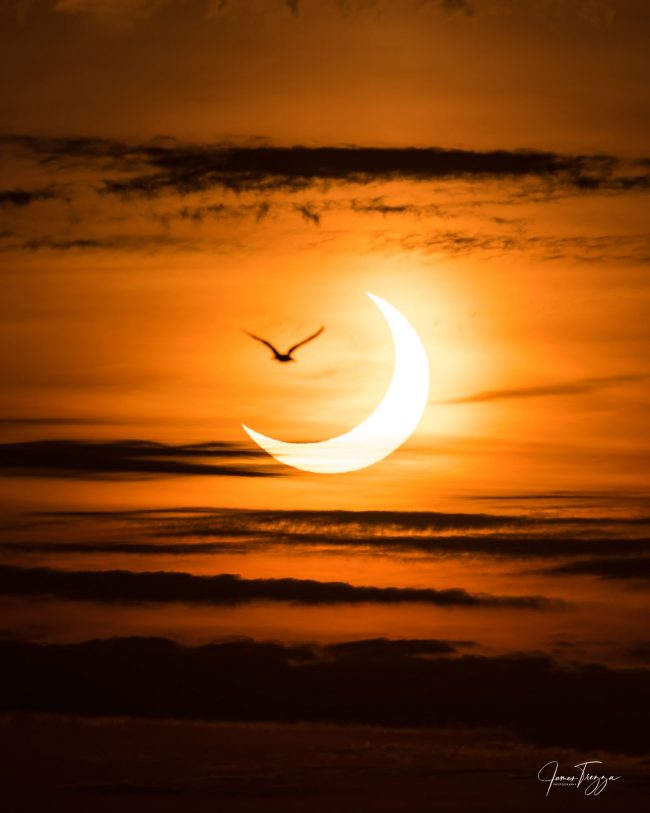
Here’s what a partial solar eclipse looks like
Video preview: The 2026 total solar eclipse with Michael Zeiler
Video preview: The 2027 total solar eclipse with Jamie Carter
Bottom line: A deep partial solar eclipse will occur on September 21, 2025. The path sweeps across the South Pacific including New Zealand and parts of Antarctica.
How to safely observe a partial solar eclipse
Planet-observing is easy: Top tips here
See photos of the April 8, 2024, total solar eclipse
Want events to observe? Visit EarthSky’s night sky guide
The post A deep partial solar eclipse September 21, 2025 first appeared on EarthSky.
from EarthSky https://ift.tt/W2JXM8b
Partial solar eclipse
The partial solar eclipse of September 21, 2025, is visible in the South Pacific including New Zealand and parts of Antarctica. It’s the last eclipse of 2025.
When and where to watch: The September 21, 2025, partial solar eclipse is visible from the South Pacific including New Zealand and parts of Antarctica. The partial eclipse starts at sunrise at 17:29 UTC. The partial eclipse remains visible through 21:53 UTC when the shadow leaves Earth.
Maximum eclipse is at 19:41 UTC when 85% of the sun will be hidden behind the moon.
Note: This is a deep partial eclipse.
Countries where the eclipse is visible
The number one rule for solar eclipse observing is to make sure you protect your eyes by using an appropriate filter. Purchase eclipse viewers from the EarthSky Store.
Moon, constellation, Saros
This partial solar eclipse occurs 4.6 days before the moon reaches apogee, its farthest point from Earth.
During the eclipse, the sun is in front of the constellation Virgo.
The eclipse belongs to Saros 154 in the Saros catalog of eclipses that describes their periodicity. It is number 7 of 71 eclipses in the series. All eclipses in this series occur at the moon’s descending node. The moon moves northward with respect to the node with each succeeding eclipse in the series.
Read more: Partial solar eclipse of September 21, 2025
This ends the second eclipse season of 2025
By the way, the current eclipse season has two eclipses. That’s because this partial solar eclipse was preceded by a total lunar eclipse on September 7. They are part of the second eclipse season of 2025. An eclipse season is an approximate 35-day period during which it’s inevitable for at least 2 (and possibly 3) eclipses to take place.
The first eclipse season was in March. There was a total lunar eclipse on March 13-14, 2025, followed two weeks later by a partial solar eclipse on March 29, 2025.
Maps and data for September 21 partial solar eclipse
Orthographic map: partial solar eclipse of September 21, 2025. Detailed map of eclipse visibility.
Google map (scroll down): partial solar eclipse of September 21, 2025. Interactive map of the eclipse path.
Circumstances table: partial solar eclipse of September 21, 2025. Eclipse times for hundreds of cities.
Animated map of the moon’s shadow across the Earth.
Saros 154 table: data for all eclipses in the Saros series.
Additional tables and data for this event.
Timeanddate.com: September 21 partial solar eclipse.
In-the-sky.org: September 21 partial solar eclipse.
Animation of the September 21 partial eclipse.
Here’s what a partial solar eclipse looks like
Video preview: The 2026 total solar eclipse with Michael Zeiler
Video preview: The 2027 total solar eclipse with Jamie Carter
Bottom line: A deep partial solar eclipse will occur on September 21, 2025. The path sweeps across the South Pacific including New Zealand and parts of Antarctica.
How to safely observe a partial solar eclipse
Planet-observing is easy: Top tips here
See photos of the April 8, 2024, total solar eclipse
Want events to observe? Visit EarthSky’s night sky guide
The post A deep partial solar eclipse September 21, 2025 first appeared on EarthSky.
from EarthSky https://ift.tt/W2JXM8b

Aucun commentaire:
Enregistrer un commentaire