
Fossilized teeth from early humans and a new Australopithecus species, discovered in Ethiopia, are providing new insights into human evolution. In this video, scientists from Arizona State University’s Institute for Human Origins discuss their latest findings.
Early humans coexisted with a newly discovered Australopithecus species
Australopithecus afarensis, which lived in East Africa from 3.9 to 2.9 million years ago, had both ape and human features. Scientists thought it was likely a human ancestor and part of the lineage that led to modern humans. Ancient humans (the Homo genus), on the other hand, first appeared in the fossil record, in the same region, about 2.8 million years ago. So scientists said on August 13, 2025, that they were surprised to discover fossil evidence of early humans and an Australopithecus species coexisting between 2.6 and 2.8 million years ago. And this Australopithecus appears to be an unknown species. The new findings show that human evolution is not a linear progression, but seems more tree-like with multiple branches.
Brian Villmoare, an anthropologist at the University of Nevada, Las Vegas, elaborated:
We used to think of human evolution as fairly linear, with a steady march from an ape-like ancestor to modern Homo sapiens. Instead, humans have branched out multiple times into different niches. Our pattern of evolution is not particularly unusual, and what has happened to humans has happened to every other tree of life.
This is what we should be finding in the human fossil record. Nature experimented with different ways to be a human as the climate became drier in East Africa, and earlier more ape-like species went extinct.
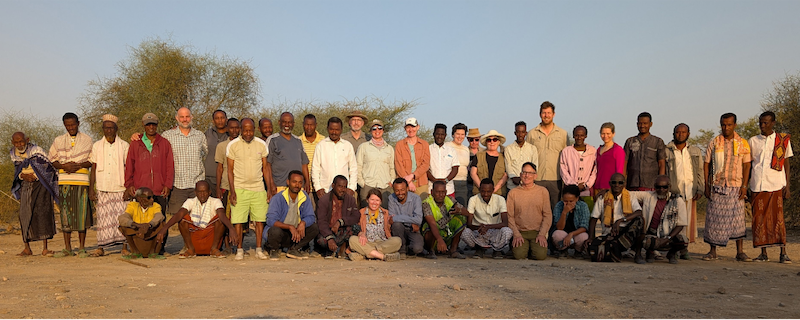
The researchers – more than 20 people from North America, Africa and Europe – published their discovery in the peer-reviewed journal Nature on August 13, 2025.
Unraveling the puzzle of human evolution
Homo sapiens is the scientific term for us modern humans. Homo is the genus (a biological classification above species) name. And sapiens is our species name.
Today, we are the only human — or Homo — species on Earth. But before us, there were other human species. And some coexisted with each other. For example, Neanderthals (Homo neanderthalensis), a human species that became extinct about 40,000 years ago, co-existed with modern humans.
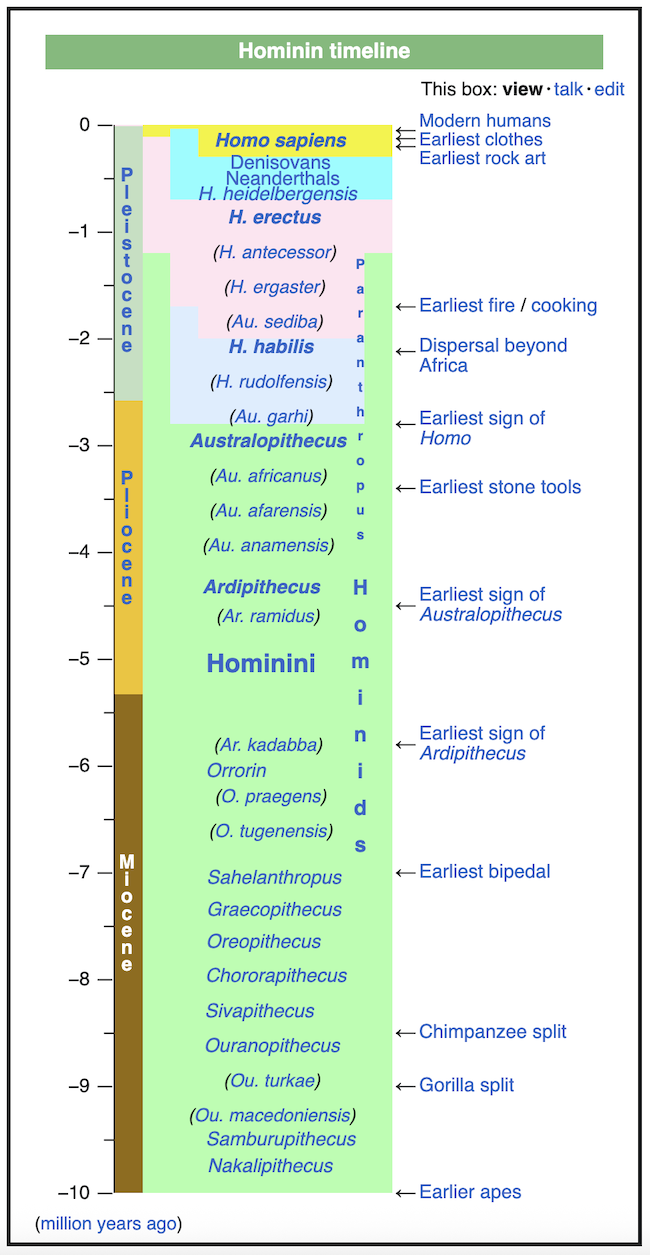
The timeline below, from Wikipedia, shows a general progression of human evolution. But the reality of it is far more complex, as these new findings demonstrate.
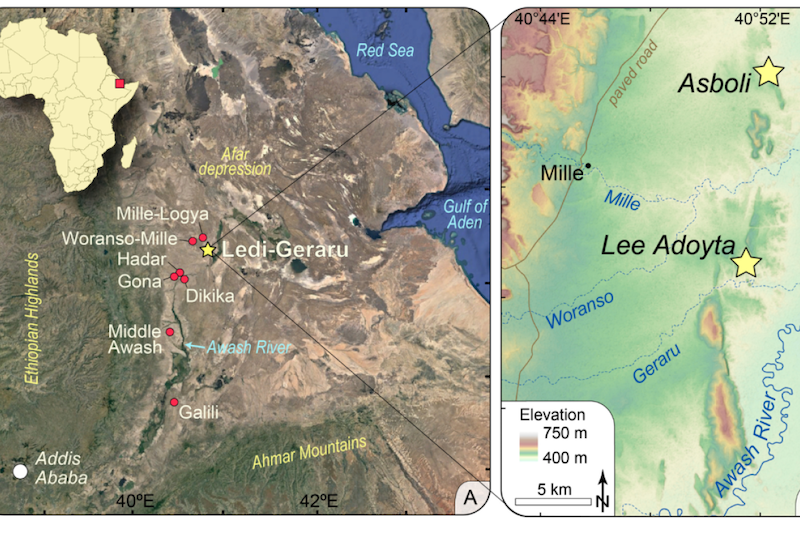
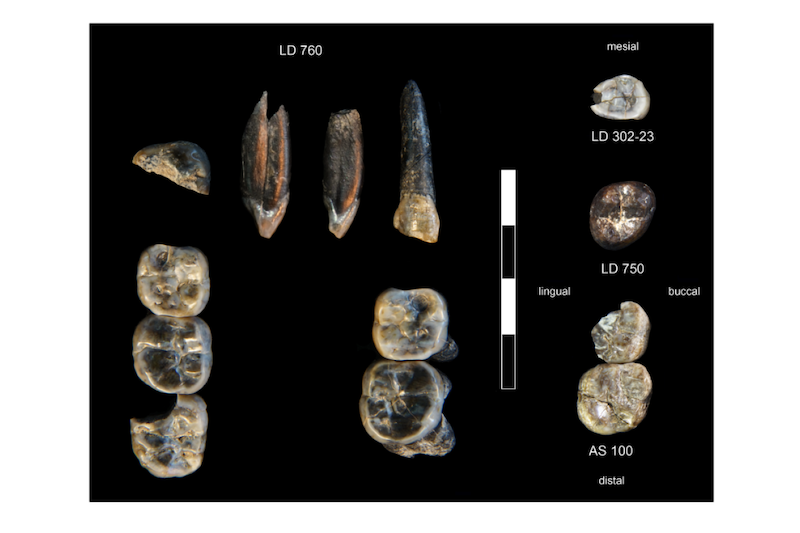
Homo and Australopithecus fossil teeth at the Ledi-Geraru site, Ethiopia
Of all our body parts, teeth are best preserved as fossils because of their hard enamel coating. Lucas Delezene, at the University of Arkansas, is an expert in hominin (modern humans and extinct members of their lineage) teeth. He said:
When we get down to the picky details, the teeth of Homo and Australopithecus look different. The differences are subtle, but once you see them, you can’t unsee them. They’re very consistent.
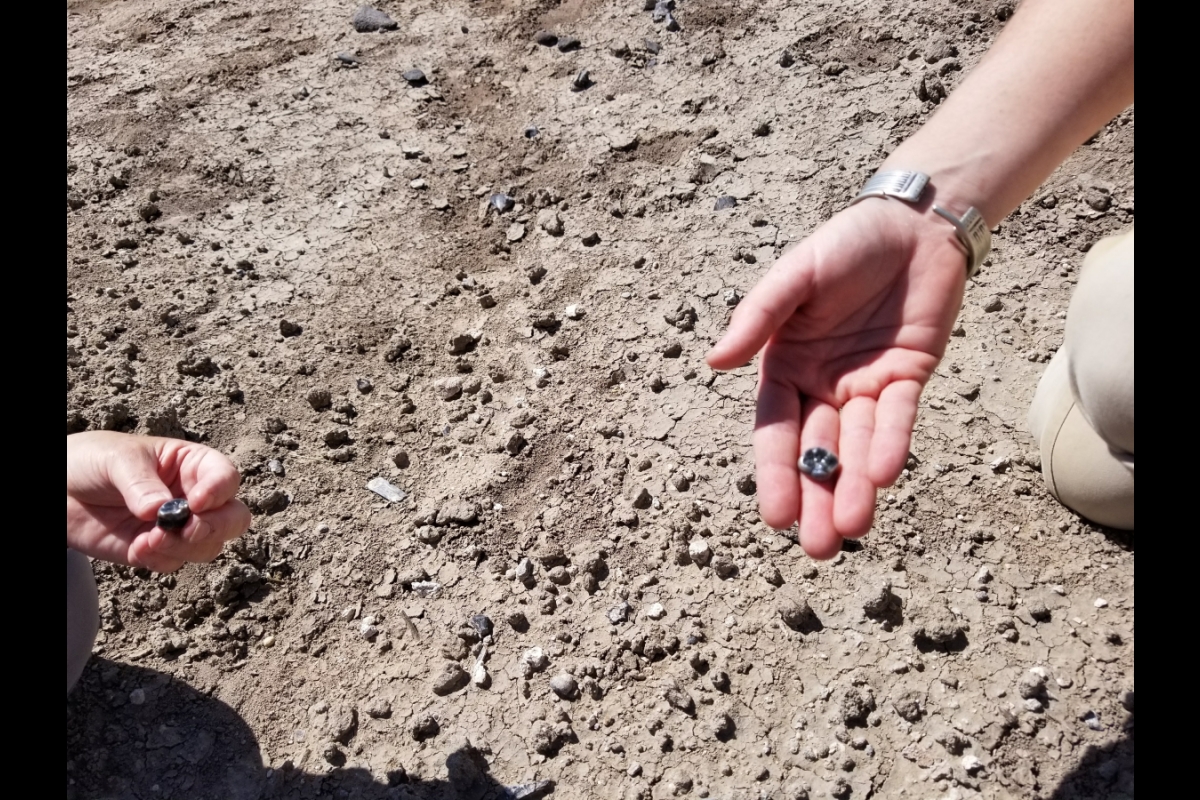
The field team found 13 teeth at the Ledi-Geraru site in Ethiopia.
Three of those teeth, dated at 2.78 and 2.59 million years old, bore distinct characteristics that indicated they came from early Homo.
But the scientists were surprised to also find teeth with traits that put them in the genus Australopithecus. And those teeth were dated at 2.63 million years old, much later than they expected for that genus. Furthermore, the teeth did not match known Australopithecus species, such as A. afarensis and A. garhi. Therefore, the researchers had discovered a totally new Australopithecus species.
This new evidence indicates that an early Homo species and a new Australopithecus species coexisted. It was an unexpected finding because scientists thought Australopithecus became extinct 2.9 million years ago.
Oldest early human fossils were also found at Ledi-Geraru
In addition, Ledi-Geraru is the same site where researchers discovered the oldest known Homo fossil, dating to 2.8 million years ago. Announced in 2015, scientists described that fossil as a jaw that had ape-like and human characteristics. Moreover, they suggested it was a transitional fossil between Australopithecus and early Homo.
Villmoare commented:
The new finds of Homo teeth from 2.6 to 2.8-million-year-old sediments – reported in this paper – confirms the antiquity of our lineage.
We know what the teeth and mandible of the earliest Homo look like, but that’s it. This emphasizes the critical importance of finding additional fossils to understand the differences between Australopithecus and Homo, and potentially how they were able to overlap in the fossil record at the same location.
Dating the fossils
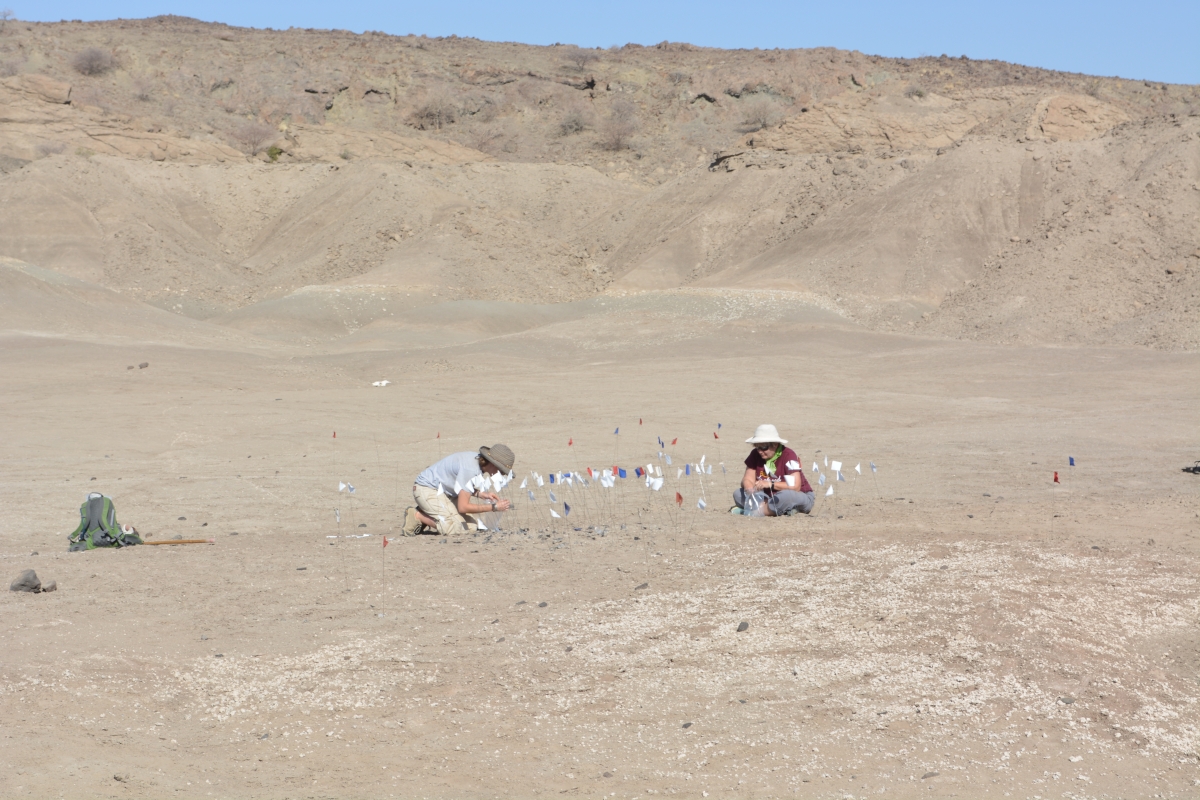
The Ledi-Geraru site lies in the Afar region in Ethiopia where there is a lot of volcanic activity. When these volcanoes erupted, they spewed ash containing feldspar crystals. And scientists can date those feldspar crystals using a technique called argon-argon dating.
Christopher Campisano, a geologist at Arizona State University, said:
We can date the eruptions that were happening on the landscape when [the ash was] deposited.
And we know that these fossils are interbed between those eruptions, so we can date units above and below the fossils. We are dating the volcanic ash of the eruptions that were happening while they were on the landscape.
Today, the Afar region is an arid environment with very sparse vegetation. However, between 2.6 to 2.8 million years ago, Afar was a dry grassland with a few trees. Rivers coursed through the land and shallow lakes expanded and shrunk over time. Scientists know this from studying fossils found in the area, by dating of the landscape, and from geological studies.
More questions about human evolution
The discovery of these fossils has raised a myriad of questions. For instance, did the early Homo and new Australopithecus species have a similar diet? Did they compete for resources? Did they interact with each other? And did they descend from a common ancestor?
The researchers have not yet named the new Australopithecus species, saying they need more fossils and studies first. Meanwhile, they are continuing to work in partnership with the Afar people who live near the site to find more fossils.
Bottom line: Scientists have discovered a new species of Australopithecus living contemporaneously with ancient humans, 2.6 to 2.8 million years ago in Ethiopia.
Source: New discoveries of Australopithecus and Homofrom Ledi-Geraru, Ethiopia
Via:
University of Arkansas
Arizona State University
University of Nevada, Las Vegas
Read more: A meeting of 2 ancient human species in fossil footprints
The post Human evolution complexity revealed in new African fossils first appeared on EarthSky.
from EarthSky https://ift.tt/INpUVS1
Fossilized teeth from early humans and a new Australopithecus species, discovered in Ethiopia, are providing new insights into human evolution. In this video, scientists from Arizona State University’s Institute for Human Origins discuss their latest findings.
Early humans coexisted with a newly discovered Australopithecus species
Australopithecus afarensis, which lived in East Africa from 3.9 to 2.9 million years ago, had both ape and human features. Scientists thought it was likely a human ancestor and part of the lineage that led to modern humans. Ancient humans (the Homo genus), on the other hand, first appeared in the fossil record, in the same region, about 2.8 million years ago. So scientists said on August 13, 2025, that they were surprised to discover fossil evidence of early humans and an Australopithecus species coexisting between 2.6 and 2.8 million years ago. And this Australopithecus appears to be an unknown species. The new findings show that human evolution is not a linear progression, but seems more tree-like with multiple branches.
Brian Villmoare, an anthropologist at the University of Nevada, Las Vegas, elaborated:
We used to think of human evolution as fairly linear, with a steady march from an ape-like ancestor to modern Homo sapiens. Instead, humans have branched out multiple times into different niches. Our pattern of evolution is not particularly unusual, and what has happened to humans has happened to every other tree of life.
This is what we should be finding in the human fossil record. Nature experimented with different ways to be a human as the climate became drier in East Africa, and earlier more ape-like species went extinct.
The researchers – more than 20 people from North America, Africa and Europe – published their discovery in the peer-reviewed journal Nature on August 13, 2025.
Unraveling the puzzle of human evolution
Homo sapiens is the scientific term for us modern humans. Homo is the genus (a biological classification above species) name. And sapiens is our species name.
Today, we are the only human — or Homo — species on Earth. But before us, there were other human species. And some coexisted with each other. For example, Neanderthals (Homo neanderthalensis), a human species that became extinct about 40,000 years ago, co-existed with modern humans.
The timeline below, from Wikipedia, shows a general progression of human evolution. But the reality of it is far more complex, as these new findings demonstrate.
Homo and Australopithecus fossil teeth at the Ledi-Geraru site, Ethiopia
Of all our body parts, teeth are best preserved as fossils because of their hard enamel coating. Lucas Delezene, at the University of Arkansas, is an expert in hominin (modern humans and extinct members of their lineage) teeth. He said:
When we get down to the picky details, the teeth of Homo and Australopithecus look different. The differences are subtle, but once you see them, you can’t unsee them. They’re very consistent.
The field team found 13 teeth at the Ledi-Geraru site in Ethiopia.
Three of those teeth, dated at 2.78 and 2.59 million years old, bore distinct characteristics that indicated they came from early Homo.
But the scientists were surprised to also find teeth with traits that put them in the genus Australopithecus. And those teeth were dated at 2.63 million years old, much later than they expected for that genus. Furthermore, the teeth did not match known Australopithecus species, such as A. afarensis and A. garhi. Therefore, the researchers had discovered a totally new Australopithecus species.
This new evidence indicates that an early Homo species and a new Australopithecus species coexisted. It was an unexpected finding because scientists thought Australopithecus became extinct 2.9 million years ago.
Oldest early human fossils were also found at Ledi-Geraru
In addition, Ledi-Geraru is the same site where researchers discovered the oldest known Homo fossil, dating to 2.8 million years ago. Announced in 2015, scientists described that fossil as a jaw that had ape-like and human characteristics. Moreover, they suggested it was a transitional fossil between Australopithecus and early Homo.
Villmoare commented:
The new finds of Homo teeth from 2.6 to 2.8-million-year-old sediments – reported in this paper – confirms the antiquity of our lineage.
We know what the teeth and mandible of the earliest Homo look like, but that’s it. This emphasizes the critical importance of finding additional fossils to understand the differences between Australopithecus and Homo, and potentially how they were able to overlap in the fossil record at the same location.
Dating the fossils
The Ledi-Geraru site lies in the Afar region in Ethiopia where there is a lot of volcanic activity. When these volcanoes erupted, they spewed ash containing feldspar crystals. And scientists can date those feldspar crystals using a technique called argon-argon dating.
Christopher Campisano, a geologist at Arizona State University, said:
We can date the eruptions that were happening on the landscape when [the ash was] deposited.
And we know that these fossils are interbed between those eruptions, so we can date units above and below the fossils. We are dating the volcanic ash of the eruptions that were happening while they were on the landscape.
Today, the Afar region is an arid environment with very sparse vegetation. However, between 2.6 to 2.8 million years ago, Afar was a dry grassland with a few trees. Rivers coursed through the land and shallow lakes expanded and shrunk over time. Scientists know this from studying fossils found in the area, by dating of the landscape, and from geological studies.
More questions about human evolution
The discovery of these fossils has raised a myriad of questions. For instance, did the early Homo and new Australopithecus species have a similar diet? Did they compete for resources? Did they interact with each other? And did they descend from a common ancestor?
The researchers have not yet named the new Australopithecus species, saying they need more fossils and studies first. Meanwhile, they are continuing to work in partnership with the Afar people who live near the site to find more fossils.
Bottom line: Scientists have discovered a new species of Australopithecus living contemporaneously with ancient humans, 2.6 to 2.8 million years ago in Ethiopia.
Source: New discoveries of Australopithecus and Homofrom Ledi-Geraru, Ethiopia
Via:
University of Arkansas
Arizona State University
University of Nevada, Las Vegas
Read more: A meeting of 2 ancient human species in fossil footprints
The post Human evolution complexity revealed in new African fossils first appeared on EarthSky.
from EarthSky https://ift.tt/INpUVS1

Aucun commentaire:
Enregistrer un commentaire