
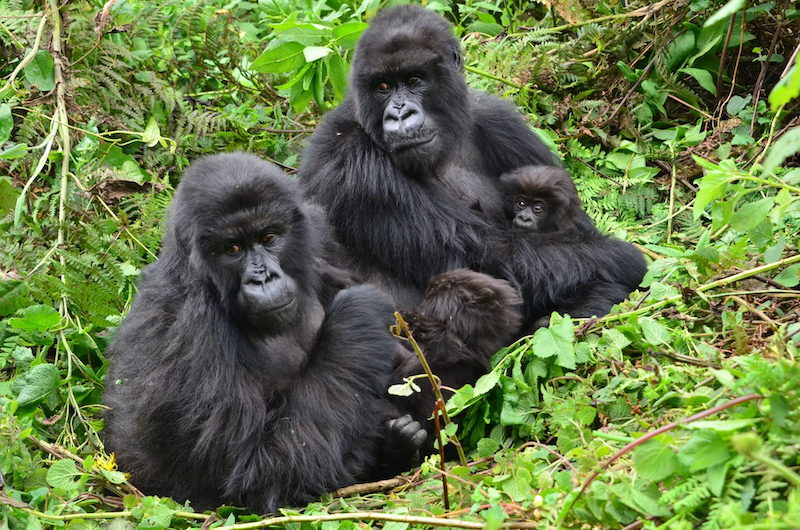
- Female mountain gorillas prefer joining groups with familiar females they lived with before.
- They avoid groups that include males they grew up with.
- Strong female social bonds influence group choice more than group size or composition.
What influences an animal to join a new social group?
In many animal societies, an individual often leaves its birth group to join another group. Scientists who study social animals have long wondered: How do they decide which group to join? On August 5, 2025, a new study revealed some answers for mountain gorillas. Researchers from the University of Zurich ran statistical analyses on 20 years of gorilla observations. Their results revealed female gorillas preferred to join groups with females they had lived with in the past. And they avoided groups that had males they had grown up with.
Co-author Robin Morrison of the University of Zurich said:
Going into a new group could feel pretty scary, with individuals usually entering at the bottom of the social hierarchy. A familiar female might help reduce this, providing a social ally.
It could also act like a recommendation from a friend – if a female they know has chosen to stay in this group, it could indicate positive things about the group as a whole or the dominant male leading that group.
The researchers published their findings in the peer-reviewed journal Proceedings of the Royal Society B on August 6, 2025.
New insights from two decades of gorilla observations
The movement of animals to different social groups is called dispersal. It’s a behavior that’s crucial for the overall health of a population. For instance, it avoids inbreeding within a group. It also increases genetic diversity, cultivates relationships between groups and, in some instances, spreads knowledge and culture.
For this study, the scientists analyzed observations of mountain gorillas in the Volcanoes National Park in Rwanda. Trained field teams gathered these observations between 2003 and 2023.
The scientists wanted to know: When a female moves to a new group, why did she pick that group?
The researchers decided to focus on females. That’s because males are harder to track; when they leave a group, they typically live a solitary life before creating their own social group. Females, on the other hand, transfer from one group to another or join a solitary male.
The scientists scrutinized 152 dispersals, made by 56 female mountain gorillas ranging in age from 6 to 43 years. Most moves to another group were undertaken alone, by adults and subadults over 6 years in age. The female gorillas, the researchers found, dispersed on average about 2.8 times to different groups during that 20-year period, with dispersions ranging from 1 to 11.
Female gorillas invest in relationships with other females
Female gorillas were generally not influenced by the size of a group or its demographics. They picked new groups based on the presence of females they had already lived with. Moreover, they were more strongly influenced to join a group if they had previously lived with those females for at least five years and seen them in the last two years.
Morrison added:
Investing in these relationships clearly matters. Spatial separation can be ephemeral with individuals being reunited in the future, easing the difficult process of starting over in a new social group.
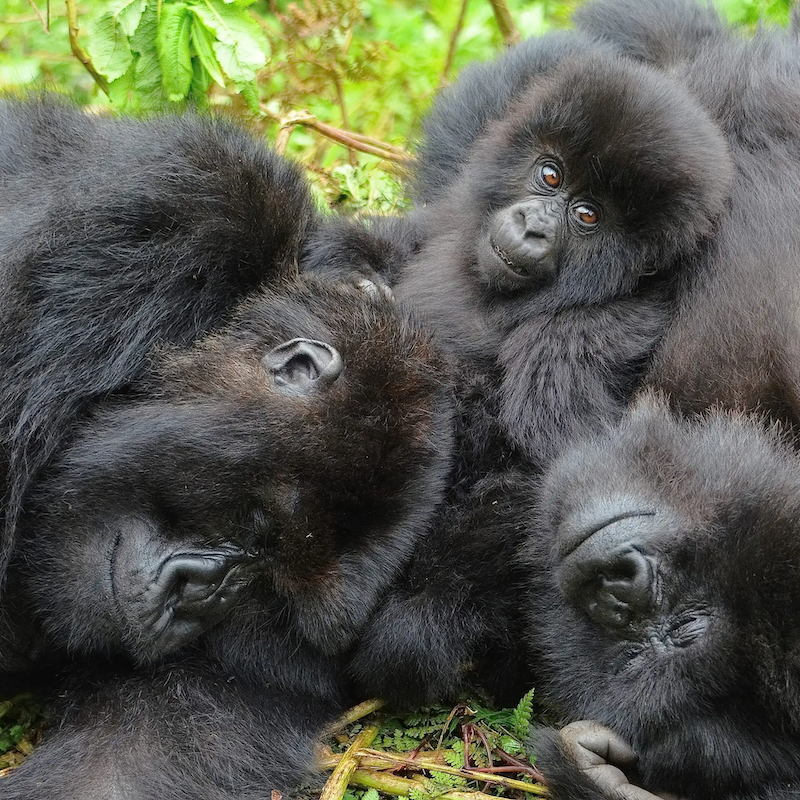
Female gorillas avoid groups with males they grew up with
In addition, females avoided going to groups that had males they grew up with.
The paper’s lead author, Victoire Martignac of the University of Zurich, said:
Because female mountain gorillas do not know with certainty who their fathers are, they might rely on a simple rule like ‘avoid any group with males I grew up with’ as the likelihood of them being related will be higher than with males they did not grow up with.
Because females can disperse multiple times, they will become familiar with many males from different groups. Yet, when choosing their next group, they only avoid males they grew up with. This really tells us that it’s not just who they know that matters but how they know them.
Deep social ties
This study shows how deep wide-ranging social ties affect the dispersal of female gorillas, allowing the formation of new relationships and sustaining current ones. And groups often interact and share overlapping ranges, indicating that relationships spread beyond group boundaries.
Martignac observed:
This mirrors a key aspect of human societies: the existence of strong ties between different social groups. As humans, we’re constantly moving across jobs, cities and social groups. We do it so effortlessly that we forget how unusual this flexibility actually is within the animal kingdom.
This is a reminder of the meaningfulness of social relationships kept across boundaries and how this extended network of relationships might have played a key role in the evolution of larger and more cooperative societies.
Continuing the legacy of Dian Fossey
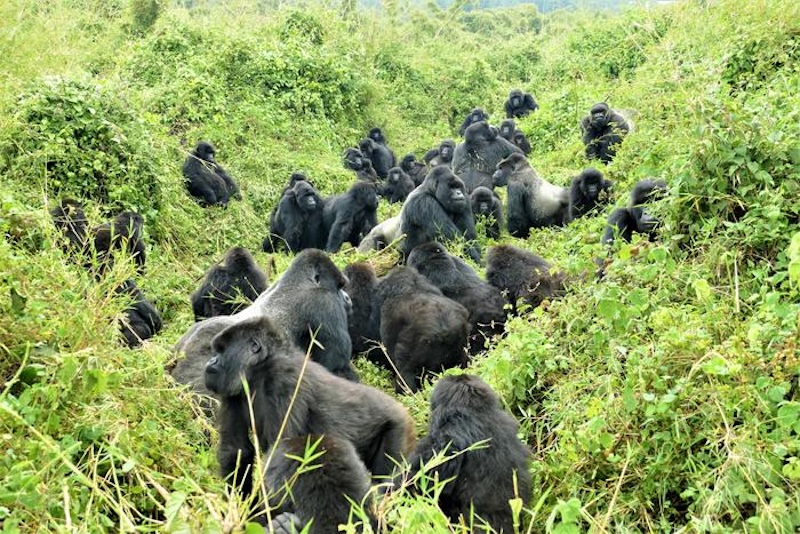
Since 1967, mountain gorillas (Gorilla beringei beringei) have been monitored at Volcanoes National Park in Rwanda by the Dian Fossey Gorilla Fund. Dian Fossey was a pioneering primatologist who did groundbreaking studies on gorillas and championed their conservation. Tragically, she was murdered in 1985, in her cabin in Rwanda.
Tara Stoinski, a paper co-author and CEO of the Dian Fossey Gorilla Fund, commented on the value of long-term studies:
Being able to study dispersal, to track not only where individuals are from but also where they go, and to construct their whole social history in such detail, is only possible because of decades of data collection. With just a few years and a few groups, all of these inter-group ties and extended networks would be invisible to us. This really highlights the value of long-term observations on multiple groups in better understanding the evolution of sociality.
Bottom line: Female gorillas prefer to join groups with females they had lived with in the past. They also avoided groups with males they grew up with.
Via:
University of Zurich
Dian Fossey Gorilla Fund
Eurekalert
Read more: Chimpanzees wear blades of grass in their ears and rears
The post Female gorillas favor moving to groups that have gal pals first appeared on EarthSky.
from EarthSky https://ift.tt/9yqvlzK
- Female mountain gorillas prefer joining groups with familiar females they lived with before.
- They avoid groups that include males they grew up with.
- Strong female social bonds influence group choice more than group size or composition.
What influences an animal to join a new social group?
In many animal societies, an individual often leaves its birth group to join another group. Scientists who study social animals have long wondered: How do they decide which group to join? On August 5, 2025, a new study revealed some answers for mountain gorillas. Researchers from the University of Zurich ran statistical analyses on 20 years of gorilla observations. Their results revealed female gorillas preferred to join groups with females they had lived with in the past. And they avoided groups that had males they had grown up with.
Co-author Robin Morrison of the University of Zurich said:
Going into a new group could feel pretty scary, with individuals usually entering at the bottom of the social hierarchy. A familiar female might help reduce this, providing a social ally.
It could also act like a recommendation from a friend – if a female they know has chosen to stay in this group, it could indicate positive things about the group as a whole or the dominant male leading that group.
The researchers published their findings in the peer-reviewed journal Proceedings of the Royal Society B on August 6, 2025.
New insights from two decades of gorilla observations
The movement of animals to different social groups is called dispersal. It’s a behavior that’s crucial for the overall health of a population. For instance, it avoids inbreeding within a group. It also increases genetic diversity, cultivates relationships between groups and, in some instances, spreads knowledge and culture.
For this study, the scientists analyzed observations of mountain gorillas in the Volcanoes National Park in Rwanda. Trained field teams gathered these observations between 2003 and 2023.
The scientists wanted to know: When a female moves to a new group, why did she pick that group?
The researchers decided to focus on females. That’s because males are harder to track; when they leave a group, they typically live a solitary life before creating their own social group. Females, on the other hand, transfer from one group to another or join a solitary male.
The scientists scrutinized 152 dispersals, made by 56 female mountain gorillas ranging in age from 6 to 43 years. Most moves to another group were undertaken alone, by adults and subadults over 6 years in age. The female gorillas, the researchers found, dispersed on average about 2.8 times to different groups during that 20-year period, with dispersions ranging from 1 to 11.
Female gorillas invest in relationships with other females
Female gorillas were generally not influenced by the size of a group or its demographics. They picked new groups based on the presence of females they had already lived with. Moreover, they were more strongly influenced to join a group if they had previously lived with those females for at least five years and seen them in the last two years.
Morrison added:
Investing in these relationships clearly matters. Spatial separation can be ephemeral with individuals being reunited in the future, easing the difficult process of starting over in a new social group.
Female gorillas avoid groups with males they grew up with
In addition, females avoided going to groups that had males they grew up with.
The paper’s lead author, Victoire Martignac of the University of Zurich, said:
Because female mountain gorillas do not know with certainty who their fathers are, they might rely on a simple rule like ‘avoid any group with males I grew up with’ as the likelihood of them being related will be higher than with males they did not grow up with.
Because females can disperse multiple times, they will become familiar with many males from different groups. Yet, when choosing their next group, they only avoid males they grew up with. This really tells us that it’s not just who they know that matters but how they know them.
Deep social ties
This study shows how deep wide-ranging social ties affect the dispersal of female gorillas, allowing the formation of new relationships and sustaining current ones. And groups often interact and share overlapping ranges, indicating that relationships spread beyond group boundaries.
Martignac observed:
This mirrors a key aspect of human societies: the existence of strong ties between different social groups. As humans, we’re constantly moving across jobs, cities and social groups. We do it so effortlessly that we forget how unusual this flexibility actually is within the animal kingdom.
This is a reminder of the meaningfulness of social relationships kept across boundaries and how this extended network of relationships might have played a key role in the evolution of larger and more cooperative societies.
Continuing the legacy of Dian Fossey
Since 1967, mountain gorillas (Gorilla beringei beringei) have been monitored at Volcanoes National Park in Rwanda by the Dian Fossey Gorilla Fund. Dian Fossey was a pioneering primatologist who did groundbreaking studies on gorillas and championed their conservation. Tragically, she was murdered in 1985, in her cabin in Rwanda.
Tara Stoinski, a paper co-author and CEO of the Dian Fossey Gorilla Fund, commented on the value of long-term studies:
Being able to study dispersal, to track not only where individuals are from but also where they go, and to construct their whole social history in such detail, is only possible because of decades of data collection. With just a few years and a few groups, all of these inter-group ties and extended networks would be invisible to us. This really highlights the value of long-term observations on multiple groups in better understanding the evolution of sociality.
Bottom line: Female gorillas prefer to join groups with females they had lived with in the past. They also avoided groups with males they grew up with.
Via:
University of Zurich
Dian Fossey Gorilla Fund
Eurekalert
Read more: Chimpanzees wear blades of grass in their ears and rears
The post Female gorillas favor moving to groups that have gal pals first appeared on EarthSky.
from EarthSky https://ift.tt/9yqvlzK

Aucun commentaire:
Enregistrer un commentaire