
People have frequently spotted whales and dolphins together in the ocean. But, are they actually playing together, or is it more of a one-sided relationship?
Do whales and dolphins play together?
While it’s common for people to see whales and dolphins interacting, scientists have done few studies on this behavior. When you see the animals together, you can’t help but wonder: Do both animals want to socialize, is one trying to avoid the other, or are they being aggressive toward each other? Scientists from Griffith University in Australia said on August 12, 2025, that they’ve analyzed interactions between 19 species of baleen whales and dolphins in 17 locations around the world. And, according to their study, one-quarter of these interactions are mutual. So what happens in the rest of the cases? Which species are the most social and playful?
The scientists published their peer-reviewed study in the journal Discover Animals on August 12, 2025.
Dolphins initiate the interactions
In the scientific community, it is widely acknowledged that dolphins are sociable, playful and curious, and that baleen whales are not only friendly but also have excellent communication skills. Thus, dolphins are usually the ones who initiate interactions with the peaceful whales. But sometimes they can be a bit too playful. According to the study’s lead author, Olaf Meynecke of Griffith University:
We were particularly interested in documenting the whales’ reactions and responses toward the dolphins, as commonly dolphins are described to harass and annoy the whales.
The study analyzed 199 separate and unrelated interactions between whales and dolphins. Photos and videos from the public, tour guides and members of the scientific community made the analysis possible. Contrary to initial assumptions, it turns out that in most cases, the whales did not avoid the dolphins. Meynecke notes:
The vast majority of the observed interactions did not show avoidance behavior.
In particular, humpback whales seem to be the most sociable. The evidence that whales don’t reject interactions with dolphins lies in their body language. According to Meynecke:
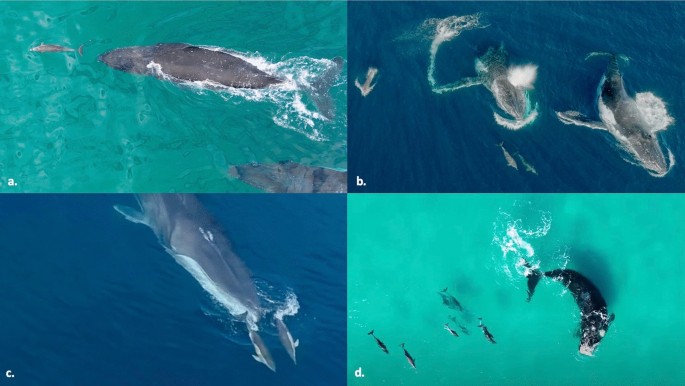
In particular, for humpback whales, we found that for one-third of the events the behavioral responses toward the dolphins appear positive. The humpback whales were rolling from side to side, undertaking belly presentation and other behaviors that are associated with courtship or friendly socializing.
Body language says it all
Whales communicate in many ways. Humpback whales express themselves through clicks, songs, fin slaps and breaching. And each of these sounds and movements means something. For example, when they roll from side to side and expose sensitive areas such as their bellies, this indicates they feel comfortable among other members of their species or other animals. However, a slap of the tail against the water is a warning.
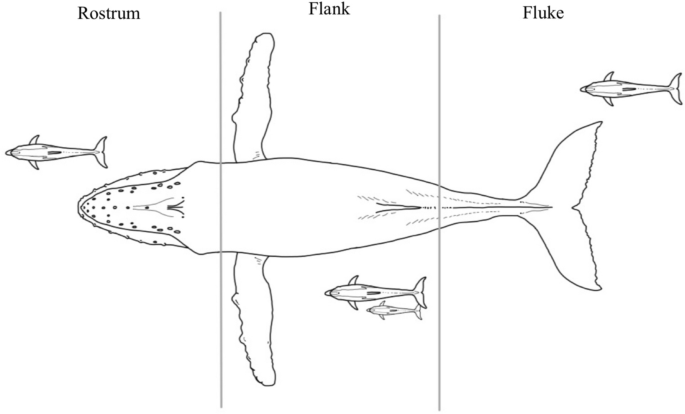
Of course, there are many details to take into account, which is why the scientists conducted a thorough analysis. During each interaction, the researchers recorded the whale and dolphin species, the date and time of the event, the location, the number of animals involved, their ages and the relative position of the dolphins in relation to key parts of the whale’s body (head, flank and tail fluke).
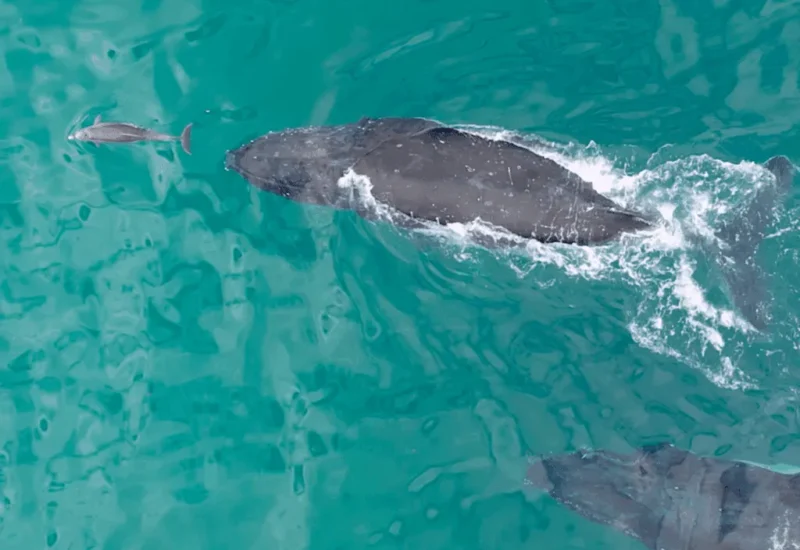
The most common interaction between whales and dolphins consisted of dolphins swimming and jumping near the whale’s head. It’s similar to how dolphins behave around boats (called bow riding). This could suggest a form of one-sided play on the part of the dolphins. However, Meynecke said:
Whales also strategically moved slowly in the direction of the dolphins with their head and rostrum.
Which species interact the most?
In total, scientists recorded dolphin interactions with 425 baleen whales from six different species. Humpback whales were the most frequent, making up 68% of encounters, followed by gray whales at 16% and fin whales at 7%.
As for the dolphins, scientists estimated around 1,570 individuals. Bottlenose dolphins were the most numerous (51%), followed by common dolphins (17%) and Pacific white-sided dolphins (15%).
Most of the interactions involved adult specimens, although they also documented calves. They saw whale calves in 44 instances and dolphin calves in 53. In 21 events, calves of both species were present at the same time.
Each whale species showed different responses to the presence of dolphins. Humpback whales, for example, moved their pectoral fins toward them 172 times. Gray whales frequently rolled over (56 times), while southern right whales performed fin slaps in five out of 10 recorded encounters.
Physically aggressive behaviors, such as tail slaps (observed 18 times) or head butts (not observed), were rare among humpback whales.
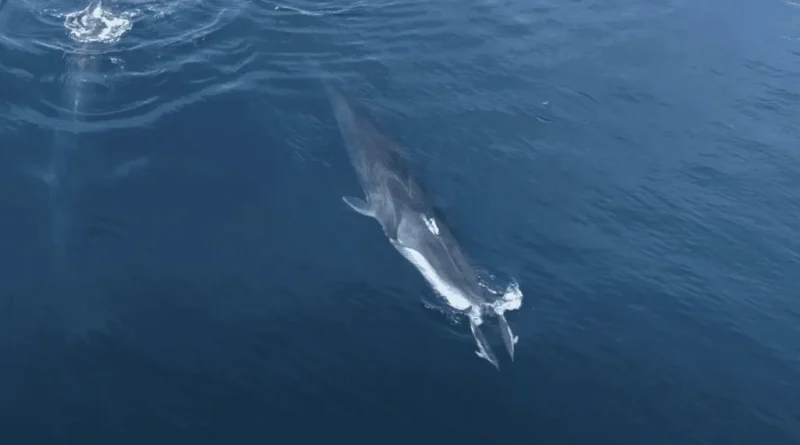
Additionally, in two recordings obtained from suction-cup cameras attached to humpback whales, researchers observed bottlenose dolphins following the whales both at the surface and deep underwater, staying close and possibly engaging in playful or social interaction.
The importance of behavior studies
Dolphins are highly social, playful and curious animals. They have a natural tendency to explore their environment and interact with other marine species, including whales. Whales, especially the larger ones like humpbacks or blues, are typically more passive or slower compared to dolphins. Their behavior is generally more reserved, and they focus their energy on activities such as migration or feeding. Meynecke said:
While social play is cooperative and reciprocal, there is also one-sided play or interaction, with only one participant perceiving the interaction as playful, as seen in cases of teasing or harassment by dolphins during feeding events.
And, just like dolphins, humans are curious, too. We want to know more about whales and dolphins, swim among them, photograph them…. In simple terms, we also want to interact. Meynecke added:
Behavioral studies of marine mammals such as these provide insight into their complex social structures, play a crucial role in enhancing our understanding of marine ecosystems and the interactions among marine species.
Co-author Olivia Crawley added:
When you’re out on the water, you often see whales and dolphins interacting, and as a scientist, you can’t help but wonder why.
I hope that this study can serve as a foundation for future studies.
Bottom line: Scientists observed whales and dolphins together to study their interactions. In most cases, whales do not avoid dolphins and their body language shows they sometimes socialize with them.
Source: Assessing social behaviour between baleen whales (Mysticeti) and dolphins (Delphinidae)
Humpback whales communicate with us using “smoke” rings
The post Do whales and dolphins play together? Images and video here first appeared on EarthSky.
from EarthSky https://ift.tt/Zv7jfDL
People have frequently spotted whales and dolphins together in the ocean. But, are they actually playing together, or is it more of a one-sided relationship?
Do whales and dolphins play together?
While it’s common for people to see whales and dolphins interacting, scientists have done few studies on this behavior. When you see the animals together, you can’t help but wonder: Do both animals want to socialize, is one trying to avoid the other, or are they being aggressive toward each other? Scientists from Griffith University in Australia said on August 12, 2025, that they’ve analyzed interactions between 19 species of baleen whales and dolphins in 17 locations around the world. And, according to their study, one-quarter of these interactions are mutual. So what happens in the rest of the cases? Which species are the most social and playful?
The scientists published their peer-reviewed study in the journal Discover Animals on August 12, 2025.
Dolphins initiate the interactions
In the scientific community, it is widely acknowledged that dolphins are sociable, playful and curious, and that baleen whales are not only friendly but also have excellent communication skills. Thus, dolphins are usually the ones who initiate interactions with the peaceful whales. But sometimes they can be a bit too playful. According to the study’s lead author, Olaf Meynecke of Griffith University:
We were particularly interested in documenting the whales’ reactions and responses toward the dolphins, as commonly dolphins are described to harass and annoy the whales.
The study analyzed 199 separate and unrelated interactions between whales and dolphins. Photos and videos from the public, tour guides and members of the scientific community made the analysis possible. Contrary to initial assumptions, it turns out that in most cases, the whales did not avoid the dolphins. Meynecke notes:
The vast majority of the observed interactions did not show avoidance behavior.
In particular, humpback whales seem to be the most sociable. The evidence that whales don’t reject interactions with dolphins lies in their body language. According to Meynecke:
In particular, for humpback whales, we found that for one-third of the events the behavioral responses toward the dolphins appear positive. The humpback whales were rolling from side to side, undertaking belly presentation and other behaviors that are associated with courtship or friendly socializing.
Body language says it all
Whales communicate in many ways. Humpback whales express themselves through clicks, songs, fin slaps and breaching. And each of these sounds and movements means something. For example, when they roll from side to side and expose sensitive areas such as their bellies, this indicates they feel comfortable among other members of their species or other animals. However, a slap of the tail against the water is a warning.
Of course, there are many details to take into account, which is why the scientists conducted a thorough analysis. During each interaction, the researchers recorded the whale and dolphin species, the date and time of the event, the location, the number of animals involved, their ages and the relative position of the dolphins in relation to key parts of the whale’s body (head, flank and tail fluke).
The most common interaction between whales and dolphins consisted of dolphins swimming and jumping near the whale’s head. It’s similar to how dolphins behave around boats (called bow riding). This could suggest a form of one-sided play on the part of the dolphins. However, Meynecke said:
Whales also strategically moved slowly in the direction of the dolphins with their head and rostrum.
Which species interact the most?
In total, scientists recorded dolphin interactions with 425 baleen whales from six different species. Humpback whales were the most frequent, making up 68% of encounters, followed by gray whales at 16% and fin whales at 7%.
As for the dolphins, scientists estimated around 1,570 individuals. Bottlenose dolphins were the most numerous (51%), followed by common dolphins (17%) and Pacific white-sided dolphins (15%).
Most of the interactions involved adult specimens, although they also documented calves. They saw whale calves in 44 instances and dolphin calves in 53. In 21 events, calves of both species were present at the same time.
Each whale species showed different responses to the presence of dolphins. Humpback whales, for example, moved their pectoral fins toward them 172 times. Gray whales frequently rolled over (56 times), while southern right whales performed fin slaps in five out of 10 recorded encounters.
Physically aggressive behaviors, such as tail slaps (observed 18 times) or head butts (not observed), were rare among humpback whales.
Additionally, in two recordings obtained from suction-cup cameras attached to humpback whales, researchers observed bottlenose dolphins following the whales both at the surface and deep underwater, staying close and possibly engaging in playful or social interaction.
The importance of behavior studies
Dolphins are highly social, playful and curious animals. They have a natural tendency to explore their environment and interact with other marine species, including whales. Whales, especially the larger ones like humpbacks or blues, are typically more passive or slower compared to dolphins. Their behavior is generally more reserved, and they focus their energy on activities such as migration or feeding. Meynecke said:
While social play is cooperative and reciprocal, there is also one-sided play or interaction, with only one participant perceiving the interaction as playful, as seen in cases of teasing or harassment by dolphins during feeding events.
And, just like dolphins, humans are curious, too. We want to know more about whales and dolphins, swim among them, photograph them…. In simple terms, we also want to interact. Meynecke added:
Behavioral studies of marine mammals such as these provide insight into their complex social structures, play a crucial role in enhancing our understanding of marine ecosystems and the interactions among marine species.
Co-author Olivia Crawley added:
When you’re out on the water, you often see whales and dolphins interacting, and as a scientist, you can’t help but wonder why.
I hope that this study can serve as a foundation for future studies.
Bottom line: Scientists observed whales and dolphins together to study their interactions. In most cases, whales do not avoid dolphins and their body language shows they sometimes socialize with them.
Source: Assessing social behaviour between baleen whales (Mysticeti) and dolphins (Delphinidae)
Humpback whales communicate with us using “smoke” rings
The post Do whales and dolphins play together? Images and video here first appeared on EarthSky.
from EarthSky https://ift.tt/Zv7jfDL

Aucun commentaire:
Enregistrer un commentaire