What’s your personal solstice? Images and stories from our community here
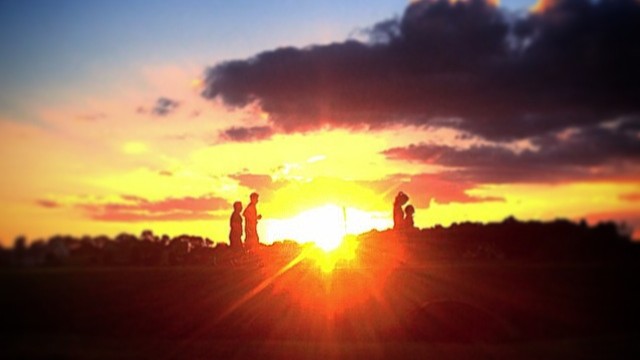
This June solstice happens at 2:42 UTC on June 21 (9:42 p.m. CDT on June 20). At the June solstice, the sun reaches its northernmost point in our sky, and we in the Northern Hemisphere have the longest day. We’re celebrating on YouTube. The video drops at 12:15 p.m. CDT (17:15 UTC). Join us in the player above or on YouTube.
The solstice is a whole-Earth event
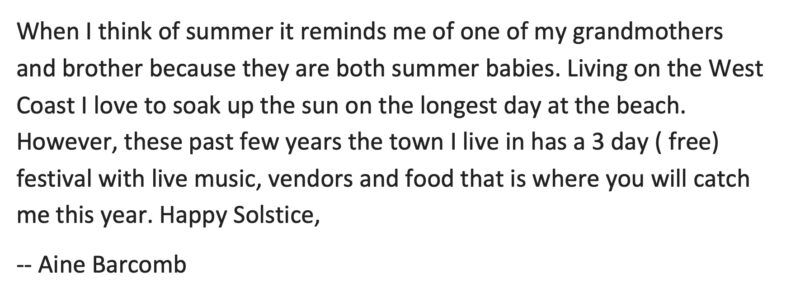
Image via Kelly Kizer Whitt.David Enders gets together with his neighbors.Aine Barcomb is going to a festival.
Solstice composites from our community
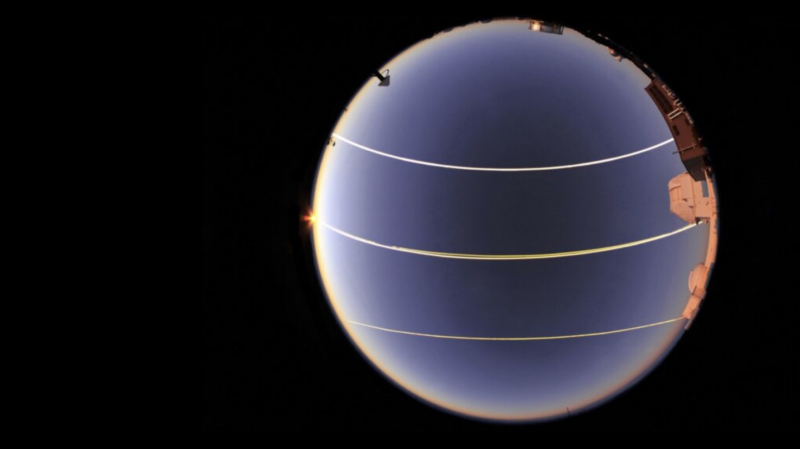
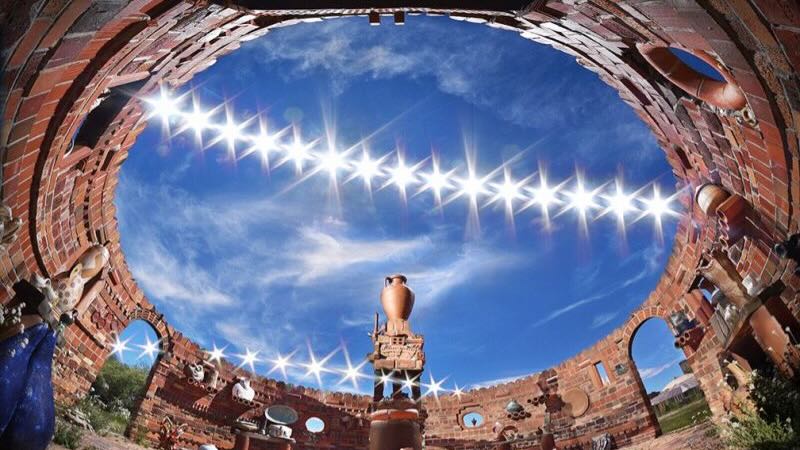
Rob Ratkowski took this all-sky view from Haleakala Observatory in Hawaii in 2023. It shows the path of the sun across the sky at the solstices (top and bottom) and at the equinoxes (center). Thanks, Rob!John Ashley was in Helena, Montana, when he created this composite image of 2 days of solstice suns in 2018. The uppermost line of suns is from that year’s June solstice. The lower line of suns is from that year’s December solstice. John wrote: “The sun’s path during summer solstice arches high across the sky (upper), but at winter solstice its path barely clears the brick walls of the Potter’s Shrine, a sculptural landmark on the grounds of the Archie Bray Foundation in Helena, Montana. The interval composite photo was created over 2 days – months apart – by placing a fisheye lens on the ground and aiming it at the southern sky.” Thank you, John!This series of images from EarthSky community member Rupesh Sangoi shows the sun’s movement along the horizon between a June and December solstice. Rupesh wrote: “Did this for over a year, at sunrise.” Glorious composite, Rupesh! Thank you.
Ancient cultures celebrated it
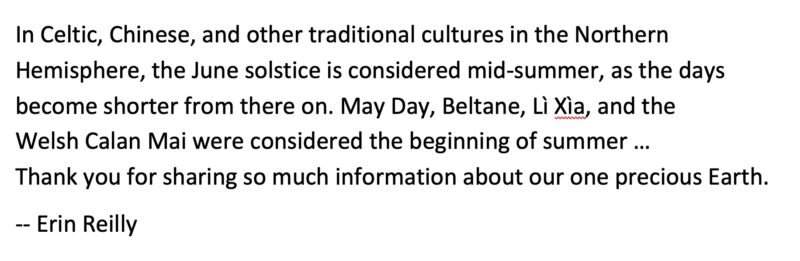
For us in the modern world, the solstice is a time to recall the reverence and understanding that early people had for the sky. At Stonehenge, some 5,000 years ago people placed huge stones in a circle on a broad plain in what’s now England and aligned them with the June solstice sunrise.Mara Owens tells of Baltic celebrations.Erin Reilly talks about traditions.
A time to celebrate the passing of the seasons
Gary Detrich meets up with a friend.Hal Sherrill is looking toward a change for the better.View at EarthSky Community Photos. | Sheryl R Garrison was in Waterton Lakes National Park in Alberta, Canada, when she captured this bumble bee. Okay, it’s not the solstice exactly … but it just said summer to us! Sheryl wrote, “I followed this busy pollinator as he journeyed through a forest of native Hedysarum sulphurescans. He might be the cutest Bumble I’ve ever photographed!” She also mentioned that June 16-22nd marks Pollinator Week 2025. And she said, “Our native bees and native plants need all the support we can give them!” Thank you, Sheryl!
Northernmost sun
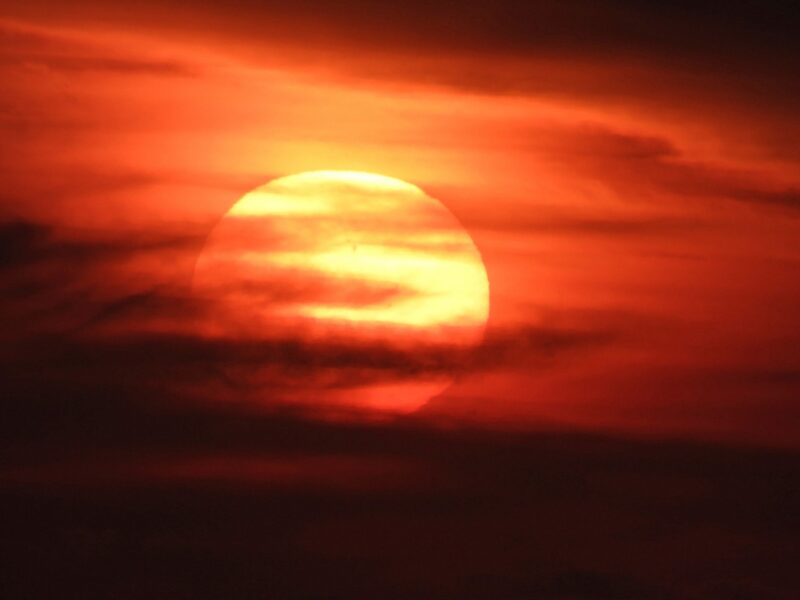
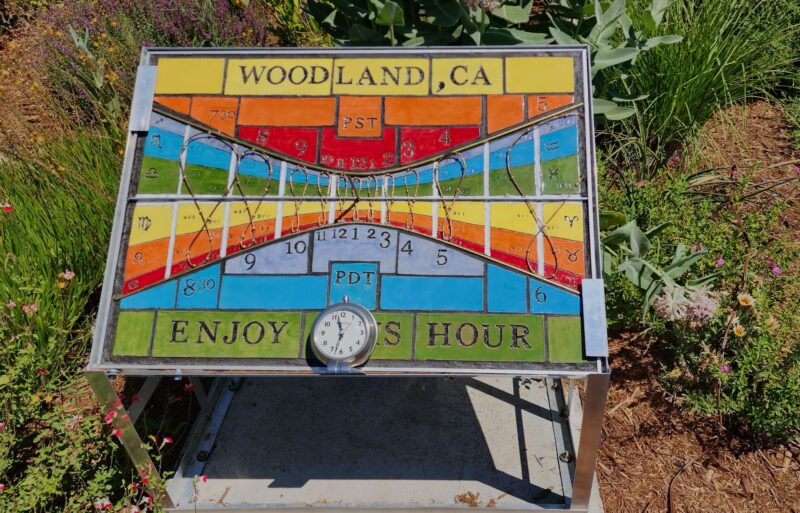

View at EarthSky Community Photos. | Cecille Kennedy in Oregon took this photo of the sun on June 15, 2025, and wrote: “The long wispy clouds are passing through the setting sun. In the image the clouds look like they’re moving with the sun to the north. A sunspot is visible on the middle upper part just below the cloud. In 5 days we will experience the longest day of the year in the Northern Hemisphere. In 5 days on the June solstice, anywhere on Earth the sun will rise and set farthest north on the horizon.” Thank you, Cecille!View at EarthSky Community Photos. | Rick Williams in Woodland, California, captured this image on June 21, 2023. Rick wrote: “This photo was taken on the solstice, June 21, 2023. A polar sundial is tilted at an angle equal to the dial’s latitude, making it parallel to the earth’s axis and perpendicular to the equatorial plane. On the June solstice, the shadow tip of the gnomon will track along the lower brass hyperbola, which marks the +23.44 degree declination line, the highest arc of the sun for the year. On the December solstice, it will track the upper brass hyperbola, the lowest arc of the year, -23.44 degrees. A polar sundial demonstrates the beautiful symmetry and cycle of our solar system. Photos, text, and 40-second time-lapse videos of the entire day’s shadow course can be found at woodlandpolarsundial.com. Enjoy this hour!” Thank you, Rick!View at EarthSky Community Photos. | Rick Williams took this photo from Montrose Harbor Breakwater in Chicago on June 21, 2022, and wrote: “At sunrise the sun was very close to its most northerly position. The atmosphere causes refraction of light through a denser medium, causing the sun to appear higher. When the upper limb of the sun touches the horizon, the center of the sun is still -50 arcminutes = -.833 degrees below the horizon. 34 arcminutes is due to refraction and 16 arcminutes is the semidiameter of the sun. So, the effect of refraction is greater than the diameter of the sun. At sunset, as the lower edge of the setting sun touches the horizon, if atmosphere were to suddenly disappear, the sun would disappear! Shorter wavelengths of light are scattered more by the atmosphere than longer, so the longer red wavelengths predominate on the horizon.” Thank you, Rick!Earth’s seasons aren’t caused by our distance from the sun. In fact, Earth’s farthest distance from the sun always happens in early July, when it’s summer in the Northern Hemisphere. Earth’s 23 1/2 degree tilt on its axis is what causes the seasons.
Galloping horses
View at EarthSky Community Photos. | Andrea van de Loo caught these amazing California coast waves on a solstice morning at dawn. Andrea wrote: “Seven women of our writing group decided to gather at sunrise. We were standing on the cliff near Davenport. When the sun rose, it illuminated the spray of the incoming surf. One of us knew the phenomenon was referred to as ‘galloping horses.’ It was magical.” Thank you, Andrea.
Lag of the seasons
If the June solstice brings the longest day, why do we experience the hottest weather in late July and August? This effect is called the lag of the seasons. This week, across the entire Northern Hemisphere, ice and snow are still melting. They’ve been melting since spring began. Sunlight is striking the Northern Hemisphere most directly this week. But it’ll be another month before the sun melts the ice – and warms the oceans – to give us the most sweltering summer heat.
Bottom line: The solstice is a whole-Earth event. Enjoy these June solstice stories and images from the EarthSky community. And happy solstice!
This June solstice happens at 2:42 UTC on June 21 (9:42 p.m. CDT on June 20). At the June solstice, the sun reaches its northernmost point in our sky, and we in the Northern Hemisphere have the longest day. We’re celebrating on YouTube. The video drops at 12:15 p.m. CDT (17:15 UTC). Join us in the player above or on YouTube.
The solstice is a whole-Earth event
Image via Kelly Kizer Whitt.David Enders gets together with his neighbors.Aine Barcomb is going to a festival.
Solstice composites from our community
Rob Ratkowski took this all-sky view from Haleakala Observatory in Hawaii in 2023. It shows the path of the sun across the sky at the solstices (top and bottom) and at the equinoxes (center). Thanks, Rob!John Ashley was in Helena, Montana, when he created this composite image of 2 days of solstice suns in 2018. The uppermost line of suns is from that year’s June solstice. The lower line of suns is from that year’s December solstice. John wrote: “The sun’s path during summer solstice arches high across the sky (upper), but at winter solstice its path barely clears the brick walls of the Potter’s Shrine, a sculptural landmark on the grounds of the Archie Bray Foundation in Helena, Montana. The interval composite photo was created over 2 days – months apart – by placing a fisheye lens on the ground and aiming it at the southern sky.” Thank you, John!This series of images from EarthSky community member Rupesh Sangoi shows the sun’s movement along the horizon between a June and December solstice. Rupesh wrote: “Did this for over a year, at sunrise.” Glorious composite, Rupesh! Thank you.
Ancient cultures celebrated it
For us in the modern world, the solstice is a time to recall the reverence and understanding that early people had for the sky. At Stonehenge, some 5,000 years ago people placed huge stones in a circle on a broad plain in what’s now England and aligned them with the June solstice sunrise.Mara Owens tells of Baltic celebrations.Erin Reilly talks about traditions.
A time to celebrate the passing of the seasons
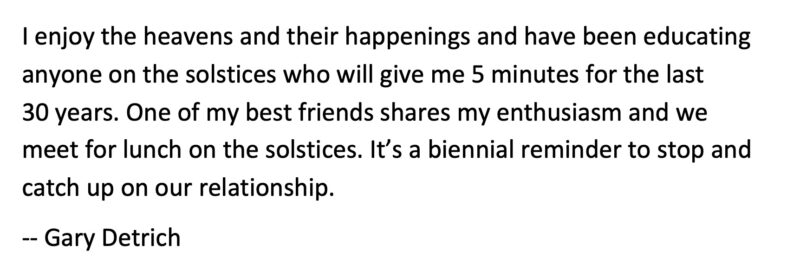
Gary Detrich meets up with a friend.Hal Sherrill is looking toward a change for the better.View at EarthSky Community Photos. | Sheryl R Garrison was in Waterton Lakes National Park in Alberta, Canada, when she captured this bumble bee. Okay, it’s not the solstice exactly … but it just said summer to us! Sheryl wrote, “I followed this busy pollinator as he journeyed through a forest of native Hedysarum sulphurescans. He might be the cutest Bumble I’ve ever photographed!” She also mentioned that June 16-22nd marks Pollinator Week 2025. And she said, “Our native bees and native plants need all the support we can give them!” Thank you, Sheryl!
Northernmost sun
View at EarthSky Community Photos. | Cecille Kennedy in Oregon took this photo of the sun on June 15, 2025, and wrote: “The long wispy clouds are passing through the setting sun. In the image the clouds look like they’re moving with the sun to the north. A sunspot is visible on the middle upper part just below the cloud. In 5 days we will experience the longest day of the year in the Northern Hemisphere. In 5 days on the June solstice, anywhere on Earth the sun will rise and set farthest north on the horizon.” Thank you, Cecille!View at EarthSky Community Photos. | Rick Williams in Woodland, California, captured this image on June 21, 2023. Rick wrote: “This photo was taken on the solstice, June 21, 2023. A polar sundial is tilted at an angle equal to the dial’s latitude, making it parallel to the earth’s axis and perpendicular to the equatorial plane. On the June solstice, the shadow tip of the gnomon will track along the lower brass hyperbola, which marks the +23.44 degree declination line, the highest arc of the sun for the year. On the December solstice, it will track the upper brass hyperbola, the lowest arc of the year, -23.44 degrees. A polar sundial demonstrates the beautiful symmetry and cycle of our solar system. Photos, text, and 40-second time-lapse videos of the entire day’s shadow course can be found at woodlandpolarsundial.com. Enjoy this hour!” Thank you, Rick!View at EarthSky Community Photos. | Rick Williams took this photo from Montrose Harbor Breakwater in Chicago on June 21, 2022, and wrote: “At sunrise the sun was very close to its most northerly position. The atmosphere causes refraction of light through a denser medium, causing the sun to appear higher. When the upper limb of the sun touches the horizon, the center of the sun is still -50 arcminutes = -.833 degrees below the horizon. 34 arcminutes is due to refraction and 16 arcminutes is the semidiameter of the sun. So, the effect of refraction is greater than the diameter of the sun. At sunset, as the lower edge of the setting sun touches the horizon, if atmosphere were to suddenly disappear, the sun would disappear! Shorter wavelengths of light are scattered more by the atmosphere than longer, so the longer red wavelengths predominate on the horizon.” Thank you, Rick!Earth’s seasons aren’t caused by our distance from the sun. In fact, Earth’s farthest distance from the sun always happens in early July, when it’s summer in the Northern Hemisphere. Earth’s 23 1/2 degree tilt on its axis is what causes the seasons.
Galloping horses
View at EarthSky Community Photos. | Andrea van de Loo caught these amazing California coast waves on a solstice morning at dawn. Andrea wrote: “Seven women of our writing group decided to gather at sunrise. We were standing on the cliff near Davenport. When the sun rose, it illuminated the spray of the incoming surf. One of us knew the phenomenon was referred to as ‘galloping horses.’ It was magical.” Thank you, Andrea.
Lag of the seasons
If the June solstice brings the longest day, why do we experience the hottest weather in late July and August? This effect is called the lag of the seasons. This week, across the entire Northern Hemisphere, ice and snow are still melting. They’ve been melting since spring began. Sunlight is striking the Northern Hemisphere most directly this week. But it’ll be another month before the sun melts the ice – and warms the oceans – to give us the most sweltering summer heat.
Bottom line: The solstice is a whole-Earth event. Enjoy these June solstice stories and images from the EarthSky community. And happy solstice!











Aucun commentaire:
Enregistrer un commentaire