
Do you like rhinoceroses? Join the fight to save them. Image via Rutpratheep Nilpechr/ Pexels.
Rhinoceroses are some of the largest and oldest land mammals on the planet. Their imposing presence, impressive horns and thick, armor-like skin make them symbols of power and resilience. However, they are also peaceful animals that are among the world’s most endangered species due to poaching and habitat loss.
What do rhinoceroses look like?
Rhinoceroses have a long history on Earth, dating back about 55 million years. Their ancestors appeared shortly after the dinosaurs and long before humans, meaning they were among the first large land mammals.
An adult rhino can weigh between 1,760 and 8,000 pounds (800 and 3,600 kg), depending on the species. Its body is stocky, with short but strong legs. But although it’s a heavy animal, it can also run quite fast, at about 34 miles per hour (55 km/h).
Rhinoceroses have one or two protrusions on the front of their heads: their famous horns. These are not made of bone but of keratin, the same substance that makes up our nails and hair. This means that horns grow back. If they lose a horn (by accident or human action), it can regenerate over time.
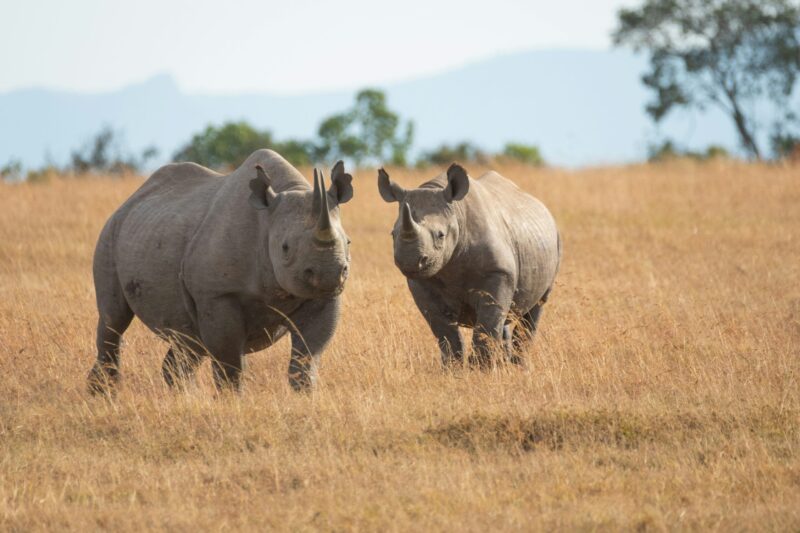
But are all horns the same? No! The number and shape of horns vary by species. White, black, and Sumatran rhinos all have two horns. However, Indian and Javan rhinos have a single horn. The front horn is usually longer and more curved, especially in African species. Asian rhinos, on the other hand, have shorter, straighter horns.
A rhino’s skin is like armor
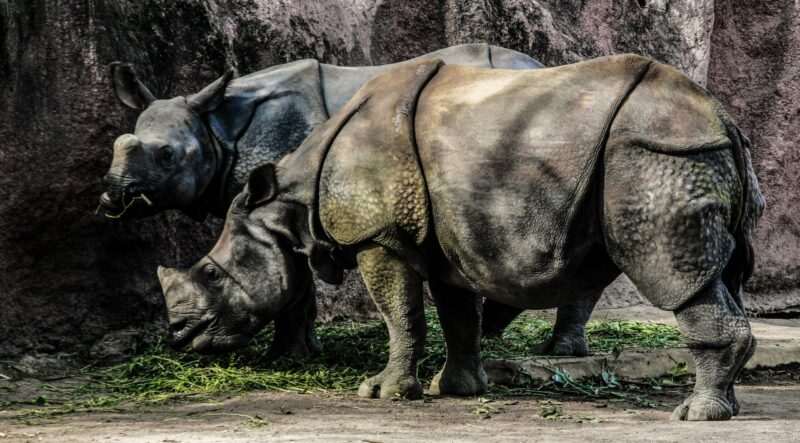
Their skin is very thick, between 0.6 and 2 inches (1.5 and 5 cm). It acts as natural armor, protecting them from thorns, bites and fights with other animals. The skin consists of layers of dense collagen. It has a rough, bumpy texture, similar to very thick leather.
But despite its thickness, rhino skin contains nerve endings, making it sensitive to insects, sunburns and skin diseases. This is why they spend a lot of time rolling in mud. This cools their bodies. The mud also acts as a natural sunscreen and protects them from parasites and insects.
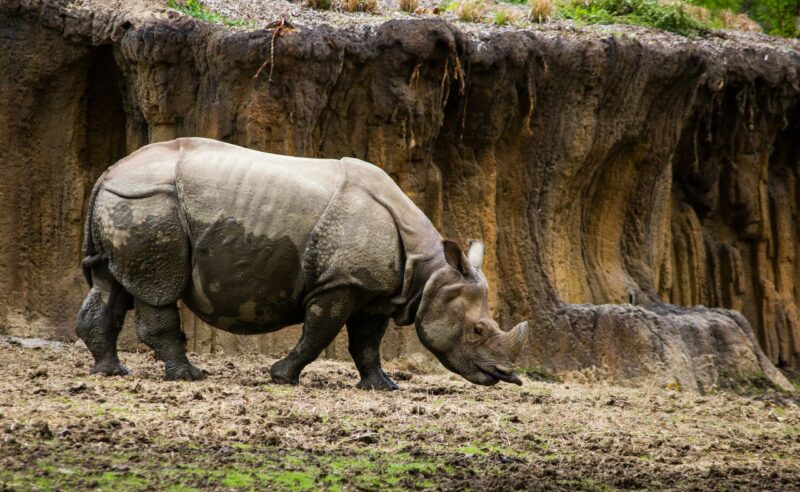
Furthermore, rhino skin isn’t actually white or black. Its color varies between light gray and dark gray, depending on the species, the environment and whether it has mud or dust on it.
Rhinoceroses and birds are allies
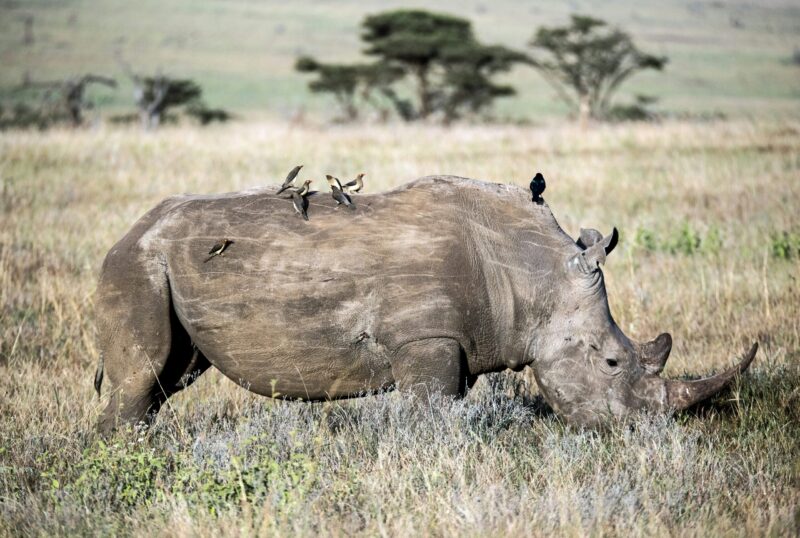
Some bird species, such as oxpeckers (genus Buphagus), help rhinos by feeding on the insects and parasites that lodge in their skin. In return, these birds receive the rhinos’ protection.
The symbiotic relationship between rhinos and certain types of birds is a classic example of mutualism: a type of symbiosis where both species benefit from each other’s help.
As well as feeding on external parasites like ticks, the birds also consume dead skin scraps and even earwax. Rhinos become feeders, but the birds also use rhinoceroses as a perch and transportation.
On the other hand, rhinos benefit when these birds remove parasites that can cause infections or discomfort. They also receive early warning of potential danger, as the birds are sensitive to the sounds of nearby predators or humans and emit warning calls.
Although generally considered mutualism, some studies suggest that oxpeckers can sometimes act parasitically. In fact, they may maintain open wounds to feed on blood. Furthermore, they do not always eliminate harmful parasites, as they sometimes prefer large ticks that have already had a blood meal.
Rhinoceroses are on the brink of extinction
But the biggest problem rhinoceroses face is poaching. Unfortunately, even though their horns regenerate, poachers kill rhinos to cut off their horns and sell them on the black market.
There are only five species of rhinoceros in the world, each with its own unique characteristics. And the majority of them are critically endangered.
The Indian rhinoceros (Rhinoceros unicornis) lives in Asia, mainly in northern India and Nepal. Their skin resembles armor with large folds. They are excellent swimmers. The IUCN Red List has assessed them as vulnerable, but fortunately their populations are increasing.
The Javan rhinoceros (Rhinoceros sondaicus) also lives in Asia. They’re rare, with fewer than 80 known individuals, all in a single national park in Indonesia. They are critically endangered.
The Sumatran rhinoceros (Dicerorhinus sumatrensis) lives in Asia and is the smallest of all rhinos. These are the only hairy rhinoceroses, adapted to forest habitats. The hair can be denser in calves and the young, becoming sparser and darker in older individuals. They are critically endangered.
The white rhinoceros (Ceratotherium simum) lives in Africa and is the largest of all the species. They’re divided into two subspecies: the southern white rhinoceros (near threatened) and the northern white rhinoceros (functionally extinct).
The Black rhinoceros (Diceros bicornis) lives in Africa. They’re smaller than white rhinos and have pointed prehensile lips for feeding on bushes. They are critically endangered.
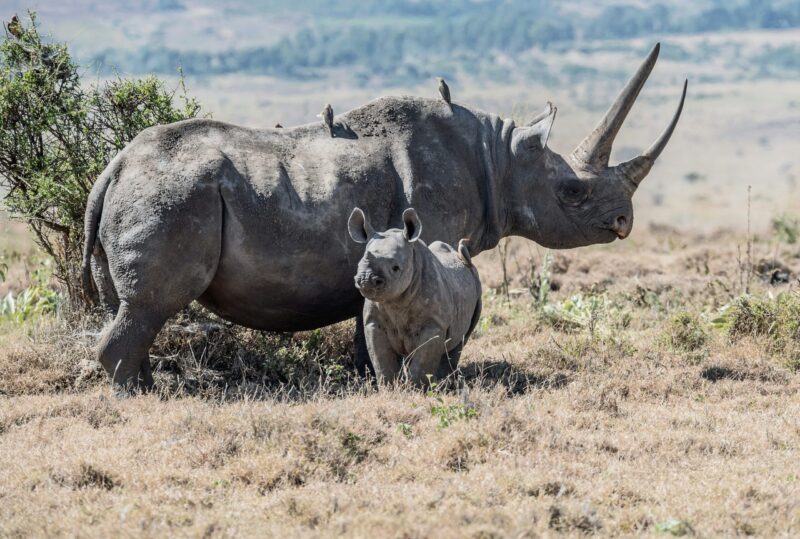
White rhinos aren’t white
The name white rhinoceros doesn’t refer to the animal’s color. The origin of the name has an interesting story based on linguistic confusion.
In Afrikaans (the language spoken in South Africa), the word wijde means wide. People used this word to describe the white rhinoceros’ broad snout (adapted for feeding on grass), one of its main distinguishing characteristics.
English-speaking settlers or explorers misinterpreted wijde as white, thus the name white rhinoceros. In contrast, people began calling the other African rhinos black rhinoceroses, though they aren’t really black.
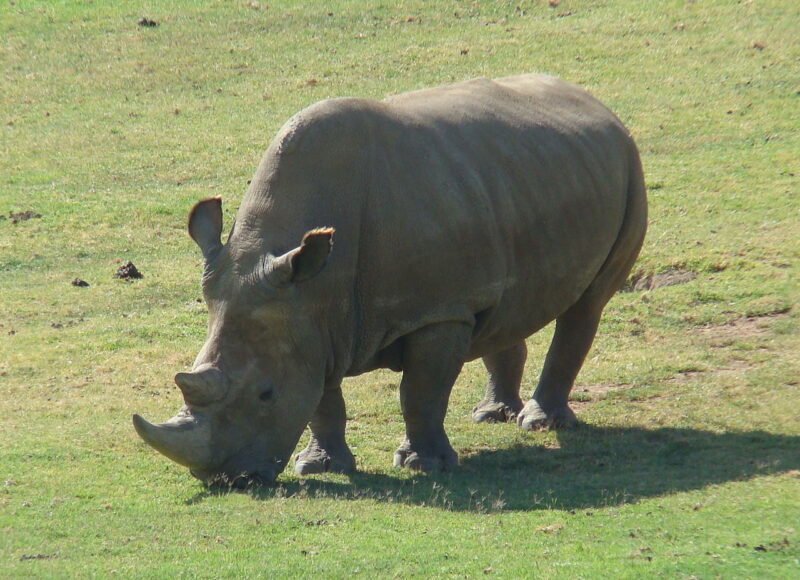
The precarious situation of the northern white rhino
Although rhinos are enormous, have thick skin and tough horns for defense, they’re not naturally aggressive. They only become defensive when they feel threatened. Unfortunately, these gentle animals can do little against human weapons.
The situation of the northern white rhino, in particular, is critically dire: It is functionally extinct. The only two living northern white rhinos are females. Currently, the two females, Najin and Fatu, live under strict protection in the Ol Pejeta Reserve in Kenya.
For decades, the northern white rhino was a victim of poaching, especially for its horns, which are highly valued on the black market. The destruction of its habitat in Central Africa, particularly in Sudan, the Democratic Republic of Congo, and Uganda, also contributed to its disappearance.
In 2018, the last known male of this subspecies – Sudan – died, leaving the fate of the northern white rhino in the hands of science.
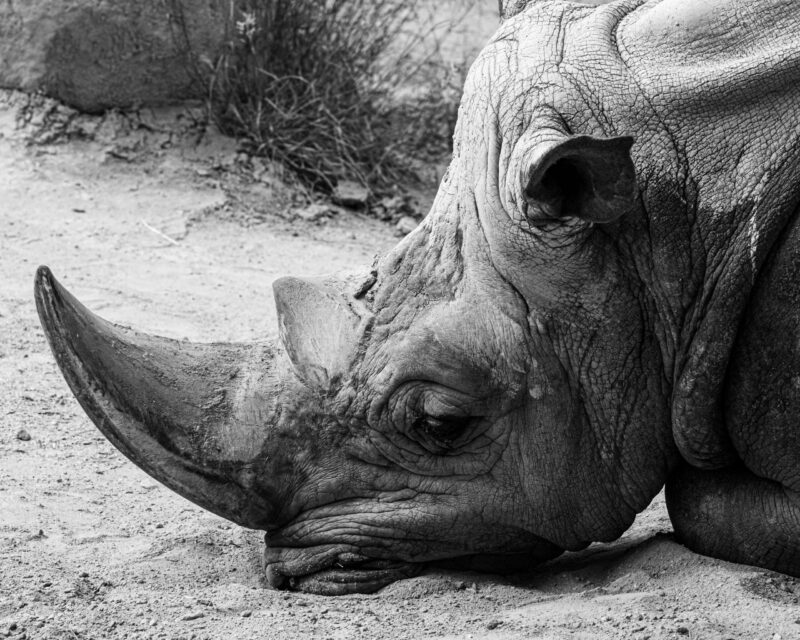
What is being done to save the northern white rhino?
Pioneering scientific projects in assisted reproduction are currently underway. In vitro fertilization is one of the options conservationists are considering.
These two rhinos, Najin (the mother) and Fatu (the daughter), cannot have babies for medical reasons. Najin was born in 1989, making her an elderly rhino. She has physical problems that prevent a safe pregnancy.
Fatu, on the other hand, was born in 2000. Though she is younger, she is also infertile, with irreversible uterine lesions. She cannot carry a pregnancy due to the condition of her uterus, but she does produce eggs.
Therefore, conservationists have collected Fatu’s eggs and fertilized them in a lab with sperm preserved from male northern white rhinos that died years earlier.
Thus, they’ve created viable embryos that are now frozen. They’re awaiting implantation into surrogate mothers of a closely related subspecies: the southern white rhinoceros.
In the long term, scientists are also studying the use of stem cells to create artificial gametes through biotechnology and cloning.
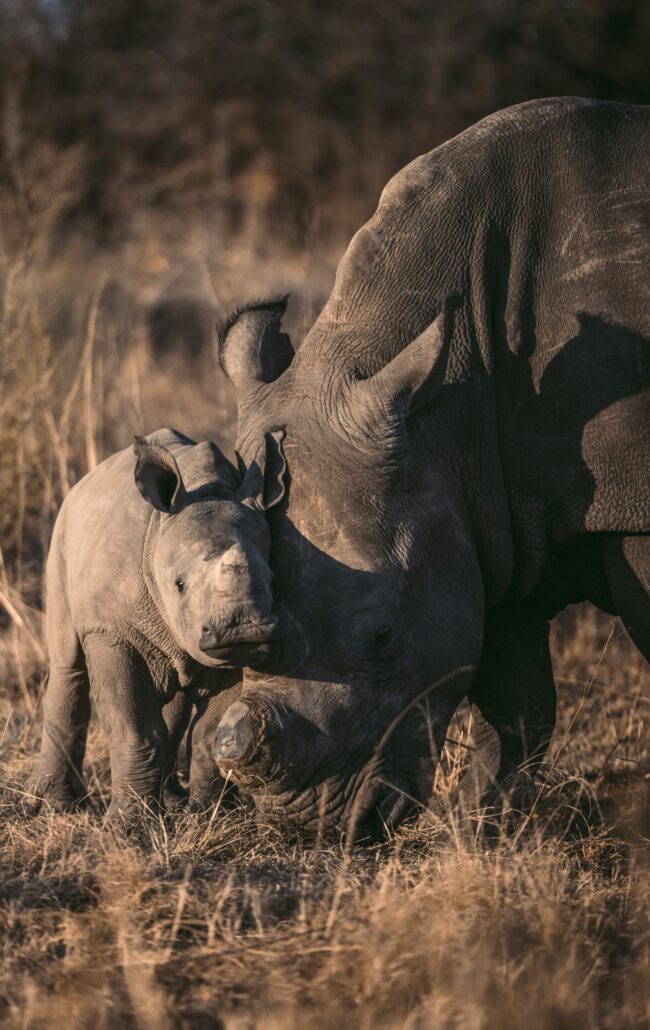
There is still hope!
While humans have put rhinos in this position, we are also the only ones who can save them. Their natural recovery is impossible without human intervention. Thanks to science, ethics and international cooperation, we can save a species on the brink of oblivion.
Several countries have been essential in the recovery of the northern white rhino. Germany leads the international scientific project called BioRescue, which is responsible for egg collection, in vitro fertilization and embryo creation.
Italy performs in vitro fertilization and has been actively culturing rhino embryos thanks to a laboratory specializing in reproductive biotechnology for large animals.
The Czech Republic cared for Najin and Fatu at the Dvur Králové Zoo before moving them to Kenya in 2009. This zoo has been instrumental in conservation outside their natural habitat and is an important partner in the BioRescue project.
Rhinos are fascinating creatures that reflect both the strength and vulnerability of wildlife. To learn more about helping rhinoceroses, visit Rhino Recovery Fund, a four-star rated charity.
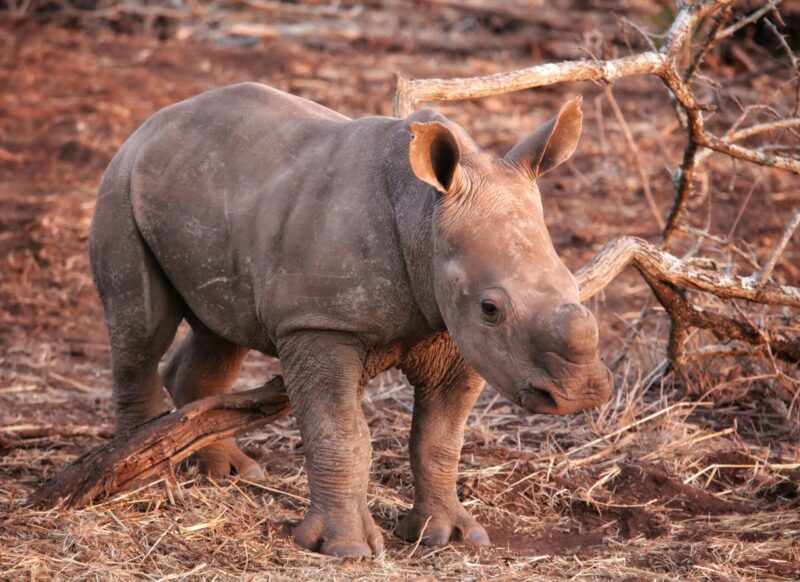
Bottom line: Rhinoceroses are gentle herbivores that are critically endangered due to poaching. But there’s still hope! Can we save them using modern science?
Read more: Zebras, beautiful and endangered: Lifeform of the week
Read more: Spiky porcupines are our lifeform of the week
The post Rhinoceroses: Can modern science save these gentle giants? first appeared on EarthSky.
from EarthSky https://ift.tt/0to5XYG
Do you like rhinoceroses? Join the fight to save them. Image via Rutpratheep Nilpechr/ Pexels.
Rhinoceroses are some of the largest and oldest land mammals on the planet. Their imposing presence, impressive horns and thick, armor-like skin make them symbols of power and resilience. However, they are also peaceful animals that are among the world’s most endangered species due to poaching and habitat loss.
What do rhinoceroses look like?
Rhinoceroses have a long history on Earth, dating back about 55 million years. Their ancestors appeared shortly after the dinosaurs and long before humans, meaning they were among the first large land mammals.
An adult rhino can weigh between 1,760 and 8,000 pounds (800 and 3,600 kg), depending on the species. Its body is stocky, with short but strong legs. But although it’s a heavy animal, it can also run quite fast, at about 34 miles per hour (55 km/h).
Rhinoceroses have one or two protrusions on the front of their heads: their famous horns. These are not made of bone but of keratin, the same substance that makes up our nails and hair. This means that horns grow back. If they lose a horn (by accident or human action), it can regenerate over time.
But are all horns the same? No! The number and shape of horns vary by species. White, black, and Sumatran rhinos all have two horns. However, Indian and Javan rhinos have a single horn. The front horn is usually longer and more curved, especially in African species. Asian rhinos, on the other hand, have shorter, straighter horns.
A rhino’s skin is like armor
Their skin is very thick, between 0.6 and 2 inches (1.5 and 5 cm). It acts as natural armor, protecting them from thorns, bites and fights with other animals. The skin consists of layers of dense collagen. It has a rough, bumpy texture, similar to very thick leather.
But despite its thickness, rhino skin contains nerve endings, making it sensitive to insects, sunburns and skin diseases. This is why they spend a lot of time rolling in mud. This cools their bodies. The mud also acts as a natural sunscreen and protects them from parasites and insects.
Furthermore, rhino skin isn’t actually white or black. Its color varies between light gray and dark gray, depending on the species, the environment and whether it has mud or dust on it.
Rhinoceroses and birds are allies
Some bird species, such as oxpeckers (genus Buphagus), help rhinos by feeding on the insects and parasites that lodge in their skin. In return, these birds receive the rhinos’ protection.
The symbiotic relationship between rhinos and certain types of birds is a classic example of mutualism: a type of symbiosis where both species benefit from each other’s help.
As well as feeding on external parasites like ticks, the birds also consume dead skin scraps and even earwax. Rhinos become feeders, but the birds also use rhinoceroses as a perch and transportation.
On the other hand, rhinos benefit when these birds remove parasites that can cause infections or discomfort. They also receive early warning of potential danger, as the birds are sensitive to the sounds of nearby predators or humans and emit warning calls.
Although generally considered mutualism, some studies suggest that oxpeckers can sometimes act parasitically. In fact, they may maintain open wounds to feed on blood. Furthermore, they do not always eliminate harmful parasites, as they sometimes prefer large ticks that have already had a blood meal.
Rhinoceroses are on the brink of extinction
But the biggest problem rhinoceroses face is poaching. Unfortunately, even though their horns regenerate, poachers kill rhinos to cut off their horns and sell them on the black market.
There are only five species of rhinoceros in the world, each with its own unique characteristics. And the majority of them are critically endangered.
The Indian rhinoceros (Rhinoceros unicornis) lives in Asia, mainly in northern India and Nepal. Their skin resembles armor with large folds. They are excellent swimmers. The IUCN Red List has assessed them as vulnerable, but fortunately their populations are increasing.
The Javan rhinoceros (Rhinoceros sondaicus) also lives in Asia. They’re rare, with fewer than 80 known individuals, all in a single national park in Indonesia. They are critically endangered.
The Sumatran rhinoceros (Dicerorhinus sumatrensis) lives in Asia and is the smallest of all rhinos. These are the only hairy rhinoceroses, adapted to forest habitats. The hair can be denser in calves and the young, becoming sparser and darker in older individuals. They are critically endangered.
The white rhinoceros (Ceratotherium simum) lives in Africa and is the largest of all the species. They’re divided into two subspecies: the southern white rhinoceros (near threatened) and the northern white rhinoceros (functionally extinct).
The Black rhinoceros (Diceros bicornis) lives in Africa. They’re smaller than white rhinos and have pointed prehensile lips for feeding on bushes. They are critically endangered.
White rhinos aren’t white
The name white rhinoceros doesn’t refer to the animal’s color. The origin of the name has an interesting story based on linguistic confusion.
In Afrikaans (the language spoken in South Africa), the word wijde means wide. People used this word to describe the white rhinoceros’ broad snout (adapted for feeding on grass), one of its main distinguishing characteristics.
English-speaking settlers or explorers misinterpreted wijde as white, thus the name white rhinoceros. In contrast, people began calling the other African rhinos black rhinoceroses, though they aren’t really black.
The precarious situation of the northern white rhino
Although rhinos are enormous, have thick skin and tough horns for defense, they’re not naturally aggressive. They only become defensive when they feel threatened. Unfortunately, these gentle animals can do little against human weapons.
The situation of the northern white rhino, in particular, is critically dire: It is functionally extinct. The only two living northern white rhinos are females. Currently, the two females, Najin and Fatu, live under strict protection in the Ol Pejeta Reserve in Kenya.
For decades, the northern white rhino was a victim of poaching, especially for its horns, which are highly valued on the black market. The destruction of its habitat in Central Africa, particularly in Sudan, the Democratic Republic of Congo, and Uganda, also contributed to its disappearance.
In 2018, the last known male of this subspecies – Sudan – died, leaving the fate of the northern white rhino in the hands of science.
What is being done to save the northern white rhino?
Pioneering scientific projects in assisted reproduction are currently underway. In vitro fertilization is one of the options conservationists are considering.
These two rhinos, Najin (the mother) and Fatu (the daughter), cannot have babies for medical reasons. Najin was born in 1989, making her an elderly rhino. She has physical problems that prevent a safe pregnancy.
Fatu, on the other hand, was born in 2000. Though she is younger, she is also infertile, with irreversible uterine lesions. She cannot carry a pregnancy due to the condition of her uterus, but she does produce eggs.
Therefore, conservationists have collected Fatu’s eggs and fertilized them in a lab with sperm preserved from male northern white rhinos that died years earlier.
Thus, they’ve created viable embryos that are now frozen. They’re awaiting implantation into surrogate mothers of a closely related subspecies: the southern white rhinoceros.
In the long term, scientists are also studying the use of stem cells to create artificial gametes through biotechnology and cloning.
There is still hope!
While humans have put rhinos in this position, we are also the only ones who can save them. Their natural recovery is impossible without human intervention. Thanks to science, ethics and international cooperation, we can save a species on the brink of oblivion.
Several countries have been essential in the recovery of the northern white rhino. Germany leads the international scientific project called BioRescue, which is responsible for egg collection, in vitro fertilization and embryo creation.
Italy performs in vitro fertilization and has been actively culturing rhino embryos thanks to a laboratory specializing in reproductive biotechnology for large animals.
The Czech Republic cared for Najin and Fatu at the Dvur Králové Zoo before moving them to Kenya in 2009. This zoo has been instrumental in conservation outside their natural habitat and is an important partner in the BioRescue project.
Rhinos are fascinating creatures that reflect both the strength and vulnerability of wildlife. To learn more about helping rhinoceroses, visit Rhino Recovery Fund, a four-star rated charity.
Bottom line: Rhinoceroses are gentle herbivores that are critically endangered due to poaching. But there’s still hope! Can we save them using modern science?
Read more: Zebras, beautiful and endangered: Lifeform of the week
Read more: Spiky porcupines are our lifeform of the week
The post Rhinoceroses: Can modern science save these gentle giants? first appeared on EarthSky.
from EarthSky https://ift.tt/0to5XYG

Aucun commentaire:
Enregistrer un commentaire