
The scientists behind this new study on the age of the Dead Sea Scrolls discuss their work in this video from the University of Groningen.
- Scientists used a new AI model to determine the age of 135 undated Dead Sea Scrolls, revealing that many are older than scientists previously thought.
- They trained the AI model using handwriting script styles from 24 scrolls with confirmed dates, enabling it to predict dates based on script styles.
- These older dates offer new insight into the history of religious groups behind the Dead Sea Scrolls and early Christians.
Scientists use AI to date the famous Dead Sea Scrolls
The Dead Sea Scrolls are ancient manuscripts that include writings from the Hebrew Bible. They’re of significant importance in studying the history of Judaism and early Christianity. On June 4, 2025, a group of scientists led by Mladen Popovic of the University of Groningen in the Netherlands said some of these scrolls are older than scientists previously thought. In a first-of-its-kind study, they used artificial intelligence (AI) to predict the dates of 135 undated scrolls. And they trained their AI model using the writings from 24 dated scrolls.
This initial study opens a new path to dating these iconic ancient documents. With more accurate dates, historians will gain better insights into life in the eastern Mediterranean from the 4th century BCE to the 2nd century CE. Also, it will shed more light on religious groups behind the Dead Sea Scrolls and early Christians.
The researchers published their study in the peer-reviewed journal PLOS One on June 4, 2025.
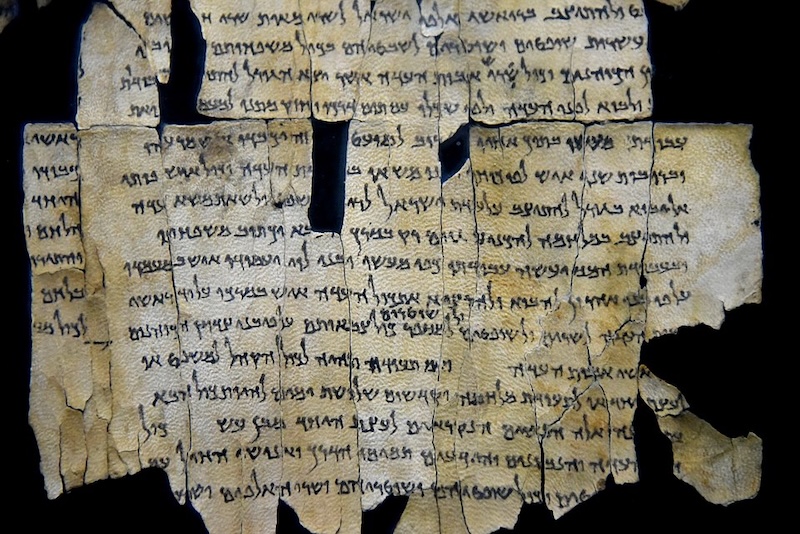
Dating individual Dead Sea Scrolls manuscripts is difficult
The Dead Sea Scrolls were collectively created between the 4th century BCE and the 2nd century CE. But getting a reliable date for individual documents has been difficult.
According to the researchers, there have only been calendar dates determined for some of the oldest and youngest scrolls. Therefore, scientists had to come up with alternate ways to figure out the age of other scrolls.
Scientists have dated most Dead Sea Scrolls using techniques in the field of paleography, the study of ancient handwriting. Paleographers match a scroll’s script styles, such as alphabet shape, to a possible date when ancient scribes used such styles. However, it’s difficult to connect specific script styles to a date, because few scrolls have a calendar date.
There’s another more definitive way to determine the age of a scroll: radiocarbon dating. Researchers use this method to date objects that have organic material. They measure the amount of radioactive carbon-14 present in the sample. However, this technique involves destroying a small portion of a precious artifact, so researchers use it only under limited circumstances.
Training Enoch, an artificial intelligence model
The researchers built an AI model they called Enoch. Its function was to analyze handwriting script styles in a scroll image and come up with a probable age for that scroll.
But first, Enoch had to be trained with well-dated scrolls. The scientists used radiocarbon dating on tiny fragments of 24 Dead Sea Scrolls. Then, they fed images of those 24 scrolls to Enoch. Its software performed a meticulous analysis of each document’s script styles, studying the subtle shapes of alphabets in Hebrew and Aramaic.
As a result, scientists trained the Enoch AI model to learn subtle details about script styles in dated manuscripts between the 4th century BCE and the 2nd century CE.
Putting Enoch to the test
After training Enoch on 24 scrolls with reliable dates, the scientists were ready to see how well the model worked on scrolls of an unknown age.
There are about 1,000 Dead Sea Scroll manuscripts and fragments. But to get started, the researchers fed Enoch the images of 135 undated scrolls.
Paleographers, experts in linking specific script styles to when they were written, also independently analyzed the 135 scrolls.
The Enoch AI model prediction results agreed with 79% of the dates determined by the paleographers.
What this new analysis tells us about the Dead Sea Scrolls
The scientists derived several insights from this first use of AI to predict the dates of individual Dead Sea Scrolls.
Radiocarbon dating and Enoch dating predictions indicated the Dead Sea Scrolls they examined were older than previous estimates. For instance, Enoch predicted the “Hasmonaean” Dead Sea Scrolls, originally dated between 150 to 50 BCE, could be older. Also, the “Herodian” script, thought to be from the mid-1st century BCE, might have originated during the late 2nd century BCE.
Furthermore, two scroll fragments from biblical books appear to date to the time of their authors. Scientists thought a scroll fragment called 4QDanielc, which contains text from the Book of Daniel, was written in the early 160s BCE. Radiocarbon dating places its date within that range, in the 2nd century BCE. Another scroll fragment, 4QQoheleta (4Q109), contains text from Ecclesiastes. Historians think an anonymous author wrote it in the 3rd century BCE. And Enoch’s analysis agreed with that date.
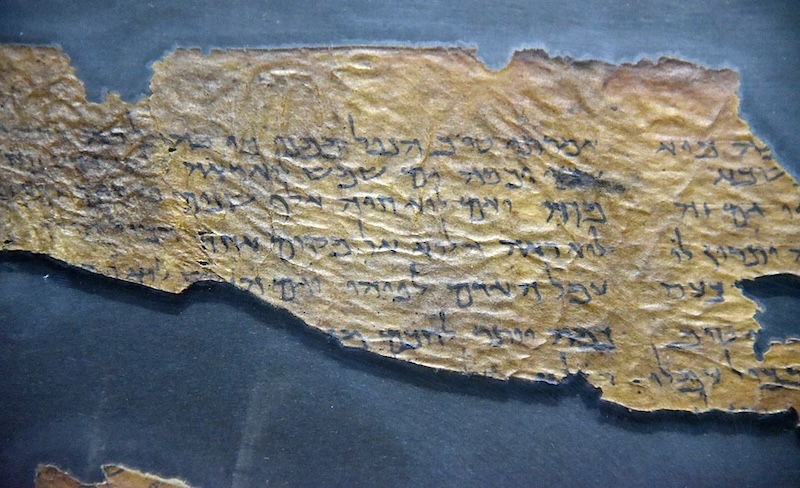
Bottom line: In a first-of-its-kind study, scientists used artificial intelligence to determine the ages of 135 undated Dead Sea Scrolls. They trained their AI model using 24 scrolls with known dates.
Source: Dating ancient manuscripts using radiocarbon and AI-based writing style analysis
Artificial intelligence finds 56 new gravitational lens candidates
The post AI dates Dead Sea Scrolls as even older than once thought first appeared on EarthSky.
from EarthSky https://ift.tt/QYDBOCN
The scientists behind this new study on the age of the Dead Sea Scrolls discuss their work in this video from the University of Groningen.
- Scientists used a new AI model to determine the age of 135 undated Dead Sea Scrolls, revealing that many are older than scientists previously thought.
- They trained the AI model using handwriting script styles from 24 scrolls with confirmed dates, enabling it to predict dates based on script styles.
- These older dates offer new insight into the history of religious groups behind the Dead Sea Scrolls and early Christians.
Scientists use AI to date the famous Dead Sea Scrolls
The Dead Sea Scrolls are ancient manuscripts that include writings from the Hebrew Bible. They’re of significant importance in studying the history of Judaism and early Christianity. On June 4, 2025, a group of scientists led by Mladen Popovic of the University of Groningen in the Netherlands said some of these scrolls are older than scientists previously thought. In a first-of-its-kind study, they used artificial intelligence (AI) to predict the dates of 135 undated scrolls. And they trained their AI model using the writings from 24 dated scrolls.
This initial study opens a new path to dating these iconic ancient documents. With more accurate dates, historians will gain better insights into life in the eastern Mediterranean from the 4th century BCE to the 2nd century CE. Also, it will shed more light on religious groups behind the Dead Sea Scrolls and early Christians.
The researchers published their study in the peer-reviewed journal PLOS One on June 4, 2025.
Dating individual Dead Sea Scrolls manuscripts is difficult
The Dead Sea Scrolls were collectively created between the 4th century BCE and the 2nd century CE. But getting a reliable date for individual documents has been difficult.
According to the researchers, there have only been calendar dates determined for some of the oldest and youngest scrolls. Therefore, scientists had to come up with alternate ways to figure out the age of other scrolls.
Scientists have dated most Dead Sea Scrolls using techniques in the field of paleography, the study of ancient handwriting. Paleographers match a scroll’s script styles, such as alphabet shape, to a possible date when ancient scribes used such styles. However, it’s difficult to connect specific script styles to a date, because few scrolls have a calendar date.
There’s another more definitive way to determine the age of a scroll: radiocarbon dating. Researchers use this method to date objects that have organic material. They measure the amount of radioactive carbon-14 present in the sample. However, this technique involves destroying a small portion of a precious artifact, so researchers use it only under limited circumstances.
Training Enoch, an artificial intelligence model
The researchers built an AI model they called Enoch. Its function was to analyze handwriting script styles in a scroll image and come up with a probable age for that scroll.
But first, Enoch had to be trained with well-dated scrolls. The scientists used radiocarbon dating on tiny fragments of 24 Dead Sea Scrolls. Then, they fed images of those 24 scrolls to Enoch. Its software performed a meticulous analysis of each document’s script styles, studying the subtle shapes of alphabets in Hebrew and Aramaic.
As a result, scientists trained the Enoch AI model to learn subtle details about script styles in dated manuscripts between the 4th century BCE and the 2nd century CE.
Putting Enoch to the test
After training Enoch on 24 scrolls with reliable dates, the scientists were ready to see how well the model worked on scrolls of an unknown age.
There are about 1,000 Dead Sea Scroll manuscripts and fragments. But to get started, the researchers fed Enoch the images of 135 undated scrolls.
Paleographers, experts in linking specific script styles to when they were written, also independently analyzed the 135 scrolls.
The Enoch AI model prediction results agreed with 79% of the dates determined by the paleographers.
What this new analysis tells us about the Dead Sea Scrolls
The scientists derived several insights from this first use of AI to predict the dates of individual Dead Sea Scrolls.
Radiocarbon dating and Enoch dating predictions indicated the Dead Sea Scrolls they examined were older than previous estimates. For instance, Enoch predicted the “Hasmonaean” Dead Sea Scrolls, originally dated between 150 to 50 BCE, could be older. Also, the “Herodian” script, thought to be from the mid-1st century BCE, might have originated during the late 2nd century BCE.
Furthermore, two scroll fragments from biblical books appear to date to the time of their authors. Scientists thought a scroll fragment called 4QDanielc, which contains text from the Book of Daniel, was written in the early 160s BCE. Radiocarbon dating places its date within that range, in the 2nd century BCE. Another scroll fragment, 4QQoheleta (4Q109), contains text from Ecclesiastes. Historians think an anonymous author wrote it in the 3rd century BCE. And Enoch’s analysis agreed with that date.
Bottom line: In a first-of-its-kind study, scientists used artificial intelligence to determine the ages of 135 undated Dead Sea Scrolls. They trained their AI model using 24 scrolls with known dates.
Source: Dating ancient manuscripts using radiocarbon and AI-based writing style analysis
Artificial intelligence finds 56 new gravitational lens candidates
The post AI dates Dead Sea Scrolls as even older than once thought first appeared on EarthSky.
from EarthSky https://ift.tt/QYDBOCN

Aucun commentaire:
Enregistrer un commentaire