A nova or ‘new star’ in Lupus: Photos from our community
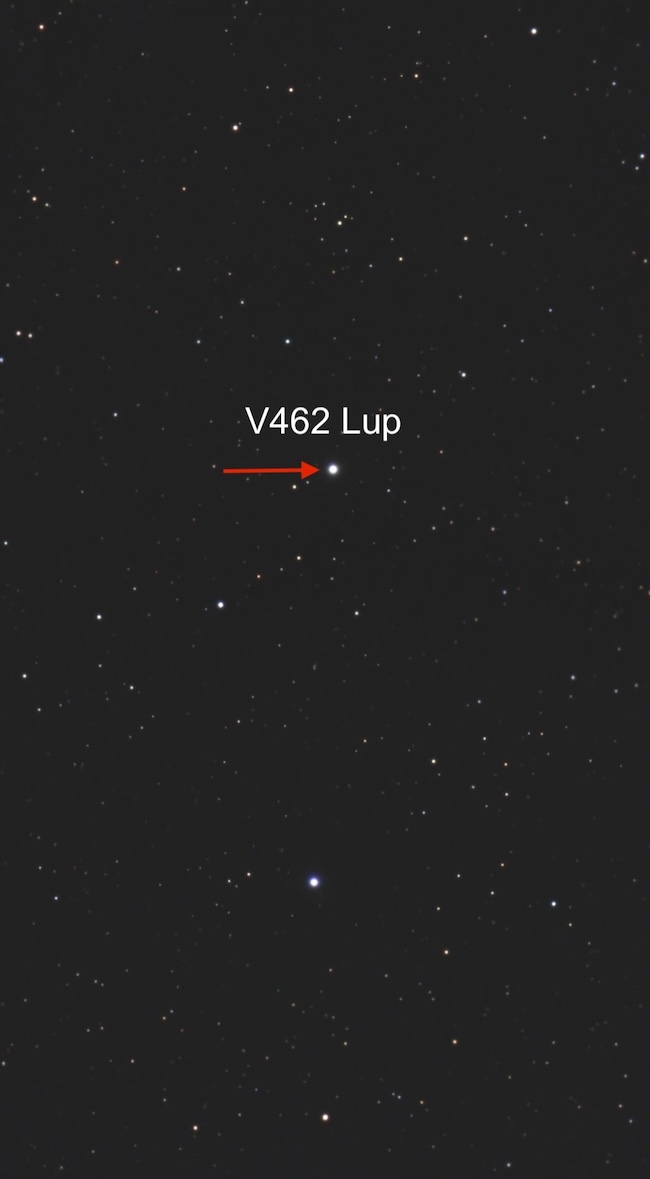
View at EarthSky Community Photos. | Stephen O’Meara captured the nova on June 16, 2025, from Botswana and wrote: “There’s a new star, called a nova, in the constellation Lupus the Wolf. New is in italics because this star was not visible before, and now it’s visible to the unaided eyes in a dark sky. And it’s a fine binocular object.” Thank you, Stephen!
At discovery, the nova was shining at 8.7 magnitude, which is below the limit for viewing with the unaided eye. So a telescope was required to see. But it continued to brighten and is currently shining at 5.7 magnitude. That means it’s now bright enough to spot with your eye in a dark sky. By the way, this star normally shines at an exceedingly dim magnitude of 22.
And EarthSky’s community of talented photographers has shared these fabulous pictures of the nova for all of us to enjoy! Thank you to all who submitted photos.
Photos of the nova in Lupus
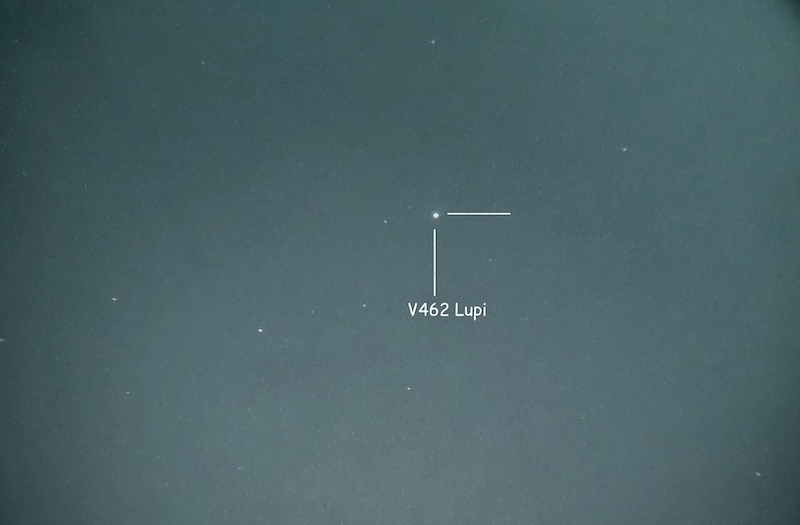
View at EarthSky Community Photos. | Steven Bellavia captured the nova on June 18, 2025, from Virginia and wrote: “An exploding star that went from magnitude 22 to magnitude 6, or 2.5 million times brighter. The All-Sky Automated Survey for Supernovae spotted it on June 12. And Yusuke Tampo, with the South African Astronomical Observatory (University of Cape Town), obtained a spectrum of the new star and identified it as a classical nova.” Thank you, Steven!View at EarthSky Community Photo. | Vedant Pandey captured this shot of the nova on June 16, 2025, from India and wrote: “A new bright nova (v462) currently visible in the constellation Lupus. I got a 15-minute window to capture this once-in-a-lifetime moment using my telescope.” Thank you, Vedant!
More community photos
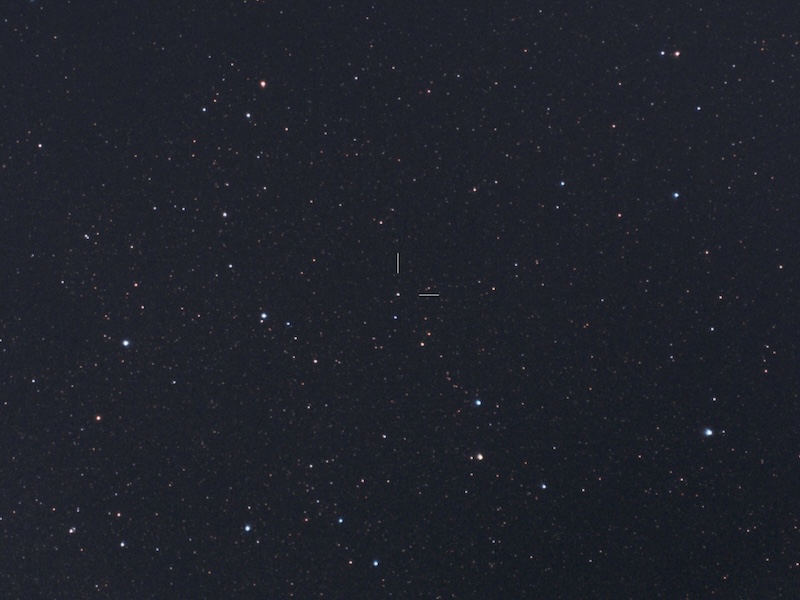
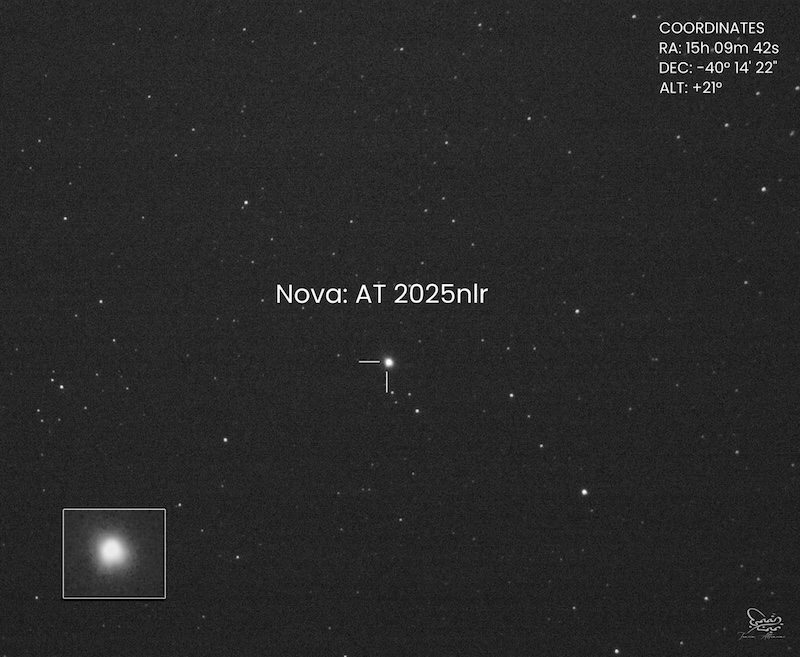
View at EarthSky Community Photos. | John Paul Pile captured this image from the Philippines on June 19, 2025. He wrote: “The nova in the constellation Lupus is currently visible to the unaided eye. Based on surrounding stars with magnitudes 5.2 and 5.8, I estimated its brightness to be about magnitude 5.4 using a 13×50 monocular. It’s not instantly noticeable, so allow your eyes a few minutes to adapt to the dark.” Thank you, John!View at EarthSky Community Photos. | Tameem Altameemi captured this image on June 20, 2025, from the United Arab Emirates and wrote: “This image, shows Nova AT2025nlr, that suddenly brightened from a white dwarf star in a binary system having a thermonuclear explosion on its surface. The nova, located at coordinates RA 15h 09m 42s, Dec -40° 14’ 22”, stood out against the surrounding star field during this observation.” Thank you, Tameem!
I caught the nova, too!
View at EarthSky Community Photos. | Marcy Curran captured this image from Wyoming on June 19, 2025, and wrote: “Here’s the nova that recently became visible in the constellation Lupus the Wolf. It’s visible from mid-to-lower latitudes in the Northern Hemisphere, but best viewed from the Southern Hemisphere. Before the nova suddenly burst into view on June 12, the star was a very faint magnitude 22. It’s now around 5.7 so it’s visible to the unaided eye in a dark sky. And it’s easy to spot in binoculars.” (taking a bow) ?
Did you catch a picture of the nova? Submit it here.
Finder charts for the nova
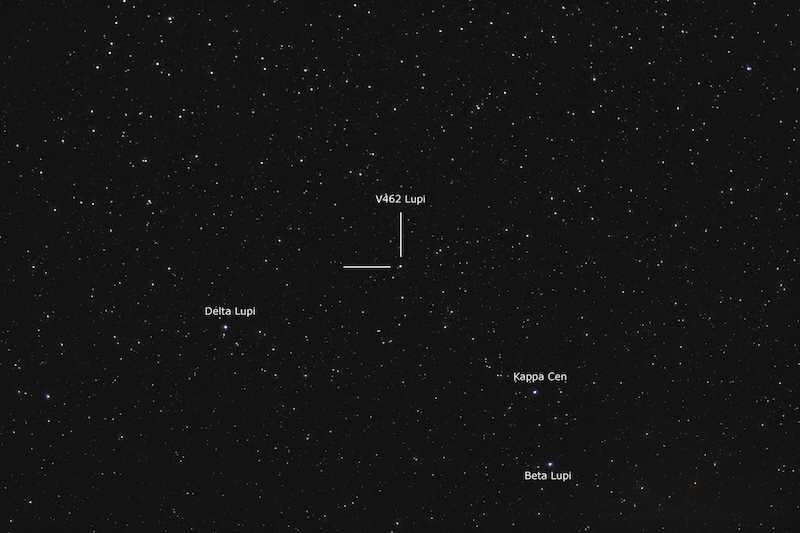
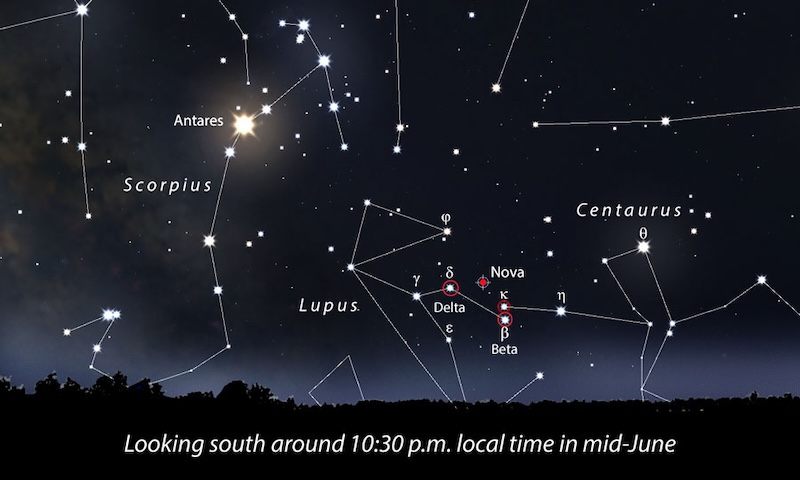
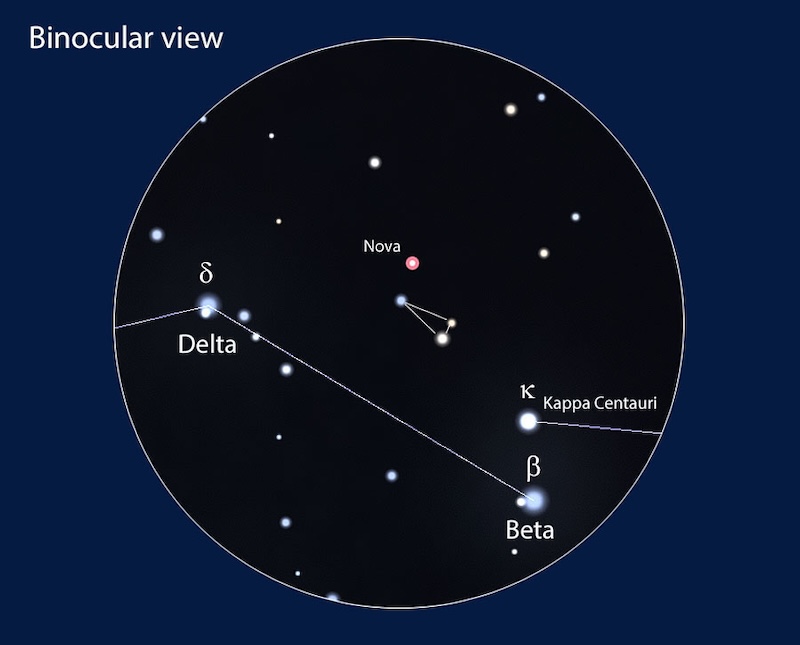
According to Astro Bob on Facebook: “Lupus is very low in the southern sky for observers in the northern U.S. However, if you live in the central or southern states it’s about a fist (10 degrees) or higher. Seek it out as soon as it gets dark — between about 10-11 p.m. local time — when the nova stands highest in the sky. This map shows the general location in relation to the constellation Scorpius and its bright star Antares.” Chart via Astro Bob. Used with permission.Using binoculars, star-hop from Scorpius southwest to the stars Delta and Beta Lupi. Then use the binocular map to pinpoint Nova Lupi’s location. Chart via Astro Bob. Used with permission.
How a nova occurs
A nova always involves two closely-orbiting stars — a tiny, dense white dwarf about the size of the Earth, and a companion star similar to the sun. The dwarf siphons material (mostly hydrogen) away from its companion over a time span of thousands of years. The hot gas forms a disk around the dwarf, which funnels the material down to the star’s surface. In time, the pilfered gas is compacted and heated until it ignites in a massive thermonuclear blast a million times brighter than the light of both stars combined. To our eyes the explosion looks like a brand new star in the night sky. Of course, the pair has been there for a long, long time, but too faint to call attention to itself. Good news. The dwarf typically survives the blast and begins anew to gather more hydrogen for the next eruption. When you know what’s behind that single pinpoint of light, it’s a marvel. Chart via Astro Bob. Used with permission.
Bottom line: A ‘new star’, or a nova, was discovered in Lupus on June 12, 2025. It has become bright enough to see with the eye! Enjoy photos of the nova here.
View at EarthSky Community Photos. | Stephen O’Meara captured the nova on June 16, 2025, from Botswana and wrote: “There’s a new star, called a nova, in the constellation Lupus the Wolf. New is in italics because this star was not visible before, and now it’s visible to the unaided eyes in a dark sky. And it’s a fine binocular object.” Thank you, Stephen!
At discovery, the nova was shining at 8.7 magnitude, which is below the limit for viewing with the unaided eye. So a telescope was required to see. But it continued to brighten and is currently shining at 5.7 magnitude. That means it’s now bright enough to spot with your eye in a dark sky. By the way, this star normally shines at an exceedingly dim magnitude of 22.
And EarthSky’s community of talented photographers has shared these fabulous pictures of the nova for all of us to enjoy! Thank you to all who submitted photos.
Photos of the nova in Lupus
View at EarthSky Community Photos. | Steven Bellavia captured the nova on June 18, 2025, from Virginia and wrote: “An exploding star that went from magnitude 22 to magnitude 6, or 2.5 million times brighter. The All-Sky Automated Survey for Supernovae spotted it on June 12. And Yusuke Tampo, with the South African Astronomical Observatory (University of Cape Town), obtained a spectrum of the new star and identified it as a classical nova.” Thank you, Steven!View at EarthSky Community Photo. | Vedant Pandey captured this shot of the nova on June 16, 2025, from India and wrote: “A new bright nova (v462) currently visible in the constellation Lupus. I got a 15-minute window to capture this once-in-a-lifetime moment using my telescope.” Thank you, Vedant!
More community photos
View at EarthSky Community Photos. | John Paul Pile captured this image from the Philippines on June 19, 2025. He wrote: “The nova in the constellation Lupus is currently visible to the unaided eye. Based on surrounding stars with magnitudes 5.2 and 5.8, I estimated its brightness to be about magnitude 5.4 using a 13×50 monocular. It’s not instantly noticeable, so allow your eyes a few minutes to adapt to the dark.” Thank you, John!View at EarthSky Community Photos. | Tameem Altameemi captured this image on June 20, 2025, from the United Arab Emirates and wrote: “This image, shows Nova AT2025nlr, that suddenly brightened from a white dwarf star in a binary system having a thermonuclear explosion on its surface. The nova, located at coordinates RA 15h 09m 42s, Dec -40° 14’ 22”, stood out against the surrounding star field during this observation.” Thank you, Tameem!
I caught the nova, too!
View at EarthSky Community Photos. | Marcy Curran captured this image from Wyoming on June 19, 2025, and wrote: “Here’s the nova that recently became visible in the constellation Lupus the Wolf. It’s visible from mid-to-lower latitudes in the Northern Hemisphere, but best viewed from the Southern Hemisphere. Before the nova suddenly burst into view on June 12, the star was a very faint magnitude 22. It’s now around 5.7 so it’s visible to the unaided eye in a dark sky. And it’s easy to spot in binoculars.” (taking a bow) ?
Did you catch a picture of the nova? Submit it here.
Finder charts for the nova
According to Astro Bob on Facebook: “Lupus is very low in the southern sky for observers in the northern U.S. However, if you live in the central or southern states it’s about a fist (10 degrees) or higher. Seek it out as soon as it gets dark — between about 10-11 p.m. local time — when the nova stands highest in the sky. This map shows the general location in relation to the constellation Scorpius and its bright star Antares.” Chart via Astro Bob. Used with permission.Using binoculars, star-hop from Scorpius southwest to the stars Delta and Beta Lupi. Then use the binocular map to pinpoint Nova Lupi’s location. Chart via Astro Bob. Used with permission.
How a nova occurs
A nova always involves two closely-orbiting stars — a tiny, dense white dwarf about the size of the Earth, and a companion star similar to the sun. The dwarf siphons material (mostly hydrogen) away from its companion over a time span of thousands of years. The hot gas forms a disk around the dwarf, which funnels the material down to the star’s surface. In time, the pilfered gas is compacted and heated until it ignites in a massive thermonuclear blast a million times brighter than the light of both stars combined. To our eyes the explosion looks like a brand new star in the night sky. Of course, the pair has been there for a long, long time, but too faint to call attention to itself. Good news. The dwarf typically survives the blast and begins anew to gather more hydrogen for the next eruption. When you know what’s behind that single pinpoint of light, it’s a marvel. Chart via Astro Bob. Used with permission.
Bottom line: A ‘new star’, or a nova, was discovered in Lupus on June 12, 2025. It has become bright enough to see with the eye! Enjoy photos of the nova here.
My family life has changed for good ever since my colleagues introduce Dr Jekawo to my family, Dr Jekawo cure my dad from parkinson, cure my herpes and HPV, also cure my husband diabetes with his herbal medicines that he sent to us via courier service then Dr Jekawo instruct us how to drink the herbal medicines and today we are all well healthy so I want to express my gratitude to Dr Jekawo for his ancestral gift to able to cure all diseases with his herbal medicines.Dr Jekawo is a traditional herbal doctor that reside in west africa also Dr Jekawo cure diseases like ALS,Diabetes,HPV,HSV,Hiv/Aids,Cancer,Hepatitis,Lupus,Bring Ex Back,Bronchitis,Chronic Disease,Degenerative diseases. Contact Dr Jekawo Email: drjekawo@gmail.com He's a good herbal doctor with a listen and trusted heart. whatsapp Dr Jekawo +2347059818667. website www.drjekawo.com. Helena Writing from Texas.




My family life has changed for good ever since my colleagues introduce Dr Jekawo to my family, Dr Jekawo cure my dad from parkinson, cure my herpes and HPV, also cure my husband diabetes with his herbal medicines that he sent to us via courier service then Dr Jekawo instruct us how to drink the herbal medicines and today we are all well healthy so I want to express my gratitude to Dr Jekawo for his ancestral gift to able to cure all diseases with his herbal medicines.Dr Jekawo is a traditional herbal doctor that reside in west africa also Dr Jekawo cure diseases like ALS,Diabetes,HPV,HSV,Hiv/Aids,Cancer,Hepatitis,Lupus,Bring Ex Back,Bronchitis,Chronic Disease,Degenerative diseases.
RépondreSupprimerContact Dr Jekawo Email: drjekawo@gmail.com He's a good herbal doctor with a listen and trusted heart. whatsapp Dr Jekawo +2347059818667. website www.drjekawo.com.
Helena
Writing from Texas.