Watch this video of some of our editors’ pics for the best deep-sky photos of April 2025, and then see more below!
Stunning deep-sky photos from our community
The EarthSky community has many talented astrophotographers who capture stunning images of the deep sky. We gathered some of our favorite deep-sky photos we received in April 2025 for you to enjoy. Do you have some of your own images to share? You can submit them to us here. We love to see them!
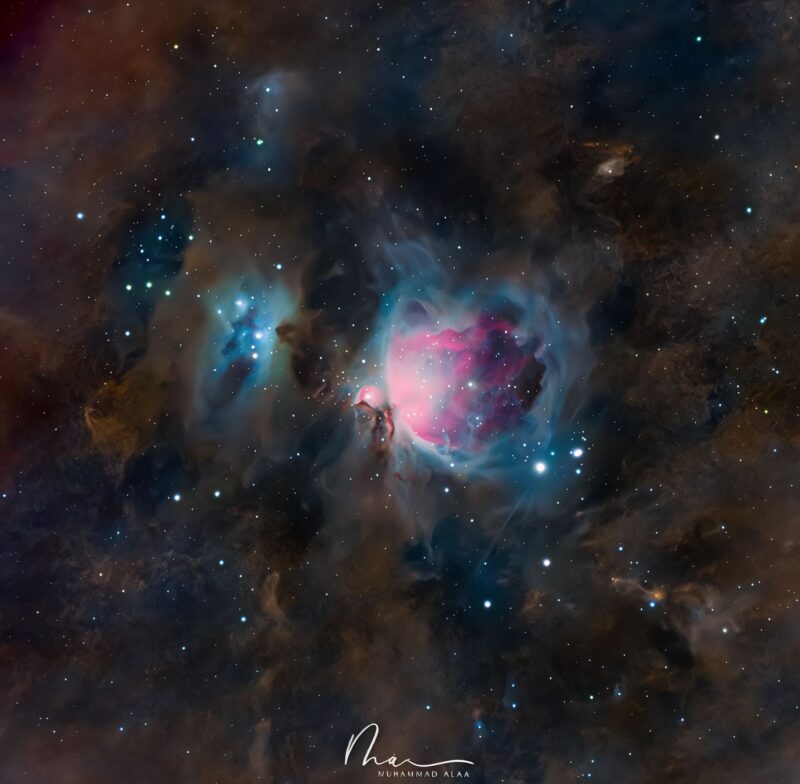
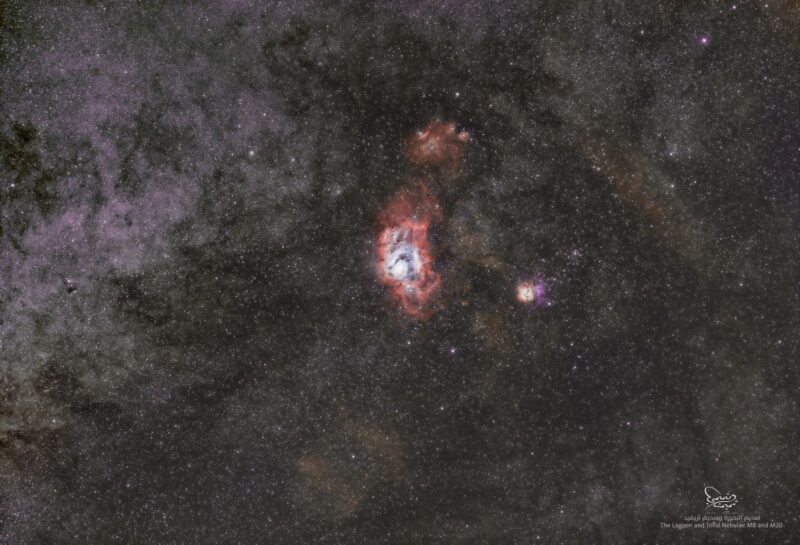
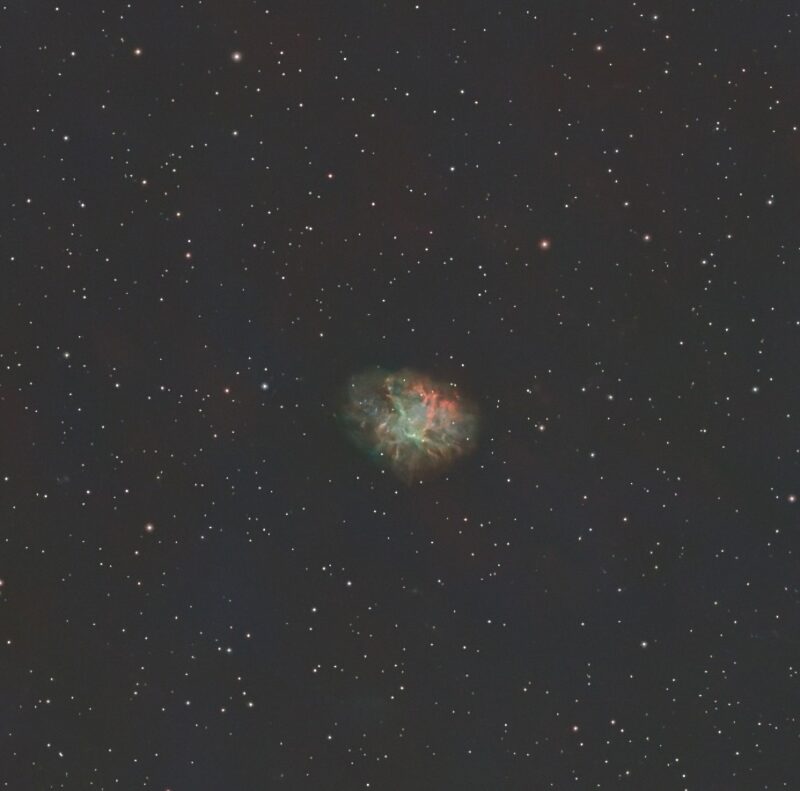
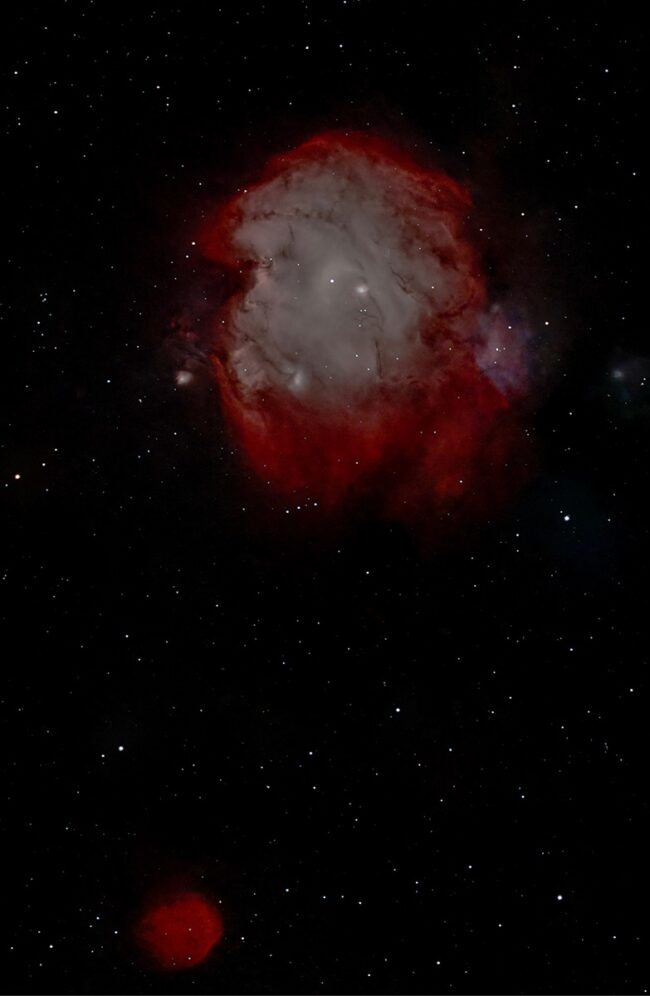
View at EarthSky Community Photos. | Muhammad Alaa in Assiut, Egypt, captured the Orion Nebula and vicinity on April 1, 2025. Muhammad wrote: “The Orion Nebula, captured by me from the skies of my village in southern Egypt.” Thank you, Muhammad!View at EarthSky Community Photos. | Tameem Altameemi in the United Arab Emirates captured diffuse nebulae in the constellation Sagittarius on April 6, 2025. Tameem wrote: “This image captures two iconic nebulae in the heart of the summer Milky Way. The Lagoon Nebula (M8) and the Trifid Nebula (M20) lie in the constellation Sagittarius, near the galactic core. This wide-field shot showcases the richness of the Sagittarius star field and the beauty of nebular structures emerging from the galactic dust.” Thank you, Tameem!View at EarthSky Community Photos. | EarthSky’s own Marcy Curran in Cheyenne, Wyoming, caught the supernova remnant Messier 1 on April 12, 2025. Marcy wrote: “Here’s the Crab Nebula, a supernova remnant in the constellation Taurus the Bull. The supernova appeared in 1054 AD. It was visible in daylight. In its center lies the Crab pulsar (a neutron star).” Thank you, Marcy!View at EarthSky Community Photos. | Jelieta Walinski at Desert Bloom Observatory in St. David, Arizona, caught the Monkey Head Nebula on April 2, 2025. Jelieta wrote: “Deep within the constellation Orion, a majestic wonder of the universe awaits. The Monkey Head Nebula (SH2-252/NGC 2175), a vast, star-forming region, is a breathtaking testament to the awe-inspiring beauty of creation. This mesmerizing image invites you to embark on a journey through the vast expanse of space and time.” Thank you, Jelieta!
Deep-sky photos of star clusters
View at EarthSky Community Photos. | Steven Bellavia in Smithfield, Virginia, caught this lovely star cluster on April 15, 2025. Steven wrote: “The Polarissima Cluster, NGC 188, Caldwell 1, is an unusual and often-overlooked open cluster in the constellation Cepheus. It’s not far from Polaris and the celestial pole. Most amateur astronomers, with equatorial mounts, setup and point their mounts and telescopes toward the celestial pole, near Polaris. But then they move on, missing this nice cluster. This is one of the most ancient of open clusters known, at approximately 6.8 billion years old.” hank you, Steven!View at EarthSky Community Photos. | Tameem Altameemi in the United Arab Emirates, captured the Hercules Cluster on April 26, 2025. Tameem wrote: “This image features the beautiful globular cluster Messier 13, also historically known as the Al-Jathi Cluster. Located in the constellation Hercules, M13 lies about 22,200 light-years away from Earth. It has an estimated age of 11.65 billion years. It contains several hundred thousand ancient stars, densely packed. In the same field of view are the spiral galaxy NGC 6207 and the faint active galaxy IC 4617.” Thank you, Tameem!
Galaxies in the deep-sky
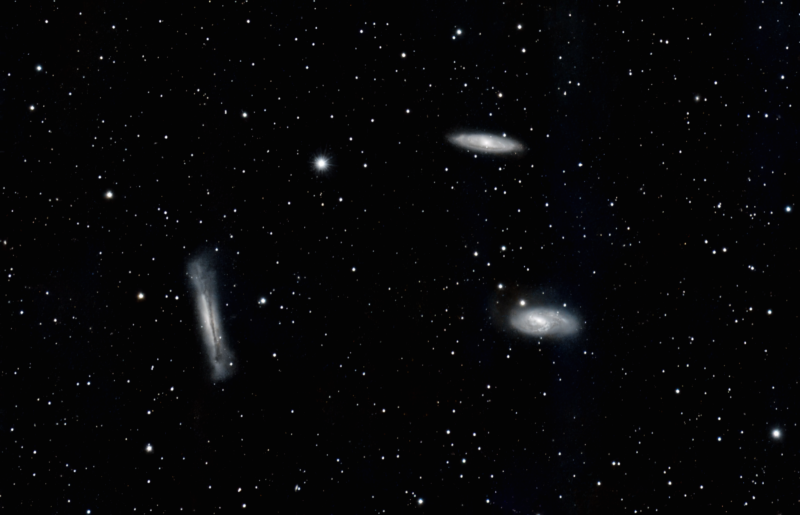
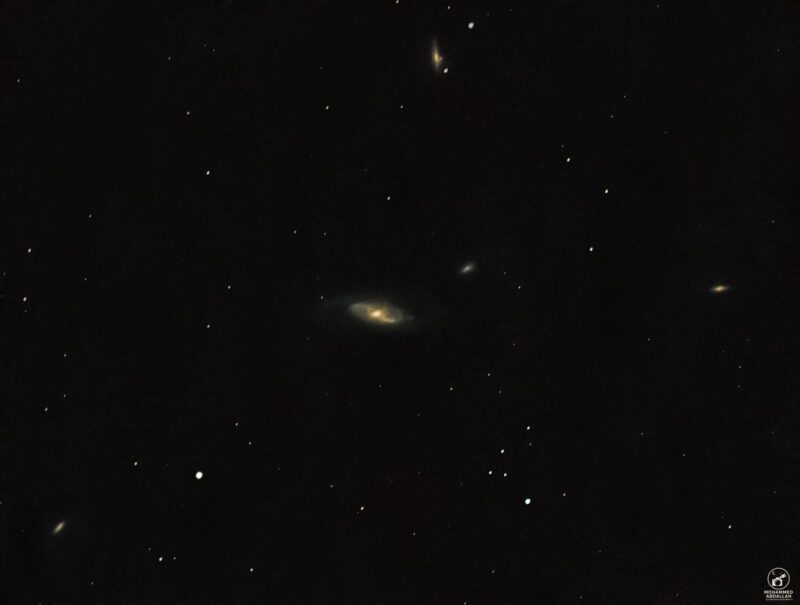
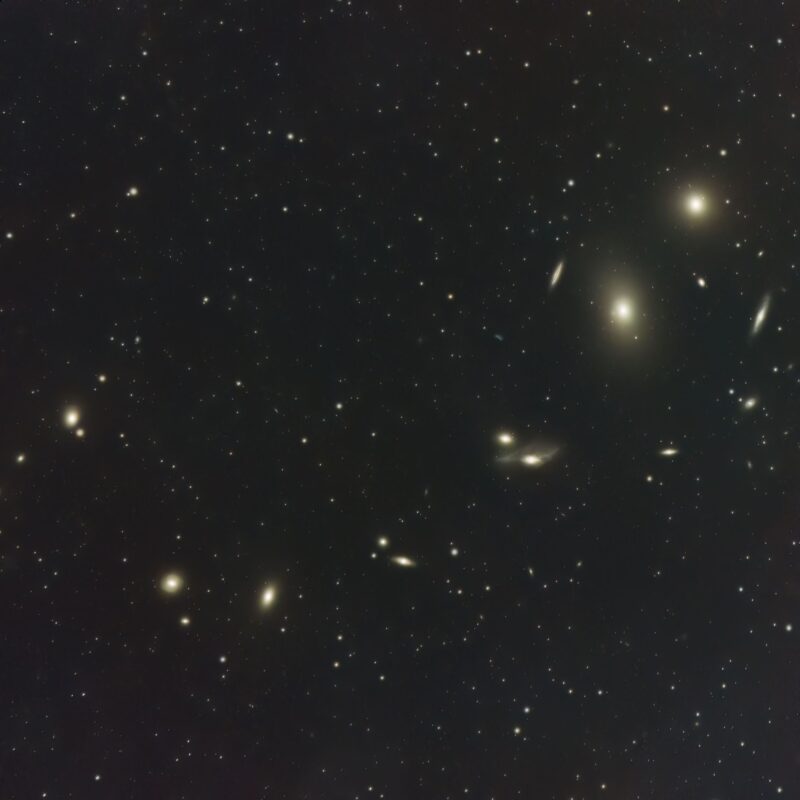
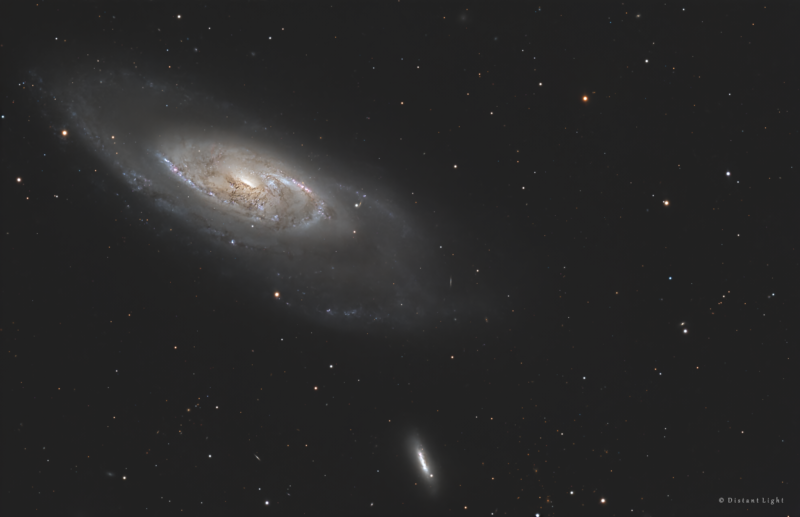
View at EarthSky Community Photos. | EarthSky’s own Shireen Gonzaga in Cockeysville, Maryland, caught the Leo Triplet of Galaxies on April 1, 2025. Shireen wrote: “This is the Leo triplet: Messier 65 (top right), Messier 66 (bottom right), and NGC 3628 (left), at 35, 31 and 35 million light years away, respectively. It’s amazing what you can do with just a camera, telephoto lens, and star tracker. The total exposure time was 10 hours, taken over 4 nights.” Thank you, Shireen!View at EarthSky Community Photos. | Mohammed Abdallah in Suez, Egypt, caught Messier 106 and 4 other surrounding galaxies in the constellation Canes Venatici on April 24, 2025. Mohammed wrote: “This intermediate spiral galaxy is about 22-25 million light-years away. It’s fascinating how vast the universe is.” Thank you, Mohammed!View at EarthSky Community Photos. | Kris Hazelbaker in Grangeville, Idaho, captured Markarian’s Chain of galaxies, containing the giant galaxy Messier 87, on April 24, 2025. Kris wrote: “This is one of my favorite areas of the sky in Virgo. It looks like an artist has brushed his ‘galaxy paint’ across the sky, leaving this arc of galaxies behind.” Thank you, Kris!
And more galaxies!
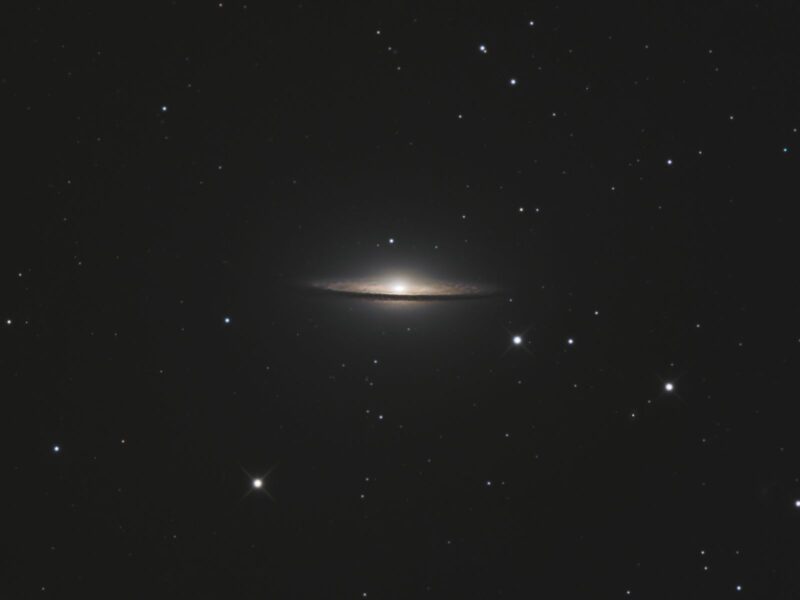
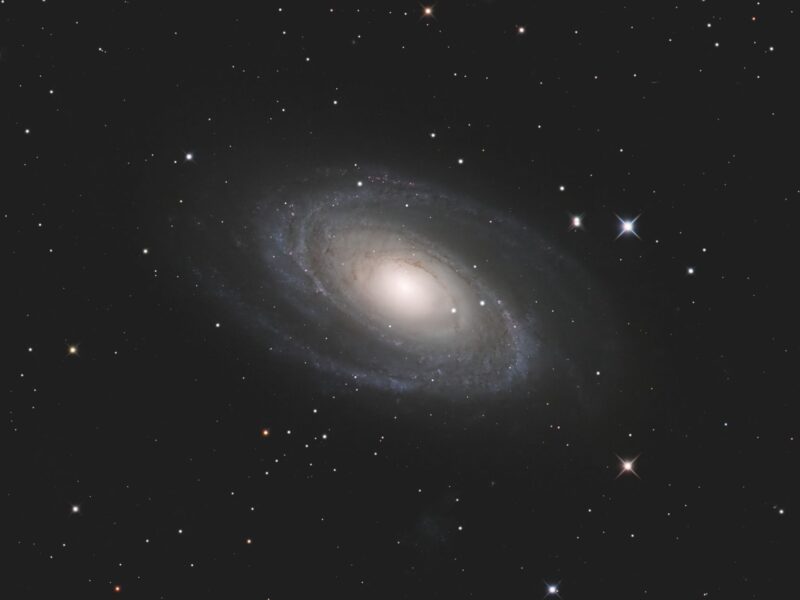
View at EarthSky Community Photos. | Steven Bellavia in Smithfield, Virginia, captured the Sombrero Galaxy in the constellation Virgo on April 28, 2025. Steven wrote: “M104, The Sombrero Galaxy (NGC 4594), is a lenticular or elliptical galaxy, 31 million light-years from Earth. It is about 30% the size of the Milky Way, with a bright nucleus, an unusually large central bulge, and a prominent dust lane in its inclined disk. The dark dust lane and the bulge give this galaxy the appearance of a sombrero hat.” Thank you, Steven!View at EarthSky Community Photos. | Brian Peel in Laramie, Wyoming, captured Messier 106, a spiral galaxy in the constellation Canes Venatici, on April 15, 2025. Brian wrote: “Imaged from my backyard, taking advantage of ‘galaxy season.'” Thank you, Brian!View at EarthSky Community Photos. | Steven Bellavia in Cherry Springs State Park, Pennsylvania, captured the spiral galaxy Messier 81 on April 1, 2025. Steven wrote: “Bode’s Nebula, or Messier 81, NGC 3031, is a grand design spiral galaxy about 12 million light-years away in the constellation Ursa Major.” Thank you, Steven!
Bottom line: Enjoy this gallery of deep-sky photos for April 2025 from our EarthSky community. If you have a great photo to share, send it in, too. We love to see them!
Watch this video of some of our editors’ pics for the best deep-sky photos of April 2025, and then see more below!
Stunning deep-sky photos from our community
The EarthSky community has many talented astrophotographers who capture stunning images of the deep sky. We gathered some of our favorite deep-sky photos we received in April 2025 for you to enjoy. Do you have some of your own images to share? You can submit them to us here. We love to see them!
View at EarthSky Community Photos. | Muhammad Alaa in Assiut, Egypt, captured the Orion Nebula and vicinity on April 1, 2025. Muhammad wrote: “The Orion Nebula, captured by me from the skies of my village in southern Egypt.” Thank you, Muhammad!View at EarthSky Community Photos. | Tameem Altameemi in the United Arab Emirates captured diffuse nebulae in the constellation Sagittarius on April 6, 2025. Tameem wrote: “This image captures two iconic nebulae in the heart of the summer Milky Way. The Lagoon Nebula (M8) and the Trifid Nebula (M20) lie in the constellation Sagittarius, near the galactic core. This wide-field shot showcases the richness of the Sagittarius star field and the beauty of nebular structures emerging from the galactic dust.” Thank you, Tameem!View at EarthSky Community Photos. | EarthSky’s own Marcy Curran in Cheyenne, Wyoming, caught the supernova remnant Messier 1 on April 12, 2025. Marcy wrote: “Here’s the Crab Nebula, a supernova remnant in the constellation Taurus the Bull. The supernova appeared in 1054 AD. It was visible in daylight. In its center lies the Crab pulsar (a neutron star).” Thank you, Marcy!View at EarthSky Community Photos. | Jelieta Walinski at Desert Bloom Observatory in St. David, Arizona, caught the Monkey Head Nebula on April 2, 2025. Jelieta wrote: “Deep within the constellation Orion, a majestic wonder of the universe awaits. The Monkey Head Nebula (SH2-252/NGC 2175), a vast, star-forming region, is a breathtaking testament to the awe-inspiring beauty of creation. This mesmerizing image invites you to embark on a journey through the vast expanse of space and time.” Thank you, Jelieta!
Deep-sky photos of star clusters
View at EarthSky Community Photos. | Steven Bellavia in Smithfield, Virginia, caught this lovely star cluster on April 15, 2025. Steven wrote: “The Polarissima Cluster, NGC 188, Caldwell 1, is an unusual and often-overlooked open cluster in the constellation Cepheus. It’s not far from Polaris and the celestial pole. Most amateur astronomers, with equatorial mounts, setup and point their mounts and telescopes toward the celestial pole, near Polaris. But then they move on, missing this nice cluster. This is one of the most ancient of open clusters known, at approximately 6.8 billion years old.” hank you, Steven!View at EarthSky Community Photos. | Tameem Altameemi in the United Arab Emirates, captured the Hercules Cluster on April 26, 2025. Tameem wrote: “This image features the beautiful globular cluster Messier 13, also historically known as the Al-Jathi Cluster. Located in the constellation Hercules, M13 lies about 22,200 light-years away from Earth. It has an estimated age of 11.65 billion years. It contains several hundred thousand ancient stars, densely packed. In the same field of view are the spiral galaxy NGC 6207 and the faint active galaxy IC 4617.” Thank you, Tameem!
Galaxies in the deep-sky
View at EarthSky Community Photos. | EarthSky’s own Shireen Gonzaga in Cockeysville, Maryland, caught the Leo Triplet of Galaxies on April 1, 2025. Shireen wrote: “This is the Leo triplet: Messier 65 (top right), Messier 66 (bottom right), and NGC 3628 (left), at 35, 31 and 35 million light years away, respectively. It’s amazing what you can do with just a camera, telephoto lens, and star tracker. The total exposure time was 10 hours, taken over 4 nights.” Thank you, Shireen!View at EarthSky Community Photos. | Mohammed Abdallah in Suez, Egypt, caught Messier 106 and 4 other surrounding galaxies in the constellation Canes Venatici on April 24, 2025. Mohammed wrote: “This intermediate spiral galaxy is about 22-25 million light-years away. It’s fascinating how vast the universe is.” Thank you, Mohammed!View at EarthSky Community Photos. | Kris Hazelbaker in Grangeville, Idaho, captured Markarian’s Chain of galaxies, containing the giant galaxy Messier 87, on April 24, 2025. Kris wrote: “This is one of my favorite areas of the sky in Virgo. It looks like an artist has brushed his ‘galaxy paint’ across the sky, leaving this arc of galaxies behind.” Thank you, Kris!
And more galaxies!
View at EarthSky Community Photos. | Steven Bellavia in Smithfield, Virginia, captured the Sombrero Galaxy in the constellation Virgo on April 28, 2025. Steven wrote: “M104, The Sombrero Galaxy (NGC 4594), is a lenticular or elliptical galaxy, 31 million light-years from Earth. It is about 30% the size of the Milky Way, with a bright nucleus, an unusually large central bulge, and a prominent dust lane in its inclined disk. The dark dust lane and the bulge give this galaxy the appearance of a sombrero hat.” Thank you, Steven!View at EarthSky Community Photos. | Brian Peel in Laramie, Wyoming, captured Messier 106, a spiral galaxy in the constellation Canes Venatici, on April 15, 2025. Brian wrote: “Imaged from my backyard, taking advantage of ‘galaxy season.'” Thank you, Brian!View at EarthSky Community Photos. | Steven Bellavia in Cherry Springs State Park, Pennsylvania, captured the spiral galaxy Messier 81 on April 1, 2025. Steven wrote: “Bode’s Nebula, or Messier 81, NGC 3031, is a grand design spiral galaxy about 12 million light-years away in the constellation Ursa Major.” Thank you, Steven!
Bottom line: Enjoy this gallery of deep-sky photos for April 2025 from our EarthSky community. If you have a great photo to share, send it in, too. We love to see them!




Aucun commentaire:
Enregistrer un commentaire