aads

Watch for the daytime moon after sunrise this week


Daytime moon Dec. 18, 2010
Daytime moon seen on December 18, 2010. A daytime moon looks ghostly against a blue sky. You can see one after sunrise this week. Look west in the morning hours! Image by Brian Pate. Used with permission.

We live in uncertain times. But things are always so much more peaceful, looking up. Please help EarthSky keep going!

Watch for the daytime moon

This month’s full moon came overnight on April 12-13, 2025. So this week’s moon is in a waning gibbous phase. Full moons rise at sunset. But waning gibbous moons rise later – and later – on each successive night.

And that means the moon sets later and later now, too. In the days following every full moon, you’ll find the moon setting in the west after sunrise. That makes the mornings following a full moon a good time to catch a daytime moon. Watch for it during the coming week, after sunrise, over your western horizon. It’ll appear pale against the blue sky. Thanks to what’s called the moon illusion, you might notice the daytime moon looking huge when close to the horizon.

The moon is up in the daytime half of the time. But, because it’s pale against the blue sky, it’s not as noticeable during the day as at night. Still, there are certain windows each month during which the daytime moon is most noticeable.

The coming week presents one of those windows. It’s a good time to watch for a daytime moon in the morning sky.

Read more: Here are 4 keys to understanding the moon’s phases.

When is last quarter moon?

Then, the next last quarter moon will fall at 1:35 UTC on April 21, 2025. That’s 8:35 p.m. CDT on April 20. It’ll rise after midnight your local time and set around noon. Look for it high in the sky before dawn.

Daytime moon photos from the EarthSky community
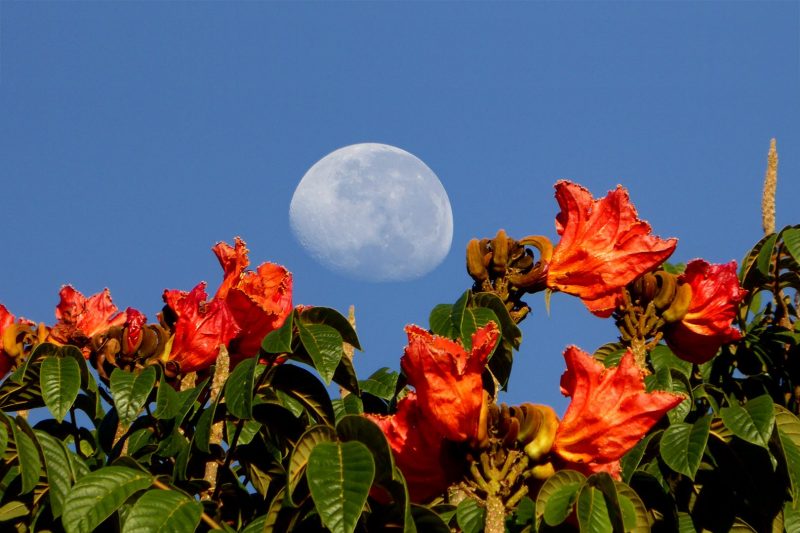
Daytime moon: Bulging white moon in bright blue daytime sky over sunlit orange-red flowers.
View at EarthSky Community Photos. | Peter Lowenstein caught the daytime moon in its waning gibbous phase from Mutare, Zimbabwe. He said: “Three-quarters of an hour after sunrise, I photographed the daytime moon descending toward the top of a flowering African tulip (Spathodia campanulata) tree.” Thank you, Peter!
Waning gibbous moon in daylight with out-of-focus branches in the foreground.
View at EarthSky Community Photos. | Ragini Chaturvedi captured this image on November 14, 2022, in New Jersey. Ragini wrote: “Daytime moon basking in the morning sun, amidst the cold and windy start to the day.” Thank you, Ragini!
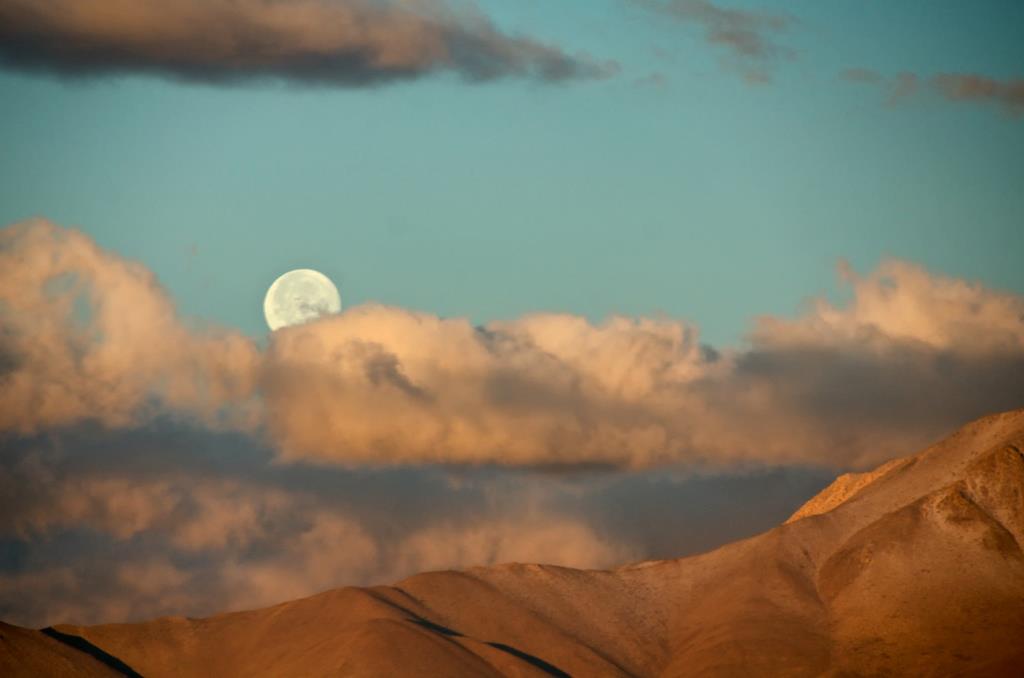
A daytime moon on January 28, 2013 as seen by EarthSky Facebook friend Denise Johnson in Ridgecrest, California, in the Mojave Desert. Notice that this moon in this photo is closer to the (western) horizon at sunrise than the moon one day later (photo below). Full moon was January 27. Afterwards, the moon is waning again and inching closer to the sun on the sky’s dome.
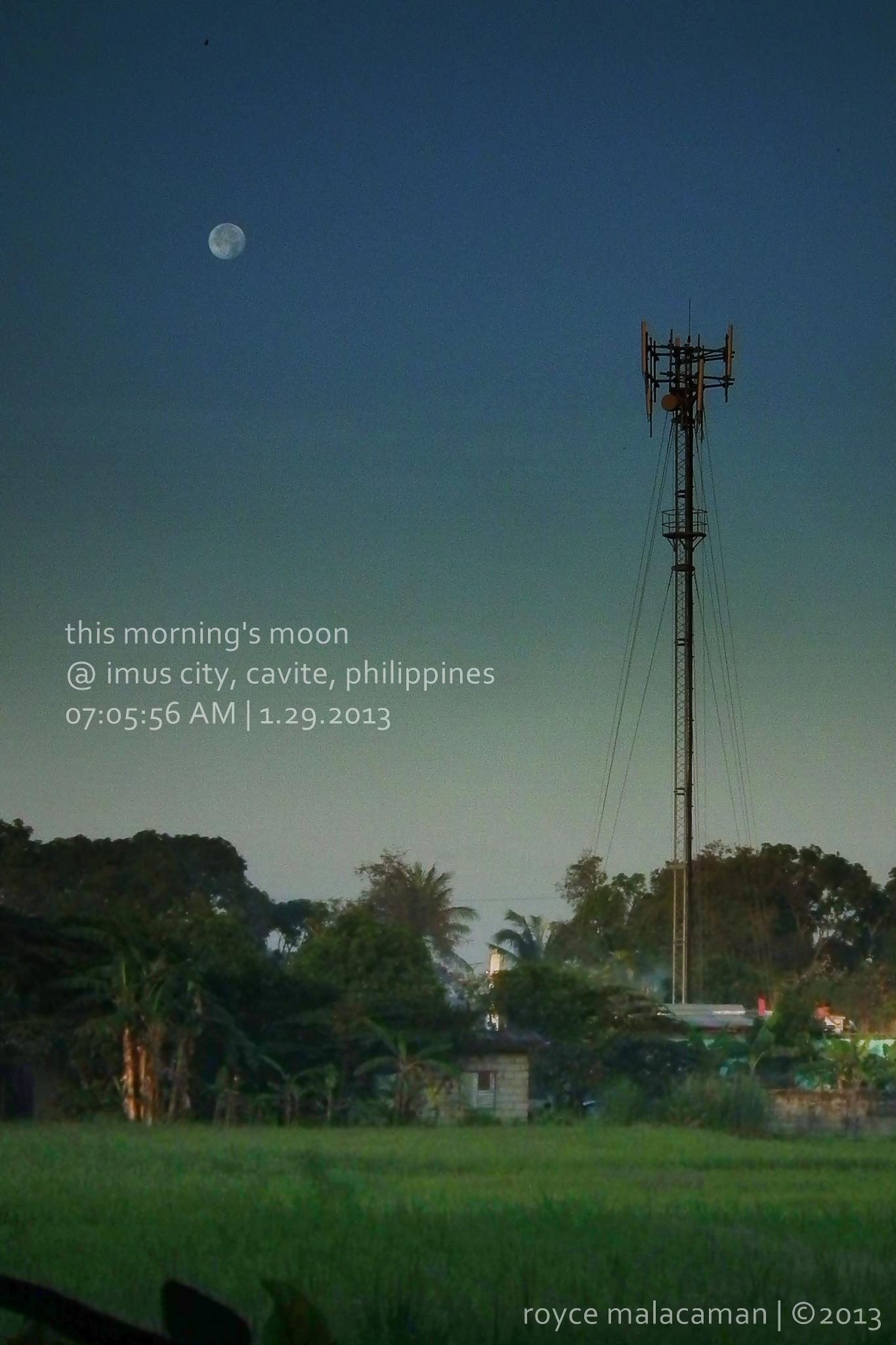
Waning gibbous moon in the west around the time of sunrise, as captured by EarthSky Facebook friend Royce Malacaman in the Philippiines. Thank you, Royce. View larger.
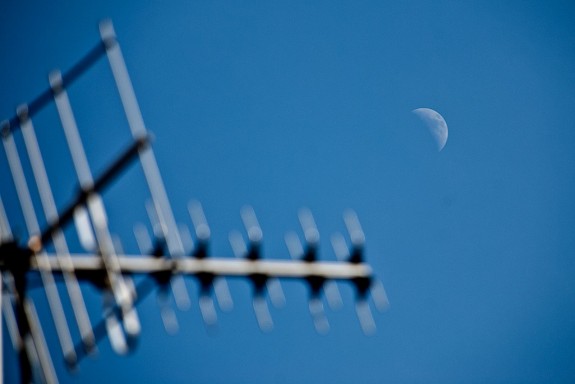
Daytime moon – May 27, 2012 – Darren Danks in Netherton UK. See more moon photos at EarthSky’s Facebook page.
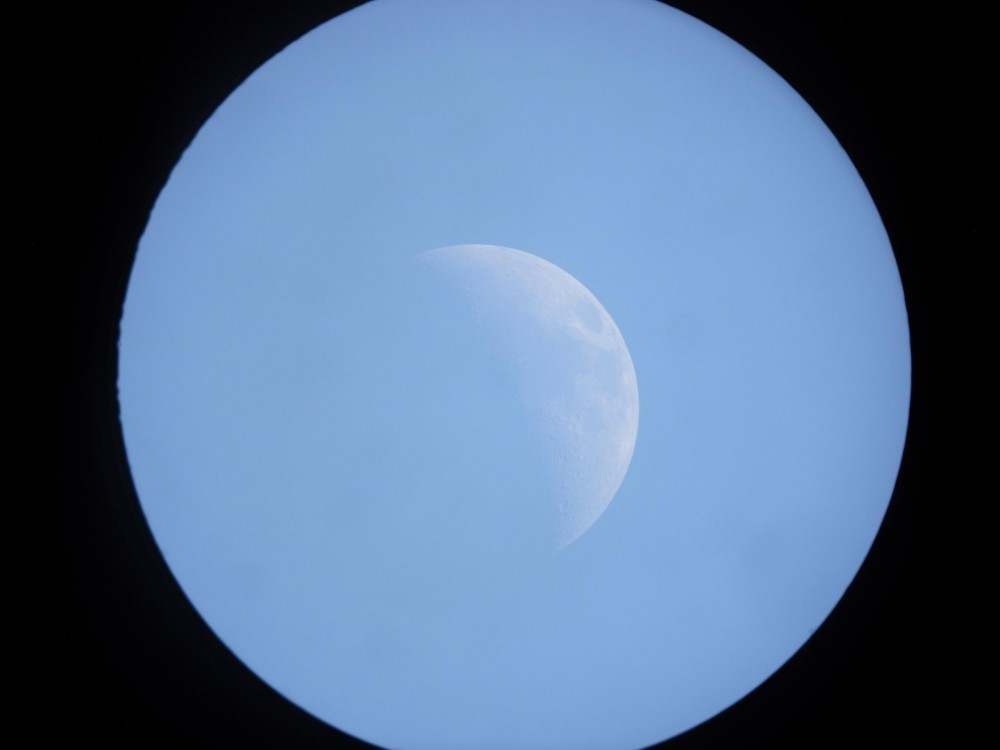
Daytime moon of May 27, 2012, seen from Ireland. Photo by Damian O’Sullivan. Thank you, Damian! View larger.

Bottom line: You can easily spot the moon in the morning sky – after sunrise – for several days after full moon. Look west after the sun comes up! And a week after the full moon, look high in the sky after dawn.

Submit your recent photo to EarthSky here.

The post Watch for the daytime moon after sunrise this week first appeared on EarthSky.


from EarthSky https://ift.tt/kMTWxRp
Daytime moon Dec. 18, 2010
Daytime moon seen on December 18, 2010. A daytime moon looks ghostly against a blue sky. You can see one after sunrise this week. Look west in the morning hours! Image by Brian Pate. Used with permission.

We live in uncertain times. But things are always so much more peaceful, looking up. Please help EarthSky keep going!

Watch for the daytime moon

This month’s full moon came overnight on April 12-13, 2025. So this week’s moon is in a waning gibbous phase. Full moons rise at sunset. But waning gibbous moons rise later – and later – on each successive night.

And that means the moon sets later and later now, too. In the days following every full moon, you’ll find the moon setting in the west after sunrise. That makes the mornings following a full moon a good time to catch a daytime moon. Watch for it during the coming week, after sunrise, over your western horizon. It’ll appear pale against the blue sky. Thanks to what’s called the moon illusion, you might notice the daytime moon looking huge when close to the horizon.

The moon is up in the daytime half of the time. But, because it’s pale against the blue sky, it’s not as noticeable during the day as at night. Still, there are certain windows each month during which the daytime moon is most noticeable.

The coming week presents one of those windows. It’s a good time to watch for a daytime moon in the morning sky.

Read more: Here are 4 keys to understanding the moon’s phases.

When is last quarter moon?

Then, the next last quarter moon will fall at 1:35 UTC on April 21, 2025. That’s 8:35 p.m. CDT on April 20. It’ll rise after midnight your local time and set around noon. Look for it high in the sky before dawn.

Daytime moon photos from the EarthSky community
Daytime moon: Bulging white moon in bright blue daytime sky over sunlit orange-red flowers.
View at EarthSky Community Photos. | Peter Lowenstein caught the daytime moon in its waning gibbous phase from Mutare, Zimbabwe. He said: “Three-quarters of an hour after sunrise, I photographed the daytime moon descending toward the top of a flowering African tulip (Spathodia campanulata) tree.” Thank you, Peter!
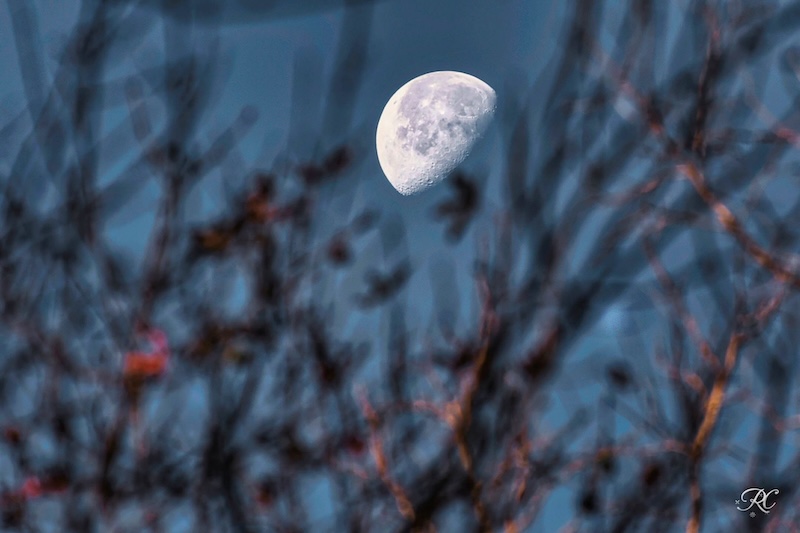
Waning gibbous moon in daylight with out-of-focus branches in the foreground.
View at EarthSky Community Photos. | Ragini Chaturvedi captured this image on November 14, 2022, in New Jersey. Ragini wrote: “Daytime moon basking in the morning sun, amidst the cold and windy start to the day.” Thank you, Ragini!
A daytime moon on January 28, 2013 as seen by EarthSky Facebook friend Denise Johnson in Ridgecrest, California, in the Mojave Desert. Notice that this moon in this photo is closer to the (western) horizon at sunrise than the moon one day later (photo below). Full moon was January 27. Afterwards, the moon is waning again and inching closer to the sun on the sky’s dome.
Waning gibbous moon in the west around the time of sunrise, as captured by EarthSky Facebook friend Royce Malacaman in the Philippiines. Thank you, Royce. View larger.
Daytime moon – May 27, 2012 – Darren Danks in Netherton UK. See more moon photos at EarthSky’s Facebook page.
Daytime moon of May 27, 2012, seen from Ireland. Photo by Damian O’Sullivan. Thank you, Damian! View larger.

Bottom line: You can easily spot the moon in the morning sky – after sunrise – for several days after full moon. Look west after the sun comes up! And a week after the full moon, look high in the sky after dawn.

Submit your recent photo to EarthSky here.

The post Watch for the daytime moon after sunrise this week first appeared on EarthSky.


from EarthSky https://ift.tt/kMTWxRp

Aucun commentaire:

Enregistrer un commentaire

adds 2