

Venus brightest? Not yet but almost
Venus is blazing in the morning sky now. You’ll see it easily in the east before sunrise. It lives up to its reputation of outshining all other objects in our sky, except the sun and moon. UFO reports are probably increasing! But you’ll know better. Venus recently passed between us and the sun. So it’s now nearing greatest brilliancy, when we’ll see it at its brightest in our sky for all of 2025. Venus will reach peak brilliancy on April 27. But start watching now! You can’t miss it.
The planets Saturn and Mercury will lie nearby, but lower on the horizon and they might be challenging to spot in the bright morning twilight.
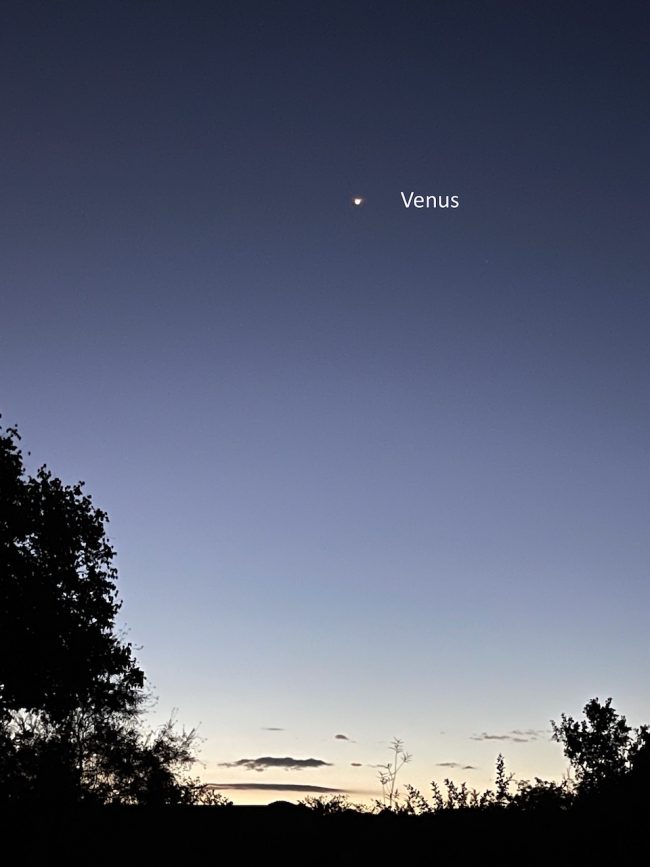
Look for Venus in the sunrise direction on any clear morning now. It’s visible not just in a dark sky, but in bright morning twilight as well.
Need an exact measure? At greatest brilliancy on April 27, 2025, Venus will shine at magnitude -4.7. That’s super bright! It’ll reach this brightness at 17 UTC on April 27.
After late April 2025, Venus won’t appear this bright to us again in the morning sky until November 2026.
When does it happen?
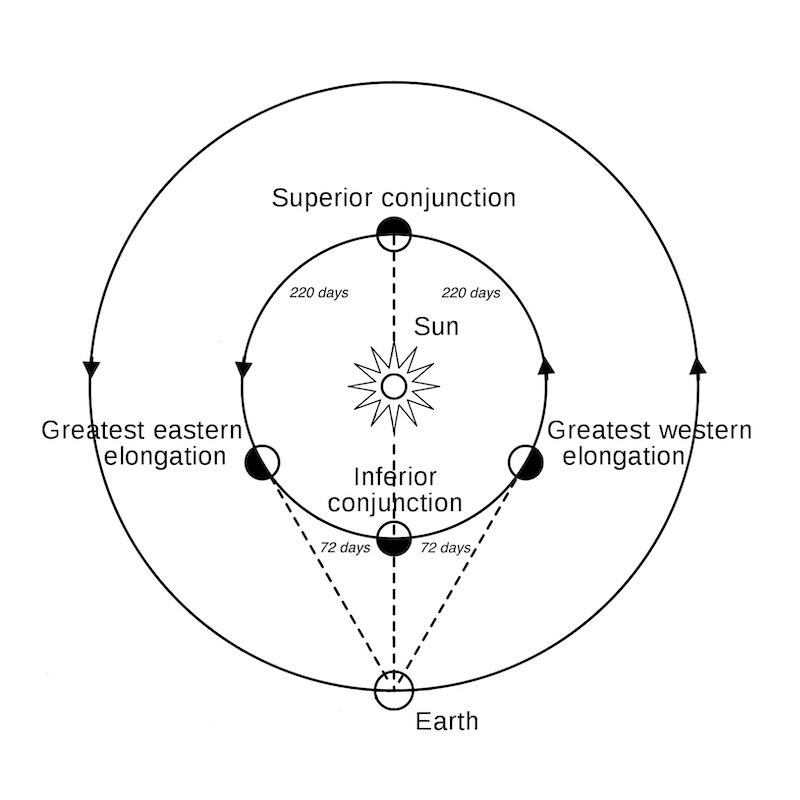
Venus was at greatest brilliancy in the evening sky on February 14. Then, Venus sank toward the sunset as it raced toward its sweep between the Earth and sun – its inferior conjunction – on March 23, 2025.
Afterwards, this bright planet quickly emerged into the morning sky. Earth and Venus are constantly moving in their orbits around the sun. Venus moves faster, and its orbit is smaller than Earth’s orbit. So Venus “laps” Earth every so often. Venus comes to inferior conjunction about every 19.5 months, or roughly 584 days. When it does this, it always moved from our evening to our morning sky. And there are always two times of greatest brilliancy surrounding inferior conjunction, one in the evening, followed by one in the morning.
Venus’ greatest brilliancy always happens about a month before – and after – Venus reaches inferior conjunction. Its next inferior conjunction – when it’ll move to the morning sky – is October 2026.
Why does it happen?
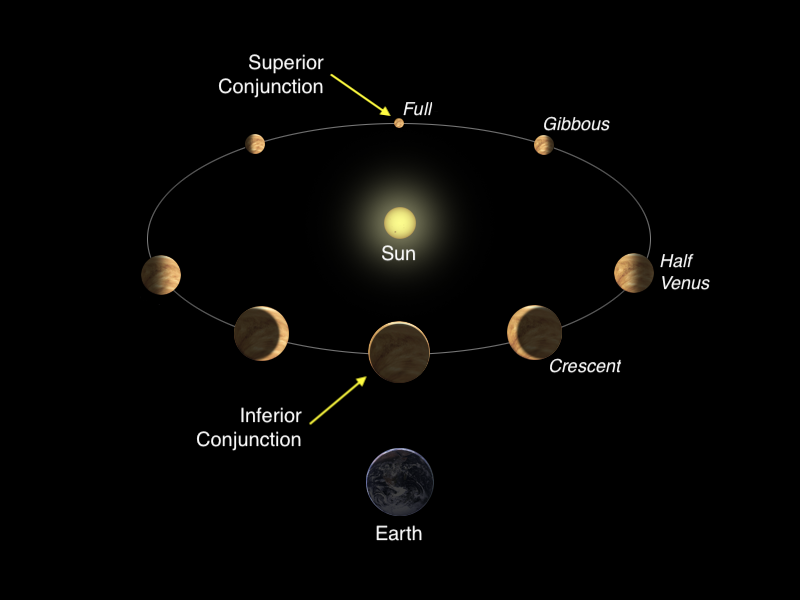
Greatest brilliancy for Venus is a combination of two factors: illumination and disk size. Venus was at superior conjunction – on the opposite side of the sun from Earth – on June 4, 2024. At superior conjunction, when Venus is on the far side of the sun from us, it’s at full phase and its disk size is always small. It emerged in the evening twilight in late July 2024. Then its disk size increased as its phase decreased and it reached its greatest brilliancy in the evening sky on Valentine’s Day, February 14, 2025.
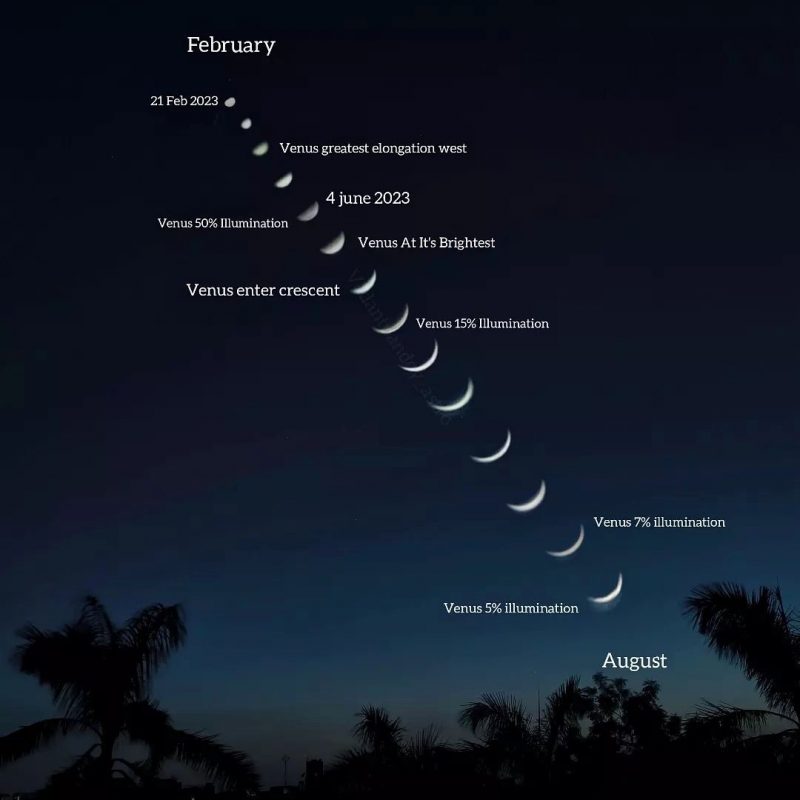
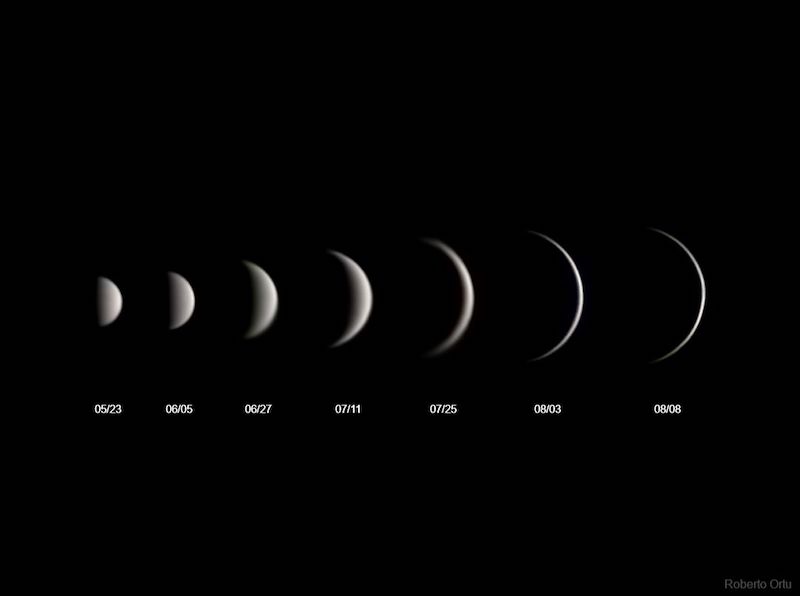
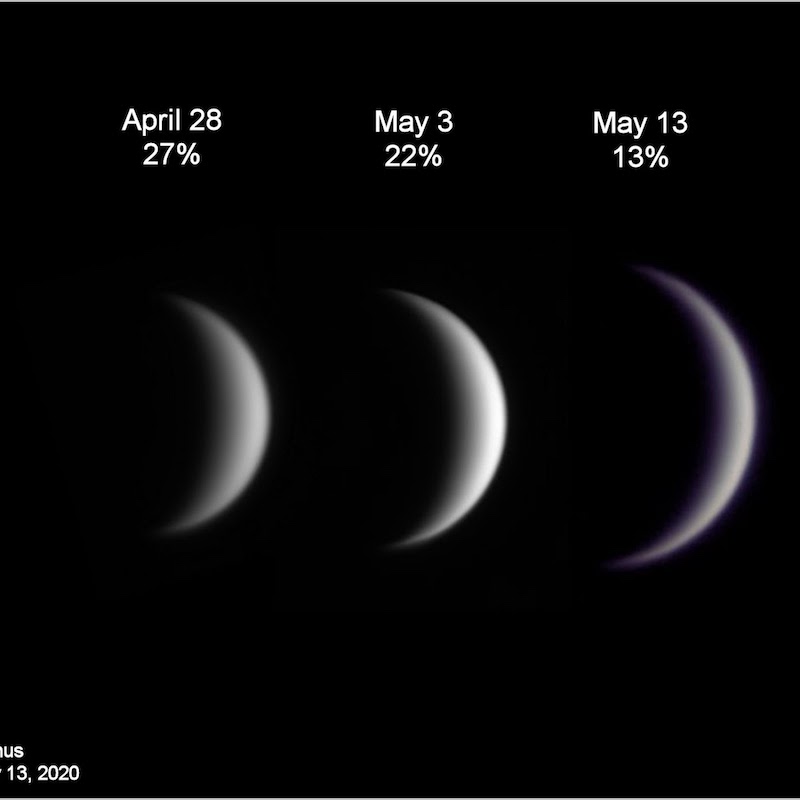
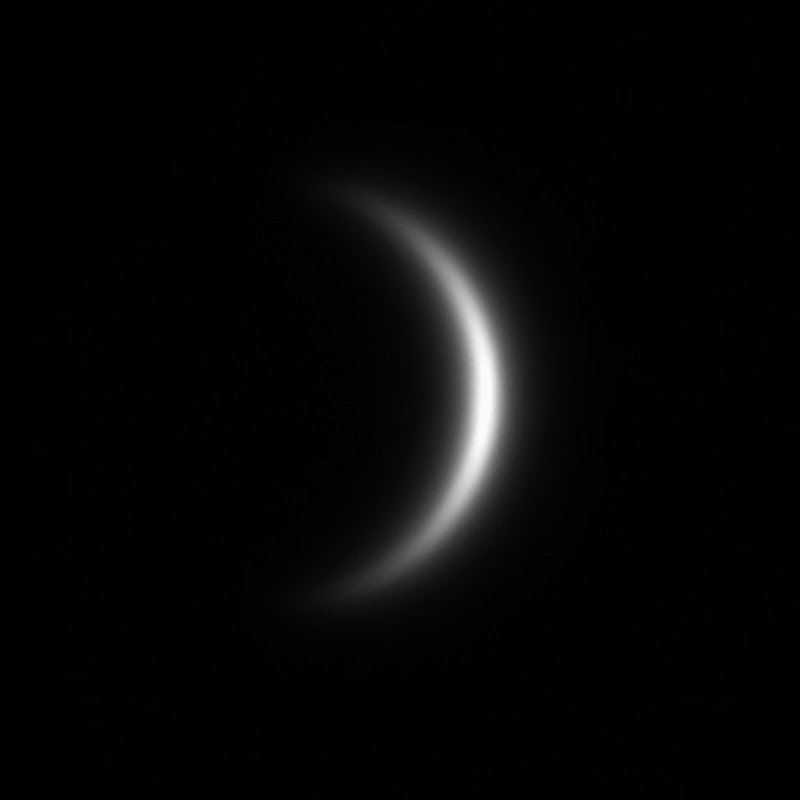
Now at greatest brilliancy in the morning sky, we’re not seeing a fully illuminated Venus. Instead, as seen through telescopes – as Venus races away from Earth – its phase has been increasing, like a waxing crescent moon. Meanwhile, again as seen through telescopes, the disk size of Venus has been decreasing as the planet races ahead of Earth in orbit around the sun.

It’s a combination of phase and size
Greatest illuminated extent. It’s only when we see Venus as a crescent that this world comes close enough to us to exhibit its greatest illuminated extent, at which time its daytime side covers the greatest area of sky. And that means that Venus is brighter around now than at any other time during its approximate 7-month reign in the morning sky.
Disk size. Remember, again as seen through a telescope, the disk of Venus decreases after inferior conjunction. In July, 2024, Venus was around a 10-arcsecond gibbous disk through telescopes. At its greatest brilliancy in the February evening sky, Venus was around a 40-arcsecond crescent disk. Now at its greatest brilliancy in the morning sky on April 27, its disk size will be 40.7-arcseconds.
So greatest brilliancy for Venus is a combination of maximum phase and disk size. The two combine to give us a bright planet Venus.
Then, as it races away from us, the phase continues to increase … but the disk size decreases. So Venus will start to appear a smidgeon fainter to us following April 27, and fainter still (but still very bright!) until it slips away in in the sun’s glare in November 2025.
Venus charts for 2025, from Guy Ottewell


Venus photos from our community

More Venus images
Bottom line: Venus will be brightest in the morning sky around April 27, 2025. After that, Venus will next be at its brightest again – this time in the evening sky – in September 2026.
Planet-observing is easy: Top tips here
EarthSky’s monthly planet guide: Visible planets and more
The post Start watching for Venus brightest in the morning sky first appeared on EarthSky.
from EarthSky https://ift.tt/4DqmG7A
Venus brightest? Not yet but almost
Venus is blazing in the morning sky now. You’ll see it easily in the east before sunrise. It lives up to its reputation of outshining all other objects in our sky, except the sun and moon. UFO reports are probably increasing! But you’ll know better. Venus recently passed between us and the sun. So it’s now nearing greatest brilliancy, when we’ll see it at its brightest in our sky for all of 2025. Venus will reach peak brilliancy on April 27. But start watching now! You can’t miss it.
The planets Saturn and Mercury will lie nearby, but lower on the horizon and they might be challenging to spot in the bright morning twilight.
Look for Venus in the sunrise direction on any clear morning now. It’s visible not just in a dark sky, but in bright morning twilight as well.
Need an exact measure? At greatest brilliancy on April 27, 2025, Venus will shine at magnitude -4.7. That’s super bright! It’ll reach this brightness at 17 UTC on April 27.
After late April 2025, Venus won’t appear this bright to us again in the morning sky until November 2026.
When does it happen?
Venus was at greatest brilliancy in the evening sky on February 14. Then, Venus sank toward the sunset as it raced toward its sweep between the Earth and sun – its inferior conjunction – on March 23, 2025.
Afterwards, this bright planet quickly emerged into the morning sky. Earth and Venus are constantly moving in their orbits around the sun. Venus moves faster, and its orbit is smaller than Earth’s orbit. So Venus “laps” Earth every so often. Venus comes to inferior conjunction about every 19.5 months, or roughly 584 days. When it does this, it always moved from our evening to our morning sky. And there are always two times of greatest brilliancy surrounding inferior conjunction, one in the evening, followed by one in the morning.
Venus’ greatest brilliancy always happens about a month before – and after – Venus reaches inferior conjunction. Its next inferior conjunction – when it’ll move to the morning sky – is October 2026.
Why does it happen?
Greatest brilliancy for Venus is a combination of two factors: illumination and disk size. Venus was at superior conjunction – on the opposite side of the sun from Earth – on June 4, 2024. At superior conjunction, when Venus is on the far side of the sun from us, it’s at full phase and its disk size is always small. It emerged in the evening twilight in late July 2024. Then its disk size increased as its phase decreased and it reached its greatest brilliancy in the evening sky on Valentine’s Day, February 14, 2025.
Now at greatest brilliancy in the morning sky, we’re not seeing a fully illuminated Venus. Instead, as seen through telescopes – as Venus races away from Earth – its phase has been increasing, like a waxing crescent moon. Meanwhile, again as seen through telescopes, the disk size of Venus has been decreasing as the planet races ahead of Earth in orbit around the sun.
It’s a combination of phase and size
Greatest illuminated extent. It’s only when we see Venus as a crescent that this world comes close enough to us to exhibit its greatest illuminated extent, at which time its daytime side covers the greatest area of sky. And that means that Venus is brighter around now than at any other time during its approximate 7-month reign in the morning sky.
Disk size. Remember, again as seen through a telescope, the disk of Venus decreases after inferior conjunction. In July, 2024, Venus was around a 10-arcsecond gibbous disk through telescopes. At its greatest brilliancy in the February evening sky, Venus was around a 40-arcsecond crescent disk. Now at its greatest brilliancy in the morning sky on April 27, its disk size will be 40.7-arcseconds.
So greatest brilliancy for Venus is a combination of maximum phase and disk size. The two combine to give us a bright planet Venus.
Then, as it races away from us, the phase continues to increase … but the disk size decreases. So Venus will start to appear a smidgeon fainter to us following April 27, and fainter still (but still very bright!) until it slips away in in the sun’s glare in November 2025.
Venus charts for 2025, from Guy Ottewell
Venus photos from our community
More Venus images
Bottom line: Venus will be brightest in the morning sky around April 27, 2025. After that, Venus will next be at its brightest again – this time in the evening sky – in September 2026.
Planet-observing is easy: Top tips here
EarthSky’s monthly planet guide: Visible planets and more
The post Start watching for Venus brightest in the morning sky first appeared on EarthSky.
from EarthSky https://ift.tt/4DqmG7A

Aucun commentaire:
Enregistrer un commentaire